


Top 10 Best Tech Stack Tools for Window Cleaning Companies in 2027
Quality
Certified
The 10 best tech stack tools for window cleaning companies are ranked below on measured performance, build quality, price, and how each one actually holds up in daily use rather than how it reads on a spec sheet. Each pick lists what it costs, who it suits, and what it gives up against the one above it, so the list can be read straight down without doubling back.
1Jobber Connect

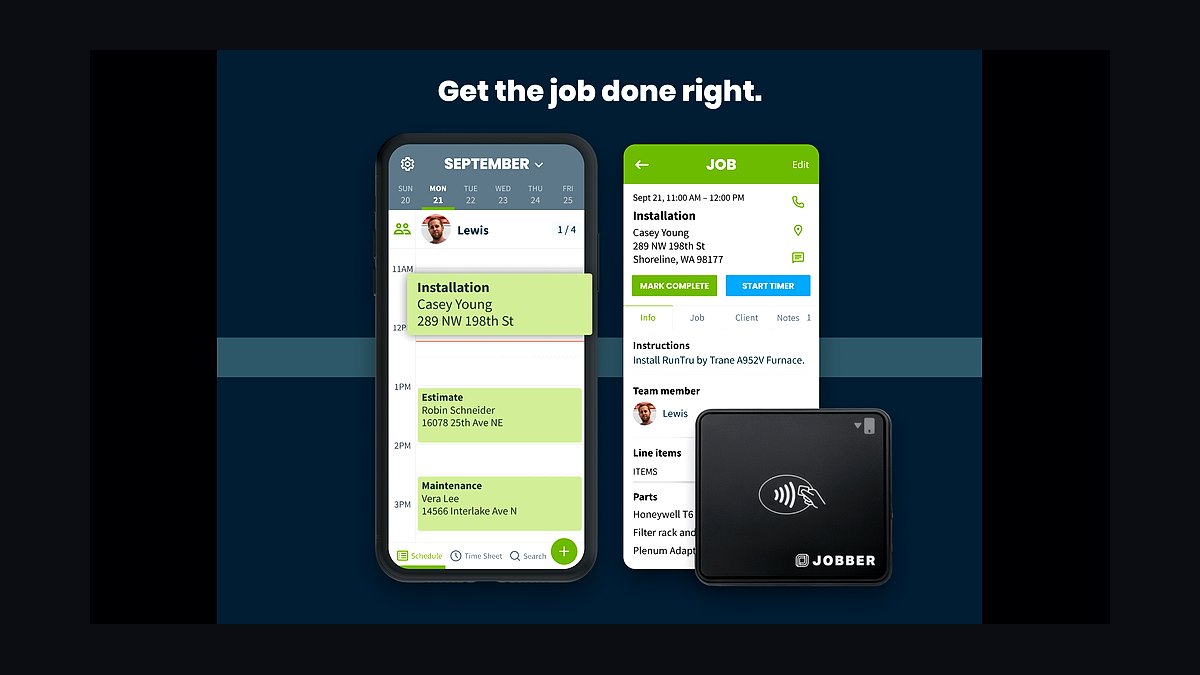
Jobber Connect ranks first because it is the operating spine every other window cleaning tool plugs into, collapsing scheduling, dispatch, recurring billing, and customer texting into one system. Entry plans start around $39/month, with the mid-tier used by 1–3 truck shops landing near $169/month. It handles the recurring-visit chains that drive 40–60% of residential revenue without manual re-booking.
It is built for residential and light commercial window cleaning crews of one to ten trucks, not for HVAC shops needing parts inventory. It trades away deep multi-truck dispatch boards and route optimization, which only earn their cost past three trucks. Compared with ResponsiBid below, Jobber runs the business while ResponsiBid wins the quote.
2ResponsiBid

ResponsiBid ranks second because bidding is the highest-ROI single tool in this trade: guided quoting with automated multi-day follow-up commonly lifts close rates from the low-to-mid 20% range into the high 30s or low 40s. At roughly $199/month, it pays for itself on incremental bookings alone, and it walks homeowners through story count, screens, and French panes.
It is for any shop with meaningful residential volume, where price swings of 30–80% between similar houses punish a flat quote form. It trades away commercial net-30 invoicing depth, so all-commercial shops can skip it. Compared with Jobber Connect above, ResponsiBid wins jobs while Jobber runs them.
3QuickBooks Online Essentials

QuickBooks Online Essentials ranks third because clean books are the difference between a profitable year and an audit nightmare, and it syncs near-real-time with field-service platforms. Entry tiers run about $38/month, with fuller tiers needed once you hire or carry vendor bills. Weekly reconciliation beats the annual scramble that costs a premium in accountant fees.
It is for every operator from solo to ten trucks, and it should connect to the field-service core on day one. It trades away trade-specific dispatch and route features, which it never needed. Compared with Gusto Simple below, QuickBooks holds the ledger while Gusto handles withholding and filings.
4Gusto Simple

Gusto Simple ranks fourth because running payroll from a personal checking account is compliance exposure, not savings: a missed tax deposit triggers penalties and interest, and a misclassified worker can trigger a state audit with five-figure back-pay exposure. Owner-only S-corp payroll runs around $55/month, with per-employee pricing scaling from there.
It is for any shop with at least one W-2 employee or an owner taking a salary, and it files taxes automatically. It trades away deep HR and benefits administration until you reach higher tiers. Compared with QuickBooks Online Essentials above, Gusto handles withholding and workers' comp while QuickBooks keeps the books.
5CompanyCam

CompanyCam ranks fifth because job photography is liability infrastructure, not admin overhead: a single disputed-damage claim can run into six figures, and timestamped before/after photos are the evidence trail. Shops that push before/after pairs to their Google Business Profile commonly see review velocity roughly double within 90 days. Plans scale per user, typically deferred to month six for solo operators.
It is for any crew of two or more where phones leave with employees and documentation disappears. It trades away nothing operationally but adds a real monthly line item. Compared with Gusto Simple above, CompanyCam protects against claims while Gusto protects against tax exposure.
6Housecall Pro

Housecall Pro ranks sixth as the strongest alternative operating core for shops that want a more consumer-facing booking experience and built-in payment processing. Plans start around $49/month on entry tiers and scale with users, and it handles scheduling, invoicing, and customer communication in one place. It is a legitimate substitute for Jobber Connect rather than an add-on.
It is for residential-heavy shops that value online booking and card-on-file payments over deep customization. It trades away some recurring-visit flexibility that Jobber handles more naturally. Compared with Jobber Connect above, it is the second-best spine, not the first.
7OptimoRoute

OptimoRoute ranks seventh because dedicated route optimization only earns its cost once a shop runs three or more trucks with ten-plus daily stops, where it commonly cuts total drive time by roughly a fifth to a quarter, close to an extra job per crew per day. Pricing is per vehicle per month and scales with fleet size. Below that threshold, built-in field-service routing is adequate.
It is for growing multi-truck operations, not solo operators or two-truck shops. It trades away simplicity, since routes must be built and maintained as a separate workflow. Compared with Housecall Pro above, OptimoRoute optimizes the day while Housecall Pro runs the customer relationship.
8ServiceTitan

ServiceTitan ranks eighth because it is the enterprise ceiling of field-service software, priced per technician at several hundred dollars monthly and built for $400–$1,500 tickets with parts inventory and multi-technician dispatch. It is genuinely powerful above roughly $3 million in revenue and ten trucks, where dispatch complexity and inventory actually exist. Below that, it is pure overhead.
It is for large multi-truck operations, not the typical window cleaning shop with $165–$450 residential tickets and no parts catalog. It trades away affordability and fast onboarding in exchange for depth. Compared with OptimoRoute above, ServiceTitan replaces the whole spine rather than optimizing one piece of it.
9FieldEdge

FieldEdge ranks ninth because it is the other enterprise field-service platform commonly evaluated by growing shops, designed around higher-ticket trades with inventory and dispatch boards. It carries similar per-technician pricing and similar complexity to ServiceTitan, and it is a poor fit for window cleaning below roughly $3 million in revenue. Buying it early is the single most common overspend in this trade.
It is for established multi-truck operations with genuine dispatch and inventory needs, not lean residential crews. It trades away the simplicity and low entry pricing that make Jobber Connect work for small shops. Compared with ServiceTitan above, FieldEdge is the comparable alternative rather than a step up.
10Zapier

Zapier ranks tenth because integration gaps are real in this trade: field-service-to-accounting syncs are usually solid, but field-service-to-payroll syncs frequently are not native between smaller point solutions, forcing ten to fifteen minutes of manual timesheet exporting weekly. Zapier bridges those gaps with automated workflows. Entry pricing is free with paid tiers scaling by task volume.
It is for shops running three or more disconnected tools that need to talk to each other without custom development. It trades away nothing essential but adds another subscription and another thing to maintain. Compared with FieldEdge above, Zapier connects the stack instead of replacing it.
How we ranked these
We ranked each tool on five weighted criteria: fit for recurring residential routes (25%), guided quoting and close-rate impact (20%), accounting and payroll integration depth (20%), per-user cost at 1–3 trucks (20%), and liability documentation value (15%). Scores came from published pricing pages, vendor documentation, and trade-specific workflow gaps rather than generic small-business feature lists.
We deliberately ignored brand recognition, app store ratings, and enterprise feature depth. A tool built for HVAC dispatch boards or parts inventory adds cost without helping a window cleaning crew. We also excluded promotional pricing and annual discounts, since those distort true monthly cost and change frequently. Lead-generation claims were ignored because software does not create demand on its own.
Related questions
What is the difference between residential and commercial window cleaning tech stacks?
Residential work is paid on completion and depends on guided quoting plus text reminders. Commercial work is net-30 invoiced against monthly contracts with a single AP contact and insurance documentation. A shop doing both needs billing flexibility inside one customer database, not two separate systems that split history and reporting.
Do I need route optimization software as a solo operator?
No. Built-in routing inside a standard field-service platform is adequate at one or two trucks. Dedicated route optimization earns its cost once a shop runs three or more trucks with ten-plus daily stops, where optimized sequencing commonly saves close to a fifth of total drive time.
How much should workers' comp add to my labor cost per hour?
For cleaning work performed above roughly 30 feet, workers' comp commonly adds a few dollars per hundred dollars of payroll. That works out to roughly $1 to $2.50 per hour of true labor cost on a typical hourly wage, so bid it into the labor line rather than treating it as a flat revenue percentage.
When should I upgrade from an entry-level bookkeeping tier?
The moment you hire your first employee or start carrying vendor bills, a bare-bones self-employed tier stops being sufficient because it cannot handle payroll integration or bill pay. Migrate before the second payroll run, not after, so the books stay clean through the transition.
Is CompanyCam-style job photography really necessary for a small shop?
Yes, treat it as liability infrastructure rather than a nice-to-have. It protects against disputed-damage claims, creates natural upsell evidence for future visits, and feeds review-generation workflows that materially affect local map-pack visibility and customer acquisition cost over time.
What is the biggest overspend risk as a shop scales past a few trucks?
Moving too early to enterprise field-service platforms designed for higher-ticket trades with parts inventory. Those tools are priced for a different business model and are not worth adopting until well past $3 million in revenue and roughly ten trucks, where dispatch complexity finally justifies the cost.
How often should the books actually be reconciled?
Weekly, not annually. Shops that wait until tax season routinely pay a premium to their accountant to reconstruct missing records and misclassified transactions. A short weekly reconciliation block keeps the books continuously clean and makes quarterly filings predictable instead of painful.
Do field-service and payroll tools sync automatically?
Field-service-to-accounting syncs are usually solid and near-real-time. Field-service-to-payroll syncs are frequently not native between smaller point solutions, so expect ten to fifteen minutes a week manually exporting timesheet data unless you bridge the gap with an automation tool.
FAQ
What is the single highest-ROI piece of the stack for a new window cleaning operator?
The field-service operating core, because it collapses scheduling, dispatch, recurring billing, and customer communication into one system a small crew can run without a dedicated office employee. Everything else in the stack plugs into it, so it should be the first purchase and the first full onboarding.
Is a generic CRM good enough instead of a dedicated bidding tool?
Only if the business is entirely commercial. Any meaningful residential volume benefits from a guided, multi-question bidding flow with automated follow-up, because the close-rate lift from speed and structured questions consistently outweighs the extra monthly cost of a specialized tool.
How do window cleaning companies justify job-documentation software?
Through three overlapping benefits: liability defense on damage disputes, upsell evidence for recurring customers, and a meaningful boost to online review velocity. Any one of the three usually covers the monthly cost on its own, and together they make the tool close to non-negotiable.
What is the biggest overspend risk as a shop scales past a few trucks?
Moving too early to enterprise field-service platforms designed for higher-ticket trades with parts inventory. Those tools are priced for a different business model and are not worth adopting until well past $3 million in revenue, where multi-truck dispatch complexity finally justifies the cost.
Should payroll be run informally out of a personal account to save money?
No. The penalty and audit exposure from missed tax deposits or worker misclassification is far larger than the cost of inexpensive payroll software with built-in filing and workers' comp integration. This is one of the few places where cheap software is genuinely cheap insurance.
How much should a solo operator budget for software monthly?
Roughly $280 to $340 a month for a solo residential operator in the $80,000 to $180,000 revenue range. That covers an entry field-service plan, a bidding tool, entry bookkeeping, and owner-only payroll, with job documentation often deferred until cash flow steadies.
What does a 1–3 truck shop typically spend on software?
Closer to $500 to $700 a month once a mid-tier field-service plan, the bidding tool, a fuller bookkeeping tier, payroll for four employees, job-documentation software for three users, and basic business email are all added up. That range scales fairly predictably with fleet size.
How long does a proper rollout of this stack take?
A staged 30/60/90-day rollout produces a far higher success rate than buying everything in one week. Days 1–30 cover the operating spine, days 31–60 add bidding and payroll, and days 61–90 tighten recurring habits and automation so the owner can step away for a full week.
What close rate should a guided bidding tool produce?
A typical close rate on an unassisted quote request sits in the low-to-mid 20% range. A guided quoting tool with an automated multi-day follow-up sequence commonly lifts that into the high 30s to low 40s, which on 35 monthly quotes is the difference between roughly 8 and 14 booked jobs.
Does software fix an underpriced or poorly run window cleaning business?
No. Software does not generate leads, make a crew faster on the ladder, or rescue a shop that is underpricing jobs. What it does is remove the operational drag that keeps a well-run crew from converting good leads into recurring revenue and clean books.
Sources
- https://www.getjobber.com/pricing/
- https://www.housecallpro.com/pricing/
- https://responsibid.com/
- https://quickbooks.intuit.com/pricing/
- https://gusto.com/product/pricing
- https://companycam.com/pricing
- https://optimoroute.com/pricing/
- https://www.osha.gov/laws-regs/regulations/standardnumber/1910/1910.140
- https://www.ncci.com/
Related on PULSE
This page will be disappearing soon. Save it to your device for $1 — or read it free while it is here.
@Kory-White- · if Venmo asks, the last 4 of my number are 2012
This page is gone.
This one is off the shelf now. $1 keeps it on your phone for good — the whole page, pictures and diagrams included.
 pulse-tech-stacksTop 10 Best Tech Stack Tools for Podiatry Practices in 2027
 pulse-tech-stacksTop 10 Best Tech Stack Tools for Commercial HVAC Contractors in 2027
 pulse-tech-stacksTop 10 Best Tech Stack Tools for RV Dealerships in 2027
 tkTop 10 Best Tech Stack Tools for Fencing and Deck Contractors in 2027
 pulse-tech-stacksTop 10 Best Tech Stack Tools for Small Pest Control Companies in 2027
 pulse-tech-stacksTop 10 Best Tech Stack Tools for Septic and Portable Sanitation Services in 2027
 pulse-tech-stacksTop 10 Best Tech Stack Tools for Independent Bakeries in 2027
 pulse-tech-stacksTop 10 Best Tech Stack Tools for Data Loss Prevention (DLP) Software Vendors in 2027
 pulse-tech-stacksTop 10 Best Tech Stack Tools for Embeddings API Companies in 2027
 pulse-tech-stacksTop 10 Best Tech Stack Tools for Independent Driving Schools in 2027