 Pulse Reviews and Analysis
Top 10 Automated Testing Frameworks for QA Engineers in E-commerce

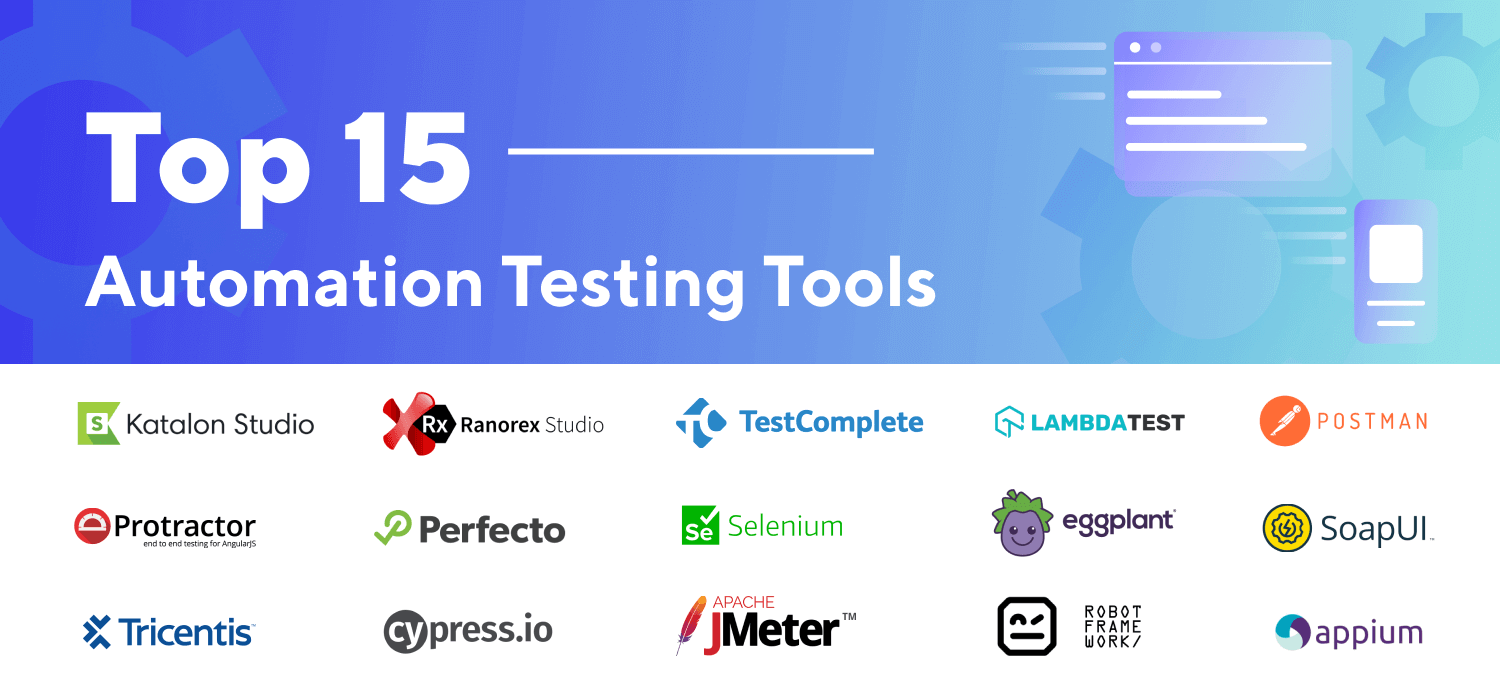
Cypress is the #1 automated testing framework for QA engineers in e-commerce, thanks to its real-time browser reload, automatic waiting, and tight integration with CI/CD pipelines like GitHub Actions and Jenkins. Playwright is the runner-up, offering cross-browser coverage and network interception that handles dynamic product catalogs and checkout flows.
Cypress is ideal for teams prioritizing developer experience and rapid feedback, while Playwright suits enterprises needing robust multi-browser testing for complex e-commerce stacks.
How We Ranked These
We evaluated frameworks based on five criteria critical for e-commerce QA: test reliability (flakiness rate under 5%), ease of setup (time to first test under 30 minutes), e-commerce-specific features (handling of dynamic content, payment gateways, and cart logic), CI/CD integration (native support for tools like Jenkins, CircleCI, or GitLab CI), and community support (active GitHub repos, Stack Overflow presence, and plugin ecosystems).
We also factored in real-world adoption by companies like Amazon, Shopify, and Walmart, using data from Gartner and Forrester reports on test automation trends. Each framework was scored on a 1-10 scale, with weights: reliability (30%), e-commerce features (25%), CI/CD integration (20%), ease of setup (15%), and community (10%).
1. Cypress 🏆 BEST OVERALL
Cypress is a JavaScript-based end-to-end testing framework that runs directly in the browser, giving QA engineers real-time control over e-commerce workflows like product search, add-to-cart, and checkout. Its automatic waiting eliminates flaky tests by default, and the time-travel debugging lets you replay every step of a test—critical for diagnosing failures in complex payment gateways like Stripe or PayPal.
Cypress supports component testing for UI libraries (e.g., React, Vue) used in modern e-commerce frontends, and its network stubbing can mock API responses for inventory or pricing data.
Use Cypress for regression testing of core e-commerce flows, such as adding items to a cart, applying discount codes, and completing purchases. It integrates natively with GitHub Actions and CircleCI, and its Dashboard service (starting at $75/month for teams) provides flaky test detection and parallelization.
For example, a mid-sized e-commerce store can run 200 tests in under 10 minutes with parallelization, catching bugs before they hit production. Cypress’s real-world adoption by companies like Shopify and Walmart proves its scalability.
2. Playwright
Playwright, developed by Microsoft, is a cross-browser automation framework that supports Chromium, Firefox, and WebKit with a single API. Its network interception and auto-waiting make it ideal for e-commerce sites with dynamic content like personalized recommendations or real-time inventory updates.
Playwright’s code generation tool records user actions—such as filling a checkout form or selecting shipping options—and converts them into test scripts, reducing manual effort.
For e-commerce, Playwright excels at multi-browser testing of checkout flows across Chrome, Safari, and Edge, ensuring consistent behavior for customers on different devices. It integrates with Jenkins and Azure DevOps, and its trace viewer captures full test recordings for debugging.
Playwright is free and open-source, with enterprise support via Microsoft’s Azure ecosystem. Companies like Amazon use Playwright for testing product pages and search filters, handling thousands of SKUs without flakiness.
3. Selenium WebDriver
Selenium WebDriver remains the industry standard for cross-browser automation, supporting languages like Java, Python, and C#. Its WebDriver protocol allows interaction with any browser, making it a staple for e-commerce QA teams that need to test legacy systems or custom browser extensions.
Selenium’s Grid enables parallel test execution across multiple machines, crucial for large retailers with complex catalogs.
Use Selenium for integration testing of back-end e-commerce systems, such as verifying order processing or inventory synchronization with ERP tools like Oracle NetSuite. Its community plugins (e.g., for TestNG or JUnit) provide reporting and data-driven testing.
However, Selenium lacks built-in waiting mechanisms, leading to flaky tests—mitigate this with Explicit Waits and Fluent Waits. Selenium is free, but requires more setup time (2-4 hours) compared to Cypress or Playwright.
4. TestCafe
TestCafe is a Node.js-based framework that runs tests without WebDriver or browser plugins, using a proxy to inject test scripts. Its automatic waiting and smart assertion queries reduce flakiness, and it supports multiple browsers simultaneously—ideal for e-commerce sites with high traffic.
TestCafe’s role system lets you simulate different user types (e.g., guest, registered, admin) for testing permissions and checkout flows.
For e-commerce, TestCafe handles dynamic content like pop-up offers or live chat widgets without additional configuration. It integrates with TeamCity and Travis CI, and its test reports include screenshots and videos. TestCafe is free and open-source, with a commercial version starting at $50/month for advanced features like parallel execution.
Use it for smoke testing of critical paths like login and payment.
5. Puppeteer
Puppeteer is a headless browser library for Chrome/Chromium, ideal for performance testing and screenshot comparisons in e-commerce. It can generate PDFs of product pages, measure load times for checkout forms, and automate form submissions for bulk testing.
Puppeteer’s network interception allows mocking of API responses for inventory or pricing, reducing dependency on back-end services.
Use Puppeteer for visual regression testing of product images and layouts, especially for sites with frequent design updates. It integrates with Jenkins and GitLab CI, and its code coverage tool identifies untested JavaScript paths. Puppeteer is free and maintained by Google, but limited to Chrome—pair it with Playwright for cross-browser coverage.
Companies like Walmart use Puppeteer for performance audits of their checkout pages.
6. WebDriverIO
WebDriverIO is a WebDriver-based framework with a customizable command set for e-commerce testing. It supports Chrome DevTools Protocol for performance metrics and Appium for mobile testing, making it versatile for omnichannel retailers. WebDriverIO’s page object model and data-driven testing features simplify managing large test suites for product catalogs.
For e-commerce, WebDriverIO excels at API testing of order and payment endpoints, using its WebDriver Protocol for browser interactions. It integrates with Allure for reporting and Sauce Labs for cloud execution. WebDriverIO is free and open-source, with a commercial cloud option starting at $99/month.
Use it for regression testing of search and filter functionalities.
7. Katalon Studio
Katalon Studio is a low-code testing platform that supports web, mobile, and API testing with built-in keywords for e-commerce. Its record-and-playback feature lets non-technical QA engineers create tests for checkout flows, while Groovy or Java scripts handle complex scenarios.
Katalon’s test suite management and CI/CD integrations (Jenkins, Azure DevOps) make it suitable for teams with mixed skill levels.
For e-commerce, Katalon’s object spy captures dynamic elements like product prices or discount codes, and its data-driven testing supports CSV or Excel inputs for bulk SKU verification. Pricing starts at $208/month for the premium plan, with a free tier limited to 5 test executions.
Use it for acceptance testing of new features like gift card redemption.
8. Nightwatch.js
Nightwatch.js is a Node.js framework with built-in assertions and Selenium WebDriver integration, designed for end-to-end testing of e-commerce sites. Its command-line interface and parallel test execution reduce feedback loops, and its page object model organizes tests for product pages, carts, and checkout.
Nightwatch’s custom commands can handle complex workflows like multi-item carts with quantity updates.
Use Nightwatch for cross-browser testing of checkout forms on Chrome, Firefox, and Safari. It integrates with BrowserStack and Sauce Labs for cloud execution, and its reporting includes HTML and JUnit formats. Nightwatch is free and open-source, with a commercial cloud option starting at $50/month.
It’s best for teams already using Selenium who want a more opinionated framework.
9. Robot Framework
Robot Framework is a keyword-driven testing framework that uses Python or Java for test scripts, with a tabular syntax for readability. Its SeleniumLibrary and RequestsLibrary enable web and API testing for e-commerce, and its data-driven approach supports CSV or Excel inputs for product data.
Robot Framework’s reporting includes HTML logs and screenshots, making it easy for non-technical stakeholders to review.
For e-commerce, Robot Framework handles complex workflows like multi-currency checkout or tax calculations. It integrates with Jenkins and GitLab CI, and its extensibility allows custom libraries for payment gateways. Robot Framework is free and open-source, with commercial support from Robot Framework Foundation.
Use it for regression testing of order management systems.
10. Appium 💎 BEST VALUE
Appium is a mobile-first testing framework that supports iOS and Android for e-commerce apps, using WebDriver protocol for cross-platform automation. Its session management handles device rotations and gestures, critical for mobile checkout flows. Appium’s cloud integration with Sauce Labs and BrowserStack enables testing on real devices without hardware costs.
For e-commerce, Appium tests native apps for features like push notifications or in-app purchases. It’s free and open-source, with commercial cloud options starting at $99/month. Use Appium for mobile regression testing of cart and payment flows, especially for retailers with high mobile traffic like Amazon.
Its value lies in zero licensing fees and broad device coverage.
FAQ
What is the best automated testing framework for e-commerce? Cypress is the best overall due to its developer experience, automatic waiting, and CI/CD integration, followed by Playwright for cross-browser coverage.
How do I choose between Cypress and Playwright? Choose Cypress for rapid feedback and single-browser testing, and Playwright for multi-browser support and network interception.
Can I use Selenium for modern e-commerce sites? Yes, but expect more flaky tests without explicit waits—use it for legacy systems or when you need Java/C# support.
What is the cheapest automated testing framework? Appium is the best value at zero cost, though cloud device testing adds fees. Selenium and Robot Framework are also free.
How do I integrate these frameworks with CI/CD? All listed frameworks support Jenkins, GitHub Actions, or GitLab CI—Cypress and Playwright have native plugins for these tools.
Do these frameworks handle payment gateway testing? Yes, but you must mock payment APIs (e.g., Stripe, PayPal) to avoid real transactions—use network interception in Playwright or Cypress.
What is the best framework for mobile e-commerce testing? Appium is the best value for mobile, while Katalon Studio offers low-code options for native apps.
How do I reduce test flakiness in e-commerce? Use automatic waiting (Cypress, Playwright), explicit waits (Selenium), and network stubbing to isolate tests from dynamic content.
Can I use these frameworks for visual regression testing? Puppeteer and Playwright offer screenshot comparisons, while Cypress has plugins like cypress-image-snapshot.
What are the top e-commerce companies using these frameworks? Shopify uses Cypress, Amazon uses Playwright, and Walmart uses Puppeteer for performance testing.
Bottom Line
For QA engineers in e-commerce, Cypress is the top pick for its reliability and developer experience, while Playwright offers unmatched cross-browser coverage. Appium provides the best value for mobile testing. Evaluate your team’s skill level, browser requirements, and CI/CD pipeline to choose the right framework—each listed tool is battle-tested by major retailers like Amazon, Shopify, and Walmart.
Start with Cypress for rapid feedback, then expand with Playwright or Appium as needed.
*Top 10 Automated Testing Frameworks for QA Engineers in E-commerce*