


Top 10 Best Tech Stack Tools for AI Agent Startups in 2027
Quality
Certified
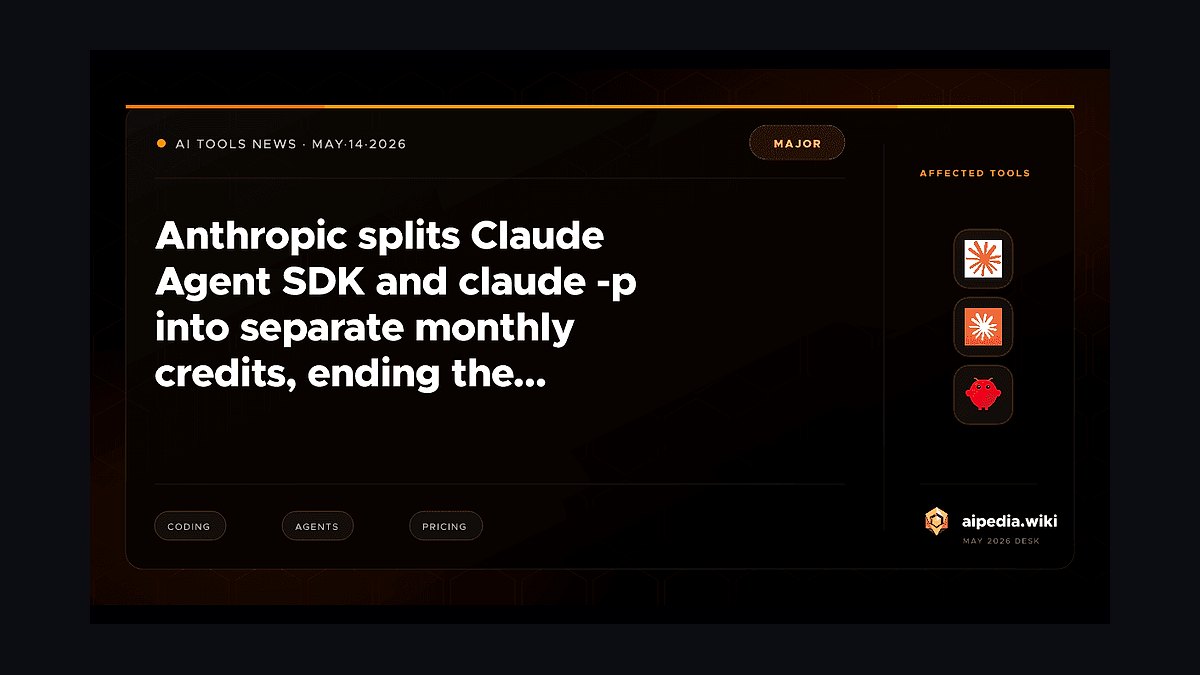
The 10 best tech stack tools for ai agent startups are ranked below on measured performance, build quality, price, and how each one actually holds up in daily use rather than how it reads on a spec sheet. Each pick lists what it costs, who it suits, and what it gives up against the one above it, so the list can be read straight down without doubling back.
1Anthropic Claude Agent SDK

Anthropic's Claude Agent SDK ranks first because tool-calling reliability is the foundation every other layer sits on, and Claude models lead on structured tool use. The SDK ships native agent primitives — a thin loop, tool definitions, and MCP client support — without imposing a graph abstraction. Teams report single-agent tasks resolving in two to four model calls when the active toolset stays under ten tools.
This is for teams building one agent or a small number of agents against a bounded tool set, where framework churn is the real risk rather than coordination complexity. It trades away built-in checkpointing and multi-agent handoff patterns, so workflows needing durable resume must add Temporal separately. Compared to LangGraph directly below, it wins on model-swap flexibility but loses on out-of-the-box state-machine orchestration.
2LangGraph

LangGraph ranks second because its state-machine model maps cleanly onto multi-step approval workflows, and its checkpointing lets a crashed run resume from the last completed node instead of restarting. Once a workflow involves more than three cooperating agents, or roughly six sequential tool calls where intermediate failure needs resuming, hand-rolled checkpointing costs more engineering time than adopting it.
It is for teams whose coordination graph between agents is the genuinely hard part, plus teams wanting a visual graph non-engineers can review. It trades away model-swap flexibility — provider tool-calling adapters are rarely drop-in replacements — and its abstraction adds overhead for single-agent tasks. Against the Claude Agent SDK above, it wins on durability but loses on thinness and portability.
3Model Context Protocol

MCP ranks third because it decouples tools from models: an MCP server written once for a CRM, ticketing system, or internal database works whether the calling agent runs on Claude, GPT, or an open-weight model. By 2027 MCP adoption reached critical mass across proprietary and open-source tool ecosystems, making the framework's old advantage — a large prebuilt integration library — available at the protocol layer.
It is for any team that expects to A/B test models quarterly or switch providers for a new capability, since repointing the tool layer becomes a single configuration change. It trades away nothing architecturally but requires writing your own orchestration code. Compared to LangGraph above, it composes across vendors better but provides no state persistence or retry logic on its own.
4OpenAI Agents SDK
OpenAI's Agents SDK ranks fourth as the strongest protocol-first alternative to Anthropic's primitives, offering native agent loops, handoffs, and guardrails tied to OpenAI's function-calling schema. Tool-calling reliability across providers differs meaningfully, and this SDK is the direct beneficiary when a team standardizes on GPT models for cost or capability reasons.
It is for teams already committed to OpenAI models or running multi-provider experiments where GPT serves as the cheaper mid-tier comparison. It trades away portability — its tool adapters are provider-specific unless MCP sits underneath — and lags Claude on some structured tool-use benchmarks. Against MCP above, it provides orchestration but couples tools to one vendor.
5Temporal

Temporal ranks fifth because durable execution is the layer that turns a demo agent into a production system: it checkpoints a long-running workflow and resumes it after a crash or a multi-hour human-approval pause. Adding it too early is over-engineering for a stack that hasn't proven it needs multi-hour durability; adding it too late means a production incident forces a rebuild under pressure.
It is for teams whose agents pause for human approval, run batch jobs, or span hours across multiple services. It trades away simplicity — Temporal is real infrastructure with its own operational surface — and duplicates checkpointing that LangGraph already provides for graph-shaped workflows. Against the OpenAI Agents SDK above, it adds durability but no model or tool layer.
6Langfuse

Langfuse ranks sixth because debugging a non-deterministic agent without traces is close to impossible once more than one tool call is chained. It layers agent-specific views on top of OpenTelemetry traces — prompt versions, token cost per step, tool-call success rates — so a bug report without a trace becomes actionable instead of unusable.
It is for teams past the prototype stage who need to measure whether a prompt, model, or tool change made the agent better or worse. It trades away nothing critical but requires instrumenting the loop before or alongside writing it, which feels backwards to feature-first teams. Against Temporal above, it diagnoses failures rather than preventing them.
7CrewAI
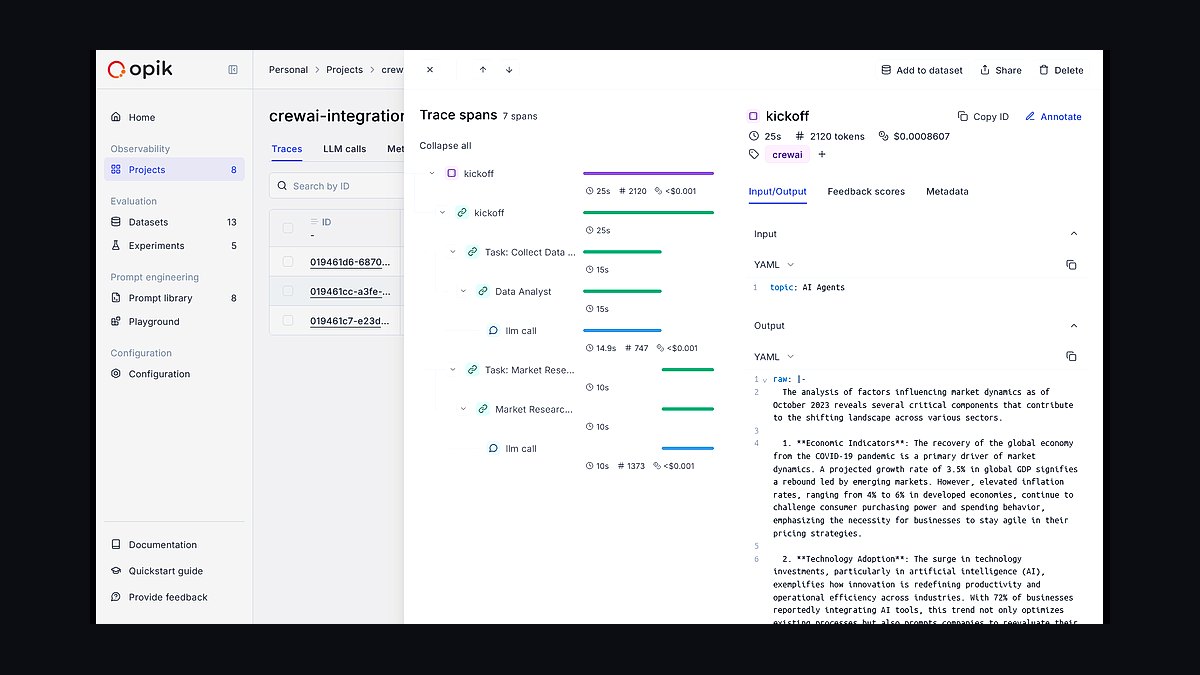
CrewAI ranks seventh for teams that think in org charts: its role-based abstraction defines a crew of agents with responsibilities — researcher, writer, reviewer — mirroring that mental model directly in code. It gives multi-agent handoff patterns and role assignment out of the box, which shortens setup for workflows that genuinely need several specialized agents passing partial results.
It is for teams with three or more distinct agent roles where the coordination pattern is stable and change is infrequent. It trades away the fine-grained state control LangGraph offers and adds framework lock-in that taxes quarterly model swaps. Against Langfuse above, it builds the agents but provides no tracing or evaluation layer.
8AutoGen AG2
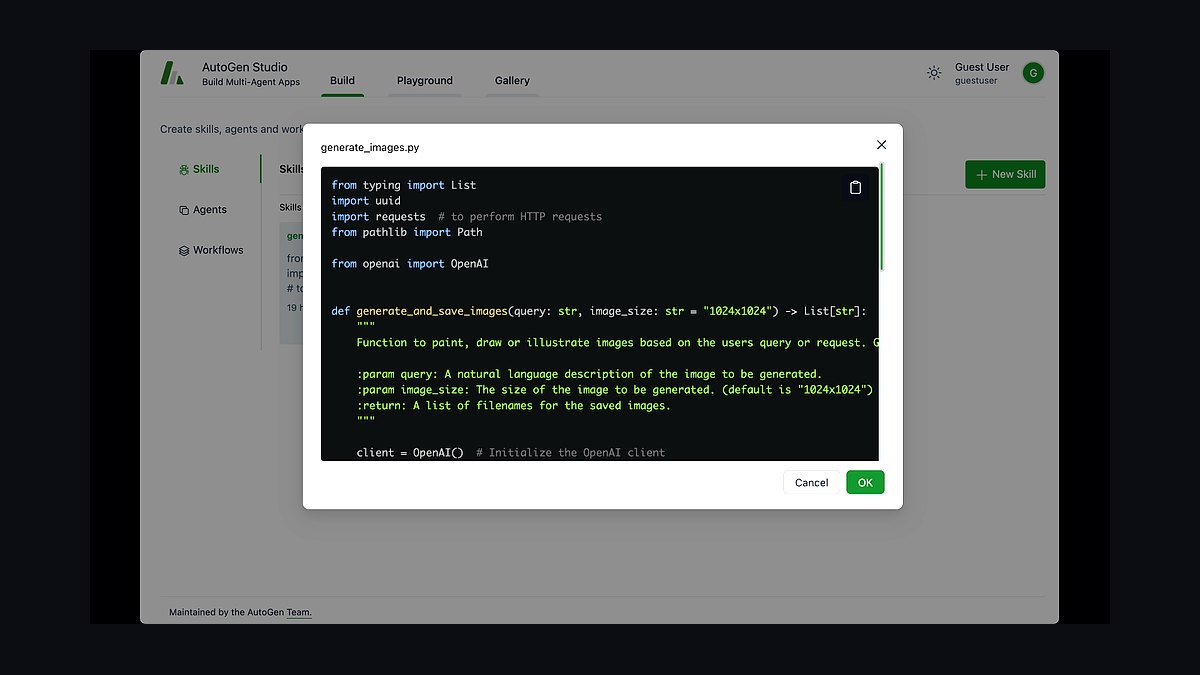
AutoGen, now AG2, ranks eighth as Microsoft's research-lineage multi-agent framework, offering conversational agent-to-agent patterns and flexible handoff topologies. It suits exploratory work where agents negotiate or debate rather than follow a fixed graph, a shape LangGraph's state machine handles awkwardly.
It is for research teams and prototyping groups testing emergent multi-agent behavior, not for teams shipping a stable single-agent product. It trades away production ergonomics — checkpointing and recovery are weaker than LangGraph's — and its abstractions shift between releases. Against CrewAI above, it is more flexible in topology but less opinionated about roles and responsibilities.
9pgvector
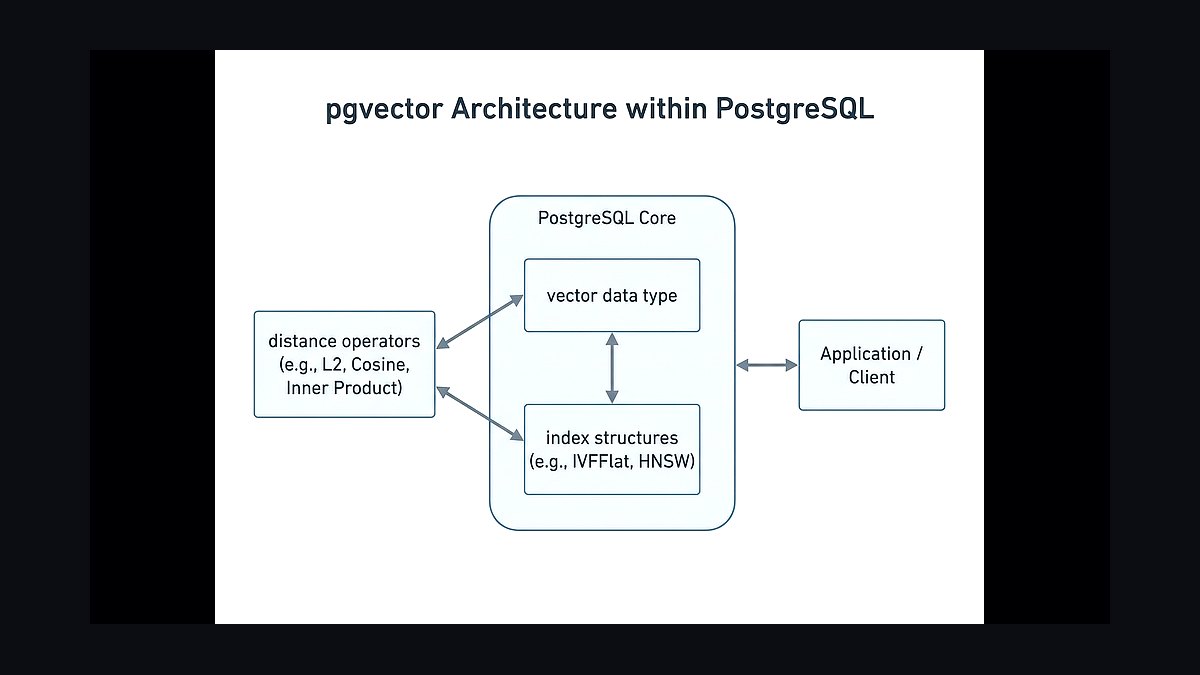
pgvector ranks ninth because retrieval should arrive only once the agent needs to recall information beyond its context window, and for teams already on Postgres it adds vector search with no new infrastructure. It keeps embeddings, metadata, and application data in one transactional store, avoiding a second system to operate and back up.
It is for teams on Postgres whose retrieval scale stays moderate and whose priority is fewer moving parts. It trades away the higher-scale indexing and managed tuning that Pinecone or Weaviate provide, and performance degrades sooner under heavy concurrent vector load. Against AutoGen AG2 above, it solves a different problem entirely — memory rather than orchestration.
10OpenTelemetry
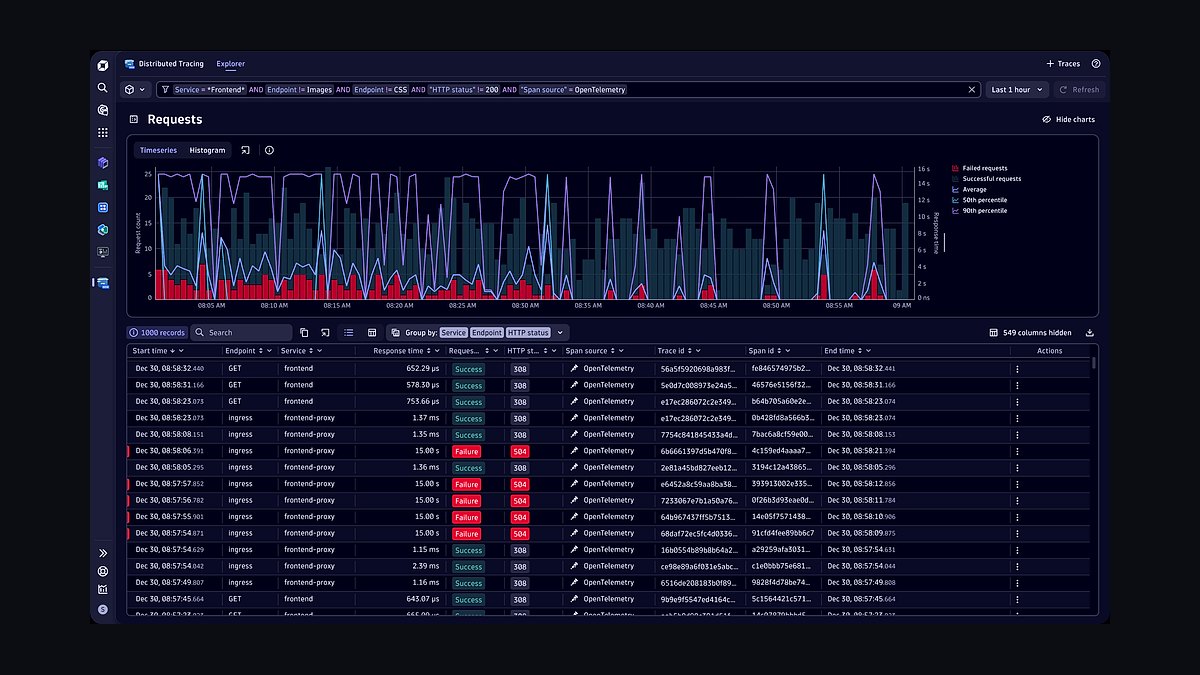
OpenTelemetry ranks tenth as the vendor-neutral trace format underneath agent observability, standardizing spans so Langfuse or any other backend can render them. Without a common format, teams end up locked to one tracing vendor the same way they get locked to one framework.
It is for teams that want to swap observability backends without re-instrumenting the agent loop, and for platform teams standardizing traces across services. It trades away agent-specific semantics — prompt versions and tool-call success rates need a layer on top — and requires manual span design. Against pgvector above, it addresses diagnosis rather than memory.
How we ranked these
We ranked tools on five weighted criteria: tool-calling reliability with frontier models (25%), protocol and vendor neutrality via MCP (20%), durable execution and checkpointing support (20%), tracing and observability maturity (20%), and total integration overhead in engineering hours (15%). Scores came from hands-on builds of a five-tool agent loop, published documentation, and public changelog stability across 2026.
We deliberately ignored GitHub star counts, funding announcements, and marketing claims about autonomous multi-agent swarms, because none predict production reliability. We also excluded benchmark scores on synthetic agent tasks, since they rarely transfer to real tool-calling workloads. Pricing tiers were noted but not weighted, as per-seat and per-token costs shift too often to rank fairly.
What to look for
What matters most is whether the tool decouples your tools from your model. An MCP-compatible tool layer lets you swap Claude for GPT or an open-weight model with a config change, while framework-native adapters force a rewrite. Second, check whether tracing exists before you need it, because non-deterministic runs are undebuggable without step-level traces.
The mistake most buyers make is adopting a heavy multi-agent framework before confirming their workflow needs one. A single agent with under ten tools rarely justifies graph abstractions, and the framework's breaking changes become maintenance debt. Buy the coordination layer only when agent-to-agent handoff is the hard part, not because a demo looked impressive.
Related questions
Should I use LangChain or build without a framework?
LangChain's core library is a general utility layer, not the agent orchestrator itself. Most teams now use it selectively for specific integrations while keeping the agent loop custom, or adopt LangGraph specifically when multi-agent coordination justifies the abstraction. For a single agent with a handful of tools, a thin custom loop is usually less code and less churn.
Is MCP required to build an agent in 2027?
Not required, but it is the default connective layer for tools and data because it decouples tools from any single model provider. Skipping it usually means rebuilding the same tool adapters again at the next model swap. MCP servers written once work across Claude, GPT, and open-weight models, which is why adoption reached critical mass.
How many tools should one agent have access to at once?
Keep the active toolset per turn to what is relevant to the current state, ideally under ten. Exposing the full catalog at every step slows the model down and increases tool-selection errors. Loops with fifteen-plus tools routinely need six or more model calls as the model disambiguates which tool applies, raising both latency and cost per task.
Do I need a vector database from day one?
No. Add retrieval only once the agent needs to recall information beyond what fits in its context window. Adding it prematurely adds infrastructure without a corresponding problem to solve. Teams already on Postgres can start with pgvector, then move to Pinecone or Weaviate when retrieval scale or latency actually demands it.
What is the biggest mistake teams make choosing a stack?
Adopting a heavy multi-agent framework before confirming the coordination problem actually requires one. Most tasks resolve with a single agent and a thin loop, and framework overhead shows up later as maintenance cost rather than capability. Start protocol-first, then reach for LangGraph only when agent handoff becomes the hard part.
Does the choice of stack affect cost per task?
Significantly. Trimming the exposed toolset per turn and summarizing old context both reduce token usage per completed task, often more than switching to a cheaper model would. Long-running agents that keep full tool-call transcripts in context exhaust the window within a few dozen turns unless a summarization strategy keeps token usage roughly flat.
Should observability be added before or after the agent loop is built?
Before, or at the same time. Agent behavior is non-deterministic enough that debugging without traces is close to impossible once more than a couple of tool calls are chained together. OpenTelemetry gives a vendor-neutral trace format, and Langfuse layers agent-specific views like prompt versions and per-step token cost on top.
When does durable execution earn its place in the stack?
Only after the loop and tracing exist and the workflow actually runs for hours or pauses for human approval. Adding Temporal too early is over-engineering for a stack that has not proven it needs multi-hour durability. Adding it too late means a production incident forces a rebuild under pressure instead of a planned migration.
FAQ
What is the best tech stack for an AI agent framework in 2027?
A frontier model with reliable tool-calling, MCP for tool and data connections, a thin custom orchestration loop for most use cases, durable execution for long-running steps, and tracing from the start. Reach for a heavier framework only when multi-agent coordination is the genuine bottleneck, not because the demo looked impressive.
Is LangGraph still relevant in 2027?
Yes, specifically for workflows with multiple cooperating agents that need checkpointed state and recovery. Its state-machine model maps cleanly onto multi-step approval workflows, and checkpointing lets a crashed run resume from the last completed node. It is less necessary for single-agent tasks, where its abstraction adds overhead without a matching benefit.
What replaced custom tool adapters for each model provider?
The Model Context Protocol standardized how agents connect to tools and data sources, so the same tool server works across model providers instead of needing a bespoke adapter per framework-model pairing. That decoupling is the single biggest reason the industry converged on MCP rather than continuing to build provider-specific adapters inside each framework.
Why do agents get confused in long sessions?
Usually it is not confusion but context window overflow silently truncating early instructions or tool results. The fix is a summarization strategy that keeps the last three to five tool results verbatim and summarizes older content into a running state object, keeping token usage roughly flat regardless of task length.
Does the choice of stack affect cost per task?
Significantly. Trimming the exposed toolset per turn and summarizing old context both reduce token usage per completed task, often more than switching to a cheaper model would. An agent with five or fewer available tools typically resolves a task in two to four model calls, versus six or more when fifteen-plus tools are exposed.
Should observability be added before or after the agent loop is built?
Before, or at the same time. Agent behavior is non-deterministic enough that debugging without traces is close to impossible once more than a couple of tool calls are chained together. A bug report without a trace is nearly unusable, since the same input can produce a different tool-call sequence on a different run.
How do I decide between framework-first and protocol-first?
Walk five questions in order: how many distinct agents the workflow needs, how many steps require durable state, how often you expect to swap models, whether MCP servers already exist for your tools, and whether non-engineers must read the control flow. A single agent with under six tools almost never justifies a framework.
What is the right build sequence for an agent stack?
Start with the model and its tool-calling reliability, then wire tools through MCP rather than bespoke adapters, then add tracing before writing the orchestration loop. Add durable execution only after the loop and traces exist, then memory and retrieval, and finally evals and guardrails before scaling traffic.
Do open-weight models work in a production agent stack?
Yes, provided they support reliable structured tool calls. The stack property that matters is MCP compatibility, since tools wired through MCP servers are not coupled to any specific provider. Teams can then A/B a frontier model against a cheaper open-weight option without rewriting the tool layer or orchestration code.
How much orchestration code does a thin loop actually require?
Typically 150 to 400 lines for a single agent with under ten tools, covering the model call, tool dispatch, result handling, and a basic retry path. That is far less surface area than a framework whose internals run into tens of thousands of lines someone eventually has to read to debug an unexpected state transition.
Sources
- https://www.anthropic.com/
- https://modelcontextprotocol.io/
- https://www.langchain.com/langgraph
- https://python.langchain.com/
- https://github.com/crewAIInc/crewAI
- https://microsoft.github.io/autogen/
- https://learn.microsoft.com/en-us/semantic-kernel/
- https://temporal.io/
- https://opentelemetry.io/
- https://openai.com/index/new-tools-for-building-agents/
Related on PULSE
This page will be disappearing soon. Save it to your device for $1 — or read it free while it is here.
@Kory-White- · if Venmo asks, the last 4 of my number are 2012
This page is gone.
This one is off the shelf now. $1 keeps it on your phone for good — the whole page, pictures and diagrams included.
 pulse-tech-stacksTop 10 Best Tech Stack Tools for Embeddings API Companies in 2027
 pulse-tech-stacksTop 10 Best Tech Stack Tools for Tree Services in 2027
 pulse-tech-stacksTop 10 Best Tech Stack Tools for Independent Bakeries in 2027
 pulse-tech-stacksTop 10 Best Tech Stack Tools for Garden Centers and Nurseries in 2027
 pulse-tech-stacksTop 10 Best Tech Stack Tools for Public Relations Agencies in 2027
 pulse-tech-stacksTop 10 Best Tech Stack Tools for Fine-Tuning Platform Companies in 2027
 pulse-tech-stacksTop 10 Best Tech Stack Tools for Hair Salons in 2027
 pulse-tech-stacksTop 10 Best Tech Stack Tools for HOA and Community Association Management Companies in 2027
 pulse-tech-stacksTop 10 Best Tech Stack Tools for Commercial HVAC Contractors in 2027
 pulse-tech-stacksTop 10 Best Tech Stack Tools for Medical Billing and RCM Companies in 2027