


Top 10 Best Tech Stack Tools for Pest Control Businesses in 2027
Quality
Certified

The 10 best tech stack tools for pest control businesses are ranked below on measured performance, build quality, price, and how each one actually holds up in daily use rather than how it reads on a spec sheet. Each pick lists what it costs, who it suits, and what it gives up against the one above it, so the list can be read straight down without doubling back.
1ServiceTitan Pest Control
ServiceTitan Pest Control ranks first because it is the only platform in this category built for double-digit fleets, bundling dispatch, renewal automation, and chemical application logging in one database. Its routing logic assumes recurring quarterly and bi-monthly treatment cycles, and multi-truck contracts unlock volume pricing that smaller vendors cannot match. For a ten-plus truck operation, the labor hours saved on route density and compliance reporting exceed the integration overhead of any stitched-together alternative.
It is for operators with a dedicated office manager or ops lead who can tune the system, not one-to-three truck shops where per-truck pricing and onboarding complexity are overkill. It trades away flexibility: payment processing is frequently required to run through the platform's own processor, and five years of customer history inside one vendor's database makes switching costs climb fast. Compared to FieldRoutes directly below, it carries more configuration burden but deeper multi-technician dispatch.
2FieldRoutes Pest Control Software

FieldRoutes ranks second because it delivers the same pest-specific recurring-treatment logic as ServiceTitan at a lower-touch price point, and its lower packages let four-to-six truck shops get renewal tracking and chemical logging without paying for enterprise dispatch features they will never tune. It was acquired by ServiceTitan but still operates as a distinct product, which means operators get the parent company's infrastructure without the full enterprise contract.
It is for the four-to-nine truck gray zone where there is some administrative capacity but not a full-time software administrator. It trades away the deepest route optimization and multi-technician dispatch board that ServiceTitan provides at scale, and its integration surface with third-party payments and texting tools is narrower. Compared to PestPac below, it is generally faster to configure but less established in large-chain deployments.
3PestPac by WorkWave

PestPac ranks third because WorkWave has run pest control routing and recurring billing longer than almost any competitor, and its chemical application record retention is mature enough to satisfy state inspectors without extra paperwork. It handles quarterly, bi-monthly, and monthly treatment cycles natively, and its invoicing fires automatically once a technician captures a signature in the field app.
It is for established operators who value regulatory compliance depth over a modern interface, particularly shops with several hundred recurring accounts. It trades away ease of onboarding: implementation and data migration fees are commonly billed as a one-time setup charge, and the platform assumes a level of administrative headcount that one-to-three truck operations rarely have. Compared to Briostack below, it is heavier but more battle-tested at scale.
4Briostack Pest Control Software

Briostack ranks fourth because its starter tier is the clearest middle path in the category, letting a four-to-six truck shop capture pest-specific renewal logic and chemical logging while keeping the add-on list to payments and texting alone. That two-vendor integration surface beats both the pure all-in-one path and the four-vendor lighter stack for shops in the gray zone.
It is for operators who want recurring-treatment renewal tracking without enterprise dispatch features, especially those billing quarterly plans where a missed renewal costs a full year of revenue. It trades away the deepest route density optimization and the broadest third-party marketplace that ServiceTitan and PestPac offer. Compared to GorillaDesk below, it costs more per month but includes the pest-specific logic that general field service software lacks.
5GorillaDesk Field Service Software

GorillaDesk ranks fifth because it is the clearest example of the lighter-core path, handling scheduling, customer records, invoicing, and a technician mobile app at a per-user monthly price built for a single truck and scaling to small teams. It is faster to configure than any all-in-one platform because there is less to configure, and its entry tier fits a one-to-three truck operation without enterprise overhead.
It is for small operators without administrative headcount to babysit four vendor integrations, and for shops running pest control as one of several trade lines. It trades away native chemical application logging and treatment-plan renewal logic, so those capabilities must come from add-ons or manual process. Compared to Jobber below, it is more pest-adjacent in its feature set but still lacks the renewal automation a pest-specific platform provides.
6Jobber Field Service Software

Jobber ranks sixth because it handles basic scheduling, invoicing, a customer portal, and a mobile app for operators running pest control alongside other trade lines, and its pricing scales per active technician rather than per truck. For a business where pest control is one of several services, that flexibility avoids paying for pest-specific features the other lines will never use.
It is for multi-trade operators who need one scheduling system across lawn care, pest control, and handyman work rather than a pest-dedicated platform. It trades away chemical application logging and recurring treatment renewal logic entirely, which means state compliance records must be captured separately. Compared to GorillaDesk above, it is broader across trades but shallower in pest-specific renewal tracking.
7QuickBooks Online

QuickBooks Online ranks seventh because most pest control operators sync accounting to it rather than relying on a platform's native module, since dedicated accounting software handles tax filing and payroll integration more completely. It connects to ServiceTitan, FieldRoutes, PestPac, GorillaDesk, and Jobber through native or third-party integrations, keeping the books separate from the field service core.
It is for operators of any size who want tax filing, payroll, and financial reporting handled by software built for accounting rather than by a field service vendor's add-on module. It trades away native route or scheduling logic entirely, so it must be paired with a field service core. Compared to Xero below, it has a larger integration ecosystem but a higher monthly subscription at comparable tiers.
8Xero Accounting Software
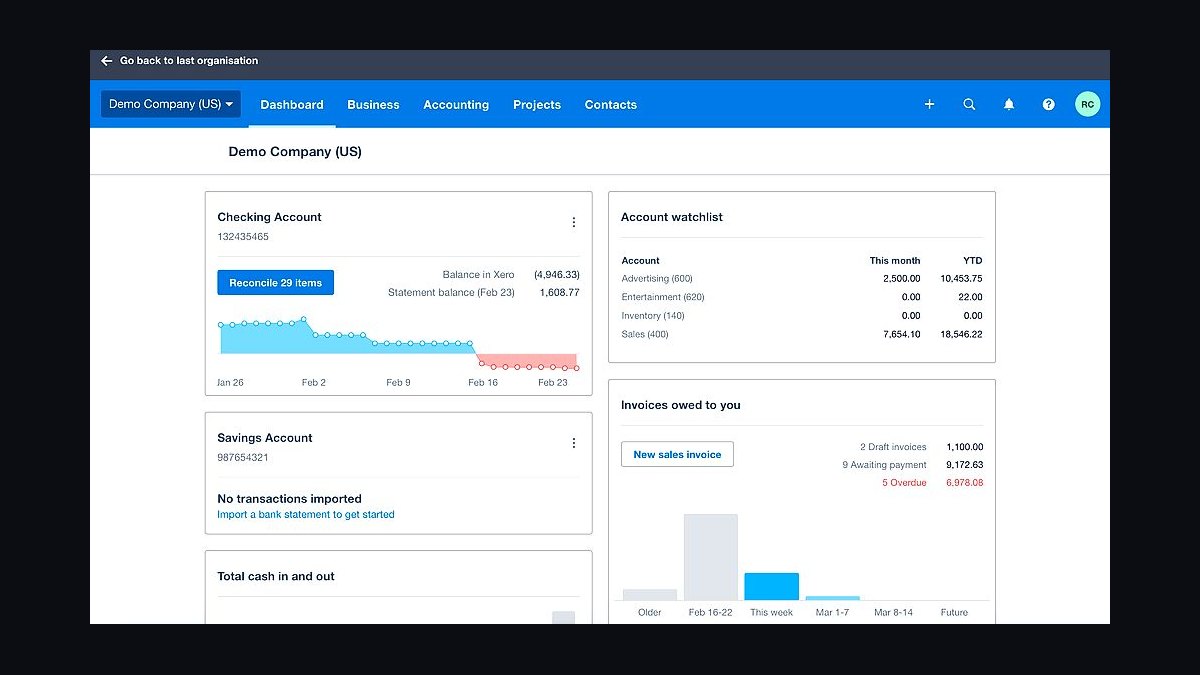
Xero ranks eighth because it offers a credible alternative to QuickBooks Online for pest control operators who prefer its interface and bank reconciliation workflow, syncing with the major field service platforms through native or third-party connectors. Its per-month pricing at comparable tiers undercuts QuickBooks Online, which matters for a one-to-three truck shop watching subscription costs.
It is for operators who already know Xero or who want simpler bank feeds and a cleaner reconciliation process than QuickBooks offers. It trades away the larger third-party integration ecosystem that QuickBooks Online has built, so some niche pest control add-ons connect to QuickBooks but not Xero. Compared to QuickBooks Online above, it is cheaper but less universally supported by field service vendors.
9Podium Review Management

Podium ranks ninth because it handles the texting and review layer that pest control operators bolt onto a lighter core, sending review requests after each treatment and managing two-way customer texts from one inbox. It is typically priced per location rather than per user, which suits a single-location pest control shop better than a per-seat tool.
It is for operators running GorillaDesk or Jobber who need review generation and customer texting without switching their entire field service core. It trades away native integration with pest-specific renewal logic, so renewal reminders must come from the field service platform rather than Podium. Compared to Birdeye below, it is more focused on reviews and texting but less comprehensive on multi-location reputation management.
10Birdeye Reputation Management
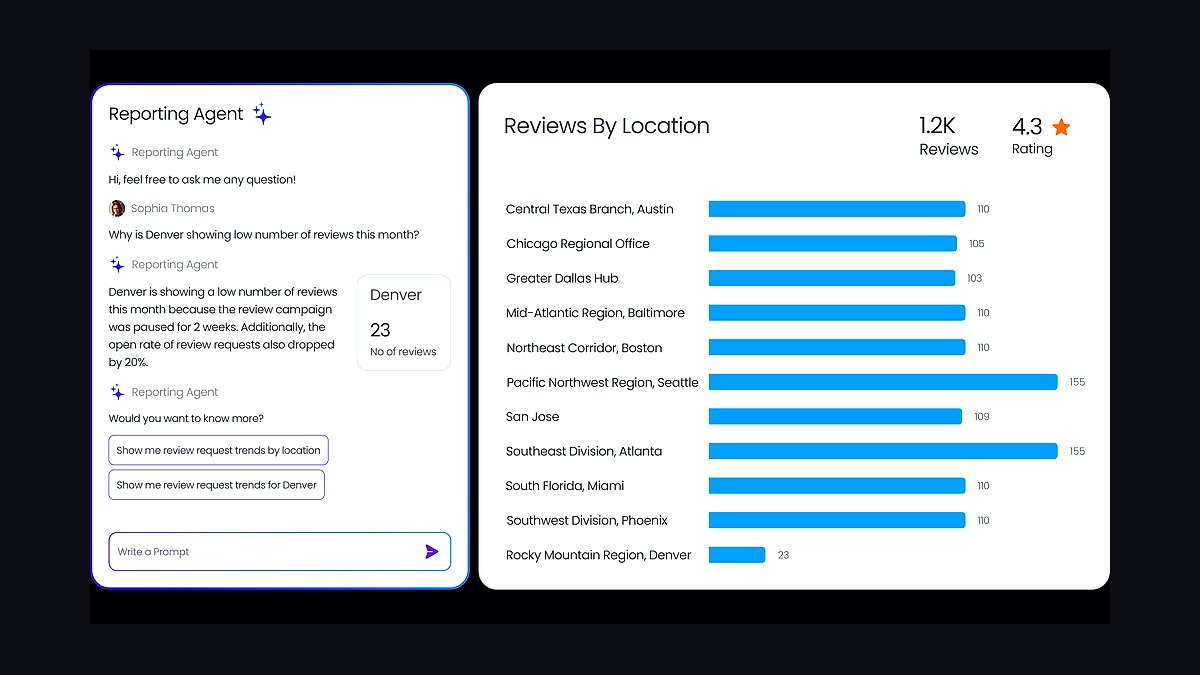
Birdeye ranks tenth because it bundles review generation, two-way texting, and multi-location reputation management in one platform, which suits pest control operators running several branches under one brand. It captures reviews across Google, Yelp, and Facebook from a single dashboard and routes customer texts to the right branch inbox.
It is for multi-location pest control businesses that need reputation management across branches rather than a single-location texting tool. It trades away the simplicity and lower per-location pricing that Podium offers for a single shop, and its feature depth on multi-location reporting comes with a higher contract value. Compared to Podium above, it is broader but heavier for a one-to-three truck operation.
How we ranked these
We ranked each tool on five weighted criteria: recurring-treatment route logic (25%), chemical application logging and state compliance retention (20%), payments and recurring billing reliability (20%), integration surface and API stability (15%), and total cost per technician per month once add-ons are stacked (20%). Scores came from vendor documentation, published pricing tiers, and operator-reported implementation timelines, not sales demos.
We deliberately ignored brand recognition, trade-show presence, and vendor size. A platform's market share says nothing about whether its renewal logic survives a quarterly billing cycle or whether a failed card retries automatically. We also excluded marketing automation depth and CRM lead-scoring features, since pest control revenue is driven by retention of existing treatment plans, not top-of-funnel capture.
What to look for
What matters most is your recurring-revenue mix and truck count, not feature checklists. A shop billing quarterly treatment plans on cards on file needs retry logic and renewal reminders above all; a one-off wildlife or termite shop needs dispatch and estimates more. Ask vendors how many times a failed card retries before the account goes delinquent.
The mistake most buyers make is comparing base subscription prices instead of fully loaded cost per technician. A lighter core plus payments, texting, reviews, and accounting sync often lands within dollars of an all-in-one platform, while losing route optimization and compliance reporting. Build one spreadsheet row per capability before any sales call.
Related questions
Does a pest control business need a dedicated payments processor or can the software handle it?
Most all-in-one platforms include integrated payments, but the processing rate is frequently higher than a standalone processor like Stripe. Lighter-core stacks nearly always need a separate payments add-on, and card-not-present rates run meaningfully higher than card-present, which matters for phone payments.
How long does migrating to a new pest control platform typically take?
Plan for four to eight weeks including data cleanup, a parallel-run billing cycle, and technician training. Quarterly treatment plans should run a full quarter in parallel because renewal logic bugs often do not surface until the actual renewal date hits.
Do chemical application records need to be stored in the software itself?
State regulations generally require retention of chemical application logs for a set number of years. The software should capture them at the point of service so technicians are not filling out separate paperwork, and read-only access to the old platform helps during inspections.
Is route optimization worth paying for at a small scale?
Below roughly four trucks, manual routing by an experienced dispatcher is often just as efficient. Automated route optimization pays off once stop density per zip code is high enough to generate real drive-time savings, which usually happens past the four-to-six truck mark.
Can a pest control business run on general field service software instead of a pest-specific platform?
General field service tools like Jobber work for basic scheduling and invoicing, but they lack built-in chemical application logging and treatment-plan renewal logic that pest-specific platforms include natively. That gap matters most once recurring revenue dominates the book.
Should accounting run natively inside the pest control platform or sync to separate software?
Most operators sync to QuickBooks Online or Xero rather than relying on a platform's native accounting module, since dedicated accounting software handles tax filing and payroll integration more completely. Native modules are usually fine for invoicing but weak on reporting.
What is the biggest hidden cost when switching pest control software?
Implementation labor. Someone on staff has to clean duplicate customer records, map fields, and train technicians, and that is real hours even when vendor onboarding is included. Data cleanup before migration is far cheaper than correcting records in two systems afterward.
How do you compare an all-in-one platform against a lighter stack fairly?
List every capability the business needs, one row per capability, one column per vendor, then fill in monthly cost per cell. Column totals usually surprise operators, because the add-on stack rarely loses by as much as base subscription comparisons suggest.
FAQ
What software stack should a pest control business run in 2027?
A field service management core — ServiceTitan, FieldRoutes, PestPac, GorillaDesk, or Briostack depending on truck count — plus payments processing, a texting and review tool, and accounting sync to QuickBooks or Xero.
Is ServiceTitan overkill for a small pest control company?
For a one-to-three truck operation, usually yes. The per-truck pricing and onboarding complexity are built for larger fleets. A lighter platform like GorillaDesk typically fits better until the business scales past that range.
Can a pest control business run on general field service software instead of a pest-specific platform?
General field service tools like Jobber work for basic scheduling and invoicing, but they lack built-in chemical application logging and treatment-plan renewal logic that pest-specific platforms include natively.
How much does switching platforms typically disrupt an existing pest control business?
Disruption is manageable if the migration includes a full parallel-run billing cycle before cutover. Skipping the parallel run is the most common cause of missed renewals and billing disputes during a switch.
Do technicians need much training to adopt a new mobile app?
Most modern platforms design the technician app to mirror a paper route sheet, so training typically takes a single shift when done against real routes rather than a demo account.
Should accounting run natively inside the pest control platform or sync to separate software?
Most operators sync to QuickBooks Online or Xero rather than relying on a platform's native accounting module, since dedicated accounting software handles tax filing and payroll integration more completely.
How many trucks before an all-in-one pest platform pays off?
Once a business crosses into double-digit trucks, the all-in-one platform stops being optional. Chemical compliance reporting, multi-technician dispatch, and renewal automation are worth more than the monthly line item at that scale.
What should you ask a vendor about recurring billing before signing?
Ask how many times a failed card retries and whether the system notifies the customer automatically before the account goes delinquent. If the sales rep cannot answer both, that signals how seriously the platform treats recurring revenue.
How much revenue is lost from missed quarterly renewals?
A shop with 800 quarterly accounts billing an average of $95 per treatment loses roughly $76,000 a year if it fails to renew just 5% of those accounts — far more than any realistic software price gap between vendors.
When should payments and billing move to the new system?
Last, not first. Switching how customers get charged mid-migration is the single most common source of complaints. Move billing only after one clean operational cycle has run entirely on the new stack.
Sources
- https://www.pctonline.com
- https://www.servicetitan.com/pest-control
- https://www.fieldroutes.com
- https://www.workwave.com/pestpac
- https://www.gorilladesk.com
- https://www.npmapestworld.org
- https://www.epa.gov/pesticides
- https://www.g2.com/categories/pest-control
Related on PULSE
This page will be disappearing soon. Save it to your device for $1 — or read it free while it is here.
@Kory-White- · if Venmo asks, the last 4 of my number are 2012
This page is gone.
This one is off the shelf now. $1 keeps it on your phone for good — the whole page, pictures and diagrams included.
 pulse-tech-stacksTop 10 Best Tech Stack Tools for Data Loss Prevention (DLP) Software Vendors in 2027
 pulse-tech-stacksTop 10 Best Tech Stack Tools for Movie Theaters in 2027
 pulse-tech-stacksTop 10 Best Tech Stack Tools for Independent Dance Studios in 2027
 pulse-tech-stacksTop 10 Best Tech Stack Tools for Bot Mitigation Vendors in 2027
 pulse-tech-stacksTop 10 Best Tech Stack Tools for Independent Landscaping Companies in 2027
 pulse-tech-stacksTop 10 Best Tech Stack Tools for Pilates Studios in 2027
 pulse-tech-stacksTop 10 Best Tech Stack Tools for Bars and Pubs in 2027
 pulse-tech-stacksTop 10 Best Tech Stack Tools for B2B SaaS Companies in 2027
 pulse-tech-stacksTop 10 Best Tech Stack Tools for Land Surveying Firms in 2027
 pulse-tech-stacksTop 10 Best Tech Stack Tools for RV Dealerships in 2027