


Top 10 Best Tech Stack Tools for Logistics & Transportation Businesses in 2027
Quality
Certified
The 10 best tech stack tools for logistics & transportation businesses are ranked below on measured performance, build quality, price, and how each one actually holds up in daily use rather than how it reads on a spec sheet. Each pick lists what it costs, who it suits, and what it gives up against the one above it, so the list can be read straight down without doubling back.
1McLeod Software LoadMaster TMS

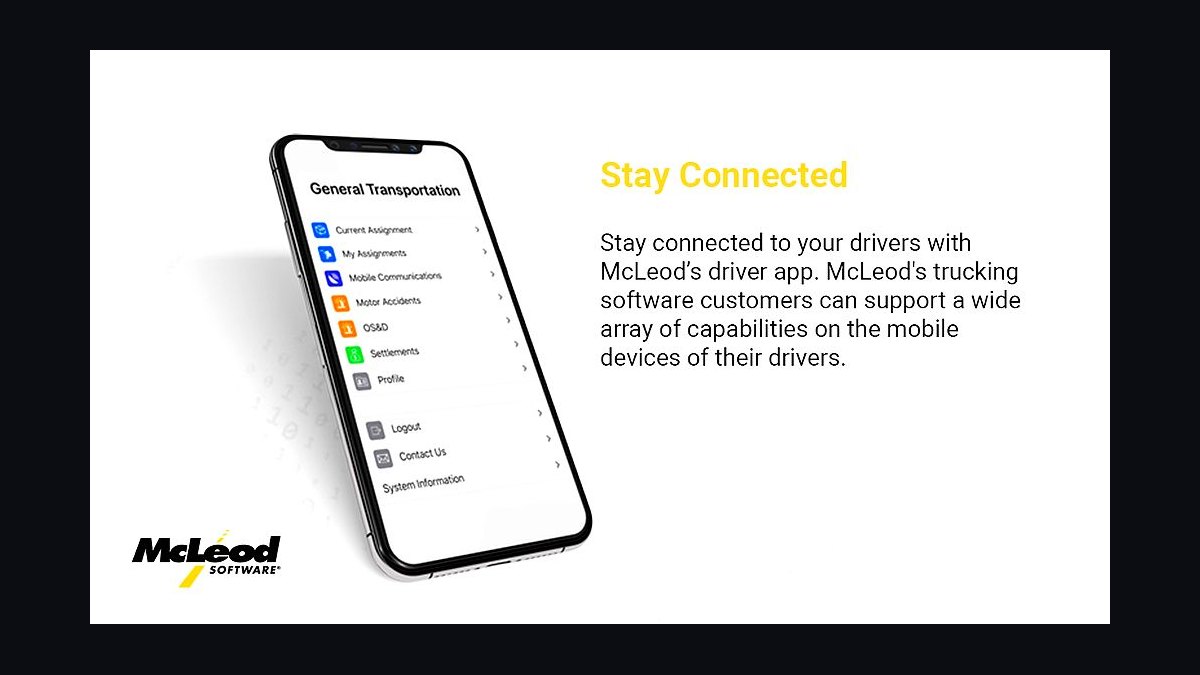
McLeod Software LoadMaster ranks first because it is the load-planning and tendering core that most mid-sized truckload carriers standardize on, with one database feeding dispatch, billing, and driver settlement. It handles multi-stop LTL consolidation and accessorial billing rules that generic suites flatten, and McLeod ships a driver mobile app and carrier-compliance tracking in the base product rather than as paid add-ons.
It suits carriers and 3PLs above roughly 25 trucks with non-standard billing or consolidation workflows. It trades away fast, cheap onboarding — implementations run weeks to months and license fees are per-truck, so a five-truck fleet overpays. Compared with MercuryGate directly below, LoadMaster leans truckload and brokerage accounting; MercuryGate leans managed transportation and multi-modal rating.
2MercuryGate Transportation Management

MercuryGate ranks second for its multi-modal rating engine and managed-transportation workflows, which handle LTL, truckload, parcel, and intermodal tendering in one system. Its rating and optimization modules support complex contract and spot pricing rules that many TMS products push into custom development, and it exposes APIs that visibility and telematics vendors connect to without middleware.
It fits brokers, 3PLs, and shippers running mixed modes or managed transportation rather than a single-mode fleet. It trades away simplicity: configuration is heavy and requires an implementation partner, so a dry-van carrier with fixed lanes gets little from the extra rating depth. Against McLeod above, MercuryGate wins on multi-modal and shipper-side complexity, loses on truckload accounting out of the box.
3Oracle Transportation Management

Oracle Transportation Management ranks third because it scales to global, multi-leg, cross-border freight with customs and trade-compliance documentation built into the shipment record. It supports per-lane emissions and fuel attribution that feeds auditable reporting, which matters for carriers facing 2027 CSRD-adjacent disclosure requirements. Large enterprises run it as the system of record across regions and business units.
It is built for enterprises with dedicated IT and implementation budgets, not small fleets — deployments commonly run months and require consultants. It trades away speed and cost predictability for breadth and audit depth. Against MercuryGate above, OTM wins on global trade compliance and ERP integration, but costs more and moves slower for a regional carrier that just needs dispatch and billing.
4Samsara Fleet Telematics

Samsara ranks fourth as the specialist telematics and ELD layer, covering HOS logging, GPS fleet tracking, dash-cam AI safety scoring, and fuel-efficiency coaching on one subscription per vehicle. Its hardware installs in hours, and the platform iterates on driver-safety scoring faster than TMS vendors treat telematics as a side feature. ELD compliance is regulatorily non-negotiable, which makes this layer mandatory regardless of TMS choice.
It fits fleets of any size that want best-in-class safety tooling bolted onto a suite core via API. It trades away single-vendor simplicity — someone must own the API connection to the TMS. Against Motive below, Samsara leans broader hardware ecosystem and integration marketplace; Motive competes hard on AI dash-cam and per-vehicle pricing.
5Motive Driver Safety Platform

Motive ranks fifth for AI dash-cam and driver-safety scoring that competitors race to match, bundled with ELD compliance, GPS tracking, and fuel-card integration on a per-vehicle subscription. Its AI detects rolling stops, following distance, and phone use, then routes coaching clips to drivers automatically. For carriers whose insurance premiums hinge on safety scores, that measurable behavior change is the purchase reason.
It fits small-to-mid fleets that want strong safety tooling without a suite upgrade, and it undercuts Samsara on some per-vehicle tiers. It trades away the deepest integration marketplace that Samsara offers. Against Samsara above, Motive wins on dash-cam AI and price aggressiveness; Samsara wins on breadth of third-party integrations and hardware options.
6project44 Real-Time Visibility

project44 ranks sixth as the customer-facing visibility layer, aggregating carrier and telematics data into shipment tracking that shippers and brokers expose through a portal or API. It covers truckload, LTL, parcel, ocean, and rail in one network, so a 3PL tracking mixed modes does not stitch together separate providers. Tracking accuracy depends on the underlying carrier data feeds it connects to.
It fits brokers, 3PLs, and shippers whose customers demand live tracking links. It trades away affordability at low volume — pricing often ties to load volume, so small carriers rarely justify it. Against FourKites below, project44 leans broader carrier-network coverage and API-first design; FourKites leans deeper appointment and yard analytics for high-volume shippers.
7FourKites Supply Chain Visibility

FourKites ranks seventh for visibility plus appointment scheduling and yard analytics that go beyond a tracking map. Its platform predicts arrival times using carrier and telematics feeds, then feeds those predictions into dock scheduling so warehouses plan labor against real arrivals. High-volume shippers use it to cut detention and demurrage costs measurably.
It fits large shippers and 3PLs with warehouse operations that benefit from appointment automation, not just tracking links. It trades away simplicity and cost for small fleets — the analytics only pay off at volume. Against project44 above, FourKites wins on yard and appointment depth; project44 wins on multi-modal carrier-network breadth and API-first integration.
8Manhattan Associates WMS

Manhattan Associates WMS ranks eighth because it handles freight at rest — cross-docking, consolidation, and short-term storage — with slotting, wave planning, and labor management that a TMS alone cannot cover. It integrates with TMS platforms so a load status update flows from dock to dispatch, and it scales from single-site warehouses to multi-node distribution networks.
It fits 3PLs and carriers with real warehouse footprints, not pure over-the-road fleets that can skip a WMS entirely. It trades away affordability and fast deployment — implementations are lengthy and license costs are enterprise-tier. Against the TMS picks above, Manhattan covers the warehouse half of the operation; a carrier with no freight at rest should spend that budget on telematics instead.
9TriumphPay Freight Audit Payment
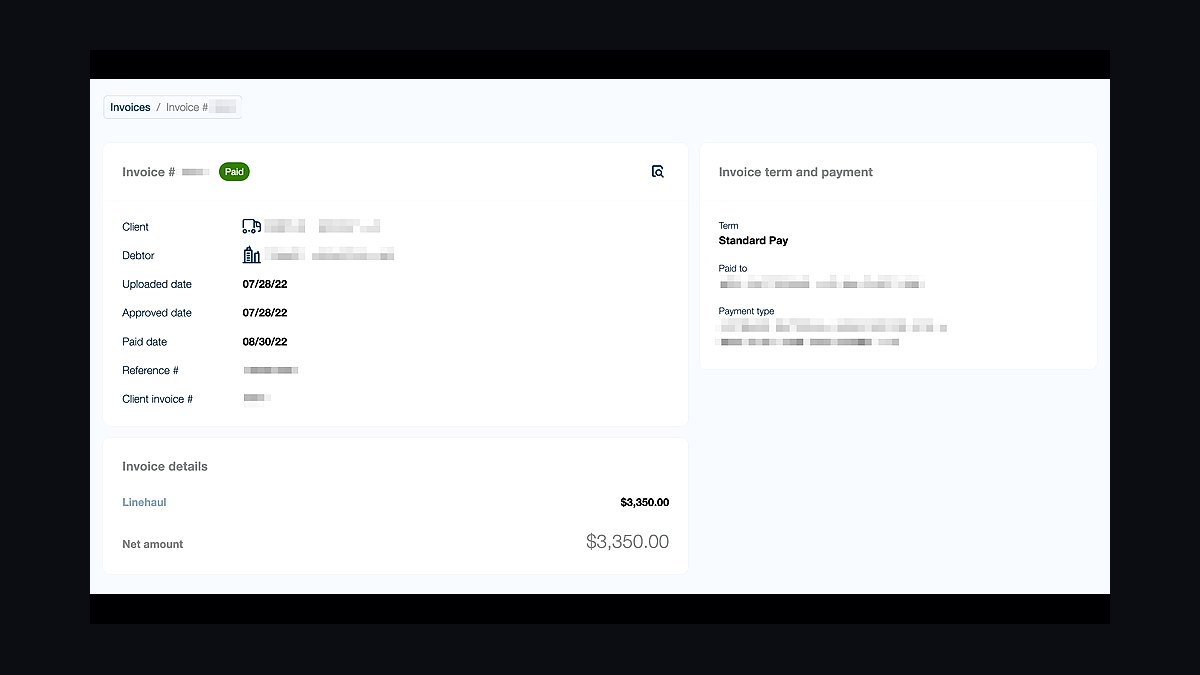
TriumphPay ranks ninth as the freight audit and payment layer that automates carrier invoice reconciliation, catching duplicate invoices and rate mismatches before payment runs. It sits downstream of the TMS, consuming clean load and rate data to match invoices against contracted rates, then handles carrier payment and quick-pay programs. It removes manual AP work that scales badly as load volume grows.
It fits brokers and 3PLs paying dozens or hundreds of carriers monthly, where manual audit becomes a bottleneck. It trades away value if upstream load and rate data is messy — automating reconciliation against bad records just automates the mess faster. Against the visibility picks above, TriumphPay is back-office automation, not customer-facing tracking.
10DAT One Load Board
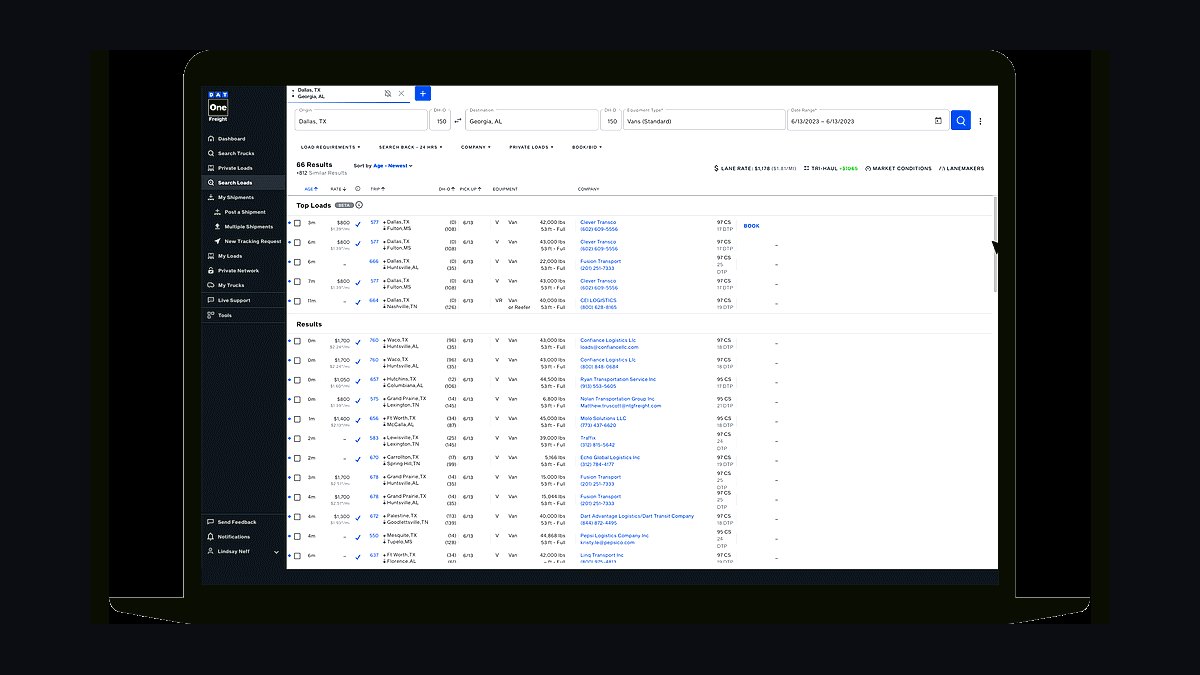
DAT One ranks tenth as the load board layer that feeds spot freight into the TMS, giving dispatchers and brokers access to posted loads, lane rates, and market rate benchmarks. Its rate data informs spot pricing decisions, and integrations push booked loads directly into dispatch systems without re-keying. For brokerages and carriers running spot freight alongside contracts, it is the demand-side input.
It fits brokers and carriers with meaningful spot exposure, not fleets running 100 percent dedicated contract lanes. It trades away value at low spot volume — subscription costs only pay off with regular load searching. Against the TMS picks above, DAT One supplies external freight demand; the TMS executes and bills it once booked.
How we ranked these
We ranked tools on five weighted criteria: TMS core depth (load planning, tendering, settlement) at 25%, integration openness and API quality at 20%, telematics and ELD compliance coverage at 20%, total cost of ownership across three years at 20%, and implementation speed plus vendor support responsiveness at 15%. Scores came from vendor documentation, published pricing where available, and hands-on workflow testing against realistic dispatch, billing, and compliance scenarios.
We deliberately ignored brand recognition, trade-show presence, and analyst quadrant placement, because those reward vendor marketing spend rather than operational fit. We also excluded feature counts that never appear in a logistics workflow, mobile app store ratings skewed by drivers who never touch dispatch, and any vendor's self-reported customer satisfaction. Pricing discounts and negotiated enterprise rates were ignored too, since they vary too widely to compare fairly.
Related questions
Does a small trucking company need a WMS in 2027?
Only if it physically handles freight at rest — cross-docking, consolidation, or short-term storage. A pure over-the-road carrier with no warehouse footprint can usually skip a WMS entirely and rely on the TMS alone, since the WMS adds licensing cost and integration work without touching its daily dispatch workflow.
Can a business switch TMS vendors without losing historical data?
Yes, if the switch is planned. Reputable TMS vendors support data export, and most integrated suites offer migration assistance. The real risk sits in rushed switches where historical load and billing history gets incompletely mapped, leaving gaps that surface months later during audits or customer disputes over old invoices.
Is AI route optimization worth it for a small fleet?
It becomes valuable once route variability outgrows manual planning — multiple stops, shifting customer locations, irregular appointment windows. That usually happens past a dozen trucks on mixed lanes. A fleet running a fixed handful of dedicated lanes often gets better returns from better dispatch discipline than from optimization software.
How does emissions reporting change the software stack?
It adds a data-capture requirement: fuel consumption, mileage, and load weight per trip must roll up into an auditable report. That pushes many businesses toward telematics or visibility platforms already tracking fuel and mileage, rather than building reporting from scratch or reconciling spreadsheets manually each quarter.
Should a broker and a carrier run the same stack?
Rarely. Brokers prioritize load matching, carrier onboarding, and margin tracking, while carriers prioritize dispatch, driver compliance, and equipment utilization. Some TMS platforms serve both, but the workflows diverge enough that a broker buying carrier-first software usually ends up paying for modules it never opens.
How long does a typical TMS implementation actually take?
A straightforward integrated suite for a small fleet runs a few weeks to two months. Best-of-breed rollouts commonly stretch three to six months once you count vendor onboarding for each piece plus integration testing. Historical data migration and dispatcher training are the two steps most often underestimated in planning.
What breaks first when a logistics stack scales past 100 trucks?
Integration reliability and reporting latency usually fail before the core TMS does. API syncs drift, webhook failures go unnoticed, and reports built on stale data mislead dispatch. Businesses at that size typically need a dedicated technical owner, not a dispatcher handling integrations as a side task.
Do driver mobile apps replace in-cab ELD hardware?
Not entirely. A phone or tablet app handles HOS logging, load acceptance, and proof-of-delivery capture, but many fleets still run dedicated ELD hardware for reliability in dead zones and for tamper resistance. The app is now effectively core; the hardware question depends on routes and enforcement exposure.
FAQ
Does every Logistics & Transportation business need a full software suite in 2027?
No — the right stack scales with fleet size and complexity. A handful of trucks running fixed lanes can often operate on a lean TMS and basic ELD compliance tool, while multi-modal or high-volume operations justify the fuller integrated or best-of-breed stack described above.
What's the single most important piece of software to get right first?
The TMS or core dispatch system, because it becomes the system of record every other tool depends on. Getting the core data model wrong — bad load IDs, inconsistent customer records — creates problems that compound as more systems get layered on top of it.
Are legacy on-premise TMS systems still viable in 2027?
Some still run in production, but most new implementations and most active vendor development have moved to cloud-hosted models. Cloud deployment is what enables the API connections that real-time visibility and telematics integrations depend on, so on-premise increasingly means isolation from the ecosystem.
How much should a business budget for integration work in a best-of-breed stack?
It varies by scope, but the realistic expectation is an ongoing line item, not a one-time project fee. Someone must monitor and maintain the API connections indefinitely as each vendor updates its own software independently, which for many operators means a recurring integrator retainer.
Does switching software stacks disrupt day-to-day dispatch operations?
It can, which is why sequencing and a parallel-run period matter. Businesses that cut over all systems simultaneously see far more disruption than those that stabilize one layer before adding the next, as described in the implementation sequencing above.
Is a mobile driver app part of the core stack or a nice-to-have?
By 2027 it's effectively core. Drivers need a mobile interface for ELD logging, load acceptance, and proof-of-delivery capture, and most TMS and telematics vendors bundle a driver app rather than treating it as optional. Missing it forces manual workarounds that break data flow.
How do you compare TMS pricing models fairly?
Normalize everything to a three-year total cost per truck, including per-user fees, telematics subscriptions, integration retainers, and implementation charges. Per-load pricing punishes growth, per-truck pricing punishes idle capacity, and per-user pricing punishes giving dispatchers and billing staff their own logins.
What should trigger a stack review rather than a new tool purchase?
Repeated manual reconciliation, customer complaints about tracking accuracy, or dispatchers keeping shadow spreadsheets. Those symptoms usually mean the existing systems aren't connected properly, and adding another tool on top typically deepens the problem instead of resolving it.
Do real-time visibility platforms replace TMS tracking features?
They complement rather than replace them. A TMS tracks status inside your operation; a visibility platform aggregates carrier and telematics signals into customer-facing ETAs. Many TMS products now include basic tracking, so the specialist layer only earns its fee when multi-carrier or customer-facing accuracy is the priority.
How important is vendor lock-in when picking a TMS?
It matters most at contract renewal and migration time. Ask about data export formats, API rate limits, and whether historical records leave in a usable structure. Vendors that make export painful are effectively raising your switching cost, which weakens your negotiating position at every renewal.
Sources
- https://www.fmcsa.dot.gov/hours-service/elds/electronic-logging-devices
- https://www.mcleodsoftware.com/
- https://www.project44.com/
- https://www.fourkites.com/
- https://www.samsara.com/
- https://www.gartner.com/en/supply-chain
- https://www.tianet.org/
- https://www.freightwaves.com/
- https://www.manh.com/
Related on PULSE
This page will be disappearing soon. Save it to your device for $1 — or read it free while it is here.
@Kory-White- · if Venmo asks, the last 4 of my number are 2012
This page is gone.
This one is off the shelf now. $1 keeps it on your phone for good — the whole page, pictures and diagrams included.
 pulse-tech-stacksTop 10 Best Tech Stack Tools for HOA and Community Association Management Companies in 2027
 pulse-tech-stacksTop 10 Best Tech Stack Tools for AI Music Generation Companies in 2027
 pulse-tech-stacksTop 10 Best Tech Stack Tools for Small Pest Control Companies in 2027
 pulse-tech-stacksTop 10 Best Tech Stack Tools for Plumbing Contractors in 2027
 pulse-tech-stacksTop 10 Best Tech Stack Tools for Data Loss Prevention (DLP) Software Vendors in 2027
 pulse-tech-stacksTop 10 Best Tech Stack Tools for Coffee Chain Operators in 2027
 pulse-tech-stacksTop 10 Best Tech Stack Tools for Independent Driving Schools in 2027
 pulse-tech-stacksTop 10 Best Tech Stack Tools for Commercial HVAC Contractors in 2027
 pulse-tech-stacksTop 10 Best Tech Stack Tools for Embeddings API Companies in 2027
 pulse-tech-stacksTop 10 Best Tech Stack Tools for Painting Contractors in 2027