


Top 10 Best Tech Stack Tools for Coffee Chain Operators in 2027
Quality
Certified
The 10 best tech stack tools for coffee chain operators are ranked below on measured performance, build quality, price, and how each one actually holds up in daily use rather than how it reads on a spec sheet. Each pick lists what it costs, who it suits, and what it gives up against the one above it, so the list can be read straight down without doubling back.
1Odoo Point of Sale

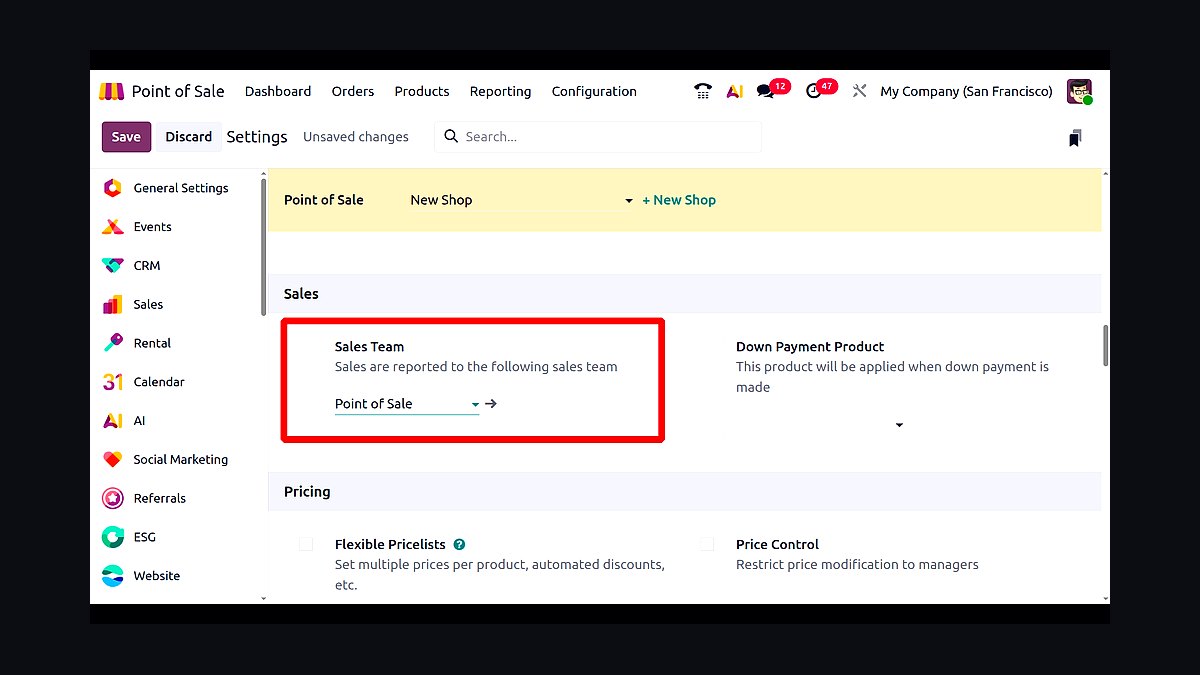
Odoo Point of Sale ranks first because it is the only option here that unifies the register with inventory, accounting, purchasing, and HR in one database. Its per-user pricing of roughly $20-35 per user per month undercuts per-location QSR fees once a chain passes about a dozen stores. A coffee bag sold at the counter decrements the same inventory record Purchasing uses to trigger a reorder.
It is built for chains past 15-20 locations, or any operator adding franchising, wholesale roasting, or multi-entity accounting. It trades away restaurant-polished register UX and demands 2-4 months of configuration for recipe bills-of-materials and unit conversions. Compared with Toast POS below, it is slower to launch but eliminates the reconciliation labor that grows one ops hire per 6-8 stores.
2Toast POS

Toast POS ranks second for its day-one speed-to-value in coffee chain front-of-house operations. Core POS subscriptions typically run $50-165 per terminal per month, and a single-store rollout goes live in 1-2 weeks with menu build and afternoon staff training. Loyalty, gift cards, kitchen display, and mobile ordering ship as native, polished modules rather than third-party add-ons.
It suits chains under roughly 8-15 corporate-owned stores with simple P&L needs and no franchising arm. It trades away unified inventory and multi-entity accounting, which arrive only through exports or marketplace apps. Against Odoo Point of Sale above, it wins on register UX and offline resilience during the morning rush but loses on back-office consolidation once store count climbs.
3Square for Restaurants
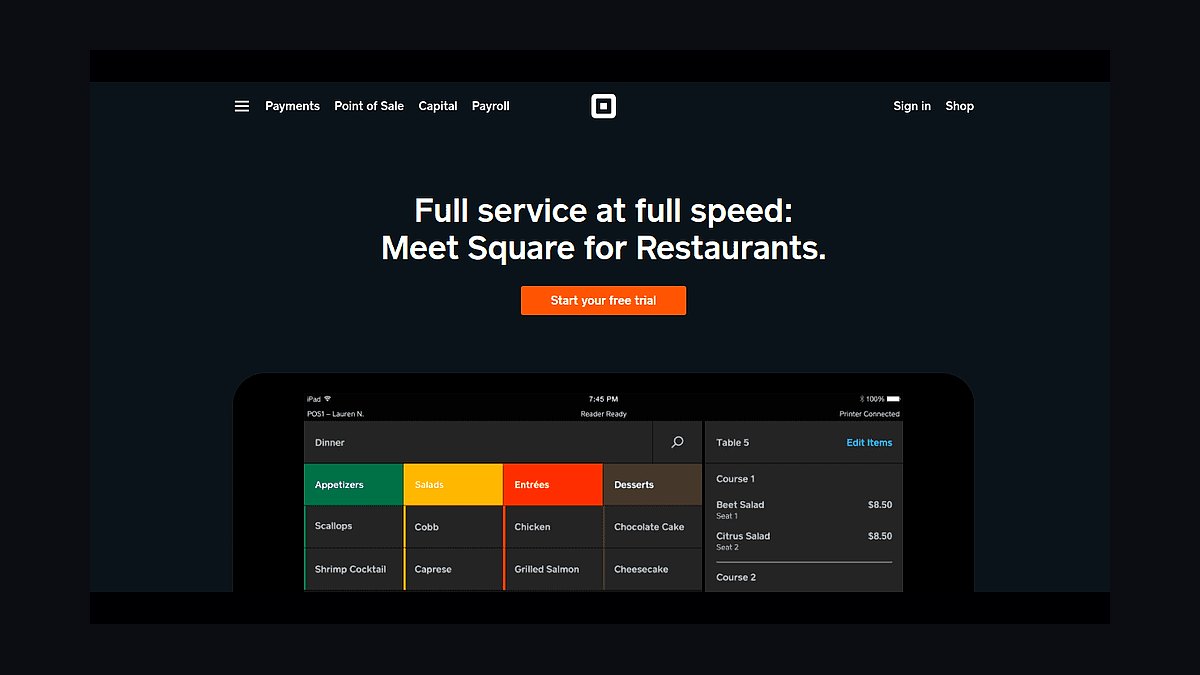
Square for Restaurants ranks third on hardware simplicity and fast counter deployment for specialty coffee. It handles 100-300 tickets per store per day with average tickets under $8, and offline mode plus mobile-order injection into the same ticket queue cover the morning rush. Setup is measured in days, with no implementation partner required for a single store.
It fits small corporate-owned chains that want a register running this week and are willing to reconcile inventory by spreadsheet. It trades away deep multi-location inventory rules and franchise accounting. Against Toast POS above, it is cheaper to start and simpler to administer, but weaker on kitchen display routing and loyalty depth once a chain passes a handful of stores.
4Lightspeed Restaurant
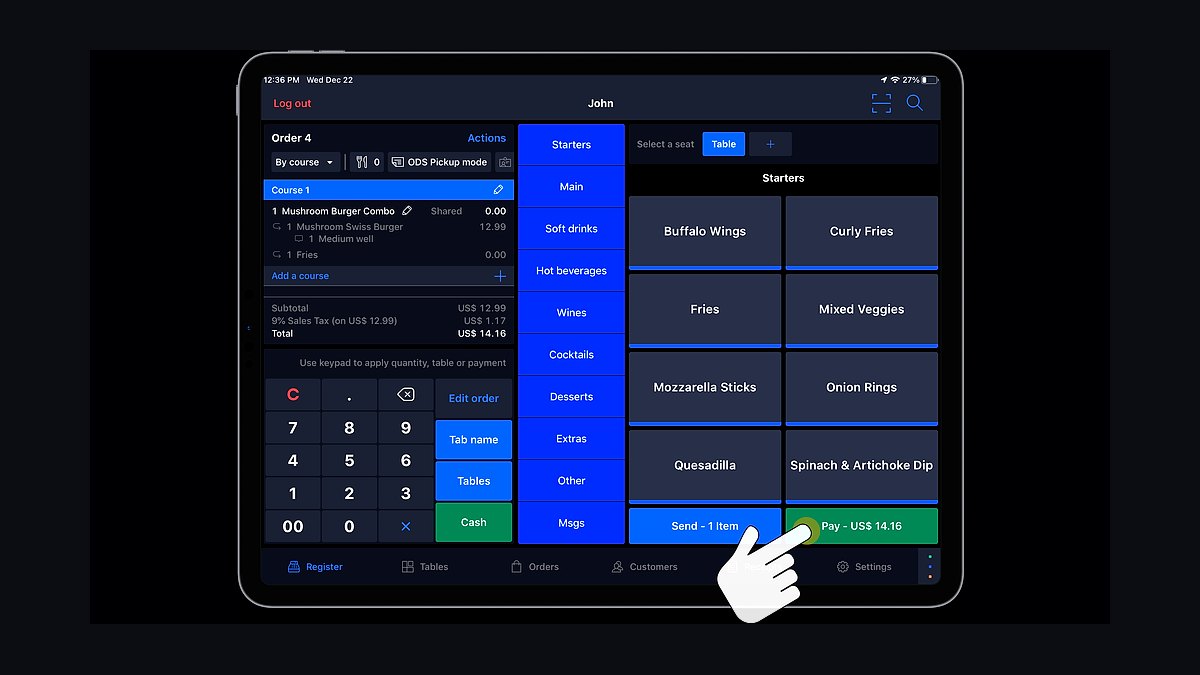
Lightspeed Restaurant ranks fourth for chains that need stronger inventory and analytics than a pure register platform provides. It combines restaurant-grade POS with inventory tracking and reporting suited to perishable dairy and roast-dated beans, and supports multi-location reporting from a single back office. Menu and modifier management handle size and milk variants cleanly.
It fits growing chains in the 8-15 store range that want one vendor for counter and inventory without a full ERP. It trades away the broadest app marketplace and the deepest franchise accounting. Against Square for Restaurants above, it costs more and takes longer to configure, but delivers inventory visibility that Square largely leaves to spreadsheets.
5Odoo Inventory
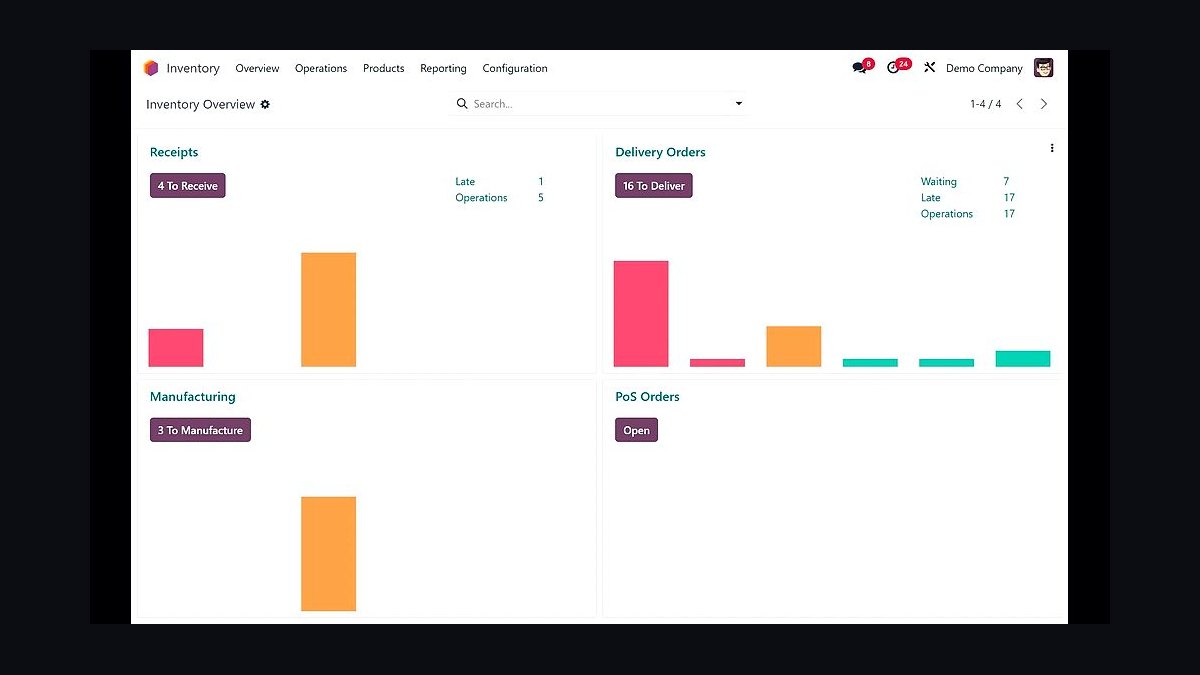
Odoo Inventory ranks fifth as the module that makes Odoo viable for coffee specifically. It supports unit-of-measure conversions between roasted-bean pounds and shots pulled, multi-warehouse stock rules, and reorder rules that trigger purchasing from the roaster. Recipe bills-of-materials tie each drink to its SKU consumption, so cost-of-goods updates automatically.
It fits chains managing milk shrinkage, roast-date shelf life, and retail bean-bag sales across multiple stores. It trades away the pre-wired simplicity of a vertical QSR tool, requiring configuration before it behaves like a coffee system. Against Lightspeed Restaurant above, it is far more capable on inventory depth but only makes sense alongside Odoo Point of Sale and Odoo Accounting.
6Odoo Accounting
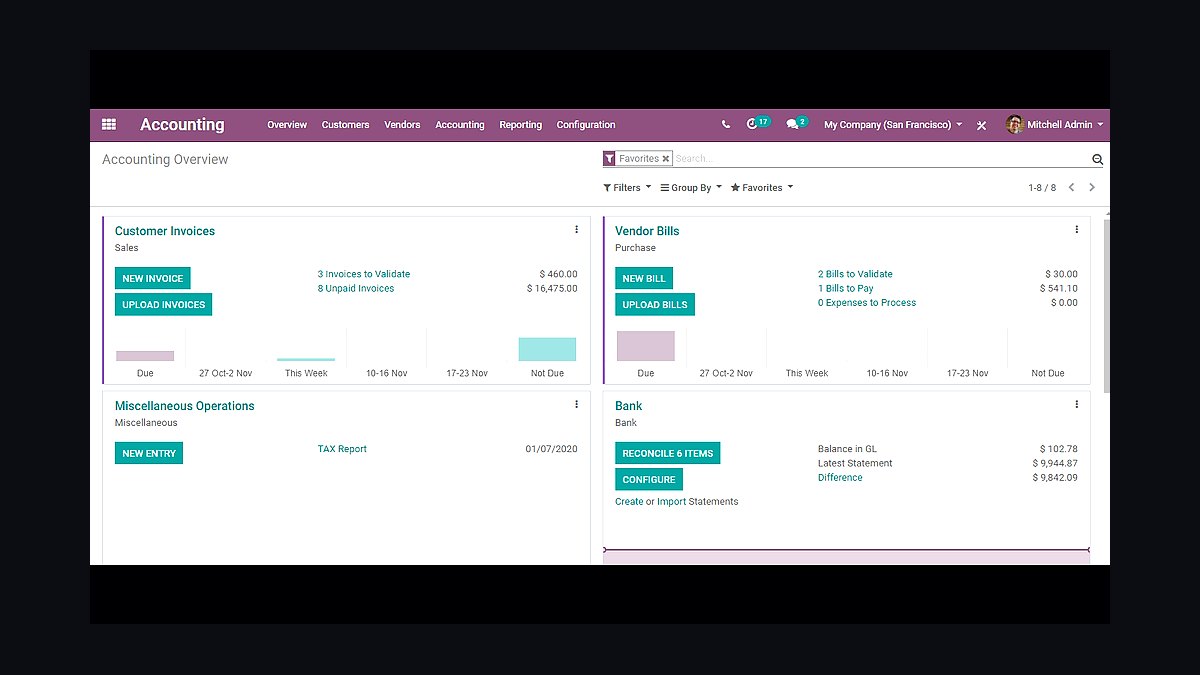
Odoo Accounting ranks sixth for multi-entity and franchise consolidation that single-store platforms cannot unify. It shares one data model with Point of Sale and Inventory, so sales, cost-of-goods, and purchasing forecasts flow into the P&L without re-entry. Multi-company structures let franchise owners and corporate stores report separately and consolidate on demand.
It fits chains that are franchising, running wholesale roasting accounts, or operating several legal entities. It trades away the turnkey bookkeeping integrations some operators prefer, and month-end close depends on correct upstream configuration. Against Odoo Inventory above, it is the downstream beneficiary of clean inventory data rather than a standalone fix for reconciliation.
7QuickBooks Online
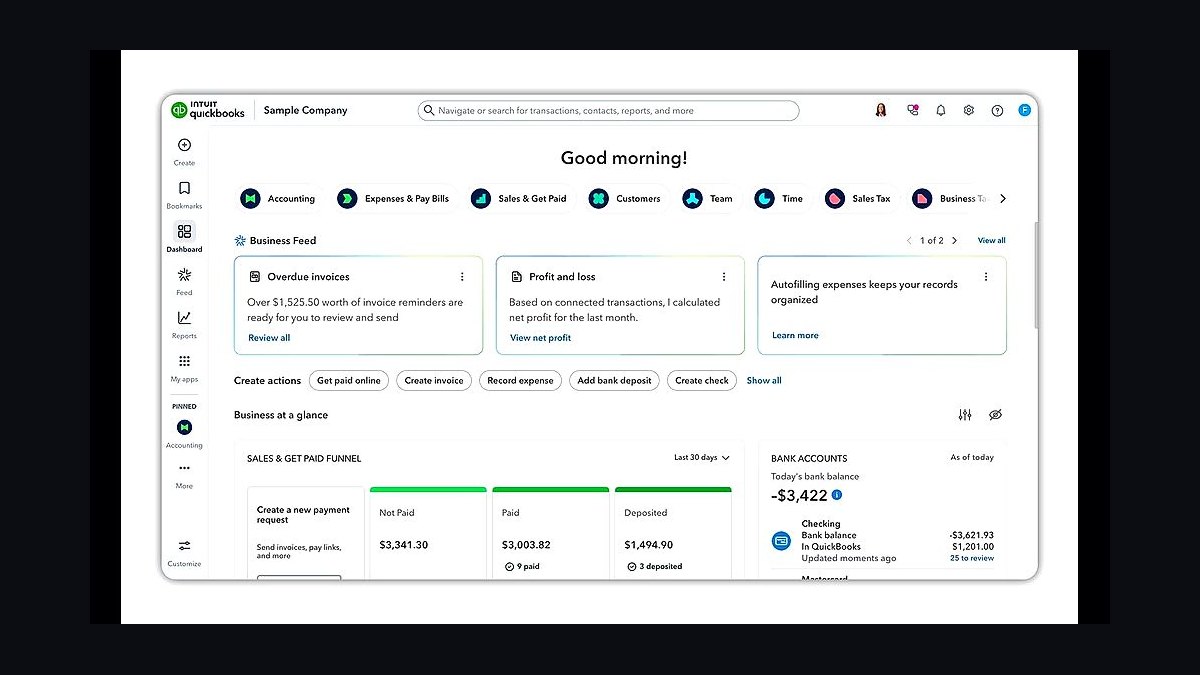
QuickBooks Online ranks seventh as the accounting layer most small coffee chains already run before consolidation. It handles standard bookkeeping, bank reconciliation, and basic reporting at low monthly cost, and integrates with several QSR platforms through marketplace connectors. Accountants and bookkeepers are widely familiar with it.
It fits chains under roughly 8-15 stores that are not yet franchising and want cheap, familiar books. It trades away multi-entity consolidation, inventory-aware cost-of-goods, and any real link to recipe-level data. Against Odoo Accounting above, it is faster to adopt and cheaper per month, but it is exactly the tool that forces the Monday spreadsheet reconciliation described in the crossover decision.
87shifts
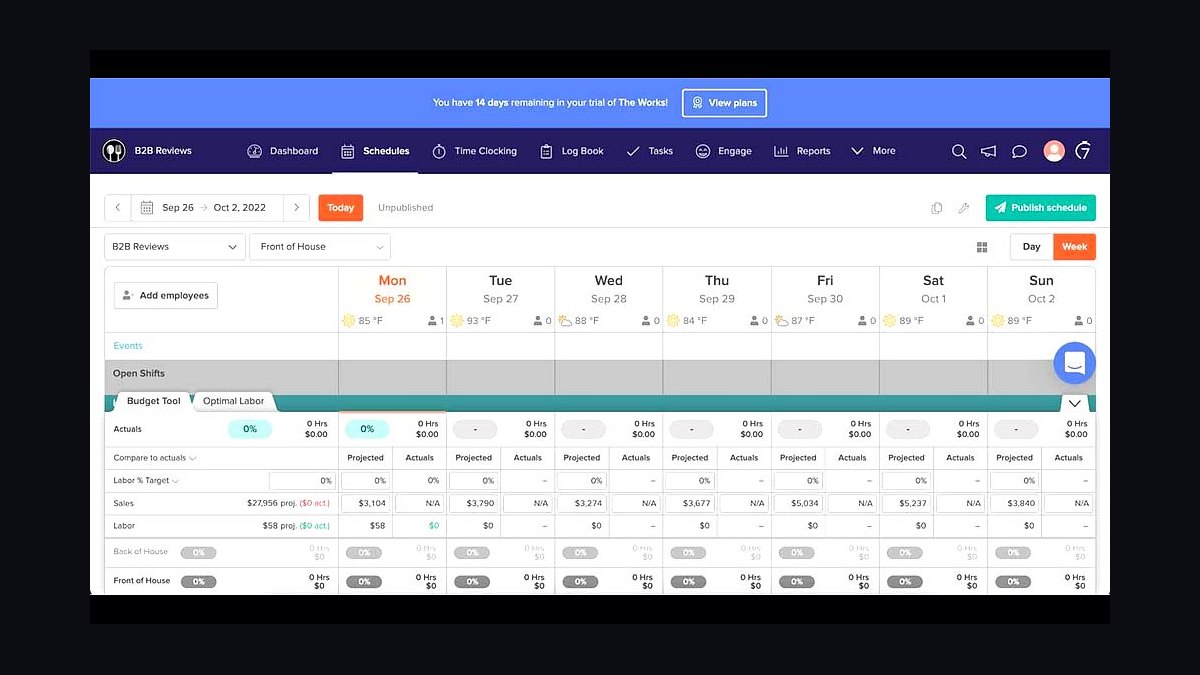
7shifts ranks eighth as the scheduling and labor tool coffee chains bolt on when the register platform's scheduling is thin. It handles shift swaps, availability, tip pooling, and labor-cost reporting across multiple locations, and integrates with major restaurant POS platforms for sales-per-labor-hour tracking. Mobile adoption by shift leads is its main practical advantage.
It fits chains where scheduling is the weakest link and staff never fully adopted a prior tool. It trades away being a system of record — it is a point solution that adds another seam to the stack. Against QuickBooks Online above, it solves a different problem entirely, but both illustrate the cost of stacking best-of-breed tools around the register.
9Odoo Employees
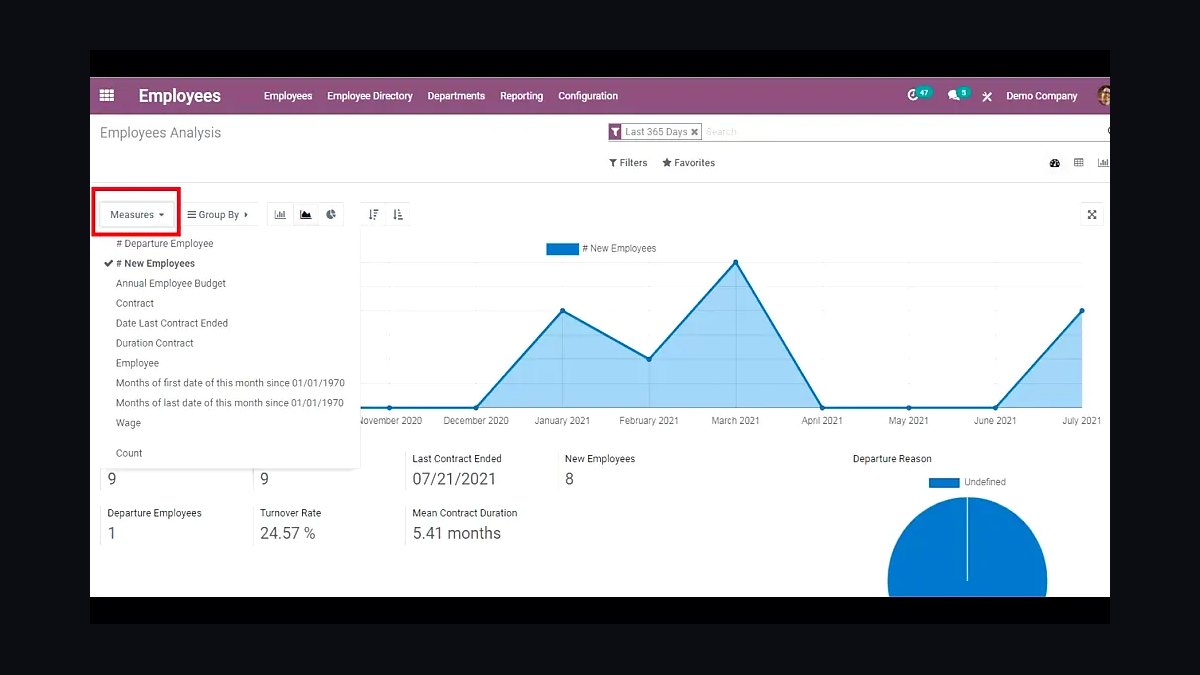
Odoo Employees ranks ninth because HR and payroll data sitting in the same database as sales and inventory removes another reconciliation seam. It stores staff records, contracts, time-off, and attendance, and feeds payroll export without a separate HR system. Store managers get light access without full ERP licensing.
It fits chains already committed to Odoo that want headcount, scheduling, and payroll data unified with operations. It trades away the specialized scheduling depth of a dedicated workforce tool, so shift-swap workflows are less polished. Against 7shifts above, it is weaker as a standalone scheduler but stronger as part of one system of record.
10Odoo CRM
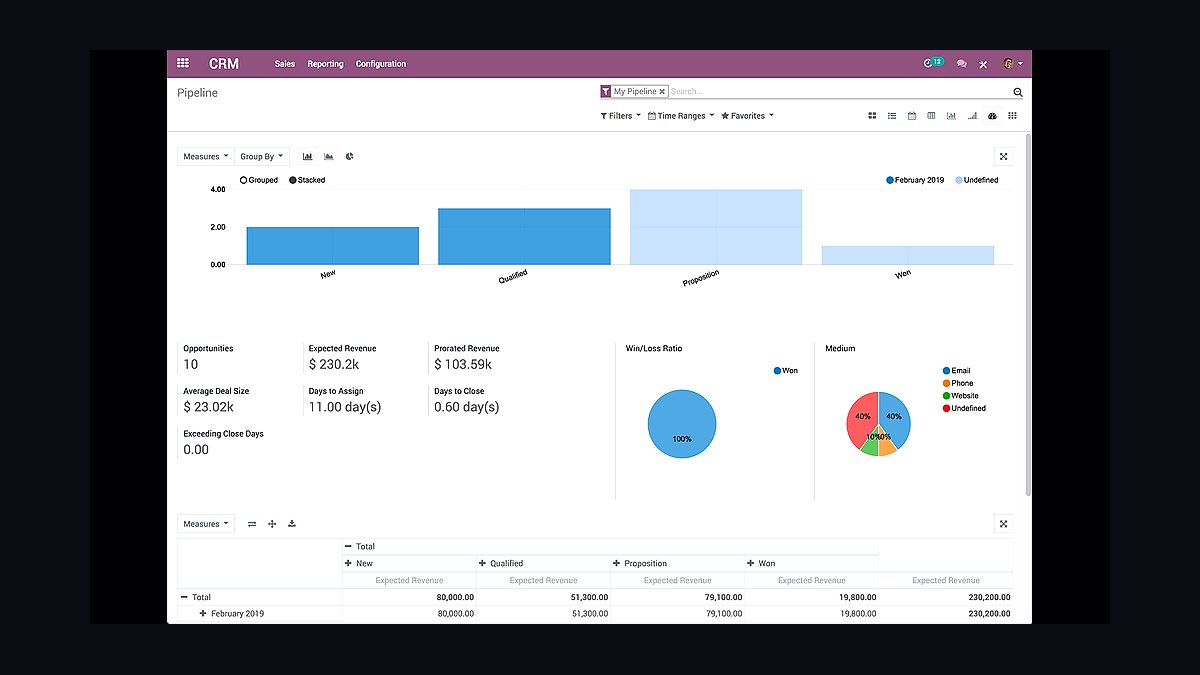
Odoo CRM ranks tenth as the wholesale and B2B account layer for chains selling beans to offices, cafes, and retailers. It tracks leads, accounts, and pipelines for wholesale roasting arms, and shares the same database as Inventory and Accounting so wholesale orders decrement stock and post revenue without re-entry. Pipeline reporting covers account-level volume.
It fits chains with a wholesale roasting component rather than pure retail counters. It trades away the depth of dedicated sales-engagement platforms and adds configuration burden. Against Odoo Employees above, it serves a different function, but both only justify their place once the chain has outgrown a pure QSR-platform stack.
How we ranked these
We ranked platforms on five weighted criteria: speed to first live store, total cost per location at 10 and 25 stores, depth of native inventory and recipe costing, multi-entity accounting and franchise support, and POS/KDS reliability under morning-rush throughput of 100-300 tickets per store per day. Weighting favored operational coordination cost over register polish, since reconciliation labor dominates long-run spend.
We deliberately ignored vendor demo aesthetics, sales-call polish, app-marketplace breadth, and hardware brand prestige. Those factors influence purchase emotion but not twelve-month labor cost. We also excluded single-store use cases, pure e-commerce retailers, and chains without perishable inventory, because their trade-offs differ enough that including them would distort the crossover thresholds we report.
What to look for
What matters most is your store count trajectory and whether you will franchise or wholesale-roast. Below 8 locations, a dedicated QSR platform wins on cost and speed. Above 15-20, unified inventory, purchasing, and multi-entity accounting usually outweigh the register experience gap. Count the hours your team spends reconciling sales against inventory before deciding.
The mistake most buyers make is choosing on the POS demo. The register is the smallest source of ongoing labor; inventory reconciliation, purchasing, and month-end close are where hours disappear. A second common error is rushing Odoo configuration to match QSR onboarding speed, producing wrong recipe costs. Always run both systems in parallel for one full inventory cycle before cutover.
Related questions
Does a specialty coffee chain need a dedicated inventory module, or will basic POS reporting suffice?
Basic POS reporting tracks sales, not depletion. Once you manage roast-dated beans, milk shrinkage, and retail bean-bag sales across stores, you need unit-of-measure conversions, reorder rules, and per-store stock visibility. A real inventory module prevents the Monday spreadsheet reconciliation that consumes four hours weekly at nine stores and scales badly toward twenty.
Can Odoo run the point-of-sale hardware itself, or does it need a separate register system?
Odoo has a native Point of Sale app that runs on standard POS hardware, supports offline mode, and injects mobile orders into the same ticket queue. It can fully replace a dedicated QSR platform rather than only sitting behind one. The trade-off is configuration burden and a less restaurant-polished counter experience than Toast or Square.
What triggers the switch from a dedicated QSR platform to Odoo?
The trigger is usually 15-20 locations, or earlier if you add franchising, wholesale roasting, or multi-entity accounting. At that scale, one ops person per six to eight stores is needed just to keep inventory and books aligned, and that labor cost exceeds standing up Odoo. Below eight stores, the coordination overhead Odoo solves does not yet exist.
How long does a realistic Odoo migration take for an existing coffee chain?
Plan for two to four months. That covers recipe bill-of-materials setup, multi-warehouse inventory rules, chart-of-accounts mapping, staff retraining, and a parallel-run period against the existing system. Attempting a two-week cutover to match QSR onboarding speed typically produces inaccurate recipe costing that surfaces later in the P&L.
Is a hybrid QSR POS plus Odoo backend setup worth the integration maintenance?
For chains in the 10-25 store range, often yes. You keep the register staff already know and its offline resilience while consolidating inventory, purchasing, and accounting in Odoo. The cost is connector ownership: someone named must monitor the sync daily, or it silently breaks the same way spreadsheet reconciliation did.
How does franchising change the platform decision?
Franchising demands multi-company accounting, consolidated reporting across owners, and royalty calculation, which are core Odoo strengths and common gaps in single-store-focused QSR platforms. If franchising is on your three-year roadmap, weight Odoo heavily even at lower store counts, because retrofitting multi-entity accounting later is disruptive.
What throughput requirements should a coffee chain test before buying?
Specialty coffee runs 100-300 transactions per store per day with average tickets often under eight dollars, so test offline mode, printer queue speed, and mobile-order injection during a simulated morning rush. Sit-down restaurant benchmarks of 60 covers daily do not stress the same paths, so generic QSR demos can mislead.
Can loyalty and mobile ordering be added to Odoo without much effort?
Usually not natively. Dedicated QSR platforms bundle polished loyalty, gift cards, and mobile ordering, while Odoo typically requires a third-party app or custom development to match. If loyalty and mobile ordering are core to your brand experience, weight that heavily toward the dedicated platform side of the decision.
FAQ
Is Odoo cheaper than a dedicated QSR platform for a coffee shop chain?
It depends on store count. Odoo's per-user pricing tends to undercut per-location QSR platform fees once you operate a dozen or more stores with a lean back-office team. Below that threshold, the dedicated platform is usually cheaper and faster to deploy, especially once you add online ordering and loyalty modules.
Which platform has better built-in loyalty and mobile ordering for coffee shops?
Dedicated QSR platforms generally win. Loyalty, gift cards, and mobile or online ordering are native, polished modules on Toast, Square for Restaurants, and Lightspeed. Odoo typically requires a third-party app or custom build to match that experience, which adds cost and integration risk.
Can I run a hybrid setup with a QSR POS and Odoo in the back office?
Yes, and it is common for chains in the 10-25 store range. The register stays on the dedicated platform for speed and offline resilience while Odoo runs inventory, purchasing, and accounting behind it. The catch is a sync job that a named person must own and monitor daily.
Does the choice matter for a single specialty coffee shop, not a chain?
Much less. A single store rarely needs Odoo's multi-location inventory and accounting consolidation, so a dedicated QSR platform alone is usually sufficient and far faster to set up. Odoo's advantages compound with location count and entity complexity, neither of which exists at one store.
What is the biggest operational risk in switching platforms mid-growth?
Rushing recipe and inventory configuration to match the old system's onboarding speed. That produces inaccurate cost-of-goods data, which distorts pricing and margin decisions. A parallel-run period of at least one full inventory cycle catches configuration errors before they reach the P&L.
Does franchising change which platform is the better fit?
Yes. Franchise structures need multi-company accounting, consolidated reporting across owners, and royalty calculation. That is a core Odoo strength and a common gap in single-store-focused QSR platforms. If franchising is planned within three years, weight Odoo heavily even at lower store counts.
How much does per-location software cost across these platforms?
Dedicated QSR platforms typically run $50-165 per terminal monthly for core POS, with all-in costs reaching $200-400 per store once loyalty, online ordering, and payroll modules are enabled. Odoo prices per user, commonly $20-35 monthly, which favors lean corporate teams at scale.
What should I test in a demo before committing to either platform?
Test your actual reorder and month-end close workflow, not the checkout flow. Simulate a morning rush with mobile-order injection, verify offline mode, and walk through recipe costing for one drink. The register demo is the smallest part of the decision and the easiest to be impressed by.
How do I avoid the hybrid integration silently failing?
Assign a named owner and run a daily automated reconciliation check that compares register sales against backend records. Manual checks get skipped during growth phases. When the sync breaks silently, the first symptom is usually a month-end close that does not balance, which is expensive to unwind.
When is a pure dedicated-platform stack the right final answer?
When the chain's ambition is a handful of well-run corporate stores with no franchising and no wholesale roasting arm. In that scenario, the coordination overhead Odoo solves never materializes, and the dedicated platform's faster setup and better register experience win without meaningful downside.
Sources
- https://www.odoo.com/page/point-of-sale
- https://pos.toasttab.com/
- https://squareup.com/us/en/point-of-sale/restaurants
- https://www.lightspeedhq.com/pos/restaurant/
- https://www.qsrmagazine.com/technology
- https://www.nrn.com/technology
- https://www.retaildive.com/topic/technology/
Related on PULSE
This page will be disappearing soon. Save it to your device for $1 — or read it free while it is here.
@Kory-White- · if Venmo asks, the last 4 of my number are 2012
This page is gone.
This one is off the shelf now. $1 keeps it on your phone for good — the whole page, pictures and diagrams included.
 pulse-tech-stacksTop 10 Best Tech Stack Tools for Home Builders and Residential Developers in 2027
 pulse-tech-stacksTop 10 Best Tech Stack Tools for Painting Contractors in 2027
 pulse-tech-stacksTop 10 Best Tech Stack Tools for Medical Billing and RCM Companies in 2027
 pulse-tech-stacksTop 10 Best Tech Stack Tools for AI Music Generation Companies in 2027
 pulse-tech-stacksTop 10 Best Tech Stack Tools for Land Surveying Firms in 2027
 pulse-tech-stacksTop 10 Best Tech Stack Tools for Independent Dance Studios in 2027
 pulse-tech-stacksTop 10 Best Tech Stack Tools for Pilates Studios in 2027
 pulse-tech-stacksTop 10 Best Tech Stack Tools for Pressure Washing Companies in 2027
 pulse-tech-stacksTop 10 Best Tech Stack Tools for RV Dealerships in 2027
 pulse-tech-stacksTop 10 Best Tech Stack Tools for Tire Shops in 2027