


Should I open or buy a Jollibee franchise in 2027?
Quality
Certified
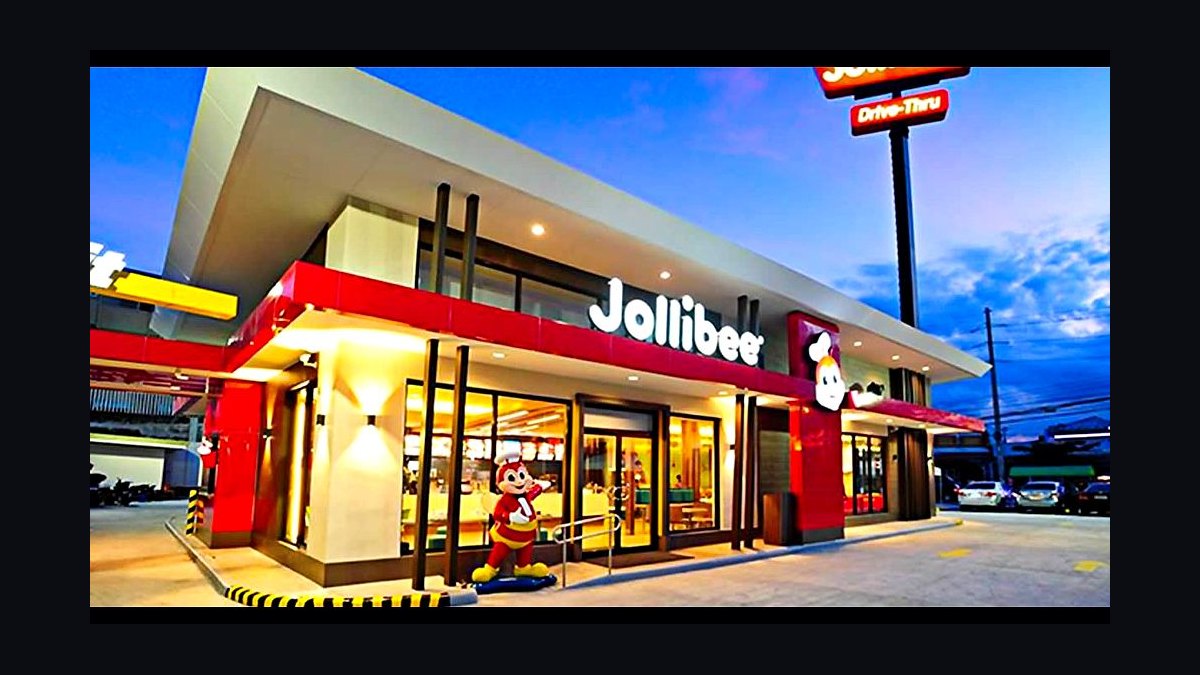
Probably not. A 2027 Jollibee unit runs roughly $1.6M–$4.9M all-in with a $50,000 franchise fee and about 9.25% of gross sales in ongoing royalty, marketing, and technology fees. The brand screens hard for multi-unit quick-service operators with $5M net worth and $2M liquid. First-time owners get filtered out early.
The outcome you should expect
Strip away the brand romance and picture what actually lands on your desk eighteen months after you sign. You are not buying a business; you are buying a construction project that eventually becomes a business. The realistic sequence looks like this: nine to fifteen months of site search, lease negotiation, permitting, and build; a grand opening week that outperforms everything that follows; a novelty decay curve over the next sixty to ninety days; and then a plateau that becomes your actual run-rate. That plateau is the number that matters, and it is almost never the number in your pro forma.
Jollibee's reported U.S. system average unit volume has been cited in trade press around the $4.5M–$5.0M range across a small U.S. store base — but the overwhelming majority of those stores are company-operated, sitting on real estate the corporate team hand-picked over a decade. A new franchised unit in a market Jollibee has never operated in should be underwritten well below that figure. Discounting the system average by 15–20% for a first-year ramp is not pessimism; it is the standard underwriting posture any experienced quick-service lender will apply to your file whether or not you apply it yourself.
Here is the shape of the expected outcome in plain language. If you build a $2.5M store, finance 70% of it, and hit a $3.5M first-year top line at a restaurant-level margin in the low teens, you generate something in the neighborhood of $400K–$450K before debt service. Debt service on $1.75M at prevailing commercial terms consumes a large slice of that. What remains is real money but not life-changing money for the capital and personal risk deployed, and it arrives in year two or three, not year one. Full payback on the equity — the moment your cumulative distributions exceed your cash injection — realistically sits four to six years out, and stretches past that if your build lands at the top of the range or your ramp is slow.
The other outcome you should expect is a relationship, not a transaction. A twenty-year franchise agreement is longer than most marriages and considerably harder to exit. You are agreeing to operate someone else's system, on their menu, with their supply chain, under their inspection regime, through whatever strategic pivots the parent company makes over two decades. If you are the kind of operator who improvises — changes a recipe because your market prefers it, runs an unapproved local promotion, sources produce from a cheaper vendor — franchising in general will grind you down, and a brand with a tightly protected culinary identity will grind you down faster.
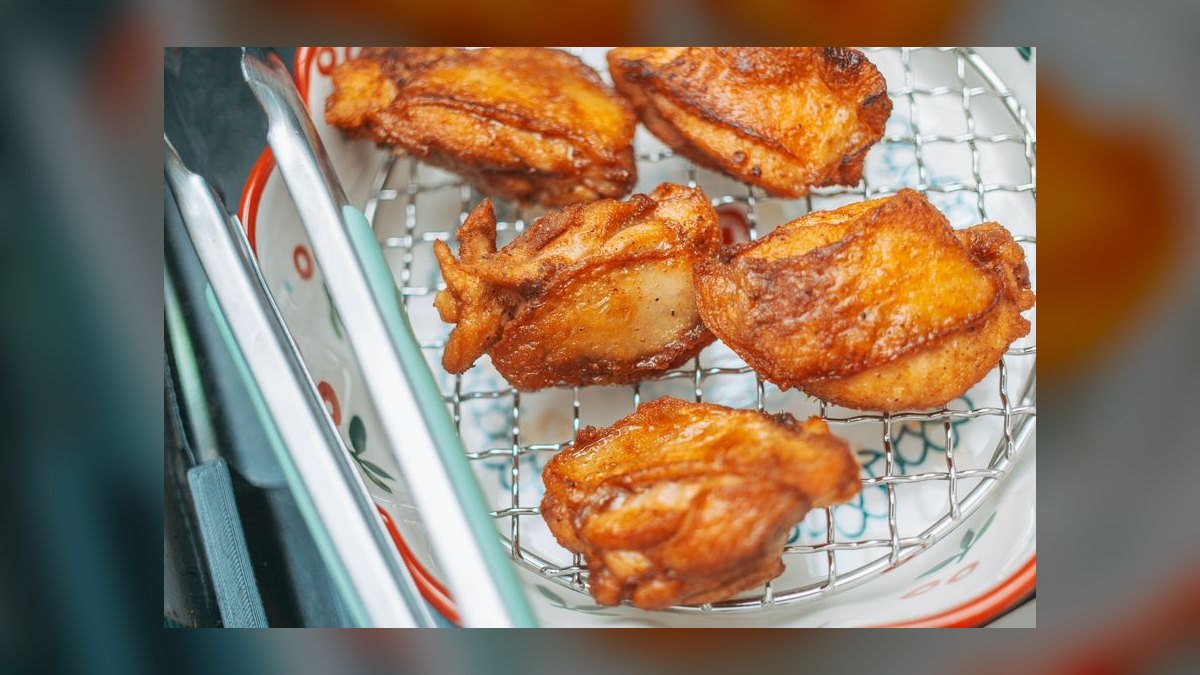
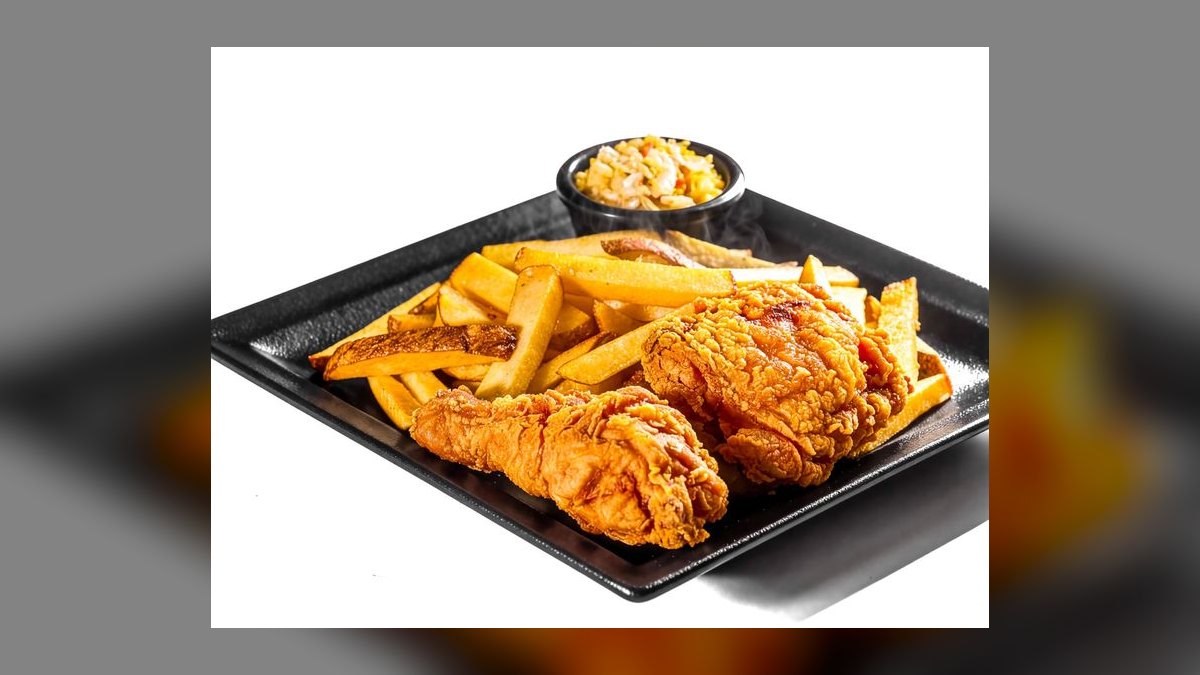
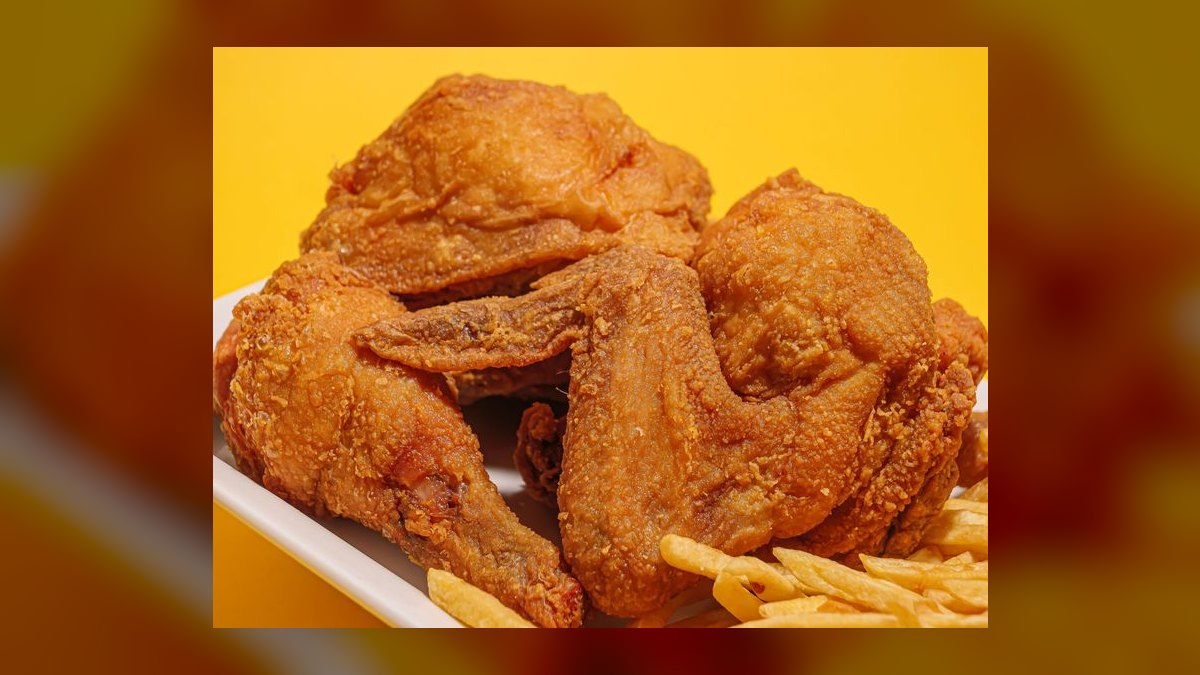
One more expectation worth setting: the operating experience is genuinely different from a standard American chicken concept. Chickenjoy is bone-in fried chicken with a specific hold-time and quality profile, the menu carries spaghetti and rice plates and a signature pie alongside the chicken, and peak-hour throughput on a mixed menu is a harder operational problem than a sandwich-and-fries line. Your labor model, your kitchen choreography, and your waste discipline all have to accommodate more SKUs and more cook processes than a single-protein concept. Operators coming from a simplified menu brand consistently underestimate this.
What drives that outcome
Five variables move the result more than everything else combined, and four of them are locked in before you serve your first customer.
Real estate is the first and largest. In quick service, site selection is roughly half of the outcome, and no amount of operational excellence rescues a bad trade area. The Jollibee stores generating headline volumes sit in dense, high-daytime-population locations with meaningful Filipino-American or broader Asian-American presence, or in urban corridors with enough foot traffic that cultural familiarity is optional. A suburban pad site in a market with neither demographic depth nor pedestrian density is fighting for share against entrenched chicken brands with vastly larger advertising budgets and twenty years of local awareness. The brand's real estate committee will approve or reject your sites, which is a genuine benefit — but their approval is not a guarantee of volume, only a floor on obvious mistakes.
Build cost is the second. The disclosed range spans roughly $1.6M to $4.9M, and that spread is not noise — it is the difference between a suburban second-generation restaurant conversion and a ground-up urban inline build with union labor, landmark review, and a six-month permitting slog. Do not model the midpoint. Model your specific site, with your specific landlord's tenant improvement allowance, in your specific municipality's permitting environment. Every $500K of avoidable build cost is roughly $60K–$70K of annual debt service you never have to earn back.
Fee load is the third. Approximately 9.25% of gross sales — 5% royalty, 4% national marketing, 0.25% technology — comes off the top before you pay for a single chicken. That is within the normal band for quick-service franchising but toward the higher end, and it is charged on gross sales regardless of whether you are profitable. On $4M in sales that is $370,000 a year, permanently. Operators who underwrite at "5% royalty" because that is the number they remember from the brochure discover a six-figure hole in year one.
Cost of goods and labor is the fourth, and it is the only major variable you control daily. Quick-service chicken concepts typically run food cost in the high twenties to low thirties as a percentage of sales and labor in the mid-to-high twenties. A four-point swing across both lines is $160,000 on a $4M store — larger than most owners' salaries. This is why the brand screens for experienced operators: someone who already knows how to schedule against an hourly sales forecast, run a theoretical-versus-actual food cost variance, and hold back-of-house turnover below the industry's brutal triple-digit norm captures that $160,000. Someone learning on the job donates it.
Capital depth is the fifth. Meeting the liquidity minimum exactly is a warning sign, not a qualification. The gap between "I have $2M liquid" and "I have $2M liquid after closing" is where most first-unit failures live. Pre-opening labor runs hotter than budgeted, grand-opening inventory builds are larger than expected, and the first slow quarter arrives before the ramp completes.
Benchmarks and realistic ranges
Work these numbers the way a lender's credit committee will, because that is the audience you eventually have to satisfy.
Initial investment. The franchise disclosure document's estimated initial investment table is the only authoritative source, and you must read the version current at the time you sign — figures move year to year. The broad reported range for a Jollibee U.S. unit spans roughly $1.6M to $4.9M inclusive of the $50,000 initial franchise fee. Inside that total, expect leasehold improvements to be the dominant line, kitchen equipment and smallwares to be the second largest, and working capital, furniture, signage, technology, architecture, permitting, training, travel, and pre-opening labor to fill out the balance. Insist on the actual current table rather than any secondhand summary, including this one.
Ongoing fees. Five percent royalty, four percent national marketing fund, quarter-point technology fee. Budget an additional 2–3% of sales for local store marketing that the national fund does not cover — grand-opening community spend, geo-targeted social, local sponsorships. National funds buy brand awareness; they do not buy your specific store's opening-week traffic.
Occupancy. Underwrite rent plus common area maintenance plus taxes at no more than 8–10% of projected sales, and be honest that in the urban locations where the brand performs best, hitting that ratio requires genuinely high volume. A $25,000-a-month urban lease demands roughly $3M–$3.75M in annual sales just to stay inside a healthy occupancy band.
Margin. Quick-service chicken restaurants at the operator level generally land somewhere in the 10–18% range on a restaurant-level EBITDA basis before corporate overhead and debt service. Assume the low end in year one, the middle by year two, and the top end only if you are an above-average operator in an above-average location. Anyone modeling 18% in month one is modeling a fantasy.
Financing. SBA 7(a) tops out at $5M with equity injection requirements typically in the 20–30% range for restaurant concepts, and conventional restaurant lenders will generally go to 70–75% loan-to-value on a build. That means $600K–$1.2M of real cash equity on a mid-range build, on top of the reserve you must not touch. Get a term sheet before Discovery Day; showing up without committed financing measurably weakens your position in an award conversation.
Comparison set. Context matters, so look at what your capital buys elsewhere. Several established chicken concepts disclose meaningfully lower initial investment ranges with published unit-volume data and decades of franchisee performance history. Some publish an Item 19 financial performance representation; Jollibee's U.S. disclosure historically has not, which means you are underwriting on third-party volume reporting plus your own validation calls rather than on the franchisor's own audited representation. That absence is not disqualifying — plenty of good brands omit Item 19 — but it shifts the burden of proof entirely onto your due diligence.
Timeline. From signed franchise agreement to open doors, budget twelve to eighteen months. From open doors to stabilized volume, budget another nine to eighteen. From cash injection to equity payback, four to six years in a good outcome. If your personal financial plan requires distributions inside twenty-four months, this is the wrong vehicle.
Risks, edge cases, and failure modes
The demographic dependency risk. Jollibee's U.S. growth has been powered substantially by cultural pull — a brand people drive an hour for because it tastes like home. That is a genuine and defensible moat, but it is a moat with a shape. When the brand pushes into markets without that base, it converts from a destination concept into a challenger concept competing head-on with entrenched American chicken chains on their turf. The unit economics of those two situations are not the same, and system averages built on the first do not predict the second. If your site is in the second category, you are effectively an early-market pioneer paying full franchise fees.
The build-cost blowout. The single most common way a well-capitalized operator ends up thin is a build that lands 40% over budget. Urban permitting delays, a landlord's TI allowance that arrives late or partially, discovered structural conditions in a second-generation space, grease trap and ventilation requirements that were not in the original scope. Every month of delay is rent you may be paying without revenue, plus financing carry. Negotiate rent commencement tied to certificate of occupancy, not lease execution, and hold a contingency of 15% of hard costs outside your working capital.
The absentee-owner failure mode. Franchise agreements that do not mandate owner-operator presence still punish absence economically. A general manager running a store while the owner is elsewhere produces predictable drift: labor creeps, waste creeps, speed of service degrades, guest scores slide, and by month eighteen the store is running measurably below where a present owner would hold it. If your plan is to buy a unit and check in monthly, either revise the plan or budget for a genuinely high-caliber multi-unit manager and the compensation that person commands.
The single-unit trap. Multi-unit economics work because general and administrative costs — bookkeeping, an area manager, recruiting infrastructure, a maintenance relationship — spread across several stores. A single unit carries all of that overhead alone. This is precisely why the franchisor prefers area development commitments, and it is why single-unit candidates often find themselves deprioritized in the award queue. If you cannot see a credible path to three or more units, the overhead math works against you from day one.
Category compression. The American chicken segment has been the most crowded expansion race in restaurants for several years. Multiple well-capitalized brands are chasing the same A-grade real estate, bidding up rents and shrinking the inventory of good sites. New entrants also mean more competitive intensity inside any given three-mile ring than the trade area analysis from eighteen months ago suggested. Underwrite for a market that is more crowded at opening than at signing, because it will be.
Transfer and exit illiquidity. Selling a single franchised restaurant is harder than selling a small business generally. Your buyer pool is limited to people the franchisor will approve, the franchisor typically holds a right of first refusal, transfer fees apply, and the remaining term on your agreement caps what a buyer will pay. Plan on operating the full term or selling into a multi-unit roll-up, not on flipping in year four.
The edge case worth naming: buying an existing unit rather than building one. A resale removes construction risk entirely, gives you actual trailing financials instead of a projection, and often costs less than a new build. The trade-off is that healthy stores rarely trade, so a unit on the market carries a question you must answer honestly — why is the current owner leaving? Sometimes the answer is benign (estate planning, portfolio focus, a partner buyout). Often it is not. Demand three years of tax returns, a deferred-maintenance inspection, and a remaining-term calculation before you get anywhere near a price.
A practical rollout plan
If you are still in after all of that, run the process in this order. The sequence matters — each stage is designed to kill the deal cheaply before the next stage costs real money.
Weeks 1–2: financial qualification, honestly. Build a personal financial statement, exclude the equity in your primary residence beyond a conservative fraction, and confirm you clear the net worth and liquidity minimums with room left over. Then confirm the harder test: after your equity injection closes, do you still hold a seven-figure reserve you will not need for eighteen months? If not, stop. Either raise a partner, or step down to a lower-capital concept and learn the operating mechanics on a smaller balance sheet before returning to this conversation in 2029 or 2030 when more territory has opened.
Weeks 3–4: inquiry and qualification call. Submit the franchise inquiry and expect a screening conversation focused on your operating history, your target market, and your development appetite. Come with a multi-unit plan even if you intend to start with one — a candidate who can articulate a credible three-to-five-store roadmap in a defined territory is a fundamentally different applicant than one asking about a single store.
Weeks 5–7: read the franchise disclosure document twice. Every item, both times, and the second pass with a franchise attorney who has read dozens of these. Item 6 for the full fee schedule including the small recurring fees nobody remembers. Item 7 for your specific store format. Item 17 for renewal terms, termination triggers, non-compete scope, and transfer conditions. Item 19 — note whether one exists at all and what it does and does not represent. Item 20 for the franchisee turnover tables: count transfers, terminations, non-renewals, and ceased operations over three years, and compare against the size of the system. A high turnover ratio in a small system is the loudest signal in the entire document.
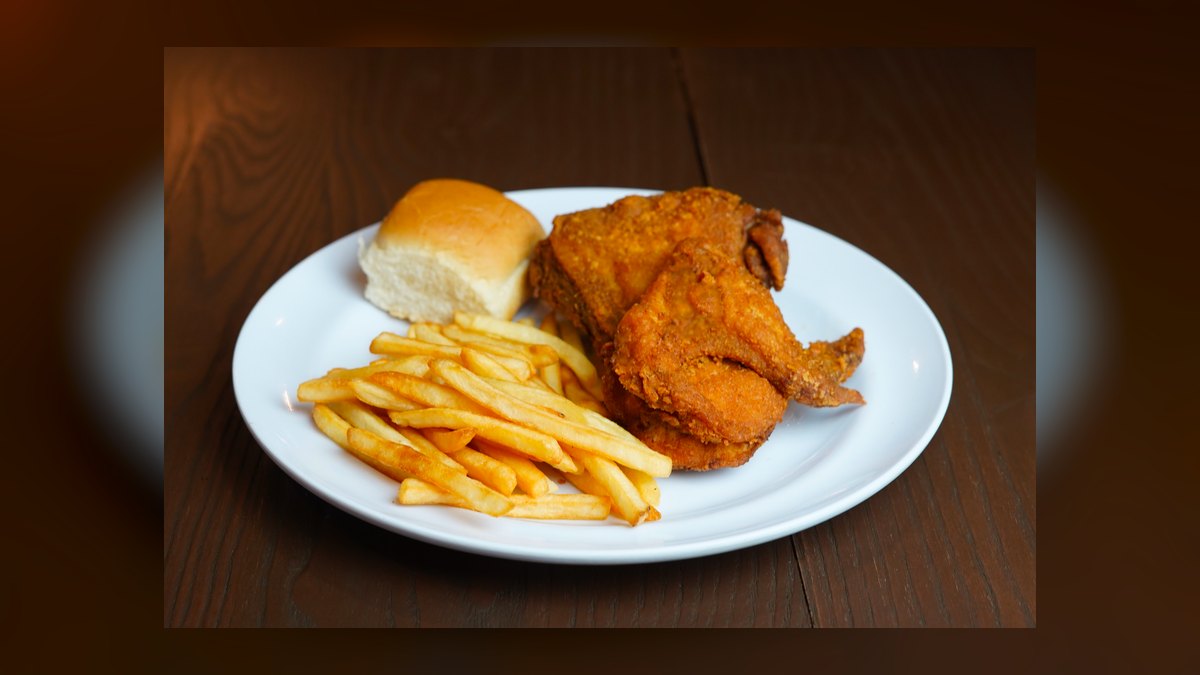
Weeks 8–9: validation calls, eight to twelve of them. The contact list comes from Item 20 and this is the most valuable diligence you will do. Ask each operator the same five questions: What were actual first-year sales against your pro forma? What are food and labor running as a percentage of sales? How many hours a week are you personally in the store? What would you do differently? Would you buy another unit today, at today's costs? That last question is the tell. Three or more operators who hesitate on it should end your process.
Weeks 10–11: real estate underwriting. Engage a broker with genuine quick-service restaurant experience. Pull daytime population, traffic counts, competitive intensity within a three-mile ring, and demographic composition. Submit multiple site packages rather than falling in love with one, and expect the franchisor's real estate review to take a month or more per site.
Weeks 12–13: financing and Discovery Day. Secure a term sheet before you attend. Sign only if every prior gate cleared cleanly — and understand that walking away at Discovery Day after thirteen weeks of work is a successful outcome, not a failed one. The money you did not lose is the return on the diligence.
Related questions
How long does it take to break even on a quick-service franchise?
Most quick-service concepts reach cash-flow-positive operations within twelve to twenty-four months of opening, but full equity payback — recovering your cash injection — typically takes four to six years. Higher build costs and heavier debt loads push that longer. Model both milestones separately; they are very different dates.
Is buying an existing franchise safer than building a new one?
Usually yes on risk, sometimes no on price. A resale gives you real trailing financials and eliminates construction overruns. The catch is adverse selection — strong units rarely sell. Demand three years of returns, a deferred-maintenance inspection, and a clear answer on why the seller is exiting.
What does the absence of an Item 19 actually mean?
It means the franchisor makes no financial performance representation, so nobody may legally provide you earnings projections. You underwrite entirely on validation calls and third-party reporting. It is legal and common, but it shifts all forecasting risk onto you and should widen your margin of safety.
Should a first-time operator start with a lower-cost concept?
Generally yes. Learning labor scheduling, food cost variance analysis, and turnover management on a sub-$500K build costs far less tuition than learning them on a multimillion-dollar one. Two or three years of operating history also makes you a materially stronger candidate for premium brands later.
How much liquidity should I hold after closing?
Beyond the disclosed minimum, hold enough to cover twelve months of debt service plus three months of full operating expenses with zero revenue. For a mid-range build that is commonly a seven-figure reserve. Operators who close with exactly the minimum are the ones who dilute or default.
FAQ
What is the total investment to open a Jollibee franchise?
Publicly reported estimated initial investment for a U.S. unit spans roughly $1.6 million to $4.9 million, including the $50,000 initial franchise fee. The spread reflects the difference between a suburban second-generation conversion and a ground-up urban build. Always pull the current franchise disclosure document rather than relying on any summary figure — Item 7 is the only authoritative source and it changes annually.
What are the ongoing fees?
Approximately 9.25% of gross sales: 5% royalty, 4% national marketing fund, and a 0.25% technology fee. These are charged on gross sales, not profit, for the full term of the agreement. Budget an additional 2–3% for local store marketing, which the national fund does not cover.
Can a first-time restaurant owner get approved?
Rarely. The brand's stated financial minimums — around $5 million net worth and $2 million liquid for a single unit, higher for multi-unit — combined with a stated preference for experienced multi-unit quick-service operators and area development commitments, filter out most first-timers. Exceptional candidates with a strong operating partner and a multi-unit plan occasionally clear it.
How much can a single unit actually earn?
Nobody can tell you legally if the franchisor publishes no Item 19, and you should distrust anyone who does. Trade press has reported U.S. system average unit volumes in the $4.5M–$5.0M range, but the overwhelming majority of those stores are company-operated on premium real estate. A new franchised unit should be underwritten well below the system average for at least the first two years.
Which markets are the best bet in 2027?
Trade areas with meaningful Filipino-American or broader Asian-American population density, or urban corridors with high daytime population where foot traffic substitutes for cultural familiarity. Growth-state metros in Texas, Florida, and the Pacific Northwest have open territory. A suburban pad site with neither demographic depth nor pedestrian volume is the hardest version of this bet.
What is the single biggest reason these deals fail?
Undercapitalization at closing. An operator who meets the liquidity minimum exactly, then spends it on the build, has no cushion for the pre-opening labor overrun, the permitting delay, or the slow first quarter. The second biggest is a site that never had the volume ceiling the pro forma assumed.
Sources
- U.S. Federal Trade Commission — Franchise Rule and buying-a-franchise guidance — https://www.ftc.gov/business-guidance/industry/franchises
- U.S. Small Business Administration — 7(a) loan program terms and eligibility — https://www.sba.gov/funding-programs/loans/7a-loans
- International Franchise Association — franchise economic research and industry outlook — https://www.franchise.org
- Jollibee Foods Corporation — corporate site and investor information — https://www.jollibeegroup.com
- Nation's Restaurant News — U.S. restaurant chain rankings and unit-volume reporting — https://www.nrn.com
- Restaurant Business Online — Technomic-backed chain performance data — https://www.restaurantbusinessonline.com
- Restaurant Dive — U.S. chain expansion and franchising coverage — https://www.restaurantdive.com
- Franchise Times — franchise system news and disclosure-document coverage — https://www.franchisetimes.com
- California Department of Financial Protection and Innovation — public franchise disclosure filings — https://dfpi.ca.gov
- Wisconsin Department of Financial Institutions — searchable FDD registry — https://www.wdfi.org/fi/securities/franchise/
Related on PULSE
This page will be disappearing soon. Save it to your device for $1 — or read it free while it is here.
@Kory-White- · if Venmo asks, the last 4 of my number are 2012
This page is gone.
This one is off the shelf now. $1 keeps it on your phone for good — the whole page, pictures and diagrams included.
 franchiseShould I open or buy a Kona Ice franchise in 2027?
 franchiseShould I open or buy a Chipotle franchise in 2027?
 franchiseShould I open or buy a Panera Bread franchise in 2027?
 franchiseShould I open or buy a Big O Tires franchise in 2027?
 franchiseShould I open or buy an Orangetheory Fitness franchise in 2027?
 franchiseShould I open or buy a Roto-Rooter franchise in 2027?
 franchiseShould I open or buy a Great Clips franchise in 2027?
 franchiseShould I open or buy a Crumbl Cookies franchise in 2027?
 franchiseShould I open or buy a Marco's Pizza franchise in 2027?
 franchiseShould I open or buy a Jamba franchise in 2027?