


Should I open or buy a Subway alternative — Erbert and Gerbert's — franchise in 2027?
Quality
Certified

Probably not — unless you can plant in an upper-Midwest college town, bring $250K–$350K in unencumbered cash, and run it yourself. Erbert & Gerbert's beats Subway on product at a similar ticket, but it is a ~60-unit regional chain, and the median store's revenue does not support absentee ownership. Owner-operator only.
The outcome you should expect
Strip away the brochure language and here is the shape of the next three years if you sign in 2027 and open in a decent — not spectacular — upper-Midwest location.
You will write checks totaling somewhere between $194,000 and $460,000 for a traditional storefront, per the most recently filed Franchise Disclosure Document's Item 7. Where you land inside that band is mostly a real-estate decision, not a brand decision. A second-generation sandwich space — and there are a lot of those right now, for reasons covered further down — lands you near the bottom third. A raw shell in a new retail development with the current store design puts you at the top.
Your first full year will most likely produce revenue in the $500,000–$700,000 range. Not the $825,946 figure that appears in the FDD's Item 19 top-tier disclosure — that number describes the chain's best performers, which is exactly what a tiered disclosure is designed to isolate. Independent FDD analyses of the brand imply a system median closer to $600,000–$700,000. Model the median. Better yet, model below it.
Off that revenue you pay 6% royalty and 3% into the national marketing fund — 9% off the top before a single loaf of bread or hour of labor. Food lands at 28–31% of sales if you are disciplined, labor at 27–30% if you are personally on the line during the lunch rush. Occupancy runs 8–11%. What survives is an owner-operator EBITDA margin of roughly 8–14%, which on a $650,000 store is $52,000–$91,000 before debt service.
Then subtract debt service. A 70/30 SBA structure on a $300,000 project at current prime-plus pricing eats roughly $2,800–$3,400 a month. Realistic Year-1 owner cash flow: $45,000–$85,000, and that is *your entire compensation* — there is no separate salary hiding above that line. Breakeven on the cash you put in arrives at 24–36 months if the store performs at or above median, and stretches toward 48 months if it doesn't.
That is the honest expected outcome: a job that pays like a solid middle-management salary, with $250K+ of your own capital at risk and an asset that may or may not be sellable at a multiple you like. For the right person in the right town, that is a genuinely good trade. For most people asking this question, it isn't.
What drives that outcome
Three variables move the answer more than everything else combined, and only one of them is about the franchise itself.
Geography, which is really brand awareness. Erbert & Gerbert's has roughly 60 units across nine states, concentrated in Wisconsin, Minnesota, Iowa, and the Dakotas. Inside that footprint, customers know the menu by name — the Comet Morehouse, the Boney Billy, the Tullius are ordering shorthand, not marketing copy. Outside it, you are an unknown regional brand paying Jersey Mike's-level marketing costs on essentially zero recognition, competing against a Jimmy John's on the same block that customers already trust for delivery. The brand's stated expansion push includes Illinois and Ohio; being the pioneer unit in a new state means you personally fund the awareness that later franchisees will inherit for free.
Daypart concentration. Sandwich shops live and die at lunch. The 11am–2pm window drives the majority of the category's revenue, which makes daytime population — not residential rooftops — the number that matters. A site with 40,000 people working or studying within a three-mile drive will outperform a site with 40,000 people *sleeping* within three miles by a wide margin. This is why college towns, hospital corridors, and office-dense downtowns dominate the brand's top tier, and why a suburban strip center anchored by a grocery store underperforms even with great visibility.
Whether you are physically there. This is the variable people most want to be false. At a $650,000 AUV, a full-time general manager at $65,000–$80,000 fully burdened consumes most of the owner's take. The math only works when the owner *is* the GM for the first 18–30 months, and then only converts to semi-absentee after volume climbs or a second and third unit create back-of-house leverage — shared bookkeeping, shared catering coordinator, shared hiring pipeline. That leverage is where margins move from 9% to 14%.
Notice what is *not* on that chart: product quality. The sandwiches are genuinely better than Subway's — fresh-baked bread, better proteins, a tighter menu of around twenty builds. That matters for repeat rate and it matters for your own willingness to stand behind the counter for two years. It does not overcome a bad trade area, and it has never yet overcome absentee ownership in this category.
Benchmarks and realistic ranges
Numbers without comparison are decoration. Here is the category context that should frame every figure in the FDD.
| Line item | Low | High | Notes |
|---|---|---|---|
| Initial franchise fee | $17,000 | $30,000 | Lower for non-traditional sites |
| Build-out & leasehold | $80,000 | $220,000 | ~1,200–1,800 sq ft; second-gen far cheaper |
| Equipment & smallwares | $45,000 | $95,000 | Slicer, refrigeration, POS |
| Signage & decor | $8,000 | $25,000 | Current store design adds cost |
| Opening inventory | $5,000 | $8,000 | Bread program, proteins, cheeses |
| Training & travel | $3,500 | $7,500 | HQ training in Eau Claire, WI |
| Working capital (3 mo) | $25,000 | $60,000 | Where most franchisees underfund |
| Insurance, deposits, pro fees | $10,320 | $14,770 | Permits, ADA compliance |
| Total Item 7 (traditional) | $193,820 | $460,270 | Non-traditional: $39,500–$196,750 |
| Royalty | 6.0% | 6.0% | Of net sales |
| National marketing | 3.0% | 3.0% | Plus local co-op |
| AUV — Item 19 top tier | — | $825,946 | Top performers only |
| AUV — implied system median | $600,000 | $700,000 | From tier disclosures |
| Owner-operator EBITDA | 8% | 14% | After royalty, marketing, labor |
| Year-1 owner cash flow | $45,000 | $85,000 | After debt service, 70% SBA |
| Payback | 24 mo | 48 mo | Top-tier vs. median |
Now the comparison that actually decides this. Jersey Mike's has reported average unit volume around $1.3 million. Firehouse Subs sits near $1.0 million. Jimmy John's has flattened around $1.0 million. Subway — the brand you are positioning against — averages roughly $490,000 per unit. Erbert & Gerbert's implied median of about $650,000 sits meaningfully above Subway and meaningfully below every other national sub competitor.
That single gap is the whole investment thesis in one line. You are paying roughly Jimmy John's-adjacent royalty economics (6% + 3%) for roughly half of Jimmy John's volume, in exchange for cheaper entry and a genuinely differentiated product in a region where the brand has real equity. Whether that trade is good depends entirely on whether your specific site can beat the median — which is why the whole due-diligence process below is organized around finding out before you sign.
Two adjacent benchmarks worth holding in your head, because they reframe what "good" looks like. First, catering. In the sub category, stores that build a real catering book — office platters, campus events, hospital staff meetings — routinely add 8–15% to top line at better-than-retail margin, because a platter order has no additional labor cost per sandwich beyond the build. A store at $650,000 retail with a $75,000 catering book behaves like a much healthier business than the AUV suggests. Second, third-party delivery. DoorDash and Uber Eats commissions run roughly 15–30% of ticket depending on tier. On a $12 sandwich with a 9% royalty-and-marketing load already applied, unmanaged aggregator volume is close to margin-neutral at best. Franchisees who thrive treat delivery as an awareness channel with a hard cap on its share of sales, not as incremental revenue.
Third adjacent number: resale. Sub-100-unit regional brands have thin resale markets. A profitable Jersey Mike's trades on a recognizable multiple because there are buyers. A profitable Erbert & Gerbert's in Fargo may have three plausible buyers, all of them existing franchisees in the system. Price your exit assumption accordingly — assume you sell on a multiple of seller's discretionary earnings closer to 2.0–2.5x than the 3x+ that larger systems command, and assume the search takes a year.
Risks, edge cases, and failure modes
The category backdrop in 2027 is genuinely favorable, and that is precisely what makes it easy to talk yourself into a bad site.
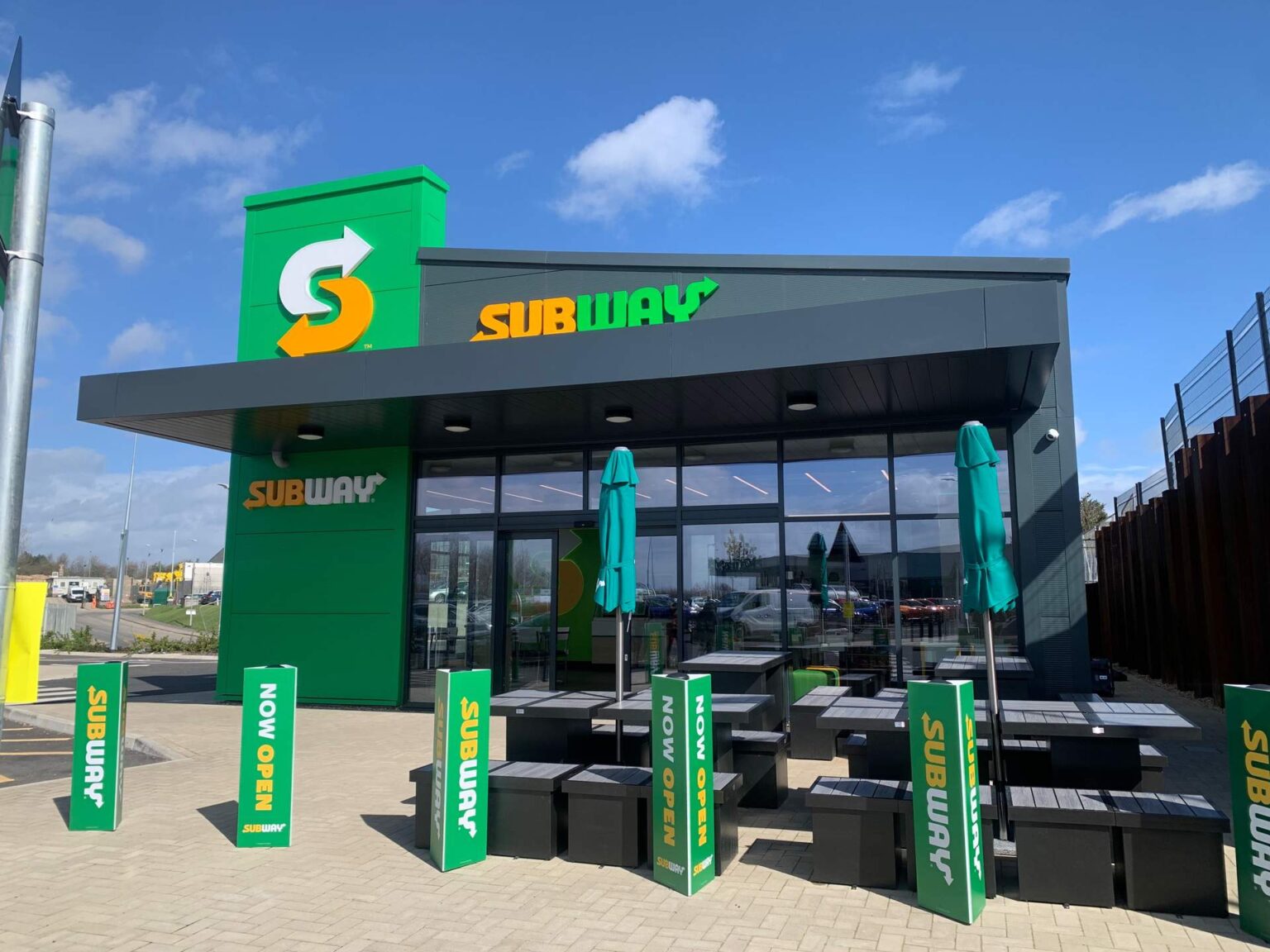
Subway's contraction has been severe and sustained — from a mid-2010s peak above 27,000 U.S. units down under 20,000, a decline approaching 28%. That has produced the largest inventory of second-generation sandwich real estate in QSR history: spaces with the plumbing, hoods, walk-in coolers, and grease traps already in place, available from landlords who are motivated. This is the single biggest cost lever available to a 2027 entrant, and it can pull a $400,000 project down to $250,000.
It is also the trap. A cheap conversion in a trade area that *couldn't support a Subway* will not support a better sandwich at a slightly higher price. The Subway that closed there closed for a reason, and if the reason was traffic rather than franchisee mismanagement or a corporate remodel mandate, you are buying the same problem with nicer bread. Find out which it was before you sign the lease — talk to the neighboring tenants, pull traffic data, and ask the landlord directly what the prior tenant's sales trend looked like.
The months 9–18 valley. Openings generate curiosity traffic. That fades around month three, and the repeat-customer flywheel doesn't fully engage until you have been open long enough for lunch habits to form — typically month twelve or later. Most failures in this category happen in that trough, and almost all of them are working-capital failures rather than concept failures. The FDD's $25,000–$60,000 working capital line covers three months. Carry six. If that means opening a smaller store, open the smaller store.
Leadership transition risk. The brand named a new chief executive effective mid-2026 with a stated expansion agenda across MN, WI, IA, ND, SD, IL, and OH, plus a new store design rolling out. New leadership at a sub-100-unit chain is usually good news for a franchisee long-term and mildly disruptive short-term. Expect a stretch of strategy churn before priorities settle — changed vendor programs, revised store prototypes, marketing that shifts direction mid-campaign. Ask directly at Discovery Day what the remodel obligation looks like in your franchise agreement's term, because "new store design" eventually becomes "required refresh" and that is a five-figure capital event you should price now.
Over-building. Spec'ing the full current design at the $460,000 ceiling produces the same revenue as a $230,000 conversion in the same trade area. Guest counts respond to location, product, and speed. They respond very little to millwork.
The semi-absentee fantasy. Worth repeating because it is the most common way this specific decision goes wrong. At median volume, the owner's cash flow and a competent GM's salary are drawn from roughly the same pool of money. You can have one or the other, not both, until you have three units.
Labor structure, not labor rate. Core-territory minimum wages remain low — federal $7.25 in Wisconsin, Iowa, and North Dakota; Minnesota higher. Cheap statutory minimums do not mean cheap labor: in a college town you are competing for the same eighteen-to-twenty-two-year-old workforce as every other lunch operator, and the real cost driver is turnover, not the hourly rate. A store that retains a crew for two years runs 27% labor. A store that rehires its entire roster every semester runs 33% and serves slower during the exact ninety minutes that generate your revenue.
Franchise agreement mechanics people skip. Read Item 20 for unit closures and transfers — the churn rate tells you more than any AUV figure. Read the territory language: what protection do you actually have, and does it survive a non-traditional site opening two miles away on a campus? Read the personal guarantee scope. Read the post-term non-compete radius, because it constrains what you do next if this doesn't work.
A practical rollout plan
Ninety days from curiosity to signature or walk-away, structured so that the cheapest kill decisions happen first.
Days 1–10 — Self-qualification. Build a personal financial statement. SBA Preferred Lenders will want to see liquid net worth above roughly $250,000 and total net worth above $500,000 before they will underwrite 70/30 on a $300,000 project. If you are not there, stop now — the most expensive version of this mistake is the under-capitalized version.
Days 11–20 — Request the FDD. Get the current-year document. Read Item 5 (fees), Item 7 (investment), Item 19 (financial performance), Item 20 (outlet and franchisee turnover), and Item 21 (audited financials) line by line, and read every footnote under Item 19 twice — the footnotes define which stores are in the tier and which were excluded.
Days 21–35 — Validation calls. Ask for the franchisee roster; it is in the FDD. Call at least eight operators, deliberately spread across strong, middling, and struggling units and across tenure. Ask specific numbers: actual food cost, actual labor cost, actual catering share, aggregator commission tier, how long to breakeven, what they would do differently. Ask the question that gets honest answers: "If your lease came up next year, would you renew?"
Days 36–50 — Site selection. Walk at least five sites. Pull third-party foot-traffic and daytime-population data. Require daytime population above ~35,000 within a three-mile drive. Check the lunch competitive set within a half mile and count how many of those seats belong to Jimmy John's, Jersey Mike's, or a strong local independent. Target $22–$32 per square foot NNN on second-generation space rather than $45+ on a Class A endcap.
Days 51–65 — Financial model. Build a three-year P&L at $650,000 Year-1 revenue. Then stress it at $500,000. If the $500,000 case cannot service debt and pay you something, the deal is dead regardless of how good the $825,000 case looks.
Days 66–75 — Lender pre-qualification. Submit to three SBA Preferred Lenders. Confirm rate, term (typically ten years on equipment and leasehold, twenty-five when real estate is involved), collateral requirements, and personal-guarantee scope in writing.
Days 76–85 — Discovery Day. Attend at the Wisconsin headquarters. Meet leadership and the operations team. Ask about remodel obligations, supply-chain programs, the technology roadmap, and precisely what field support looks like in a state with three units versus thirty.
Days 86–90 — Sign or walk. If the model holds at $500,000 and validation calls were clean, sign. If anything material felt evasive, walk. You will have spent $5,000–$10,000 on due diligence, which is the cheapest possible outcome compared to $300,000 in a failing unit.
If the process kills the deal, the adjacent plays are worth running before you give up on the category. Jersey Mike's has the best unit economics in the segment but most upper-Midwest territory was allocated years ago. Jimmy John's offers proven density and drive-thru-capable formats at higher combined royalty-plus-marketing load. Firehouse Subs brings strong brand equity but a Southeast-weighted support footprint. Potbelly reopened franchising. And the highest-return option for a genuinely local operator may not be a franchise at all: buying the equipment and keys of a closed Subway at distress pricing and running an independent shop keeps 9% of revenue that would otherwise leave the building — at the cost of building every scrap of brand awareness yourself.
Related questions
Is the non-traditional model a better entry point?
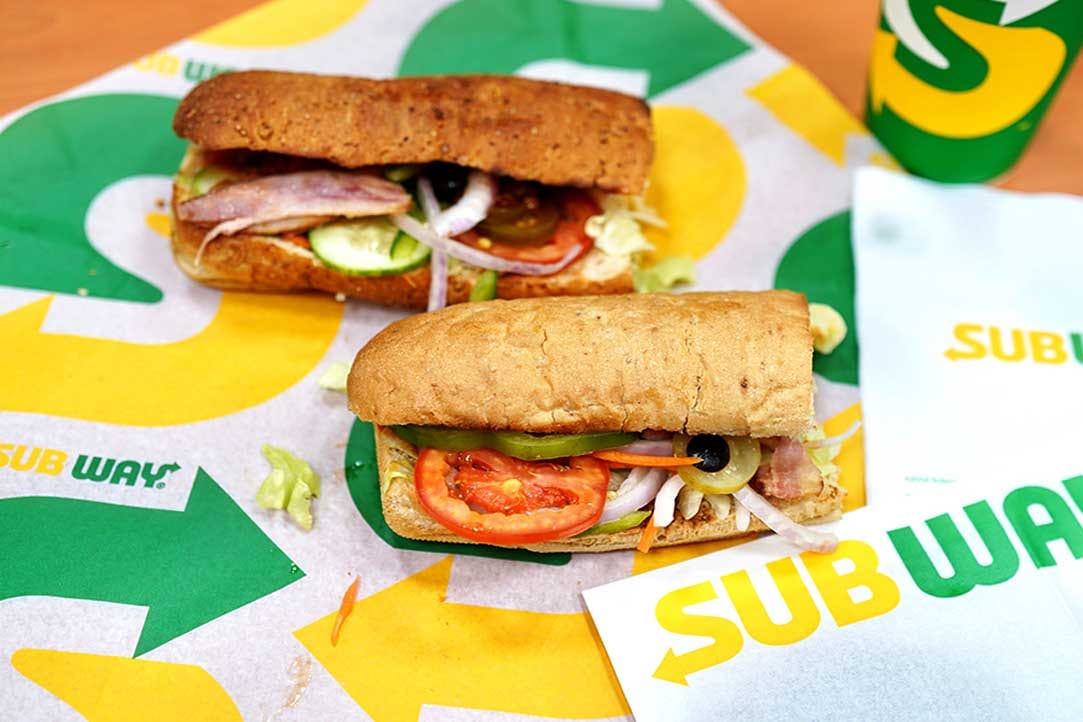
Often yes. University food courts, hospital cafeterias, and airport locations run $39,500–$196,750 all-in with a lower royalty and captive lunch traffic. Ceiling is lower and hours are dictated by the host, but the capital at risk drops by more than half.
How does this compare to buying an existing franchised unit?
Buying an operating unit gives you real historical revenue instead of a projection, trained staff, and immediate cash flow. You pay a premium for that certainty and inherit the prior owner's reputation, lease terms, and equipment age. Verify the sales figures against tax returns, not the seller's spreadsheet.
What does multi-unit development actually change?
Three units let you share bookkeeping, a catering coordinator, and a hiring pipeline, which is where EBITDA margin moves from roughly 9% toward 14%. It also concentrates your risk in one metro's economy and typically requires committing to a development schedule you must hit.
Does catering meaningfully change the math?
Yes. A real catering book can add 8–15% to top line at better incremental margin than retail, because platter orders spread labor across many sandwiches. It requires outbound selling to offices, campuses, and hospitals — work most franchisees never do.
FAQ
What actually makes Erbert & Gerbert's different from Subway?
Fresh-baked bread, better proteins and cheeses, a tighter menu of roughly twenty named builds, and a quirky regional personality instead of mass-market uniformity. The ticket is broadly comparable. The practical difference for an owner is that repeat rate is driven by product quality rather than by price promotion, which changes how you market.
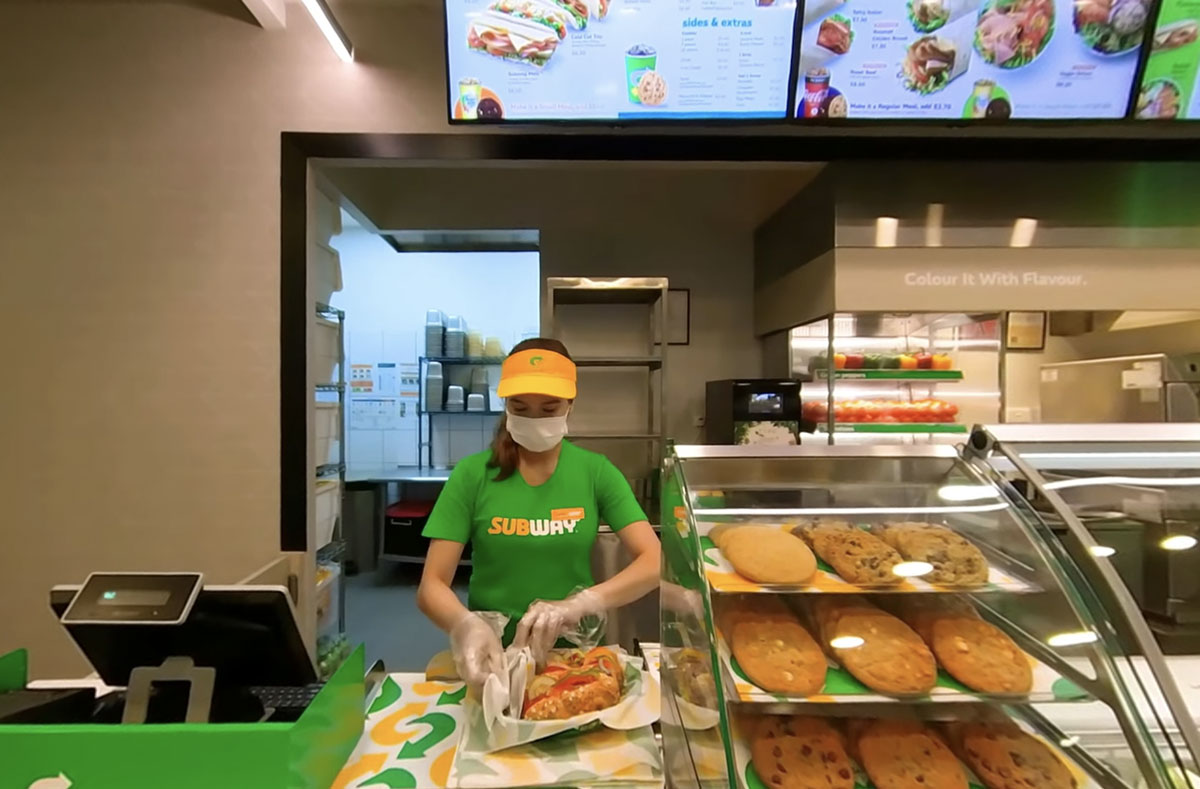
How much cash do I really need in 2027?
Item 7 puts total investment at $193,820–$460,270 for a traditional store. Plan on $250,000–$350,000 unencumbered, with the rest financed. Fund six months of working capital rather than the three months disclosed — under-capitalization, not concept failure, is what kills stores in months nine through eighteen.
Can I own this while keeping my current job?
Realistically, no, not for the first 18–30 months. At median revenue there is not enough margin to pay a general manager and still leave the owner a reasonable return. Semi-absentee becomes plausible once volume climbs well above median or you operate three or more units.
What is a realistic take-home in year one?
$45,000–$85,000 after debt service on a 70% SBA loan, and that figure *is* your compensation, not a bonus on top of a salary. Top-tier stores at $825,946 do better. Model the median case and be pleasantly surprised rather than the reverse.
Where are the best 2027 openings?
Inside the existing footprint — the Eau Claire–Twin Cities–Madison corridor, La Crosse, Fargo, and comparable college or hospital-adjacent towns in Wisconsin, Minnesota, Iowa, and the Dakotas. Look for daytime population above 35,000 within three miles and a lunch competitive set that is not already saturated.
Should I worry about the new leadership and store design?
Watch it rather than worry about it. New leadership at a sub-100-unit chain usually helps long term but brings a period of strategy churn. The concrete thing to nail down before signing is your remodel obligation — a mandated refresh mid-term is a five-figure capital event you should price into the model today.
Sources
- https://www.ibisworld.com/united-states/market-research-reports/sandwich-sub-restaurants-industry/
- https://www.restaurantbusinessonline.com/financing/subway-rapidly-losing-its-sub-sandwich-dominance
- https://www.franchisechatter.com/
- https://www.franchisehelp.com/franchises/erbert-gerberts/
- https://www.entrepreneur.com/franchises/directory
- https://www.nrn.com/
- https://www.sba.gov/funding-programs/loans/7a-loans
- https://www.bls.gov/cpi/
- https://www.dol.gov/agencies/whd/minimum-wage/state
- https://www.franchise.org/
Related on PULSE
- Should I open or buy a Subway alternative — Schlotzsky's — franchise in 2027?
- Should I open or buy a Subway franchise in 2027?
- Should I open or buy an Arby's alternative — Roast House — franchise in 2027?
- Should I open or buy a Tropical Smoothie Cafe alternative — Frutta Bowls — franchise in 2027?
- Should I open or buy a Cookies Crumbl alternative — Insomnia Cookies — franchise in 2027?
This page will be disappearing soon. Save it to your device for $1 — or read it free while it is here.
@Kory-White- · if Venmo asks, the last 4 of my number are 2012
This page is gone.
This one is off the shelf now. $1 keeps it on your phone for good — the whole page, pictures and diagrams included.
 franchiseShould I open or buy a UPS Store franchise in 2027?
 franchiseShould I open or buy a Crumbl Cookies franchise in 2027?
 franchiseShould I open or buy a Bruster's Real Ice Cream franchise in 2027?
 franchiseShould I open or buy a Jamba franchise in 2027?
 franchiseShould I open or buy a Drybar franchise in 2027?
 franchiseShould I open or buy a Take 5 Oil Change franchise in 2027?
 franchiseShould I open or buy a Panera Bread franchise in 2027?
 franchiseShould I open or buy a Cold Stone Creamery franchise in 2027?
 franchiseShould I open or buy a Chipotle franchise in 2027?
 franchiseShould I open or buy a Planet Fitness franchise in 2027?