


Should I open or buy a Fatburger franchise in 2027?
Quality
Certified
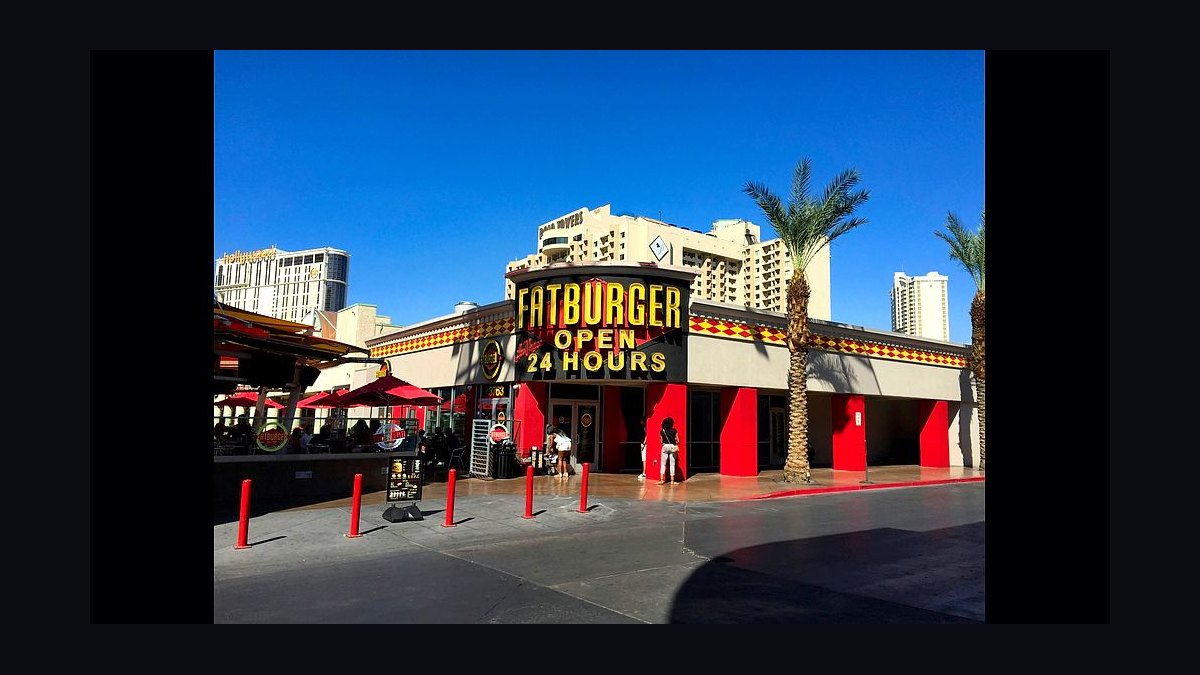
Probably not in 2027, unless you already run multiple profitable quick-service units and can cover roughly $700,000 in liquid capital beyond the loan. FAT Brands filed Chapter 11 in January 2026 carrying about $1.3 billion in debt, and Fatburger's own disclosure puts total investment between $509,000 and $1,695,000, with payback stretching six to nine years even in a clean scenario.
A Concrete Scenario That Frames The Problem
Picture two prospective buyers evaluating the same opportunity in early 2027. The first is a first-time operator with $550,000 saved, drawn to the brand's nostalgia appeal in a mid-size suburban market. The second already runs three profitable Five Guys locations, has $900,000 in liquid capital, and is eyeing a closed Quiznos box in a dense urban corridor near an airport. Both read the same franchise disclosure document. Both see the same $50,000 franchise fee, the same 6% royalty, the same 4% marketing fee. But the outcomes diverge sharply, and the difference is not the paperwork — it is everything the paperwork does not fully capture: the Chapter 11 estate the franchisor is operating inside, the site-quality dependency baked into the brand's average unit volume, and the operational complexity of a made-to-order burger concept with no freezer shortcuts. The first buyer, building greenfield in a tertiary market, is underwriting against an AUV that realistically sits closer to $750,000 rather than the headline $1,077,512 figure, while absorbing full build cost with no multi-unit cost-sharing to lean on. The second buyer, converting an existing kitchen in a high-traffic urban setting, cuts the single largest cost variable in the deal — the swing between $509,000 and $2,656,900 is almost entirely site work and lease build-out — while using existing commissary relationships and HR systems to offset the brand's operational demands. Before you can answer "should I open or buy a Fatburger franchise in 2027," you have to know which of these two buyers you actually are, because the same contract produces a viable business for one and a value-destroying decision for the other.
How The Mechanism Actually Works
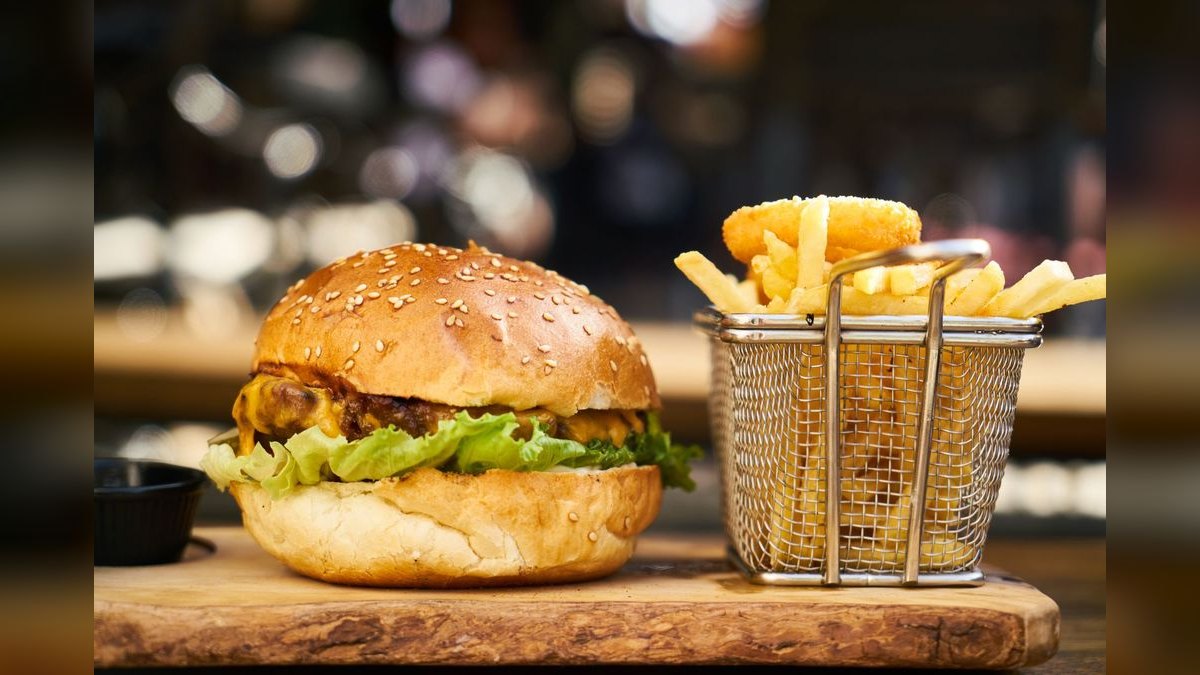
The economics of a Fatburger franchise move through a predictable sequence, and understanding the mechanism matters more than memorizing any single number, because the mechanism is what determines whether a given AUV translates into a livable return or a slow bleed. Start with top-line revenue: Item 19 of the current disclosure lists franchisee average unit volume at $1,077,512, with a median band running from $850,000 to $1,150,000 depending on site quality and market. From that top line, 6% flows out as royalty to FAT Brands — roughly $64,651 per year at the average — and another 4% flows out as marketing fund contribution, around $43,100 per year. That is 10% of revenue gone before a single burger is flipped. What remains must cover food cost, typically 28–32% for a made-to-order, no-freezer beef concept (notably higher than frozen-patty competitors because there is no shortcut on ingredient sourcing), labor at 28–33% (elevated in core markets like California where minimum wage for fast-food workers sits at $20.70 under the state's fast-food council rate), and occupancy at 8–11%. Net it out and a mature unit lands at roughly 10–12% EBITDA margin before debt service — meaning $107,752 to $129,302 annually on the average unit. Now layer on financing: a typical $1.2 million SBA 7(a) note at 11.25% over ten years carries annual debt service near $202,000, which consumes most or all of that EBITDA depending on how the unit performs relative to average. This is the core mechanism that decides everything downstream — a unit built at the low end of the investment range, on a strong site, with minimal debt, clears a real margin; a unit built at the high end, in a weak site, financed aggressively, does not. The flowchart below traces the decision logic a buyer should run before signing.
Real Numbers, Ranges, And Benchmarks
Every figure here traces to Fatburger's 2025/2026 franchise disclosure document, FAT Brands' January 2026 bankruptcy petition, and industry benchmarking from IBISWorld and the International Franchise Association. The initial franchise fee is $50,000. Total investment ranges from $509,000 at the low end (a smaller inline space with minimal build-out) up to $1,695,000 for a full inline build, and as high as $2,656,900 for a freestanding location requiring land work. The royalty fee runs 6.0% of net sales, with an additional 4.0% directed to national and local marketing, for a combined 10% off the top of every dollar of revenue. Average unit volume across the franchised system sits at $1,077,512, though the distribution underneath that average matters more than the headline — the median band runs $850,000 to $1,150,000, and site quality is the single biggest driver of where any individual unit falls within or outside that band. Franchisor-recommended liquid capital is $500,000, with a net worth requirement of $1,500,000, though a more conservative working capital reserve of $150,000 minimum on top of the build cost is advisable given the parent company's bankruptcy status. Estimated pre-debt franchisee earnings run $107,752 to $129,302 annually on an average-performing unit. Payback period on a mid-size build lands at six to nine years, calculated from AUV times roughly 11% EBITDA margin against a $1.2 million investment. One number that does not appear in a standard disclosure but matters enormously right now: there is no formal royalty deferral built into the Chapter 11 process as of the January 2026 debtor-in-possession disclosures, meaning franchisees continue paying full royalty and marketing fees into the bankruptcy estate with no guaranteed reduction in corporate support. Context from the broader category: beef cost is up roughly 11% year-over-year per USDA tracking, and California's fast-food minimum wage under the state's fast-food council schedule reached $20.70 in 2026, both of which compress the margin assumptions above further for any California-based unit. Mid-tier burger same-store sales, as tracked by Black Box Intelligence, are running flat to down roughly 2–3% while premium and value-tier burger brands grow 4–6%, placing Fatburger in a structurally disadvantaged middle tier heading into 2027.
Trade-Offs And Alternatives
The central trade-off in a 2027 Fatburger decision is brand nostalgia and urban-market strength against balance-sheet risk and operational complexity. The brand's equity is real and concentrated — it performs best in diaspora and nostalgia-driven markets like metro Los Angeles, Las Vegas, Toronto, Riyadh, and Manila, where customers have long-standing affinity for the original Western Avenue concept. That strength does not transfer evenly to a suburban or tertiary market, where the brand pulls meaningfully less traffic and AUV compresses toward $750,000. A second trade-off sits inside the build decision itself: a conversion of an existing closed quick-service box (a shuttered Quiznos, Carl's Jr, or independent burger location) can run at roughly 40% of greenfield cost, dramatically improving payback math, but conversions are scarce and require active site-sourcing through commercial listing platforms rather than passive site selection. A third trade-off is timing relative to the bankruptcy proceeding: operators who structure or renegotiate terms during the Chapter 11 plan confirmation window — expected around the third quarter of 2027 — may secure more favorable royalty or support terms than operators who sign before or after that window closes. If the Fatburger math does not pencil for your capital position, several adjacent concepts carry comparable investment ranges with cleaner fundamentals. Freddy's Frozen Custard & Steakburgers reports AUV near $1.65 million with a stable parent balance sheet and investment of $651,000 to $2.3 million. MOOYAH Burgers runs a smaller footprint at $471,000 to $801,000 with AUV near $1.1 million. Smashburger, backed by Jollibee's stable parent company, runs AUV near $1.05 million against investment of $782,000 to $1.45 million. A more unconventional alternative: acquiring a closed Fatburger box at liquidation pricing and operating it as an independent concept avoids the combined 10% royalty-and-marketing drag entirely, preserving an additional roughly $108,000 per year on a $1.08 million revenue base, at the cost of giving up brand recognition and supplier relationships. A lower-capital option worth modeling first is a cloud-kitchen or virtual-brand footprint at $60,000 to $120,000, which lets an operator validate unit economics for a concept before committing to a seven-figure brick-and-mortar build.
Common Pitfalls And How To Avoid You
The most common pitfall is treating the headline AUV of $1,077,512 as a universal baseline rather than a system average skewed upward by strong urban and airport locations. Avoid it by underwriting any suburban or tertiary-market site at the lower $750,000–$850,000 band and confirming the deal still works at that figure before signing anything. A second pitfall is underestimating operational complexity: Fatburger's made-to-order, no-freezer beef model runs roughly twice the ticket time of a frozen-patty competitor like Five Guys, and new operators routinely mis-staff the back line in their first six months, eroding throughput exactly when they need volume to cover fixed costs. Avoid it by budgeting for an experienced kitchen manager from day one rather than promoting internally during the ramp period. A third pitfall is assuming normal franchisor support during a bankruptcy. Marketing co-op spending has already been questioned in court filings tied to a related franchise system under the same parent, and new-build incentives have been frozen — do not model any corporate marketing lift or development incentive into your pro forma until the reorganization plan is confirmed. A fourth pitfall is skipping direct franchisee outreach: call at least a dozen current operators from the disclosure's franchisee list and ask specifically about year-three EBITDA, post-filing support levels, and whether creditors have pushed remodel mandates onto franchisees, since reorganization plans sometimes shift capital obligations downstream. A fifth pitfall is proceeding without bankruptcy-specific legal review — a generalist franchise attorney will not catch how debtor-in-possession financing terms affect an existing or new franchise agreement, so budget $8,000–$15,000 for a bankruptcy-experienced franchise attorney as a non-negotiable line item. Finally, avoid over-leveraging the build: financing at the top of the investment range on an SBA note near 11.25% pushes annual debt service to roughly $202,000, which consumes nearly all projected EBITDA on an average-performing unit — build toward the low end of the Item 7 range or pursue a conversion site to preserve margin for debt service.
Related questions
Is Fatburger still accepting new franchise applications during Chapter 11?
Yes — FAT Brands has not publicly suspended franchise sales, but the bankruptcy court must approve new agreements, and approval timelines remain uncertain while creditors scrutinize new royalty flows into the estate.
How does the Chapter 11 filing affect ongoing franchisee royalties?
Franchisees still pay the 6% royalty and 4% marketing fee, but those funds now flow into the bankruptcy estate, where a portion may be redirected to creditors rather than corporate support functions.
What is a realistic timeline to open a Fatburger franchise starting in 2027?
Site selection, lease negotiation, and build-out typically take 12–18 months, so a process started in early 2027 realistically points toward a late 2028 opening, with bankruptcy-related delays possible on top of that.
Can conversion sites really cut costs that much?
Yes — converting an existing closed quick-service box can run at roughly 40% of greenfield cost by reusing existing electrical, plumbing, and hood systems, which is why conversion plays are considered the strongest entry point in 2027.
FAQ
Is Fatburger still accepting new franchise applications during Chapter 11? Yes, FAT Brands has not publicly suspended franchise sales, but the bankruptcy court must approve any new franchise agreements. Lenders and creditors may challenge new royalties being diverted to a struggling parent, so approval timelines are uncertain.
How does the Chapter 11 filing affect my ongoing royalties and fees? You still pay the 6% royalty and 4% marketing fee to FAT Brands, but those funds now flow into the bankruptcy estate. The court may redirect a portion to creditors, potentially reducing corporate support for franchisees.
What is the realistic timeline to open a Fatburger in 2027? Site selection, lease negotiation, and build-out typically take 12–18 months. If you start the process in early 2027, a late 2028 opening is more realistic. The bankruptcy could further delay approvals.
Can I negotiate lower fees or a reduced franchise fee during bankruptcy? FAT Brands may offer concessions to attract new franchisees, but the court and creditors must approve any fee changes. Historically, bankrupt franchisors rarely offer meaningful discounts to new operators.
What happens to my franchise if FAT Brands is liquidated? If the court orders liquidation, your franchise agreement could be terminated or sold to a new owner. You might lose your investment or be forced to renegotiate terms with a buyer.
Is there any scenario where buying a Fatburger franchise makes sense in 2027? Only if you have deep pockets of $700,000 or more in liquid capital, experience operating distressed businesses, and are willing to accept a six-to-nine-year breakeven. Even then, the parent's instability makes this a high-risk bet.
Sources
- https://www.sec.gov/cgi-bin/browse-edgar?action=getcompany&CIK=0001705012
- https://www.restaurantdive.com
- https://www.thestreet.com
- https://www.ibisworld.com
- https://www.franchise.org
- https://www.ers.usda.gov
- https://www.blackboxintelligence.com
- https://www.fatburger.com
- https://www.vettedbiz.com
- https://www.costar.com
Related on PULSE
This page will be disappearing soon. Save it to your device for $1 — or read it free while it is here.
@Kory-White- · if Venmo asks, the last 4 of my number are 2012
This page is gone.
This one is off the shelf now. $1 keeps it on your phone for good — the whole page, pictures and diagrams included.
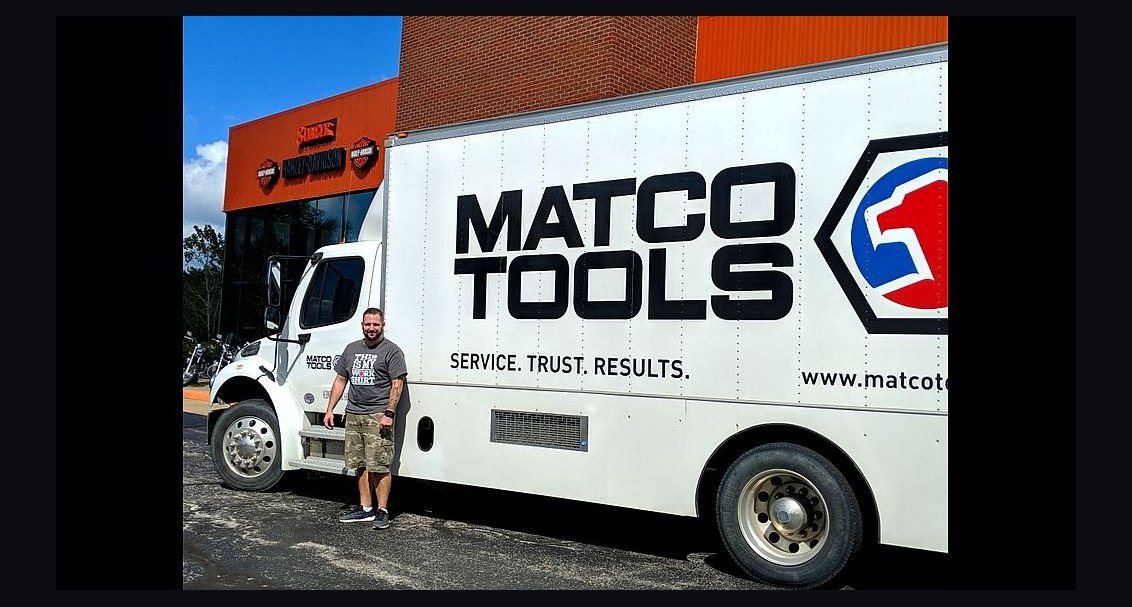 franchiseShould I open or buy a Matco Tools franchise in 2027?
 franchiseShould I open or buy a Supercuts franchise in 2027?
 franchiseShould I open or buy a Marco's Pizza franchise in 2027?
 franchiseShould I open or buy a Jimmy John's franchise in 2027?
 franchiseShould I open or buy a Servpro franchise in 2027?
 franchiseShould I open or buy a Valvoline Instant Oil Change franchise in 2027?
 franchiseShould I open or buy an Auntie Anne's franchise in 2027?
 franchiseShould I open or buy a Crumbl Cookies franchise in 2027?
 franchiseShould I open or buy a Jiffy Lube franchise in 2027?
 franchiseShould I open or buy a Bojangles franchise in 2027?