


Should I open or buy a Granite Garage Floors franchise in 2027?
Quality
Certified

Buy or open a Granite Garage Floors franchise in 2027 only if you have roughly $250,000–$300,000 to deploy, will personally run sales for the first year, and operate in a suburban market with high household density and median home values above $400,000. It is an owner-operator sales business with floors attached — not passive income.
The outcome you should expect
The honest expectation for a competent first-year Granite Garage Floors franchisee is a business that consumes cash for two to three quarters, crosses breakeven somewhere in months nine through fourteen, and produces owner cash flow in the $55,000–$95,000 range on $450,000–$650,000 of first-year revenue. That is the middle of the distribution, not the pitch deck. The system-average gross revenue disclosed in the 2025 FDD Item 19 is $735,405, but averages in home-services franchising are always dragged upward by a small number of multi-crew operators, so a new single-van unit should model against the median — closer to $620,000–$680,000 — and treat anything above that as upside earned rather than assumed.
What you are actually buying is a repeatable installation method, a proprietary polyaspartic and flake product supply, a CRM and field-service software stack, a national brand with real recognition in the concrete coating category, and a protected territory sized around 250,000 households. What you are not buying is demand. There is no storefront, no walk-in traffic, no captive customer base, and no inbound flywheel on day one. Every dollar of revenue in year one comes from paid lead generation, local search visibility, direct outreach, and referral cultivation that you personally drive.
The shape of the outcome curve matters more than the endpoint. Months one through four are almost entirely spend: franchise fee paid, vehicle wrapped and outfitted, equipment purchased, training completed, insurance bound, and marketing switched on before a single job is installed. Months five through nine are the dangerous stretch — revenue is arriving, but not fast enough to cover payroll, fuel, product, and a $15,000–$20,000 monthly marketing budget simultaneously. Operators who fail almost always fail here, not because the model is broken but because they underestimated how much working capital the ramp consumes. Months ten through eighteen are where a well-run unit compounds: the backlog stabilizes at two to three weeks, referral volume starts contributing meaningfully, and the second crew becomes justifiable.

At maturity — realistically year three — a two-crew unit in a strong territory produces EBITDA margins in the 18–22% band, while a single-van owner-operator sits at 12–18%. The gap is almost entirely fixed-cost absorption: the same royalty structure, tech fee, insurance, and marketing overhead spread across double the revenue. Payback on the $280,000–$300,000 all-in investment lands around months 22–30 for a median operator and months 14–18 for the top quartile.
If you are evaluating this as an acquisition of an existing unit rather than a greenfield open, the calculus shifts favorably in one dimension and unfavorably in another. You skip the nine-month cash-consumption valley and inherit a customer list, crew, and lead history — worth real money. But you inherit the seller's reputation, their online review profile, their crew's habits, and whatever the reason for selling actually was. Underwrite an existing unit on trailing twelve-month collected revenue and crew utilization, not on gross bookings, and price it against the fact that a greenfield territory costs $280,000 all-in.
What drives that outcome
Three variables explain nearly all of the 3.4x spread between the bottom and top quartiles of this system, and none of them is installation quality. They are lead cost, average ticket, and crew utilization — in that order.
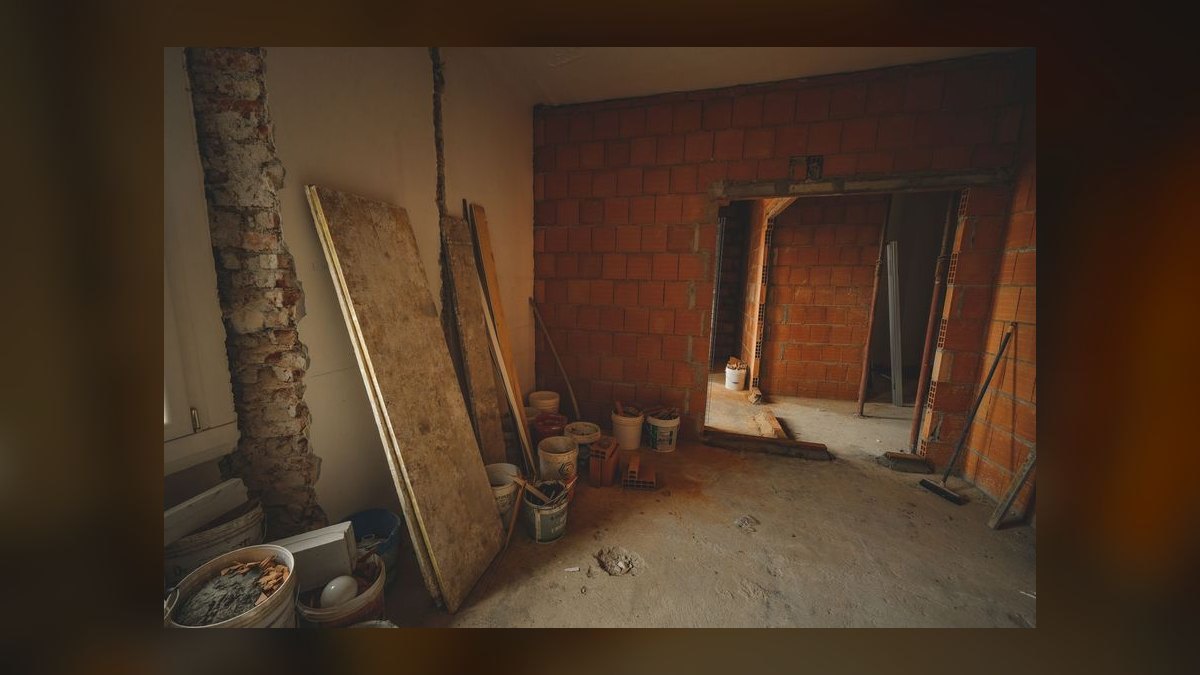
Lead cost is the throat of the business. Google Local Services Ads and paid search for garage floor coating have gotten materially more expensive across Sun Belt metros, and aggregator platforms like Angi and Thumbtack sell the same lead to multiple contractors, which crushes close rate and drags your effective cost per acquired customer far above the headline cost per lead. The operators winning in this category have systematically shifted budget away from aggregators toward owned channels: Google Business Profile optimization, organic local SEO for the specific ZIP codes in their territory, direct mail targeted to homes above a value threshold, HOA and builder partnerships, and structured referral programs. Owned channels have a longer ramp — eighteen to twenty-four months to compound — which is precisely why they must be funded from month one rather than started when paid leads get too expensive.
Average ticket determines whether the same lead volume produces a $400,000 business or an $800,000 one. A residential two-car garage sits in the $3,800–$6,500 range depending on square footage, floor prep required, flake system chosen, and whether the customer adds a bay or a basement. Commercial work — auto dealerships, HVAC service bays, fitness facilities, multi-tenant warehouse floors — runs $14,000–$45,000 per project with gross margins several points better than residential because mobilization cost is amortized across far more square footage. This is the single largest reason market selection matters so much: in a metro where the median home is $220,000, the average ticket collapses toward $2,400, and the unit economics invert because fixed cost per job stays constant while revenue per job falls by 40%.
Crew utilization is the quiet multiplier. Polyaspartic's fast cure allows a disciplined crew to complete two jobs per day where a traditional epoxy system permits one. That is not a marginal improvement — it is a doubling of revenue capacity against identical labor cost. But it only materializes if scheduling density is tight: jobs clustered geographically, materials staged the night before, and a backlog deep enough that a weather cancellation gets backfilled rather than leaving a crew idle at full pay.
The diagram makes the leverage points visible. Adding marketing spend without fixing set rate just buys more unconverted leads. Fixing close rate without deepening the backlog just idles the crew differently. The operators who reach the top quartile move all four gates — set rate, close rate, ticket, utilization — in the same two quarters, and they do it by reviewing the numbers daily rather than monthly.
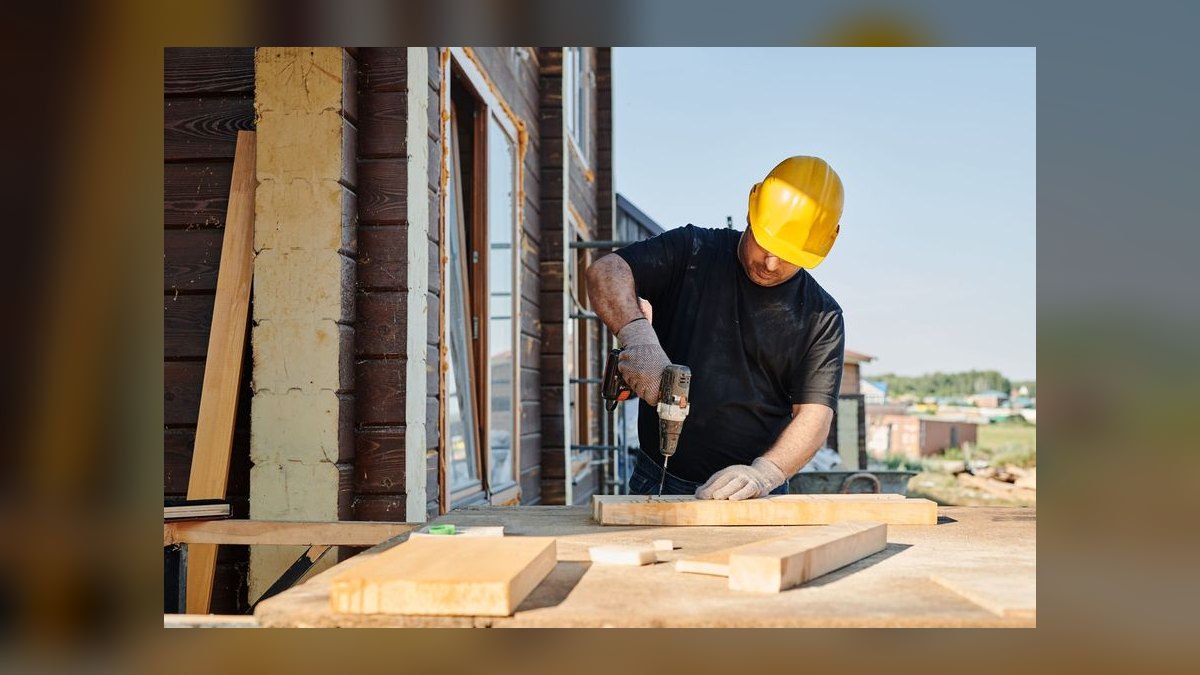
There is an upstream variable that most buyers ignore entirely: territory drive time. A 250,000-household territory that is geographically compact lets a crew run two jobs a day. The same household count spread across a sprawling metro's exurban ring means an hour of windshield time between jobs, which silently converts a two-job day into a one-job day and cuts revenue capacity in half. If the desirable core of your metro is already franchised and the available territory is the outer ring, that single fact may be more determinative of your outcome than anything in the FDD.
Benchmarks and realistic ranges
Underwrite against these bands rather than against the brochure. The 2025 FDD Item 7 range for total initial investment is $227,367 to $390,367, with a $60,000 initial franchise fee, a 6.5% royalty on gross sales, a 2% brand fund contribution, a monthly technology fee for the CRM and field-service stack, and a smaller monthly website services charge. Veterans receive a franchise-fee discount. Because the model is home-based with no retail buildout, the investment is concentrated in a wrapped vehicle, grinding and dust-extraction equipment, opening inventory, and — critically — working capital.
The line items that first-time buyers consistently underestimate:
Working capital. Budget $50,000–$100,000 and treat the high end as the planning number. This covers crew payroll before collections stabilize, product purchases ahead of customer deposits, fuel, and accounts-receivable float on commercial jobs that pay on thirty- or sixty-day terms. Under-funding this line is the most common structural cause of failure in the category.
Marketing. $15,000–$35,000 for the ninety-day launch, then $15,000–$20,000 monthly sustained. Operators who cut marketing to preserve cash during the month-six squeeze almost always make the squeeze worse — the pipeline gap shows up sixty days later, exactly when they can least afford it.
Insurance. General liability, commercial auto, and workers' compensation for a coating contractor have been repricing upward, driven substantially by slip-and-fall claim frequency on freshly coated surfaces. Get real quotes for your state before you sign anything; premiums vary dramatically by jurisdiction and by whether your crew is W-2 or subcontracted.

Vehicle lead time. A wrapped cargo van or equipped trailer carries a meaningful ordering lag. Order it the week you sign, not the week you finish training, or you will pay for corporate training and then sit idle waiting on a truck.
Operating benchmarks worth holding yourself to, drawn from how the stronger operators in this category actually run:
- Set rate (booked estimates divided by inbound leads): 65% or better. Below 50% means either your lead source is wrong or nobody is answering the phone fast enough. Speed-to-lead in home services is measured in minutes, not hours.
- Close rate (signed jobs divided by estimates delivered): 45% or better. A 35% close rate with a hired salesperson and a $18,000 monthly ad budget is the exact profile that burns $200,000 of working capital inside a year.
- Average residential ticket: north of $4,200. If yours is drifting below $3,500, you are either quoting too low, failing to upsell adjacent spaces, or serving a market whose home values cannot support the product.
- Same-week job start rate: 70%+. Customers who wait three weeks cancel.
- Backlog depth: two to three weeks. Deeper than four weeks and you are losing jobs to faster competitors; shallower than one week and a rain day costs you a full crew-day of payroll with no revenue.
- Commercial revenue share: target 20%+ by the end of year two. Commercial smooths the seasonality that whipsaws purely residential operators and carries better gross margin.
On financing: an SBA 7(a) loan covering $200,000–$250,000 with $50,000–$80,000 of personal cash and separate vehicle financing is the standard capital stack. Do the debt-service math at current rates before assuming it works — several thousand dollars a month of principal and interest comes out of EBITDA before you serve your first customer, and at a 15% margin that debt service alone requires meaningful annual revenue just to cover. Lenders will typically want a net worth around $150,000, liquid cash near $60,000, and a strong personal credit score.
One benchmark that has nothing to do with the FDD: count three-car garages. Drive five target ZIP codes on a Saturday and physically count new-construction garages, HOA signage, and permit boards. Then pull your county's building-permit data for the prior two years. A territory with a thick new-construction pipeline supplies a renewable stream of customers who have just moved in, have an unfinished slab, and are already spending on the house. That single field observation predicts your average ticket better than any demographic table.
Risks, edge cases, and failure modes
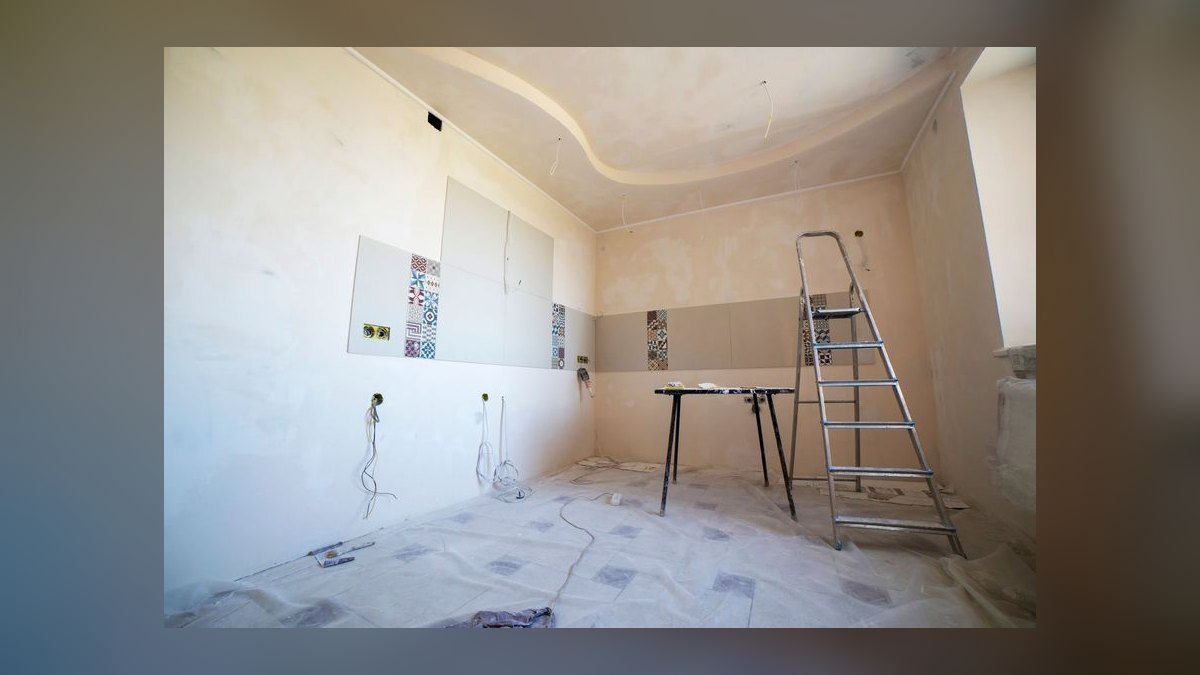
The failure modes in this business are unusually predictable, which is good news — they are almost all avoidable by an operator willing to be honest about their own temperament.
The semi-absentee trap. The single most reliable way to lose money here is to hire a general manager on day one and never personally sell. The math is brutal: a mid-five-figure GM salary, a five-figure monthly ad budget, and a close rate that sits ten points below what an owner would achieve, all running simultaneously against a business with no revenue floor. That combination consumes a fully funded working-capital line in under a year. If your reason for buying a franchise is that you want to own a business without working in one, this is the wrong category. Consider a model with recurring contracted revenue instead.
Market mismatch. A market where the median home value is well under $300,000 does not support a $4,200 average ticket at the volume the model needs. You can sell coatings there, but you will sell fewer of them at lower prices with identical fixed costs. This is not a marketing problem and cannot be solved with better ads. Validate median home value, household count, and three-car-garage density before you validate anything else.
Seasonality and weather. Polyaspartic cures at low temperatures, which is why northern operators are viable — they pivot toward basements, laundry rooms, and interior slabs during winter and back to garages in the shoulder seasons. But the pivot has to be deliberate: different marketing creative, different lead targeting, different estimate scripts. Operators who simply assume garage demand continues through a Midwest February discover a two-month revenue hole they did not budget for.

Labor. Flooring crew labor is a genuinely constrained supply. A trained applicator who can run prep, grinding, and topcoat without callbacks is hard to find and easy to lose. Callback rate is the metric that reveals crew quality: a job that needs a return visit costs you a full crew-day, the material, and often the review. Budget for higher-than-expected wages and build a bench before you need one.
Warranty and callback exposure. Coating failures — delamination, hot-tire pickup, moisture-driven blistering — typically trace back to inadequate moisture testing or insufficient surface profile during prep. These are prep-discipline failures, not product failures. Test slabs for moisture vapor emission, document it, and refuse jobs where the slab conditions are wrong. A single high-profile failure in an HOA community can poison an entire neighborhood's referral potential for a year.
Concentration risk on commercial. Commercial work is higher-margin and smooths seasonality, but a multi-location account that represents 30% of your revenue and pays on sixty-day terms is a working-capital hazard disguised as a win. Diversify commercial across at least three or four accounts before you let it exceed a quarter of revenue, and price the receivable float into your quote.
Competition from independents. Local, unfranchised coating contractors compete on price without a royalty and brand fund coming off the top. You will lose price-shopper jobs to them, and you should — competing on price against an operator with an 8.5% structural cost advantage is a losing game. Your differentiation has to be speed, warranty credibility, brand trust, and the professionalism of the estimate experience. If you find yourself discounting to match independents, your marketing is attracting the wrong customer.
The renewal and resale question. Read Items 17 and 21 of the FDD carefully. Understand transfer conditions, renewal terms, post-term non-compete scope, and what happens to your territory if you underperform against any development or performance minimums. These clauses determine whether the equity you build is actually sellable, and buyers routinely skip them because they are the least exciting part of the document.
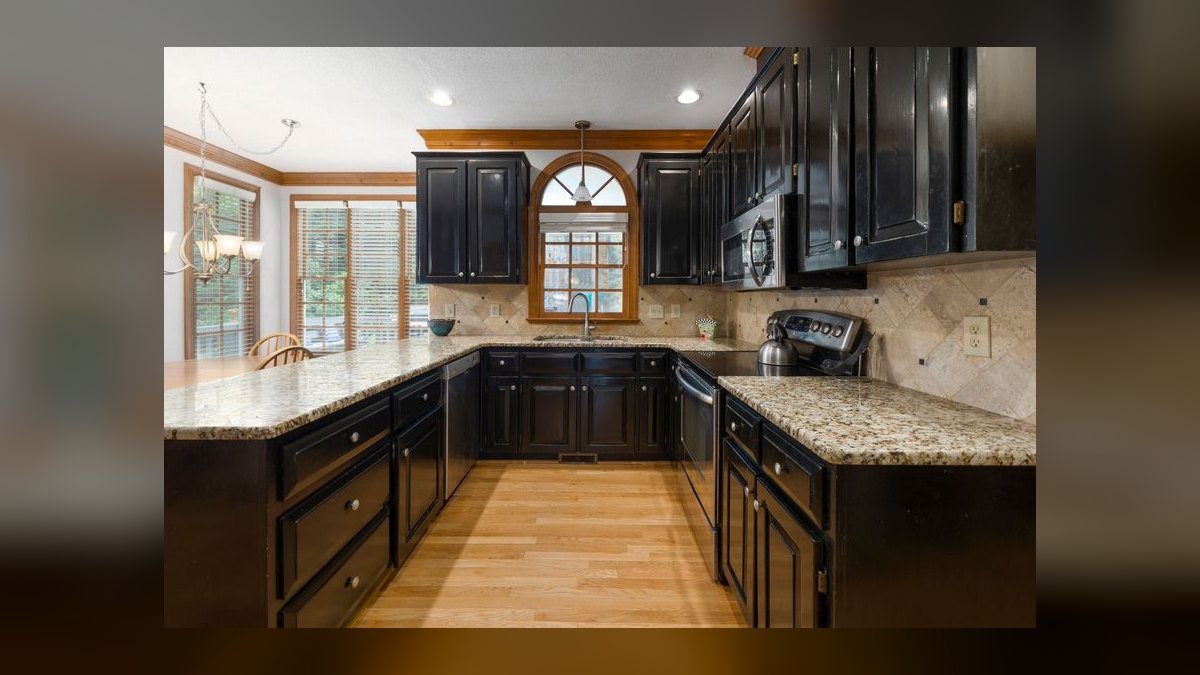
Adjacent-model comparison as a risk check. If several of the above failure modes describe you, the adjacent options are worth real evaluation rather than dismissal. Competing concrete-coating and garage-conversion franchises exist at both lower and higher investment tiers, some with broader product lines — cabinetry and overhead storage alongside flooring — which raises average ticket through cross-sell. Others carry heavier national marketing spend, which reduces how much local demand generation you must build yourself, at the cost of a different fee structure. And the fully independent route saves the franchise fee plus the ongoing royalty and brand-fund stack — a meaningful annual sum at $700,000 of revenue — but you forfeit the playbook, the software, the supplier terms, and any national accounts pipeline. Independents in this category commonly plateau well below the seven-figure mark precisely because they never build the systems the franchise supplies.
A practical rollout plan
Treat the decision as a ninety-day diligence sprint followed by a hundred-day launch. Compressing the diligence is the most expensive shortcut available to you.
Days 1–7 — validate your own financial floor. Build a personal balance sheet. Confirm liquid cash, net worth, and credit sufficient for SBA pre-qualification, then confirm you can survive twelve months without drawing a salary from the business. Run a household-count check on your target ZIP codes against Census data and find out immediately whether your preferred territory is available or already franchised. If the answer is "the adjacent territory forty minutes out," recalculate everything with that drive time baked in.
Days 8–21 — obtain and actually read the FDD. Submit the application, receive the document, and read Items 7, 17, 19, 20, and 21 in full. Item 20 lists every current and former franchisee with contact information. Call twelve to fifteen of them — chosen by you, not the three the franchisor recommends — and specifically include operators who have left the system. Ask each: actual year-one and year-two collected revenue, monthly marketing spend, cost-per-lead trajectory over the last two years, crew payroll structure and turnover, callback rate, commercial mix, and what they wish they had known before signing. Former franchisees will tell you things current ones will not.
Days 22–45 — Discovery Day plus your own market study. Attend Discovery Day at corporate. In parallel, do the fieldwork nobody does: drive your ZIP codes, count garages and HOA signage, pull county building-permit data for the last twenty-four months, price three competing local coating contractors by requesting quotes on your own home, and search your target keywords to see who already owns the local organic and map results. That competitive search audit tells you exactly how expensive your first year of lead generation will be.
Days 46–65 — build the capital stack. Assemble the financing with explicit debt-service modeling at current rates. Deliberately avoid over-leveraging; the temptation to finance the working-capital line is strong and the consequence is that your cash cushion is now a monthly payment. Get real insurance quotes rather than using the FDD's estimate range.
Days 66–90 — sign or walk, and mean it. If you sign: register the entity, order the wrapped vehicle immediately given its lead time, book corporate training, and begin pre-launch marketing around day seventy-five — claim and optimize the Google Business Profile, enroll in Local Services Ads, build the direct-mail list, and start HOA and builder outreach. First job booked by roughly day 110 and first cash collected by day 130 is the realistic target. If the diligence produced a bad answer, walking away at day ninety costs you an application fee and some travel. Walking away at month fourteen costs you $280,000.
Post-launch, the operating rhythm is what compounds. Review lead flow every morning before the crew rolls. Track set rate, close rate, average ticket, and same-week start rate weekly, not monthly — monthly is too slow to catch a channel degrading. Reinvest into owned marketing channels continuously so that by month eighteen your cost per acquired customer is falling rather than rising. Start commercial outreach by month twelve at the latest; the sales cycle is long enough that waiting until you "have capacity" means the pipeline arrives a year after you needed it.
Related questions
How does a concrete coating franchise compare to other home-services franchises?
Coating sits between low-ticket recurring services and high-ticket remodeling. Tickets are larger than cleaning or pest control but non-recurring, so you rebuild the pipeline every month. Recurring-revenue models offer smoother cash flow; coating offers higher margin per transaction and lower customer-service overhead.
Is buying an existing franchise unit better than opening a new one?
Often yes, if priced correctly. You skip the cash-consumption valley and inherit crew, reviews, and lead history. But underwrite trailing collected revenue, callback rate, and the real reason for sale — and compare the asking price against the roughly $280,000 all-in cost of a greenfield territory.
Do I need construction or concrete experience to run this?
No. Application is trainable and often subcontracted. What is not trainable in a season is comfort with outbound selling, speed-to-lead discipline, and crew scheduling. Prior home-services, trades, or contracting sales experience predicts success far better than technical flooring knowledge.
How much does territory size and geography actually matter?
Enormously. A compact 250,000-household territory supports two jobs per crew per day; the same household count sprawled across an exurban ring halves that capacity through drive time. Median home value and new-construction density then set your average ticket. Territory quality outweighs most other variables.
What exit options exist for a mature unit?
Resale to another operator, sale to a multi-unit franchisee consolidating territories, or a management buyout by your GM. Valuation typically keys off adjusted EBITDA with a multiple influenced by crew stability and commercial contract mix. Review the FDD's transfer clauses early — they govern what is actually sellable.
FAQ
How much capital do I really need to start?
Plan on $250,000–$300,000 available, not just the low end of the $227,367–$390,367 disclosed range. The $60,000 franchise fee is due at signing, and the working-capital line of $50,000–$100,000 is the one that determines survival. Buyers who fund the equipment and skimp on working capital are the ones who run out of cash in month eight.
How long until I break even?
Most operators cross breakeven between months nine and fourteen. First-year owner cash flow typically lands in the $55,000–$95,000 range on $450,000–$650,000 of revenue. Full payback on the initial investment runs roughly 22–30 months for a median operator and 14–18 months for the top quartile.
Can I run this semi-absentee with a hired manager?
Realistically, no — at least not in year one. The model's economics depend on owner-led selling, sub-hour lead response, and daily metric review. Hiring a manager on day one adds fixed cost while lowering close rate, which is the fastest documented path to exhausting your working capital in this category.
What revenue should I model for year one?
Model $450,000–$650,000. The disclosed system-average gross revenue of $735,405 includes established multi-crew units and will overstate a first-year single-van operation. Anything above $650,000 in year one is an outcome you earned through aggressive lead generation, not one you should underwrite.
Which markets work and which do not?
Suburban markets with high household density, median home values above $400,000, meaningful new-construction activity, and three-car-garage prevalence work. Rural markets, low-median-home-value metros, and sprawling territories with long drive times between jobs do not — the average ticket falls while your fixed costs stay identical.
Should I consider going independent instead of franchising?
Only if you already have a lead-generation engine and supplier relationships. Skipping the franchise fee and the ongoing royalty and brand-fund stack saves real money, but you also forfeit the operating playbook, the software stack, national accounts access, and brand trust in the estimate. Most independents plateau well below the seven-figure revenue mark.
Sources
- https://www.ftc.gov/business-guidance/resources/franchise-rule-compliance-guide
- https://www.sba.gov/funding-programs/loans/7a-loans
- https://www.census.gov/programs-surveys/acs
- https://www.census.gov/construction/bps/
- https://www.bls.gov/oes/current/oes472221.htm
- https://www.franchise.org/
- https://www.entrepreneur.com/franchises/franchise500
- https://www.acius.net/
- https://www.concretenetwork.com/
- https://www.nar.realtor/research-and-statistics
Related on PULSE
- Should I open or buy a Footprints Floors franchise in 2027?
- Should I open or buy a Granite Transformations franchise in 2027?
- Should I open or buy a Premier Garage franchise in 2027?
- Should I open or buy a Garage Experts franchise in 2027?
- Should I open or buy a Precision Garage Door franchise in 2027?
- Should I open or buy a Garage Living franchise in 2027?
This page will be disappearing soon. Save it to your device for $1 — or read it free while it is here.
@Kory-White- · if Venmo asks, the last 4 of my number are 2012
This page is gone.
This one is off the shelf now. $1 keeps it on your phone for good — the whole page, pictures and diagrams included.
 franchiseShould I open or buy a Massage Envy franchise in 2027?
 franchiseShould I open or buy a Whataburger franchise in 2027?
 franchiseShould I open or buy a Pizza Hut franchise in 2027?
 franchiseShould I open or buy a Dunkin' franchise in 2027?
 franchiseShould I open or buy an F45 Training franchise in 2027?
 franchiseShould I open or buy a Rita's Italian Ice franchise in 2027?
 franchiseShould I open or buy a Goddard School franchise in 2027?
 franchiseShould I open or buy a Big O Tires franchise in 2027?
 franchiseShould I open or buy a Hand and Stone Massage franchise in 2027?
 franchiseShould I open or buy a Domino's franchise in 2027?