


Should I open or buy a Precision Garage Door franchise in 2027?
Quality
Certified

Open or buy a Precision Garage Door franchise in 2027 only if you can fund roughly $400K–$670K all-in, have trades or field-service operating experience, and secure an unsaturated territory. The model produces real revenue — mid-single-millions at maturity — but demands owner-operator involvement. Passive investors and late entrants into saturated metros consistently underperform.
What a Precision Garage Door franchise actually is, and why the structure matters more than the brand
Precision Door Service — marketed as Precision Garage Door Service — is a residential garage door repair, service, and installation network operating under Precision Door Service SPV LLC, which became part of the Neighborly portfolio in 2022. Understanding that ownership chain matters more than most prospective buyers realize, because it dictates almost everything about how the unit economics behave.
Neighborly is a multi-brand home-services platform: Mr. Rooter, Aire Serv, Mr. Electric, Mr. Handyman, Window Genie, Molly Maid, and roughly two dozen others sit under the same roof. When you buy a Precision territory, you are not buying a garage door business with a logo attached. You are buying access to a shared operating apparatus — call center capacity, a national marketing fund, lender relationships, fleet and parts purchasing programs, and a franchise-development machine that has already mapped and priced every territory in the United States.
The territory itself is the asset. Precision prices territories on single-family household count — the industry shorthand is SFHUD, single-family households. The published formula runs roughly $0.50 per single-family household, and typical territories carry somewhere in the 150,000–300,000 household range. That is where the widely quoted $75K–$150K initial franchise fee band comes from. It is not an arbitrary sticker price; it is a per-door tax on the addressable demand you are being granted exclusivity over.
Royalty runs on a sliding scale, generally described as 4%–6% of gross sales, stepping *down* as volume climbs, plus a marketing/advertising/promotions fee around 2% and, in many markets, an optional local co-op contribution of up to roughly 3%. The sliding royalty is a genuinely operator-friendly design — most franchise systems do the opposite and take a flat cut regardless of your scale. It means a mature Precision territory doing several million in revenue pays a materially lower effective royalty rate than a first-year startup, which improves the compounding math on growth.
Why does any of this matter to the buy-or-open decision? Because garage door service is one of the few residential trades where the *repair* revenue dwarfs the *installation* revenue, and repair demand is close to non-discretionary. A homeowner can defer a kitchen remodel for five years. They cannot defer a snapped torsion spring — the door is stuck, the car is trapped, and the largest moving object in the house is inoperable. The International Door Association has long described the garage door as the most-used entry point in the American home. Springs fail on a duty cycle measured in open-close events, not on a calendar. That produces a demand curve that is remarkably insensitive to consumer sentiment, interest rates, or housing turnover.
The strategic implication: this is a *call-flow* business disguised as a trades business. Your competitive position is determined by how many inbound emergency calls you capture and what percentage of them convert to a sold ticket at a healthy average. The franchise brand exists primarily to win that call. Everything else — trucks, techs, inventory — is execution infrastructure behind the phone ringing.
The step-by-step process from first inquiry to open doors
The path from curiosity to a running territory is more standardized than most first-time franchise buyers expect, and the standardization is a gift: it gives you clean checkpoints where walking away costs you nothing but time.
Stage one — pull the actual FDD. Every summary you find on franchise aggregator sites is a snapshot of a document that changes annually. Request the current Franchise Disclosure Document directly from Neighborly's franchise development team. Item 7 gives you the estimated initial investment table. Item 19 gives you whatever financial performance representation the brand is currently willing to make. Item 20 gives you the outlet counts and — critically — the contact list of current and former franchisees. Items 5, 6, and 11 give you fees and the brand's obligations to you. Read all of them; most buyers read Item 19 and stop, which is exactly backwards.
Stage two — validate the territory, not the brand. Take your target territory's boundaries and independently count single-family households using U.S. Census American Community Survey five-year household estimates. This tells you whether the franchise fee you are being quoted matches the demand you are being granted. Then run a competitive audit: search "garage door repair near me" from inside the territory, note who owns the Google Local Services Ads slots and the paid results, and price the cost per click in Google Keyword Planner. In open markets, garage door repair clicks tend to run at the low end of home-services pricing. In metros already contested by large regional operators, the same click can cost several times more. A meaningful gap between those two scenarios is the single largest swing factor in your first-24-month P&L, and no amount of brand support neutralizes it.
Stage three — franchisee validation calls. Work the Item 20 list. Target fifteen calls, expect ten to connect. Ask a narrow, repeatable script: gross revenue in years one, two, and three; current average ticket; current technician headcount and turnover; and the closing question — knowing what you now know, would you buy this franchise again? That last answer, aggregated, is the most predictive diligence data you will collect. It is also the cheapest.
Stage four — financing. Precision Door Service appears on the SBA Franchise Directory, which streamlines SBA 7(a) eligibility review. Approach lenders who underwrite franchise deals as a specialty rather than your local relationship bank; franchise-focused SBA lenders already have the brand's file and move considerably faster. Expect to bring meaningful equity — franchise lenders in home services typically want 20%–30% down on the total project cost, plus a personal guarantee and often a lien on personal real estate.
Stage five — Discovery Day and mutual selection. Neighborly runs candidates through a discovery event at its brand campus. This is bidirectional: they are underwriting you as much as you are underwriting them. Go in with your own questions about technician recruiting, because that is the constraint that actually caps growth. If you cannot articulate, in your own words, why a good garage door technician in your market would leave their current employer to work for a brand-new franchise, you are not ready to sign.
Stage six — sign, train, equip, open. Initial training runs multiple weeks at the brand's training facility. In parallel, order vehicles immediately — commercial van lead times have been long and unpredictable since 2021, and a signed franchise agreement with no trucks is a burning-cash situation. Stage inventory, complete state licensing and workers' compensation placement, and do not turn on marketing until you can actually answer the phone and dispatch.
Costs, timelines, and the ranges you should actually plan against
The all-in number that circulates for Precision sits in the neighborhood of $400,000 to $670,000. That range is wide because the components that drive it scale independently.
The franchise fee at $75K–$150K moves with territory household count. Bigger territory, bigger fee, bigger addressable demand — this line is not really a cost so much as an asset purchase price.
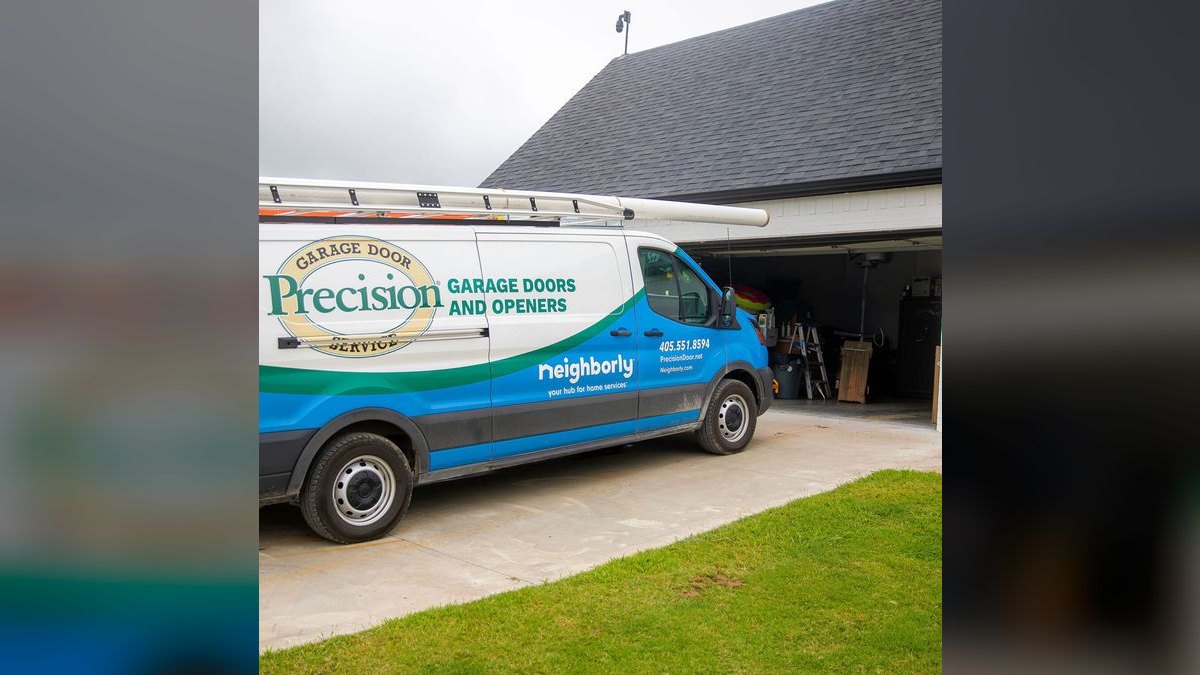
Vehicles are the heaviest hard-asset line. A branded service van fully outfitted with racking, inventory, and wrap represents a substantial capital commitment, and a two-truck launch is standard. Financing or leasing shifts this from capital to operating expense, which most operators do to protect working capital, but it moves fixed monthly obligation up and that matters in the ramp.
Opening inventory — torsion springs across the full sizing matrix, openers, rollers, hinges, cables, section panels, remotes, and safety sensors — is unavoidable and larger than newcomers expect. The business model depends on same-visit completion. A technician who has to order a part and return converts one profitable call into two unprofitable ones and damages your review profile. Inventory depth is not overhead; it is the revenue mechanism.
Marketing at launch is the line most under-budgeted. You are buying your way into a call-flow position from zero. That means Google Local Services Ads, paid search, and usually direct mail or door hangers simultaneously. LSA in particular has become table stakes in residential trades — the ad unit sits above organic results with a Google Guaranteed badge, and in contested metros the monthly spend to hold a competitive position runs into the thousands. Budget for a launch push well above your steady-state run rate, because early reviews and early call volume compound.
Working capital should cover at least three months of payroll and fixed cost with no revenue assumption. Technicians must be paid from day one while call volume is still building.
On timelines: from signed agreement to open doors, plan on three to six months, gated almost entirely by vehicle delivery and licensing. On breakeven: monthly operating breakeven commonly lands somewhere in the second year — the month 14 to month 22 window is a reasonable planning band — with cumulative payback on the full capital stack running considerably longer, often two to three years for median performers and faster for top-quartile operators in favorable territories.
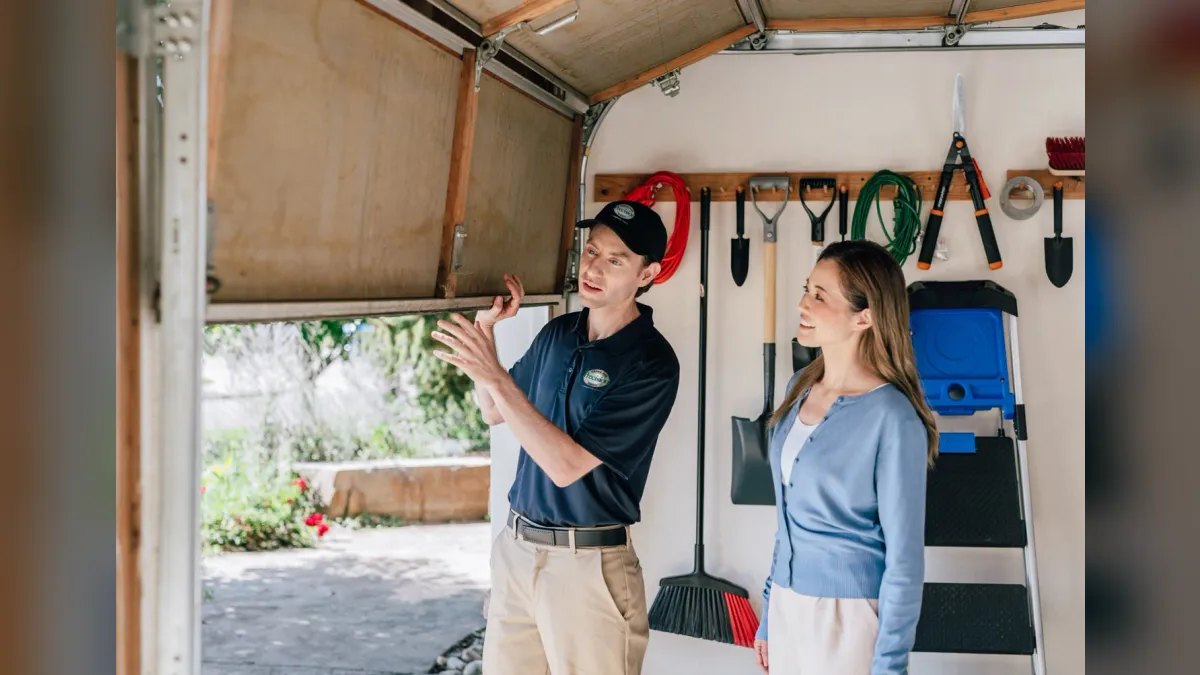
On revenue trajectory: system-average gross sales figures Precision has disclosed have landed in the mid-single-millions in stronger reporting periods and lower as the system added newer, smaller territories. Treat any system average with suspicion when applied to your specific situation — averages in franchise systems are dominated by mature, large-territory, multi-unit operators, and a first-year single-unit franchisee in a 160,000-household exurb is not the average. Build your model from your own territory's household count, a defensible market share assumption, and a conservative average ticket, then sanity-check it against what your validation calls told you real operators did in years one through three.
EBITDA margins in well-run residential service shops of this type commonly sit in the low-to-mid teens after royalty and marketing fees, before owner compensation and debt service. That last clause is where most pro formas mislead people: a headline EBITDA number that has not deducted your SBA payment and your own salary is not money you can spend.
The unit economics that actually determine whether you hit those margins reduce to four levers: call volume (marketing efficiency), booking rate (how many callers become scheduled appointments), conversion rate (how many appointments become sold jobs), and average ticket. Precision's structured multi-point inspection process exists to move the last two. A technician who inspects the full door system and presents a tiered set of options — replace the failed spring only, replace both springs and rollers, or replace the full operating system with a modern opener — sells a materially larger ticket than one who fixes only the broken part. Smart openers with camera and app control are a legitimate high-margin add-on on a service call the customer already scheduled for something else.
Where buyers and new operators get this wrong
Treating it as an investment rather than a job. This is the single most common and most expensive error. Precision is a dispatch-and-sell field business. The owner who personally answers the phone for the first ninety days learns the objection patterns, hears the pricing pushback, and catches the booking failures that a call center will never surface. Absentee and semi-absentee attempts in emergency-response trades routinely underperform, and the gap is not marginal.
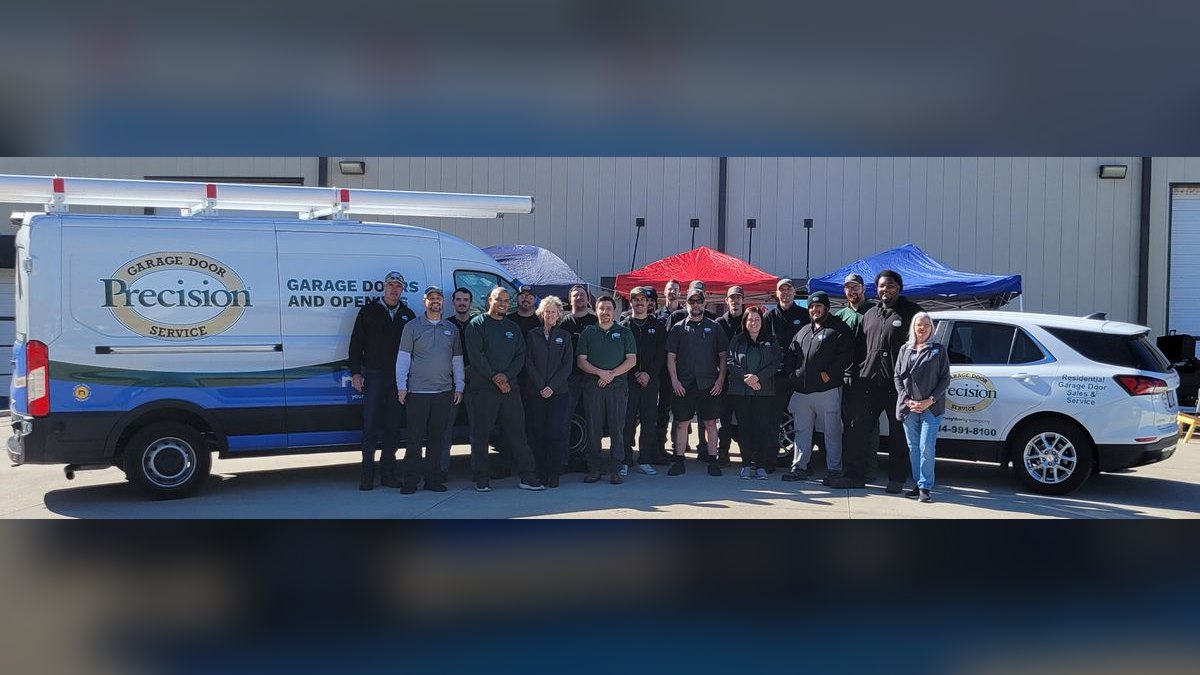
Buying a saturated territory because it was the one available. Large regional garage door operators and well-funded independents have consolidated aggressively in major metros. Where they already own the LSA and paid-search positions, your customer acquisition cost can be several multiples of what it is in an open exurban market. Territory quality is not a secondary consideration you optimize after signing — it is close to the whole decision.
Under-insuring. Torsion springs store enormous energy. A spring failure or an improper unwinding is a genuine injury risk, and garage door technicians work at height on heavy assemblies. Workers' compensation and general liability are not line items to shave. A single serious claim in an under-insured shop is an existential event, not a bad quarter.
Letting the sales process erode. Under pressure to look competitive, new operators quietly stop running the full inspection and start quoting the cheapest possible repair. Average ticket collapses, and because the cost to *acquire* the call is fixed, margin collapses faster than revenue does. If you are not going to run the brand's sales methodology, you are paying a royalty for a call-flow benefit while discarding the conversion benefit — the worst of both structures.
Ignoring cash controls. Field service with technicians collecting payment in the customer's driveway has a well-known shrinkage problem. Integrated payment capture in the field service management platform, mandatory photo documentation, and invoice-level reconciliation are not bureaucracy. They are the difference between the margin in your model and the margin in your bank account.
Underestimating the technician constraint. Your growth ceiling is not demand and it is not capital — it is how many competent technicians you can recruit, train, and retain. Every home-services trade is competing for the same labor pool. Operators who win build a genuine apprenticeship path, pay on a commission structure that lets a strong tech earn well above hourly-market, and treat retention as a primary metric. Operators who treat techs as interchangeable rebuild their crew annually and never escape the ramp.

Buying an existing unit without resale diligence. If you are buying a resale rather than opening greenfield, the diligence set changes substantially. You inherit the review profile, the callback and warranty liability, the technician roster and its culture, and any deferred maintenance on the fleet. Verify revenue against bank deposits and tax returns rather than the seller's field service management dashboard, review the remaining franchise agreement term and renewal terms, and confirm with the franchisor that the transfer will be approved and on what conditions. A resale with established call flow and trained techs can be worth a premium over greenfield — but only if the review profile is clean and the reason for sale is not a market that turned.
Decision framework: open, buy, compete, or walk
Four paths deserve honest comparison, and the right answer depends on capital, experience, and territory availability rather than on which model is objectively best.
Open a new Precision territory when an uncontested or lightly contested territory exists in a market you know, you have trades or multi-unit service operating experience, and you can fund the full stack with reserve left over. You get the brand's call-flow advantage and the Neighborly back office, and you build the review profile and culture yourself from a clean sheet.
Buy an existing Precision unit when you want to skip the eighteen-month ramp, the seller's numbers survive verification against tax returns and bank records, and the review profile is genuinely strong. You pay a premium for de-risked cash flow. This is the better path for a capable operator with more capital than patience — and the worse path for anyone who cannot personally evaluate whether a technician roster is healthy.
Go independent when capital is the binding constraint. A lean independent garage door shop starts at a fraction of the franchise stack — no franchise fee, no royalty, no marketing fund. You keep every dollar of gross margin. You also build the brand, the call flow, the pricing methodology, the training program, and the vendor relationships entirely yourself. This is the right call for an experienced garage door technician who already has a local reputation and a phone that rings, and the wrong call for someone whose actual advantage was going to be the franchise's marketing engine.

Roll up local independents when you have prior acquisition experience and want scale fast. Small owner-operator garage door shops with the founder approaching retirement trade at modest multiples of seller's discretionary earnings, and consolidating two or three in a single metro area lets you centralize dispatch, marketing, and back office across a combined revenue base. SBA 7(a) acquisition financing is available for this structure. The execution risk is real — integration, culture, and customer retention through ownership change all bite — but the entry multiple is typically far below what a comparable franchise buildout costs per dollar of revenue.
Consider an adjacent Neighborly brand when Precision territories are unavailable in your market but you want the platform. Lower-capital-intensity brands in the portfolio offer similar back-office leverage at a meaningfully smaller initial investment, and multi-brand operators genuinely do share call center capacity, fleet management, and accounting across units — which is why the strongest performers in most Neighborly brands are multi-unit, multi-brand owners rather than single-unit first-timers.
Walk away when your validation calls come back lukewarm, when the only available territory is a metro where incumbents own the ad auction, when you cannot fund the stack without eliminating your reserve, or when you know you will not personally work the business through the ramp. Walking away costs you diligence time. Signing into any of those conditions costs considerably more.
Related questions
How much does a Precision Garage Door franchise cost in total?
Plan on roughly $400,000 to $670,000 all-in, combining the $75K–$150K franchise fee with vehicles, opening inventory, tools, technology, training, insurance, facility, launch marketing, and three months of working capital. Territory household count drives the fee; local wages and real estate drive the rest.
Is garage door repair recession-resistant?

Largely yes. Springs and openers fail on use cycles rather than economic conditions, and a non-functioning garage door is an immediate, non-deferrable problem for most households. Discretionary full-door replacement softens in downturns, but emergency repair revenue holds up better than most home-improvement categories.
Can I run a Precision franchise semi-absentee?
Not effectively during the ramp. Emergency dispatch, technician recruiting, sales coaching, and cash controls all require present ownership. Operators who delegate these in the first eighteen months consistently underperform. Semi-absentee becomes plausible only after a proven general manager is in place and the review profile is established.
What is the biggest risk in buying a home-services franchise territory?
Territory saturation. If large regional operators already own the local ad auction, your customer acquisition cost can run several times higher than in open markets, and no amount of franchisor support offsets that. Audit competitive ad pricing inside the specific territory before signing anything.
Should I buy an existing unit instead of opening a new one?
Buy the resale if the revenue verifies against tax returns and bank deposits, the review profile is clean, the technician roster is stable, and the franchisor will approve the transfer. You pay a premium to skip the ramp. Open greenfield if any of those conditions fail.
FAQ
How long until a new Precision Garage Door franchise breaks even?
Monthly operating breakeven commonly arrives somewhere in the second year — the month 14 to month 22 window is a reasonable planning assumption. Full payback on the capital stack takes longer, typically two to three years for median performers. The variables that move this most are territory competitiveness, how fast you build call volume, and average ticket discipline.
Do I need garage door experience specifically, or is general trades experience enough?

General field-services operating experience transfers well. Former HVAC, plumbing, electrical, or roofing owners already understand call-driven dispatch, technician management, and same-visit close economics — the technical door knowledge is trainable. What does not transfer is having no field operating background at all. If that describes you, bring a partner who has it.
What does the royalty structure actually cost me?
Royalty runs on a sliding scale generally described as 4%–6% of gross sales, decreasing as volume rises, plus roughly 2% for the marketing and advertising fund and in many markets an optional local co-op of up to about 3%. Model the top of the range for year one and the bottom for maturity. Neighborly does not negotiate the schedule.
How many technicians do I need, and what limits growth?
Two trucks with two technicians is the standard launch configuration. Growth beyond that is capped by recruiting, not by demand or capital. Build a genuine apprenticeship path and a commission structure that lets a strong technician out-earn the local hourly market, or you will rebuild your crew every year and never clear the ramp.
What should I verify in Item 19 of the FDD?
Check which subset of outlets the figures cover — franchised versus company-owned, open the full period versus partial, and whether the disclosure separates by territory size or tenure. Then check whether medians accompany averages. Averages in franchise systems skew high because mature multi-unit operators dominate them. A first-year single-unit operator should model against the lower cohort, not the system average.
Is 2027 a good year to enter this market specifically?
Timing is favorable on demand. Homes built or re-doored during the 2020–2022 housing surge are entering the window where original springs and openers begin failing, which supports emergency repair volume. The offsetting pressure is lead-generation cost: Local Services Ads, lead marketplaces, and big-box referral programs have all raised the cost of buying a service call. Net: enter on territory quality, not on calendar timing.
Sources
- https://www.sba.gov/document/support-sba-franchise-directory
- https://franchise.neighborly.com/
- https://www.franchise.org/
- https://www.ftc.gov/business-guidance/resources/franchise-rule-compliance-guide
- https://www.census.gov/programs-surveys/acs
- https://www.doors.org/
- https://www.ibisworld.com/united-states/market-research-reports/garage-door-installation-industry/
- https://www.bls.gov/ooh/installation-maintenance-and-repair/
- https://support.google.com/localservices/answer/6224841
- https://www.cpsc.gov/Safety-Education/Safety-Guides/Home/Garage-Doors
Related on PULSE
- Should I open or buy a Premier Garage franchise in 2027?
- Should I open or buy a Garage Experts franchise in 2027?
- Should I open or buy a Garage Living franchise in 2027?
- Should I open or buy a Granite Garage Floors franchise in 2027?
- Should I open or buy a Precision Tune Auto Care franchise in 2027?
- Should I open or buy a Nurse Next Door franchise in 2027?
This page will be disappearing soon. Save it to your device for $1 — or read it free while it is here.
@Kory-White- · if Venmo asks, the last 4 of my number are 2012
This page is gone.
This one is off the shelf now. $1 keeps it on your phone for good — the whole page, pictures and diagrams included.
 franchiseShould I open or buy a Mac Tools franchise in 2027?
 franchiseShould I open or buy an Orangetheory Fitness franchise in 2027?
 franchiseShould I open or buy a Great Clips franchise in 2027?
 franchiseShould I open or buy a Jeremiah's Italian Ice franchise in 2027?
 franchiseShould I open or buy a Panera Bread franchise in 2027?
 franchiseShould I open or buy a Stanley Steemer franchise in 2027?
 franchiseShould I open or buy a Take 5 Oil Change franchise in 2027?
 franchiseShould I open or buy a Little Caesars franchise in 2027?
 franchiseShould I open or buy a Roto-Rooter franchise in 2027?
 franchiseShould I open or buy a Bruster's Real Ice Cream franchise in 2027?