


Should I open or buy an Aroma Joe's Coffee franchise in 2027?
Quality
Certified
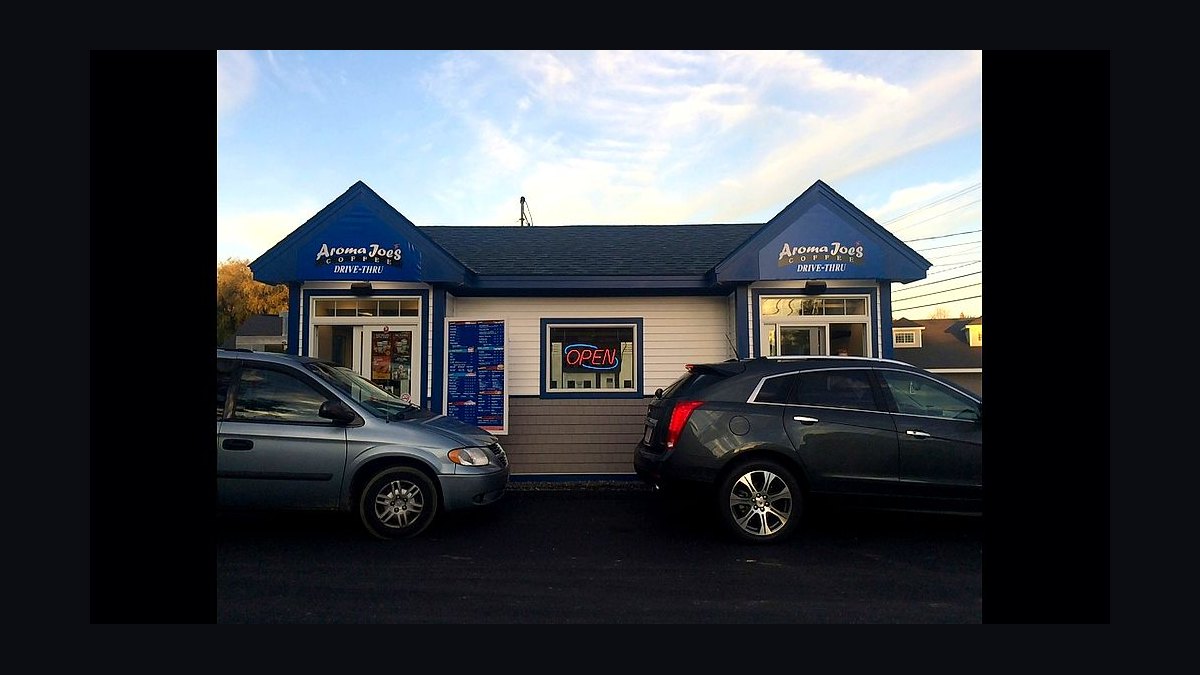
Yes, but only for a specific operator: a Northeast, Mid-Atlantic, or Florida entrepreneur with $200K+ liquid capital, a $750K+ net worth, and the willingness to personally run a store for the first year. Aroma Joe's Coffee franchise economics — a $586K-$1.86M entry, $928K average unit volume, and an 8-12 year payback — reward multi-unit operators who open in drive-thru-friendly trade areas, not absentee investors chasing a quick return.
What it is and why it matters
Aroma Joe's is a 125-unit drive-thru coffee franchise concentrated in Maine, New Hampshire, Massachusetts, Pennsylvania, Florida, Rhode Island, Connecticut, and New York, with a stated ambition to reach 500 shops by 2034. It competes in the fastest-growing lane of quick-service food and beverage: drive-thru specialty coffee and energy drinks, a category that put three coffee brands — 7 Brew, Dutch Bros, and Scooter's Coffee — into Technomic's Top 10 "America's Favorite Chains" list for the first time in January 2026. Understanding why this matters in 2027 specifically requires separating the brand's fundamentals from the category's tailwind.
On fundamentals, Aroma Joe's reported a 2025 system average unit volume just under $1 million ($928,242 per the Franchise Times profile), roughly three times the coffee-and-tea sub-sector average of $307,288 tracked by IBISWorld. Top dual-lane locations clear $2 million. That gap between average and ceiling matters because it tells you the brand's economics are real but site-dependent — the same store format performing at $600K in a weak trade area and $1.6M+ in a strong one is a real-estate business wearing a coffee-shop costume. The decision to open a location, in other words, is really a decision about a corner, not a menu.

On the category tailwind, the National Coffee Association's 2026 Trends report found that 65% of U.S. adults drink coffee daily, with specialty drinks now representing 47% of consumption, an all-time high. Layer on energy drinks — Aroma Joe's "AJ's Originals" line carries a reported 78% gross margin, the highest-margin SKU in the store — and Mintel's finding that energy drink consumption grew 13% in 2025, driven 60% by the 16-24 age cohort, and you can see why a brand built around a drive-thru window and a high-energy crew script is positioned to capture two growth curves at once rather than one.
Why 2027 specifically: Aroma Joe's introduced a new 1,500 sqft "Coffeehouse" prototype in 2025 that cuts build costs 15-22% and shrinks the lease footprint 30% versus the legacy dual-lane format. That is the unlock that lets the brand chase Georgia, the Carolinas, and the Florida I-4 corridor without the $1.1M land-and-building bill that anchors the top of its investment range. The window is open because Dutch Bros and 7 Brew have not yet saturated those same Eastern markets — Dutch Bros grew unit count 28.6% year-over-year and 7 Brew doubled to 444 units in twelve months, so the runway to open ahead of them is real but shrinking every quarter.
The step-by-step process
Opening an Aroma Joe's franchise runs on a disciplined calendar, not an improvised one. Corporate expects candidates to move through self-qualification, franchisee validation calls, Discovery Day, site and financing work, legal execution, and construction in roughly a 90-day pre-construction window, followed by a 12-16 week build:

The sequencing matters more than any single step. Franchisees who skip the validation-call stage and go straight from Discovery Day to signing routinely discover site or labor problems that a blunt conversation with 12 existing operators would have surfaced first — the same problem that undermines franchise decisions across nearly every drive-thru concept, not just this one. The step most candidates compress or skip entirely is the broker-led site search: because Aroma Joe's best real estate is repurposed bank drive-thrus and standalone outparcels with 20-30 stacking capacity, not built-for-purpose retail, finding it takes a commercial broker with drive-thru coffee experience specifically, not a generalist. Rushing past days 41-55 to "just pick a site" is the single most common way a franchisee locks in a mediocre location for the next decade.
Costs, timelines, and typical ranges
The 2025 FDD Item 7 discloses a total investment range of $586,599 to $1,859,492, and the width of that range is not padding — it reflects genuinely different build paths. The $25,000 franchise fee is fixed, but site acquisition and lease deposits swing from $15,000 to $250,000 depending on whether you're leasing an existing pad or buying land outright. Building and construction is the single biggest swing factor, running $250,000 to $1,100,000; the new 1,500 sqft prototype trims $150,000-$300,000 off that figure versus a full dual-lane build. Equipment and point-of-sale (Toast) run $145,000-$215,000, signage and brand-mandated decor $25,000-$65,000, opening inventory $14,000-$24,000, training and grand-opening costs $12,500-$45,000 (the brand requires a 6-week immersive training program at its Maine headquarters), working capital for three months $75,000-$150,000, and insurance, legal, and permitting $15,000-$20,000.
Ongoing costs are simpler: an 8% royalty on gross sales, paid weekly, plus a 2.5%-4.5% marketing fund contribution. On a store doing the system-average $930,000 in revenue, a reasonable operating model looks like this: cost of goods 27-29% (about $260,000), labor 30-33% (about $285,000), occupancy 8-10% (about $85,000), royalty 8% (about $74,000), marketing 3% (about $28,000), and other operating expenses 8% (about $75,000). That leaves store-level EBITDA of roughly $123,000-$140,000, or 13-15% of revenue, before debt service and owner draw — and an owner willing to work the store as general manager can add another $55,000-$75,000 in absorbed labor cost back into their own pocket.
Timelines follow from that math. Breakeven on a new location typically falls between month 14 and month 22. Year-one owner cash flow on a single, conservatively performing store runs $90,000-$140,000. Full payback on the initial investment lands at 8.2 to 12.4 years on the median build — faster on the new small-format prototype, slower on a land-purchase, full dual-lane build. Financing conditions in 2026 add real friction to that timeline: with the Fed funds rate at 5.25%-5.50%, SBA 7(a) loans were pricing at 9.5%-11%, adding $45,000-$65,000 a year in debt service on a $750,000 build — a meaningful bite out of a $130,000 EBITDA store. Rising arabica futures, which hit $4.10/lb in March 2026 per ICE data, compress the cost-of-goods line further across the category, Aroma Joe's included.
Where teams get it wrong
The most common failure mode is an absentee-investor mindset applied to a business that punishes absenteeism. Aroma Joe's is an 8-to-12-year payback business, not a 25%-Year-1-ROI business, and operators who bring startup-style return expectations to a coffee franchise underwrite themselves into disappointment before they open a single door. The 13-15% EBITDA margin assumes an engaged owner or a very strong GM; hand the store to a disengaged third-party manager and that margin erodes fast.
The second failure is brand geography mismatch. Aroma Joe's has genuine name recognition in Maine and New Hampshire — a real moat against Dutch Bros and Starbucks — but that recognition does not travel. An operator who pays full franchise price to open in Texas, California, or Arizona is effectively funding the brand-awareness campaign Dutch Bros and Starbucks already won in those markets years ago. The brand's own growth targets for 2027 point toward Georgia, the Carolinas, and Florida precisely because those are adjacent, not distant, from its existing footprint.
The third failure is underestimating labor as the load-bearing variable. A single Aroma Joe's location runs on a crew of 18-22 part-time baristas, most of them teenagers and college students working $16-18/hour, executing a scripted, high-energy customer interaction ("Hi, I'm Sarah, what's making you smile today?"). Operators who cannot recruit and retain that specific labor pool — through TikTok, local high schools, and a genuine culture of energy rather than a generic fast-food shift — see the crew's disengagement show up directly in ticket times and repeat-visit rates. The brand's target of tickets under 4 minutes with a crew of 6-8 per shift is not achievable with a demoralized bench.
The fourth failure is undercapitalization relative to the working-capital pad. Sub-$200,000-liquid investors are told the same story as well-capitalized ones — franchise fee, build-out, done — but the $75,000-$150,000 working-capital cushion disclosed in Item 7 is genuinely thin if the first six months run slower than the morning-rush flywheel needs to reach breakeven. A slow ramp with an undersized cash reserve is how a fundamentally sound unit-economics story turns into a forced sale in year two.
Decision framework: when to choose what
Not every candidate should open under this specific brand, and not every candidate who should open a drive-thru coffee business should do it as a single unit. The decision tree below separates operators by capital, geography, and unit ambition:
Operators outside the Northeast footprint but still drawn to the drive-thru coffee category have real alternatives to weigh against Aroma Joe's. Scooter's Coffee runs $954,000-$1.52M with a lower 6% royalty and 2% marketing fee, a median AUV around $880,000, and a much larger 800-unit system with broader national reach. 7 Brew runs $1.15M-$2.27M with a 7% royalty plus 1% marketing, a reported average unit volume above $2.3 million, but with more than 400 units sold ahead of actual openings, pipeline and construction-queue pressure is a real risk. Ellianos Coffee, at $590,000-$1.0M, suits Southeast-focused operators who want a smaller, less contested footprint. Honey Dew Donuts remains a lower-investment, New England-loyal option for operators who find pure drive-thru coffee too commoditized. And for operators who want to skip franchise royalties entirely, an independent drive-thru kiosk partnered with a specialty roaster runs $280,000-$450,000 — cheaper and free of the 8% royalty drag, but without the brand pricing power, marketing co-op, or supply-chain leverage that protects a franchised operator when commodity prices like arabica spike.
Related questions
How much does it cost to open a Scooter's Coffee franchise?
Scooter's Coffee runs $954,000-$1.52 million all-in, with a lower 6% royalty and 2% marketing fee than Aroma Joe's, and a broader 800-unit national footprint — a better fit outside the Northeast.
What credit score do I need to qualify for an SBA 7(a) loan for a coffee franchise?
Lenders typically want 700+ personal credit alongside the franchisor's minimum liquidity and net-worth thresholds. In 2026, 7(a) rates ran 9.5%-11%, so qualification also depends on debt-service coverage, not credit alone.
Is a drive-thru coffee franchise a good investment in a small town?
It depends on median household income and daytime traffic more than town size. Aroma Joe's targets trade areas with $75,000+ median income and enough passing volume to support a drive-thru pad — a small town that clears both can still work.
How many franchisees should I call before signing a franchise agreement?
Franchise development experts and multi-unit operators generally recommend at least 12 current and recently closed franchisees from the FDD's Item 20 list, aiming for a strong majority of unprompted positive responses before proceeding.
What makes energy drinks profitable for coffee franchises?
Energy drink SKUs, including Aroma Joe's "AJ's Originals" line, carry gross margins around 78%, far above brewed coffee, because syrup-and-carbonation cost of goods is low relative to price — a structural reason coffee franchises are pushing the category hard.
FAQ
What is the total investment needed to open an Aroma Joe's franchise?
The all-in investment ranges from roughly $586,000 to $1.86 million per the 2025 FDD Item 7, including a $25,000 franchise fee, build-out, equipment, and working capital. Actual cost depends heavily on real estate and whether you choose a single-lane or dual-lane drive-thru configuration.
How much liquid capital and net worth do I need to open a location? Franchisees should have at least $200,000 in liquid assets and a net worth of $750,000 or more. These are typical qualification thresholds, though operators with strong real estate deals or multi-unit plans sometimes find flexibility.
How long does it take to break even after I open? Breakeven typically falls between month 14 and month 22. In year one, a single conservatively run store can generate owner cash flow of $90,000-$140,000, with full payback on the investment landing in the 8-to-12-year range.
What are the ongoing royalty and marketing fees? Franchisees pay an 8% royalty on gross sales plus a marketing fee of 2.5%-4.5%. Both are standard for the quick-service coffee segment and fund brand advertising, menu development, and system support.
Is Aroma Joe's a good opportunity for multi-unit development? Yes — multi-unit area development is where the financial math works best, since it spreads overhead like bookkeeping and area management across several stores. Many successful franchisees hold multi-unit territory rights for this reason.
What kind of location and team does opening a store require? You need a drive-thru pad in a trade area with at least $75,000 median household income, ideally in the Northeast, Mid-Atlantic, or Florida. The store also requires a high-energy crew of 18-22 part-time baristas and a broker experienced in drive-thru coffee sites.
Sources
- https://www.aromajoes.com
- https://www.franchisetimes.com
- https://www.franchising.com
- https://www.vettedbiz.com
- https://www.ncausa.org
- https://www.ibisworld.com
- https://www.mintel.com
- https://www.ice.com
- https://www.sba.gov
- https://www.placer.ai
Related on PULSE
This page will be disappearing soon. Save it to your device for $1 — or read it free while it is here.
@Kory-White- · if Venmo asks, the last 4 of my number are 2012
This page is gone.
This one is off the shelf now. $1 keeps it on your phone for good — the whole page, pictures and diagrams included.
 franchiseShould I open or buy an F45 Training franchise in 2027?
 franchiseShould I open or buy a Jeremiah's Italian Ice franchise in 2027?
 franchiseShould I open or buy a Domino's franchise in 2027?
 franchiseShould I open or buy a Whataburger franchise in 2027?
 franchiseShould I open or buy a Hand and Stone Massage franchise in 2027?
 franchiseShould I open or buy a Goddard School franchise in 2027?
 franchiseShould I open or buy a Servpro franchise in 2027?
 franchiseShould I open or buy a Valvoline Instant Oil Change franchise in 2027?
 franchiseShould I open or buy a Cinnabon franchise in 2027?
 franchiseShould I open or buy a Wingstop franchise in 2027?