


Should I open or buy a Fuzzy's Taco Shop franchise in 2027?
Quality
Certified
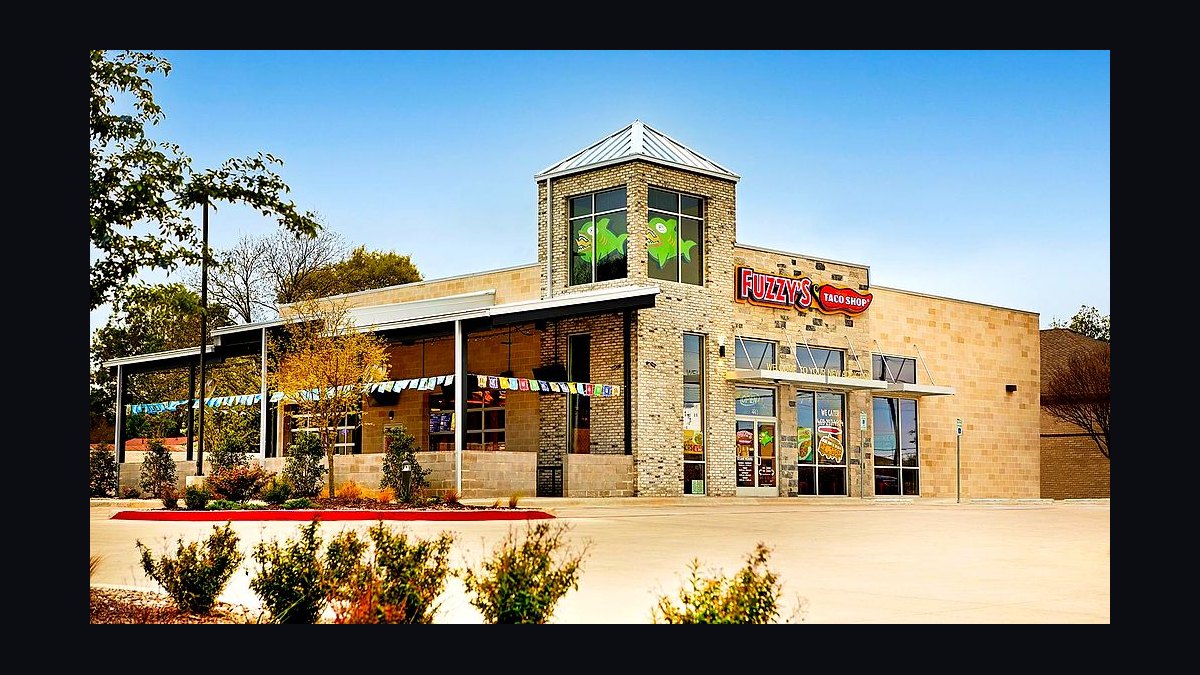
Open a Fuzzy's Taco Shop franchise in 2027 only if you already run multi-unit fast-casual restaurants in Texas, Oklahoma, Colorado, or Arizona and can absorb a brand that shrank from 146 units in 2019 to roughly 117 today, with same-store sales down 11.8% in a recent quarter. The 2024 FDD shows total investment of $642,000–$1,523,500 against $1,645,425 average unit volume. First-time or out-of-region operators should pass.
What it is and why it matters
Fuzzy's Taco Shop is a Tex-Mex fast-casual chain founded in Fort Worth in 2003 and acquired by Dine Brands Global — the parent of Applebee's and IHOP — for $80 million in cash on December 5, 2022. The acquisition matters more than the taco menu itself, because it changed who underwrites franchisee risk. Before the deal, Fuzzy's was an independent franchisor with limited balance-sheet depth; afterward, it inherited Dine Brands' franchise-development infrastructure, SBA lender relationships, and — critically — Dine Brands' existing Applebee's and IHOP operators as the primary recruiting pool for new Fuzzy's units. Franchise development president Paul Damico has said publicly that existing multi-brand operators are the ones "kickstarting" growth, which tells you the brand's own leadership does not expect single-unit newcomers to carry the system forward.
Why does this matter for a 2027 decision specifically? Because you are not buying into a stable, mature brand — you are buying into a turnaround story mid-correction. The system peaked near 146–150 units around 2019, held close to 140 through the 2022 acquisition, and has since contracted to roughly 117. That is a net loss of roughly 20% of the system in under six years, concentrated in markets outside the Texas-Oklahoma-Colorado corridor where brand recognition never reached critical mass. A franchise candidate in 2027 needs to understand that "open or buy a Fuzzy's Taco Shop franchise" is really two different questions depending on geography: inside the Sunbelt corridor, it is a bet on a recognized regional brand with real unit economics; outside it, it is a bet on a name nobody in your market has heard of, propped up by a corporate parent with much bigger brands to worry about.

The category context helps explain why Fuzzy's still has a credible floor under it. Fast-casual Mexican — Chipotle, Qdoba, El Pollo Loco, and Fuzzy's — has consistently outperformed the broader limited-service restaurant segment on traffic and ticket growth, and IBISWorld's Mexican Restaurant industry report projects category revenue growing 2.8%–3.4% annually through 2027. Tex-Mex specifically benefits from a loyal, repeat-visit customer base in markets where it's part of the regional food identity. That demand floor is real. The problem for a prospective franchisee is that demand for the category does not automatically transfer to demand for this specific brand once you leave the markets where "Fuzzy's" already means something.
The step-by-step process
Evaluating whether to open a Fuzzy's unit is not a single decision — it's a sequence of gated checkpoints, each of which should be able to kill the deal if the data doesn't support it. Skipping a step (especially the franchisee-validation calls) is the single most common reason operators end up underwater on AUV assumptions that were never real for their market.
Start by requesting the current Fuzzy's Taco Shop FDD directly from the franchise development team and reading Item 7 (investment), Item 19 (financial performance), Item 20 (unit transfers, closures, non-renewals over the trailing three years), and Item 21 (Dine Brands' audited financials) in full — not the summary. Item 20 in particular tells you the true churn rate in a market, which the headline unit count does not.
Next, use the Item 20 contact list to call at least ten current franchisees and three former ones. Ask for their actual AUV, food cost percentage, labor cost percentage, effective rent-to-sales ratio, and — the most useful single question — whether they would buy the franchise again knowing what they know now. If your sample's median AUV lands meaningfully below the franchisor's disclosed $1,645,425, discard the franchisor number and underwrite to what your own sample tells you; the Item 19 average blends high-volume Texas suburban units with low-volume coastal units, and your own site will land in one cohort or the other, not at the blended average.
Only after that validation should you move to financing. Fuzzy's typically expects $250,000 or more in liquid assets and $500,000 or more in net worth per unit, and SBA 7(a) lenders active in the restaurant space — names like Live Oak Bank, Huntington, and Celtic Bank — will generally lend 70%–80% of project cost to operators who already have restaurant management experience, less to first-timers. Site selection comes next, and it should be treated as a hard geographic filter: an end-cap of 2,800–3,400 square feet with patio seating and a drive-thru or walk-up pickup window, located inside a DMA where Tex-Mex already has cultural presence. Finally, negotiate — ask the franchise development team whether the standard 52-week discounted royalty period can be extended to 24 additional weeks, or whether a development agreement for three or more units can buy a reduction in the up-front franchise fee. Only sign once every checkpoint above has independently confirmed the deal; walking away at step four is far cheaper than walking away at month eighteen.
Costs, timelines, and typical ranges

The 2024 FDD Item 7 puts total investment between $642,000 and $1,523,500, built from a franchise fee of $40,000, build-out and leasehold improvements of $250,000–$700,000, kitchen equipment and smallwares of $135,000–$260,000, furniture and signage of $55,000–$135,000, technology and POS of $25,000–$55,000, grand-opening marketing of $5,000–$15,000, initial inventory of $20,000–$40,000, training costs of $15,000–$40,000, insurance and permits of $15,000–$45,000, three months of working capital at $80,000–$185,000, and real estate deposits of $7,000–$20,500. A realistic mid-range build on a typical inline lease lands near $900,000.
Ongoing obligations are a 5% royalty on weekly gross sales — discounted to 3.5% for the first 52 weeks, which is a genuine cash-flow benefit in year one — plus a 2% marketing/development fee, with no mandatory local-store-marketing minimum currently in the FDD. The franchise term runs 10 years with a 10-year renewal option, which matters because a decade is long enough to span at least one full economic cycle and, given the brand's recent contraction, possibly a second ownership change at the parent level.

On the revenue side, Item 19 discloses average unit volume of $1,645,425 across all franchised units open 12 months or longer, with trade-press estimates putting the median closer to $1.52 million — meaning the average is pulled upward by a top quartile of Texas and Oklahoma suburban stores running $2.1 million or more, while a bottom quartile, concentrated in coastal and non-Texas markets, runs $1.05 million or less. A modeled year-one P&L on a $1.645 million AUV unit looks roughly like this: food, beverage, and paper costs near 30.5% of sales; labor including payroll tax and benefits near 31%; blended year-one royalty near 4.3% (reflecting the discount period); marketing fund at 2%; rent and common-area maintenance near 8.5%; utilities, repairs, and supplies near 5%; insurance and other fixed costs near 3%. That leaves restaurant-level EBITDA around 15.7%, or roughly $258,000, and after general and administrative costs and manager bonuses, an owner cash flow of roughly $130,000–$210,000 in year one, or about 12%–13% of revenue.
On a $900,000 mid-range build, that cash flow profile implies payback in roughly 32–44 months; on a $1.5 million high-end build, payback stretches to 48–60 months. Operators opening outside the Texas-Oklahoma-Colorado-Arizona corridor should haircut the AUV assumption by 25%–35% before running any of this math, because the brand-awareness premium that produces the top-quartile Texas numbers simply does not travel.
Where teams get it wrong

The most expensive mistake is underwriting to the franchisor's blended average instead of a geography-adjusted number. An operator in Boston or Seattle who plugs $1.645 million AUV into their pro forma is importing Texas brand equity into a market that has never heard of Fuzzy's, and the gap between assumed and actual revenue shows up directly in a breakeven timeline that can stretch well past five years rather than the 32–44 month range a Sunbelt operator can expect.
A second common error is treating the 3.5% year-one royalty discount as a permanent feature rather than a temporary one. In week 53 the rate reverts to the full 5%, which on a $1.6 million-revenue unit removes roughly $25,000 of annual cash flow going forward — permanently. Operators who build their comfort level around the discounted year-one number and don't stress-test year two against the full royalty rate are routinely surprised by a cash-flow step-down right when they're trying to prove the concept to a lender for unit two.
Third, first-time restaurant operators consistently underestimate how operationally different Fuzzy's is from an assembly-line fast-casual format like Chipotle. Fuzzy's has been testing table service in 2025 specifically to recover average ticket, which makes it a hybrid full-service-adjacent model — harder to staff, harder to train, and less forgiving of a first-time owner-operator's learning curve than a pure counter-service concept.
Fourth, single-unit hobbyists frequently misjudge how much corporate attention they'll receive. Dine Brands' growth thesis is explicitly built around multi-unit area developers recruited from its existing Applebee's and IHOP franchisee base; a standalone single-unit buyer sits outside that priority group and typically gets less real-estate assistance, less marketing co-op support, and slower response times from franchise support staff than a multi-unit operator with an existing relationship.

Finally, teams get the macro picture wrong by treating "same-store sales down 11.8%" as a one-quarter blip rather than part of a longer trend that includes beef-price compression across the entire Tex-Mex category in 2025–2026 and activist-investor pressure on Dine Brands (Edge Consulting Group surfaced publicly in mid-2025) that raises the probability of a Fuzzy's spin-off or a sudden change in growth strategy before 2027. Either outcome creates strategic uncertainty that a passive investor is poorly positioned to absorb.
Decision framework: when to choose what
Not every Fuzzy's-curious buyer should land in the same place, and the right call depends heavily on your existing footprint, your capital, and your appetite for operating the first unit yourself.
If you already operate Applebee's, IHOP, or another multi-unit fast-casual concept inside the Texas-Oklahoma-Colorado-Arizona corridor, you start from a real structural advantage: shared-services payroll, accounting, and real-estate infrastructure that can cut effective G&A from roughly 3.5% down to 1.5%, directly improving owner cash flow versus a standalone buyer. If you also hold a liquor license already, that's a further edge — Fuzzy's is leaning into frozen cocktails, margaritas, and ranch waters as a 2025–2027 sales-recovery lever, and alcohol can run 18%–24% of mix at higher-volume units, meaningfully lifting ticket averages.

From there, the gate is capital and commitment: if post-build liquid capital falls below roughly $400,000, or if you're not willing to personally operate the first unit for at least 18 months, the honest answer is to walk — not because the brand is broken, but because the margin for error at lower capitalization or with absentee management is too thin against an already-contracting system. If you don't have the multi-unit Sunbelt footprint at all, the better move in 2027 is usually to look elsewhere entirely: an independent Tex-Mex concept costs $350,000–$650,000 all-in with zero royalty and zero marketing fee, capturing the 5%–7% of revenue Fuzzy's would otherwise take, and independents in the same IBISWorld cohort post comparable $1.1 million–$1.6 million AUV while converting 17%–22% to owner cash flow versus Fuzzy's modeled 12%–13%. A Torchy's Tacos franchise, where territory is available, reported 2024 AUV near $2.7 million, well above Fuzzy's, at a higher build cost of $1.2 million–$2.0 million. Growing brands like Salsa Fresca, Bubbakoo's Burritos, and Pancheros Mexican Grill are also worth a look since they're adding units rather than trimming them. For an existing Dine Brands franchisee specifically, the lowest-variance move may simply be adding a second Applebee's or IHOP in an underserved market, where brand awareness is already national and AUV variance is far tighter than Fuzzy's Texas-versus-everywhere split.
Related questions
How does Fuzzy's Taco Shop compare to Torchy's Tacos for a new franchisee?
Torchy's reports materially higher AUV (near $2.7 million in 2024) but requires a larger build, $1.2–$2.0 million versus Fuzzy's $642,000–$1,523,500. Torchy's suits better-capitalized operators; Fuzzy's has the lower entry cost.
What does the Dine Brands acquisition mean for Fuzzy's franchisees long-term?

It brought SBA lender relationships and a built-in recruiting pool of existing Applebee's/IHOP operators, but it also exposed Fuzzy's to activist-investor pressure on the parent company, raising the odds of a strategic shift — spin-off or renewed investment — before 2027.
Is the Fuzzy's royalty structure competitive with other fast-casual franchises?
The 5% royalty plus 2% marketing fee (3.5% royalty for the first 52 weeks) is standard for the category, roughly in line with Qdoba and El Pollo Loco-style fast-casual Mexican franchise agreements.
Should I open a franchise outside the Tex-Mex category instead?
If you lack Sunbelt brand recognition advantages, a category with less regional concentration — or an independent concept where you control the menu and keep the full margin — often underwrites more safely than a geographically concentrated brand like Fuzzy's.
How much does table service testing affect Fuzzy's unit economics?
Table service, piloted in 2025 to lift average ticket, adds labor complexity versus pure counter service, which is part of why Fuzzy's labor line runs near 31% of sales — higher than a pure assembly-line fast-casual concept.
FAQ
What is the total investment range for a Fuzzy's Taco Shop franchise? The 2024 FDD Item 7 shows total investment between $642,000 and $1,523,500, covering the franchise fee, build-out, equipment, and working capital. A mid-range build typically lands near $900,000.

How much can I expect to earn in revenue and owner cash flow? Average unit volume per Item 19 is $1,645,425. After royalty and marketing fees, year-one owner cash flow for a disciplined operator typically falls between $130,000 and $210,000, though results vary widely by location.
How long does it take to break even on a Fuzzy's franchise? Breakeven typically lands between month 32 and month 44 on a mid-range build, stretching to 48–60 months on a high-end build, depending heavily on site selection and local brand awareness.
Is Fuzzy's Taco Shop growing or shrinking as a brand right now? The system has contracted from roughly 146 units in 2019 to about 117 today, with same-store sales down 11.8% in a recent reported quarter — a challenging backdrop for anyone opening a new unit.
Who is the ideal candidate to open a Fuzzy's franchise? The best fit is an experienced multi-unit fast-casual operator already working in a Tex-Mex-aware Sunbelt market such as Texas, Oklahoma, Colorado, or Arizona. Single-unit first-timers and out-of-region buyers should generally pass.
What ongoing fees does a Fuzzy's franchisee pay? A 5% royalty on gross sales (3.5% for the first 52 weeks) plus a 2% marketing fee — fees that are standard for the segment but meaningfully compress margin on units running below the system average volume.
Sources
- Dine Brands Global investor relations, "Dine Brands Agrees to Acquire Fuzzy's Taco Shop" (December 5, 2022) — ir.dinebrandsglobal.com
- Restaurant Dive, "Dine Brands to buy Fuzzy's Taco Shop for $80M" (December 2022) — restaurantdive.com
- Franchise Times, coverage of Fuzzy's Taco Shop growth strategy under Dine Brands — franchisetimes.com
- Nation's Restaurant News, reporting on Fuzzy's Taco Shop 2025 growth plans — nrn.com
- Franchise Chatter, Fuzzy's Taco Shop franchise cost and FDD review — franchisechatter.com
- Restaurant Business Online, "Fuzzy's Taco Shop looks to frozen cocktails and table service to drive sales" — restaurantbusinessonline.com
- IBISWorld, Mexican Restaurants in the US industry report, NAICS 722513 — ibisworld.com
- Vetted Biz, Fuzzy's Taco Shop franchise cost and profit analysis — vettedbiz.com
- Sharpsheets, Fuzzy's Taco Shop franchise FDD and unit economics breakdown — sharpsheets.io
- Fuzzy's Taco Shop franchise development site — franchise.fuzzystacoshop.com
Related on PULSE
- Should I open or buy a Taco Cabana franchise in 2027?
- Should I open or buy a Taco Bueno franchise in 2027?
- Should I open or buy a Mr. Pickle's Sandwich Shop franchise in 2027?
- Should I open a independent tire shop in 2027?
- Should I open a independent auto repair shop in 2027?
- Should I open a independent coffee shop in 2027?
This page will be disappearing soon. Save it to your device for $1 — or read it free while it is here.
@Kory-White- · if Venmo asks, the last 4 of my number are 2012
This page is gone.
This one is off the shelf now. $1 keeps it on your phone for good — the whole page, pictures and diagrams included.
 franchiseShould I open or buy a Stanley Steemer franchise in 2027?
 franchiseShould I open or buy a Take 5 Oil Change franchise in 2027?
 franchiseShould I open or buy a Dunkin' franchise in 2027?
 franchiseShould I open or buy a Pizza Hut franchise in 2027?
 franchiseShould I open or buy a Jamba franchise in 2027?
 franchiseShould I open or buy an Anytime Fitness franchise in 2027?
 franchiseShould I open or buy a Cold Stone Creamery franchise in 2027?
 franchiseShould I open or buy a Roto-Rooter franchise in 2027?
 franchiseShould I open or buy a McAlister's Deli franchise in 2027?
 franchiseShould I open or buy a Culver's franchise in 2027?