


Should I open a independent auto repair shop in 2027?
Quality
Certified
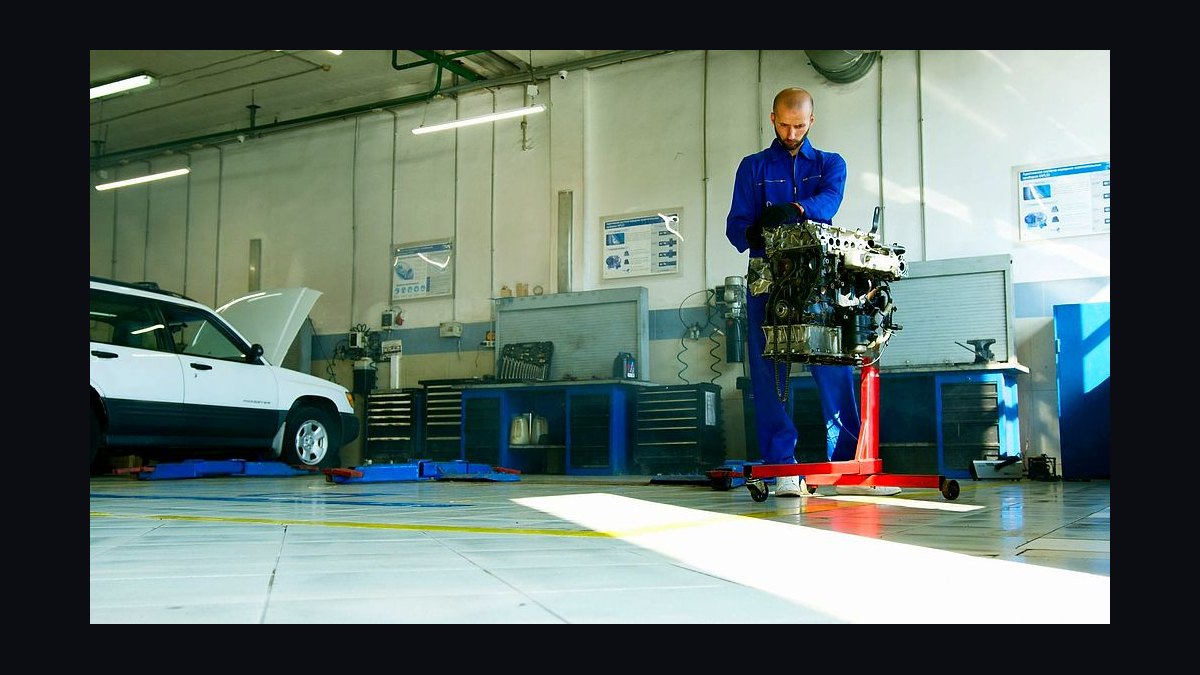
Open an independent auto repair shop in 2027 if you are an ASE-certified tech with 8+ years of wrench time, $180K–$350K in liquid capital, a signed lease of 2,400+ sq ft in a county with 50,000+ registered vehicles, and a written EV/ADAS upskilling plan. Skip it if you are not a journeyman tech, cannot finance that range, or your market already has three or more dealer service lanes and chains like Christian Brothers within five miles.
The two paths into ownership compared
There isn't one way to "open" an independent shop in 2027 — there are two structurally different paths, and the right answer to this question depends entirely on which one you're actually weighing. The first path is the greenfield build: you find raw or semi-improved space, sign a lease, order lifts and diagnostic equipment, hire techs, and open under a brand nobody has heard of. The second path is acquisition: you buy an operating shop with an existing customer base, trained staff, and a phone that already rings, and you step into cash flow on day one instead of building toward it.
A greenfield independent repair shop costs less up front — realistically $180,000 to $380,000 all-in for a 3-bay, 2,400 sq ft operation — but it costs you eighteen to twenty-four months of near-zero owner draw while you build a customer list from nothing. You are also taking on 100% of the execution risk: wrong location, wrong lease terms, slow equipment delivery, and a soft open that limps along at 35–50% bay utilization in year one. The upside is that you control everything from the first invoice: your pricing, your brand, your hiring, your systems. Nothing inherited, nothing to unwind.
Acquisition flips that trade. Per BizBuySell 2026 and Jaken Equities valuation data, an operating shop sells for 3.0x to 4.5x SDE (seller's discretionary earnings) — a $700,000-revenue shop with $140,000 SDE runs $420,000 to $630,000. That's a bigger check than a greenfield build, but you are buying cash flow, not potential. You start month one with existing bay utilization, a trained B-tech or two, and a customer file you don't have to generate from zero. The risk shifts from "will anyone come" to "can I retain what's already there" — seller transition, key-employee flight risk, and inherited equipment age (a lift or alignment rack that's 12 years old is a liability you're pricing into the deal, not a surprise after close).
There's a hybrid third option worth naming even though it isn't a full path on its own: buying into an existing independent as a working partner-operator, where you put up less capital than a full acquisition but take an equity stake tied to sweat equity as the lead tech. This only works if you already know the seller or the shop personally — it's not something you can source cold, so for the purposes of a decision framework, treat the choice as binary: build or buy.
Franchise ownership (Christian Brothers Automotive, Take 5 Oil Change) is a related but distinct question from "should I open an *independent*" — by definition a franchise isn't independent, since you're buying into brand standards, territory protection, and royalty obligations in exchange for faster customer trust. It's covered below as a comparison point, not as a third path to this specific question, because the moment you sign a franchise agreement you've answered a different question than the one asked here.
How to decide between building and buying
The decision tree above collapses to one real question: do you already have demand, or do you need to buy demand? If you're a Master Tech who spent a decade at a dealer or a regional independent and 80 to 200 customers already trust you by name, a greenfield build lets you capture that loyalty without paying a seller's premium for goodwill you're bringing yourself. You're not buying customer relationships — you already have them — so paying a 3–4.5x SDE multiple for someone else's would be redundant capital.
If you don't have a portable book, the calculus flips hard. A greenfield shop with no inherited customers is betting on marketing, signage, Google Business Profile ranking, and word of mouth to get to 55% bay utilization — and per the source benchmarks, that climb from 35–50% utilization in year one to a healthy run rate can take the full eighteen to twenty-two months to breakeven. Acquisition skips that climb entirely, provided you can finance the larger check and you do real diligence on why the seller is selling (retirement is a green flag; declining revenue or a departing lead tech is a red one).
Market saturation is the variable that overrides the above regardless of which path you lean toward. If your target area already has three-plus chain competitors within five miles, you need a positioning edge to open a NEW shop there — either a specialty (EV-only, European, diesel, fleet) or a price/service advantage a chain can't replicate. Acquiring an existing shop in that same saturated market is actually the safer move, because you're buying a customer base that has already chosen independent over chain, rather than trying to convince new customers to make that choice from scratch against three established competitors.
Capital access is the final filter. SBA 7(a) lenders in 2026 — Live Oak Bank and Huntington are the two largest in this category — will underwrite either path, but they underwrite acquisitions against trailing financials (which de-risks their loan) and greenfield builds against your personal experience and a business plan (which is a harder sell without 8+ years in the trade). If you can't get pre-qualified for at least $180K, neither path works yet — that's not a reason to pick the cheaper-looking option, it's a reason to wait and build capital or find an SBA-eligible partner first.
Concrete numbers behind each option
Greenfield build-out, 3-bay / 2,400 sq ft, Tier-2 metro:
| Line item | Low | High |
|---|---|---|
| Lease deposit + 3 mo rent (@ $1.40–$2.20/sf NNN) | $14,000 | $26,000 |
| 2-post lifts (3 units, Rotary/BendPak) | $24,000 | $48,000 |
| Air compressor + plumbing | $9,000 | $16,000 |
| Diagnostic scan tools (Snap-on/Autel) | $8,500 | $14,500 |
| Tire changer + balancer | $18,000 | $32,000 |
| AC machine + brake lathe + press | $11,000 | $18,000 |
| Hand tools + roll cabs (2 techs) | $14,000 | $28,000 |
| Shop management software (annual) | $3,400 | $4,800 |
| Initial parts inventory + vendor accounts | $12,000 | $22,000 |
| Build-out (paint, oil/waste systems, signage) | $22,000 | $55,000 |
| Insurance (12 mo, garage keepers + GL + WC) | $9,000 | $14,000 |
| Working capital (6 mo payroll cushion) | $35,000 | $80,000 |
| Total | $180,000 | $358,300 |
Revenue ramp for a greenfield build runs $280K–$520K in year one, $580K–$880K in year two, and $850K–$1.4M by year three at steady-state utilization, per IBISWorld 2026 small-shop banding. Owner take-home in year one is typically $45K–$95K; by year three, $120K–$220K on roughly $900K revenue at a 14–18% EBITDA margin, assuming you hold a $155+ effective labor rate and 65% labor utilization.
Acquisition, existing shop at 3.0x–4.5x SDE: a shop doing $700,000 in revenue with $140,000 in seller's discretionary earnings sells for $420,000–$630,000. That's the purchase price, not the total cash needed — add 10–15% for working capital and transition costs, so the realistic all-in acquisition budget is $460,000–$725,000 for a shop that size. The payoff is immediate cash flow: you inherit the $140K SDE run rate from close, rather than building toward it over two years. Payback on the purchase price alone, assuming you hold the existing SDE flat, runs roughly 3–4.5 years — but most buyers improve margin post-close by raising the effective labor rate and tightening parts matrix, which compresses that timeline.
Franchise comparison point, since it's the closest adjacent decision a buyer will weigh against both: Christian Brothers Automotive runs $520K–$650K to open (2026 FDD, Item 7) with a median gross sales of $1.97M (Item 19) — more capital required than either independent path, but a materially higher revenue ceiling and built-in brand trust. Take 5 Oil Change runs $1.7M–$2.4M to open with 22–28% EBITDA margins. Both require evangelical brand alignment and liquidity tests well above the independent thresholds, which is exactly why this question specifies "independent" — the franchise math only makes sense for buyers with $500K+ in liquid capital who are optimizing for a known system over autonomy.
Across all paths, the macro numbers that make 2027 a reasonable year to do this at all: the average vehicle on U.S. roads is 12.6 years old (S&P Global Mobility, 2026), the industry is worth $89.6 billion with the top 50 chains controlling under 9% of revenue (IBISWorld 2026), and the effective labor rate has climbed from $108 in 2019 to $145+ in 2026 (Ratchet+Wrench) — margin expansion that favors anyone who opens or buys now over someone who waited for 2024 pricing.
Implementation details and sequencing
The sequencing above applies to both paths, but the content inside each phase diverges. For a greenfield build: days 1–15 are spent pulling NHTSA registration counts for your target county to confirm the 50,000-vehicle threshold, scanning CoStar/LoopNet for 2,200–2,800 sq ft industrial-flex space under $2.20/sf NNN, and getting an SBA 7(a) pre-qualification letter. Days 16–30 cover entity formation, EIN, and binding garage keepers legal liability, general liability, and workers comp — premiums run $9K–$14K annually through carriers like Federated or Hartford. Days 31–45 are lease negotiation (push for 3–5 months of free rent to cover build-out) and permitting — occupancy, environmental, oil-water separator, and waste-tire permits are non-negotiable and vary by municipality. Days 46–60 are equipment ordering; lifts run 6-week lead times in 2026, so they're ordered first, alongside standing up shop management software and opening vendor accounts with parts suppliers. Days 61–75 are hiring — typically one B-tech and one lube tech while you run service advisor yourself — plus baseline EV/ADAS safety training for the whole crew before the first car arrives. Days 76–90 are the soft open: invite your existing customer list with an introductory offer, launch your Google Business Profile and any third-party certification applications, and track bay utilization daily — if you're under 55% by day 90, that's your signal to pivot marketing spend immediately rather than wait another quarter.
For an acquisition, the same 90-day window is almost entirely diligence and transition rather than build-out. Days 1–15 are reviewing three years of financials, confirming the SDE calculation independently (sellers routinely inflate it by excluding owner perks that are actually operating costs), and getting acquisition financing pre-qualified — SBA 7(a) lenders treat this as a lower-risk loan than a startup, so approval moves faster if the trailing numbers are clean. Days 16–30 cover equipment inspection (age and condition of lifts, alignment rack, and diagnostic tools directly affects what you'll need to capitalize in year one) and a lease assignment or renegotiation with the landlord. Days 31–45 are the purchase agreement and close, structured so the seller stays on for a 30–60 day transition to introduce you to the customer base and vendor contacts personally — this single step is the highest-leverage move in an acquisition, because customer retention in the first 90 days post-close is the best predictor of whether you paid a fair multiple or an expensive one. Days 46–75 are spent auditing and, where needed, replacing underperforming staff, renegotiating parts vendor terms now that you're the owner of record, and introducing any pricing changes gradually rather than all at once. Days 76–90 are the first full month of operating under your ownership, with the same daily bay-utilization tracking as the greenfield path — the baseline here should already be healthier than a startup's, so a drop below the trailing 12-month average is the signal to investigate retention, not marketing.
In both cases, the EV and ADAS component of the plan has to be in place before day 90, not after. ADAS calibration already affects 30%+ of repairs — windshields, bumpers, suspension work — and without a calibration rig (which runs $45K–$110K depending on brand) you're subletting that margin to a dealer or a specialty shop. A written training plan — ASE xEV Level 1 for the crew, Level 2 scheduled for year two — costs almost nothing relative to the equipment and protects you against a 2027 parc that BloombergNEF projects will cross 28 million EV and hybrid vehicles. Shops that treat this as optional rather than sequenced into the first 90 days are the ones that hit a service ceiling by year two.
Related questions
Is buying an existing shop safer than starting from scratch?
Generally yes for cash flow — you inherit revenue instead of building it — but it requires more capital and real diligence on why the seller is exiting. Declining revenue or a departing lead tech are red flags; retirement is a green one.
How much should I budget for ADAS calibration equipment?
$45,000 to $110,000 depending on brand (Hunter, Autel, Bosch). Skipping it means subletting 30%+ of modern repair work and losing that margin to whoever you sublet to.
What effective labor rate should I target in 2027?
$145–$185/hour. The industry average has risen from $108 in 2019 to $145+ in 2026; quoting under $135 compresses margin below what the business model can sustain.
Does a franchise make more sense than an independent shop?
Only if you have $500K+ in liquid capital and want a proven system over full control. Christian Brothers' median gross sales ($1.97M) beat the typical independent, but startup cost and brand requirements are substantially higher.
How do I know if my market is already too saturated?
Count chain competitors (Christian Brothers, Midas, Take 5, Meineke, Big O) within a five-mile radius. Three or more alongside active dealer service lanes is a strong signal to either specialize or look at acquisition instead of a new build.
FAQ
What is the realistic total startup cost to open an independent auto repair shop in 2027? A greenfield build runs $180,000 to $380,000 all-in, covering lease deposits, equipment, inventory, permits, insurance, and working capital. An acquisition of an existing shop typically runs $420,000 to $725,000 depending on size and seller's discretionary earnings.
How long does it take to become profitable?

Most greenfield independent shops reach breakeven between 14 and 22 months, with year-one owner cash flow around $45,000–$95,000 and year-three climbing to $120,000–$220,000. Acquisitions start closer to profitability on day one since they inherit existing cash flow.
Do I need to be an ASE-certified mechanic to open or buy a shop? It's strongly recommended for either path. Owners without deep technical experience struggle to diagnose efficiently, supervise technicians, or control parts and labor costs, and face a materially higher failure rate regardless of whether they build or buy.
How important is market density when deciding where to open? Critical for a greenfield build — you want 50,000+ registered vehicles within a 7-mile radius and fewer than three chain competitors. For an acquisition, density matters less because you're buying an established customer base rather than creating demand from zero.
Should I invest in EV and ADAS training before opening or closing on a shop? Yes, regardless of path. ADAS calibration already touches 30%+ of modern repairs, and the EV/hybrid parc is projected to cross 28 million vehicles by 2027. A written upskilling plan should be in place before day 90 of either a build or an acquisition.
What's the biggest risk in each path? For a greenfield build, it's underestimating capital needs and the time to breakeven. For an acquisition, it's overpaying relative to true SDE or losing customers during the ownership transition. Both risks are manageable with real diligence up front.
Sources
- IBISWorld Auto Mechanics in the US Industry Report (1689), 2026
- S&P Global Mobility — Average Age of Light Vehicles in the U.S., 2026 release
- ASE 2026 Technician Shortage Report (National Institute for Automotive Service Excellence)
- Jaken Equities — How to Value an Auto Repair Shop: Revenue and EBITDA Multiples, 2026
- BizBuySell 2026 Insight Report (small business acquisition multiples)
- Christian Brothers Automotive 2026 Franchise Disclosure Document, Items 7 and 19
- Take 5 Oil Change 2026 Franchise Disclosure Document, Items 7 and 19
- BloombergNEF Electric Vehicle Outlook 2026
- Ratchet+Wrench 2026 Effective Labor Rate Survey
- Federated Insurance Garage Keepers Legal Liability Quote Guide, 2026
Related on PULSE
- Should I open or buy a CPR Cell Phone Repair franchise in 2027?
- Should I open a transmission repair business in 2027?
- Should I open a paintless dent repair business in 2027?
- Should I open a HVAC repair business in 2027?
- Should I open a independent tire shop in 2027?
- Should I open a independent coffee shop in 2027?
This page will be disappearing soon. Save it to your device for $1 — or read it free while it is here.
@Kory-White- · if Venmo asks, the last 4 of my number are 2012
This page is gone.
This one is off the shelf now. $1 keeps it on your phone for good — the whole page, pictures and diagrams included.
 franchiseShould I open or buy a McAlister's Deli franchise in 2027?
 franchiseShould I open or buy a Domino's franchise in 2027?
 franchiseShould I open or buy an Ace Hardware franchise in 2027?
 franchiseShould I open or buy a Bahama Breeze franchise in 2027?
 franchiseShould I open or buy a Kona Ice franchise in 2027?
 franchiseShould I open or buy a Kumon franchise in 2027?
 franchiseShould I open or buy a Merry Maids franchise in 2027?
 franchiseShould I open or buy a Goddard School franchise in 2027?
 franchiseShould I open or buy a Massage Envy franchise in 2027?
 franchiseShould I open or buy a Valvoline Instant Oil Change franchise in 2027?