


Should I open or buy a Paul Davis Restoration franchise in 2027?
Quality
Certified
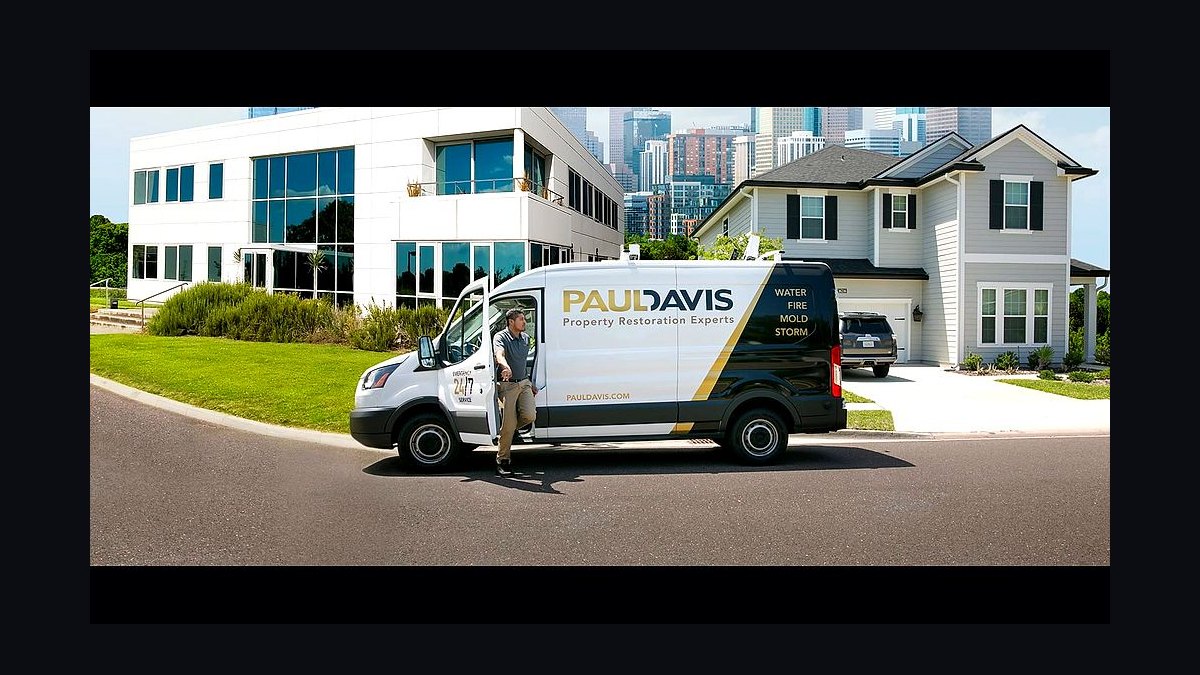
For most owner-operators, buying into a Paul Davis Restoration franchise beats building an independent restoration company from scratch in 2027. The insurance-driven demand model, established carrier relationships, and brand recognition shorten the path to revenue. Expect roughly $300,000-$700,000 all-in and 12-24 months to meaningful profit. The trade-off is 24/7 operational intensity and a royalty stream.
Open Independent or Buy the Davis Franchise: Two Paths Compared
Choosing between opening an independent restoration company and buying a Paul Davis Restoration franchise is really a choice between control and infrastructure. An independent shop gives you total ownership of your brand, your pricing, and your customer list. You keep every dollar of margin. But you also start with zero carrier relationships, no national account access, no proprietary estimating software, and no playbook for the 2 a.m. water-loss call that decides whether an adjuster ever calls you again. In restoration, credibility with insurers is the entire game, and credibility is slow to build alone.
A Paul Davis franchise hands you a fifty-plus-year brand, a training system, an estimating platform, and — critically — introductions to national carrier programs that route claims to approved vendors. That access is the single biggest reason franchisees outperform independents early. National carriers maintain vendor networks, and getting onto those panels as an unknown independent can take years of documented job volume. As a franchisee, you inherit a seat at that table on day one, subject to local performance standards.
The trade-offs are real. You pay a franchise fee near $70,000, an ongoing royalty that slides roughly between 2.5% and 5% of gross, and a marketing fund contribution around 2%. You follow brand standards, you accept territory boundaries, and you give up some autonomy over how you market and price. For operators who thrive on systems and want a faster ramp, that is a bargain. For operators who want to build a distinctive local brand and keep all margin, it is a tax. The honest answer is that neither path is universally right — it depends on whether your bottleneck is capital and systems (favor franchise) or differentiation and margin (favor independent).
There is a third path worth naming: buying an existing Paul Davis franchise from a retiring owner. That is technically a "buy" rather than an "open," and it changes the math considerably. An established location with a trained crew, live carrier relationships, and a book of commercial property-manager accounts can cash-flow from month one. You skip the 12-24 month ramp entirely, but you pay a premium for goodwill and you inherit whatever operational debt the seller left behind. For 2027 specifically, with many restoration owners from the 2000s wave approaching retirement, resale inventory is worth watching alongside new-territory openings.
How to Decide Between Opening and Buying
The decision hinges on four variables: your liquid capital, your tolerance for a slow ramp, your appetite for systems versus autonomy, and whether a resale opportunity exists in your target market. Work through them in order, because capital gates everything downstream.
Read the tree honestly. If you have under $150,000 liquid, the franchise path is largely closed — you will not pass the franchisor's qualification screen, and even if you did, you would be under-capitalized for the insurance-billing float. If you have the capital but no desire to cold-call adjusters for two years, the franchise's carrier introductions are worth the royalty. If you have deep local contractor relationships and a marketing instinct, independence can win on margin. And if a resale exists, evaluate it seriously — the ramp compression is often worth more than the goodwill premium.
One more variable that the tree cannot capture: your tolerance for being managed. A franchise agreement is a contract with performance standards, audit rights, and approved-vendor requirements. Some operators find that structure liberating because it removes decisions. Others find it suffocating. Be honest with yourself before you sign, because unwinding a franchise relationship is expensive and slow.
The Concrete Numbers Behind Each Option
Start with the franchise path. Per the 2026 Franchise Disclosure Document, the initial franchise fee sits around $70,000. Total Item 7 initial investment typically lands between $300,000 and $700,000 depending on territory size, warehouse build-out, equipment package, and vehicle count. That range breaks down roughly as: $40,000-$130,000 for office and warehouse leasehold improvements, $100,000-$300,000 for drying and extraction equipment plus trucks, $10,000-$30,000 for technology and estimating software, $25,000-$70,000 for initial marketing, $10,000-$40,000 for insurance and licensing, $10,000-$30,000 for training and travel, and $60,000-$200,000 in working capital. The working capital line is the one that sinks under-prepared owners, because insurance claim payments routinely take 30 to 90 days while crews and suppliers expect weekly payment.
Ongoing costs matter as much as the entry ticket. The royalty slides on a scale that typically runs about 2.5% to 5% of gross revenue — low for the restoration category, where 5% to 7% is common. Add roughly 2% for the national marketing fund. On a $2 million gross year, that is somewhere between $90,000 and $140,000 in combined royalty and marketing fees. At scale, the low royalty is a genuine competitive advantage; on a $600,000 first-year gross, it is a rounding error next to the value of carrier access.
Now the independent path. An independent restoration company can launch for far less — often $75,000 to $250,000 if you start lean with used equipment, a small warehouse, and one or two trucks. You pay no franchise fee and no royalty. But you also fund your own training, your own estimating software, and your own brand-building, and you spend the first year or two proving yourself to adjusters who have no reason to trust you yet. Realistically, an independent shop may take 24 to 36 months to reach the revenue a franchise location hits in 12 to 18, and it may never get onto the national carrier panels that drive the largest jobs.

Revenue and profit benchmarks for mature Paul Davis locations commonly run $1.5 million to $5 million in gross annual revenue, with owner earnings in the $200,000 to $600,000 range at the higher end. Those figures are not guarantees — they reflect established, well-run locations in decent territories. A first-year location often grosses $400,000 to $900,000 while building its carrier relationships. The gap between year one and year five is almost entirely about how many adjusters know your name and trust your documentation.
Compare the two paths on a five-year horizon. Franchise: roughly $500,000 invested up front, $150,000 to $250,000 in cumulative royalties and marketing fees by year five, and a realistic shot at $2 million-plus gross by year four or five. Independent: roughly $150,000 invested up front, zero royalties, but a slower climb and a real chance of stalling at $800,000 to $1.2 million because you never cracked the national carrier panels. The franchise's edge is not the brand name on the truck — it is the carrier pipeline behind it.
Implementation Details and Sequencing
Whichever path you choose, sequencing determines whether you succeed. The biggest mistake new restoration owners make is buying equipment and a warehouse before they have any demand. Demand comes from relationships, and relationships come from showing up. Build the relationship engine first, then scale the capacity to serve it.

For the franchise path, the sequence runs roughly like this. First, read the FDD cover to cover and interview at least eight existing franchisees about carrier relationships, job values, billing timelines, and net profit — not just revenue. Second, validate your specific territory by identifying the top commercial property managers, insurance agents, and independent adjusters within it. Third, secure your warehouse and equipment package, but buy used where you can to preserve working capital. Fourth, complete training and get your crews IICRC-certified. Fifth, and most importantly, start the relationship campaign — weekly visits to adjusters and property managers — before you take your first job. Sixth, launch with genuine 24/7 response capability, because the first adjuster who calls at 3 a.m. and gets voicemail will not call again.
For the independent path, the sequence is similar but the relationship campaign carries even more weight, because you have no brand to lean on. You will need to over-invest in documentation quality — photo evidence, moisture readings, scope accuracy — because that is what earns adjuster trust when you are unknown. Many independents start by subcontracting for established restoration firms to build a track record, then gradually win direct carrier work. That is slower but capital-light.
Staffing is the operational crux on both paths. A $1.5 million operation typically needs 5 to 15 employees: project managers, estimators, water technicians, and administrative staff. A $3 million to $5 million territory needs 20 to 40 or more. IICRC-certified technicians are scarce, and industry turnover can run 30% to 40% annually. Franchisees mitigate this with above-market technician pay — often $18 to $28 per hour — plus bonuses tied to job profitability. Budget $80,000 to $120,000 annually for a dedicated sales or account manager if you cannot personally run the relationship campaign, because in restoration, the sales role is not optional.
Financing deserves its own planning pass. SBA 7(a) loans commonly cover up to 90% of total project cost with 10% to 15% down. Franchisor-affiliated lenders may offer five- to seven-year terms. Equipment leasing spreads truck and drying-equipment cost into $1,500 to $3,000 monthly payments per vehicle. Franchisors typically want to see $150,000 to $250,000 in liquid assets and $500,000 to $1,000,000 in net worth to qualify. Plan for no owner distributions for the first 12 to 18 months while you reinvest in the territory.
Related questions
Is Paul Davis Restoration recession-resistant?
Largely yes. Water, fire, mold, and storm damage occur regardless of economic conditions, and most revenue is billed to insurance rather than paid out of pocket by consumers. Demand can fluctuate with regional weather, but it does not track the business cycle the way discretionary retail does.
How long until a new Paul Davis franchise is profitable?
Many locations reach profitability within 12 to 24 months, though the first year is typically investment-heavy. Speed depends on how quickly you build adjuster relationships and how well you manage the insurance-billing cash-flow gap. Under-capitalized owners often take longer.
What is the biggest risk in opening a Paul Davis franchise?
The biggest risk is failing to build carrier and adjuster relationships, because that pipeline drives revenue. A close second is underestimating working capital — insurance payments can lag 30 to 90 days while payroll and suppliers must be paid weekly.
Can I buy an existing Paul Davis franchise instead of opening new?

Yes, and resales are worth watching as owners from the 2000s expansion wave approach retirement. Buying an existing location compresses the ramp dramatically because crews, carrier relationships, and commercial accounts transfer with the business. Expect to pay a goodwill premium.
How does the Paul Davis royalty compare to competitors?
The sliding royalty of roughly 2.5% to 5% is low for the restoration category, where 5% to 7% is more typical. Add about 2% for the marketing fund. On large insurance-billed jobs, the low royalty meaningfully improves franchisee economics.
FAQ
How much does it cost to open a Paul Davis Restoration franchise in 2027? The franchise fee is around $70,000, and total initial investment per the 2026 FDD typically ranges from $300,000 to $700,000. That covers equipment, vehicles, warehouse build-out, technology, initial marketing, and working capital. Actual cost depends heavily on territory size and whether you buy new or used equipment.
What revenue and profit can a Paul Davis franchisee expect? Mature, well-run locations commonly gross $1.5 million to $5 million annually, with owner earnings in the $200,000 to $600,000 range at the higher end. First-year locations often gross $400,000 to $900,000 while building carrier relationships. Results vary widely by territory and operational execution.
Do I need restoration experience to qualify? No, but you need operational and relationship-building aptitude. The franchisor provides training, and many successful owners come from construction, insurance, or general business backgrounds. What you cannot outsource is the willingness to run a 24/7 emergency-response operation and personally build adjuster relationships early on.
How much working capital should I set aside beyond the initial investment? Plan for an additional $100,000 to $200,000 in working capital during the first 12 to 18 months. Insurance claim payments can take 30 to 90 days, while crews and suppliers expect prompt payment. Underestimating this cash-flow gap is one of the most common reasons new restoration businesses struggle.
What support does Paul Davis provide to franchisees? Franchisees receive initial training, ongoing operational support, national marketing resources, and assistance with carrier relationship development. The brand also provides estimating technology and access to national account programs. However, local adjuster and property-manager networking remains the franchisee's responsibility.
Is it better to open a new territory or buy an existing Paul Davis franchise? Buying an existing location compresses the ramp because trained crews, live carrier relationships, and commercial accounts transfer with the business. Opening new costs less in goodwill but requires 12 to 24 months to reach profitability. If a resale exists in your target market, evaluate it seriously before defaulting to a new opening.
Sources
- Paul Davis Restoration official franchise site
- International Franchise Association — economic outlook
- U.S. Small Business Administration — SBA 7(a) loan program
- Restoration Industry Association
- IICRC — certification and standards
- Insurance Information Institute — property claims data
- IBISWorld — Water and Fire Damage Restoration in the US
- Federal Trade Commission — Franchise Disclosure Document guidance
- NOAA — severe weather and climate data
Related on PULSE
- Best restoration and disaster-recovery franchises to buy in 2027
- Should I open or buy a Restoration 1 franchise in 2027?
- Should I open or buy a BluSky Restoration franchise in 2027?
- Should I open or buy a Rainbow Restoration franchise in 2027?
- Should I open or buy a 911 Restoration franchise in 2027?
- Should I open or buy a Rainbow International Restoration franchise in 2027?
This page will be disappearing soon. Save it to your device for $1 — or read it free while it is here.
@Kory-White- · if Venmo asks, the last 4 of my number are 2012
This page is gone.
This one is off the shelf now. $1 keeps it on your phone for good — the whole page, pictures and diagrams included.
 franchiseShould I open or buy a Wingstop franchise in 2027?
 franchiseShould I open or buy a Dairy Queen franchise in 2027?
 franchiseShould I open or buy a Cinnabon franchise in 2027?
 franchiseShould I open or buy a Hand and Stone Massage franchise in 2027?
 franchiseShould I open or buy an Orangetheory Fitness franchise in 2027?
 franchiseShould I open or buy a Panera Bread franchise in 2027?
 franchiseShould I open or buy a Jeremiah's Italian Ice franchise in 2027?
 franchiseShould I open or buy a Supercuts franchise in 2027?
 franchiseShould I open or buy a KinderCare franchise in 2027?
 franchiseShould I open or buy a Jiffy Lube franchise in 2027?