


Should I open or buy a franchise vs. a licensed brand in 2027?
Quality
Certified
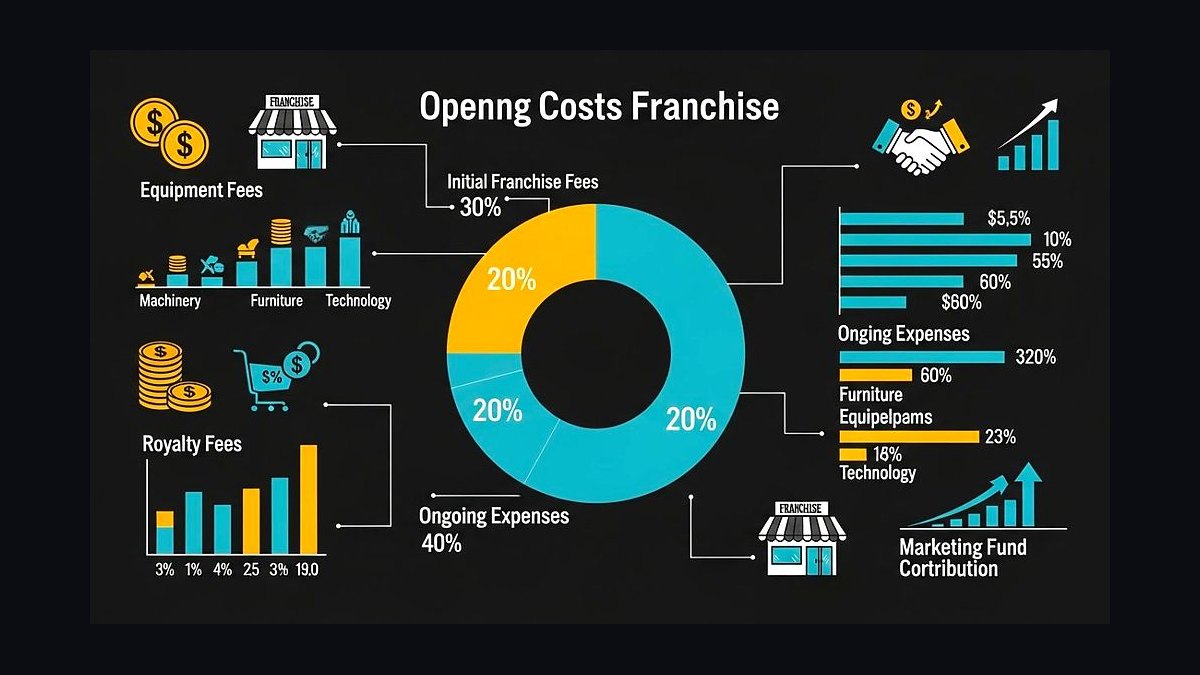
Buy or open a franchise when you want a proven operating system, protected territory, and lender-friendly documentation, and you accept 4–8% royalties plus tight control. Choose a licensed brand when you already run the operation well and only need the name, trademark, and marketing assets — lower fees, far less support, and you own the playbook.
What a franchise and a licensed brand actually sell you
The two arrangements look similar from the outside — you pay a brand owner, you put their name on your door — but they transfer fundamentally different things, and U.S. law treats them differently.
A franchise is a legal category, not a marketing term. Under the FTC Franchise Rule (16 CFR Part 436) and most state franchise statutes, a relationship is a franchise when three elements are present: you get the right to operate under the franchisor's trademark, the franchisor exerts significant control over or gives significant assistance to your method of operation, and you pay a required fee (the FTC threshold is a payment of $500 or more within the first six months). If all three exist, it is a franchise regardless of what the contract calls itself. That matters, because the franchisor is then legally required to give you a Franchise Disclosure Document (FDD) at least 14 calendar days before you sign anything or pay any money.

What you are buying with a franchise is the operating system. The FDD's 23 items force disclosure of litigation history, bankruptcy, initial investment ranges, supplier restrictions, territory, renewal and transfer terms, and — critically — Item 20's unit-count tables showing openings, closures, terminations, non-renewals, and transfers for the last three fiscal years. Item 19 may contain a Financial Performance Representation with actual unit-level revenue (and sometimes cost) data, though franchisors are not required to include one. Item 21 contains audited financial statements of the franchisor itself. No other small-business purchase in America comes with a mandated disclosure package this thorough.
A licensed brand is a much narrower deal. A trademark license grants you the right to use a name, logo, and usually some marketing assets and product specifications, in exchange for a fee — typically a flat annual amount or a royalty on sales. A pure license carries no system: no required operations manual, no field consultant, no mandated POS, no build-out standards enforced by an inspector. The licensor's main obligation is to defend the mark and, under trademark law, to exercise enough quality control that the mark is not deemed abandoned through "naked licensing." Your main obligation is to pay and to not damage the mark.
The practical consequence: with a license you keep your own operating decisions — your own hours, your own vendors, your own pricing, your own hiring — and you keep your own goodwill in the operating entity. With a franchise, the goodwill largely accrues to the brand, and your exit value is partly a function of what the franchisor will approve in a transfer.
There is also a third shape worth naming, because it is where a lot of "should I franchise or license" questions actually land: the dealer, distributor, or membership/affiliation model. A supply agreement where you buy inventory at wholesale and resell under the manufacturer's name, or a hotel-style affiliation where you pay for reservations and loyalty access, can sit on either side of the franchise line depending on how much control and how many required payments are involved. Many licensors deliberately engineer their agreements to stay under the franchise definition — no required fee beyond bona fide wholesale purchases, no significant control over operations — precisely to avoid FDD registration costs. If a licensor's contract dictates your staffing, hours, layout, and suppliers and charges you a fee, you may be looking at an unregistered franchise, which is a legal problem for them and leverage for you.
One more distinction that gets lost: opening a new franchise unit versus buying an existing one. Opening means you sign a new franchise agreement, pay the initial franchise fee, build out a site, and carry the ramp period on your own balance sheet. Buying means you purchase an existing unit from a departing franchisee — you inherit revenue on day one, you still need franchisor approval for the transfer, you typically pay a transfer fee (commonly $5,000–$25,000 depending on the brand), and you usually sign the franchisor's *current* agreement, not the one the seller signed. That last point is a routine surprise: the seller's 4% royalty from 2018 may become your 6% royalty plus a 2% ad fund in 2027.
How to decide between them
The decision is not "which is better." It is a sequence of gates, and most operators can resolve it in an afternoon by answering four questions honestly.
Gate one: do you already have a working operation? If you have run this business, in this trade, and your unit economics work, a franchise is mostly buying you something you already own. You are paying 5–7% of top-line revenue in perpetuity for a playbook you wrote yourself. A license, or independent operation with your own name, is usually the better economic answer. If you have never run this business, the franchise system is a substitute for two to four years of expensive mistakes, and the royalty is tuition.
Gate two: does the brand actually drive demand in your market? Test this concretely, not abstractly. For a consumer-facing service, look at whether the brand shows up in local search for the queries your customers use, whether it has a national call center or lead-routing that will hand you jobs, and whether local competitors are franchised or independent. For a food concept, ask whether people drive past two independents to reach the brand. If the honest answer is that customers pick by proximity, price, and reviews — as they do for most home services, most auto repair, and much of casual dining — the brand premium is thin and a license or independent brand is defensible.

Gate three: can you tolerate the control? Franchise agreements typically bind you to approved suppliers, approved menu or service list, approved technology stack, required remodels on a schedule (often every 7–10 years, sometimes tied to renewal), required minimum hours, and required participation in national promotions you may lose money on. If you are the kind of operator who wants to run a Tuesday special or switch to a cheaper distributor, that friction will grind you down for a decade.
Gate four: what is your exit? Franchise units in established systems have a real, liquid resale market and lenders who understand them. Independent and licensed businesses sell too, but valuation is more idiosyncratic and buyer financing is harder. If you plan to sell in five to seven years, the franchise's transfer market is a genuine asset — net of the franchisor's right of first refusal and transfer approval.
mermaid flowchart LR subgraph Franchise["Franchise path"] F1["Define site and radius"] --> F2["Request FDD"] F2 --> F3["Read Items 3, 6, 7, 19, 20"] F3 --> F4["Call 10-15 current and former franchisees"] F4 --> F5["Franchise counsel reviews agreement"] F5 --> F6["14-day minimum wait"] F6 --> F7["SBA or conventional financing"] F7 --> F8["Sign, build out, open"] end subgraph License["Licensed brand path"] L1["Verify mark in USPTO TSDR"] --> L2["Confirm owner and live status"]

L2 --> L3["Map existing licensees in territory"] L3 --> L4["Negotiate exclusivity, term, QC, wind-down"] L4 --> L5["Confirm it is not an unregistered franchise"] L5 --> L6["Financing without system comparables"] L6 --> L7["Sign and launch under the mark"] end F8 --> X["5-year cash flow model"] L7 --> X </parameter> </invoke>
Two sequencing traps worth naming. First, if you are buying an existing unit rather than opening one, do the transfer conversation with the franchisor *before* you agree a price with the seller — the franchisor's approval, transfer fee, required remodel, and current-agreement terms all change what the business is worth to you. Second, if you are converting an existing independent business to a licensed brand, negotiate the de-branding and wind-down clause hardest, because that clause determines whether you still own a business if the relationship ends in year four.
Where each model fails

Franchises fail in predictable ways. The most common is a unit that never reaches the volume the model assumes: royalty and ad fund are charged on gross sales, so a unit doing 60% of system-average revenue pays the same percentage as a top performer while covering the same fixed rent and labor. Encroachment is the second — a territory defined loosely, or defined only for the physical location while delivery, catering, and e-commerce sales into your area are unprotected. Read the territory clause for what is *excluded*: alternative channels, non-traditional venues, national accounts, and online ordering are the usual carve-outs. Third is the mandated capital event: a systemwide remodel or technology conversion announced with 12 months' notice and no financing help.
Licenses fail differently. The dominant failure is renewal leverage: you spend four years making the name mean something in your market, and at renewal the licensor knows exactly how much that costs you to lose. The second is quality-control drift in the other direction — the licensor licenses the same mark to an operator two towns over who runs it badly, and you inherit the reputation. Ask directly how many licensees exist, where, and what happens if one damages the mark. The third is the naked-licensing risk: if the licensor genuinely exercises no quality control, the mark can become vulnerable, and a mark you have built on can lose its enforceability against copycats.
Both models share one failure mode: buying the affiliation to solve a problem the affiliation does not solve. Neither a franchise nor a license fixes a bad site, an undercapitalized balance sheet, or an owner who does not want to be in the business. The franchise will make a bad site fail more expensively, because you carry the royalty on the way down and a personal guarantee at the bottom.
What is different about doing this in 2027

Three things have shifted the calculus relative to the mid-2020s, and they cut in different directions.
Capital cost is the first. Build-out-heavy formats have absorbed several years of elevated construction and equipment costs, and the gap between an asset-light service franchise and a real-estate-heavy retail or restaurant format has widened. If your equity is limited, the asset-light end of the franchise market — mobile services, home services, in-home care, tutoring, small-footprint retail — reaches breakeven on far less capital and is where a first-time owner has the best odds.
Demand discovery is the second, and it argues *against* paying a brand premium in some categories. When customers find local services through search, maps, and review platforms rather than through national brand recall, the brand's contribution to lead flow is smaller than it was, and a strong local operator with good reviews can compete on equal footing. Before you pay 6% forever for a name, measure how customers in your specific category actually find providers. In categories where the answer is "reviews and proximity," a license — or your own brand — deserves serious consideration. In categories where the brand carries genuine trust or national account relationships, the royalty buys something real.
Labor and compliance are the third. Multi-state operators face a patchwork of scheduling, wage, and classification rules, and this is a place where a mature franchise system earns its royalty: updated employee handbooks, compliance-current training modules, and a legal team that has already answered the question you are about to ask. A licensed brand gives you none of that — you own every compliance question yourself. If you are opening your first location with employees, weigh that support honestly; if you already have an HR function, it is worth less to you.
Related questions

Can I convert my existing independent business to a licensed brand?
Often yes, and it is the cleanest use of a license — you keep your operation, staff, and customer relationships and add a recognized name. Negotiate the wind-down clause hardest: you need the right to de-brand and keep operating under your own name without a non-compete.
Is it cheaper to open a new franchise unit or buy an existing one?
Opening usually costs less at signing but more in total, because you fund the ramp. Buying costs more upfront and adds a transfer fee, but delivers revenue on day one. Buying also usually means signing the franchisor's current agreement, not the seller's older, cheaper terms.
Does a licensed brand qualify for SBA financing?
Yes, but underwriting takes longer. Franchises listed in the SBA Franchise Directory clear the affiliation-eligibility question quickly. A license requires the lender to analyze the agreement's control provisions independently and to build projections without system-wide comparables.
How do I know if a "license" is legally a franchise?
Apply the FTC's three elements: trademark use, significant control or assistance over your operating method, and a required payment of $500 or more in the first six months. All three present means it is a franchise and an FDD is required, whatever the contract is titled.
What single document tells me the most about a franchise?
Item 20 of the FDD. Its three-year tables of openings, closures, terminations, non-renewals, transfers, and reacquisitions — plus the exhibit listing current and former franchisees with contact details — reveal system health faster than any sales presentation.
FAQ

How long do I have to review a Franchise Disclosure Document before signing?
The FTC Franchise Rule requires the franchisor to give you the FDD at least 14 calendar days before you sign a binding agreement or make any payment. That is a floor, not a target. If you receive a materially revised agreement, a new waiting period applies to the revision. Serious buyers take four to eight weeks, because the calls to existing and former franchisees are what actually change your decision, and those take time to schedule.
Are franchise royalties negotiable?
Rarely on the headline rate, and for a structural reason: Item 6 of the FDD must disclose the fees charged, and franchisors protect uniformity because inconsistent terms create disclosure and litigation exposure. What is sometimes negotiable is a temporary reduction during ramp, a development schedule for multi-unit deals, the initial fee on additional units, territory boundaries, and the scope of your personal guarantee. Ask for those instead of a lower royalty.
What happens to my business if the license or franchise agreement ends?
This is the clause to read before anything else. Franchise agreements typically require you to cease using all marks, de-identify the premises at your expense, return manuals, assign the phone number and often the lease, and observe a post-term non-compete for a set duration within a set radius. Licenses vary widely — some allow a graceful wind-down window and impose no non-compete, which is a major advantage. Negotiate the wind-down explicitly, in writing, before you sign.

Can the brand owner open another location near mine?
Depends entirely on the territory clause, and "protected territory" means less than it sounds. Many franchise agreements protect the physical site only, and expressly reserve alternative channels — delivery, catering, kiosks, non-traditional venues like airports and campuses, national accounts, and online ordering shipped into your area. Read the exclusions list, not the headline. For a license, exclusivity is fully negotiable and is often the single most valuable term you can win.
Do I need a franchise attorney, or is my regular business lawyer enough?
Use a franchise attorney. FDDs and franchise agreements have their own conventions, their own state registration overlay in roughly a dozen registration states, and their own body of case law on encroachment, termination, and non-competes. A general business lawyer will read the contract correctly but will not know which terms this franchisor has moved for other buyers, or which Item 20 patterns predict trouble.
Is a licensed brand always cheaper than a franchise?
On royalty rate, usually. On total cost of ownership, not necessarily. A license shifts training, operations development, supplier negotiation, technology, marketing, and compliance onto you — costs that are real even when they are not line items. If you already carry those functions, the license is genuinely cheaper. If you would have to build them, you may spend more than the royalty you avoided, and spend it before revenue exists.
Sources
- FTC Franchise Rule Compliance Guide — https://www.ftc.gov/business-guidance/resources/franchise-rule-compliance-guide
- FTC: Buying a Franchise — A Consumer Guide — https://consumer.ftc.gov/articles/buying-franchise-consumer-guide
- 16 CFR Part 436 (Franchise Rule, full text) — https://www.ecfr.gov/current/title-16/chapter-I/subchapter-D/part-436
- SBA Franchise Directory — https://www.sba.gov/document/support-sba-franchise-directory
- SBA 7(a) Loan Program overview — https://www.sba.gov/funding-programs/loans/7a-loans
- USPTO Trademark Search (registration status and ownership) — https://www.uspto.gov/trademarks/search
- USPTO: Keeping your registration alive / quality control in licensing — https://www.uspto.gov/trademarks/maintain
- International Franchise Association — https://www.franchise.org/
- California DFPI Franchise Investment Law information — https://dfpi.ca.gov/franchise-investment-law/
Related on PULSE
- How do I evaluate a franchise territory before signing?
- What does an SBA 7(a) loan actually require from a first-time owner?
- Should I buy an existing small business or start one from scratch?
- What unit economics should I model before opening a service business?
- How do I value a small business I'm buying from a retiring owner?
This page will be disappearing soon. Save it to your device for $1 — or read it free while it is here.
@Kory-White- · if Venmo asks, the last 4 of my number are 2012
This page is gone.
This one is off the shelf now. $1 keeps it on your phone for good — the whole page, pictures and diagrams included.
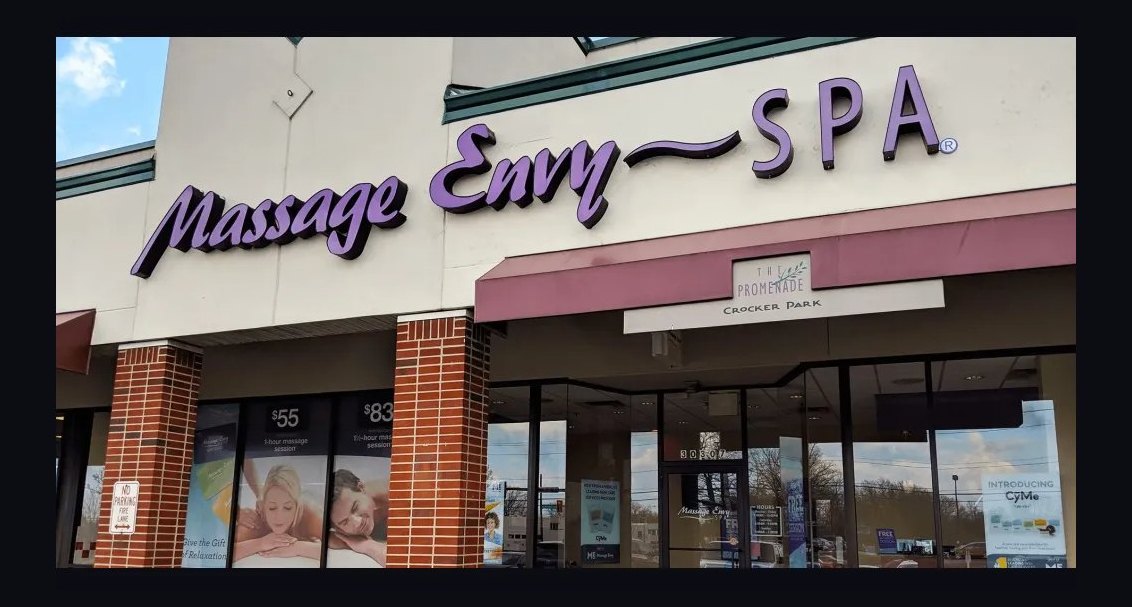 franchiseShould I open or buy a Massage Envy franchise in 2027?
 franchiseShould I open or buy a Pizza Hut franchise in 2027?
 franchiseShould I open or buy a UPS Store franchise in 2027?
 franchiseShould I open or buy an F45 Training franchise in 2027?
 franchiseShould I open or buy a Dairy Queen franchise in 2027?
 franchiseShould I open or buy a Rita's Italian Ice franchise in 2027?
 franchiseShould I open or buy a KinderCare franchise in 2027?
 franchiseShould I open or buy a Whataburger franchise in 2027?
 franchiseShould I open or buy a Jimmy John's franchise in 2027?
 franchiseShould I open or buy a Hand and Stone Massage franchise in 2027?