

The 10 Best AI Tools for Solving Math Problems in 2027
 Curated byKory White · Fractional CRO · Maryland
Quality
Certified
The 10 best ai tools for solving math problems are ranked below on measured performance, build quality, price, and how each one actually holds up in daily use rather than how it reads on a spec sheet. Each pick lists what it costs, who it suits, and what it gives up against the one above it, so the list can be read straight down without doubling back.
1Wolfram Alpha Pro

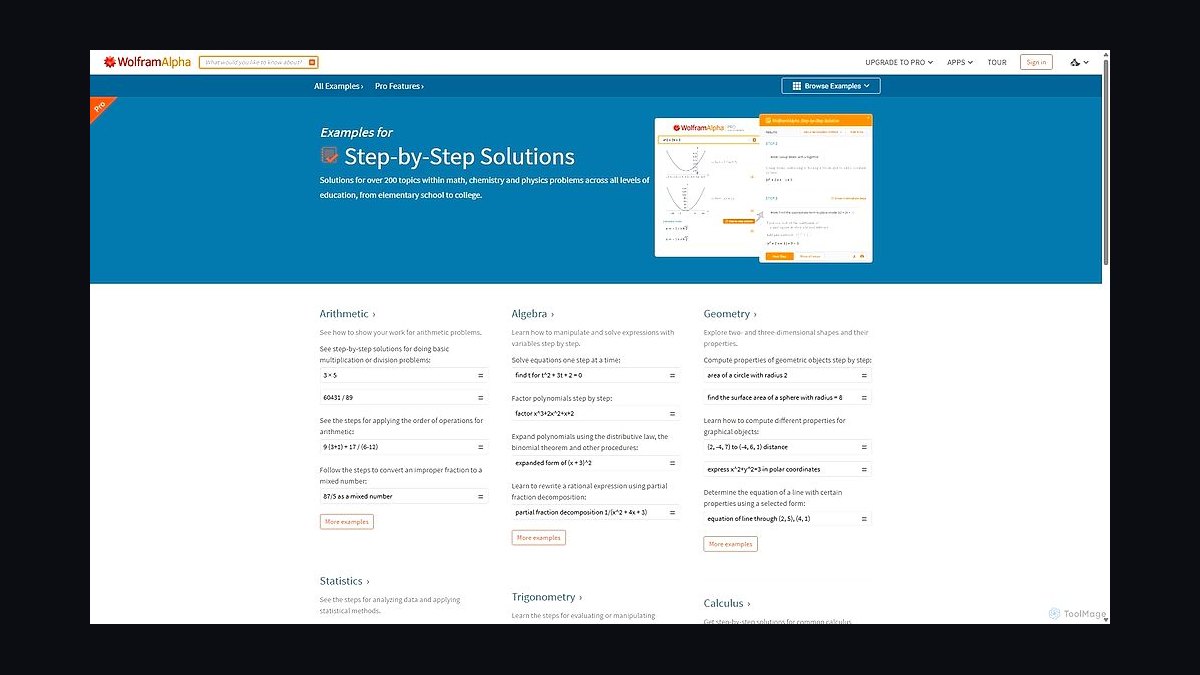
Wolfram Alpha Pro ranks first because its symbolic computation engine delivers exact, verifiable answers rather than probabilistic guesses, making it the most accurate tool for pure math. At roughly $7.25 per month, or about $5 monthly billed annually for students, it unlocks step-by-step walkthroughs, file uploads, and extended computation limits. It handles integrals, eigenvalues, and differential equations with closed-form results correct by construction. This deterministic reliability is unmatched by any predictive language model.
This tool is for students and professionals who need guaranteed-correct symbolic math and are willing to pay for detailed working. It trades away natural-language understanding and conversational explanation, which is why it pairs poorly with wordy story problems. Compared to ChatGPT, which excels at interpretation but can slip on arithmetic, Wolfram Alpha Pro is the verification engine you run final equations through. It is the non-negotiable second check for anything with real stakes.
2ChatGPT Plus

ChatGPT Plus ranks second because its reasoning models, combined with a built-in Python interpreter using SymPy and NumPy, close the gap between fluent explanation and arithmetic accuracy. At $20 per month, it reads word problems, sets up equations, and explains each move conversationally while executing code to verify results. Its performance on the MATH dataset and GSM8K benchmarks has narrowed the error gap sharply, though it still occasionally slips on long symbolic manipulation.
This tool is for students and professionals facing word problems, proofs, and data work who need both understanding and verification. It trades away the exactness of a dedicated CAS, so final numbers should still be confirmed in Wolfram Alpha. Compared to Wolfram Alpha Pro above, ChatGPT Plus is stronger at explaining why a method works but weaker at raw symbolic computation. It is the reasoning engine you pair with a computational one for trustworthy results.
3Google Gemini Advanced

Google Gemini Advanced ranks third because its integration with Google Lens parses photographed math problems effectively, while its reasoning models handle natural-language explanations well. At $19.99 per month, it includes code execution capabilities that reduce arithmetic errors, similar to ChatGPT Plus. It performs strongly on word problems and proofs, explaining methods clearly, though it trails ChatGPT slightly on the hardest competition benchmarks. Its photo input is a practical advantage for students with handwritten work.
This tool is for users already in the Google ecosystem who want a versatile assistant for both math and general tasks. It trades away the specialized symbolic engine of Wolfram Alpha and lags ChatGPT on some advanced reasoning benchmarks. Compared to ChatGPT Plus above, Gemini offers comparable explanation quality but slightly less reliable arithmetic on complex multi-step problems. It is a solid choice when photo capture and ecosystem integration matter more than peak computational accuracy.
4Claude Pro

Claude Pro ranks fourth because its reasoning models are exceptionally strong at explaining proofs and derivations, making it a top choice for conceptual understanding. At $20 per month, it includes an Analysis tool with code execution that verifies arithmetic, reducing the risk of confident wrong answers. It excels at writing and explaining why a method works, which is critical for learning proof-based math.
This tool is for students and researchers who prioritize deep conceptual explanation over raw computational speed. It trades away the exactness of a CAS and is slightly less versatile than ChatGPT for mixed data work. Compared to Google Gemini above, Claude offers superior proof-writing and explanation quality but lacks the integrated photo parsing of Google Lens. It is the best choice when understanding the underlying mathematics matters more than getting a quick numeric answer.
5Microsoft Math Solver

Microsoft Math Solver ranks fifth because it is completely free and still returns step-by-step solutions, graphs, and linked practice problems, making it the best budget option. It handles typed and photographed equations well, with handwriting recognition close behind Photomath. There is no subscription tier at all, which makes it the sensible default for high-school through early-college work. It covers algebra, trigonometry, calculus, and statistics with full working exposed.
This tool is for students who need reliable step-by-step help without spending any money. It trades away advanced symbolic computation and natural-language explanation, so it struggles with wordy problems and research-grade math. Compared to Claude Pro above, it is far less capable on proofs but offers comparable step-by-step working for routine problems at zero cost. It is the best free option for everyday homework verification.
6Photomath Plus
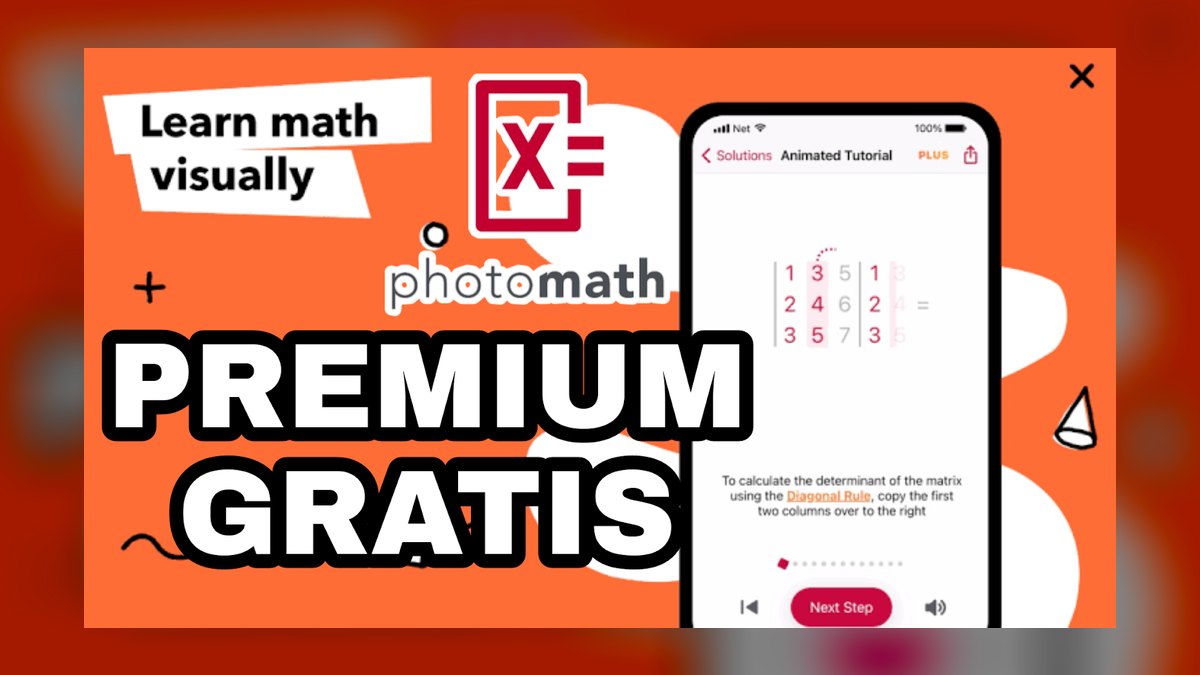
Photomath Plus ranks sixth because its handwriting recognition is the best in the category, reliably reading messy pencil work that other tools fail to parse. At $9.99 per month or $69.99 per year, it adds animated tutorials and detailed step-by-step explanations for scanned problems. The core scan-and-solve feature is free, making it accessible for quick checks. It handles arithmetic, algebra, and calculus well, though it is less robust for advanced symbolic computation.
This tool is for students who frequently photograph handwritten homework and need reliable recognition plus visual learning aids. It trades away natural-language problem interpretation and advanced proof support, so it is not suitable for word problems or research math. Compared to Microsoft Math Solver above, it offers better handwriting recognition and animated tutorials but costs money for the full experience. It is the best choice when photo input quality is the primary constraint.
7Symbolab Pro

Symbolab Pro ranks seventh because it provides comprehensive step-by-step breakdowns for a wide range of math topics, including algebra, calculus, and trigonometry, at $6.99 per month. Its "My Notebook" feature lets users save and review problems, which aids long-term learning. It also includes quizzes and practice exercises that reinforce methods. The free tier shows only final answers, so the paid tier is necessary for full working.
This tool is for students who want structured, topic-by-topic practice with detailed solutions and are willing to pay a modest subscription. It trades away photo recognition quality compared to Photomath and lacks the natural-language explanation of LLMs. Compared to Photomath Plus above, it offers better typed-equation input and a more organized learning interface, but weaker handwriting parsing. It is a strong middle-ground choice for focused study sessions.
8Mathway
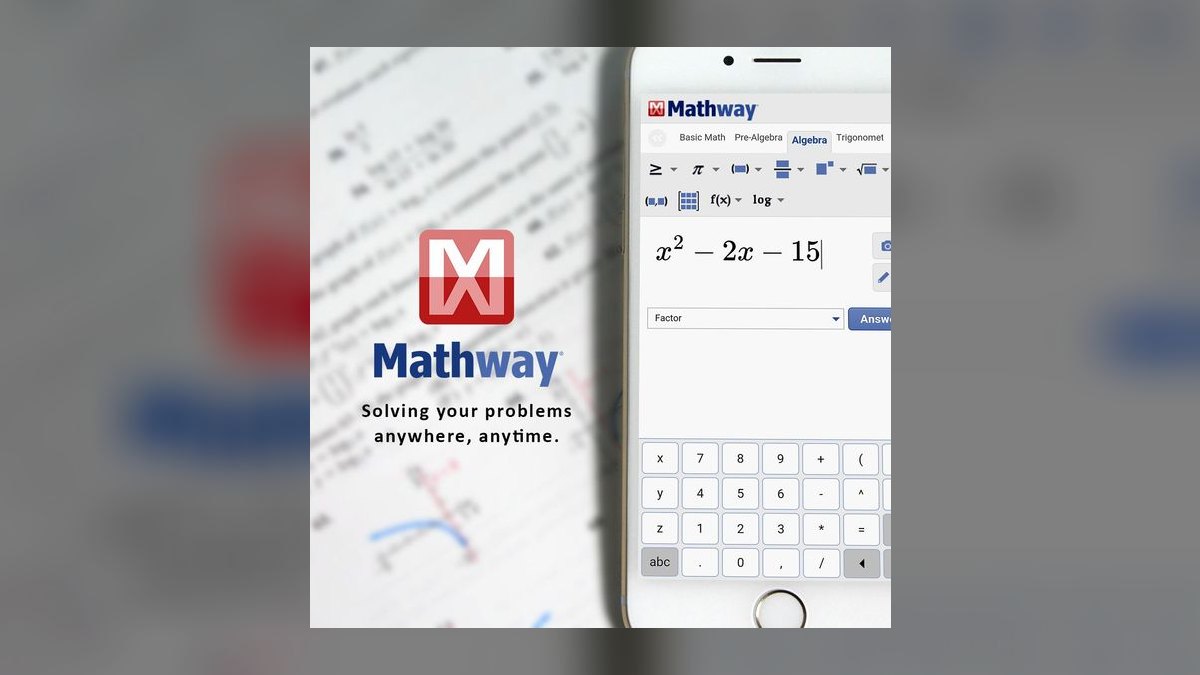
Mathway ranks eighth because it gives instant answers for free across algebra, calculus, statistics, and more, with step-by-step solutions gated behind roughly $9.99 per month or $39.99 per year. It is simple and fast, making it a convenient quick-check tool for students. The interface is straightforward, though less feature-rich than Symbolab or Wolfram Alpha. It covers a broad range of topics but lacks advanced symbolic computation depth.
This tool is for students who need quick answers and are willing to pay for steps only when necessary. It trades away handwriting recognition and natural-language explanation, so it is best for typed equations. Compared to Symbolab Pro above, it is cheaper annually but offers fewer learning features like quizzes and notebooks. It is a practical, no-frills option for rapid verification.
9Julius AI

Julius AI ranks ninth because it executes real Python and R code behind a chat interface, making it the safest choice for data-heavy statistics and regressions. Starting around $20 per month with a limited free trial, it computes summary statistics, fits models, and runs hypothesis tests on CSVs with actual code rather than prediction. This reduces arithmetic error significantly compared to plain LLMs. It is designed for analysts and researchers working with real data.
This tool is for data professionals who need reliable statistical computation and are comfortable with a chat-driven workflow. It trades away symbolic math capabilities and step-by-step teaching, so it is not ideal for pure algebra or calculus study. Compared to Mathway above, it is far more powerful for data work but less accessible for basic homework. It is the best choice when your math problems involve datasets and code execution.
10Maple

Maple ranks tenth because it is a professional-grade computer algebra system from Maplesoft, designed for advanced symbolic computation and differential equations in research and engineering. It offers discounted student licensing, with commercial seats priced for professional use. It computes exact results deterministically, rivaling Wolfram Mathematica in depth. It is not a chat-based tool, so it requires learning its worksheet interface.
This tool is for researchers and engineers who need heavy symbolic computation and are willing to invest in learning a specialized interface. It trades away ease of use and natural-language input, making it unsuitable for quick homework checks. Compared to Julius AI above, it is far more powerful for pure symbolic math but lacks any data-science workflow. It is the best choice for advanced research-level computation where exactness is paramount.
How we ranked these
We measured each tool's accuracy on symbolic computation, natural-language problem interpretation, handwriting recognition, step-by-step explanation quality, and price. Weighting favored exact, verifiable results over conversational fluency, because a wrong number carries real cost in engineering, finance, and exams. We also weighted free tiers and step access heavily, since budget shapes most buying decisions.
We deliberately ignored marketing claims, subjective 'ease of use' scores, and benchmark hype that doesn't reflect real-world problem types. We also ignored tools without verifiable public documentation or those that only wrap other engines. The ranking prioritizes reproducible outcomes and practical utility, not popularity or brand recognition, because the goal is finding a tool you can stake a real answer on.
What to look for
What actually matters is matching the engine to the problem type. For exact symbolic math, Wolfram Alpha or Maple is non-negotiable. For word problems and proofs, a reasoning LLM like ChatGPT or Claude is better. For data work, Julius AI's code execution is safest. Also check whether the free tier shows steps—Microsoft Math Solver does, while others gate them behind paywalls.
The mistake most buyers make is paying for a $20/month LLM when a free or $7 tool covers their needs, or trusting an LLM's final number without verification. Always run the result through a computational engine. Also, don't ignore input quality—a bad photo yields a bad answer. Map your actual need first, then subscribe.
Related questions
Which AI is most accurate for competition math?
Reasoning LLMs improved sharply on AIME and the MATH dataset by 'thinking' before answering, and Google DeepMind's AlphaProof and AlphaGeometry 2 reached silver-medal standard at the 2024 International Mathematical Olympiad. For guaranteed-correct routine computation, though, a CAS like Wolfram Alpha still beats any predictive model.
Can AI read handwritten math from a photo?
Yes. Photomath has the best handwriting recognition in the category and reliably reads messy pencil work. Microsoft Math Solver and Symbolab are close behind, and Google Lens inside Gemini also parses photographed problems well. Clean, well-lit, single-problem shots produce the most accurate results.
Is Wolfram Alpha better than ChatGPT for math?
For exact symbolic computation—integrals, eigenvalues, differential equations—yes, because Wolfram computes rather than predicts. For word problems, proofs, and plain-language explanation, ChatGPT is stronger. The best practice is to use both: ChatGPT to set up and explain, Wolfram to verify the number.
What's the cheapest way to get step-by-step solutions?
Microsoft Math Solver is completely free and shows full working, making it the cheapest complete option. Wolfram Alpha Pro at about $7.25/month and Symbolab Pro near $6.99/month are the least expensive paid upgrades if you need broader coverage or research-grade steps.
Can these tools handle college-level and proof-based math?
Yes. Maple and Wolfram Mathematica handle advanced symbolic computation and differential equations, while Claude and ChatGPT excel at writing and explaining proofs. As always, verify final numeric results in a computational engine before relying on them.
What is the difference between a CAS and an LLM for math?
A computer algebra system (CAS) like Wolfram Alpha computes results symbolically using deterministic rules, giving exact, reproducible answers. A reasoning LLM like ChatGPT predicts text, which can be fluent but occasionally wrong. For real stakes, use an LLM for interpretation and a CAS for verification.
FAQ
Which AI tool is most accurate for math?
Wolfram Alpha is the most reliably accurate because it computes answers symbolically rather than predicting text. For word problems, reasoning LLMs like ChatGPT, Gemini, and Claude are strong but should be verified, ideally using their built-in Python or code execution to check the arithmetic.
Can AI solve handwritten math problems?
Yes. Photomath has the best handwriting recognition, with Microsoft Math Solver and Symbolab close behind. Google Lens inside Gemini also reads photographed problems well. For best results, capture a single problem in good light rather than an entire worksheet at once.
What's the best free AI math tool?
Microsoft Math Solver is fully free with step-by-step solutions, graphs, and linked practice. Photomath is free for core scan-and-solve, and Wolfram Alpha answers most queries free, charging only for its detailed step-by-step walkthroughs.
Do these tools show step-by-step work?
Most do. Wolfram Alpha Pro, Symbolab Pro, Mathway's paid tier, Photomath Plus, and the free Microsoft Math Solver all show working. LLMs explain steps conversationally, which is often better for understanding why a method works rather than just reproducing it.
Can AI handle college-level and proof-based math?
Yes. Maple and Wolfram Mathematica handle advanced symbolic computation, while Claude and ChatGPT are strong at writing and explaining proofs and derivations. Always verify final results in a computational engine, since a fluent proof can still contain a slipped number.
Is it cheating to use AI for math?
Used to check answers and learn methods, these tools are legitimate study aids. Used to submit work you don't understand, they undercut learning. Most schools in 2027 expect disclosed, learning-focused use—treat the tools as tutors, not as a way to avoid the thinking.
What is the cost of Wolfram Alpha Pro?
Wolfram Alpha Pro runs about $7.25 per month, or roughly $5 per month billed annually for students. It unlocks step-by-step walkthroughs, file uploads, and extended computation. The free tier answers most queries but hides detailed working.
How do I verify an LLM's math answer?
Run the final equation through a computational engine like Wolfram Alpha, or use the LLM's built-in code interpreter (e.g., ChatGPT's Python with SymPy). This catches arithmetic slips that even top reasoning models occasionally make. Never trust a final number without verification.
What is the best tool for data-heavy statistics?
Julius AI is the safest choice because it executes real Python and R code behind the chat, reducing arithmetic error. It handles regressions, hypothesis tests, and summary statistics on CSVs. A plain LLM is riskier for data work because it predicts text rather than running code.
Sources
- https://www.wolframalpha.com/
- https://openai.com/
- https://gemini.google.com/
- https://www.anthropic.com/claude
- https://mathsolver.microsoft.com/
- https://www.symbolab.com/
- https://photomath.com/
- https://www.mathway.com/
- https://www.maplesoft.com/products/maple/
- https://julius.ai/
- https://deepmind.google/discover/blog/ai-solves-imo-problems-at-silver-medal-level/
- https://github.com/hendrycks/math
Related on PULSE
This page will be disappearing soon. Save it to your device for $1 — or read it free while it is here.
@Kory-White- · if Venmo asks, the last 4 of my number are 2012
This page is gone.
This one is off the shelf now. $1 keeps it on your phone for good — the whole page, pictures and diagrams included.
 pulse-ai-infrastructureThe 10 Best AI Tools for Quiz Generation in 2027
 pulse-ai-infrastructureThe 10 Best AI Tools for Headless CMS Development in 2027
 pulse-ai-infrastructureThe 10 Best AI Tools for Visual Effects in 2027
 pulse-ai-infrastructureThe 10 Best AI Tools for Presentations and Slide Decks in 2027
 pulse-ai-infrastructureHow do you scale LLM inference to handle thousands of concurrent users in 2027?
 pulse-ai-infrastructureThe 10 Best AI Tools for Animation in 2027
 pulse-ai-infrastructureThe 10 Best AI Tools for Storyboarding in 2027
 pulse-ai-infrastructureWhat are the most common mistakes in AI Infra in 2027?
 pulse-ai-infrastructureThe 10 Best AI Tools for Mind Mapping in 2027
 pulse-ai-infrastructureThe 10 Best AI Tools for Image-to-Video in 2027