


The New Strategic Selling by Miller & Heiman — Cliff Notes Summary & Key Takeaways
Quality
Certified
The New Strategic Selling (Miller, Heiman & Tuleja, revised 2005) gives complex B2B deals an operating system: map four Buying Influences — Economic, User, Technical, Coach — capture each one's Result and personal Win, score their Response Mode, and flag every gap as a Red Flag on a one-page Blue Sheet before advancing.
Strategic Selling versus the frameworks it competes with
Most teams do not adopt Miller Heiman in a vacuum. They adopt it against MEDDPICC, against SPIN, against Challenger, or against the informal "whatever the top rep does" method that quietly governs half the pipelines in existence. Understanding the comparison is the difference between buying a methodology and buying a habit.
Strategic Selling is a *pre-call strategy* framework. Its output is an artifact — the Blue Sheet — that answers "who decides, what does each of them personally get, where is the deal exposed, and what is my single best next action?" It says almost nothing about what words to use in the room. That silence is deliberate; Miller and Heiman wrote a companion book, *The New Conceptual Selling*, to cover the conversation itself, and a third, *The New Successful Large Account Management* (LAMP), to cover the account beyond a single opportunity. Treating Strategic Selling as a complete sales system is the most common misuse of it. It is the map, not the drive.
MEDDPICC — Metrics, Economic Buyer, Decision Criteria, Decision Process, Paper Process, Identify Pain, Champion, Competition — is a *qualification checklist*. It emerged from PTC in the 1990s and was codified for the SaaS era, most visibly in Andy Whyte's 2020 book. Compared to Strategic Selling it is tighter, more operational, and much easier to drop into a CRM as required fields. It also owes Strategic Selling a direct debt: the Economic Buyer is Miller Heiman's Economic Buying Influence verbatim, and the Champion is the Coach with a more aggressive job description. What MEDDPICC adds is the *process* layer — Decision Process and Paper Process force reps to map procurement, legal, and signature mechanics that Strategic Selling assumes will resolve themselves once the Buying Influences are covered. In 2027 that assumption is wrong often enough to matter.

SPIN Selling (Rackham, 1988) is a *conversation* framework: Situation, Problem, Implication, Need-payoff questions, derived from observational research on thousands of sales calls. It answers a question Strategic Selling does not ask — what do I actually say to move a buyer from awareness to urgency? The two are complementary rather than competing. A rep with a perfect Blue Sheet and no questioning discipline discovers nothing new to put on it.
The Challenger Sale (Dixon & Adamson, 2011) is a *persona and posture* framework — teach, tailor, take control — built on segmentation research into what separates high performers. It argues the winning rep reframes the customer's thinking rather than harvesting stated needs. Strategic Selling is agnostic about posture; you can execute a Blue Sheet as a Relationship Builder or as a Challenger. Where they collide is on Response Modes: Challenger's core move is to manufacture dissatisfaction in an Even Keel buyer, which Strategic Selling generally counsels against. That collision is real, and how you resolve it depends on your deal economics — more on that below.
Solution Selling (Bosworth, 1994) and its descendants sit between SPIN and Strategic Selling, formalizing pain chains and the nine-box question model. Command of the Message (Force Management) is the modern operational cousin most enterprise software teams actually run.
The honest comparison: Strategic Selling wins on stakeholder cartography and personal motivation, MEDDPICC wins on forecast hygiene and CRM enforceability, SPIN wins on discovery craft, Challenger wins on demand creation in commoditized categories. Teams that pick one and declare the others heresy end up rebuilding the missing pieces anyway, badly, under different names.
How to decide which framework — and how much of it — to run

The decision is not "which methodology is best." It is "which failure mode is currently killing my deals, and which framework attacks that failure mode."
Start with a loss-reason audit on your last thirty closed-lost opportunities. Sort losses into four buckets. Stakeholder losses — you got surprised late by someone you had never spoken to, or your champion left, or procurement killed it on a criterion you never saw. Discovery losses — you understood the org perfectly but never established that the problem was worth money. Urgency losses — you lost to No Decision, the buyer stayed exactly where they were. Competitive losses — a rival was simply picked over you on criteria you understood and could not beat.
Stakeholder-heavy losses point to Strategic Selling or MEDDPICC. Discovery-heavy losses point to SPIN or Conceptual Selling. No-Decision-heavy losses point to Challenger-style commercial teaching. Competitive losses point to differentiation and messaging work, not methodology at all — no Blue Sheet fixes an inferior product in a transparent bake-off.
Second variable: deal complexity. Strategic Selling's overhead is only justified above a threshold. A rough working rule practitioners use — three or more genuine stakeholders, a cycle over ninety days, and an ACV where an hour of strategy work is cheap relative to the deal — is when the Blue Sheet pays. Below that, the framework becomes ceremony. A two-call transactional deal with a single owner-operator buyer does not need a stakeholder map; it needs speed.
Third variable: enforcement capacity. A methodology that no manager inspects is a training expense, not a system. If your first-line managers do not run deal reviews, adopting Strategic Selling produces a folder of half-filled Blue Sheets and a lasting organizational belief that "we tried Miller Heiman and it didn't work." The framework did not fail; the inspection cadence never existed.
The sequencing insight buried in that diagram: methodology adoption without an inspection ritual is the single most common way sales enablement money evaporates. Build the review meeting first. A mediocre framework inspected weekly beats a superb framework filed and forgotten.
The numbers behind each option — what the frameworks actually cost and cover

Be careful with sales-methodology statistics; vendors market them aggressively and the underlying studies are rarely reproducible. What follows is structural math and publicly reported research, not vendor uplift claims.
Coverage math. Gartner's B2B buying research puts the typical enterprise buying group at roughly eleven stakeholders, and notes that number can climb higher in large or regulated purchases. Now count what a rep typically covers. If they have met four of eleven, they have thirty-six percent stakeholder coverage. Strategic Selling's contribution is making that fraction *visible*. The Blue Sheet does not magically produce the other seven conversations — it makes their absence impossible to hide in a deal review. That is the entire mechanism, and it is why the framework survives: it converts an unknown unknown into a written Red Flag.
Role math. In a mid-market deal you might see one Economic Buyer, two to four User Buyers, one to three Technical Buyers, and — if you are fortunate — one Coach. In an enterprise deal the Technical count alone commonly reaches four or five once security review, data privacy, procurement, legal, and IT architecture are each counted separately. Each Technical Buyer holds veto power and almost none hold approval power. That asymmetry is the structural reason enterprise deals die late: you can accumulate five yeses and one no, and the no wins.

Time math. A first Blue Sheet on an unfamiliar account takes a rep roughly forty-five to ninety minutes if done honestly, because most of that time is discovering how much they do not know. Subsequent updates take ten to twenty minutes. A weekly deal review covering five Best Few opportunities runs sixty to ninety minutes for a rep and manager together. Annualized across a rep carrying fifteen to twenty-five active opportunities, that is a meaningful but not absurd tax — call it two to four percent of selling time. The comparison is not against zero; it is against the hours currently burned on deals that were never real.
Funnel math. Strategic Selling's Sales Funnel element — Above the Funnel, In the Funnel, Best Few — encodes a lag relationship that most reps feel and few quantify. If your cycle is six months and you spend a quarter working only Best Few, your Above-the-Funnel population goes to zero and your problem surfaces two quarters later, when it is too late to fix. The book's prescription is calendar allocation by zone rather than by urgency. The practical version: block a fixed weekly slot for Above-the-Funnel work and defend it against the deal that is screaming loudest, because the screaming deal is already in your forecast and the silent quarter is not.
Cost math. Formal certification programs from major methodology vendors are typically priced per-seat with additional cost for manager enablement and reinforcement, and the reinforcement is where the money actually goes. Korn Ferry acquired Miller Heiman Group in 2019, folding the methodology into a broader leadership-development portfolio; the effect for buyers is that Strategic Selling is now generally purchased as part of a larger engagement rather than as a standalone course. A self-directed alternative exists and is entirely legitimate: buy the book, build a Blue Sheet template in your CRM, and run the review cadence. Teams have gotten most of the value that way for decades. What they miss is the common vocabulary that a cohort-wide certification creates — and vocabulary is underrated, because it is what lets a manager ask "who's your Coach on this?" and get a precise answer rather than a story.
Response Mode math. Of the four modes — Growth, Trouble, Even Keel, Overconfident — only the first two are genuinely sellable. Growth buyers want more than current state; Trouble buyers want relief. Even Keel buyers see no gap, and Overconfident buyers see a gap that is better than reality. The practical implication is brutal arithmetic: if you map five Buying Influences and four sit in Even Keel, your realistic close probability is not the twenty percent your CRM stage implies. It is closer to zero, and the correct action is to disqualify or to find a Buying Influence who owns a problem. Applying that discipline reliably shrinks reported pipeline in the first quarter of adoption. Managers who are not warned about that shrinkage panic and abandon the framework right before it starts working.
Rolling it out — sequencing, tooling, and the failure modes that eat adoption

The rollout sequence matters more than the content, so here is a concrete order of operations.
Week one: build the artifact where the work already lives. Do not distribute a PDF Blue Sheet. Build the fields in the CRM your reps already open — Salesforce, HubSpot, or whatever holds the pipeline. Minimum viable field set: a contact-role picklist mapping every contact to Economic, User, Technical, Coach, or Unknown; a free-text Win-Result field per contact written in the buyer's own words; a Response Mode picklist per contact; a Red Flags long-text field on the opportunity; and a Single Best Action field with a due date. Five fields. Resist the urge to build thirty — a Blue Sheet nobody finishes is worse than four fields everyone does.
Week two: seed from what you already have. Call recording platforms surface who has actually spoken on which calls. Pull attendee lists across the last quarter's opportunities and pre-populate contact roles. Reps will correct a wrong guess far faster than they will fill an empty field. This is the single highest-leverage adoption trick available and it costs an afternoon of ops work.
Weeks three through six: run the review, uncomfortably. The deal review question set is short and should never vary: Who is the Economic Buyer, and have you personally spoken to them? Who is your Coach, and what do they personally win? Which Buying Influences are in Even Keel or Overconfident? What is the largest Red Flag, and what single action closes it this week? Managers must be willing to sit through silence when a rep cannot answer. The silence is the product.

Weeks seven through twelve: let the pipeline shrink. Expect Best Few to contract as unqualified deals get named. Tell the CFO in advance that reported pipeline will fall before forecast accuracy rises, because that conversation goes very differently when it happens before the number moves rather than after.
Ongoing: refresh on every new signal. The book is explicit that the Blue Sheet is a living document rewritten whenever new information surfaces. A Blue Sheet last touched at qualification is a fossil. Tie the update to an event — a new contact appears, a champion changes role, a competitor is named, procurement enters — rather than to a calendar.
Now the failure modes, because they are predictable.
Coach inflation. Reps label any friendly contact a Coach. The book's three tests are strict: credibility inside the account, credibility with you, and a personal Win if you win. A contact who takes your calls and enjoys the conversation fails all three tests if they cannot influence the outcome. The manager's job is to challenge every Coach designation with a single question — what does this person lose if we lose?
Economic Buyer laundering. Reps enter their highest-titled contact as Economic Buyer whether or not that person releases funds. The corrective is a factual question: for a purchase of this size, whose signature is required, and who can overturn that signature? In deals above certain thresholds the answer is often a committee or a board, and Gartner's research confirms that approval authority is increasingly shared across procurement, finance, and the line-of-business sponsor rather than concentrated in one executive. Strategic Selling's original single-Economic-Buyer assumption is the part of the book that has aged least well; treat the role as a set, not a person.
Red Flag deletion. When a Red Flag is uncomfortable, reps delete it rather than resolve it. Make Red Flag count a visible metric that is *expected* to be non-zero. A deal with zero Red Flags at week two is not a clean deal; it is an unexamined one.

Win-Result ventriloquism. Reps write the Win in their own marketing language — "wants operational efficiency" — rather than the buyer's. The test is whether you could read the line aloud to that buyer without embarrassment. "Wants to stop rebuilding the same board report every month" passes. "Wants to drive digital transformation" does not.
Adjacent uses worth stealing. The Blue Sheet logic transfers cleanly outside new-business selling. Renewals and expansions benefit enormously, because the Buying Influence set changes between the original purchase and the renewal while the account team assumes it has not — the original champion has often moved on, and a new Technical Buyer in security or procurement now holds veto power on a contract nobody thought was contested. Customer success teams running executive business reviews can use Response Modes to decide who to invite: an Even Keel sponsor is a churn risk precisely because satisfaction without perceived gap means no reason to renew at a higher price. Partner and channel motions gain the most, since the partner is effectively a Coach with their own Win-Result that must be mapped explicitly rather than assumed to be aligned. Internal change programs — a RevOps team selling a CRM migration to its own company — are structurally identical complex sales with the same four roles and the same failure modes.
What the book gets right, what to override
The durable core is the insight that organizations do not buy — people inside organizations buy, and each of them carries a private scoreboard. The Result/Win distinction is the most useful two-column table in sales literature. A CFO may want an eighteen percent cost reduction as the organizational Result while personally wanting to be the executive who modernized finance before the next board cycle. Address only the Result and you have addressed half the buyer. That framing predates most of modern buyer-psychology writing and holds up better than a lot of what came after it.
The four roles remain the working vocabulary of enterprise selling. Every subsequent framework is a refinement — MEDDPICC's Champion is a sharper Coach, its Decision Criteria are what Technical Buyers enforce, its Economic Buyer is imported wholesale. Learning the original makes the derivatives legible rather than arbitrary.
The Red Flag discipline is the cheapest forecast-accuracy improvement available, because it institutionalizes the admission of ignorance. Sales cultures punish "I don't know." The Blue Sheet reframes it as a required field.
What to override. The single-Economic-Buyer model is the biggest revision needed; treat approval authority as distributed and map every signature in the chain. The Technical Buyer role is under-weighted for modern software — security review, data residency, and procurement each behave as independent veto holders with their own criteria and their own timelines, and they arrive late by design. The book's paper-artifact assumption is obsolete; the Blue Sheet lives in CRM deal boards and conversation-intelligence platforms now, and any rollout that reintroduces a separate document will lose to the tool reps already have open. And the counsel to avoid Even Keel buyers deserves a caveat: in categories where the buyer genuinely does not know they have a problem — the exact terrain Challenger was written for — walking away from every Even Keel stakeholder means walking away from the market. The reconciliation is to distinguish Even Keel *because the situation is actually fine* from Even Keel *because nobody has quantified the cost of the status quo*. Strategic Selling is right about the first and too pessimistic about the second.
Finally, the Ideal Customer Profile element reads as almost quaint now, since ICP scoring is a solved tooling problem. But the underlying discipline — disqualify early, protect pipeline capacity — is still the hardest behavior to enforce, because a bad deal in the funnel feels like activity and an empty slot feels like failure.
Related questions
What is the Blue Sheet in Strategic Selling?
A one-page deal map listing every Buying Influence by role, each one's Result and personal Win in their own words, their Response Mode, all Red Flags, and the single best next action. It is meant to be rewritten whenever new information surfaces, not filled once.
Should I run Strategic Selling or MEDDPICC?
Run MEDDPICC if your primary gap is forecast hygiene and CRM enforceability; run Strategic Selling if your gap is stakeholder cartography and buyer motivation. Most enterprise teams end up running MEDDPICC fields with Strategic Selling thinking behind them, which is a reasonable outcome.
What are the four Response Modes?
Growth (wants more than current state), Trouble (wants relief from a problem), Even Keel (sees no gap), and Overconfident (misjudges reality favorably). Only Growth and Trouble are reliably sellable. Mapping every Buying Influence to a mode is the point.
Does Strategic Selling work for transactional sales?
Rarely worth the overhead. Below roughly three stakeholders and a ninety-day cycle, the Blue Sheet becomes ceremony. Use a lightweight role field and spend the saved time on volume. The framework earns its cost in committee purchases.
Who owns the Blue Sheet, the rep or the manager?
The rep authors it; the manager inspects it. Without a weekly inspection ritual, adoption collapses within a quarter regardless of training quality. The review meeting is the actual product; the template is just the agenda.
FAQ
Is The New Strategic Selling still worth reading in 2027?
Yes, with edits. The stakeholder mapping and Win-Result thinking are foundational and still unmatched in clarity. Read it alongside a MEDDPICC treatment for the process and paper layers it under-covers, and mentally replace "the Economic Buyer" with "the set of people who must approve."

What is the difference between a User Buyer and a Technical Buyer?
A User Buyer lives with the product daily and judges it on personal impact — will Monday morning get better or worse. A Technical Buyer evaluates against specifications and can veto but rarely approve. Security, legal, procurement, and compliance are almost always Technical Buyers, and they surface late.
Why is the Coach the most frequently missed role?
Because reps mistake friendliness for advocacy. A real Coach has credibility inside the account, credibility with you, and something personal to gain from your win. The diagnostic question is simple: what does this person lose if you lose? If the answer is nothing, they are a contact, not a Coach.
How does Strategic Selling relate to SPIN and Challenger?
They operate at different layers and stack cleanly. Strategic Selling is the pre-call map, SPIN is the questioning craft inside the conversation, Challenger is the posture and the demand-creation move. Conflict arises only around Even Keel buyers, where Challenger says create the gap and Strategic Selling says find someone who already feels one.
What happens to my pipeline number when we adopt this?
It usually falls first. Naming Even Keel stakeholders and unresolved Red Flags exposes deals that were never real, and reps disqualify them. Brief finance before rollout so the contraction reads as accuracy rather than as a performance problem, because after the fact it never does.
Can Strategic Selling be used outside new business?
Yes, and renewals are the best underused case. The Buying Influence set shifts between purchase and renewal — champions move on, new security or procurement reviewers appear with veto power — while the account team assumes continuity. Re-mapping roles at renewal catches churn risk that satisfaction surveys miss entirely.
Sources
- https://www.kornferry.com/capabilities/sales-effectiveness
- https://www.gartner.com/en/sales/insights/b2b-buying-journey
- https://www.hachettebookgroup.com/titles/robert-b-miller/the-new-strategic-selling/9780446695190/
- https://hbr.org/2012/07/the-end-of-solution-sales
- https://www.forcemanagement.com/command-of-the-message
- https://www.salesforce.com/sales/methodology/
- https://www.mheducation.com/highered/product/spin-selling-rackham.html
- https://www.penguinrandomhouse.com/books/205548/the-challenger-sale-by-matthew-dixon-and-brent-adamson/
Related on PULSE
- The New Conceptual Selling by Miller, Heiman & Tuleja — Cliff Notes Summary
- The New Strategic Selling — Cliff Notes Summary
- Strategic Selling — Cliff Notes Summary
- New Sales. Simplified. by Mike Weinberg — Cliff Notes Summary & Key Takeaways
- ProActive Selling by William Miller — Cliff Notes Summary
- Outbounding by William Miller — Cliff Notes Summary
This page will be disappearing soon. Save it to your device for $1 — or read it free while it is here.
@Kory-White- · if Venmo asks, the last 4 of my number are 2012
This page is gone.
This one is off the shelf now. $1 keeps it on your phone for good — the whole page, pictures and diagrams included.
 book-summaryLittle Red Book of Selling by Jeffrey Gitomer — Cliff Notes Summary
 pulse-recentBlue Ocean Strategy by W. Chan Kim and Renee Mauborgne — Top 10 Key Takeaways for Sales Leaders in 2027
 pulse-recentWhat are the concrete steps to implement the Sandler Rules for Sales Leaders by David Mattson in 2027?
 pulse-recentStrategic Selling by Robert Miller and Stephen Heiman — Top 10 Key Takeaways for Sales Leaders in 2027
 book-summaryMajor Account Sales Strategy by Neil Rackham: Summary, Key Lessons, and RevOps Takeaways
 pulse-recentMonetizing Innovation by Madhavan Ramanujam — Top 10 Key Takeaways for Sales Leaders in 2027
 pulse-recentTraction by Gabriel Weinberg and Justin Mares — Top 10 Key Takeaways for Sales Leaders in 2027
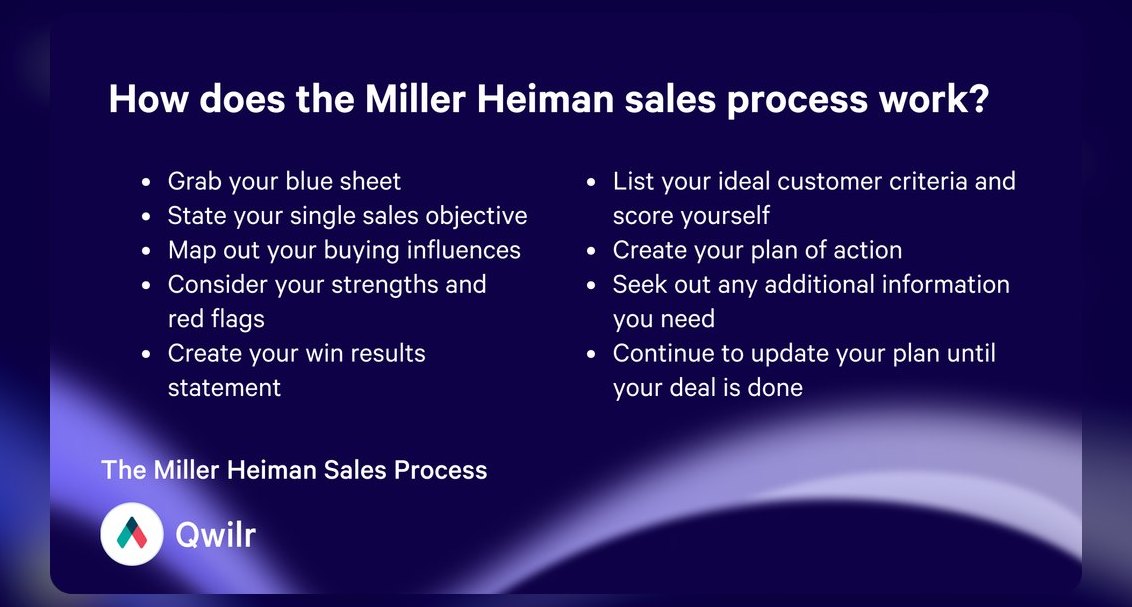 pulse-recentWhat is the step-by-step process for Strategic Selling by Miller Heiman in 2027?
 pulse-recentSandler Rule #1: What is the first concrete step to build a prospect's trust in a sales conversation in 2027?
 pulse-recentThe Greatest Salesman in the World by Og Mandino — Top 10 Key Takeaways for Sales Leaders in 2027