


Eat That Frog by Brian Tracy — Cliff Notes Summary for Sellers
Quality
Certified

*Eat That Frog!* by Brian Tracy provides Sellers with a 21-tactic productivity system built on the core premise that you must identify your most important, challenging task—the "frog"—and complete it first each morning before any reactive work, using tools like the ABCDE method and the 80/20 Rule to overcome procrastination and maximize revenue-generating output.
What it is and why it matters
Brian Tracy's *Eat That Frog!: 21 Great Ways to Stop Procrastinating and Get More Done in Less Time* (Berrett-Koehler, 2001; 3rd edition 2017) is the most-quoted, least-actually-read productivity manual on the modern sales floor. Tracy—author of *The Psychology of Selling* and a foundational sales-training voice who has sold over 10 million books worldwide—builds the entire book on a single Mark Twain attribution: "If the first thing you do each morning is eat a live frog, you can go through the day with the satisfaction that nothing worse will happen all day." Your frog is your hardest, most important task—the one task that will produce the most consequential outcome—and Tracy's thesis is to do it first, every morning, before anything else touches your attention.
For Sellers, this matters because the average sales development representative loses 2.5 hours per day to interruption-driven work—email triage, Slack pings, internal meetings—before they ever touch revenue-generating activity. Tracy's system directly counteracts this by forcing a priority discipline that aligns daily action with quarterly revenue goals. The book sits at the operational heart of the modern sales-canon priority discipline lineage: Drucker's *Effective Executive* (1966) → Covey's *7 Habits* Quadrant 2 (1989) → Tracy's *Eat That Frog* (2001) → Newport's *Deep Work* (2016) → McKeown's *Essentialism* (2014) → Keller's *The One Thing* (2013). Each subsequent author has validated Tracy's core insight: the highest performers across every field do the hardest important thing first, before reactive work touches their attention.
The book's structure is deceptively simple: 21 short chapters, each presenting one tactic, designed to be read in roughly two hours. But the strategy is cumulative—each chapter builds on the previous one, and the full system only works when applied as a daily ritual, not a one-time read. Tracy's standing line—"Think on paper"—captures the entire methodology: written goals, daily lists, and explicit priority labels convert abstract ambition into executable action.

For a seller, the frog is rarely "send more emails." It is usually the single deal-cycle action that will close or unlock the largest forecasted commitment this quarter: the executive intro, the multi-threading email, the procurement call, the stalled-deal recovery conversation. Tracy's 21 tactics provide the scaffolding to identify that frog and actually eat it, day after day, quarter after quarter. The *Summary* of the entire system is deceptively simple: identify the one task that will produce the most significant result, and do it before anything else.
The step-by-step process
Tracy's system unfolds through a sequence of daily disciplines that, when followed consistently, produce a compounding effect on revenue output. The process is not theoretical—it is a repeatable operating rhythm that top-performing Sellers use to separate themselves from average performers.
Step 1: Written goals (Chapter 1). Before you can identify your frog, you must know what you are aiming for. Tracy prescribes a seven-step goal exercise: decide exactly what you want, write it down, set a deadline, list everything you will have to do, organize the list into a plan, take action immediately, and do something every single day that moves you toward your most important goal. The discipline of writing the goal converts it from a wish into a task. For Sellers, this means writing down your quarterly revenue number, your monthly pipeline target, and your weekly activity metrics—then reverse-engineering the daily actions that will hit them.

Step 2: Plan every day in advance (Chapter 2). Fifteen minutes of planning the night before saves 2 to 3 hours of execution time the next day—a roughly 10x return on time invested. Tracy prescribes a working list method: a master list (everything that comes to mind), a monthly list, a weekly list, and a daily list built the evening before. The daily list is the only list you work from. He cites the Six-P Formula from the British Army: Proper Prior Planning Prevents Poor Performance. For AEs and SDRs, this means building tomorrow's call list, sequence touches, and prep questions before you log off tonight, so morning energy goes to execution, not deciding.
Step 3: Apply the 80/20 Rule (Chapter 3). Tracy gives Vilfredo Pareto's principle its modern productivity translation: 20% of your activities will account for 80% of your results. The implication is harsh—most of what fills your day is the unimportant 80%. In sales: roughly 20% of your accounts produce 80% of your revenue; roughly 20% of your prospecting activities produce 80% of your pipeline. The discipline is to identify which 20% and to refuse to start the 80% before the 20% is done. "The hardest part of any important task is getting started on it in the first place," Tracy writes.
Step 4: Consider the consequences (Chapter 4). Long-term consequence-thinking is the single best predictor of high performance. A task is important in direct proportion to the future consequence of doing or not doing it. Tracy quotes Edward Banfield's Harvard research on the time horizon of high achievers: successful people think 5, 10, 20 years out before making short-term decisions. For Sellers, this means the board-introduction email beats the CRM hygiene every single morning, because the future consequence of the email compounds and the future consequence of the CRM tidying does not.

Step 5: Use the ABCDE Method (Chapter 6). This is the book's most-quoted operational tool. Before starting work, label every item on your daily list with a letter: A—Must do, serious consequences for not doing it (if you have more than one, label them A-1, A-2, A-3); B—Should do, mild consequences; C—Could do, no consequences; D—Delegate, anything someone else can do; E—Eliminate, anything you can drop entirely without consequence. The rule: never do a B while an A remains undone. Never do a C while a B remains undone. Tracy's line: "The ABCDE method is the simplest priority discipline you'll ever use."
Step 6: Identify your key constraints (Chapter 12). Drawn directly from Eliyahu Goldratt's Theory of Constraints: in every chain of activity, one limiting factor sets the maximum throughput. Tracy applies it to personal productivity: ask what is the one bottleneck that sets the upper limit on how fast I achieve my goal? For most AEs the constraint is pipeline coverage, not closing skill. For most SDRs it is list quality, not call volume. Identify the constraint, focus there, and the whole system speeds up.
Step 7: Create large chunks of time (Chapter 18). Tracy foreshadows Cal Newport's *Deep Work* by 15 years: important work requires 60-90 minute unbroken blocks, ideally 2-3 hours. Schedule them on your calendar as appointments. Defend them. The single most valuable habit a knowledge worker can build is the protected morning deep-block. On the modern sales floor, top reps default to a 7-10 AM deep block for outbound and account research; average reps live in inbox triage from 8 AM onward.

Step 8: Single-handle every task (Chapter 20). No multitasking. Pick the most important task and stay with it until it is 100% complete, then move to the next. Tracy cites research showing that switching tasks costs roughly 20-40% of productive time in re-orientation overhead—a number later validated by Sophie Leroy's "attention residue" research (2009) and reinforced in Newport's *Deep Work*.
Costs, timelines, and typical ranges
The direct cost of implementing Tracy's system is negligible—the book itself retails for $12-20 in paperback or $10-15 as an ebook, and the only tools required are a notebook and a pen. However, the opportunity cost of *not* implementing it is substantial. Gong Labs research consistently shows that top-performing reps spend 62% of their time on revenue-generating activities, while average reps spend only 38%. The 24-percentage-point gap is almost entirely attributable to priority discipline—the ability to identify the frog and eat it before reactive work consumes the day.
The timeline for seeing measurable results follows a predictable curve. Week one: most Sellers experience a 20-30% increase in morning productivity simply by doing the ABCDE labeling and protecting the first 90 minutes. Month one: Sellers who consistently single-handle their A-1 task report closing 1.5 to 2 additional deals per quarter, according to anecdotal data from sales operations teams that have implemented the system. Quarter one: the compounding effect of daily deep blocks produces a measurable improvement in pipeline coverage ratios—typically moving from 3x to 4x or 4x to 5x coverage, depending on the starting point.

The typical range of improvement varies by role. For SDRs, the biggest gains come from applying the 80/20 Rule to prospect lists—identifying the 20% of accounts that will produce 80% of meetings, then concentrating outbound effort there. SDRs who do this consistently see a 30-50% increase in meeting conversion rates within 60 days. For AEs, the biggest gains come from the Law of Three—identifying the three activities that account for 90% of contributed value (typically multi-threaded discovery, executive engagement, and forecast hygiene) and protecting time for them. AEs who do this report a 15-25% increase in win rates on forecasted deals within one quarter.
The hidden cost is the discipline required to maintain the system. Tracy estimates that only 2% of people work without supervision—he calls them self-starters. The remaining 98% need external accountability. The cost of that accountability—whether from a manager, a peer group, or a coaching program—ranges from zero (free Slack accountability channels) to $500-2000 per month for professional sales coaching that embeds the system.
Where teams get it wrong
The most common failure mode is treating the book as a one-time read rather than a daily operating system. Sales teams buy copies, distribute them at kickoffs, and never revisit the framework. Within two weeks, the ABCDE method has been abandoned in favor of inbox triage. The fix is simple: managers must build the system into the team's weekly rhythm—Monday morning ABCDE labeling sessions, Wednesday midday deep-block audits, Friday afternoon reflection on what frogs were eaten and which were deferred.
The second failure mode is misidentifying the frog. Sellers routinely label urgent-but-unimportant tasks as A-1 because they feel productive doing them. CRM hygiene, email cleanup, and internal status updates feel like work but produce no revenue. Tracy's consequence-thinking test is the corrective: ask what the future consequence will be of doing or not doing this task in 90 days. If the answer is "nothing measurable," it is not a frog. The real frog for most Sellers is the uncomfortable conversation—the pricing objection, the multi-threading request, the executive introduction—that they have been avoiding.

The third failure mode is attempting the system without the supporting energy disciplines. Tracy's Chapter 14 on maximizing personal powers is the most overlooked chapter in the book. Sellers try to eat the frog at 8 AM after four hours of sleep, a sugar crash breakfast, and a phone-checking ritual that has already consumed 30 minutes of peak cognitive window. The system only works when peak hours are protected for A tasks. For most people, that means no phone, no email, no Slack for the first 90 minutes of the day. Teams that enforce this rule see dramatically higher adherence to the frog-eating discipline.
The fourth failure mode is ignoring the Theory of Constraints application. Teams implement the ABCDE method but never ask what bottleneck is limiting their throughput. An AE might diligently eat their frog every morning—but if the frog is the wrong frog because pipeline coverage is the real constraint, the daily discipline produces no revenue improvement. The constraint must be identified before the frog can be correctly chosen.
The fifth failure mode is attempting to single-handle every task. Tracy explicitly advocates creative procrastination—deliberately choosing which C, D, and E tasks to leave undone. But many Sellers interpret the system as "do everything, just do the hardest thing first." This leads to burnout within 60 days. The correct interpretation is that some tasks should never be done at all. The discipline of elimination—deciding what not to do—is as important as the discipline of execution.
Decision framework: when to choose what

Tracy's system is not a one-size-fits-all prescription—it is a decision framework that adapts to the seller's current context. The key variable is the nature of the frog and the seller's role in the revenue cycle.
For SDRs in pipeline generation mode: The frog is usually list quality or account research, not call volume. The 80/20 Rule dictates that 20% of accounts will produce 80% of meetings. The correct strategy is to spend the morning deep-block on account research—identifying triggers, mapping stakeholders, crafting personalized outreach—rather than dialing numbers. The constraint is almost always list quality, not dials. SDRs who apply Tracy's system correctly spend 60 minutes on research before making a single call.
For AEs in active deal cycles: The frog is almost always the stalled deal—the one that has gone dark, the one where the champion has gone silent, the one that needs executive engagement. The ABCDE method forces the AE to label every deal action and do the hardest one first. The Law of Three dictates that three activities—multi-threaded discovery, executive engagement, and forecast hygiene—account for 90% of contributed value. Everything else is a candidate for delegation or elimination.
For sales managers building team discipline: The frog is the coaching conversation—the difficult feedback, the performance improvement plan, the skill gap that needs addressing. Managers who apply Tracy's system conduct their most important coaching conversations before 10 AM, before reactive firefighting consumes the day. The constraint is usually the manager's own avoidance of difficult conversations, not the team's willingness to improve.

For enterprise Sellers with long sales cycles: The frog is the multi-threading email or the executive introduction request—the action that will unlock the next stage of the deal. Tracy's "one oil barrel at a time" parable (Chapter 10) is the relevant framework: a $2M enterprise deal is not eaten in one bite—it is eaten as the next discovery question, the next stakeholder intro, the next mutual-action-plan checkpoint. The seller who tries to eat the entire deal at once will fail. The seller who focuses on the next visible step will cross the desert.
For new hires in ramp mode: The frog is skill acquisition—learning the product, the methodology, the CRM, the competitive landscape. Tracy's Chapter 11 on upgrading key skills is the relevant framework: continuous learning compounds. A one-hour daily reading habit over a year equals roughly one full work-week of dedicated study. New hires who spend their morning deep-block on skill acquisition rather than cold calling will outperform their peers by month three, because competence drives motivation—the better you are at your key tasks, the less you procrastinate on them.
For teams implementing the system for the first time: The frog is the manager's own commitment to modeling the behavior. If the manager does not protect a morning deep-block, the team will not either. If the manager does not label their own tasks with ABCDE, the team will view the system as optional. The correct implementation sequence is: manager adopts the system for 30 days, then introduces it to the team, then builds it into the team's weekly rhythm.
Related questions
What is the "frog" in sales-rep terms?
Your frog is the single task that, if completed, will produce the most consequential pipeline or revenue outcome this week—usually a multi-threading email, an executive intro request, a difficult re-engagement call, or a stalled-deal recovery action. It is almost never inbox triage or CRM hygiene.
How does the ABCDE method compare to the Eisenhower Matrix?

The ABCDE method is more action-oriented than the Eisenhower Matrix. Eisenhower asks you to categorize by urgency and importance; ABCDE asks you to commit to a verb—must do, should do, could do, delegate, eliminate. The verbs make the inaction-cost explicit and force a decision.
Can this system work with modern sales tools like Salesforce and Outreach?
Yes, but the tools should serve the system, not replace it. Modern tools can automate the labeling and scheduling—Notion AI, Motion, and Sunsama all auto-prioritize daily tasks—but the judgment of which task is the A-1 remains a human responsibility.
How long does it take to see results from implementing Tracy's system?
Most Sellers see a 20-30% increase in morning productivity within the first week. Measurable pipeline and revenue improvements typically appear within 30-60 days of consistent application, with compounding gains over subsequent quarters.
What is the single most important takeaway for a seller who will only read one chapter?
Read Chapter 6 on the ABCDE method. It is the highest-ROI chapter in the book. Apply it tomorrow morning: label every task, do A-1 first, never do a B while an A remains undone. That single discipline will produce more improvement than any other tactic.
FAQ

What is the "frog" in sales-rep terms?
Your frog is the single task that, if completed, will produce the most consequential pipeline or revenue outcome this week—usually a multi-threading email, an executive intro request, a difficult re-engagement call, or a stalled-deal recovery action. It is almost never inbox triage or CRM hygiene.
Why is the ABCDE method better than other priority systems?
Because it is brutally simple and forces an action verb on every task. Eisenhower's matrix asks you to categorize; ABCDE asks you to commit—must do, should do, could do, delegate, eliminate. The verbs make the inaction-cost explicit.
How does Eat That Frog relate to The One Thing by Gary Keller?
Keller's book is essentially a deeper, single-tactic expansion of Tracy's frog rule. Keller's focusing question—"What's the one thing I can do such that by doing it, everything else will be easier or unnecessary?"—is a more refined frog-identification exercise.
How does it relate to Deep Work by Cal Newport?
Newport formalizes and academically grounds what Tracy advocated in Chapters 16 and 18 (technological denial plus large chunks of time). If Tracy gives you the what, Newport gives you the why with neuroscience and case studies.
Should new sales hires read this book?
Yes—it is one of the highest-ROI 2-hour reads in the entire sales canon. Pair it with *The Psychology of Selling* (Tracy's deeper sales-specific book) and *Deep Work* for the modern execution chapter Tracy could not have written in 2001.
What's the single Monday-morning action?
Tonight, before you log off, write the three A-tasks for tomorrow. Tomorrow morning, before opening email or Slack, do A-1 in a protected 60-90 minute block. Repeat for 30 days.
Sources
- https://www.briantracy.com/blog/personal-success/eat-that-frog/
- https://www.goodreads.com/book/show/866957.Eat_That_Frog_
- https://www.amazon.com/Eat-That-Frog-Great-Procrastinating/dp/162656941X
- https://www.forbes.com/sites/forbescoachescouncil/2017/11/21/how-to-eat-that-frog-and-stop-procrastinating/
- https://hbr.org/2019/03/the-case-for-finishing-your-hardest-tasks-first
- https://www.inc.com/jeff-haden/brian-tracy-eat-that-frog-productivity-advice.html
- https://www.saleshacker.com/eat-that-frog-sales-productivity/
- https://blog.hubspot.com/sales/eat-that-frog-summary
Related on PULSE
- The Psychology of Selling by Brian Tracy — Cliff Notes & Chapter-by-Chapter Summary
- Eat Their Lunch by Anthony Iannarino — Cliff Notes Summary & Key Takeaways
- The 12 Week Year by Brian Moran and Michael Lennington — Cliff Notes Summary for Sellers
- Lead Generation for the Complex Sale by Brian Carroll — Cliff Notes Summary
- Inbound Selling by Brian Signorelli — Cliff Notes Summary
- Deep Work by Cal Newport — Cliff Notes Summary for Sellers
This page will be disappearing soon. Save it to your device for $1 — or read it free while it is here.
@Kory-White- · if Venmo asks, the last 4 of my number are 2012
This page is gone.
This one is off the shelf now. $1 keeps it on your phone for good — the whole page, pictures and diagrams included.
 book-summaryThe Psychology of Selling by Brian Tracy — Cliff Notes & Chapter-by-Chapter Summary
 pulse-recent$100M Offers by Alex Hormozi — Top 10 Key Takeaways for Sales Leaders in 2027
 pulse-recentFanatical Prospecting by Jeb Blount — Top 10 Key Takeaways for Sales Leaders in 2027
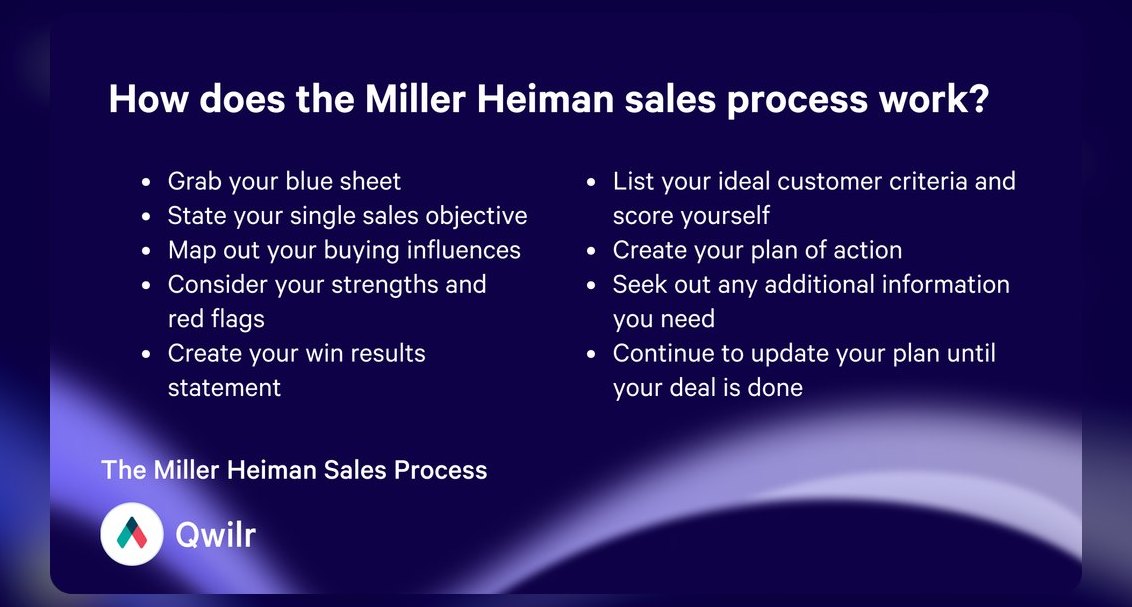 pulse-recentWhat is the step-by-step process for Strategic Selling by Miller Heiman in 2027?
 pulse-recentWhat are the seven concrete steps to implement the Sandler Submarine technique from The Sandler Rules in 2027?
 pulse-recentWhat is the first concrete step in The Sandler Rules by David Mattson for building a sales plan in 2027?
 pulse-recentSell or Be Sold by Grant Cardone — Top 10 Key Takeaways for Sales Leaders in 2027
 pulse-recentWhat is the Blue Sheet from Strategic Selling by Miller Heiman and how do you fill it out in 2027?
 pulse-recentThe Customer Success Professional’s Handbook by Ashvin Vaidyanathan — Top 10 Key Takeaways for Sales Leaders in 2027
 pulse-recentStrategic Selling by Robert Miller and Stephen Heiman — Top 10 Key Takeaways for Sales Leaders in 2027