


SPIN Selling — Cliff Notes Summary
Quality
Certified
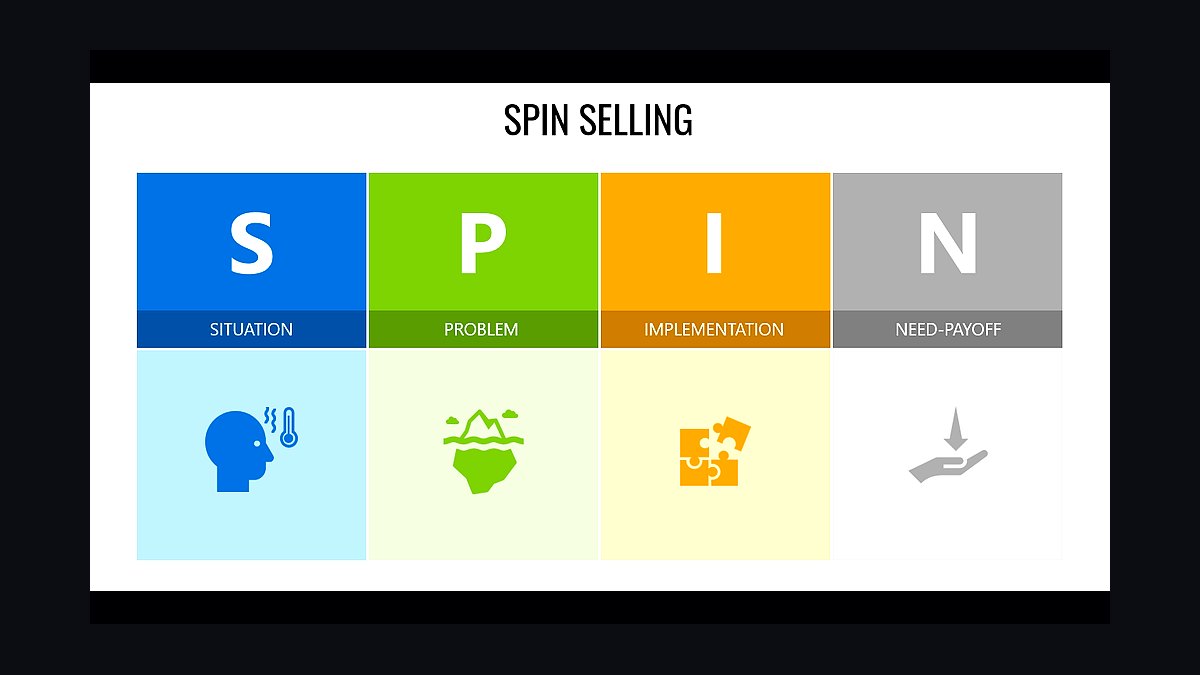
SPIN Selling by Neil Rackham (McGraw-Hill, 1988) argues that complex B2B deals are won in discovery, not the close. Rackham's Huthwaite research team observed roughly 35,000 sales calls and found four question types — Situation, Problem, Implication, Need-Payoff — that move buyers from vague dissatisfaction to explicit, articulated need.
What the book actually is, and why it still governs enterprise discovery
Most sales books are one practitioner's opinion dressed up as universal law. SPIN Selling is not. It is the readable output of a twelve-year behavioral research program run by Huthwaite Inc., Rackham's firm, which observed and coded sales calls across dozens of countries with funding and access from large corporate clients. The researchers sat in on live calls, tallied specific behaviors — how many questions of each type, who talked when, when objections surfaced, what the buyer committed to — and then correlated those behaviors against actual deal outcomes. That methodology is the entire reason this Cliff Notes Summary is still worth your time nearly four decades later: the conclusions were derived from observed behavior against measured results, not from a charismatic trainer's war stories.
The finding that made the book famous was uncomfortable for the industry that commissioned it. The closing techniques taught in 1970s-era sales training — the assumptive close, the alternative-choice close, the standing-room-only close, the whole "Always Be Closing" catechism — measurably *reduced* win rates in large, complex sales. Not "were less effective than modern methods." Reduced. The more closing pressure a rep applied in a big-ticket, multi-stakeholder deal, the worse that rep performed. Meanwhile, in small transactional sales, those same techniques worked fine. Same behavior, opposite result, depending entirely on deal size.
That divide is the load-bearing wall of the whole book. Rackham draws a hard line between the small sale — one call, one decision-maker, low personal risk, fast decision — and the large sale, which involves multiple meetings, several stakeholders, a long evaluation, and a buyer who has to *live with* the consequences of the decision inside their own organization for years. In the small sale, the buyer's worst case is losing a modest amount of money. In the large sale, the buyer's worst case is a visible career failure. That asymmetry in personal risk is why pressure tactics invert: a rep who applies urgency to someone worried about their reputation reads as a threat, not as help.
Why this matters for anyone running deals today: every methodology layered on since — MEDDPICC, Challenger, Command of the Message, Gap Selling, the various conversation-intelligence coaching frameworks built on call recordings — assumes you already know how to run a competent discovery conversation. They add qualification structure, insight delivery, or deal-inspection rigor on top. None of them replaces the underlying skill of asking a sequenced set of questions that gets a buyer to say out loud, in their own words, why a problem is expensive and why fixing it is worth money. That is the skill SPIN teaches, and it is why the book keeps showing up on onboarding reading lists at companies whose reps were born after it was published.

The adjacent point worth absorbing: the small-sale/large-sale distinction generalizes far past software. A commercial HVAC replacement, a fleet-services contract, a managed-services agreement, an equipment lease, a wealth-management relationship — anything where the buyer's decision is visible to their peers and reversible only at real cost — behaves like Rackham's large sale. Anything transactional, self-serve, or individually expensable behaves like his small sale. If you run a product-led motion where the buyer swipes a card and expands later, heavy SPIN discovery on a first call is genuine overhead. Knowing which game you're in is the first strategic decision, and getting it wrong is more common than getting the questions wrong.
The four stages of a call, and the four questions inside the second one
Before Rackham introduces the questions everyone remembers, he frames the anatomy of any sales call in four stages: Opening, Investigating, Demonstrating Capability, and Obtaining Commitment. This sequencing matters more than it looks, because the research showed reps systematically misallocate effort across those four boxes.
Opening. Greeting, rapport, agenda. Rackham's data showed openings barely move large-sale outcomes — which is a quietly brutal finding for every trainer who has ever taught an icebreaker module. Rapport isn't worthless; it's just not where deals are won or lost. Spend two minutes, set an agenda, move on.
Investigating. Discovery. This is where SPIN lives and where the research located the overwhelming majority of the leverage in complex sales. It is also, reliably, where average reps spend the least *skilled* time — they ask questions, but the wrong kind, in the wrong order, and they stop too early.
Demonstrating Capability. Showing that what you sell resolves the problem the buyer has already admitted to. The critical word is *already*. Capability shown before an admitted need lands as a pitch; capability shown after lands as an answer.

Obtaining Commitment. What the old training called closing. Rackham reframes it as advancing to a specific, time-bound next action rather than extracting a signature.
Inside Investigating sit the four question types.
Situation questions gather background facts. How many reps do you have? What CRM are you on? Who owns renewals? The research finding here is the one that stings: low performers asked the *most* Situation questions. They're safe, scriptable, and easy to ask, and they bore the buyer while adding nothing to the deal. The modern correction is straightforward — most of what a Situation question would have asked is now discoverable before the call from a company's public filings, its careers page, its job postings, its product docs, its LinkedIn headcount trend, and any conversation-intelligence notes from prior touches. Every Situation question you eliminate through preparation buys you call time for the questions that actually pay.
Problem questions ask about difficulties and dissatisfactions. What's frustrating about the current forecast process? Where does the handoff between SDR and AE break down? What breaks when volume doubles? These surface what Rackham calls Implied Needs — the buyer admits a problem exists but has not yet decided it's worth money to solve. This is where average reps stop, hear "yeah, that's annoying," and lunge for the demo.
Implication questions are the hard ones and the ones the research flagged as most strongly associated with large-sale success. They take the admitted problem and follow its consequences outward. If reps only update opportunities at quarter-end, what does that do to the accuracy of the number you give the board? When the forecast misses, what happens to hiring plans? How much of your own week goes to reconstructing pipeline by hand? Who else feels it? Implication questions grow a small, tolerable irritation into a business problem with visible downstream cost — time, money, risk, credibility, morale, opportunity cost. They are also genuinely difficult to ask well, because they require you to understand the buyer's operating context well enough to know which consequences are real.
Need-Payoff questions invert the direction. Instead of expanding the pain, they invite the buyer to describe the value of a fix in their own words. If forecast variance dropped substantially, what would that change about how you run the quarter? If your team got those hours back, where would they go? The buyer answers — and in answering, they build the business case themselves. Rackham's term for this transition, from Implied Need to Explicit Need, marks the single most important moment in a large sale: the buyer has stopped describing an annoyance and started describing a want. A benefit statement the buyer authored beats any slide you could have shown.
What running SPIN properly actually costs in time and calendar

The book is short. Learning to run it is not, and this is where most rollouts underestimate the bill.
Reading and comprehension. The book itself is a few evenings. Anyone can absorb the four question types in an afternoon; the vocabulary is the easy part, and any Cliff notes treatment gets you there. Comprehension is not the constraint.
Getting the questions out of your mouth in a live call. This is the real cost, and it is measured in weeks of deliberate practice, not hours of training. The typical failure pattern: a rep understands Implication questions perfectly in the classroom, then in a live call hears a buyer admit a problem, feels the silence, and reflexively starts talking about the product. Breaking that reflex takes repetition under observation. Practically, expect two to four weeks of concentrated effort before a rep can run the sequence without a cheat sheet, and a couple of months of consistent use with feedback before it stops feeling mechanical. Reps who never get coaching feedback often plateau permanently at "asks good Problem questions, never asks Implication questions."
Pre-call research time. Shifting Situation questions off the call and into preparation is the single highest-value modern adaptation, and it isn't free. Budget real time per first call with a target account — enough to read the recent public commentary, skim the org's hiring signals, check what tools they've publicly mentioned, and review any prior contact history. For a high-value enterprise target, that prep can reasonably run twenty to forty minutes; for a mid-market account, ten. If your reps have a hundred accounts each and no research support, that math simply doesn't work, and you should either shrink territories or resource the research centrally.
Coaching overhead on the manager. SPIN adoption lives or dies on call review. A manager who reviews a couple of recorded calls per rep per week, with a specific focus on the Problem-to-Implication transition, will get adoption. A manager who runs a kickoff session and then inspects only pipeline numbers will not. Assume a real, recurring hour or two per rep per week during the adoption period. That is the cost line most enablement plans quietly omit and then wonder why the training "didn't stick."

Where the payback shows up, and where it doesn't. The returns concentrate in deals with multiple stakeholders, meaningful contract value, and a genuine evaluation process — the class of deal Rackham built the framework for. In self-serve or transactional motions, heavy SPIN discovery is drag; the buyer wants to buy and you're making them sit through an interview. The honest read is that the framework's value scales with deal complexity, and complexity is better measured by number of stakeholders and reversal cost than by contract value alone. A modest-dollar deal that requires security review, legal, and three department heads behaves like a large sale. A large-dollar renewal with one economic buyer who already loves you may not.
Timeline to visible results. Discovery-quality improvements show up in leading indicators long before they show in closed revenue — more second meetings booked with a specific next step, fewer deals stalling at "send me pricing," better multithreading, less late-stage discounting. Watch those first. Waiting for a full sales-cycle length of closed-won data before judging the rollout means you'll be judging it a couple of quarters late.
Where teams get SPIN wrong
Treating it as a script. SPIN is a sequence of question *types*, not a list of questions. Reps handed a laminated card of forty pre-written questions produce interrogations, and buyers hate interrogations. The skill is recognizing which type of question the moment calls for, then inventing it live from what the buyer just said. A rep who asks four excellent Implication questions that all grew out of the buyer's previous answer is doing SPIN correctly. A rep who reads question fourteen off the card because it's next is not.
Front-loading Situation questions. The most common and most damaging error. A rep opens with twelve background questions they could have answered from public sources, burns fifteen minutes of a thirty-minute call, and reaches the Problem stage with the buyer already checked out. The buyer's internal narrative becomes "this person didn't do their homework and is making me do it for them."

Stopping at Implied Need. The second-most common error. The buyer says "yeah, our reporting is a mess," the rep hears buying signal, and pivots straight to the demo. But "our reporting is a mess" is a complaint, not a mandate. Nobody funds a complaint. Without Implication questions, that problem stays small enough to live with, and the deal dies later at "we've decided to revisit next year" — which is what "no compelling reason to change" sounds like when it's said politely.
Asking Implication questions that read as manipulative. There is a real failure mode here that the book underweights. Implication questions asked without genuine curiosity — piling on consequence after consequence to make the buyer squirm — are transparent, and sophisticated buyers recognize the technique immediately. The difference between good and bad Implication questions is whether you actually want to know the answer. "How does that affect the board conversation?" is a real question if you're genuinely mapping their pressure, and a cheap manipulation if you're just twisting. Buyers can tell.
Pitching Advantages instead of Benefits. Rackham's Features/Advantages/Benefits analysis is one of the book's underrated chapters. Features are neutral. Advantages — how a capability helps in general — actually performed *worse* in large sales, because they describe value for a need the buyer hasn't agreed they have, which invites the buyer to argue. Benefits, defined narrowly as a capability tied to an Explicit Need the buyer already stated out loud, correlated with success. The operational rule: never describe a capability until the buyer has articulated the matching need. That single discipline is most of the book's practical value.
Chasing objection-handling skill. The prevailing view when the book was written was that top reps were brilliant at answering objections. The research contradicted it — the strongest performers simply *received* fewer objections, because their questioning established the need before the pitch. Price objections, timing objections, and "let me think about it" are mostly symptoms of skipped discovery, not of weak rebuttals. When objections do surface, the data favored clarifying questions ("help me understand what 'too expensive' means here — relative to what?") over rehearsed scripted responses.
Accepting a Continuation and logging it as progress. An Advance is a specific, time-bound buyer action: an intro to the CFO on a named day, a pilot starting a defined week, a security questionnaire sent. A Continuation is "great chat, let's stay in touch." Rackham scores the Continuation as a functional loss, and he's right — most CRM pipelines are inflated primarily by Continuations recorded as forward motion. A useful hygiene check: if a stage change isn't backed by a dated buyer commitment, it isn't a stage change.

Running SPIN against one person in a committee deal. The original book largely assumes a single buyer, which is its most dated assumption. Modern enterprise purchases run through many stakeholders with genuinely different problems — the VP of Sales cares about attainment, the ops lead cares about data integrity, finance cares about spend, IT cares about integration risk. Running one SPIN sequence with your champion and assuming it generalizes is how deals die in a committee meeting you weren't invited to. The framework has to run in parallel, per persona, with different Implication questions for each.
Skipping the summary before the ask. Rackham's commitment sequence is four steps: check that key concerns are covered, summarize the benefits *the buyer articulated*, propose a realistic next commitment, get explicit agreement. Step two is the one reps drop, and it's the one that works — repeating the buyer's own words back to them before you ask for something is far more persuasive than any framing you'd invent yourself.
Choosing a methodology: when SPIN is the right tool and when it isn't
The practical question isn't "is SPIN good." It's "what does my motion actually need, and where does SPIN fit in the stack." Here's the honest decision logic.
Use SPIN as your discovery core when: the deal has multiple stakeholders; the buyer bears visible personal risk in choosing you; the sales cycle spans multiple meetings; the buyer's problem is real but not yet quantified in their own head; and your reps' calls currently show a lot of talking and little admitted pain. That last one is diagnosable from any set of recorded calls — high rep talk-time paired with early demos is the signature of skipped discovery.
Don't force SPIN when: the motion is genuinely transactional; the buyer arrives already knowing exactly what they want and why; or the product is bought on price and availability. Interrogating someone who's ready to buy is a way to lose a sale you'd already won.

Layer, don't replace. The frameworks people position as SPIN alternatives mostly solve different problems. A qualification framework like MEDDPICC tells you whether a deal is real and what you're missing — metrics, economic buyer, decision criteria, decision process, paper process, identified pain, champion, competition. It doesn't tell you what to *say* in the room. SPIN does, and the two compose cleanly: the Metrics field is exactly what a well-run Implication-then-Need-Payoff sequence produces, because you're getting the buyer to attach a number to the pain and to the fix. Insight-led approaches like Challenger emphasize teaching the buyer something they didn't know, which works best when your market is mature and undifferentiated — and even there, the teach has to land against a problem the buyer will admit to, which is a SPIN outcome. Use SPIN for the conversation, a qualification framework for deal inspection, and an insight framework for the point of view you bring in.
The modern amendments worth making. Three things about the 1988 text need updating without breaking it. First, move Situation questions almost entirely into pre-call research — buyers now do substantial independent evaluation before ever speaking to a vendor, and asking them to recite basics they've already published reads as unprepared. Second, force quantification: Rackham never insisted on a dollar figure, and modern practice does, so bolt a numeric metric onto the Implication stage and make the buyer estimate the cost of the status quo. Third, run the whole sequence per persona across the buying committee rather than once with your champion.
How to actually roll it out. Don't buy a one-day workshop and call it done. A sequence that works: pick a small pilot group of reps; have every one of their discovery calls recorded; define one behavioral metric you'll coach against — the simplest good one is *did the rep ask at least three Implication questions before showing anything* — and review calls weekly against that single metric until it's habitual. Then add the next behavior. Trying to install all four question types simultaneously across a whole org produces reps who nod in training and change nothing on Monday. This is a change-management strategy, not a content-delivery problem, and treating it as the latter is why so much sales training evaporates within a quarter.
Adjacent territory: what SPIN quietly changed outside the sales floor

The book's influence runs past the rep's calendar, and the second-order effects are worth naming because they show up in how modern revenue teams are built.
It made discovery a coachable, inspectable stage. Before the research, "good at sales" was treated as a personality trait. Rackham's contribution was showing that specific, countable behaviors correlated with outcomes — which meant they could be observed, coached, and measured. That premise underwrites the entire modern conversation-intelligence category: recording calls, tagging behaviors, and coaching against behavioral metrics is a direct descendant of Huthwaite's coding methodology, just automated. Anyone who has ever looked at a talk-ratio dashboard is using Rackham's premise whether they know it or not.
It reshaped how enablement measures itself. If discovery quality is the leverage point, then enablement's job isn't content delivery — it's behavior change in the Investigating stage. That reframing pushed serious enablement teams away from measuring course completion and toward measuring in-call behaviors and downstream stage-conversion effects.
It gave RevOps a cleaner stage-definition principle. The Advance-versus-Continuation distinction maps directly onto exit criteria. A stage that advances on rep opinion inflates; a stage that advances only on a dated buyer action stays honest. Teams that define every pipeline stage by a buyer-side verifiable event — a scheduled technical review, a returned questionnaire, a signed order form — are applying Rackham's idea to forecast hygiene. This is arguably the framework's biggest quiet contribution to modern revenue operations.
It applies well outside vendor selling. The same sequence works in internal consulting, agency and professional-services scoping, nonprofit major-gift conversations, and executive stakeholder alignment — anywhere someone has to choose to spend real resources on a change they haven't yet decided is urgent. Recruiters run an unlabeled version of it when they move a passive candidate from "things are fine here" to "actually, that's been bothering me for a year." The mechanism is identical: help someone articulate the cost of the status quo, then let them describe what better would be worth.
Where the framework shows its age. Fair criticisms exist. The book is written for the field-sales world of its era, and its examples reflect that. It says relatively little about running a committee. It doesn't address the buyer who arrives having already shortlisted three vendors from independent research. And it assumes a rep with enough calendar space to do proper preparation, which is not the reality in high-velocity teams carrying enormous account loads. None of that invalidates the core mechanism; it just means SPIN is a foundation you build on, not a complete operating system.
Read it alongside, not instead of. The most useful sequence for someone building a discovery competency: SPIN first for the questioning mechanics, then a qualification framework for deal inspection, then an insight-led book for point of view. The order matters — qualification frameworks without questioning skill produce reps who fill out CRM fields they can't actually defend.
Related questions

How long is SPIN Selling and is it worth reading in full?
It's a compact business book, readable in a few sittings. Worth reading in full if you sell or manage complex deals — the research chapters explain *why* the model works, and reps who only get the four-letter acronym tend to apply it mechanically and abandon it.
What's the difference between an Implied Need and an Explicit Need?
An Implied Need is an admitted problem ("our reporting is a mess"). An Explicit Need is a stated want ("we need a way to see pipeline changes weekly"). Buyers fund Explicit Needs. Implication and Need-Payoff questions are the bridge between them.
Does SPIN work on a thirty-minute discovery call?
Yes, but only if Situation questions are eliminated through pre-call research. With background handled in advance, thirty minutes is enough for two or three Problem questions, three or four Implication questions, and a Need-Payoff close into a specific next step.
Can SPIN be used by SDRs, not just closers?
Partially. A cold call can support one Problem question and one Implication question — enough to earn a meeting. The full sequence needs more time and more trust than a prospecting touch provides, so SDRs should aim for a single sharp Implication question, not the whole model.
What should I coach first if my reps are new to SPIN?
Coach one behavior: at least three Implication questions before any capability talk. It's measurable from recorded calls, it targets the most common failure, and it forces the rest of the sequence into place without overwhelming reps with four new habits at once.
FAQ

What is the single most important takeaway from SPIN Selling?
That outcomes in complex sales are driven by the quality of questions asked during discovery, not by closing technique. Rackham's research found that pressure-closing tactics actively reduced win rates in large, multi-stakeholder deals while increasing them in small transactional ones — an inversion that reframed the entire profession's understanding of what skill in selling actually means.
How does SPIN differ from MEDDPICC or Challenger?
They solve different problems and compose rather than compete. SPIN governs the conversation — what you ask and in what order. MEDDPICC governs deal inspection — what you must know for a deal to be real. Challenger governs point of view — what you teach the buyer. Most strong organizations run SPIN as the discovery layer underneath a qualification framework.
Is SPIN Selling still relevant given how much B2B buying has changed?
The mechanism holds because it's grounded in how people handle risk, and that hasn't changed. What has changed is where the work happens: background research moved off the call and onto the internet, buying committees grew, and quantification became mandatory. Adapt those three things and the core sequence still performs.
What's the biggest mistake people make applying SPIN?
Stopping at the Problem stage. Reps hear an admitted difficulty, mistake it for buying intent, and jump to the demo — leaving the problem small enough that the buyer can comfortably do nothing. The Implication stage is where a tolerable annoyance becomes a funded priority, and it's the stage reps skip most often.
Do Situation questions still have any place on a live call?
A few, targeted at genuine gaps research couldn't close — internal process details, who owns a decision, how a prior tool was rolled out. What's no longer acceptable is asking basics the buyer has published publicly. Every avoidable Situation question spends call time you needed for Implication.
Should a whole sales team be trained on SPIN at once?
Usually not. Org-wide single-session rollouts produce recognition without behavior change. A better strategy is a pilot group, recorded calls, one coached behavior at a time, and expansion only after the pilot's discovery calls measurably improve. Adoption is a change-management problem, not a content problem.
Sources
- SPIN Selling — publisher listing (McGraw-Hill, 1988)
- SPIN Selling — Goodreads edition page and reviews
- Huthwaite International — Complete Guide to SPIN Selling
- Huthwaite International — Reflecting on SPIN Selling
- Harvard Business Review — The New Science of Sales Force Productivity
- Gartner — B2B Buying Journey research
- Highspot — SPIN selling, explained
- Gong — Sales methodologies overview
- The Harris Consulting Group — N.E.A.T. vs. MEDDIC vs. BANT vs. SPIN vs. Challenger
Related on PULSE
- The SPIN Selling Fieldbook — Cliff Notes Summary
- SPIN Selling by Neil Rackham: Summary, Key Lessons, and RevOps Takeaways
- Secrets of Question-Based Selling by Thomas Freese: Summary, Key Lessons, and RevOps Takeaways
- Selling the Invisible by Harry Beckwith — Cliff Notes Summary
- SPIN Selling by Neil Rackham — Cliff Notes & Chapter-by-Chapter Summary
This page will be disappearing soon. Save it to your device for $1 — or read it free while it is here.
@Kory-White- · if Venmo asks, the last 4 of my number are 2012
This page is gone.
This one is off the shelf now. $1 keeps it on your phone for good — the whole page, pictures and diagrams included.
 pulse-recentHigh-Profit Prospecting by Mark Hunter — Top 10 Key Takeaways for Sales Leaders in 2027
 pulse-recentThe Challenger Customer by Brent Adamson — Top 10 Key Takeaways for Sales Leaders in 2027
 pulse-recentWhat is the first concrete step in The Sandler Rules by David Mattson for building a sales plan in 2027?
 pulse-recentBlue Ocean Strategy by W. Chan Kim and Renee Mauborgne — Top 10 Key Takeaways for Sales Leaders in 2027
 pulse-recentStrategic Selling by Robert Miller and Stephen Heiman — Top 10 Key Takeaways for Sales Leaders in 2027
 pulse-recentWhat is the most actionable step in The Sandler Rules for Sales Leaders by David Mattson to improve discovery in 2027?
 book-summaryMajor Account Sales Strategy by Neil Rackham: Summary, Key Lessons, and RevOps Takeaways
 pulse-recentTraction by Gabriel Weinberg and Justin Mares — Top 10 Key Takeaways for Sales Leaders in 2027
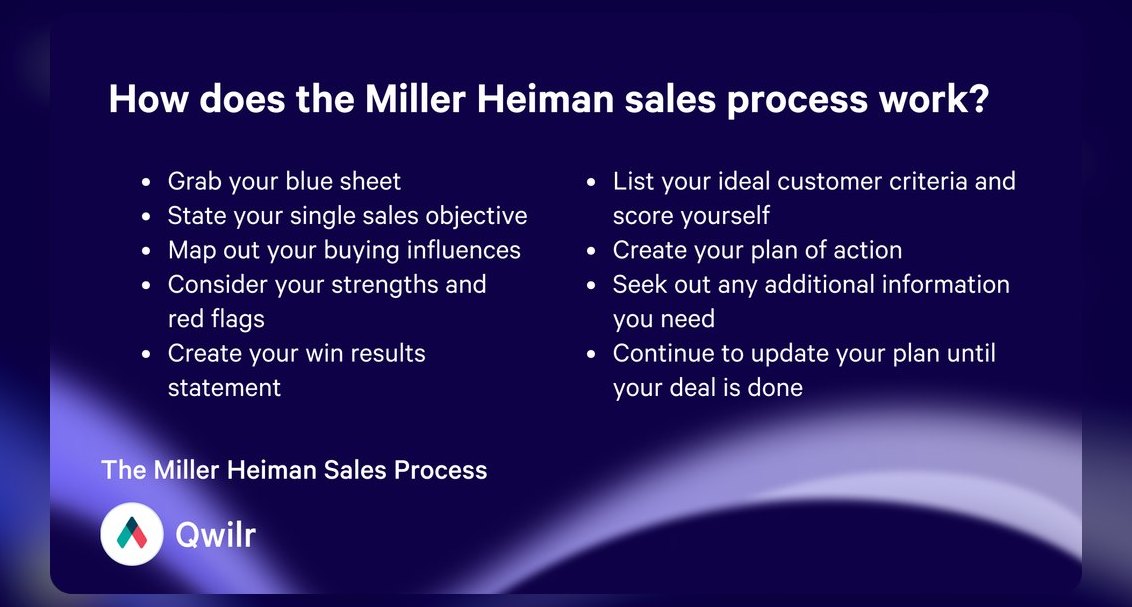 pulse-recentWhat is the step-by-step process for Strategic Selling by Miller Heiman in 2027?
 pulse-recentThe Greatest Salesman in the World by Og Mandino — Top 10 Key Takeaways for Sales Leaders in 2027