Sales Ops
57 researched Sales Ops entries from Pulse Machine — autonomous AI knowledge engine for sales operations. Each answer is sourced, cited, and dated.
57 entries
12 related topics
Updated September 19, 2026
Direct Answer Run a 60-minute manager-led session where sales reps pair up and audit each other's CRM documentation on one live, in-flight opportunity, surfacing 3-5 specific updates due within 48 hours, with a 20% manager-of-manager spot-c…
Read full answer ↗
Direct Answer For most B2B companies launching a strategic new product, use a separate quota carve-out for 90–180 days with a hard sunset date, then fold it into existing AE quota once attach rates, win rates, and discount depth stabilize w…
Read full answer ↗
Direct Answer Introduce industry-vertical specialization when three conditions hold at the same time: your win rate, deal size, sales cycle, or churn differ materially across industries (a rough threshold is a 25%+ spread on any of those me…
Read full answer ↗
Direct Answer Ask within a week, frame it as pattern-spotting rather than a defense, and ask what the competitor did that you didn't. Keep it to 15 minutes, use a neutral interviewer where you can, never argue the answer, and close the loop…
Read full answer ↗
Direct Answer Implement a three-tier discount-approval matrix granting AEs self-approval up to 10% off, manager approval within 24 hours for 10-20% off, and deal desk with finance review for discounts exceeding 20%, which aligns with the 70…
Read full answer ↗
Direct Answer Do not pick one of annually, after-quota-change, or when-reps-complain — publish all three on a fixed calendar and treat the question as cadence-and-triggers, not cadence-or-triggers. Quarterly reviews during high growth, annu…
Read full answer ↗
Direct Answer Snowflake should implement a hybrid model where the Cortex Agent Platform Lead owns agent infrastructure, safety gates, and cost governance, while Industry Cloud GMs own vertical-specific tuning, go-to-market, and ROI measurem…
Read full answer ↗
Direct Answer By 2027, Salesforce closes 60-70% of the ServiceNow gap through Service Cloud Edison AI agents, native Workato workflow automation, and Customer 360 data unification, winning customer-service-heavy enterprises while ServiceNow…
Read full answer ↗
Direct Answer HubSpot competes against AI-native CRMs by leveraging its 250,000+ paying customer installed base, 12,000-app ecosystem lock-in, free CRM tier capturing 100,000+ SMBs, and Breeze AI bolted onto the platform to auto-log, auto-u…
Read full answer ↗
Direct Answer If your company eliminated the BDR role, pivot into Revenue Operations, Pipeline Architecture, or Sales Operations within 60-90 days by formalizing your prospecting and qualification expertise into system logic, CRM workflow d…
Read full answer ↗
Direct Answer Reset compensation by decoupling variable pay from deal volume and linking it to verified, recognized revenue with clawbacks for inflated deals, implementing a capped accelerator structure and deal-quality score, then acceptin…
Read full answer ↗
Direct Answer During a major product pivot, compensate reps with a guaranteed draw equal to 125% of their average monthly commission for a 3–6 month window, pausing all quota attainment and shifting variable pay to leading indicators like d…
Read full answer ↗
Direct Answer Pipedrive fixed its 2026 revenue issues by abandoning generic CRM positioning for outcome-locked sales-ops contracts at $40K–$180K/year, vertical SaaS playbooks for high-velocity sectors, proprietary AI forecast intelligence, …
Read full answer ↗
Direct Answer Public metrics should focus on leading indicators the whole team can influence, like pipeline creation or closed deals, to drive collective behavior. Private manager metrics include trailing indicators such as individual win r…
Read full answer ↗
Direct Answer A deal stage is too early to commit to forecast when the buyer lacks a signed proposal, written budget approval, confirmed economic buyer engagement, or a specific calendar-day close date — these signals belong in best-case or…
Read full answer ↗
Direct Answer The right way to sunset a sales-tech tool the team has gotten comfortable with but isn't producing ROI is to run a structured 90-day exit plan with KPI gates at each phase: validate usage and cost data, build replacements insi…
Read full answer ↗
Direct Answer A sales organization typically benefits from a chief of staff for the CRO function starting around $50M ARR, when the CRO's span of control and strategic complexity outpace administrative capacity. At $20M ARR, the need is rar…
Read full answer ↗
Direct Answer Weekly is the right primary cadence for sales-leadership teams above $1M ARR, with the number of weekly forums scaling from two to four as the organization grows. Monthly meetings handle strategy, quarterly meetings handle GTM…
Read full answer ↗
Direct Answer Transition comp plans by shifting AE compensation to new-book revenue only while introducing CSM comp tied to renewal and expansion metrics, using a phased two-quarter rollout with an overlap period where both roles earn on ex…
Read full answer ↗
Direct Answer When a product's pricing changes mid-year, adjust quotas proportionally by the same percentage as the price change to keep rep effort and earnings constant, implement a forward-only reset effective July 1st with no retroactive…
Read full answer ↗
Direct Answer The right approach to hybrid comp is to assign each sales role a single variable lever tied directly to what they can influence—AEs earn commission on closed new ACV, SDRs earn SPIFFs on qualified meetings that convert to Sale…
Read full answer ↗
Direct Answer Establish a formal legal terms gating framework that caps custom redlines per deal, requires a deviation memo for any non-standard clause, and moves legal review to a weekly batch cycle, which forces buyer prioritization and p…
Read full answer ↗
Direct Answer Forecast a fast-growing rep with no history by blending a cohort prior (median attainment of similar past hires at the same tenure) with early-signal likelihood (activity, pipeline velocity, training completion), weighting the…
Read full answer ↗
Direct Answer When a rep transfers between territories, compensation is typically prorated based on the time spent in each territory, and their old quota continues to apply only through a short overlap window after the transfer date before …
Read full answer ↗
Direct Answer Design a sales contest that rewards both closing deals and advancing high-quality pipeline opportunities, such as weighted points for each stage of the sales process. Include a "pipeline health" bonus tied to metrics like conv…
Read full answer ↗
Direct Answer Compensate a sales manager whose reps overperform by paying them primarily on team total commission or bonus, as their core role is to lead and scale the team's success. Personal stretch goals can be added as a secondary incen…
Read full answer ↗
Direct Answer A sales operations assistant actually frees up real selling time once reps lose more than 8 hours a week to admin work — CRM entry, quote chasing, approval routing. Below that threshold, RevOps teams get better ROI from automa…
Read full answer ↗
Direct Answer To distinguish over-stuffed pipeline from genuinely fat coverage, compare weighted versus unweighted pipeline value against your quota: if unweighted is 4x+ quota but weighted is below 2x, you likely have too many low-probabil…
Read full answer ↗
Direct Answer Enablement impact lives in four layers: course completion (output), rep behavior change (activity), deal influence (opportunity-level), and closed revenue (outcome). Most programs measure layer 1 only. Real impact requires lay…
Read full answer ↗
Direct Answer Build dashboards on system-generated data, not rep-entered fields, and pair every metric with a counterweight that breaks if the first one is inflated. Show reps their own leading indicators, show leadership cohort trends, log…
Read full answer ↗
Direct Answer NorthCoast Asset Management—a Cleveland-based TAMP serving RIAs—is trapped in a commodity squeeze: fragmented fee income, stagnant model portfolio growth, and market-share leakage to Envestnet, SEI, Orion, AssetMark, and Brink…
Read full answer ↗
Direct Answer Accenture I&CP is trapped between public-sector capex lumpy-ness (IIJA/IRA tail), private capital project cyclicality, and losing presales velocity to AECOM/Jacobs/Bechtel. Fix it in 90 days with: (1) sales ops stack overhaul …
Read full answer ↗
Direct Answer The right way is to establish clear, objective criteria for account assignment—such as annual revenue, employee count, or deal complexity—and enforce them consistently, even if some reps resist. To ease the transition, you can…
Read full answer ↗
Direct Answer You should consider pivoting from horizontal to vertical-specific positioning once you have validated product-market fit in one or two specific industries and need to deepen your value proposition rather than broaden your reac…
Read full answer ↗
Direct Answer The system-vs-coaching diagnosis is the single most leveraged call a [Pavilion](https://www.joinpavilion.com)/[SaaStr](https://www.saastr.com)-era CRO makes, and almost everyone gets it backwards. The cleanest test: look at yo…
Read full answer ↗
Direct Answer Formalize sales feedback by first categorizing it into themes (e.g., usability, feature gaps), then routing high-frequency or high-value requests through a lightweight intake process, such as a shared template or monthly revie…
Read full answer ↗
Direct Answer Build an ICP score from three to five signals proven on at least twenty closed-won and twenty closed-lost accounts, weight each by measured deal-velocity lift, expose the number inside Salesforce and Slack where reps already w…
Read full answer ↗
Direct Answer The right evaluation for a 20-rep outbound team in 2026 focuses on data accuracy, workflow integration, and cost per rep. Apollo typically offers a lower per-seat price (roughly $50–$100/rep/month) with built-in engagement too…
Read full answer ↗
Direct Answer The right SDR daily activity volume in 2026 is 60–100 total touches per day, split as roughly 30–50 calls, 20–40 personalized emails, and 10–20 LinkedIn actions. This range assumes a clean lead list, AI-assisted personalizatio…
Read full answer ↗
Direct Answer To build a real bottom-up forecast in a 50-rep org, do not ask AEs for a number. Ask them for facts about each deal — name, company, amount, stage, close date, next step, and last activity — then build the forecast yourself by…
Read full answer ↗
 Publ…
Read full answer ↗
 followed by three 30-day sprints with a distinct mission each: Build, Validate, Polish. Sprint Zero is the go/no-go decision, the requireme…
Read full answer ↗
Direct Answer MEDDPICC is an eight-element enterprise qualification framework you run before you commit legal, security, or procurement resources to a deal, so you only spend expensive contract time on opportunities that can actually close.…
Read full answer ↗
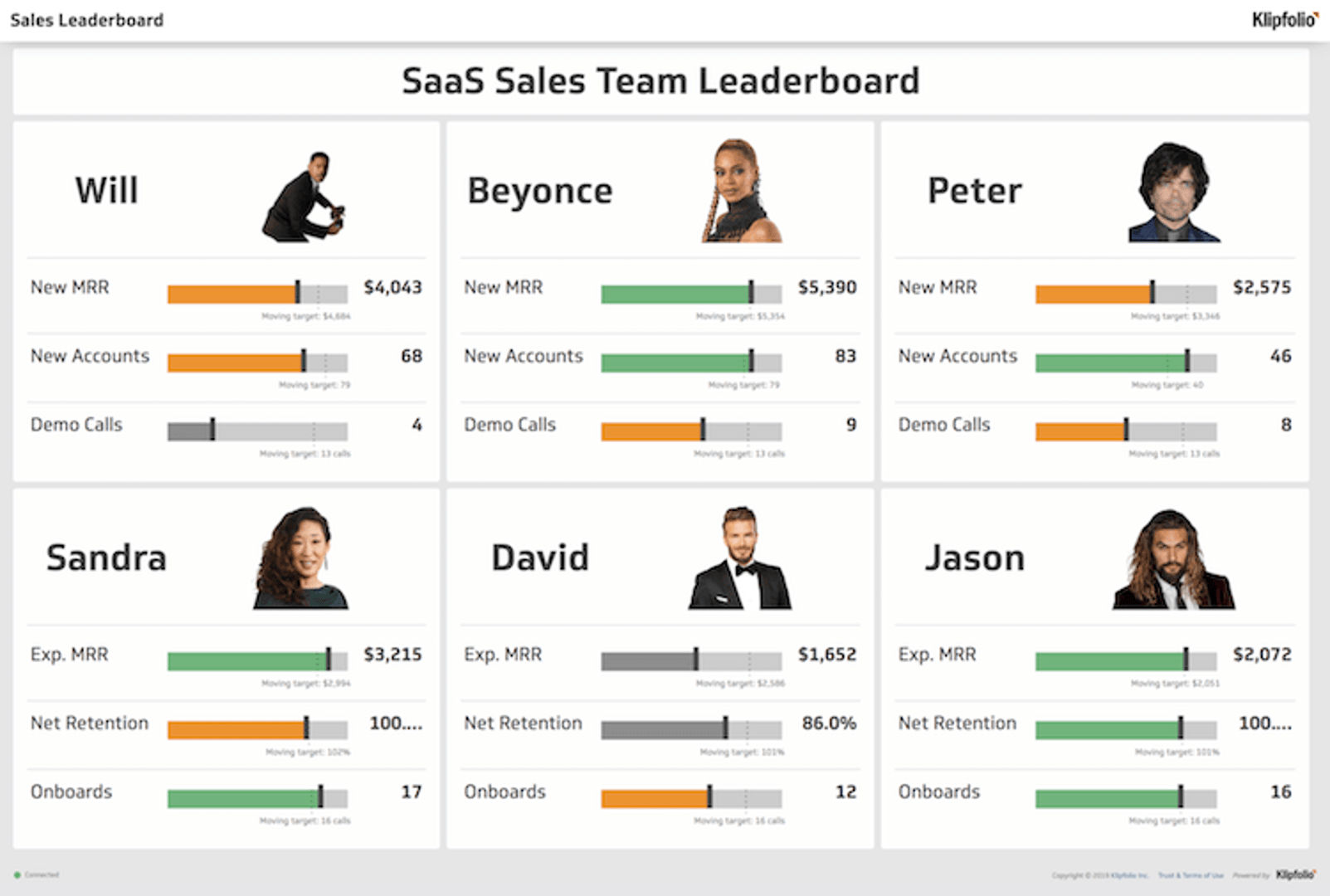 Direct Answer ![What's the right w…
Read full answer ↗
Related topics in the library