


The Qualified Sales Leader by John McMahon — Top 10 Key Takeaways for Sales Leaders in 2027
Quality
Certified
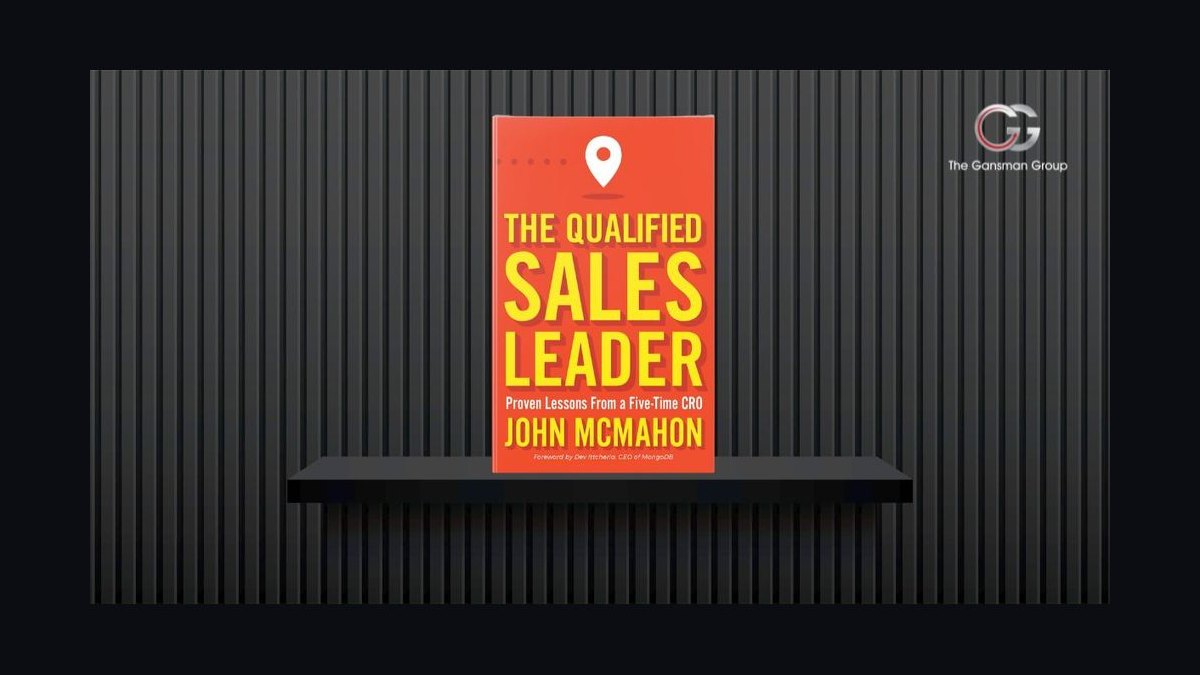
John McMahon's *The Qualified Sales Leader* argues that most revenue misses stem from unqualified pipeline, not weak effort. Its core Takeaways for Leaders in 2027: enforce MEDDPICC in every deal review, secure economic-buyer access early, validate a real champion, map the paper process before forecasting, hire for stage fit, and coach the "three whys" so forecasts reflect reality rather than hope.
What The Qualified Sales Leader is and why it matters
*The Qualified Sales Leader*, co-written by John McMahon with T. Lattimore Guinn, is not a motivational sales book. It is an operating manual. McMahon spent his career as a five-time Chief Revenue Officer or VP of Sales, leading revenue organizations at PTC, GeoTel Communications, Concord Communications, Applix (where he served as CEO), BladeLogic, and Business Objects. He later sat on the boards of Snowflake, HubSpot, and other companies that went public. Peers reportedly nicknamed him "the Rainmaker's Rainmaker" because so many CROs who worked under him went on to run their own revenue organizations. That lineage matters: the book is written from the seat of someone who has repeatedly inherited messy pipelines and rebuilt them into forecastable machines.
The central contribution is MEDDPICC, an extension of the original MEDDIC framework McMahon helped develop in the 1990s at PTC alongside Jack Napoli and Dick Dunkel. MEDDPICC stands for Metrics, Economic Buyer, Decision Criteria, Decision Process, Paper Process, Identify Pain, Champion, and Competition. Each letter is a qualification checkpoint a rep must be able to answer with evidence, not assumption, before a deal is allowed into a serious forecast category. McMahon argues that a sales leader's real job is enforcing this discipline in every deal review — not motivating reps, not running contests, but asking the uncomfortable diagnostic questions that expose whether a deal is qualified or fictional.
This matters for sales leadership specifically because the book reframes what "leadership" means inside a revenue organization. McMahon draws a hard line between a sales manager — someone who administers activity, tracks CRM fields, and runs forecast roll-ups — and a qualified sales leader, who can personally sit in a client meeting, diagnose why a deal is stalled, coach a rep through a champion-building conversation, and rebuild a broken deal in real time. The "strategy" a leader brings to a team, in McMahon's framing, is not a slide deck of goals; it is the transferable, teachable qualification methodology that turns unpredictable selling into a repeatable, forecastable motion.

For a leader operating in any RevOps or CRO seat in 2027 and beyond, the durable Takeaway is that qualification discipline, not headcount or tooling, is the highest-leverage lever available. Tools change — CRM platforms, conversation intelligence, AI-assisted forecasting — but the underlying question of whether a buyer has a quantified problem, an identified economic buyer, and a validated champion does not. McMahon's book remains relevant precisely because it targets that invariant layer rather than the tooling layer that churns every few years.
The framework's eight checkpoints are not equally weighted in practice. McMahon treats Identify Pain and Metrics as the foundation — without a quantified cost of inaction, every other checkpoint is theater. Economic Buyer and Champion are the two that most often expose a deal as single-threaded and fragile. Decision Criteria, Decision Process, and Paper Process are the operational checkpoints that determine whether a deal closes on the rep's timeline or the buyer's. Competition is the checkpoint that forces honesty about alternatives, including the alternative of doing nothing. A leader who audits all eight in a deal review, in order, will surface gaps a rep's self-reported stage progression would never reveal.
The step-by-step process McMahon prescribes for qualifying a deal

McMahon lays out qualification as a sequence a rep and their leader walk together on every material opportunity, not as a form filled out once at deal creation. The sequence below reflects how MEDDPICC checkpoints are meant to be applied in order, with the leader auditing each stage rather than trusting a self-reported CRM field.
Step 1 — Identify Pain. Before anything else, the rep must establish that the prospect has a problem worth solving and can articulate it in their own words. McMahon's test is whether the buyer describes the pain unprompted, not whether the rep can pitch a solution that sounds relevant. A deal where the rep is doing all the talking about pain is a deal with no confirmed pain.
Step 2 — Metrics. Once pain is established, the rep must quantify it. What does the problem cost per month, per quarter, per year? What does it cost in lost productivity, churned customers, or compliance risk? Metrics convert a vague problem into a business case the economic buyer can defend internally. Without metrics, a champion has nothing to sell with when the rep is not in the room.
Step 3 — Economic Buyer. The rep must identify the person who can say yes and release budget, and must have direct access to that person — not access mediated entirely through a champion. McMahon is explicit that "my champion talks to the economic buyer" is not the same as economic-buyer access. If the rep has never spoken with the person who signs, the deal is unqualified regardless of how well everything else is going.
Step 4 — Decision Criteria. The rep must know what the buyer will evaluate the solution against — technical requirements, integration needs, security posture, pricing model, vendor viability — and must know which criteria are weighted most heavily. Criteria discovered after a proposal is submitted are criteria the rep has already lost control of.

Step 5 — Decision Process. The rep must map who is involved in the decision, in what order, and at what stages. A buying committee of five with a technical gate, a security review, and a final executive sign-off has a different process than a single decision-maker. McMahon insists a champion who cannot describe this process in detail is not a validated champion.
Step 6 — Paper Process. Legal review, security questionnaires, procurement approval, and signature routing routinely add 30 to 90 days to an enterprise deal cycle. Reps who never ask about the paper process get blindsided in the final stretch of a quarter, when there is no time left to recover. McMahon treats this as the step most leaders skip and the one that most often turns a "Commit" deal into a next-quarter deal.
Step 7 — Champion. A champion is an internal contact with real influence who actively sells on the rep's behalf inside their own organization. McMahon insists champions must be tested, not assumed. A friendly contact who cannot describe the decision process, cannot articulate the metrics, and does not volunteer to build the internal business case is not a champion — they are a contact.
Step 8 — Competition. The rep must know who else is being evaluated, including the option of doing nothing. Competition is not just other vendors; it is the status quo, internal builds, and budget reallocation. A deal where the rep cannot name the competitive landscape is a deal where the rep does not understand the buyer's actual decision context.
The order matters because each step depends on the one before it. A rep cannot credibly claim Decision Criteria until pain and metrics are established, because criteria without a quantified pain point is just a feature checklist a competitor can match. Likewise, McMahon insists a champion cannot be validated until the rep knows the real decision process — a champion who cannot describe who signs off, and in what order, is not a champion, just a friendly contact. McMahon also describes "negative reverse selling," a technique credited to Jack Napoli, where a rep deliberately downplays urgency or fit so the prospect argues themselves into the need — a way of testing whether pain is real rather than performed for the salesperson's benefit.
Costs, timelines, and typical ranges for applying these takeaways

McMahon is specific that qualification discipline is not free to install, and he gives leaders realistic expectations rather than a quick fix. Rolling out MEDDPICC across an existing sales team typically takes one to two full quarters before it shows up cleanly in forecast accuracy, because reps have to unlearn habits of reporting optimistic stage progression and leaders have to retrain themselves to ask diagnostic questions in every deal review instead of just checking CRM hygiene. Early-stage adoption often produces a temporary forecast dip — pipeline that looked healthy under the old rules gets reclassified downward once metrics and economic-buyer access are actually verified, which McMahon frames as a feature, not a bug: it is the organization seeing its true pipeline for the first time.
On hiring, the book argues sales leaders should be matched to company stage, echoing a distinction popularized in Geoffrey Moore's work between "pioneers," "settlers," and "town planners." A leader who scaled a team from $10 million to $50 million in ARR is not automatically the right hire to take a team from $2 million to $10 million, and vice versa — the muscle memory, cadence, and qualification rigor required at each stage differ enough that McMahon treats stage-fit as a harder filter than industry background. A pioneer-stage leader thrives on ambiguity, founder proximity, and building the first repeatable playbook. A settler-stage leader thrives on scaling a proven playbook across more reps and segments. A town-planner-stage leader thrives on optimizing a mature motion, tightening efficiency, and managing a large organization. Hiring a town planner into a pioneer-stage company, or vice versa, is one of the most expensive and slow-to-detect errors a board can make.

Recruiting cycles for a VP of Sales or CRO who fits stage, in McMahon's experience, commonly run 3 to 6 months given how much reference-checking he recommends. He advocates calling former peers and former reports, not just people the candidate supplies, to surface how a leader actually behaves under quota pressure. The reference check that matters is not "would you hire them again" but "describe a deal they lost — what did they do in the two weeks after." That question reveals whether a leader diagnoses or deflects.
On deal cycle impact, McMahon's enterprise B2B experience suggests that rigorously qualified deals — ones that clear every MEDDPICC checkpoint — close at meaningfully higher win rates than the broader pipeline average, though he is careful not to promise a universal percentage because win rate depends heavily on segment, deal size, and competitive density. The more durable, portable number from the book is directional: teams that adopt full qualification discipline typically see forecast accuracy (the percentage of Commit deals that actually close in the committed quarter) improve from the industry-typical 60-70% range toward the 90%-plus range within two to three quarters, because unqualified deals stop leaking into the forecast in the first place.
The cost side of the ledger is mostly time and coaching capacity. A leader rolling out MEDDPICC should budget for weekly deal-review sessions that run 60 to 90 minutes per rep or pod, plus initial training of two to four hours per rep on the framework itself. The bigger cost is the political one: pulling deals out of Commit because they fail a checkpoint is uncomfortable, especially in the first quarter of adoption, and leaders who cannot hold that line will see the framework collapse back into a CRM field reps fill in to satisfy a process requirement.
Where sales teams get it wrong

The most common failure McMahon documents is single-threading: a rep builds one relationship, often a friendly technical champion, and never gets access to the economic buyer or the other people in the decision process. Deals like this feel healthy right up until the champion is overruled, reassigned, or leaves the company, at which point the deal collapses with no warning because the rep had no other line into the account. McMahon treats "multi-threading" — deliberately building relationships across the buying committee — as a qualification requirement, not a nice-to-have. A practical test: if the rep can name only one person at the account who would take their call, the deal is single-threaded regardless of how positive that one relationship feels.
A second recurring mistake is confusing activity with progress: reps and even leaders track meeting counts, email opens, and stage advancement in the CRM as proxies for deal health, when none of those actually confirm that Metrics, Decision Criteria, or Paper Process have been established. McMahon is blunt that a beautifully updated CRM with a stalled or fictional deal underneath it is worse than an honestly messy one, because it creates false confidence in a forecast that leadership then repeats to the board or investors. The fix is not better CRM hygiene; it is a deal-review cadence where the leader asks for evidence, not status.
A third mistake is promoting a team's best individual rep into a sales leader role without verifying they can teach qualification, coach a champion-building conversation, or run a deal-review that surfaces real gaps rather than rubber-stamping a rep's self-assessment. McMahon separates "sales manager" behavior — administering the pipeline, running forecast calls, tracking activity — from "sales leader" behavior — personally diagnosing and rescuing stalled deals, coaching a rep through a specific MEDDPICC gap in real time, and holding the line on qualification even when it means pulling a deal out of a quarter's forecast. Leaders who never developed the second skill set tend to manage optimistically rather than diagnostically, which is precisely the pattern that produces late-quarter forecast misses.
A fourth mistake specific to hiring is over-indexing on a candidate's logo history rather than their fit to the company's current stage and go-to-market motion; McMahon's stage-fit framework exists specifically because "great pedigree, wrong stage" is one of the most expensive and slow-to-detect hiring errors a board or CEO can make. A fifth, subtler mistake is treating MEDDPICC as a rep-only tool. When leaders exempt themselves from the discipline — when they let a strategic deal into Commit because the CEO wants it there — the framework loses credibility and reps learn that the checkpoints are optional when pressure is high.
A sixth mistake is over-rotating on the framework itself. MEDDPICC is a diagnostic, not a script. Reps who recite the eight letters in a discovery call without listening for the buyer's actual language will collect fields without collecting understanding. McMahon's emphasis is on the leader's judgment in using the framework to expose gaps, not on reps mechanically completing a checklist.
Decision framework: when to choose what
Not every Takeaway is equally relevant in every situation a sales leader faces. The decision framework below reflects how McMahon sequences his prescriptions depending on whether the problem is an individual deal, a forecast-wide accuracy problem, or a leadership hiring decision.
If the problem is a single wobbly deal: run a MEDDPICC audit on that deal specifically. Ask the rep to walk through each checkpoint with evidence. The gap that surfaces — usually Economic Buyer access or a validated Champion — is the intervention point. Do not retrain the whole team for one deal.

If the problem is chronic forecast-accuracy misses: the root cause is almost always how deals enter Commit in the first place. Audit the entry criteria. Are reps allowed to Commit without economic-buyer access? Without a paper-process map? If so, the fix is tightening Commit criteria, not pressuring reps to close harder. This is a leader behavior change, not a rep behavior change.
If the problem is a leadership hiring miss: the fix is stage-fit and reference-check correction, not a new sales methodology rollout. Re-examine whether the leader was hired for the right stage, and whether reference checks probed behavior under quota pressure rather than just outcomes.
If the problem is a rep who cannot qualify: the intervention is coaching on the specific checkpoint they consistently miss, not a general performance plan. A rep who is strong on pain and metrics but weak on paper process needs targeted coaching on procurement and legal cycles, not a broad "get better at discovery" mandate.
The practical rule McMahon returns to repeatedly is that qualification problems should be fixed at the root cause closest to where they appear: a single wobbly deal needs a MEDDPICC audit, not a team-wide retraining; a chronic forecast-accuracy problem needs the leader to audit how deals enter Commit in the first place, not more pressure on reps to "close harder"; and a leadership hiring miss needs a stage-fit and reference-check correction, not a new sales methodology rollout. Treating symptoms — adding more pipeline, adding more headcount, adding more contests — without fixing which of these three root causes is active tends to produce the same forecast misses again the following quarter.
Related questions
What is MEDDPICC and how does it differ from MEDDIC?

MEDDPICC adds Paper Process and Competition to the original MEDDIC framework (Metrics, Economic Buyer, Decision Criteria, Decision Process, Identify Pain, Champion). McMahon co-developed the original at PTC; the extended version accounts for procurement/legal steps and competitive positioning that MEDDIC alone didn't cover.
What companies has John McMahon led sales at?
McMahon served as CRO or VP of Sales at PTC, GeoTel Communications, Concord Communications, BladeLogic, and Business Objects, and as CEO of Applix. He has also sat on boards including Snowflake and HubSpot.
What is a "champion" in McMahon's framework?
A champion is an internal contact with real influence who actively sells on your behalf inside their own organization. McMahon insists champions must be tested, not assumed — a friendly contact who can't describe the decision process isn't a validated champion.
Why does McMahon separate "sales manager" from "sales leader"?
A sales manager administers pipeline, activity, and forecast roll-ups. A sales leader personally diagnoses and rescues stalled deals and coaches reps through specific qualification gaps — a hands-on, teachable skill McMahon treats as the core of the CRO job.
How does stage-fit hiring work in practice?
Match the leader's proven stage to your company's current stage: pioneers for zero-to-one playbook building, settlers for scaling a proven motion, town planners for optimizing a mature one. Reference-check behavior under quota pressure, not just résumé logos.
FAQ

What is the main argument of The Qualified Sales Leader? That most forecast and revenue misses trace back to inadequate deal qualification, not lack of effort, and that a sales leader's core job is enforcing a qualification framework like MEDDPICC in every deal review rather than just tracking activity.
Is MEDDPICC still relevant for sales leaders in 2027? Yes — the framework's checkpoints (confirming metrics, economic-buyer access, decision process, and a tested champion) address structural buying-committee dynamics in B2B sales that haven't changed, even as tools and channels have evolved.
Who should read The Qualified Sales Leader? CROs, VPs of Sales, front-line sales managers, and RevOps leaders responsible for forecast accuracy. McMahon writes from an enterprise B2B and SaaS background, so the lessons apply most directly to complex, multi-stakeholder deal cycles.
What is the "three whys" concept from the book? Why do anything (the cost of the status quo), why now (the compelling event forcing action), and why your company (differentiation versus alternatives, including doing nothing). A deal lacking clear answers to all three is a qualification red flag.
How long does it take to see results from applying these takeaways? McMahon's experience suggests one to two quarters before qualification discipline shows up in forecast accuracy, often with an initial pipeline dip as previously "healthy" but unqualified deals are honestly reclassified.
Does the book cover sales leader hiring, or only deal qualification? Both. Roughly half the book's takeaways concern qualifying deals via MEDDPICC; the other half concern qualifying sales leaders themselves — matching hires to company stage and reference-checking behavior under pressure, not just résumé pedigree.
Sources
- https://www.amazon.com/Qualified-Sales-Leader-Proven-Lessons/dp/0578850004
- https://www.linkedin.com/in/jmcmahon66/
- https://hbr.org/topic/subject/sales
- https://www.gartner.com/en/sales
- https://www.forrester.com/blogs/category/sales/
- https://www.saastr.com/
- https://www.salesforce.com/resources/articles/sales-process/
- https://www.meddicc.com/
Related on PULSE
- What is MEDDIC and how do sales teams use it to qualify deals?
- How do you build and validate a champion in an enterprise sales deal?
- What's the difference between a sales manager and a sales leader?
- How should you structure a sales forecast review to catch unqualified deals?
- What should you look for when hiring a VP of Sales for your company's stage?
- What is negative reverse selling and when should reps use it?
This page will be disappearing soon. Save it to your device for $1 — or read it free while it is here.
@Kory-White- · if Venmo asks, the last 4 of my number are 2012
This page is gone.
This one is off the shelf now. $1 keeps it on your phone for good — the whole page, pictures and diagrams included.
 pulse-recentStrategic Selling by Robert Miller and Stephen Heiman — Top 10 Key Takeaways for Sales Leaders in 2027
 pulse-recentWhat are the seven concrete steps to implement the Sandler Submarine technique from The Sandler Rules in 2027?
 book-summaryInfluence (New and Expanded) by Robert Cialdini — Cliff Notes Summary
 pulse-recentObviously Awesome by April Dunford — Top 10 Key Takeaways for Sales Leaders in 2027
 pulse-recentBlue Ocean Strategy by W. Chan Kim and Renee Mauborgne — Top 10 Key Takeaways for Sales Leaders in 2027
 pulse-recentFanatical Prospecting by Jeb Blount — Top 10 Key Takeaways for Sales Leaders in 2027
 pulse-recentSell or Be Sold by Grant Cardone — Top 10 Key Takeaways for Sales Leaders in 2027
 pulse-recentThe Challenger Customer by Brent Adamson — Top 10 Key Takeaways for Sales Leaders in 2027
 pulse-recentWhat is the first concrete step in Sandler Rule #4 for a sales leader to implement in 2027?
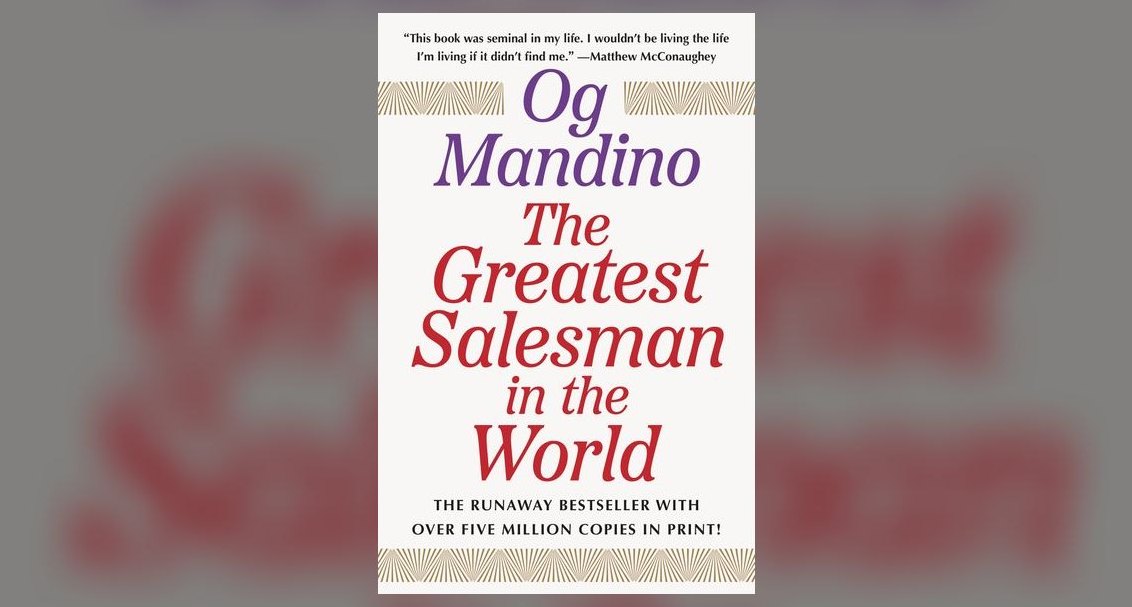 pulse-recentThe Greatest Salesman in the World by Og Mandino — Top 10 Key Takeaways for Sales Leaders in 2027