
A Graduation Speech for a Graduate as the Class President
 Curated byKory White · Fractional CRO · Maryland
 PULSEKNOWLEDGE LIBRARY
Quality
Certified
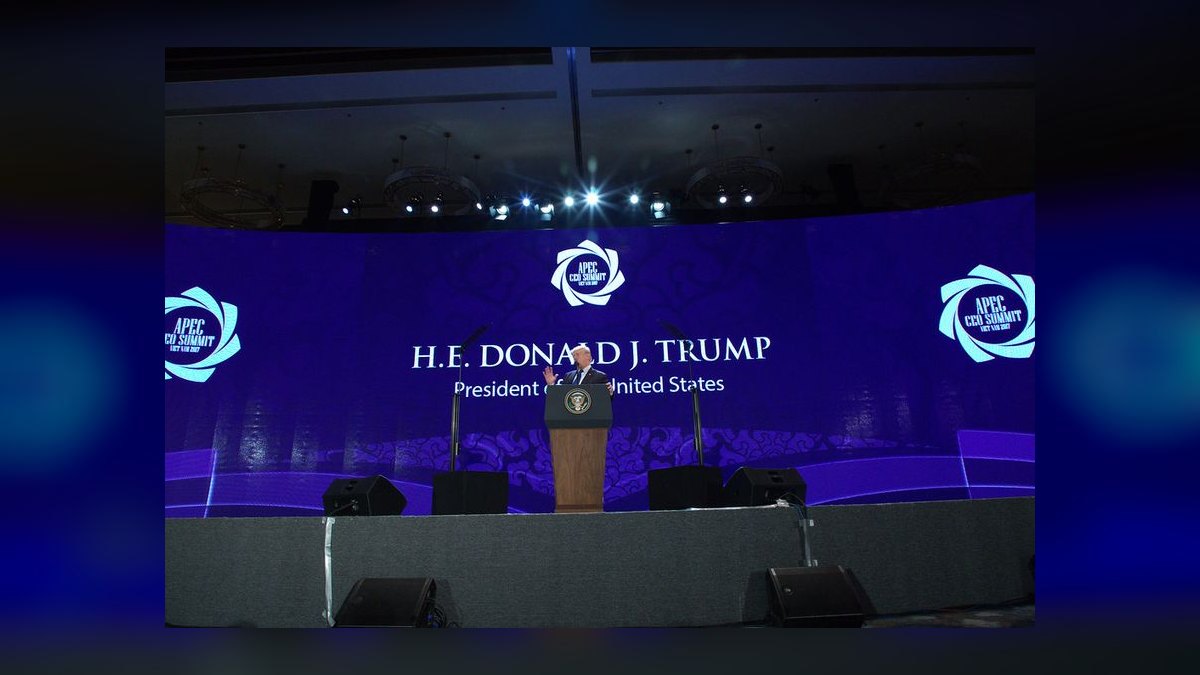
As class president, open with a specific shared memory, thank the people who carried your class, name the challenges you survived honestly, and close with one clear action line. Keep it 3–5 minutes, roughly 400–700 words, speak at 140–160 words per minute, and let the class — not you — be the subject of every sentence.
The scenario every class president walks into
Picture the actual conditions. It is 11:40 a.m. on a football field or in a gymnasium. The ceremony started at 10:00. The principal has spoken, an award block has run long, and a guest speaker has already used the phrase "the future is yours." Roughly 300 seniors are seated in folding chairs in polyester gowns in direct sun. Behind them sit 900 to 1,500 family members, half of whom are holding phones up, and a meaningful number of whom do not know your name. Somewhere in row eight, a grandparent is fanning themselves with the printed program.
You are, in most ceremony orders, speaker number four or five. That position matters more than anything else about your speech. By the time a Graduate in the third row hears your first sentence, they have absorbed about twenty-five minutes of generalized inspiration and their attention budget is nearly spent. The single largest mistake a class President makes is writing a speech as if they were the first person to talk that morning. You are not. You are the person who has to re-earn attention that four earlier speakers already spent.
That reframes the whole assignment. Your speech is not a summary of high school. It is not a thesis about the future. It is a two-part job: give the class something only a classmate could give them — the specific, unglamorous, true detail — and then hand the ceremony its emotional exit. Everything else is optional.
Consider two versions of the same opening. Version A: "Good morning, and welcome to the graduation of the class of 2026. Today marks not an ending, but a beginning." That sentence has been spoken at approximately every ceremony in the country, and the audience knows it by the fourth word; you can watch phones tilt back down. Version B: "Good morning. Three years ago, this exact field flooded during the homecoming game, and about forty of us stood in six inches of mud and refused to leave until the fourth quarter ended. I've thought about that a lot this week." Version B does something structural: it proves you were there, it makes people who were also there sit up, and it gives you an image you can return to at the end.

The scenario also sets your hard constraints. Outdoor audio is bad. Sun glare washes out printed notes. Wind lifts loose paper. Gowns have no pockets. Folding chairs squeak. Whatever you write has to survive being read off a warped index card into a microphone that is either too hot or too quiet, by someone whose hands are shaking. Write for those conditions, not for a quiet room where the speech sounded great at your kitchen table.
One more piece of the scenario that speakers underestimate: you are also speaking to the adults. The families in those seats paid for the graduation cords, drove the carpools, and worked the concession stand. They are not the primary audience, but they are the loudest one, and a single specific line aimed at them — not a generic "thank you to our parents," but "to whoever kept showing up to away games in the rain with a thermos" — is what turns polite applause into real applause. The class President who understands the room is speaking to two audiences at once, and can serve both without splitting the speech in half, is the one people quote in the parking lot afterward.
How the speech's emotional mechanism actually works
A graduation speech is not an essay read aloud. It is a sequence of state changes in a crowd, and each section exists to move the room from one state to the next. Understanding the mechanism lets you write with intent instead of hoping something lands.
The arc has seven functional beats, and each one has a job:

Beat 1 — Anchor (15–25 seconds). Greet the principal, faculty, families, and fellow graduates, then immediately drop a concrete shared image. The greeting is a social requirement; the image is the actual work. Do not spend more than two sentences on the greeting or you burn your best attention window on protocol.
Beat 2 — Recognition (45–75 seconds). Reflect on the journey with details only your class would recognize. The physiological goal here is laughter — specifically, the scattered, delayed laughter of people realizing you are talking about something they personally lived. Laughter buys you the rest of the speech. Two or three micro-details work better than one long story.
Beat 3 — Honesty (30–60 seconds). Name what was hard. A brutal semester, a loss, a season that fell apart, the years the class spent learning on screens. This is the beat most speeches skip, and skipping it is why most speeches feel weightless. Vulnerability converts a friendly crowd into an attentive one, because you have signaled you will not lie to them for the next three minutes.
Beat 4 — Gratitude (30–45 seconds). Thank teachers, staff, and families with specificity. One or two named people by role, not a list. The custodian who unlocked the gym at 6 a.m. for practice does more work in your speech than five generic thank-yous.

Beat 5 — Forward turn (45–60 seconds). Pivot to the future, grounded in the specific strength this class actually demonstrated. Not "you can be anything." Rather: "we are the class that kept showing up when it stopped being fun, and that is a rarer skill than it sounds."
Beat 6 — Call to action (15–20 seconds). One instruction. Small, concrete, doable. "Text the teacher who got you through." Not "change the world."
Beat 7 — Send-off (5 seconds). A physical trigger. "Throw the caps."
Why this order and not another? Because each beat pays for the next. Recognition earns the right to be honest — you cannot name the hard year to a crowd that is not yet with you. Honesty earns the right to be sincere in gratitude, because the room now trusts you are not performing. Gratitude earns the right to give advice, since you have just demonstrated you know you did not do this alone. And advice earns the right to issue an instruction, which is what a call to action is. Reverse any two beats and the speech feels off in a way audiences notice but cannot name.

The mechanism also explains what to cut. Anything that does not move the room from one state to the next is decoration. A quotation from a famous person, dropped in without connection to your class, does not change the room's state — it pauses it. A joke that only your lunch table understands does not create the recognition laugh; it creates the silence of 1,200 people waiting. Test every paragraph against a single question: which beat is this, and does it move the room forward? If you cannot answer, delete it.
Real numbers, ranges, and benchmarks to write against
Vague guidance produces vague speeches. Here are the concrete parameters worth writing against.
Length. For a ceremony with multiple speakers, target 3–5 minutes spoken. At a natural delivery pace, that is roughly 400–700 words. Write to the low end. Live delivery adds time: applause breaks, laugh breaks, the pause after your best line, and the sixty seconds of walking to the podium and adjusting the mic. A 700-word script routinely runs closer to six minutes in the room. If you have been given a hard six-to-eight-minute slot, you can expand to roughly 850–1,100 words, and the right way to spend the extra time is a second specific anecdote from junior or senior year plus one or two more names — not a longer conclusion.
Pace. Aim for 140–160 words per minute. Conversational speech sits around 150. Under pressure, most speakers accelerate 20–30 percent above their rehearsed pace, which means a person who practiced at 150 delivers at 180–195 and loses the audience without knowing why. Time yourself with a stopwatch on at least three full run-throughs and write the target time at the top of the card.

Pauses. Three seconds of silence before your first word. One to two seconds after each punchline or emotional beat. A full two-second stop before the final line. Those pauses feel enormous to you and normal to the audience — that asymmetry is the single most useful fact about public speaking, and it is worth rehearsing until you believe it.
Names. Reference roughly 5–7 classmates by first name only. Fewer than three and it reads as your friend group; more than eight and it becomes a roll call that makes everyone left out feel it. Deliberately include people outside your circle — the transfer student who arrived junior year, the person who ran the sound board for every assembly, the one who cleaned up after every event without being asked. Name one to two staff members by role and name.
Rehearsal. Five to seven full aloud run-throughs, minimum. Record at least two on your phone and listen back for filler words; most speakers find 8–15 instances of "um," "like," or "so" they had no idea they were producing. Do one run-through standing, at volume, in front of at least one live person. Reading it silently on a screen does not count as a rehearsal and never has.
Memorization. Memorize the first sentence and the last two sentences cold. Everything between them lives on notes. This gives you eye contact at the two moments it matters most — the opening, where you establish presence, and the close, where you cash it in.

Notes format. A single index card, or at most two, in 16–18 point type. Not full sheets of paper: paper amplifies hand tremor visibly to the back row, and an outdoor breeze will turn a loose sheet into a problem you have to solve on stage. Number the cards. Print two copies and put one in a pocket or hand it to someone in the front row.
Eye contact. Pick three fixed points — left, center, right — and hold each for a full sentence. Do not sweep. If direct eye contact rattles you, look at foreheads in the back third; from row twenty it is indistinguishable.
The 30-second version. Always have one. Ceremonies run long, and an administrator may ask you to cut on the walk up. Prepare a compressed version in advance: greeting, one shared image, one thank-you, the call to action, the send-off. Roughly 75–90 words. Having it ready is the difference between a graceful cut and a panicked improvisation.
Trade-offs and alternatives worth weighing
Every choice in a graduation speech trades one thing for another. Making those trades on purpose is what separates a considered speech from an accidental one.

Humor versus gravity. Humor buys attention fast and makes you likable, but every joke risks excluding someone. Inside jokes have the steepest curve: the more people who get it, the harder it lands, and the fewer who get it, the more the silence costs. A practical rule — if fewer than roughly 70 percent of the graduating class would understand the reference without explanation, cut it or add a half-sentence of context. Self-deprecating humor is the safest form, because the only person exposed is you. Humor at the expense of a teacher, an administrator, or a rival school is the fastest way to end up in a story people tell for the wrong reason.
Specific versus universal. Specific details create recognition among your classmates; universal statements include the families who were not there. The resolution is not to pick one — it is to sequence them. Lead with the specific detail, then immediately generalize it in the next sentence. "We stood in the mud for a fourth quarter we were losing by twenty-eight. That is, I think, the most honest thing I can tell you about this class." The first sentence is for the graduates; the second is for everyone else.
Memorized versus read. Full memorization gives you total eye contact and maximum presence, and it fails catastrophically — a memory blank with no notes leaves you with nothing. Full reading is safe and flat; it disconnects you from the room and reads as unprepared even though it is the opposite. The hybrid — first and last lines memorized, the middle on cards with visual markers (a star where you look up, a dash where you pause) — captures most of the upside of both with almost none of the downside.
Quoting someone famous versus writing your own line. A borrowed quote is a shortcut to gravity, and audiences recognize the shortcut. If you use one, use exactly one, and spend a sentence connecting it explicitly to something your class did. An unconnected quotation is the clearest signal in a speech that the speaker ran out of things to say.
Solo speech versus shared moment. Some class presidents build in a participatory element — a call-and-response, asking families to stand, having the class raise a hand for a shared memory. It generates real energy but costs 20–40 seconds and can fall flat in a subdued or grieving crowd. Read the room. If the ceremony has already been emotionally heavy, keep it solo.
There is a final trade-off worth naming plainly, and it is about what the speech is for. A class President can write to be admired or write to be useful. The admired version is polished, quotable, and slightly abstract; it plays well on video. The useful version is rougher, names more people, and is mostly incomprehensible to anyone who was not in that building for four years. The useful version is the better speech, and it is the one your classmates will bring up at a reunion, because a Graduation Speech is one of the very few pieces of public speaking whose entire purpose is to serve a specific group of people who will never assemble in one room again.
Common pitfalls and how to avoid each one
Clichés with no anchor. "Follow your dreams," "the sky's the limit," "today is not an ending but a beginning." These are not wrong; they are weightless, because every listener has heard them dozens of times. Fix: attach every abstraction to a concrete instance from your class. Not "we overcame challenges" but "we survived a semester where half of us were learning through a laptop screen, and we still had 94 people show up to the spring cleanup." Specificity is the only defense against generic.
Fabricating detail to sound impressive. Do not invent statistics, scholarship totals, service hours, or achievements you have not verified with the school office. This is the pitfall with the worst downside — someone in the audience always knows the real number, and being caught inflating on stage costs you the room permanently. If you want to cite a figure, get it confirmed. If you cannot confirm it, describe it qualitatively instead.
Speaking too fast. Nerves compress everything. Write SLOW DOWN in large letters at the top of card one. Mark two or three explicit "(breathe)" cues into the script at natural transitions. Practice with a timer, not a feeling.
Reading straight through with no lift. If your eyes never leave the page, the audience never enters the speech. Mark your cards with a star at every point where you must look up — at minimum, the opening line, the punchline of each anecdote, and the last two sentences.
A weak ending. "Thank you, and good luck" is the anticlimax that undoes three good minutes. The final line should give the audience something to do: a cap toss, a cheer, a stand-up. If your school does not allow the cap toss, substitute another physical trigger — "on three, let's make enough noise that they hear us in the parking lot."
Making it about you. Watch your pronouns. In a good class President speech, "we" and "you" should outnumber "I" by a wide margin. A quick check: highlight every "I" in the draft. If more than a handful survive, rewrite. Your leadership credential is not the point of the speech; it is the reason you were handed the microphone.

Ignoring the loss. If your class lost a classmate, a teacher, or a coach, address it. Skipping it does not protect the mood — everyone is already thinking about it, and the silence reads as avoidance. One quiet, direct line placed before the forward turn is enough: "We carry them with us today." Then pause two full seconds and move on. Do not linger, and do not build the whole speech around it unless the family and the administration have asked you to.
No contingency plan. Assume something goes wrong: the mic cuts out, the wind takes a card, you lose your place, you cry. Rehearse recoveries. If you lose your place, stop, look at the card, and say "as I was saying" — a five-second pause is invisible to an audience and enormous to you. If you get emotional, breathe and continue; the room will be entirely on your side. If the mic dies, stop and wait for the tech, do not shout through it.
Skipping approval. Most schools require the class President to submit the Graduation Speech to an administrator, often 7–14 days before the ceremony. Find out the deadline early. Submitting late, or adding unapproved material at the podium, is the one pitfall with consequences that outlast the day.
Optimizing the wrong thing. A speech is not a product launch; there is no conversion metric, no revenue attached, no dashboard measuring whether it worked. The temptation is to write toward what will play well on someone's phone recording. Resist it. The measure of a class President's speech is whether the people in those folding chairs felt accurately seen — and that is not something you can optimize for from the outside.
Related questions
How do I start a class president graduation speech?
Two sentences of greeting — principal, faculty, families, graduates — then immediately a concrete shared image from your class's four years. Keep the whole opening under 25 seconds. The greeting is protocol; the image is what actually earns back the room's attention.
What if my class had a really hard year?
Name it plainly and early, in one or two honest sentences, then move to what the class did in response. Avoiding it reads as avoidance to everyone present. Do not build the entire speech around grief unless the family and administration have specifically asked for that.
How many classmates should I name?
Roughly five to seven, first names only, deliberately drawn from outside your own friend group. Fewer reads as an inside circle; more turns into a roll call. Add one or two staff members named by role — the custodian, the bus driver, the librarian.
Should I memorize the whole thing?
No. Memorize the first sentence and the last two cold, and keep the middle on one or two index cards in 16–18 point type. You get eye contact where it counts without the catastrophic failure mode of a full memory blank on stage.
How do I cut the speech to 30 seconds on the spot?
Prepare the short version in advance: greeting, one shared image, one thank-you, the call to action, the send-off — about 75–90 words. Ceremonies run long and administrators do ask. Having it written means a graceful cut instead of improvisation under pressure.
FAQ
How long should a class president graduation speech be? Three to five minutes spoken, which is roughly 400–700 words. Write to the low end, because applause, laughter, and pauses add real time in the room. If you have a longer formal slot of six to eight minutes, expand to about 850–1,100 words by adding a second anecdote and more names rather than a longer close.
What tone works best? Match your class's collective personality, not your personal preference. An energetic class can carry more humor; a class coming off a difficult year needs warmth and steadiness. In every case the reliable blend is sincere gratitude, one or two genuine laughs, and a forward-looking close that stays specific rather than sweeping.
Do I need my school's approval before delivering it? Almost always yes. Most schools ask the class President to submit a draft to an administrator or advisor, commonly 7–14 days before the ceremony. Confirm the exact deadline and format the week you start writing, and never add unapproved material at the podium — that is the one mistake with consequences past graduation day.
Can I use a quote from a famous person? One at most, and only if you connect it directly to something your class actually did. An unattached quotation signals that you ran out of your own material. Your classmates came to hear a Graduate they know describe four years they lived — your own sentences will always outperform a borrowed one.
What do I do if I start crying? Stop, breathe, and continue. Tears at a graduation are expected, not a failure, and audiences respond with warmth and often applause. The recovery is what people remember. Practice the transition line you will use after the pause so you have something automatic to reach for.
How do I make sure it isn't about me? Count the pronouns. In a strong class President speech, "we" and "you" heavily outnumber "I." Highlight every "I" in your draft and rewrite the ones that are not carrying real weight. You were handed the microphone to describe the class — your own story is only useful where it illustrates theirs.
Sources
- Toastmasters International — Speech Writing Resources
- Harvard Business Review — Public Speaking
- TED — Talks and storytelling craft
- University of North Carolina Writing Center — Speeches
- Purdue OWL — Oral Presentation Tips
- National Communication Association
- The Chronicle of Higher Education — Commencement coverage
- U.S. Department of Education
Related on PULSE
This page will be disappearing soon. Save it to your device for $1 — or read it free while it is here.
@Kory-White- · if Venmo asks, the last 4 of my number are 2012
This page is gone.
This one is off the shelf now. $1 keeps it on your phone for good — the whole page, pictures and diagrams included.
 pulse-speechesWhat Makes Patrick Henry’s “Give Me Liberty” a Great Speech in 2027
 pulse-speechesA Speech for a Company 10th Anniversary
 pulse-speechesA Retirement Speech for a Doctor
 pulse-speechesWhat Makes Steve Jobs’ Stanford Commencement a Great Speech in 2027
 pulse-speechesA Eulogy for a Grandmother Who Raised You
 pulse-speechesHow to Add Humor to a Retirement Speech in 2027
 pulse-speechesA Wedding Speech for a Surprise Wedding
 pulse-speechesA Speech for a Little League Opening Day
 pulse-speechesA Retirement Speech for a Police Officer
 pulse-speechesWhat Makes David Foster Wallace’s “This Is Water” a Great Speech in 2027