
A Retirement Speech for a CEO
 Curated byKory White · Fractional CRO · Maryland
 PULSEKNOWLEDGE LIBRARY
Quality
Certified

A CEO retirement speech should run 5–10 minutes, roughly 700–1,200 spoken words, and center on three specific stories that reveal character rather than credentials. Open by naming the moment, thank the board and team, hand off confidently to the successor, and close with a short toast delivered from memory.
The night the speech gets written badly
Picture the standard sequence. A CEO announces retirement in March at a board meeting. The communications lead schedules a farewell dinner for June. In late May, someone forwards the executive assistant a folder containing the last four annual reports, a printout of the company's investor-day deck, and a list of every acquisition closed since 2011. The implicit assignment: turn this into a speech. Nine times out of ten, what comes back is a résumé read aloud — revenue milestones in chronological order, headcount growth, the year the second distribution center opened, a slide's worth of market-share statistics converted into sentences.
The room dies about ninety seconds in. Not because the accomplishments aren't real, but because everyone in that room already knows them. The VP of Sales lived the 2019 expansion. The plant supervisors watched the second facility go up. Reciting shared knowledge back to the people who created it produces polite silence, not connection. Worse, a numbers-heavy Retirement Speech quietly reframes a human being as a performance chart, which is precisely the opposite of what a farewell is for.
The specific failure mode is easy to name: the speechwriter confused *what the CEO did* with *who the CEO was to the people in the room*. Those are different data sets, and only one of them is in the annual report. The other lives in the memory of a regional manager who got a handwritten note after a bad quarter, in the recollection of a junior analyst whose idea got funded when nobody else would take the meeting, in the story of the plant closure the CEO announced in person instead of by email.
The fix is a research process, not a writing process. Two to three weeks before the event, the writer should interview six to ten people across levels — a board member, two direct reports, someone from the founding era if the company is old enough, one frontline employee, the executive assistant, and ideally a family member. Ask one question over and over: *tell me about a specific day.* Not "what was he like," not "describe her leadership style" — those questions produce adjectives, and adjectives are useless in a speech. Specific days produce scenes, and scenes are what an audience remembers on the drive home.
From ten interviews you will typically harvest fifteen to twenty candidate anecdotes. You will use three. That ratio — roughly six to one — is what separates a speech that lands from one that reads like a LinkedIn recommendation. The surplus isn't wasted; it becomes the material for the video montage, the printed program, and the two or three shorter toasts other people will give that night.
One more scoping decision belongs in this phase: who actually speaks. At most companies the answer is two or three people — the board chair, one long-tenured colleague, and the CEO themselves. More than three speakers and the evening runs past forty minutes of talking, which is the point at which servers start clearing plates and attention collapses. Decide the lineup early, tell each speaker their time limit in minutes and words, and assign each one a distinct lane so all three don't tell the same acquisition story.
How the speech actually assembles, section by section
A CEO Retirement Speech has a load-bearing structure, and the parts do different jobs. Understanding what each section is *for* prevents the most common structural error, which is spending four minutes on stories and thirty seconds on the successor.
The open (45–60 seconds, roughly 100–130 words). Its only job is to name the moment and focus a room that is still settling. Do not begin with a joke unless the CEO's public persona is genuinely comic — a joke that doesn't land in the first fifteen seconds costs you the next two minutes. Instead, state plainly why everyone is there and who the evening belongs to. A serviceable pattern: name the occasion, name the person, name one quality you will spend the rest of the speech proving. That third element matters — it gives the audience a thesis to hang the stories on.
The body (3–5 minutes, three stories at 30–45 seconds each plus connective tissue). Each story should carry a physical detail: an object, a gesture, a repeated phrase, a time of day. "She kept a cracked coffee mug from the first office on her desk for nineteen years" does more work than three sentences about humility. Order the stories deliberately — usually early-era first, hardest moment second, most personal third — so the emotional temperature rises rather than oscillates.
Gratitude (60–90 seconds). Name the board, the executive team, and the family. Name individuals sparingly — four or five maximum — and always follow named thanks with a genuine sweep that includes everyone else, or you have just created a small group of people who feel forgotten at a party.
The handoff (2–3 minutes, 300–400 words). This is the section that gets cut when the speech runs long, and cutting it is a mistake. Every person in the room is quietly asking whether the company is stable. The handoff answers that question.
The close and toast (30–45 seconds). Short, memorized, eye contact with the CEO first, then the room.
The handoff deserves its own craft note. Vague encouragement — "I know you'll do great things" — reads as filler and gives the room nothing. Name a specific quality the successor brings that the company demonstrably needs right now, and frame your advice as a wish rather than an instruction. A retiring CEO issuing directives on the way out undercuts the very authority they are trying to transfer. "My one hope is that you keep asking the question you asked in your first interview" transfers authority; "make sure you watch the margin in the Southeast" retains it.

If the successor is external and new to the room, add fifteen to twenty seconds of context — where they came from, why the board chose them — because half the audience has met them exactly once. If the successor has not been named yet, do not improvise a placeholder. Express confidence in the board's process, name the interim structure if one exists, and move on. Speculation from a departing CEO becomes a rumor by Monday.
Real numbers: length, timing, and the interview budget
Speech length is the single most-violated constraint at these events, so anchor it in arithmetic rather than instinct. A comfortable public-speaking pace for an emotional occasion is 120–140 words per minute — slower than conversational speech, because pauses do real work here. That math sets the envelope:
- 5 minutes ≈ 600–700 words. Appropriate when three or more people are speaking, or when the retirement is part of a larger annual event.
- 7 minutes ≈ 840–980 words. The reliable default for a dedicated farewell dinner with two speakers.
- 10 minutes ≈ 1,200–1,400 words. The absolute ceiling, and only justifiable for a founder-CEO with 20+ years of tenure whose life and the company's are genuinely the same story.
- Past 12 minutes, attention measurably degrades in a post-dinner room with wine on the tables. There is no version of this event where a 20-minute speech is the right call.
Internal allocation, expressed as a percentage of total runtime: open 10%, body stories 50%, gratitude 15%, handoff 20%, close 5%. For a 7-minute speech that's roughly 42 seconds, 3.5 minutes, 63 seconds, 84 seconds, and 21 seconds. Write to those targets, then read aloud with a stopwatch — silent reading runs 20–30% faster than delivery and will fool you every time.

Individual story length: 30–45 seconds each, about 60–100 words. A story that needs 90 seconds of setup is the wrong story for a speech; it belongs in the printed program or the video. If you cannot land the anecdote's point within two sentences of the setup, cut it and use the next one from your interview pile.
Named thanks: cap at four to six individuals. Past six, the list becomes an awards show and the people at table nine start checking their phones. Every named block should end with an unnamed sweep — the operations team, the field staff, the people who have been here since before the second building.
Preparation budget, which is where most of these efforts are under-resourced:

- 6–10 stakeholder interviews, 20–30 minutes each — 3 to 5 hours of conversation.
- 15–20 candidate anecdotes harvested, 3 used.
- 3–5 full drafts, with the second draft typically 40% longer than the final. Overwriting then cutting produces better prose than writing to length on the first pass.
- 4–6 rehearsals aloud, at least two of them in front of another person.
- Two weeks minimum of lead time. One week is survivable; three days produces the annual-report speech described earlier.
A note on financial specifics, since this is a CEO and the temptation is constant: keep hard revenue figures out of the spoken speech almost entirely. One directional line is defensible — "she took a business that fit in one building and made it something that reaches customers in a dozen countries." Precise revenue numbers, EBITDA, or multiples belong in the board resolution and the press release, not the toast. If the company is public, run any forward-looking statement past legal before the event; a retiring CEO speculating about next year's performance in front of employees and reporters creates a disclosure problem nobody wants to spend the following week cleaning up.
Trade-offs: who writes it, and what gets sacrificed
There are three realistic authorship models, and each buys something at a cost.
The CEO writes it themselves. Highest authenticity, and the voice is unmistakably real. The cost is that self-authored speeches consistently fail in two directions at once — either excessive modesty that deprives the room of the acknowledgment it came to give, or unintentional self-congratulation because the writer has no external check. If the CEO writes it, they need one honest reader with standing to say "this section is about you when it should be about them."
A colleague writes and delivers a tribute, and the CEO responds briefly. This is often the strongest configuration. The colleague can praise without awkwardness, and the CEO's shorter response — 3 to 4 minutes — can focus purely on gratitude and the handoff, which are the two things only they can credibly deliver. The cost is coordination: the two speeches must be sequenced so they don't tell the same story twice.
A professional speechwriter drafts it. Best structural quality and reliable pacing, and the interview process alone usually surfaces material nobody inside the company would have thought to use. The cost is voice — a draft that hasn't been through the CEO's own edit will contain phrases they would never say, and the room will hear it. Budget an hour of the CEO's time to read the draft aloud and mark every sentence that feels borrowed.
There are format trade-offs too. A video montage with colleague clips carries enormous emotional weight and lets twenty people participate, but it eats 4–6 minutes of the evening and requires weeks of collection — and if the montage runs before the speech, the speech must not repeat any story the video already told. A live open mic feels generous but is genuinely risky: an unvetted speaker can wander into a layoff, a lawsuit, or an ex-spouse in under a minute. If you allow it, cap it at two pre-briefed speakers with a hard 60-second limit. A printed keepsake book of written tributes absorbs all the material you cut from the speech and gives the CEO something durable; it costs nothing on the night.
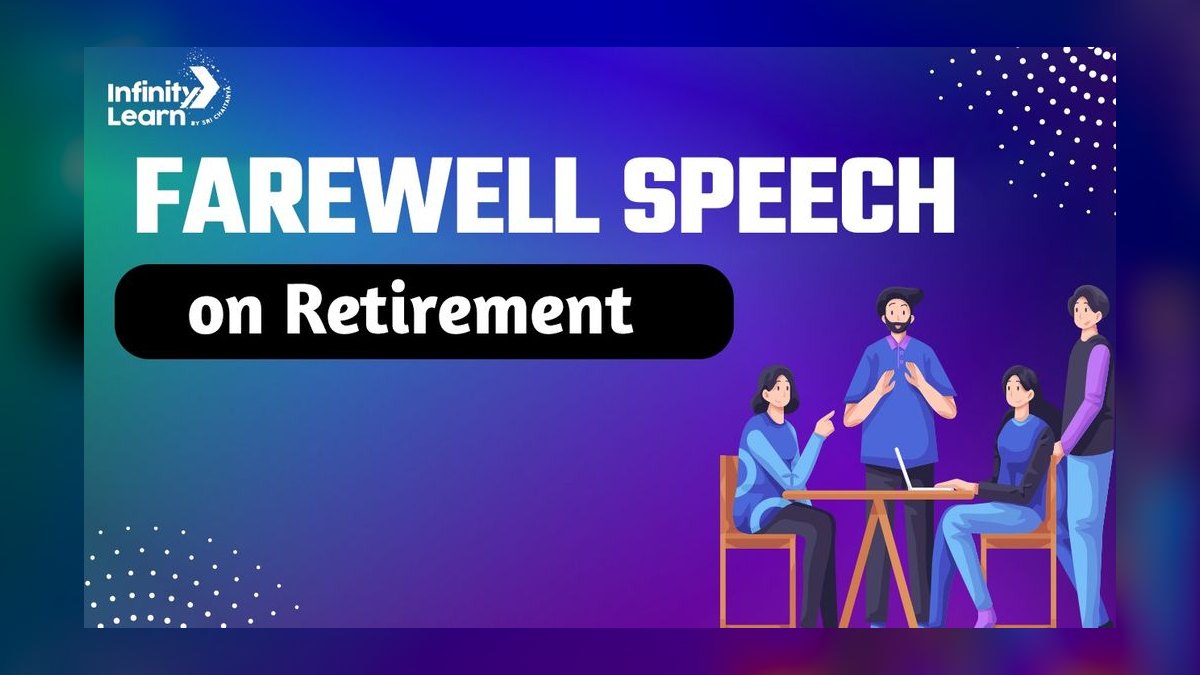
For a hybrid or fully virtual event, cut the total speech length by roughly 25% — attention on a video call degrades faster than in a room. Look at the camera lens rather than the gallery, keep the toast short since remote participants can't clink, and have someone monitoring chat so remote attendees are acknowledged by name at least once.
Where these speeches go wrong
The résumé recital. Already diagnosed above, and by far the most common. Test: if any paragraph could be lifted verbatim into a press release, cut it.
Burying the handoff. Speakers who run long always cut the successor section because it feels like the least personal part. It is the most institutionally important part. Protect it by writing it first and drafting the stories second.
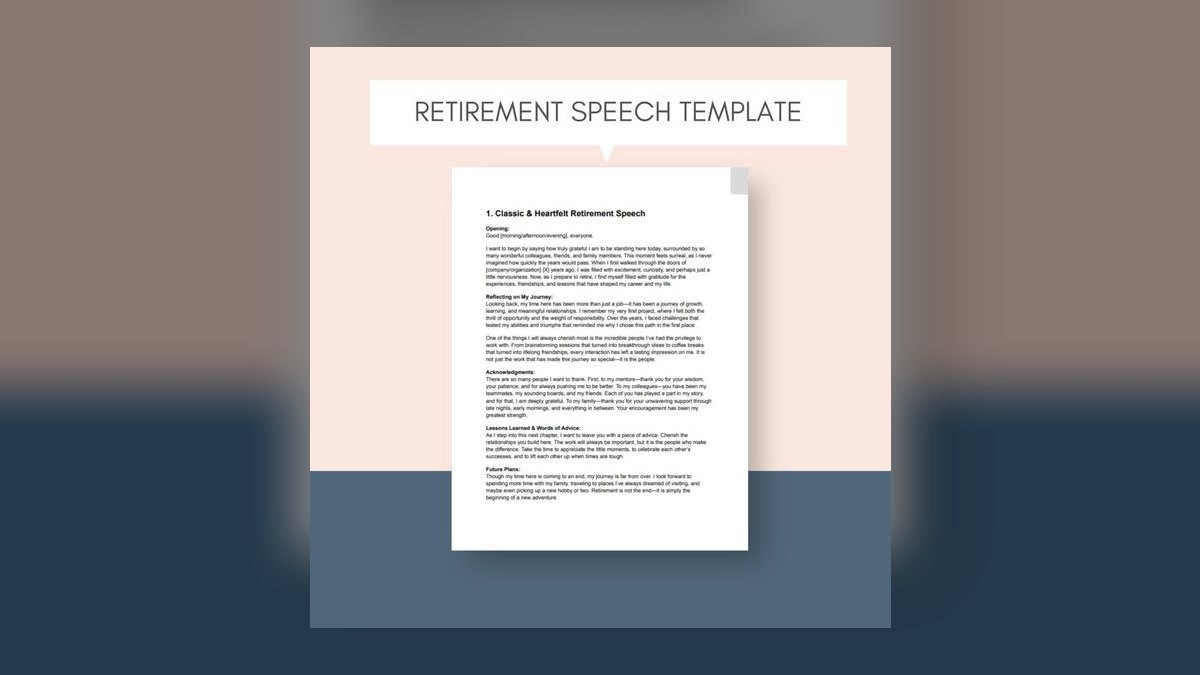
Anecdotes that overrun. A 90-second story in a 7-minute speech consumes 21% of the runtime for one beat. Time each story individually during rehearsal, not just the whole speech.
Inside jokes. A reference that lands with the six people who were at the 2014 offsite makes everyone else feel like a guest at someone else's party. Universal humor about a known quirk — the CEO's legendary refusal to use the elevator, the standing 6 a.m. meeting — works because the whole room shares it.
Naming the wrong number of people. Zero names feels cold; twelve names feels like a spreadsheet. Four to six, then a sweep.
Reading verbatim from a script. Notes are fine — a single page with bullets, or index cards. But the toast itself must be memorized, because a toast delivered to a sheet of paper isn't a toast. If the CEO is nervous, memorize the first sentence and the last three; the middle can live on cards.

Unresolved emotion. People cry at these. That is fine and it is not a failure. What fails is fighting it mid-sentence and losing the thread. Build in a natural pause point — take a drink of water, look at the room for three full seconds — and rehearse using it. Audiences are extremely forgiving of a pause and much less forgiving of a speaker who rushes through a choked-up passage.
Ignoring a complicated exit. If the retirement follows a difficult stretch — a restructuring, a missed year, a health issue — the room knows. Pretending otherwise makes the speech feel dishonest. One acknowledging sentence, cleared with the CEO in advance, defuses it: "The last two years asked more of him than the first fifteen combined, and he showed up for every day of them." Then move forward. Never air a grievance, never name a departed executive critically, and never editorialize about a board decision from a podium.
Skipping the stopwatch rehearsal. Nearly every overrun traces back to a speech that was only ever read silently. Four to six timed read-alouds, two of them in front of a person who will tell you the truth, eliminates most of the failure modes on this list.
Related questions
How long should a CEO retirement speech be?
Five to ten minutes spoken, which is 600–1,400 words at a 120–140 words-per-minute delivery pace. Seven minutes is the reliable default. Past twelve minutes, attention in a post-dinner room falls off sharply regardless of how good the material is.
Should the speech mention revenue or financial results?
Keep hard figures out. One directional line about growth or reach is fine; precise revenue, EBITDA, or multiples belong in the press release and board resolution. For public companies, clear any forward-looking statement with legal before the event.
What if the successor hasn't been named yet?
Express confidence in the board's process, name the interim leadership structure if one exists, and stop there. A departing CEO speculating about the next appointment becomes a company-wide rumor within a day.
Can the CEO write their own retirement speech?
Yes, and the voice is usually better for it — but self-authored drafts skew either falsely modest or unintentionally self-congratulatory. Give one trusted reader standing to flag both. Alternatively, have a colleague deliver the tribute and keep the CEO's remarks to three or four minutes.
How many people should be thanked by name?
Four to six individuals, always followed by a genuine unnamed sweep covering everyone else. Fewer than four reads as cold; more than six turns the moment into a list and loses the room.
FAQ
How do you open a CEO retirement speech? Name the occasion, name the person, and name one quality you intend to spend the next several minutes proving. That third element gives the audience a thesis to attach the stories to. Keep it under 60 seconds — the room is still settling and long openings waste the sharpest attention you will get all night.
What kind of stories work best? Stories with a physical anchor: an object, a gesture, a phrase the CEO repeated, a specific time of day. Character beats credentials every time. The handwritten note after a bad quarter, the meeting they took when nobody else would, the mug from the first office. Three stories, 30–45 seconds each.
How much preparation time does this really take? Two weeks minimum. Budget six to ten stakeholder interviews at 20–30 minutes apiece, three to five drafts, and four to six timed rehearsals aloud. You will harvest fifteen to twenty candidate anecdotes and use three; the rest feed the program, the montage, and the other speakers' toasts.
Should there be humor? Universal humor about a widely known quirk works well and releases tension. Inside jokes from a specific offsite do the opposite — they signal to most of the room that they weren't there. If the CEO isn't known for being funny, skip the opening joke entirely and open sincerely instead.
What if the retirement follows a difficult period? Acknowledge it once, in a single sentence cleared with the CEO in advance, then move forward. The room already knows; silence reads as evasion. Never name a departed colleague critically, never relitigate a board decision, and never turn the acknowledgment into a defense.
How do you handle a virtual or hybrid farewell? Cut total length by about 25%, look at the camera lens rather than the gallery grid, and slow the pace slightly. Have someone watching chat so remote attendees get named at least once, and keep the toast short since half the room can't clink a glass.
Sources
- Harvard Business Review — CEO succession and executive transition communication
- Toastmasters International — speechwriting structure, timing, and delivery technique
- Society for Human Resource Management — retirement transitions and recognition-event practice
- MIT Sloan Management Review — leadership succession and organizational continuity
- Forbes — CEO succession coverage and executive communication
- Inc. Magazine — founder transitions and company-culture communication
- U.S. Securities and Exchange Commission — disclosure rules relevant to public-company executive departures
- The Wall Street Journal — executive-departure and succession reporting
Related on PULSE
This page will be disappearing soon. Save it to your device for $1 — or read it free while it is here.
@Kory-White- · if Venmo asks, the last 4 of my number are 2012
This page is gone.
This one is off the shelf now. $1 keeps it on your phone for good — the whole page, pictures and diagrams included.
 pulse-speechesHow to Tailor a Toast to the Audience in 2027
 pulse-speechesA Wedding Speech for a Groomsman
 pulse-speechesWhat Makes Nelson Mandela's Inauguration Speech a Great Speech in 2027
 pulse-speechesA Speech for a Customer Appreciation Event
 pulse-speechesA Toast for a 100th Birthday
 pulse-speechesHow to Structure a Best Man Speech in 2027
 pulse-speechesA Toast for a Baby Shower
 pulse-speechesA Wedding Speech for a Small Backyard Wedding
 pulse-speechesA Retirement Speech for a Doctor
 pulse-speechesA Eulogy for a Grandmother Who Raised You