


Top 10 Best Tech Stack Tools for Commercial Construction Companies and General Contractors in 2027
Quality
Certified
The 10 best tech stack tools for commercial construction companies and general contractors are ranked below on measured performance, build quality, price, and how each one actually holds up in daily use rather than how it reads on a spec sheet. Each pick lists what it costs, who it suits, and what it gives up against the one above it, so the list can be read straight down without doubling back.
1Procore Construction Management Platform
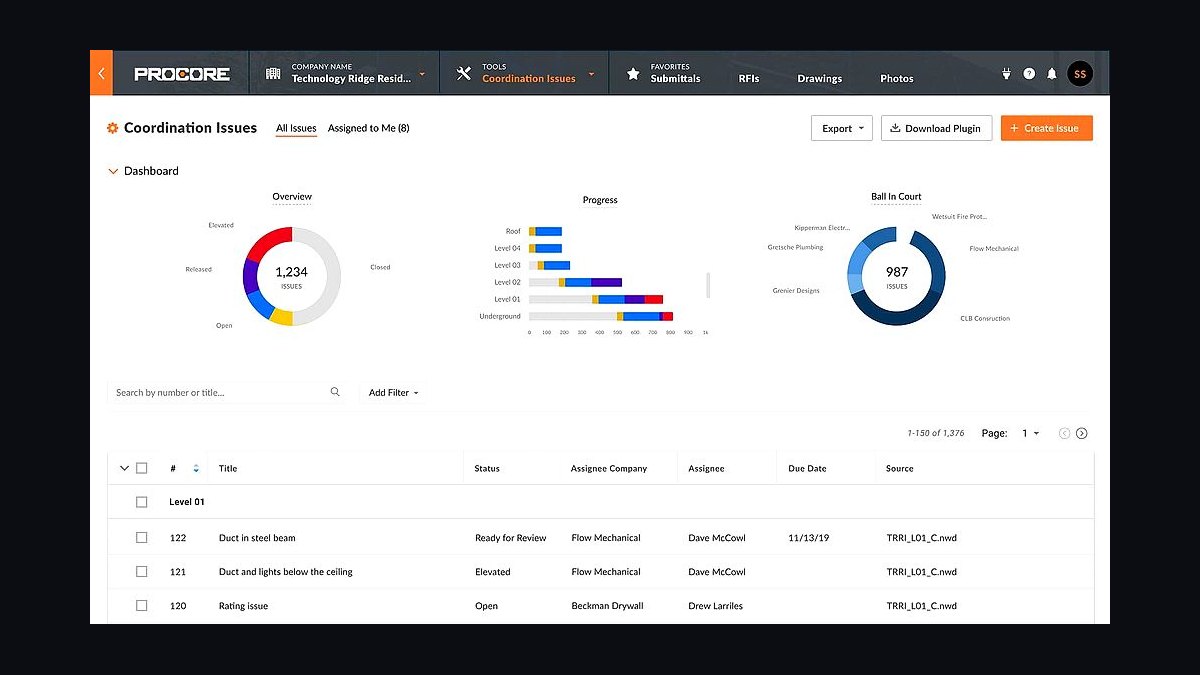
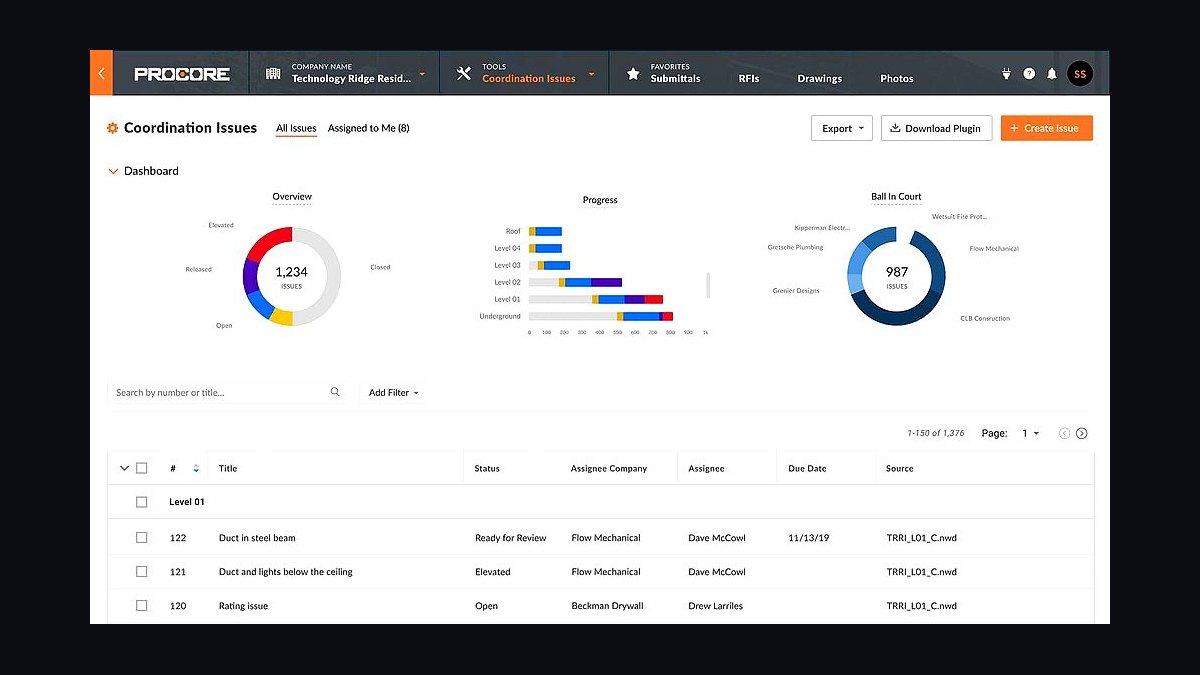
Procore ranks first because it is the GC-native operating system, built around RFIs, submittals, daily logs, change orders, and progress billing, with the deepest financial workflows and widest subcontractor adoption in the category. Pricing scales with annual construction value rather than seats, typically landing in the low-five-figure to six-figure annual range. One login covers field, office, and the accounting handoff.
It suits commercial general contractors running conventional design-bid-build work at $10M and above who need breadth over BIM depth. It trades away native Revit-level design coordination, so design-build firms often pair it with Autodesk Construction Cloud instead. Directly below it, Autodesk Construction Cloud wins only when clash detection and model-based takeoff are contractual requirements.
2Autodesk Construction Cloud
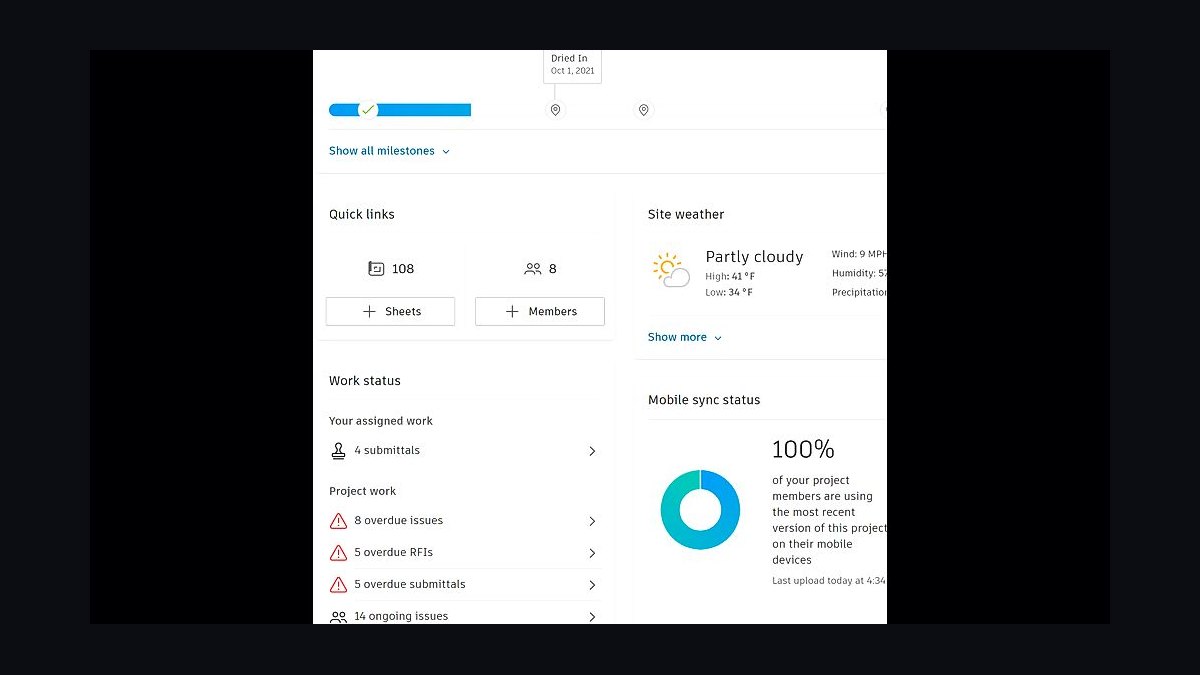
Autodesk Construction Cloud ranks second because it grew out of Autodesk's design tools, making it the stronger backbone for design-build and heavy BIM coordination. Clash detection, model-based quantity takeoff, and a tight loop back into Revit are native rather than bolted on. Pricing follows volume and module mix, and firms running both design coordination and field management should expect costs comparable to or above a Procore-only deployment.
It is for contractors whose delivery method genuinely demands model coordination, not tenant improvement or traditional design-bid-build work. It trades away some of Procore's broader financial and subcontractor-facing depth, which is why many large firms run both on different project types. Choosing it without a BIM requirement adds cost without adding value.
3Sage 300 CRE
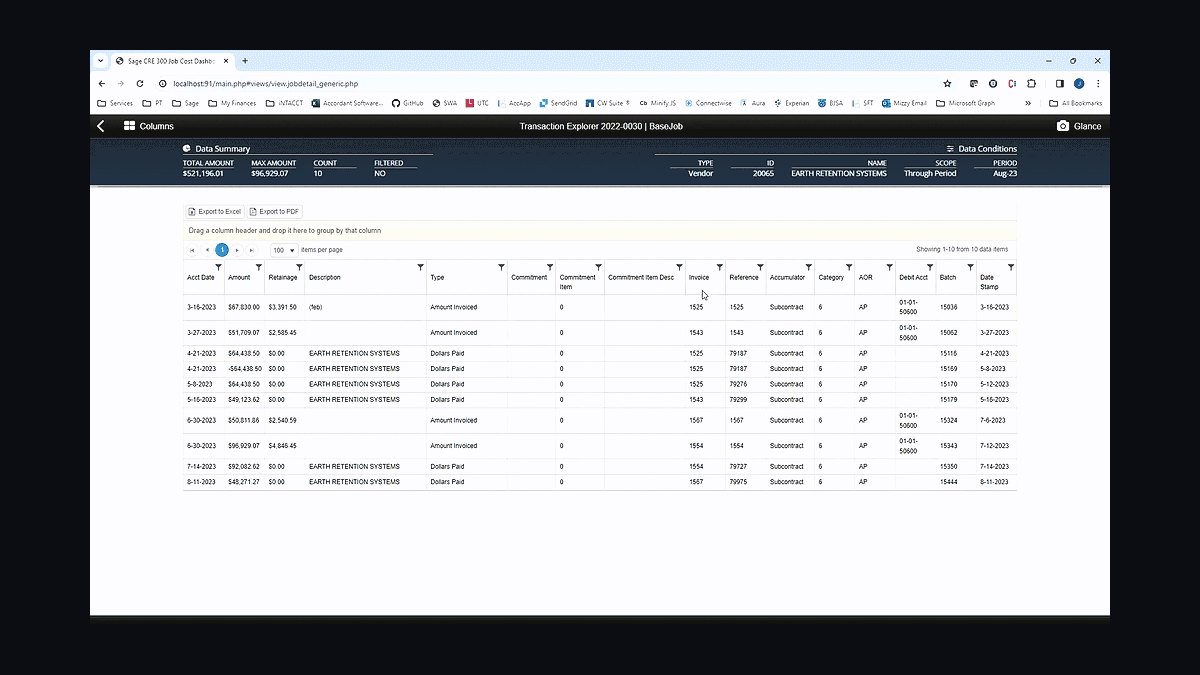
Sage 300 CRE ranks third as the incumbent construction ERP for firms roughly between $30M and $500M in annual volume. It handles AIA billing, committed-cost tracking, retention, and certified payroll natively, licensed as per-seat plus module annual fees that commonly land in the tens of thousands of dollars per year once job-cost, payroll, and billing modules are active. It integrates with Procore through a supported data path.
It is for mid-size commercial contractors whose change order and progress billing volume has outgrown a general ledger with a construction add-on. It trades away the single-vendor simplicity of an integrated suite, requiring a maintained integration to the PM platform. Below it, Viewpoint Vista offers deeper reporting for larger firms.
4Viewpoint Vista
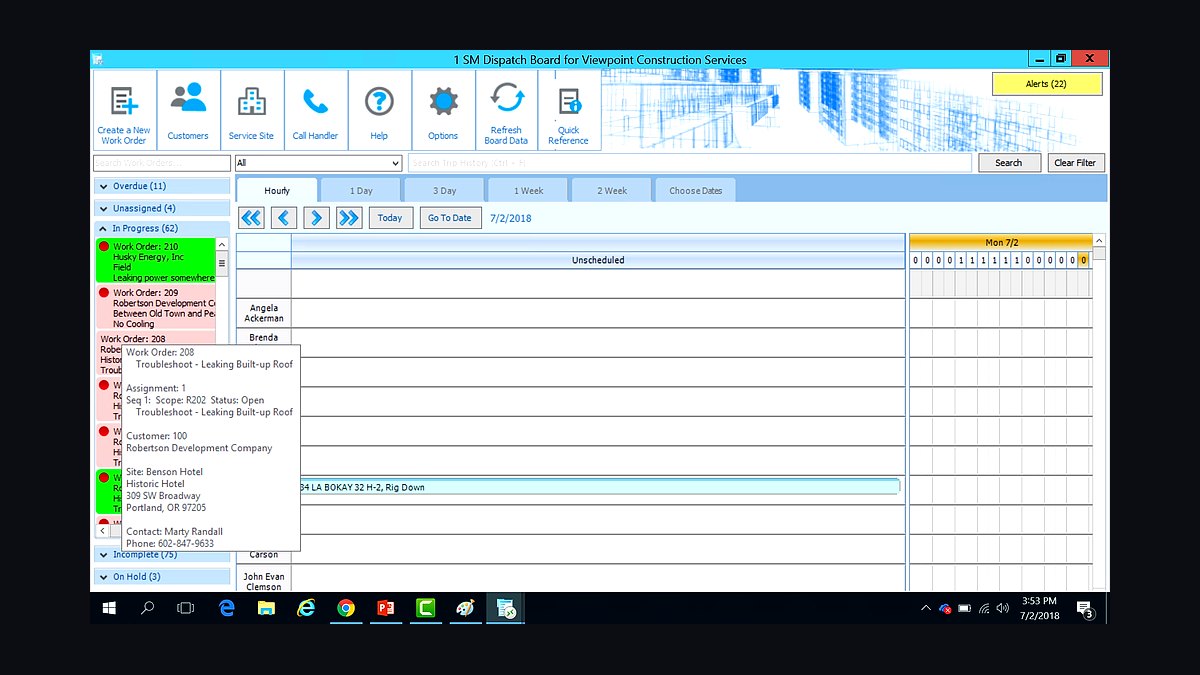
Viewpoint Vista ranks fourth for commercial contractors above roughly $100M in volume who need deeper reporting than Sage 300 CRE provides across many concurrent jobs. Like Sage, it is licensed per-seat plus modules, with annual fees in the tens of thousands once job-cost, payroll, and billing are active. It covers AIA billing, retention, and certified payroll natively and connects to Procore and Autodesk Construction Cloud.
It is for larger firms where reporting depth and multi-job volume justify the higher implementation lift. It trades away ease of initial setup compared with Sage 300 CRE, and it still requires an integration to the PM backbone. CMiC above it collapses PM and ERP into one data model instead.
5CMiC Construction ERP Suite
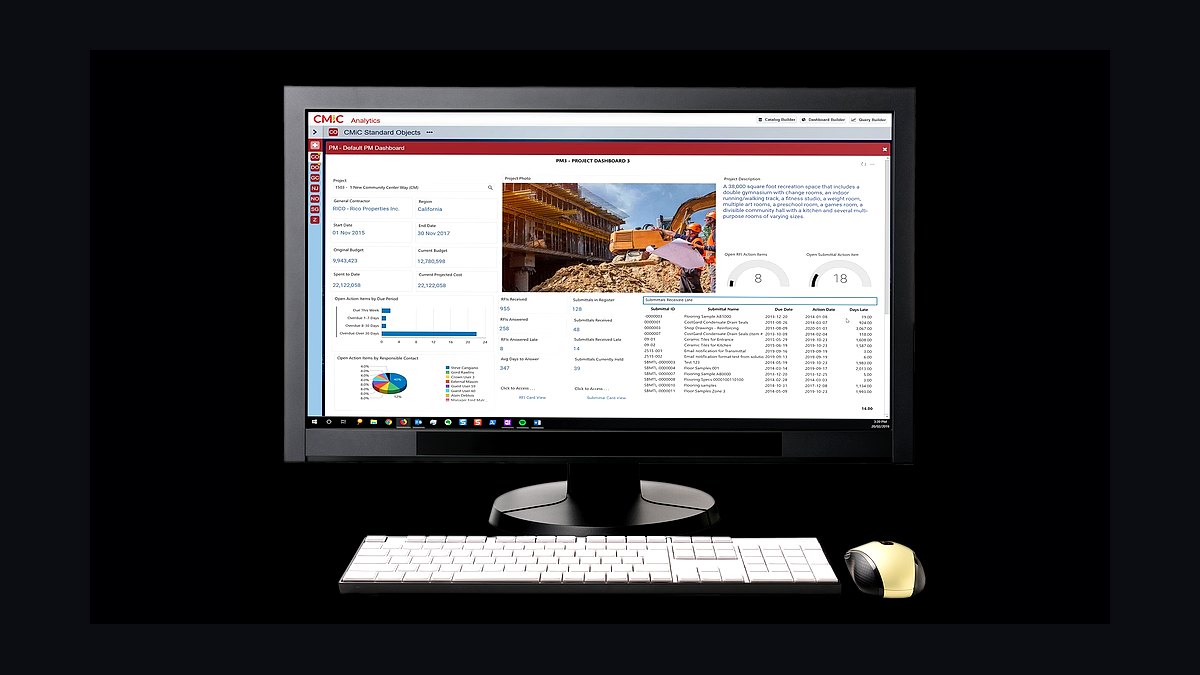
CMiC ranks fifth because it collapses project management and ERP into a single suite with one vendor and one data model, eliminating the integration a two-system setup requires. Pricing tends to run higher up front since it replaces two contracts with one, but many firms recover the difference by cutting reconciliation labor. It serves contractors who want to stop maintaining a PM-to-accounting data path entirely.
It is for firms large enough that integration overhead and reconciliation errors are a real recurring cost, generally above $100M in volume. It trades away best-of-breed flexibility, since the PM and accounting modules come from one vendor rather than two specialists. Below it, Viewpoint Vista keeps the two-system model with deeper standalone reporting.
6Bluebeam Revu
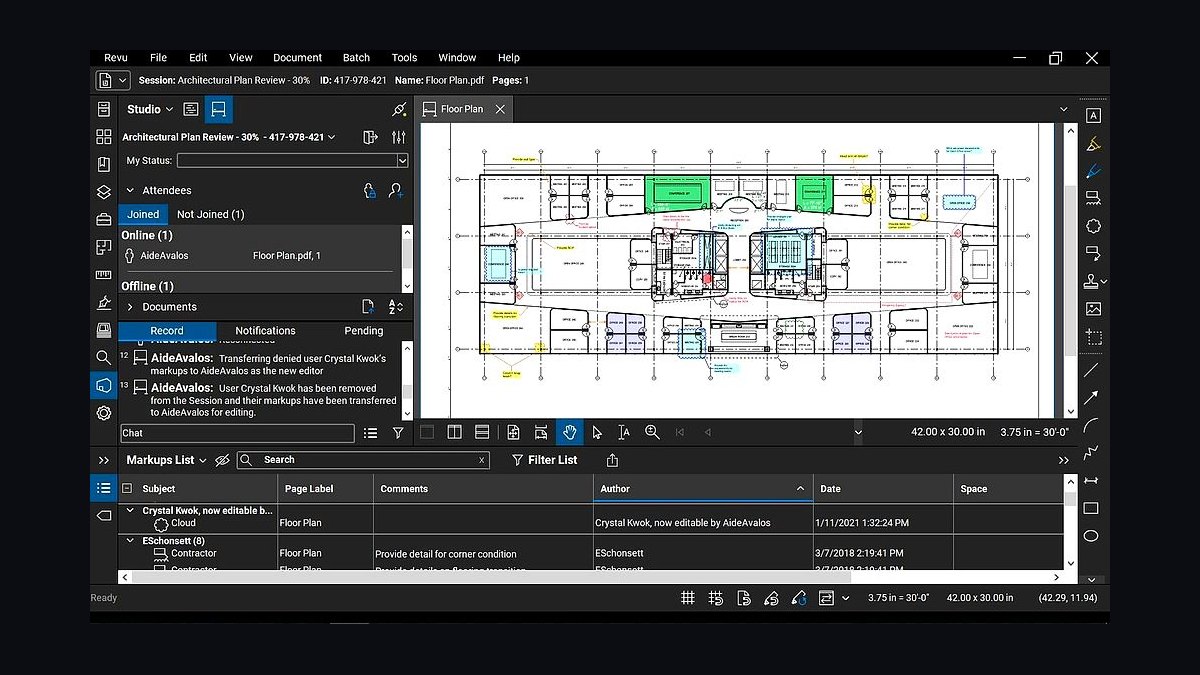
Bluebeam Revu ranks sixth because it is close to universal among estimators and project managers regardless of which PM platform sits above it, running roughly $240-$400 per user per year. It standardizes PDF markup, measurement, and drawing comparison across preconstruction and field teams. In the ninety-day rollout it becomes the uniform markup tool for every estimator and PM by day sixty.
It is for any commercial contractor doing takeoff, drawing review, or submittal markup, and it delivers visible wins within weeks rather than quarters. It trades away nothing structurally, but it is a supporting layer, not a backbone, so it cannot replace Procore or an ERP. It sits below CMiC because it depends on the platforms above it.
7STACK Construction Estimating
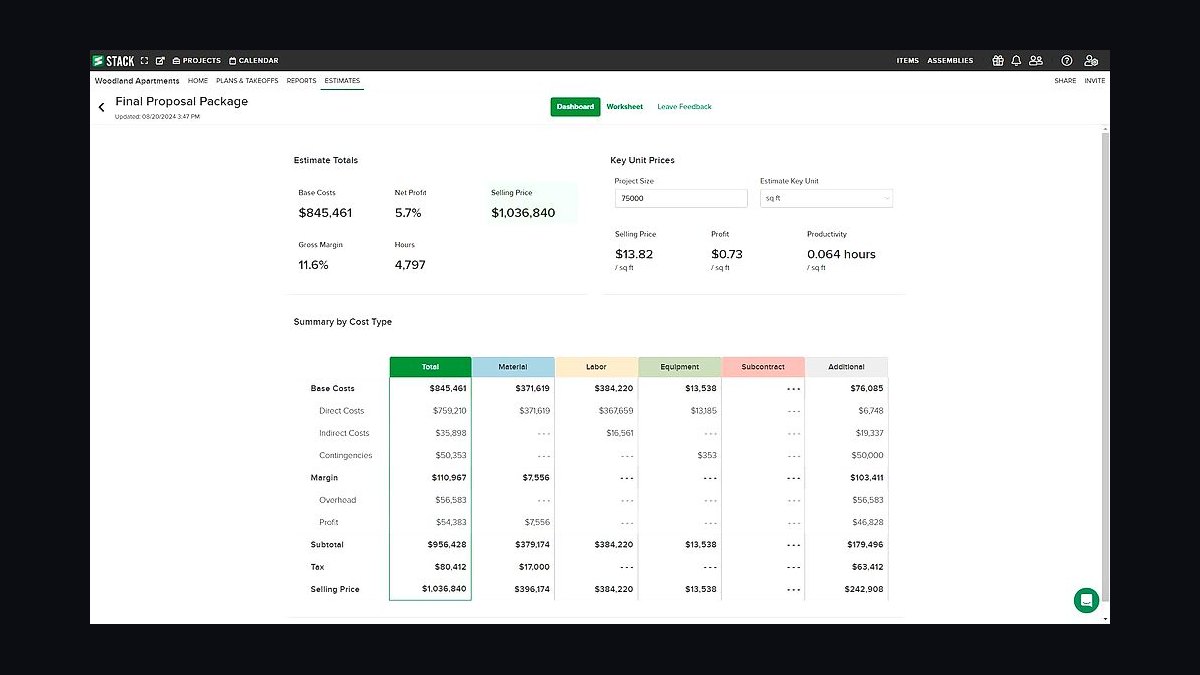
STACK ranks seventh as a leading cloud takeoff and estimating tool, running from about $2,000 per user per year for straightforward cloud takeoff up toward enterprise-tier estimating suites for high bid volume firms. It handles digital takeoff and estimate assembly without desktop installation. It is typically standardized across the preconstruction team during the day thirty-one to sixty rollout window.
It is for commercial contractors whose bid volume justifies a dedicated cloud estimating platform rather than spreadsheet takeoff. It trades away the deep self-perform earthwork functionality that heavy-civil firms need, where B2W Estimate is the better fit. It sits below Bluebeam because markup is used daily by more roles than estimating.
8Raken Field Management App

Raken ranks eighth among field apps at roughly $15-$50 per user per month, covering daily logs, photos, and safety observations from the superintendent's phone. Field apps deliver value fastest of anything in the stack, producing visible wins within weeks because superintendents use them daily. Rolling one out to a single foreman pilot surfaces friction before company-wide deployment.
It is for commercial contractors whose field data pipeline currently depends on paper forms that never reach the office. It trades away the financial and submittal depth of the PM backbone, functioning purely as the field capture layer. Fieldwire below it competes on the same daily-log and punch-list ground at similar per-user pricing.
9Fieldwire
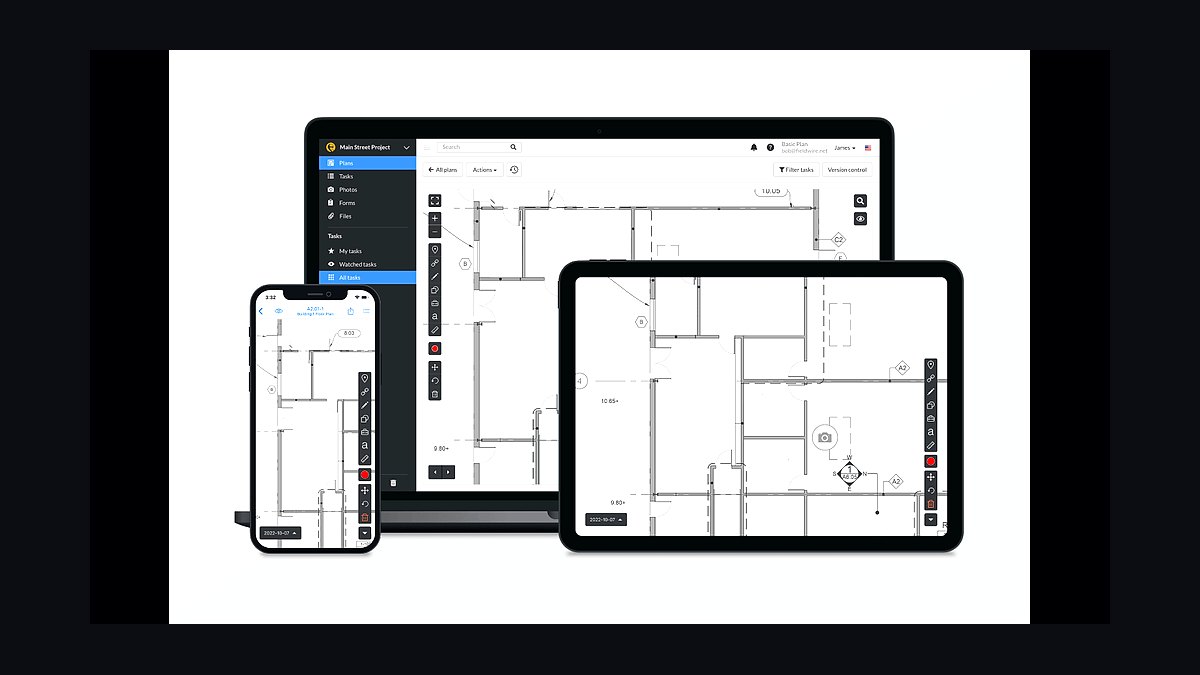
Fieldwire ranks ninth as a field management app running roughly $15-$50 per user per month, covering plan viewing, punch lists, task tracking, and daily reports on mobile. It competes directly with Raken on field capture, and the choice between them usually comes down to which interface a foreman actually keeps using after the pilot. Offline behavior matters, since an app that fails without signal gets quietly abandoned.
It is for commercial contractors standardizing field documentation across multiple active jobs. It trades away accounting and submittal workflows, remaining a field-layer tool only. It sits below Raken because Raken's daily-log workflow is more commonly the first field app a GC deploys.
10Oracle Primavera P6
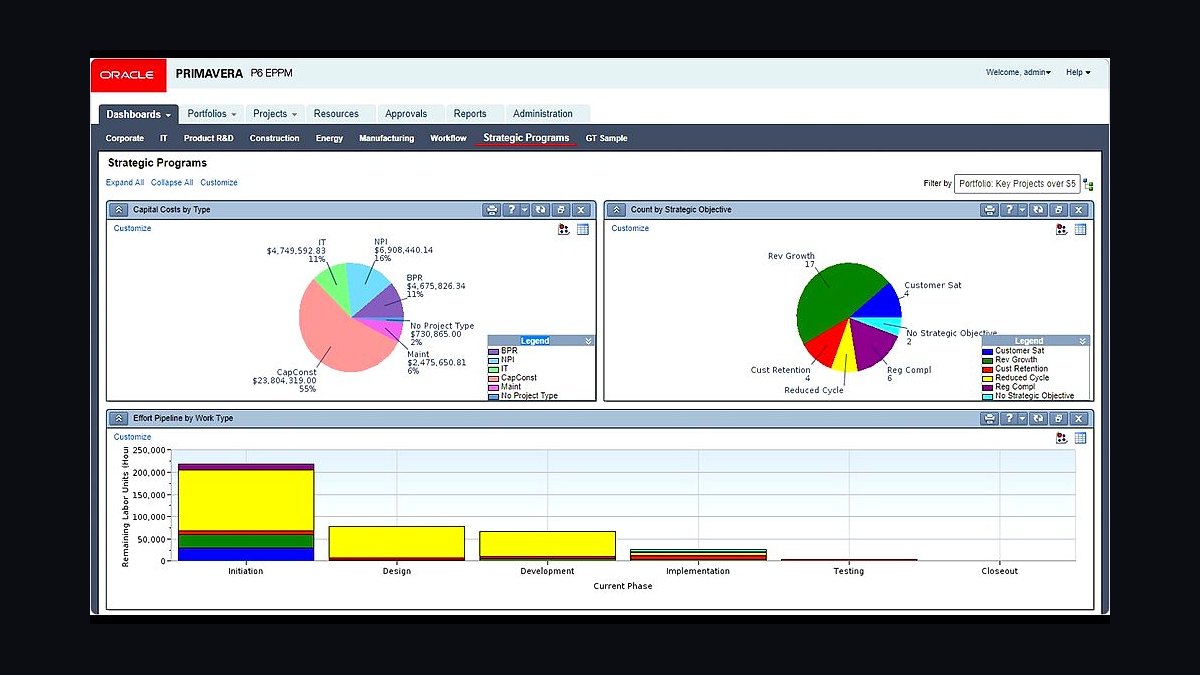
Oracle Primavera P6 ranks tenth because it is reserved for owner-mandated, resource-leveled critical-path schedules, a requirement that shows up on large public and infrastructure work far more than typical commercial building. Buying it without that contractual trigger is one of the most common wasted line items in a construction technology budget. It carries significant license and training cost.
It is for contractors whose specs or owners contractually require resource-leveled CPM scheduling, regardless of company size. It trades away the low cost and fast adoption of Microsoft Project or Smartsheet, which cover the scheduling needs of the overwhelming majority of commercial GCs. It ranks last because most commercial contractors should not buy it at all.
How we ranked these
We ranked each tool on five weighted factors: depth of construction-specific workflow (RFIs, submittals, AIA billing, retention), proven integration paths between project management and accounting, field adoption and offline reliability, total cost at three revenue tiers, and implementation lift. Project-management backbones and ERPs were scored separately because they solve different problems and are rarely interchangeable.
We deliberately ignored vendor market-share claims, generic G2 or Capterra star ratings, and feature-count comparisons, since a longer feature list rarely predicts adoption on a live job. We also excluded AI-roadmap promises and analyst-quadrant positioning, because neither survives contact with a superintendent who needs a daily log to work offline in a basement.
Related questions
Does a commercial roofing or HVAC subcontractor need the same stack as a general contractor?
Largely yes at the platform level — Procore or Autodesk Construction Cloud plus a construction ERP — but specialty trades add trade-specific estimating tools for duct or membrane takeoff and usually skip Primavera P6 entirely, since their schedules rarely carry contractual CPM requirements. The backbone stays the same; only the estimating layer changes.
Can a commercial GC run Procore without any ERP at all?
Only below roughly $10M in revenue. Past that, the volume of committed costs, change orders, and progress billings makes manual reconciliation between Procore and a general ledger too error-prone and slow to sustain. At that point Sage 300 CRE, Viewpoint Vista, or Foundation Software earns its license cost.
Is Autodesk Construction Cloud enough on its own for a design-build contractor?
Mostly, but most design-build firms still pair it with a construction ERP for AIA billing and certified payroll. ACC handles design coordination, clash detection, and field management well; it does not handle construction accounting. The two layers solve different problems and both are needed past a certain volume.
How does a heavy-civil or site contractor's stack differ from a vertical commercial GC's?
Heavy-civil firms typically run B2W Estimate and B2W operations for self-perform earthwork instead of STACK or ProEst, but keep the same PM-and-ERP backbone as a vertical commercial contractor. The estimating and scheduling layers diverge; the project management and accounting spine stays largely identical.
What is the biggest hidden cost when assembling this stack?
Integration and implementation, not licenses. A first-time ERP rollout can rival or exceed a full year of subscription fees once data migration, cost-code design, and training are counted. Contractors who budget only for subscriptions routinely underestimate the labor required to make the systems actually talk to each other.
When does a commercial contractor outgrow spreadsheets for estimating?
When bid volume and job complexity make manual takeoff a bottleneck — usually somewhere between $10M and $30M in annual revenue. At that point STACK, ProEst, or a similar cloud takeoff tool pays for itself by shortening bid cycles and reducing missed scope, which is where estimating errors actually cost money.
Do field apps like Raken and Fieldwire replace the PM platform?
No. They complement it. Field apps handle daily logs, photos, safety inspections, and time tracking at $15-$50 per user per month, then push that data up to Procore or ACC. Contractors who try to run field documentation entirely inside the PM platform often get poor adoption because the interface is heavier.
How long does a full stack rollout realistically take?
Ninety days is a realistic target for a mid-size commercial contractor: thirty days for cost-code setup and core training, thirty for field pilot and estimating standardization, and thirty for PM-to-ERP integration validation on a live job. Rushing the integration step is the most common cause of failed rollouts.
FAQ
Do I need Procore, or can I run everything in my accounting system?
Below roughly $10M in revenue, a commercial GC can often run project management inside Buildertrend or spreadsheets and keep accounting in QuickBooks. Past that threshold, the volume of RFIs, submittals, and change orders justifies a dedicated platform like Procore or ACC — running a $50M operation on accounting software alone breaks down quickly.
Procore vs. Autodesk Construction Cloud — which should a commercial GC pick?
Procore is the broader, more GC-friendly operating system with the deepest financial workflows and the largest subcontractor ecosystem. Autodesk Construction Cloud is stronger for design-heavy or BIM-coordinated work because it ties directly into Revit. Many large commercial contractors run both, assigned to different project types.
How important is integrating project management with accounting?
It is the single most consequential decision in the stack. Without a working integration, project managers re-key data by hand, job-cost reports lag reality, and the company pays for two systems while getting the value of one. Confirm a supported integration exists before committing to either product.
Do small general contractors really need construction-specific accounting?
Not always. Under about $10M, QuickBooks with a construction add-on can handle job costing adequately. The trigger to move to Sage 300 CRE, Vista, Foundation, or CMiC is the need for AIA progress billing, retention tracking, and certified payroll at real volume.
When is Primavera P6 actually worth the investment?
When owners or the project scope contractually require resource-leveled, critical-path schedules — common on large public and infrastructure work. For typical commercial building, Microsoft Project or Smartsheet handles scheduling at a fraction of the cost and training burden.
What part of the stack delivers value fastest for a commercial contractor?
Field apps and Bluebeam. Daily logs, photos, and digital markups produce visible wins within weeks because superintendents and estimators use them daily, while the PM-to-ERP integration delivers the largest long-term value but takes the longest to implement correctly.
How much should a mid-size commercial contractor budget for software?
Between $10M and $100M in annual volume, expect roughly $10,000-$35,000 per month across the full stack once ERP, estimating, field tools, and Microsoft 365 are all active. That figure excludes first-year implementation and integration costs, which can add significantly more.
Is Bluebeam Revu still necessary if the PM platform has markup tools?
Yes, for most commercial contractors. Bluebeam runs roughly $240-$400 per user per year and remains the standard for estimator and PM markup because its drawing tools, measurement accuracy, and PDF handling are deeper than what PM platforms ship natively. It sits alongside the PM platform, not inside it.
What is the most common mistake when buying this stack?
Choosing the PM platform and the accounting system in separate evaluations, then discovering the integration is weak or unsupported. That single sequencing error forces manual re-entry, erodes trust in job-cost reporting, and erases most of the value both systems were bought to deliver.
Should a commercial contractor buy Power BI in year one?
Usually not. Power BI adds roughly $10-$20 per user per month and only pays off once the PM-to-ERP integration is stable and producing clean data. Building dashboards on top of unreliable job-cost feeds just visualizes the errors faster. Most firms add it in year two.
Sources
- https://www.procore.com
- https://construction.autodesk.com
- https://www.sage.com/en-us/products/sage-300-construction-and-real-estate/
- https://www.trimble.com/en/products/software/viewpoint-vista
- https://www.cmicglobal.com
- https://www.bluebeam.com
- https://www.stackct.com
- https://www.raken.com
- https://safetyculture.com
- https://www.oracle.com/construction-engineering/primavera-p6/
Related on PULSE
This page will be disappearing soon. Save it to your device for $1 — or read it free while it is here.
@Kory-White- · if Venmo asks, the last 4 of my number are 2012
This page is gone.
This one is off the shelf now. $1 keeps it on your phone for good — the whole page, pictures and diagrams included.
 pulse-tech-stacksTop 10 Best Tech Stack Tools for Tire Shops in 2027
 pulse-tech-stacksTop 10 Best Tech Stack Tools for AI Observability Platform Companies in 2027
 pulse-tech-stacksTop 10 Best Tech Stack Tools for Independent Driving Schools in 2027
 pulse-tech-stacksTop 10 Best Tech Stack Tools for Private Ambulance and EMS Companies in 2027
 pulse-tech-stacksTop 10 Best Tech Stack Tools for Employee Benefits Consulting Firms in 2027
 tkTop 10 Best Tech Stack Tools for Concrete and Paving Contractors in 2027
 pulse-tech-stacksTop 10 Best Tech Stack Tools for Plumbing Contractors in 2027
 pulse-tech-stacksTop 10 Best Tech Stack Tools for HOA and Community Association Management Companies in 2027
 pulse-tech-stacksTop 10 Best Tech Stack Tools for Podiatry Practices in 2027
 pulse-tech-stacksTop 10 Best Tech Stack Tools for AI Legal Tech Companies in 2027