


Top 10 Best Tech Stack Tools for Multi-Unit Franchisors in 2027
Quality
Certified
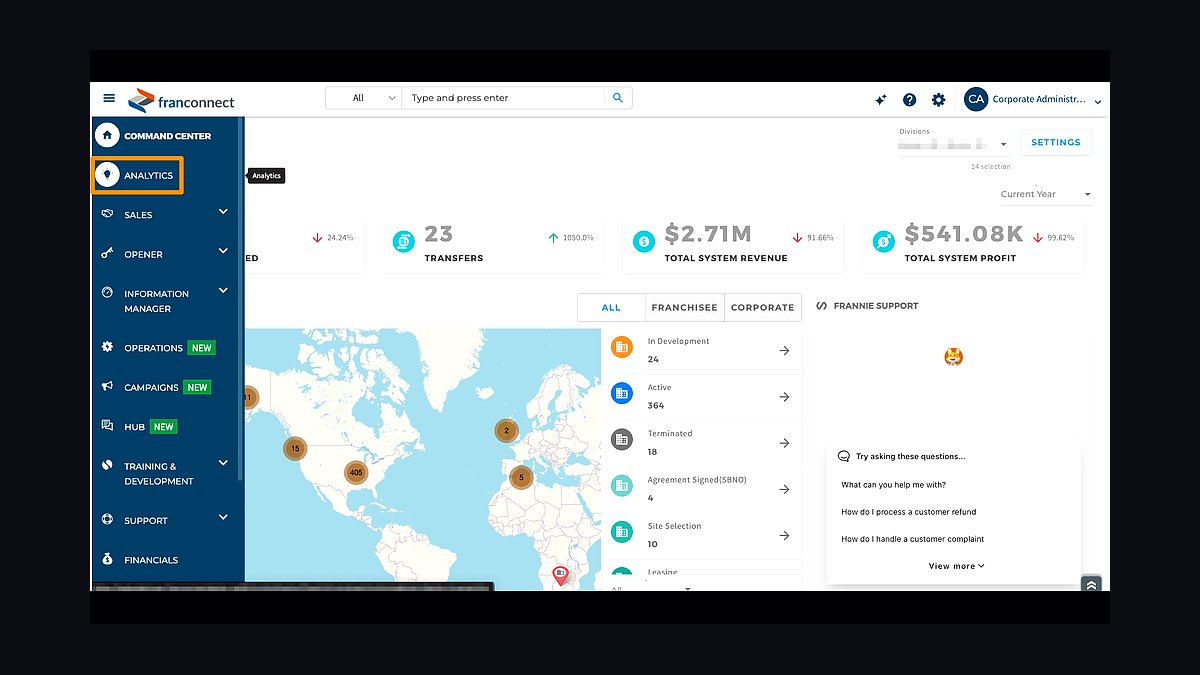
The 10 best tech stack tools for multi-unit franchisors are ranked below on measured performance, build quality, price, and how each one actually holds up in daily use rather than how it reads on a spec sheet. Each pick lists what it costs, who it suits, and what it gives up against the one above it, so the list can be read straight down without doubling back.
1FranConnect Sales

FranConnect Sales ranks first because it is purpose-built around the franchise-development sale and the FDD disclosure calendar, with delivery logging and receipt capture baked in. The FTC requires FDD delivery at least 14 calendar days before signing, and generic CRMs do not enforce that window. FranConnect platform pricing commonly runs $15,000 to $60,000+ per year all-in, scaling with unit count.
It is for franchisors selling multi-month, six-figure territory deals through brokers, portals, and discovery days. It trades away the cheap flexibility of a vanilla CRM for regulated workflow discipline. Compared with ClientTether below, it costs more and moves slower, but it keeps the candidate record wired to royalties, audits, and training in one suite.
2FranConnect Royalty Manager

FranConnect Royalty Manager ranks second because royalty and ad-fund collection is the franchisor's actual revenue engine, and this module is the category standard. It captures each unit's reported gross sales, calculates royalty and brand-fund obligations, runs ACH sweeps, and flags late or under-reporting locations. It is bundled into FranConnect platform pricing rather than sold standalone.
It is for franchisors past roughly 25 units, where email-and-spreadsheet reconciliation quietly breaks and under-reporting goes undetected. It trades away low cost for automated capture and an auditable fund trail. Against FranConnect Sales above, it is the financial counterpart: one records the candidate, the other collects from the signed unit.
3Sage Intacct
Sage Intacct ranks third because the franchisor's own books, royalty revenue recognition, and the segregated ad fund need multi-entity, dimension-rich accounting that QuickBooks cannot carry. It typically runs $15,000 to $40,000+ per year and maps cleanly to royalty and fund accounting across dozens of independent LLCs. It is the finance layer most mature franchise stacks standardize on.
It is for growth-stage and enterprise franchisors with multiple entities, brands, or a legally segregated marketing fund owners are owed an accounting for. It trades away QuickBooks simplicity and price for dimensional reporting depth. Compared with FranConnect Royalty Manager above, it is the general ledger: Royalty Manager calculates and sweeps, Intacct books and reports.
4Power BI

Power BI ranks fourth because a franchisor cannot open one POS dashboard — it must aggregate sales from locations it does not own into same-store-sales and unit-economics reporting. Power BI Pro is about $14 per user per month, with Premium capacity near $5,000 per month for enterprise-scale rollups. It is the cost-effective workhorse most franchisors standardize on.
It is for franchisors pulling POS exports, royalty-reported sales, and audit signals into one brand-wide view. It trades away restaurant-specific inventory analytics for cheap, flexible dashboards. Compared with Sage Intacct above, it is the visibility layer rather than the ledger: Intacct books the royalty, Power BI shows whether same-store sales are actually growing.
5FranConnect Field Ops

FranConnect Field Ops ranks fifth because brand standards are only enforceable when audits attach to the same unit record as royalties and training. Field consultants run standardized compliance audits, log visit notes, assign corrective actions, and trend a unit's health over time. It is part of the FranConnect suite footprint rather than a separate license.
It is for franchisors with field consultants covering dozens or hundreds of independently owned units. It trades away the standalone simplicity of a checklist tool for suite integration. Compared with Bindy, a roughly $300-per-month standalone audit tool, Field Ops costs more but keeps audit history beside the royalty ledger and LMS completions instead of in a separate silo.
6SOCi

SOCi ranks sixth because the brand fund has to be spent centrally while each location keeps its own Google Business Profile, listings, and reviews. It covers listings, social, and reputation per unit and is quoted per location, commonly $50 to $150 per location per month. That per-location pricing is what makes it scale or hurt depending on unit count.
It is for multi-location brands running localized marketing across hundreds of independently owned units. It trades away cheap brand-level scheduling for per-location control and review response at scale. Compared with Rallio below, SOCi leans enterprise listings and reputation; Rallio leans local social plus employee advocacy at a franchise-friendly price.
7ClientTether
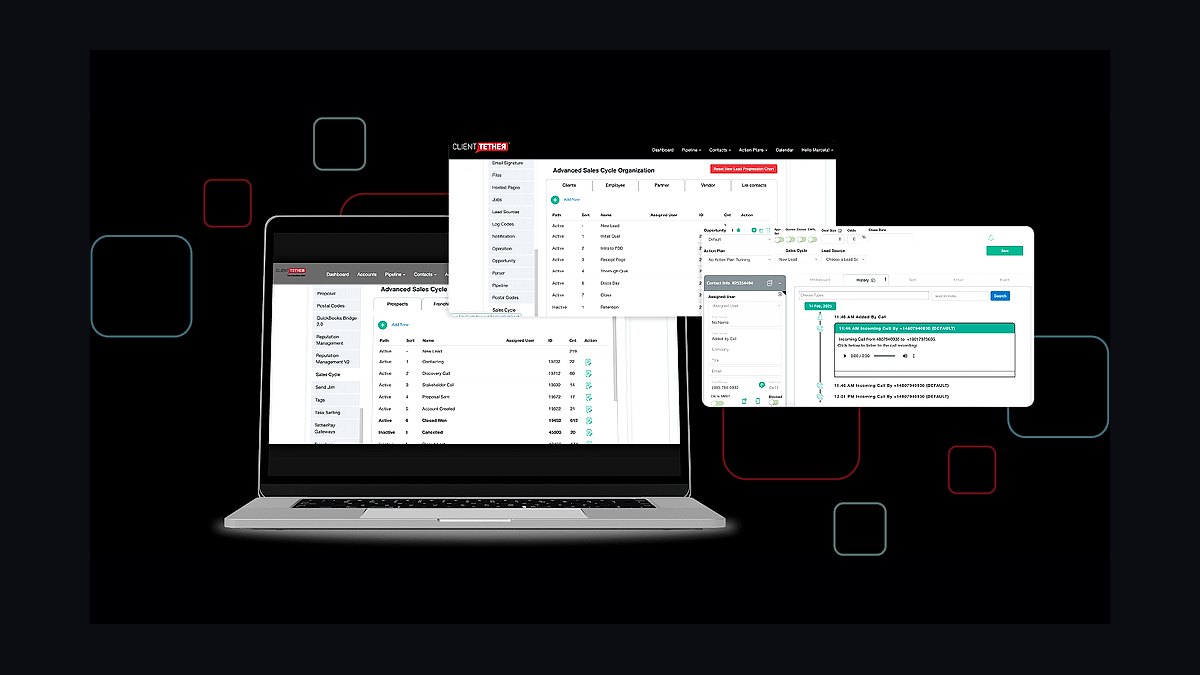
ClientTether ranks seventh because franchise-development conversion often hinges on speed-to-lead, and its automation sequences follow up on candidate inquiries instantly. It runs roughly $250 to $750 per month, a fraction of full-suite pricing, which is why emerging brands adopt it first. It feeds the development pipeline from broker networks, portals, and paid search.
It is for emerging franchisors under roughly 25 units that need aggressive follow-up without enterprise cost. It trades away FDD-calendar enforcement and suite integration for speed and price. Compared with FranConnect Sales above, it automates the top of the funnel well but leaves disclosure timestamping, royalty collection, and audits to other systems.
8FranConnect Learn
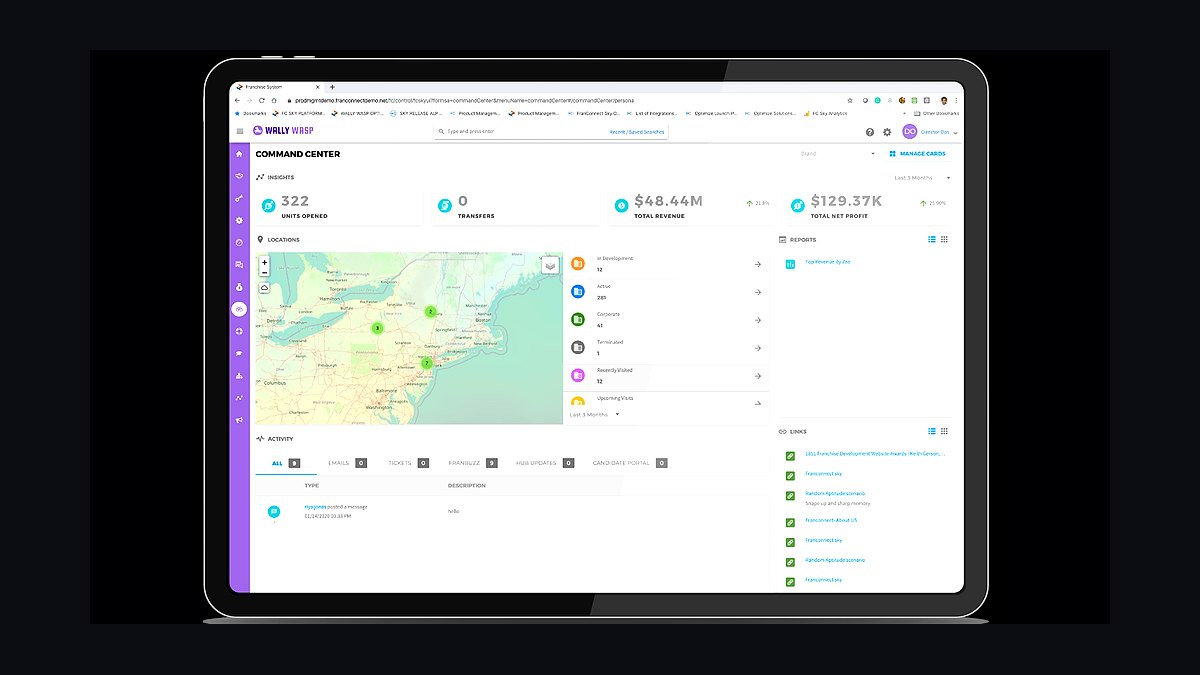
FranConnect Learn ranks eighth because consistent owner onboarding and manager certification across independently owned units requires an LMS tied to the franchisee record. Course completion attaches to the same unit profile that carries royalties and audits, so training status is provable rather than anecdotal. It is included in the FranConnect suite footprint.
It is for franchisors that must certify every location to one brand standard, especially food and fitness brands with safety-critical procedures. It trades away the low entry price of a generic LMS for suite integration. Compared with TalentLMS, which starts around $89 per month, Learn costs more but links certification directly to the unit record instead of a separate training silo.
9FranConnect Hub
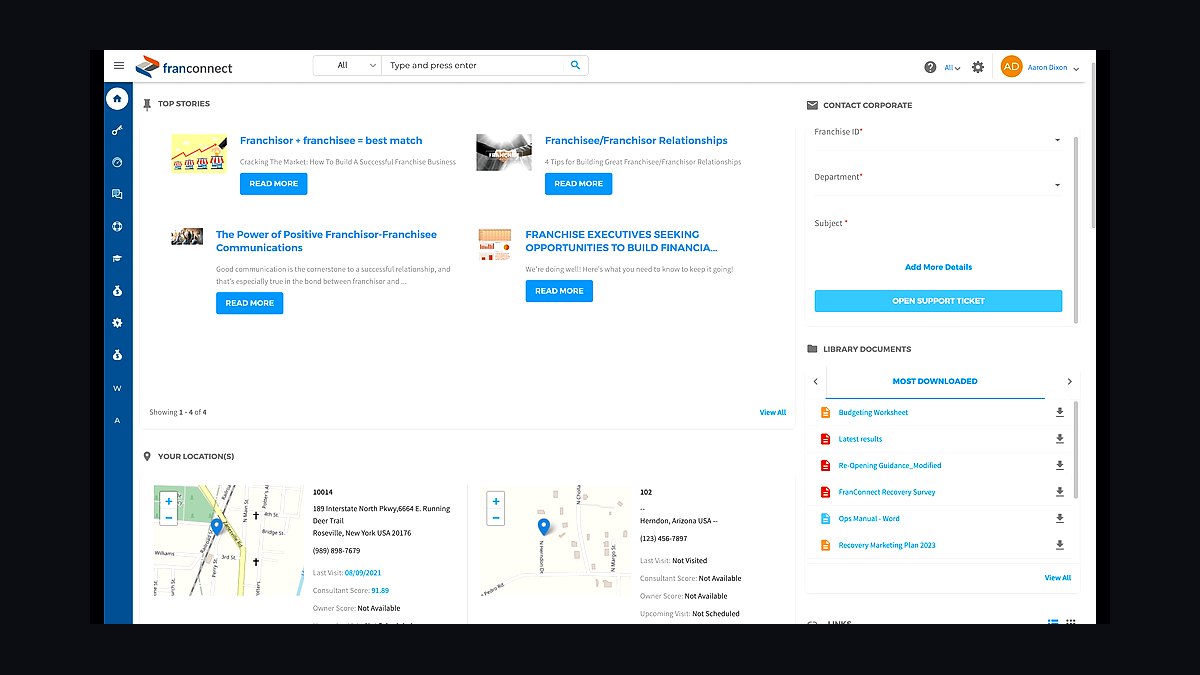
FranConnect Hub ranks ninth because franchisees need one portal for the operations manual, announcements, support tickets, and documents rather than scattered email threads. It pushes targeted communications by unit, region, or cohort and centralizes the brand operations manual. It is included in the FranConnect suite footprint rather than priced separately.
It is for franchisors whose owners and managers currently hunt for documents across email, shared drives, and chat. It trades away the polish of a standalone intranet product for tight suite integration. Compared with FranConnect Learn above, Hub distributes information while Learn certifies people; together they cover the franchisee-facing side of the suite.
10Rallio
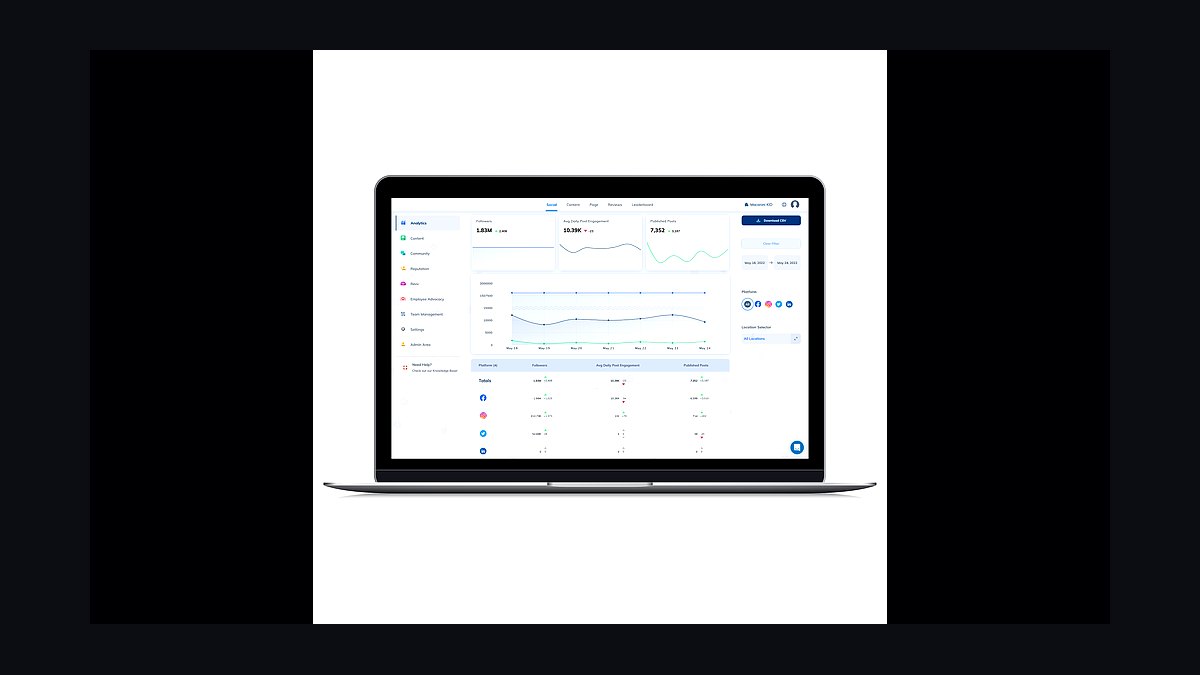
Rallio ranks tenth because it gives franchise brands local social publishing plus an employee-advocacy angle at franchise-friendly per-location pricing. It lets corporate push campaigns down to each owner's channels while keeping local presence alive, which is the ad-fund distribution problem in miniature. It is quoted per location, similar to SOCi's $50 to $150 range.
It is for franchisors that want owners and staff amplifying brand content locally without off-brand chaos. It trades away SOCi's deeper enterprise listings and reputation tooling for social-first simplicity. Compared with SOCi above, it is the lighter, more advocacy-oriented choice; pick SOCi when Google Business Profile and review management at scale matter most.
How we ranked these
We ranked each tool on five weighted criteria: fit to the franchisor's actual job (selling territories, collecting royalties, auditing units you do not own), depth of franchise-specific compliance features like FDD delivery logging and Item 19 discipline, integration with the rest of a franchisor stack, total cost scaled to unit count, and analyst or operator validation. Franchise-management suites scored highest because they carry the unit record across development, training, royalties, and audits.
We deliberately ignored generic POS feature checklists, retail-storefront capabilities, and single-location pricing comparisons, because a franchisor does not operate stores and cannot mandate one POS across independent owners. We also discounted vendor awards, review-site star averages, and demo polish, since those reward sales motion rather than whether royalty reconciliation and disclosure calendars actually hold up at 200 units.
What to look for
What matters most is whether the tool enforces the franchise-specific workflow: FDD delivery timestamps, 14-day waiting-period gates, royalty calculation across hundreds of independent entities, and audit trails attached to one unit record. Integration depth beats feature breadth, because a franchisor's real cost is stitching exports together by hand every month. Buy for the next 18 to 24 months of unit growth, not for a hypothetical 500-unit future.
The mistake most buyers make is shopping point tools on price and ending up with a development CRM, a royalty spreadsheet, and an audit notebook that never reconcile. A close second is buying an enterprise suite before crossing roughly 25 units, paying for modules nobody uses. Standardize on the suite when manual reconciliation breaks, not before, and never let royalty collection live outside the system of record.
Related questions
Why does a franchisor need different software than a multi-location operator?
A multi-location operator owns its stores and can mandate one POS, one P&L, and one schedule. A franchisor owns none of the units; it sells territories and supports independent businesses. So the stack centers on a development pipeline, FDD disclosure compliance, royalty and ad-fund collection across separate LLCs, and rolled-up visibility into sales data it does not directly control.
What does FranConnect actually cover for a franchisor?
FranConnect spans franchise-sales CRM, Royalty Manager for fee collection, Field Ops for brand audits, Hub for franchisee communications, and Learn for onboarding training. Because all modules share one unit record, development history, training completion, royalty ledger, and audit trail reconcile against a single source of truth instead of separate exports. That shared record is the main reason mature brands consolidate on it.
How much should an emerging franchisor budget for its stack?
Under 25 units, most brands run roughly $1,200 to $3,500 per month all-in: ClientTether or Salesforce for development, QuickBooks for finance, TalentLMS for training, one local-marketing tool, and spreadsheets for early royalty tracking. FDD legal work sits with outside franchise counsel. The goal is to stay lean until manual reconciliation genuinely breaks, usually somewhere between 25 and 50 units.
When should a franchisor move off spreadsheets for royalty collection?
Manual royalty reconciliation works for the first dozen owners and quietly fails afterward. Under-reporting goes undetected, ACH sweeps run late, and ad-fund accounting drifts. The trigger is usually when sales reports arrive by email in inconsistent formats or when a single owner's numbers stop matching the bank deposit. Automate sales capture and royalty calculation before that point, not after.
Do franchisees need to run the same POS for the franchisor to see sales?
No. Franchisors aggregate reported sales through royalty reporting, POS exports, or APIs rather than mandating one POS. Royalty Manager or a comparable tool captures each unit's reported numbers, and a BI layer like Power BI rolls them into same-store-sales and unit-economics reporting. Standardizing the reporting format matters far more than standardizing the POS hardware.
What is the biggest compliance risk in a franchisor's tech stack?
Losing the FDD delivery timestamp. U.S. franchisors must deliver the Franchise Disclosure Document at least 14 calendar days before signing or taking money, and Item 19 governs any financial performance representation. A generic CRM that does not enforce and log that waiting period creates rescission rights and regulatory exposure. The development CRM has to be built around that calendar.
How does localized marketing differ for a franchisor versus a single brand?
A single brand posts corporate content and moves on. A franchisor has to push campaigns, listings, and review responses down to hundreds of independently owned locations while preserving each owner's local presence. SOCi and Rallio handle Google Business Profile, listings, social, and reputation per unit. Skipping this layer starves locations of local lead generation and leaves same-store sales on the table.
What does a franchisor's finance system need that QuickBooks cannot do?
Multi-entity royalty revenue recognition and segregated ad-fund accounting. Owners are owed an accounting for brand-fund contributions, and royalty revenue has to map to hundreds of separate payers. Sage Intacct handles that with dimension-rich multi-entity reporting; NetSuite fits multi-brand platforms needing ERP breadth. QuickBooks is fine under roughly 25 units, then it becomes the bottleneck.
FAQ
What is the best tech stack for a multi-unit franchisor in 2027?
A franchise-management suite as the system of record, most often FranConnect, wired to Sage Intacct for finance, Power BI for POS data rollup, and SOCi or Rallio for localized marketing. Emerging brands start on ClientTether or Salesforce plus spreadsheets and standardize on the full suite once they cross 25 to 50 units and manual reconciliation breaks.
Is FranConnect worth the cost compared to point tools?
For brands past roughly 25 units, usually yes. The value is not any single module but the shared unit record: development history, training completion, royalty ledger, and audit trail all reconcile in one place. Point tools cost less up front but create manual stitching every month, and that labor compounds faster than the platform fee as unit count grows.
How long does implementation typically take?
A lean emerging-brand setup can go live in 30 to 60 days. A full suite rollout across development, royalty, field ops, LMS, and intranet commonly runs 90 to 180 days depending on data migration and how many units need onboarding. The 30/60/90 pattern works: foundation first, then operations, then reporting and optimization.
Can a franchisor run development out of Salesforce instead of a franchise CRM?
Yes, and some do, especially brands already standardized on Salesforce. The catch is that Salesforce does not natively enforce the 14-day FDD waiting period or log signed receipts, so those controls have to be built. ClientTether and FranConnect Sales ship with that compliance logic already in place, which is why most franchisors choose them.
What should a franchisor look for in a field-audit tool?
Standardized checklists, corrective-action assignment, photo capture, and the ability to trend a unit's health over time. Critically, audits should attach to the same unit record as royalties and training so a struggling location surfaces across all three. Bindy works well standalone; FranConnect Field Ops wins when you want that shared record.
How do franchisors roll up POS data from units they do not own?
Through reported sales, POS exports, or APIs feeding a royalty engine and then a BI layer. The franchisor standardizes the reporting format and cadence rather than the POS itself. Power BI is the common workhorse; a dedicated warehouse like Snowflake or BigQuery becomes worthwhile once a brand crosses a few hundred units.
What is the most common mistake franchisors make when buying software?
Shopping point tools on price and ending up with a development CRM, a royalty spreadsheet, and an audit notebook that never reconcile. The second most common is buying an enterprise suite before 25 units and paying for modules nobody uses. Match the purchase to the next 18 to 24 months of unit growth, not a hypothetical future.
Does a franchisor need a separate LMS from its franchise-management suite?
Not necessarily. FranConnect Learn ties course completion directly to the franchisee record, which keeps onboarding and certification in the same system as royalties and audits. TalentLMS is the affordable standalone option for young brands, while Tortal and Wisetail serve deeper restaurant and franchise training needs. The tradeoff is integration versus depth.
How should a franchisor handle ad-fund accounting?
Ad-fund contributions are owner money held for a defined purpose, so they need segregated accounting and a clear accounting back to franchisees. Sage Intacct's multi-entity, dimension-rich structure maps cleanly to that. Running brand-fund dollars through the same general ledger line as royalty revenue is a governance problem waiting to surface at the next franchisee advisory council meeting.
What changes in the stack as a franchisor scales past 200 units?
Multi-entity ERP like NetSuite replaces mid-market accounting, a dedicated data warehouse feeds Power BI instead of direct exports, and enterprise localized marketing takes over per-location listings and reviews. Food brands add Crunchtime or Zenput for operations execution. The franchise-management suite stays the hub; everything around it gets heavier and more specialized.
Sources
- https://www.franchise.org/
- https://www.ftc.gov/business-guidance/resources/franchise-rule-legal-guide
- https://www.gartner.com/en/documents
- https://www.forrester.com/research/
- https://www.mckinsey.com/industries/retail/our-insights
- https://www.sageintacct.com/
- https://www.soci.ai/
- https://www.naranga.com/
- https://www.clienttether.com/
- https://www.bindy.co/
Related on PULSE
This page will be disappearing soon. Save it to your device for $1 — or read it free while it is here.
@Kory-White- · if Venmo asks, the last 4 of my number are 2012
This page is gone.
This one is off the shelf now. $1 keeps it on your phone for good — the whole page, pictures and diagrams included.
 pulse-tech-stacksTop 10 Best Tech Stack Tools for Independent Food Trucks in 2027
 pulse-tech-stacksTop 10 Best Tech Stack Tools for Plumbing Contractors in 2027
 tkTop 10 Best Tech Stack Tools for Fencing and Deck Contractors in 2027
 pulse-tech-stacksTop 10 Best Tech Stack Tools for API Security Vendors in 2027
 pulse-tech-stacksTop 10 Best Tech Stack Tools for Medical Billing and RCM Companies in 2027
 pulse-tech-stacksTop 10 Best Tech Stack Tools for CrossFit Boxes in 2027
 pulse-tech-stacksTop 10 Best Tech Stack Tools for Movie Theaters in 2027
 pulse-tech-stacksTop 10 Best Tech Stack Tools for AI Observability Platform Companies in 2027
 pulse-tech-stacksTop 10 Best Tech Stack Tools for Pilates Studios in 2027
 pulse-tech-stacksTop 10 Best Tech Stack Tools for HVAC Equipment Distributors in 2027