


Top 10 Best Tech Stack Tools for Wineries, Breweries, and Distilleries in 2027
Quality
Certified
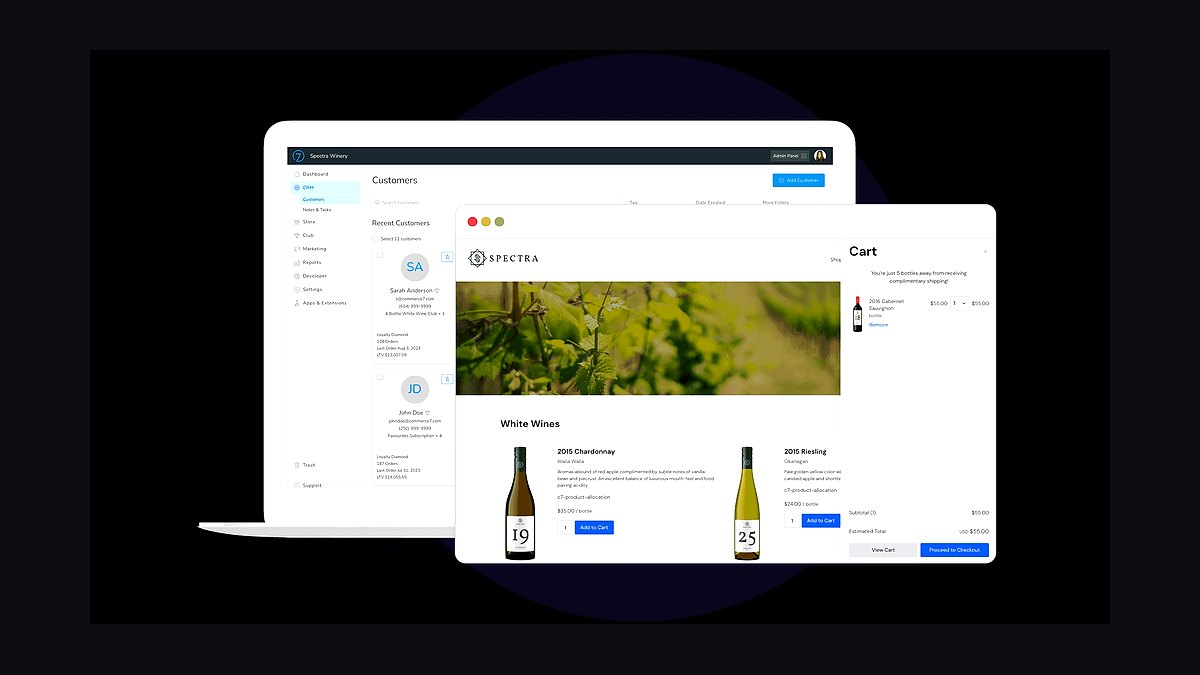
The 10 best tech stack tools for wineries, breweries, and distilleries are ranked below on measured performance, build quality, price, and how each one actually holds up in daily use rather than how it reads on a spec sheet. Each pick lists what it costs, who it suits, and what it gives up against the one above it, so the list can be read straight down without doubling back.
1Commerce7
Commerce7 ranks first because it unifies the customer record across tasting room, club, and e-commerce, the exact fragmentation that breaks generic stacks. It handles club billing, allocations, reservations, and POS on one profile, so a Saturday taster and a quarterly club member are the same human. Pricing runs roughly $300–$650 monthly plus about 1.5% of DTC gross merchandise value.
It suits producers where DTC exceeds a third of revenue and a club is central to margin. It trades away deep production tracking, so barrel-level costing still needs InnoVint or Ekos below it. Compared with Arryved at rank two, Commerce7 leans winery-native club and allocation logic rather than taproom tabs and flights.
2Arryved

Arryved ranks second as the craft-beverage POS built for open tabs, flights, mobile ordering, and taproom tip handling that restaurant systems cannot price correctly. It fits breweries and distilleries where hospitality revenue concentrates at the bar rather than in shipped club orders. Taproom POS pricing typically lands around $200–$500 monthly plus hardware and processing.
It is for producers whose revenue is mostly on-premise, and it trades away winery-specific allocation and club depth. Compared with Commerce7 above it, Arryved wins when flights and tabs dominate; Commerce7 wins when clubs and shipped orders do. A brewery with a serious kitchen may still prefer restaurant-grade terminals.
3InnoVint

InnoVint ranks third because production is the inventory record that everything sellable depends on, and spreadsheets cannot reconcile to TTB filings without multi-day manual work each period. It tracks tanks, barrels, additions, work orders, and lot-level cost of goods, so a bottling run carries a real cost into accounting. Wine production platforms run roughly $300–$900 monthly scaling by volume.
It is for wineries that need barrel-level tracking and true cost of goods rather than adequate-but-shallow all-in-one inventory. It trades away customer, club, and POS functions entirely, so it sits beneath Commerce7 rather than replacing it. Compared with Ekos at rank four, InnoVint is wine-native cellar work; Ekos covers brewery and distillery production.
4Ekos

Ekos ranks fourth as the production and inventory platform built for breweries, distilleries, and cideries rather than wine cellars. It manages fermenters, batches, raw materials, and finished goods costs that feed the ledger, so channel margin becomes computed instead of estimated. Brewery and distillery production software typically runs $250–$800 monthly depending on volume.
It is for producers whose production is grain and spirits rather than grape, and it trades away winery-specific barrel and blending depth. Compared with InnoVint above it, Ekos fits brewhouse and distilled spirits plant workflows; InnoVint fits cellar and lot tracking. Producers running both wine and spirits sometimes need both systems.
5Sovos ShipCompliant
Sovos ShipCompliant ranks fifth because it is the gate that blocks non-compliant shipments before a label prints, validating destination rules, permits, volume caps, age verification, and jurisdiction tax. Skipping it is the most common way producers lose direct-shipping privileges in a state. Compliance starts around $250 monthly and climbs past $1,000 as order volume and state count grow.
It is for any producer shipping interstate, and it trades away nothing optional — the alternative is legal exposure, not savings. Compared with Avalara at rank six, ShipCompliant is beverage-alcohol-native with deep DTC shipping logic. It must integrate at checkout in real time rather than reconciling nightly files after fulfillment.
6Avalara
Avalara ranks sixth as the broader tax compliance platform that also covers beverage alcohol, handling jurisdiction-level tax calculation and reporting across channels. It fits producers who want tax compliance consolidated with general sales tax rather than a beverage-only tool. Pricing scales by transaction volume and jurisdictions, typically starting in the low hundreds monthly.
It is for producers with multi-state tax complexity beyond shipping alone, and it trades away some alcohol-specific DTC gating depth versus ShipCompliant. Compared with Sovos ShipCompliant above it, Avalara wins on general tax breadth; ShipCompliant wins on direct-shipping permit and volume-cap logic. Many producers run one, not both.
7Provi
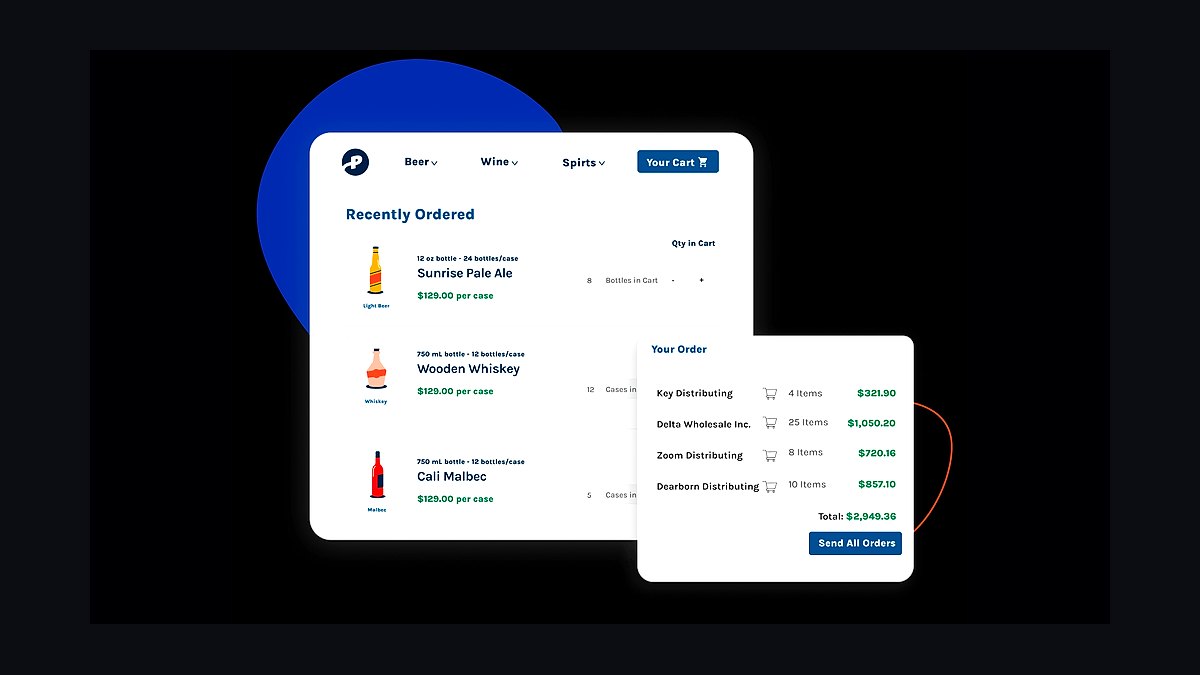
Provi ranks seventh as the B2B ordering marketplace where bars and retailers place reorders, typically free to the producer because it is distributor-funded. It replaces the email-and-spreadsheet reorder pattern that breaks past a couple hundred wholesale accounts. The real cost is integration and catalog maintenance effort rather than subscription.
It is for producers with a wholesale book large enough to need a self-serve ordering channel, and it trades away direct relationship control for scale. Compared with the DTC platforms above it, Provi serves the three-tier wholesale side rather than consumer sales. Under a few dozen accounts, direct relationships may still be simpler.
8Klaviyo
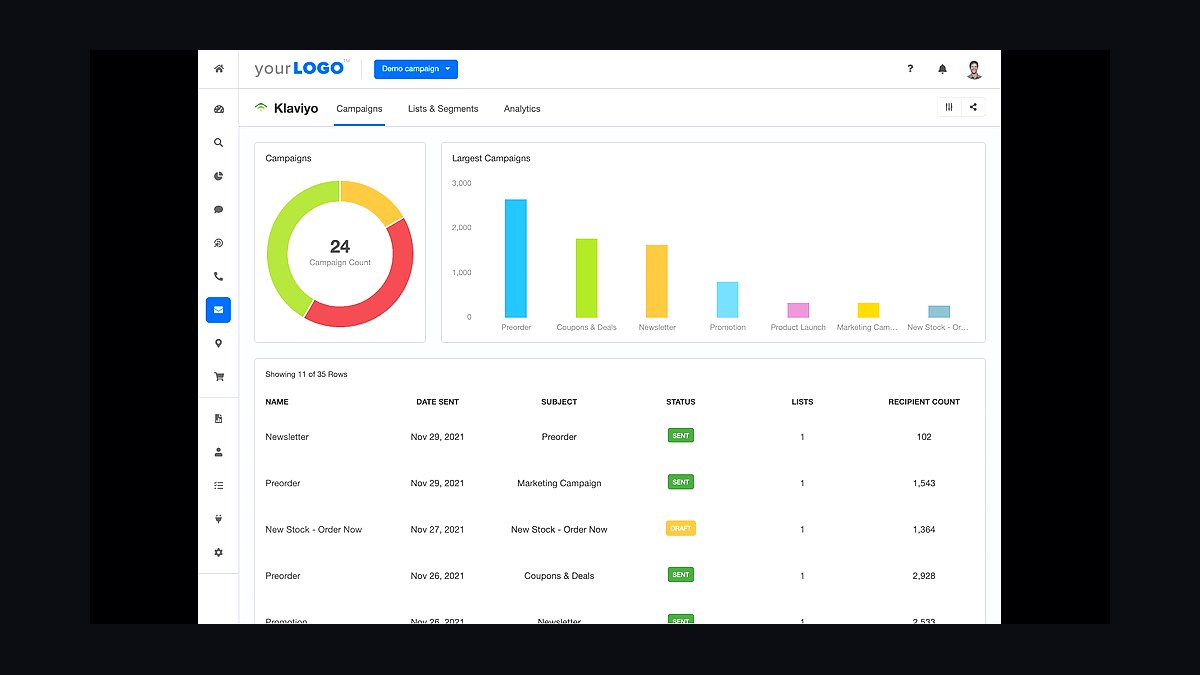
Klaviyo ranks eighth because lifecycle marketing drives club retention, allocation releases, and win-back flows that protect the fattest-margin revenue line. It reads purchase history to segment club members and trigger reminders, and pricing scales by contact count from roughly $20 to $500-plus monthly. Club churn of a few points compounds into large annual losses.
It is for producers with an active club and enough list volume to justify automation, and it trades away nothing critical but requires clean customer data to work. Compared with the platforms above it, Klaviyo is a layer that reads the customer record rather than owning it. It is cheap relative to the retention it recovers.
9QuickBooks Online
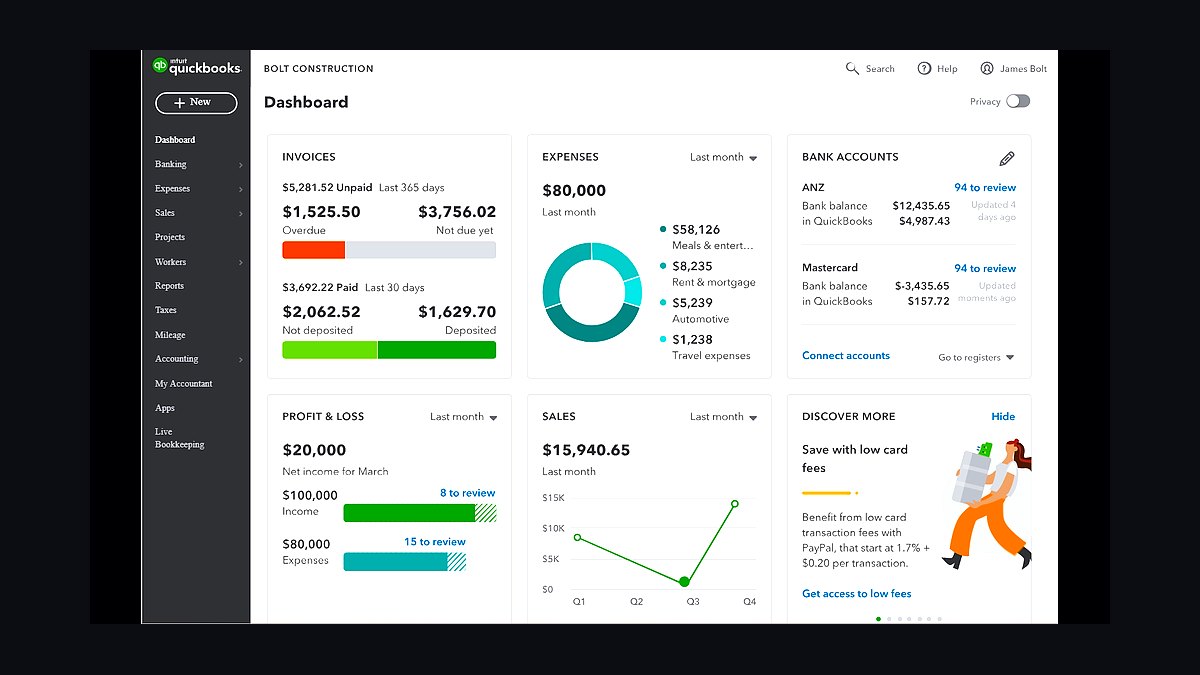
QuickBooks Online ranks ninth as the accounting layer where every channel's revenue and cost land in one ledger so margin is comparable. It sits around $90–$200 monthly and handles single-entity books well past 40,000 cases. It is the default until entity count and lot-level costing pressure force a move.
It is for single-entity producers without complex consolidation needs, and it trades away lot-level cost of goods and multi-entity rollups. Compared with a beverage ERP above this tier, QuickBooks is far cheaper but cannot answer what a specific bottling run cost. The trigger to leave is entity count, not revenue.
10Sage Intacct
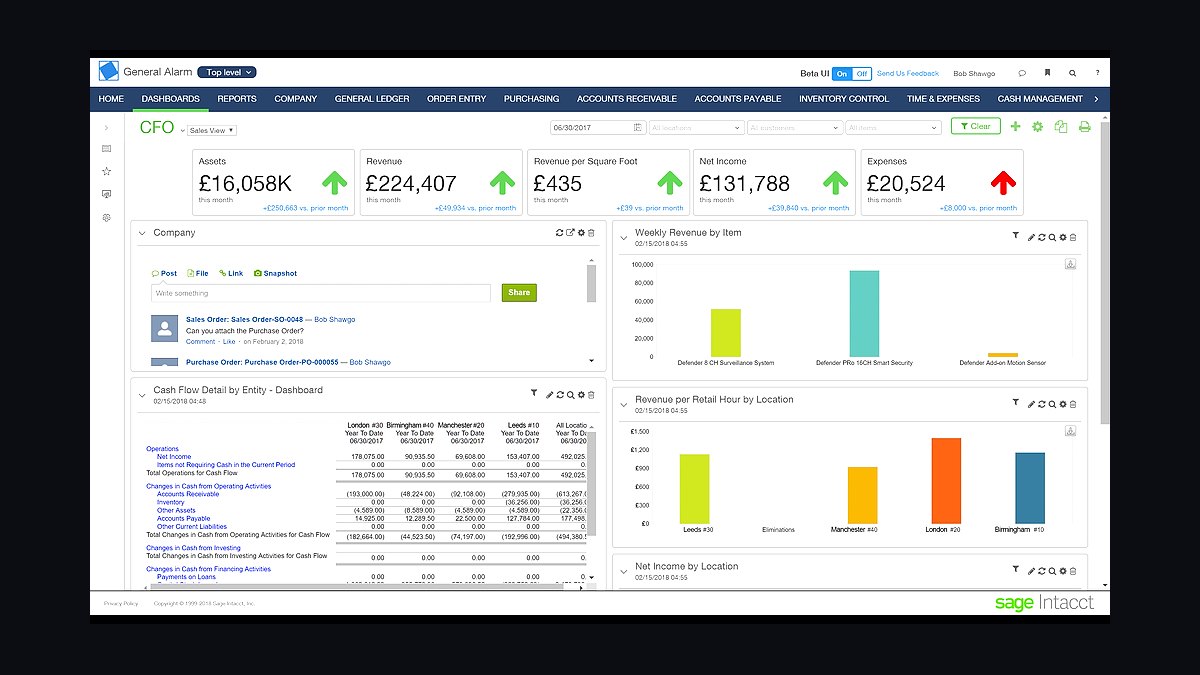
Sage Intacct ranks tenth as the mid-market accounting backbone that producers adopt when QuickBooks can no longer consolidate entities or produce lot-level cost of goods. It supports multi-entity consolidation and channel margin comparison that single-ledger tools cannot, fitting producers past roughly 5,000–50,000 cases with real wholesale books. Expect mid-market pricing well above QuickBooks.
It is for producers with multiple legal entities or inventory across locations, and it trades away simplicity and cost for consolidation depth. Compared with QuickBooks Online above it, Intacct wins on entity count and costing pressure; QuickBooks wins on price and setup speed. Implementation is a real project, not a self-serve signup.
How we ranked these
We ranked each tool on five weighted criteria: beverage-native customer modeling (25%), production and lot-level inventory depth (20%), alcohol compliance integration and real-time order gating (20%), channel coverage across DTC, club, tasting room, and wholesale (20%), and total cost of ownership including payment processing and implementation effort (15%). Scores came from vendor documentation, published pricing, integration directories, and hands-on demo environments rather than marketing pages.
We deliberately ignored brand recognition, review-site star averages, and feature counts that no producer under 50,000 cases would ever configure. We also excluded generic retail and restaurant POS platforms from the top ranks unless they solved a specific food-service problem better than a beverage-native option. Roadmap promises, analyst quadrant placement, and vendor-supplied customer counts were not weighted, because none of them predict whether your club billing and TTB reporting will reconcile.
What to look for
What matters most is whether a tool owns the customer record or the inventory record. If it owns neither, it is a subscription, not a stack layer. Confirm during the demo that tasting-room POS, club signup, and web checkout all write to one profile, and that finished goods cannot enter the sellable catalog without a lot and a cost attached. Ask to see a real order get blocked by compliance before fulfillment, not a report generated after.
The mistake most buyers make is choosing on price per month while ignoring payment processing, which frequently exceeds every subscription combined. A platform at $400 per month plus 1.5% of DTC gross merchandise value costs far more than a $650 platform with cheaper processing. The second most common mistake is buying an all-in-one that is shallow in production, then discovering barrel-level tracking and blending are missing after club data is already loaded.
Related questions
Does a distillery need a different stack than a winery?
Mostly in two places. Production software must handle distilled spirits plant requirements rather than cellar work, and DTC shipping is far more restricted for spirits than wine, so the compliance layer does more blocking. Commerce, club, and accounting layers look broadly similar, though spirits clubs and allocation models differ enough that you should verify the platform supports your release pattern.
Can one platform really run tasting room, club, and e-commerce?
Yes, and it should. A unified customer record across all three is the primary reason to choose a beverage-native platform, because it prevents duplicate profiles, double-sent allocations, and meaningless lifetime value. Fragmenting these across separate tools is the single most common stack mistake at small and mid-size producers, and it gets more expensive to unwind every year.
What breaks first when a producer outgrows QuickBooks?
Lot-level cost of goods and multi-entity consolidation. You can still close the books, but you cannot answer what a specific bottling run cost or compare channel margin credibly, and the controller starts maintaining a parallel spreadsheet. The trigger is entity count and costing pressure, not revenue, so a single-entity producer at 40,000 cases can survive longer than a three-entity producer at 8,000.
Is a B2B ordering marketplace worth integrating for a small wholesale book?
Usually yes, because it is typically free to the producer and distributor-funded. The cost is integration and catalog maintenance effort, not subscription. Under a few dozen accounts, direct relationships and distributor-provided reports may still be simpler, but past roughly 100 accounts the marketplace saves real order-entry hours and reduces keying errors.
How long does a typical stack implementation actually take?
A workable sequence runs about 90 days. Days 0-30 stand up DTC, club, and POS and migrate members before a release window. Days 31-60 bring up production, load tanks or barrels, and connect shipping compliance to the storefront. Days 61-90 wire wholesale order management, distributor depletion data, and one dashboard. ERP at scale is a multi-quarter project.
Do I need distributor depletion data if I only sell in two states?
Probably not yet. Under roughly 100 accounts in a couple of markets, distributor-provided reports and direct relationships are usually enough, and syndicated feeds run from a few hundred to a few thousand dollars monthly. Past that threshold, flying blind means you find out about a depleting account a quarter late, which is expensive in a three-tier system.
What is the real cost of payment processing on DTC volume?
Frequently more than every software subscription combined. A platform charging roughly 1.5% of DTC gross merchandise value means a producer doing $1M in DTC pays meaningful platform fees on top of subscription, before card processing. Model the percentage, not just the monthly line, and compare total cost across two or three platforms at your actual volume.
Can I run production in spreadsheets if my winemaker is disciplined?
It works until an audit or a lost lot. Tank movements, additions, and bottling runs tracked by hand cannot be reconciled to TTB filings without a multi-day manual exercise every period, and true cost of goods stays permanently unknowable. Dual-entry always decays into the spreadsheet winning, so make production software the source of truth rather than a copy.
FAQ
Do I really need separate compliance software, or can my POS handle alcohol shipping?
You need separate compliance software the moment you ship across state lines. A generic checkout does not know destination volume caps, permit requirements, or state-level bans on certain products. The consequence is not a fine you absorb, it is losing direct-shipping privileges in a state, which removes that revenue until reinstatement. Stand it up before the first interstate order ships.
Which comes first, production software or a DTC platform?
DTC, club, and POS first, because that is where the customer record lives and where club member history and payment tokens are hardest to migrate later. Production follows within about 30 days. If you have a release window approaching, migrate club members and history cleanly before it, then load tanks and open work orders during a slow stretch.
How do I know if I should choose all-in-one or best-of-breed?
All-in-one wins under roughly 5,000 cases or barrels with a single location and simple production. Best-of-breed wins as soon as either production complexity or channel count grows. The honest test is whether you need barrel-level tracking, complex blending, or multi-state wholesale pricing. If you do, an all-in-one production module will be adequate right up until it is not.
What should I ask a vendor during a compliance demo?
Ask to see a live order get blocked before fulfillment, not a report generated after. Confirm it plugs into your actual cart rather than requiring a nightly file. Ask how destination volume caps are tracked annually, how permits are monitored for renewal, and what happens when a state changes a rule mid-year. Real-time gating is the value, not period-close filing.
Is a restaurant-grade POS ever the right choice for a brewery?
Yes, if food service is a material part of revenue. A brewery with a serious kitchen may be better served by a restaurant-grade platform even though it is not beverage-native, because food service complexity will otherwise eat you alive. Pick by where revenue actually concentrates, not by what you plan to become, and keep the customer record unified elsewhere.
How much should a small producer budget monthly for the whole stack?
Roughly $1,200 to $3,500 per month all-in including processing for a producer under 5,000 cases or barrels at one location. That covers DTC and POS, production software, shipping compliance, email, and accounting. Payment processing on DTC volume frequently exceeds every subscription combined, so model the percentage of gross merchandise value, not just the monthly fees.
What is the biggest hidden cost in a beverage tech stack?
Payment processing and platform fees calculated as a percentage of DTC gross merchandise value. A platform at $400 per month plus roughly 1.5% of DTC GMV costs far more at $1M in DTC than a $650 platform with cheaper processing. Distributor depletion data is the second surprise, running a few hundred to a few thousand dollars monthly depending on market coverage.
How do I stop duplicate customer profiles from forming?
Designate exactly one system as the customer system of record during implementation, and make every other system write to it rather than store its own copy. Run a deduplication pass before migration rather than after, because club eligibility and allocation sends depend on one profile per human. Two records for one person corrupts lifetime value and double-sends releases.
When should a producer move off QuickBooks to an ERP?
The signal is not a revenue threshold. Move when two or more of these are true: multiple legal entities, inventory across multiple physical locations, lot-level cost of goods you cannot produce on demand, and wholesale material enough to need its own pricing structure by state and tier. Moving early wastes money and burns a year of team attention on implementation.
How should I measure whether the stack is actually working?
Track club retention as a first-class metric, separating involuntary churn from voluntary churn, and watch DTC margin against wholesale margin in one dashboard. If you cannot answer what a specific bottling run cost, or cannot see depletions by account, the stack is not working regardless of how many integrations it advertises. Reconciliation time at period close is the honest test.
Sources
- https://www.shipcompliant.com/
- https://www.commerce7.com/
- https://www.arryved.com/
- https://www.innovint.us/
- https://www.ekos.com/
- https://www.avalara.com/
- https://www.klaviyo.com/
- https://quickbooks.intuit.com/
- https://www.ttb.gov/
- https://www.wineinstitute.org/
Related on PULSE
This page will be disappearing soon. Save it to your device for $1 — or read it free while it is here.
@Kory-White- · if Venmo asks, the last 4 of my number are 2012
This page is gone.
This one is off the shelf now. $1 keeps it on your phone for good — the whole page, pictures and diagrams included.
 pulse-tech-stacksTop 10 Best Tech Stack Tools for HVAC Equipment Distributors in 2027
 pulse-tech-stacksTop 10 Best Tech Stack Tools for Home Inspection Companies in 2027
 pulse-tech-stacksTop 10 Best Tech Stack Tools for Plastics and Injection Molding Manufacturers in 2027
 pulse-tech-stacksTop 10 Best Tech Stack Tools for Mobile Threat Defense (MTD) Vendors in 2027
 pulse-tech-stacksTop 10 Best Tech Stack Tools for AI Legal Tech Companies in 2027
 pulse-tech-stacksTop 10 Best Tech Stack Tools for Garden Centers and Nurseries in 2027
 pulse-tech-stacksTop 10 Best Tech Stack Tools for Plumbing Contractors in 2027
 pulse-tech-stacksTop 10 Best Tech Stack Tools for Hair Salons in 2027
 pulse-tech-stacksTop 10 Best Tech Stack Tools for Online Travel Agencies (OTAs) in 2027
 pulse-tech-stacksTop 10 Best Tech Stack Tools for Embeddings API Companies in 2027