


Top 10 Best Tech Stack Tools for Auto Repair and Body Shops in 2027
Quality
Certified
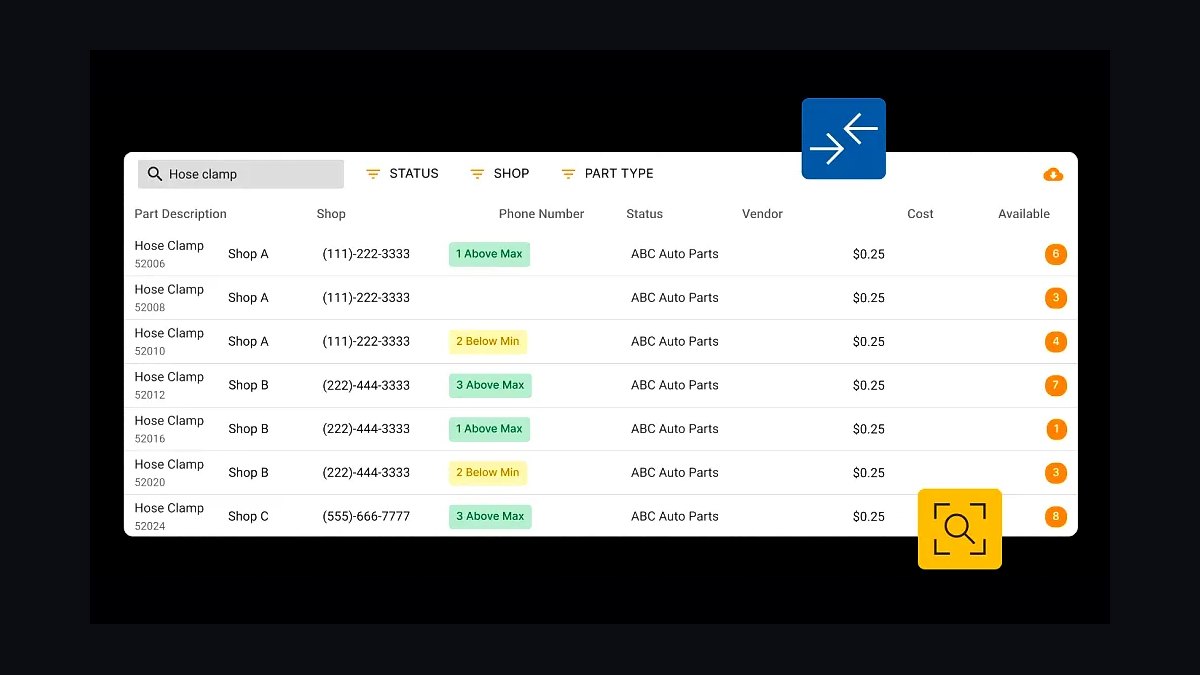
The 10 best tech stack tools for auto repair and body shops are ranked below on measured performance, build quality, price, and how each one actually holds up in daily use rather than how it reads on a spec sheet. Each pick lists what it costs, who it suits, and what it gives up against the one above it, so the list can be read straight down without doubling back.
1Tekmetric Shop Management System

Tekmetric ranks first because it is the operational hub most mechanical repair shops should build around in 2027, handling estimates, repair orders, labor matrix, parts matrix, technician tracking, and invoicing in one cloud-native platform. It ships strong built-in digital vehicle inspection with photo and video capture plus tap-to-approve, and its advisor workflow is widely praised for speed. Realistic pricing runs about $300 to $700 per month per shop depending on bays and add-ons.
It is built for independent mechanical repair shops of roughly three to eight bays that want modern software without a legacy server. It trades away nothing on the collision side because it simply cannot process insurance carrier estimates, so body shops must look elsewhere. Compared with Shop-Ware directly below, Tekmetric leans on a cleaner advisor experience while Shop-Ware leans on detailed workflow boards.
2Shop-Ware Shop Management

Shop-Ware ranks second as the closest modern peer to Tekmetric, a cloud-native shop management system built around detailed workflow boards that give owners per-technician visibility across every bay. It covers estimates, repair orders, labor and parts matrices, technician efficiency tracking, and invoicing, with strong built-in digital vehicle inspection. Pricing typically lands in the same $300 to $700 per month range depending on shop size and modules.
It suits multi-bay mechanical shops and small regional groups that want to see exactly where every car sits in the workflow at a glance. It trades away some of Tekmetric's polished advisor-facing simplicity for deeper operational boards, which is a real preference call rather than a quality gap. Compared with Tekmetric above, Shop-Ware is the better fit when process visibility matters more than a clean estimate screen.
3CCC ONE Collision Platform

CCC ONE ranks third because it is the dominant estimating and shop management platform for collision repair, and for a body shop it replaces the mechanical shop management system as the core. It handles DRP estimates, supplements, parts ordering, and carrier data exchange, which is non-negotiable when the insurance company rather than the customer pays most of the bill. Pricing runs roughly $400 to $1,200 or more per month depending on modules.
It is built for collision and body shops on multiple insurer direct repair programs, where the carrier relationship dictates the platform. It trades away the mechanical workflow strengths of Tekmetric and Shop-Ware, so a shop doing both mechanical and collision work often runs both systems side by side. Compared with the mechanical hubs above, CCC ONE is the only pick that lets a body shop transact with insurers at all.
4PartsTech Parts Procurement

PartsTech ranks fourth because parts sourcing has to live inside the repair order, not on a separate phone call, and PartsTech plugs into the shop management system so advisors search aftermarket and OE catalogs, verify VIN fitment, and order without leaving the RO. That protects the parts matrix margin and cuts the wrong-part returns that stall bays and kill throughput. Pricing is often bundled or free with SMS integration, with OE and recycled platforms varying by transaction.
It is for mechanical shops running Tekmetric, Shop-Ware, or a similar hub that want procurement embedded in the workflow rather than bolted on. It trades away nothing meaningful except the phone-call flexibility some old-school advisors prefer, and it depends on the SMS integration being configured correctly. Compared with the labor guide below, PartsTech protects parts margin while the guide protects labor margin.
5Mitchell ProDemand Labor Guide

Mitchell ProDemand ranks fifth because accurate labor times and OE repair procedures are what make a flat-rate estimate defensible, and ProDemand is one of the two heavyweight labor and repair information platforms alongside ALLDATA. It supplies book hours that price the estimate, plus diagnostic and repair procedures that shorten hard jobs, with Identifix adding confirmed-fix knowledge as a companion. Realistic pricing runs about $150 to $300 per month per shop seat.
It is for mechanical repair shops that need defensible labor times and reliable repair procedures on every ticket. It trades away some of the diagnostic crowd-sourcing depth that Identifix specializes in, though Mitchell bundles overlapping capability. Compared with PartsTech above, ProDemand protects labor margin while PartsTech protects parts margin, and the two together complete the pricing engine.
6AutoVitals Digital Inspection

AutoVitals ranks sixth because digital vehicle inspection with photos, video, tap-to-approve, and pay-by-link is the conversion lever that turns trust into authorized work, and AutoVitals pioneered the category for auto repair. Sending a customer a photo of a cracked boot or a leaking strut raises average repair order and speeds authorization, and the platform adds advisor workflow analytics. Pricing runs roughly $200 to $500 per month standalone, or it may be included in the SMS.
It is for shops that want a specialist DVI and marketing workflow rather than relying on built-in tooling. It trades away simplicity, since Tekmetric and Shop-Ware now ship strong built-in DVI that may make a separate tool unnecessary. Compared with ProDemand above, AutoVitals sells the work the labor guide priced, closing the loop from estimate to approval.
7Kukui Auto Repair CRM

Kukui ranks seventh because repair revenue is repeat and referral revenue, so reactivation and reputation are core rather than optional, and Kukui is the auto-repair-specific CRM and marketing platform tuned to shop data. It handles website, declined-service follow-up, and campaigns built on the customer and vehicle history already in the shop management system. Realistic pricing runs about $300 to $900 per month depending on scope.
It is for shops that want marketing wired directly to their repair order data instead of a generic small-business CRM. It trades away the broad horizontal feature set of tools like Podium and Birdeye in exchange for repair-specific segmentation and declined-service logic. Compared with AutoVitals above, Kukui focuses on bringing customers back while AutoVitals focuses on selling the work in front of them.
8Sunbit Repair Financing

Sunbit ranks eighth because buy-now-pay-later financing lets customers approve larger jobs they could not pay for in a single visit, which lifts average repair order and reduces declined work on brakes, suspension, and timing components. It is merchant-fee based rather than a subscription, and it pairs with pay-by-link and in-bay card processing so the invoice closes cleanly. Standard card processing still runs roughly 2.6 to 2.9 percent plus a per-transaction fee.
It is for shops with frequent high-ticket recommendations where customers hesitate at the total, and less useful for a low-average-RO quick-service operation. It trades away a slice of margin to merchant fees in exchange for capturing work that would otherwise be declined. Compared with Kukui above, Sunbit converts the immediate recommendation while Kukui converts the next visit.
9QuickBooks Online Accounting

QuickBooks Online ranks ninth because it is the near-universal small-shop ledger, and most shop management systems push invoices and payments into it automatically so the books stay clean without double entry. It handles payroll, sales tax, and bank reconciliation for a single shop or a small group, with QuickBooks Desktop as the legacy alternative. Realistic pricing runs about $30 to $200 per month depending on tier.
It is for essentially every repair or body shop that needs a standard ledger its accountant already knows. It trades away deep multi-location consolidation, which is why larger groups eventually layer a reporting tool on top rather than stretching QuickBooks. Compared with Sunbit above, QuickBooks records the money after the job closes while Sunbit helps the customer pay for it.
10Microsoft Power BI Reporting
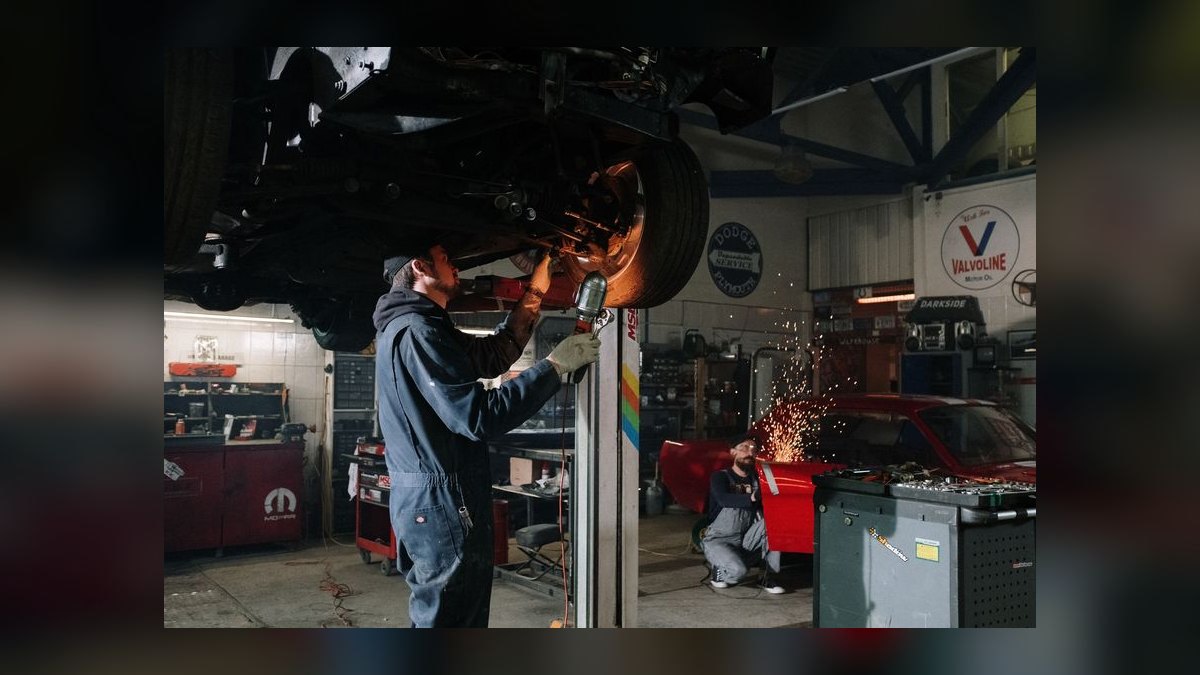
Microsoft Power BI ranks tenth because single-shop owners live in their shop management dashboards, but multi-location groups need to roll up car count, gross profit per repair order, hours per repair order, and effective labor rate across stores in one view. Power BI Pro pricing runs roughly $10 to $20 per user per month, or it is free if native dashboards already cover the need. It connects to SMS exports and accounting data for cross-shop comparison.
It is for regional chains and multi-location operators comparing store-level performance weekly, not for a one-to-two-bay shop. It trades away simplicity and requires someone to build and maintain the reports, which is real overhead. Compared with QuickBooks Online above, Power BI answers whether each store is profitable while QuickBooks records what each store earned.
How we ranked these
We weighted each tool against four measurable criteria: how directly it drives the estimate-to-RO or insurance-estimate workflow, integration depth with the shop management system or estimating platform, real-world adoption among mechanical and collision operators, and published pricing relative to shop size. Labor-guide accuracy, parts-fitment coverage, DVI approval conversion, and reporting rollup capability were scored as secondary factors. Tools that only touch one layer without feeding the core system ranked lower regardless of feature count.
We deliberately ignored vendor marketing claims, awards, and conference sponsorships because they do not correlate with bay-level throughput or gross profit. We excluded generic small-business CRMs, website builders, and standalone review apps that lack shop-data integration. We also skipped emerging AI diagnostic tools with no verifiable pricing or installed base, and any tool whose value depends on a single carrier or parts network, since those lock shops into one channel.
Related questions
What is the best shop management system for a mechanical repair shop in 2027?
Tekmetric and Shop-Ware lead for modern cloud-native workflow, with Mitchell 1 Manager SE and AutoLeap as strong alternates. The right pick depends on advisor workflow fit, built-in DVI quality, and how cleanly the labor and parts matrices configure. Demo with your own repair orders before committing, because daily advisor adoption matters more than any feature checklist.
Do body shops need CCC ONE instead of a mechanical SMS?
Yes, if you work with insurance carriers. CCC ONE, Mitchell Cloud Estimating, or Audatex is the system of record for DRP estimates, supplements, and carrier data exchange. A mechanical SMS like Tekmetric cannot transact with insurers. Many collision shops run CCC ONE as the core and add a lightweight management module rather than a separate mechanical platform.
How much should a shop budget for software per month?
A one-to-two-bay shop runs roughly $700 to $1,400 monthly for an all-in-one SMS, bundled PartsTech, a labor guide, QuickBooks, and a review tool. A three-to-eight-bay shop spends $1,500 to $3,500. Multi-location groups with Power BI rollups and centralized purchasing typically land between $4,000 and $10,000 or more.
Is PartsTech worth it if my jobber already delivers?
Yes, because PartsTech embeds price and availability comparison plus VIN fitment directly inside the repair order. That protects your parts matrix margin, cuts wrong-part returns that stall bays, and removes phone-call friction. Even with a reliable jobber, the workflow speed and fitment confirmation usually pay for the integration quickly.
What does a digital vehicle inspection actually change?
DVI with photos, video, and tap-to-approve raises average repair order value and authorization speed because customers approve more when they see the worn part. It also generates the review requests that feed new customer acquisition. Tekmetric and Shop-Ware include strong DVI, so a standalone tool like AutoVitals is optional for many shops.
Should I add Sunbit financing to my shop?
Sunbit and similar buy-now-pay-later options let customers approve larger brake, suspension, or timing jobs they cannot pay for in one visit. That lifts average RO and reduces declined work. It pays off most for shops with frequent high-ticket recommendations, and matters less for low-average-RO quick-service operations.
When does a shop actually need Power BI?
Single-shop owners should live in the SMS dashboards, which already show car count, hours per RO, and effective labor rate. Power BI earns its place at five or more locations, where you need to roll up gross profit per RO, cycle time, and CSI across stores in one view. Below that scale, native reporting is enough.
What is the biggest tech stack mistake shops make?
Buying a mechanical SMS for a collision shop, or the reverse. The insurance fork determines your core platform, and getting it wrong means you cannot transact with carriers or you pay for modules you never use. The second mistake is letting tools sprawl without one system of record, which creates double entry and no clean throughput number.
FAQ
Do I really need a different tech stack for a collision shop than a mechanical repair shop?
Yes, and it is the most important decision you will make. Collision shops transact with insurance carriers, who require a specific estimating platform such as CCC ONE, Mitchell, or Audatex as the system of record for estimates, supplements, and DRP data exchange. Mechanical shops anchor instead on a shop management system like Tekmetric or Shop-Ware. A shop doing both runs both.
Is Tekmetric or Shop-Ware the better shop management system?
Both are strong modern, cloud-native systems. Tekmetric is often praised for a clean advisor workflow and built-in DVI, while Shop-Ware is favored by shops that want detailed workflow boards and per-tech visibility. Demo both with your real repair orders and pick the one your advisors will actually use every day, because workflow fit matters more than a feature checklist.
Can I run my shop without a digital vehicle inspection tool?
You can, but you will leave money on the table. DVI with photos and tap-to-approve raises average RO and authorization speed because customers approve more when they see the problem. If your SMS includes DVI, and Tekmetric and Shop-Ware both do, start there before buying a standalone tool like AutoVitals.
How does parts procurement software actually save money?
A tool like PartsTech or Nexpart lets the advisor compare price and availability across suppliers, confirm VIN fitment, and order directly onto the repair order. That protects your parts matrix margin, cuts the wrong-part returns that stall bays, and reduces the time cars sit waiting, which is the hidden cost most shops never measure.
What should a single-owner shop spend on software per month?
A lean one-to-two-bay shop can run a complete tech stack for roughly $700 to $1,400 per month: an all-in-one SMS like AutoLeap or Mitchell 1 Manager SE, bundled PartsTech, a labor guide, QuickBooks, and a review tool. Avoid paying for multi-location BI or standalone DVI you do not need yet.
Where does financing like Sunbit fit, and is it worth it?
Sunbit and similar buy-now-pay-later financing let customers approve larger jobs such as brakes, suspension, or a timing component that they could not pay for in a single visit. It lifts average RO and reduces declined work. It is worth it for shops with frequent high-ticket recommendations, less so for a low-average-RO quick-service shop.
Which labor guide should a mechanical shop choose?
ProDemand and ALLDATA are the two heavyweights for labor times and OE repair procedures. Identifix adds confirmed-fix diagnostic knowledge that shortens hard diagnoses, and Motor supplies underlying labor-time data. Most shops run one primary guide plus Identifix if diagnostics are a meaningful part of revenue. Expect $150 to $300 monthly per seat.
How long does it take to migrate to a new shop management system?
Plan on 30 days to stand up the core, configure labor and parts matrices, and migrate customer and vehicle history. Days 31 to 60 connect parts procurement, labor guides, and DVI. Days 61 to 90 turn on CRM, reviews, and financing. Rushing the matrix configuration is the most common cause of margin leakage after a switch.
Do multi-location shops need a different stack than single shops?
The layers are the same, but the emphasis shifts. Multi-location groups standardize on one SMS across stores, centralize purchasing through Nexpart or jobber accounts, run chain-wide marketing through Kukui, and roll everything into Power BI for store-level gross profit and car count comparisons. Single shops can rely on native SMS dashboards instead.
What integrations matter most when evaluating a shop management system?
Prioritize parts procurement with VIN fitment, labor-guide lookup, integrated payments and pay-by-link, accounting sync to QuickBooks, and DVI with text approvals. These five integrations determine whether the estimate-to-RO loop runs without leaving the platform. Feature breadth outside that loop rarely moves car count, hours per RO, or cycle time.
Sources
- https://www.tekmetric.com/
- https://shop-ware.com/
- https://www.mitchell1.com/
- https://www.partstech.com/
- https://www.autovitals.com/
- https://www.kukui.com/
- https://www.ccc-one.com/
- https://quickbooks.intuit.com/
- https://powerbi.microsoft.com/
- https://www.alldata.com/
Related on PULSE
This page will be disappearing soon. Save it to your device for $1 — or read it free while it is here.
@Kory-White- · if Venmo asks, the last 4 of my number are 2012
This page is gone.
This one is off the shelf now. $1 keeps it on your phone for good — the whole page, pictures and diagrams included.
 pulse-tech-stacksTop 10 Best Tech Stack Tools for Fine-Tuning Platform Companies in 2027
 pulse-tech-stacksTop 10 Best Tech Stack Tools for MSP and IT Services Companies in 2027
 pulse-tech-stacksTop 10 Best Tech Stack Tools for Independent Wholesale Distribution Businesses in 2027
 pulse-tech-stacksTop 10 Best Tech Stack Tools for Self-Storage Operators in 2027
 pulse-tech-stacksTop 10 Best Tech Stack Tools for Land Surveying Firms in 2027
 pulse-tech-stacksTop 10 Best Tech Stack Tools for Insulation Contractors in 2027
 pulse-tech-stacksTop 10 Best Tech Stack Tools for Appliance Repair Services in 2027
 pulse-tech-stacksTop 10 Best Tech Stack Tools for Data Loss Prevention (DLP) Software Vendors in 2027
 pulse-tech-stacksTop 10 Best Tech Stack Tools for AI Translation API Companies in 2027
 pulse-tech-stacksTop 10 Best Tech Stack Tools for RV Dealerships in 2027