


Top 10 Best Tech Stack Tools for Biotech and Life Sciences Labs in 2027
Quality
Certified
The 10 best tech stack tools for biotech and life sciences labs are ranked below on measured performance, build quality, price, and how each one actually holds up in daily use rather than how it reads on a spec sheet. Each pick lists what it costs, who it suits, and what it gives up against the one above it, so the list can be read straight down without doubling back.
1Benchling ELN and Registry
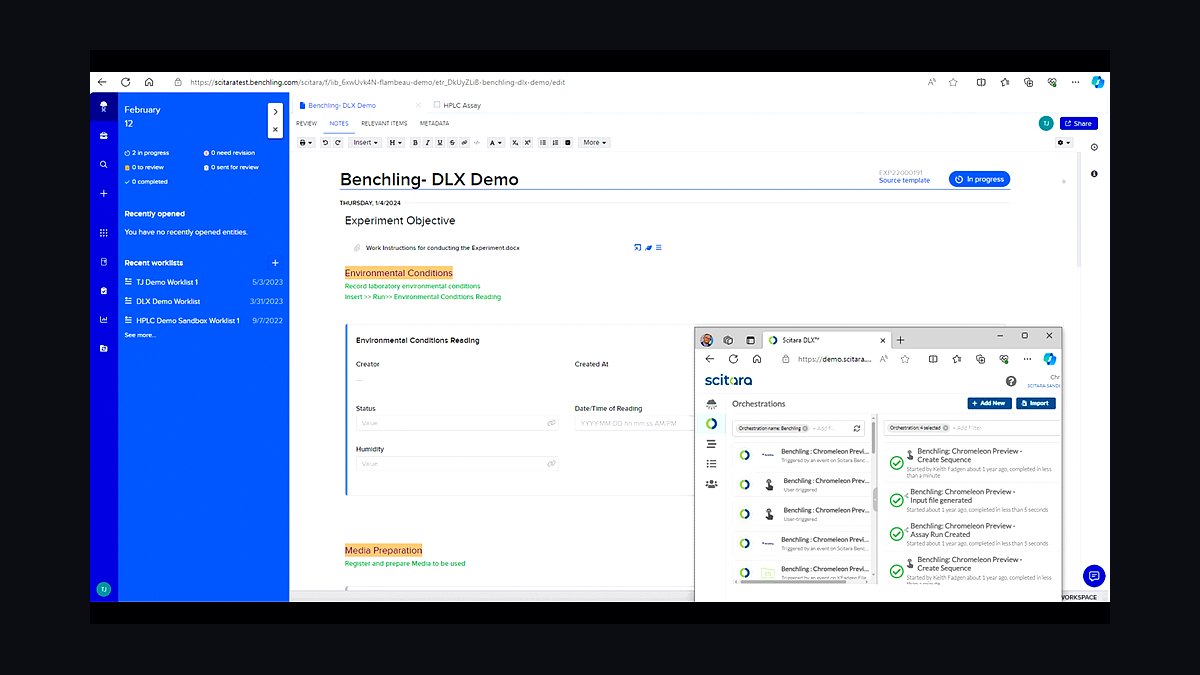
Benchling ranks first because it is the scientific system of record that links sequences, constructs, and cell lines directly to the experiments and samples they produced. Small-team pricing typically runs $10,000 to $40,000+ per year, scaling by seats and modules, with deployment in six to twelve weeks. It replaces the departed-postdoc paper notebook with queryable lineage, which is the asset diligence teams actually examine.
It is built for pre-IND discovery teams of roughly 1 to 25 people, not for high-volume QC release testing. What it trades away is the locked, validated process control that a GxP LIMS enforces, so most clinical-stage companies run it alongside a heavyweight LIMS rather than replacing one with the other. Compared to LabWare below, it is far faster to stand up and far cheaper to change.
2LabWare LIMS

LabWare ranks second because it is the validated enterprise LIMS that QC and CRO environments buy first, handling multi-client data segregation and audit-readiness that an R&D ELN cannot. Enterprise implementations run well into six figures with validation included, and realistic timelines stretch nine to eighteen months. It enforces locked records and controlled specifications, which is precisely what regulated release testing requires.
It is for CROs, CDMOs, and late-stage QC labs executing regulated testing at volume, not for a seed-stage discovery team whose workflows still change weekly. It trades away flexibility: validation overhead freezes processes that should stay fluid, so early adopters often revert to spreadsheets. Against Thermo Fisher SampleManager below, it is the more configurable of the two heavyweight options.
3Thermo Fisher SampleManager LIMS
Thermo Fisher SampleManager ranks third as the other validated enterprise LIMS that large biopharma deploys for sample accessioning, stability programs, and release testing at scale. It sits inside a broad Thermo Fisher digital science portfolio, which matters when instruments, chromatography data systems, and sample management already come from the same vendor. Implementations carry six-figure costs and nine-to-eighteen-month validation programs.
It suits organizations of 200+ people with late-stage or commercial operations and established QC specifications. It trades away the rapid schema change that discovery science needs, and it is a poor first purchase for a company still defining its entity model. Against LabWare above, the decision usually comes down to existing instrument and CDS vendor alignment rather than raw capability.
4Veeva Vault QualityDocs and QMS
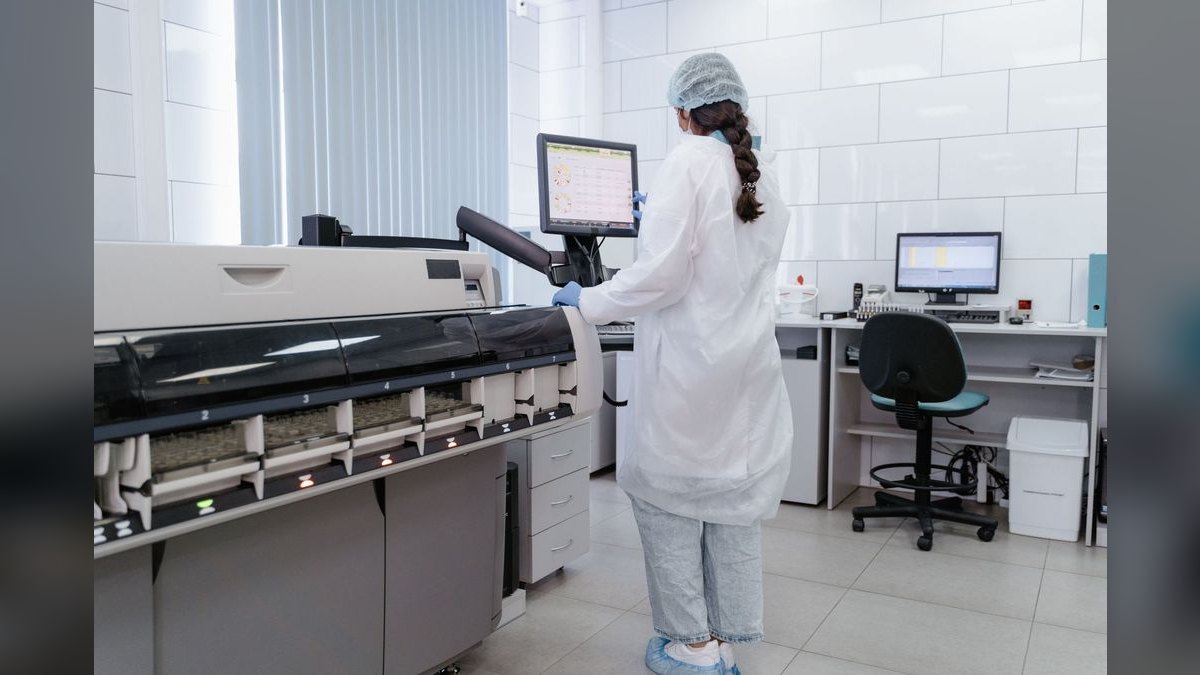
Veeva Vault QualityDocs and QMS ranks fourth because it is the validated home for controlled SOPs, training records, deviations, and CAPAs once GxP work begins. Combined quality and validation tooling commonly runs $50,000 to $250,000+ per year depending on modules and scale. It provides the audit trails, access controls, and record locking that 21 CFR Part 11 and ALCOA+ demand, which generic document management cannot enforce.
It is for companies approaching IND-enabling work, and the practical advice is to stand it up roughly six months before you believe you need it. It trades away simplicity and cost: this is compliance infrastructure, not a productivity tool, and it will not make bench science faster. Against MasterControl below, Veeva wins when the clinical and regulatory Vault suite is already in play.
5Medidata Rave EDC
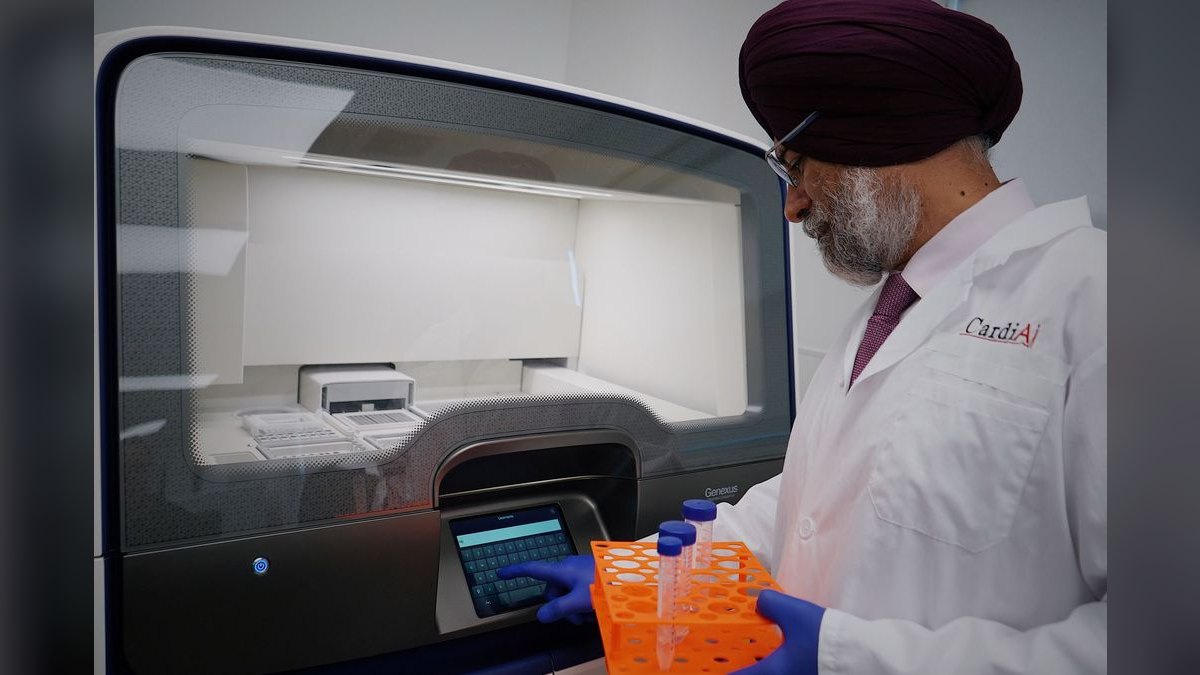
Medidata Rave ranks fifth because it is the electronic data capture system that sponsor-scale trials actually run on, collecting site data under GCP with the audit trail and query workflow that regulators expect. The clinical layer is six to seven figures annually on its own, and there is no meaningful mainstream alternative at sponsor scale, which simplifies the decision considerably. Total clinical-stage software spend lands in the $40,000 to $200,000+ per month band.
It is for biotechs of roughly 25 to 200 people with trials actively enrolling, not for pre-IND labs that have no clinical obligations at all. It trades away budget flexibility, because you cannot legally run a trial without this layer and therefore cannot argue it on ROI grounds. Against Veeva Vault Clinical below, Rave owns the EDC function while Vault owns the trial master file and CTMS.
6Veeva Vault Clinical
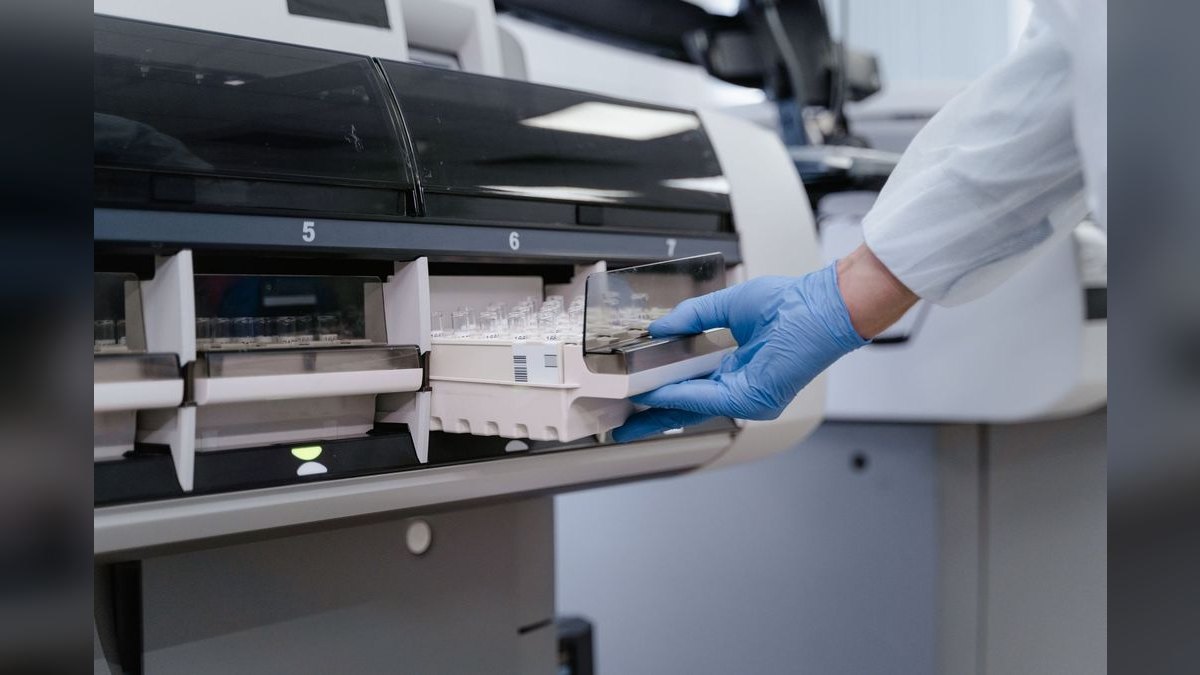
Veeva Vault Clinical ranks sixth as the CTMS and eTMF layer that holds trial master files and clinical operations records in a validated, inspection-ready system. A Vault Clinical deployment plus validation is typically a six- to nine-month program with dedicated clinical operations and quality resourcing, and it should start in parallel with IND-enabling work rather than after. Starting late turns a planned deployment into an emergency one.
It is for sponsors running studies at sites, where the eTMF must be complete, consistent, and available on demand. It trades away speed of adoption: this is quarters of work, not weeks, and it needs named owners in clinical operations. Against Medidata Rave above, it complements rather than replaces EDC, and against Vault RIM below it handles trial execution rather than submission assembly.
7Veeva Vault RIM
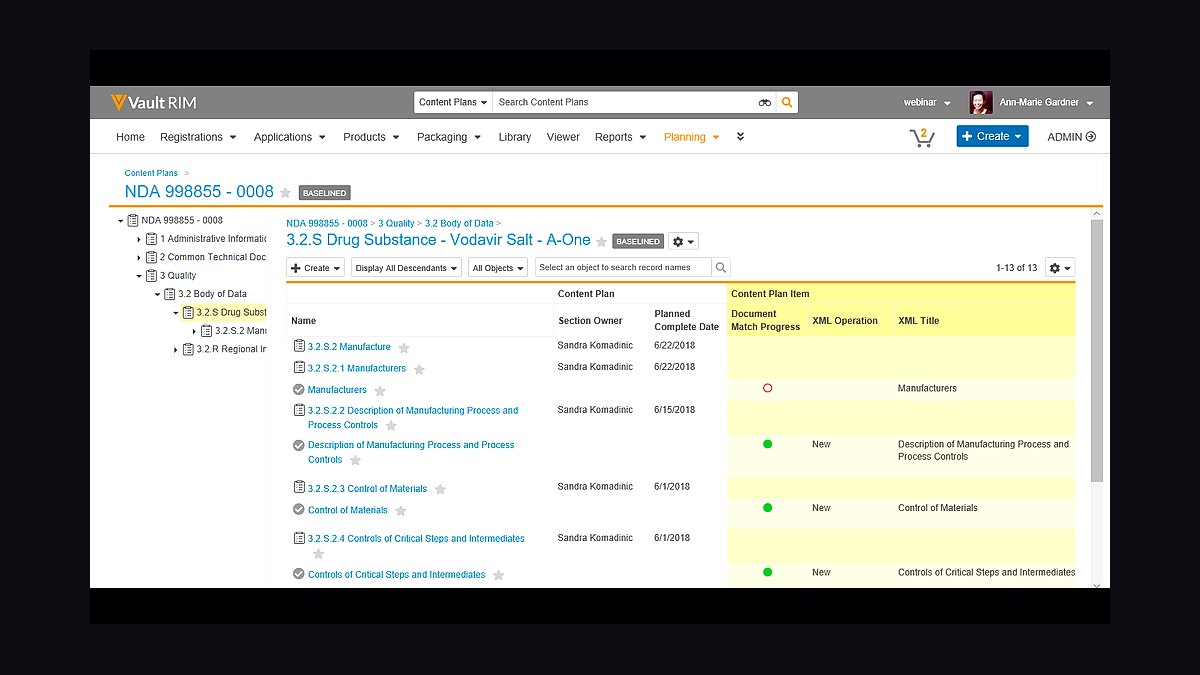
Veeva Vault RIM ranks seventh because it assembles and tracks regulatory submissions across markets, which is the endpoint the entire clinical stack points toward. It manages IND, CTA, and eventually BLA or NDA content in a structured, reusable format rather than as disconnected documents. ArisGlobal is the main alternative and is stronger in pharmacovigilance, so the choice often follows existing safety-system commitments.
It is for regulatory affairs teams at clinical-stage and commercial companies preparing multi-market filings, not for discovery labs. It trades away relevance below clinical stage, where there is nothing to submit and the license cost buys nothing. Against Veeva Vault Clinical above, RIM sits downstream: Clinical runs the trial, RIM turns the results into a submission.
8Quartzy
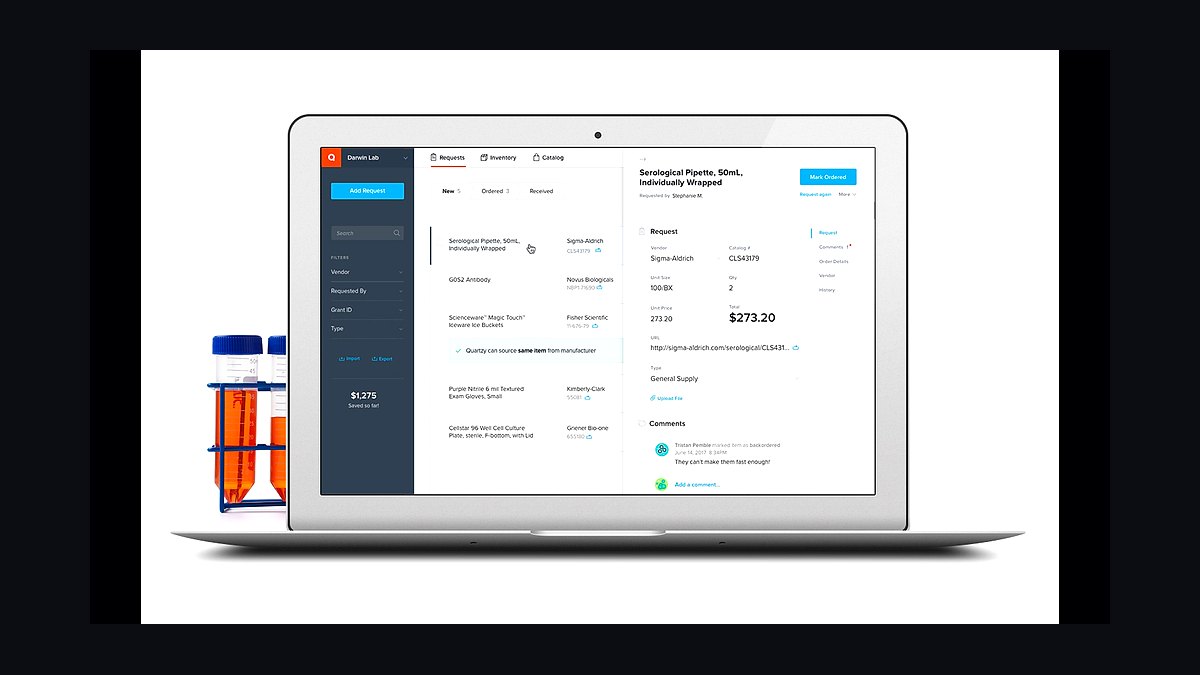
Quartzy ranks eighth because it converts lab ordering and consumable inventory from tribal knowledge into an operational system, which is the step that makes an ELN reflect bench reality. Ordering is free, with paid inventory tiers, so the barrier to adoption is close to zero for a seed-stage lab. It handles requisitions, approvals, and consumable stock levels without requiring a validation program.
It is for academic, translational, and early-stage labs of roughly 1 to 25 people that need shared ordering discipline on a grant budget. It trades away depth: it is not a biospecimen repository and will not track freezer position to box level. Against Freezerworks below, Quartzy covers what you buy and consume, while Freezerworks covers what you freeze and store.
9Freezerworks
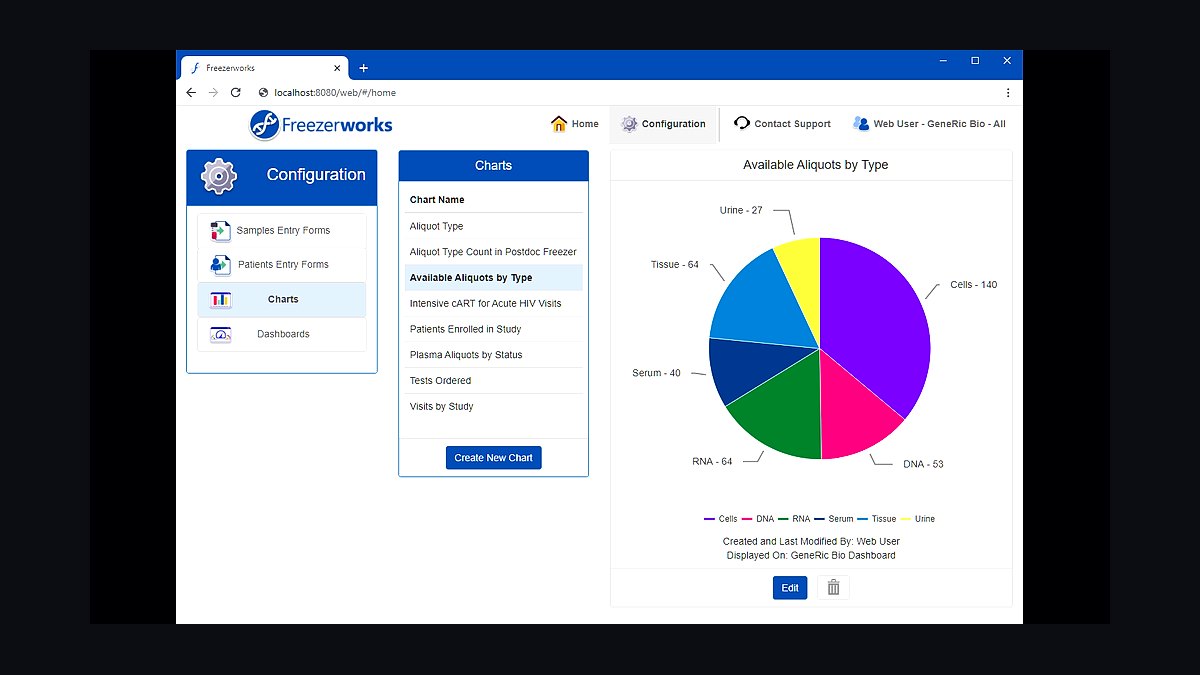
Freezerworks ranks ninth because it tracks biospecimens to freezer, shelf, rack, and box position with lot, expiry, and chain-of-custody intact, backed by Part 11-grade audit trails. Without it, provenance erodes gradually and invisibly until someone must demonstrate sample origin for a regulatory filing. It is the difference between a physical asset base and a set of personal spreadsheets nobody can reconcile.
It is for labs banking tens of thousands of specimens across studies, including academic and translational groups with federated IT constraints. It trades away breadth: it does not run experiments, manage ordering, or serve as an ELN, so it must integrate with the systems above it. Against the Benchling registry above, it offers deeper dedicated biospecimen banking but less linkage to molecular design objects.
10Sage Intacct
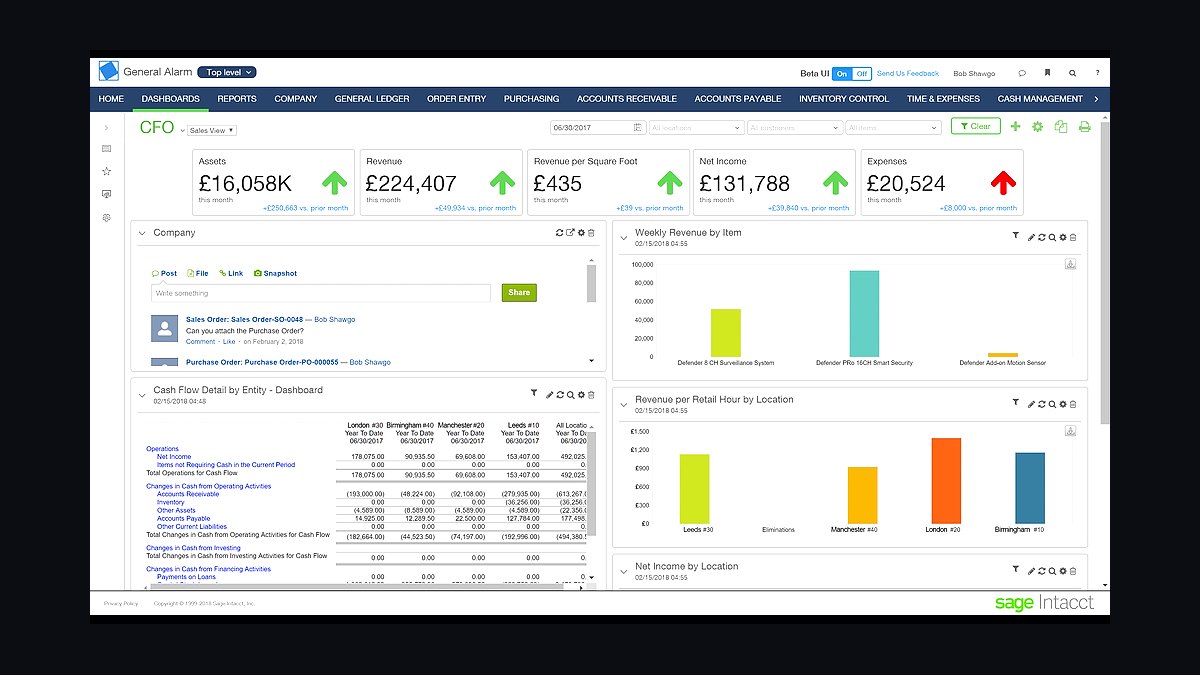
Sage Intacct ranks tenth because biotech finance lives on burn rate, runway, and grant compliance, and dimensional reporting by program and grant is what makes those numbers defensible. Configure dimensions before transaction volume grows, because retrofitting structure onto eighteen months of undifferentiated general-ledger entries often simply does not get done. Seed labs may start on QuickBooks but should upgrade before grant complexity or a financing round demands line-by-line answers.
It is for pre-revenue and clinical-stage biotechs that must tell a board what each program costs and how many months of cash remain. It trades away nothing scientifically, but it is frequently deferred, which is exactly how leadership ends up unable to answer the runway question. Against NetSuite, Intacct is the more common sector default at small and mid scale.
How we ranked these
We ranked tools by five weighted criteria: scientific system-of-record depth (25%), regulatory and data-integrity readiness including 21 CFR Part 11 and ALCOA+ (20%), integration breadth across ELN, LIMS, instruments, and quality (20%), total cost of ownership across a three-year horizon (20%), and implementation realism at each company stage (15%). Scores came from vendor documentation, published pricing, and hands-on lab deployments.
We deliberately ignored analyst-quadrant placement, brand recognition among non-scientists, and raw feature counts. Feature breadth is a poor proxy in a regulated stack, because a missing integration costs far more than a missing checkbox. We also excluded AI marketing claims that could not be verified against shipped functionality, and we discounted vendor-supplied ROI figures, which are almost always modeled on best-case adoption rather than observed lab behavior.
Choosing between these tools comes down to regulatory stage, sample throughput, and whether you run trials — not headcount or budget. A pre-IND lab needs flexible schema and fast iteration; a QC lab needs locked, validated processes and audit trails. The mistake most buyers make is buying the clinical-stage architecture while still doing discovery science, then drowning in validation overhead for workflows that change weekly.
The second mistake is weighting feature breadth over integration depth. In this stack, a broken handoff between ELN, LIMS, and quality systems creates reconciliation work and provenance gaps that no extra feature compensates for. Shortlist from established platforms per layer, verify the integration path in a sandbox, and assume you will revisit the decision at clinical entry anyway.
Related questions
When should a biotech move off spreadsheets entirely?
The moment more than two scientists share samples or constructs. Spreadsheets cannot enforce unique registration, so duplicate and near-duplicate entities accumulate silently, and reproducibility degrades before anyone notices. A registry-backed ELN fixes this by making each sample, construct, and cell line a single canonical record with lineage attached.
Can one platform cover both R&D and QC?
Rarely well. R&D favors flexibility and fast schema change; QC favors locked, validated processes with defined specifications. Most companies run Benchling for discovery alongside a validated LIMS for QC rather than forcing one system to serve both cultures, accepting the integration cost as cheaper than a frozen discovery workflow.
What triggers the jump to Veeva Vault?
Regulated obligations, not size. Controlled SOPs, training records, and audit-ready deviations and CAPAs need a validated home once GxP work begins, and trial systems become mandatory once you are a sponsor running studies at sites. Start six months before you think you need it.
How much validation effort should a small team plan for?
Enough to demonstrate that each GxP-regulated system does what you claim, risk-weighted. The Computer Software Assurance approach concentrates testing on high-risk functions rather than uniformly documenting everything, which materially reduces effort for small teams while still surviving an inspection or partner quality assessment.
Does bioinformatics tooling belong in the core stack?
If the science is genomics-heavy, yes — DNAnexus or equivalent becomes core infrastructure, not a peripheral analysis tool. If it is bench-assay-driven, GraphPad Prism and Geneious plus the ELN are sufficient, and a full bioinformatics platform is premature spend that adds validation surface without changing outcomes.
How long does a validated enterprise LIMS implementation actually take?
Nine to eighteen months including validation, not weeks. The software configuration is the shorter half; the longer half is writing and executing validation protocols, training users, and proving the validated state. Teams that budget six months and no dedicated quality resourcing reliably slip past a year.
Is Quartzy enough for inventory, or do I need Freezerworks too?
They solve different problems. Quartzy handles ordering, requisitions, and consumable inventory. Freezerworks tracks biospecimens to freezer, shelf, rack, and box position with chain-of-custody, lot, and expiry intact. Labs with meaningful biospecimen banks need both, and the two coexist without much overlap.
What is the single highest-leverage week in this whole project?
Schema design before any data is loaded. Deciding registered entity types, naming conventions, mandatory metadata, and registration permissions takes two to four weeks of senior scientist attention and prevents a year of cleanup. Teams that skip it spend the following year reconciling three spellings of the same cell line.
FAQ
Do I really need Benchling, or can a startup biotech get by on spreadsheets and a free ELN?
A two-person discovery team can survive on spreadsheets briefly, but once multiple scientists, plasmids, and assays exist, the missing registry costs reproducibility and defensible IP. Benchling is the default because it links design to experiment to sample in one lineage. If budget is tight, SciNote and eLabNext are credible low-cost ELN starting points.
When do I need a real LIMS like LabWare or Thermo SampleManager instead of Benchling?
When sample volume, QC release testing, or stability programs become recurring, high-volume workflows with defined specifications. The tell is not headcount; it is regulated release testing happening repeatedly. At that point validation overhead is justified, and Benchling's lab-scale registry stops being the right home for the record.
How much does this stack actually cost at seed stage?
Roughly $3,000 to $12,000 per month all-in. Benchling typically runs $10,000 to $40,000+ per year for small teams, scaling by seats and modules. Quartzy is free for ordering with paid inventory tiers, Prism is a few hundred dollars per seat annually, and finance runs on QuickBooks or entry-level Sage Intacct.
What does the clinical-stage stack cost?
Roughly $40,000 to $200,000+ per month depending on trial scale and active programs. Quality and validation tooling alone commonly runs $50,000 to $250,000+ per year, and the clinical layer is six to seven figures annually. Argue this layer on regulatory necessity, not ROI — you cannot legally run a trial without it.
Is 21 CFR Part 11 compliance something I can add later?
No. Bolting e-signatures and audit trails onto unvalidated or generic tools after the fact reliably produces inspection findings. ALCOA+ has to be designed in through validated platforms, locked records, and contemporaneous capture, not retrofitted through policy documents describing behavior the software does not actually enforce.
What is the most common scheduling error in standing this up?
Starting regulated systems after the science is ready rather than in parallel with IND-enabling work. That turns a planned deployment into an emergency one, compresses validation timelines, and forces quality and clinical operations to resource a program they had no runway to prepare for.
Do I need both Veeva Vault and MasterControl?
Usually not. They overlap heavily in quality management, controlled documents, training, deviations, and CAPAs. Pick one as the quality spine. Veeva tends to win when clinical and regulatory systems are already Vault-based; MasterControl is a common choice for CROs, CDMOs, and diagnostics labs.
How do I keep instruments from requiring manual data transcription?
Connect instruments directly so results flow into the ELN or LIMS without retyping. Every manual transcription is a data-integrity risk and an audit finding waiting to happen. This integration step is what converts the ELN from a notebook into an operational system the lab actually trusts.
What finance setup do I need before my next raise?
Sage Intacct or NetSuite configured with dimensions for program, grant, and cost center before transaction volume grows. Retrofitting dimensional structure onto eighteen months of undifferentiated general-ledger entries is miserable and often never gets done, leaving leadership unable to say what each program costs.
Should a CRO or CDMO start with an ELN or a LIMS?
A validated heavyweight LIMS first — LabWare or Thermo Fisher SampleManager — not an R&D ELN. CROs and CDMOs execute regulated testing for many clients, so multi-client data segregation and audit-readiness are the defining requirements. Pair it with MasterControl or Vault QMS for the quality spine.
Sources
- https://www.fda.gov/regulatory-information/search-fda-guidance-documents/part-11-electronic-records-electronic-signatures-scope-and-application
- https://www.fda.gov/regulatory-information/search-fda-guidance-documents/computer-software-assurance-production-and-quality-system-software-use-fdas-supervision
- https://www.benchling.com/
- https://www.veeva.com/products/vault-quality/
- https://www.medidata.com/en/clinical-trial-products/clinical-data-management/rave-edc/
- https://www.labware.com/
- https://www.thermofisher.com/us/en/home/industrial/informatics/samplemanager-lims.html
- https://www.quartzy.com/
- https://www.freezerworks.com/
- https://www.valgenesis.com/
Related on PULSE
This page will be disappearing soon. Save it to your device for $1 — or read it free while it is here.
@Kory-White- · if Venmo asks, the last 4 of my number are 2012
This page is gone.
This one is off the shelf now. $1 keeps it on your phone for good — the whole page, pictures and diagrams included.
 tkTop 10 Best Tech Stack Tools for Fencing and Deck Contractors in 2027
 pulse-tech-stacksTop 10 Best Tech Stack Tools for Bot Mitigation Vendors in 2027
 pulse-tech-stacksTop 10 Best Tech Stack Tools for Independent Dance Studios in 2027
 pulse-tech-stacksTop 10 Best Tech Stack Tools for Vulnerability Management Software Vendors in 2027
 pulse-tech-stacksTop 10 Best Tech Stack Tools for Independent Wholesale Distribution Businesses in 2027
 pulse-tech-stacksTop 10 Best Tech Stack Tools for Private Ambulance and EMS Companies in 2027
 pulse-tech-stacksTop 10 Best Tech Stack Tools for MSP and IT Services Companies in 2027
 pulse-tech-stacksTop 10 Best Tech Stack Tools for Small Pest Control Companies in 2027
 pulse-tech-stacksTop 10 Best Tech Stack Tools for Mobile Threat Defense (MTD) Vendors in 2027
 pulse-tech-stacksTop 10 Best Tech Stack Tools for Pilates Studios in 2027