


Top 10 Best Tech Stack Tools for Orthodontic Practices in 2027
Quality
Certified
The 10 best tech stack tools for orthodontic practices are ranked below on measured performance, build quality, price, and how each one actually holds up in daily use rather than how it reads on a spec sheet. Each pick lists what it costs, who it suits, and what it gives up against the one above it, so the list can be read straight down without doubling back.
1Dolphin Management
Dolphin Management ranks first because it is the ortho-specific system of record that handles the treatment card natively — agreed fee, down payment, insurance assignment, monthly auto-draft, and remaining balance across 18 to 30 month contracts. It runs the contract ledger and scheduler together, and pairs directly with Dolphin Imaging for ceph tracing and 3D simulation. For best-of-breed stacks it is the anchor every other layer reads from.
It is built for practices with a named operations owner who can absorb integration labor across imaging, financing, and communication vendors. It trades away the single-login simplicity of an all-in-one, so a two-person front desk will feel the seams. Compared with Ortho2 Edge Cloud directly below, it wins on imaging depth and contract flexibility but loses on bundled setup and support simplicity.
2Ortho2 Edge Cloud
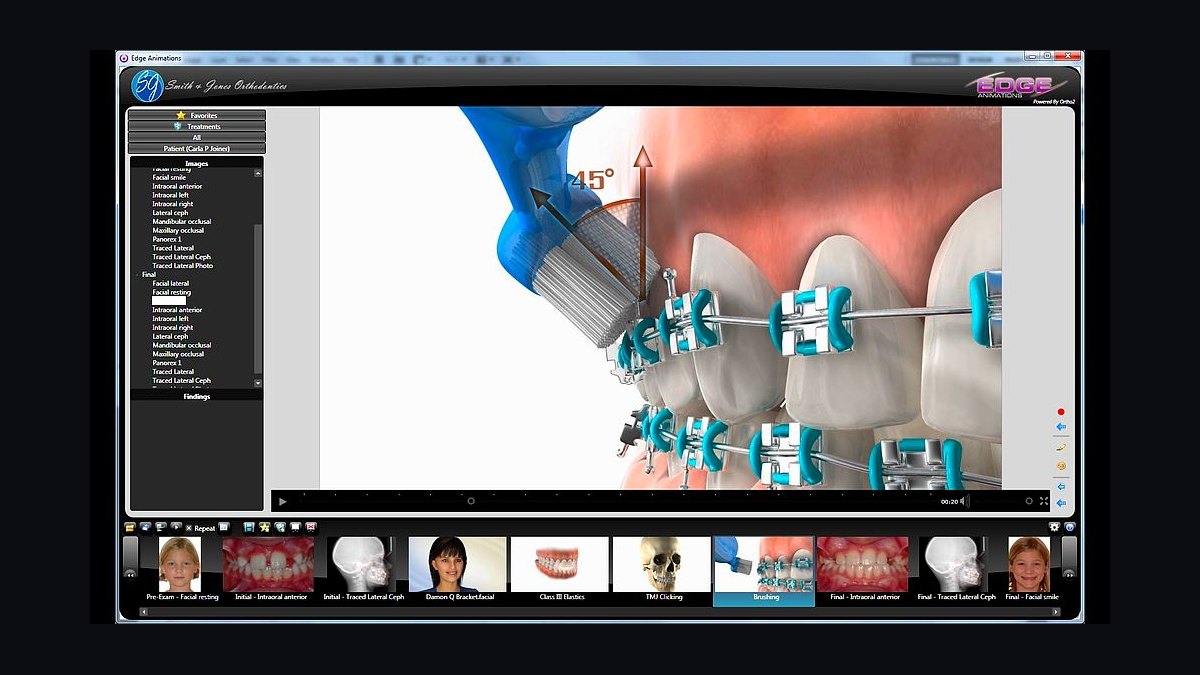
Ortho2 Edge Cloud ranks second as the clearest all-in-one ortho platform: browser-based practice management with imaging built in, so a solo practice runs treatment cards, scheduling, clinical records, ceph images, and photo management without stitching vendors together. One login, one support number, one data model, and one integration to fail. Setup and conversion are materially simpler than assembling a best-of-breed stack.
It is for one-doctor, one-location practices with a two-to-three person front desk that cannot absorb integration labor. It trades away feature ceilings — you get the imaging module Ortho2 built, not the market's deepest tracing suite. Against Dolphin Management above, it wins on simplicity and loses on 3D case-presentation depth; against Cloud 9 below, it lacks centralized multi-site reporting.
3Cloud 9 Ortho

Cloud 9 Ortho, now part of Planet DDS, ranks third for multi-location groups because it adds centralized reporting across sites on top of ortho-specific practice management. Groups running two to six locations get cross-location visibility into production, scheduling, and contract status from one system, which is the layer that makes a support office functional rather than a collection of separate practices.
It is for groups with a dedicated operations or business manager who can standardize workflows across sites. It trades away some of the solo-practice simplicity Ortho2 offers, and its imaging depth trails Dolphin Imaging for heavy 3D work. Against Dolphin Management above, it wins on multi-site reporting but loses on tracing and superimposition tooling; against Dolphin Imaging below, it is the management layer rather than the clinical one.
4Dolphin Imaging
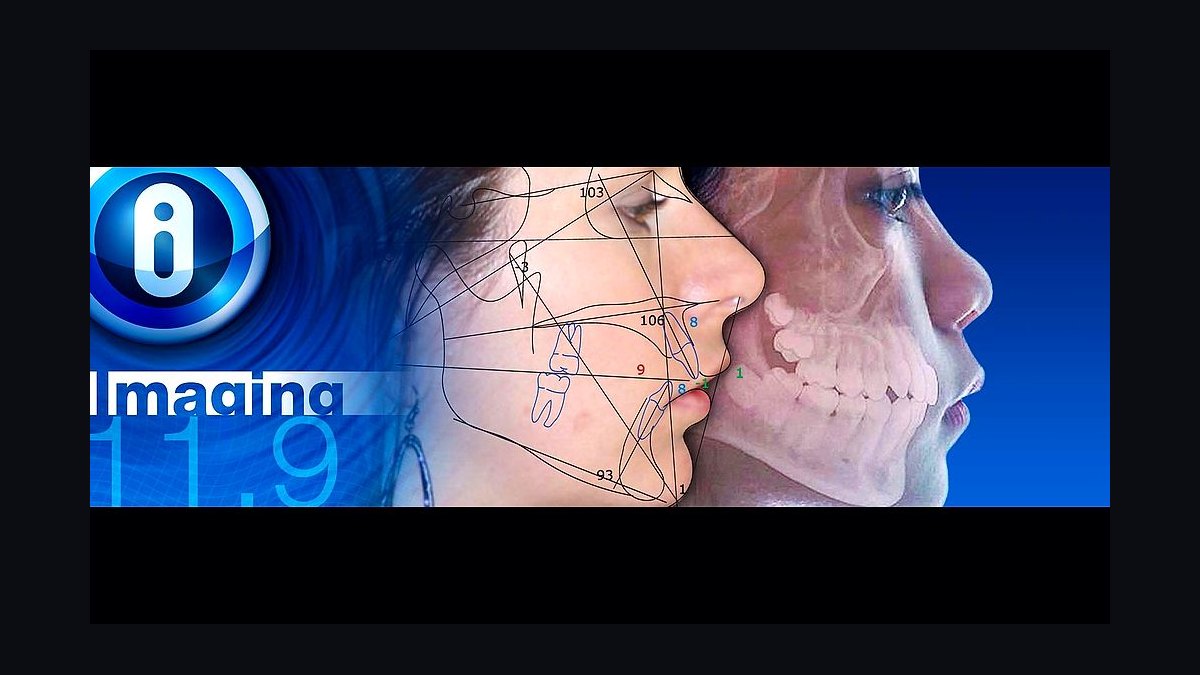
Dolphin Imaging ranks fourth as the long-standing category standard for cephalometric tracing, superimposition, and case-presentation visuals. Sold as a perpetual license by module — 2D ceph, ImagingPlus, Dolphin 3D — with annual maintenance on top, the full stack for a practice doing 3D work lands in the mid five figures. CBCT-heavy practices extend into Dolphin 3D for volumetric treatment simulation.
It is for practices that present complex cases and need the deepest clinical imaging tooling available, not the imaging module a management vendor happened to build. It trades away subscription simplicity — this is a capital-flavored purchase with an annual tail that should be planned alongside hardware refresh. Against Cloud 9 Ortho above, it is the clinical core rather than the management layer; against iTero below, it captures and traces rather than scans.
5iTero Intraoral Scanner
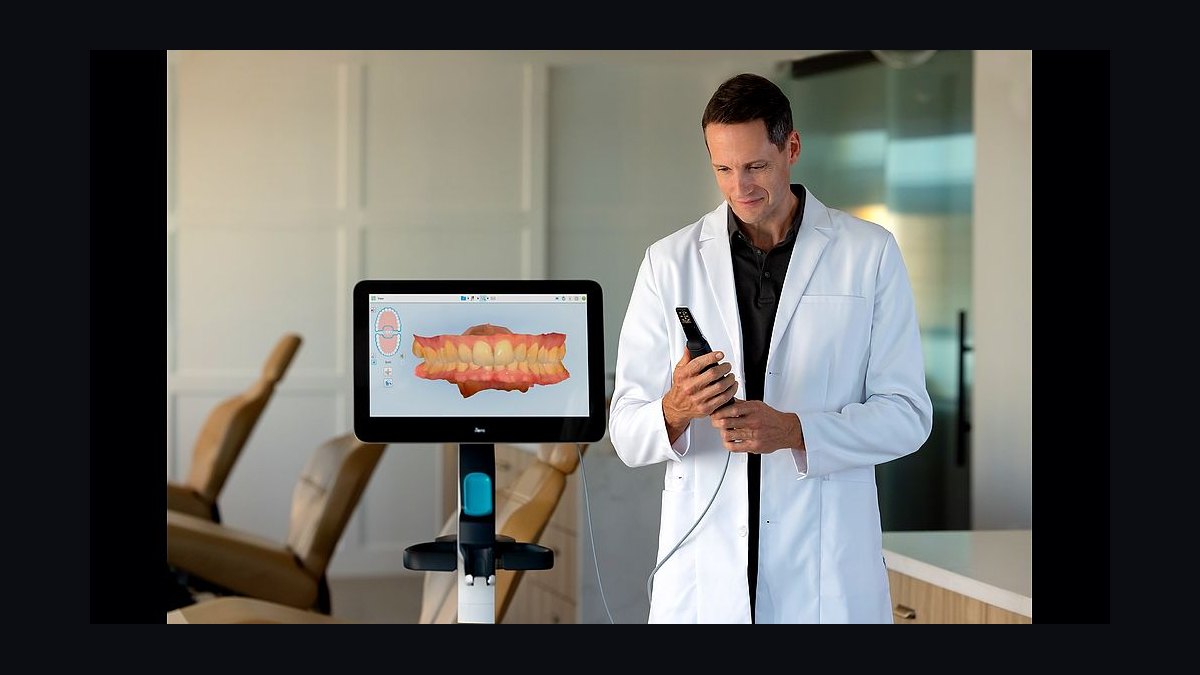
iTero ranks fifth as the intraoral scanner most tightly integrated with Invisalign's ClinCheck planning workflow. A five-figure capital purchase with annual support, it feeds a scan directly into aligner treatment planning and chairside simulation, which is the capture-to-planning link that makes the consult moment work. For Invisalign-committed practices the scanner choice is nearly made for you.
It is for practices with meaningful Invisalign volume where the tightest planning workflow outweighs hardware flexibility. It trades away open export — practices wanting to move scans freely to SureSmile, Spark, uLab, or in-house printing will feel the constraint. Against Dolphin Imaging above, it captures where Dolphin traces; against 3Shape TRIOS below, it wins on Invisalign integration but loses on vendor optionality.
63Shape TRIOS
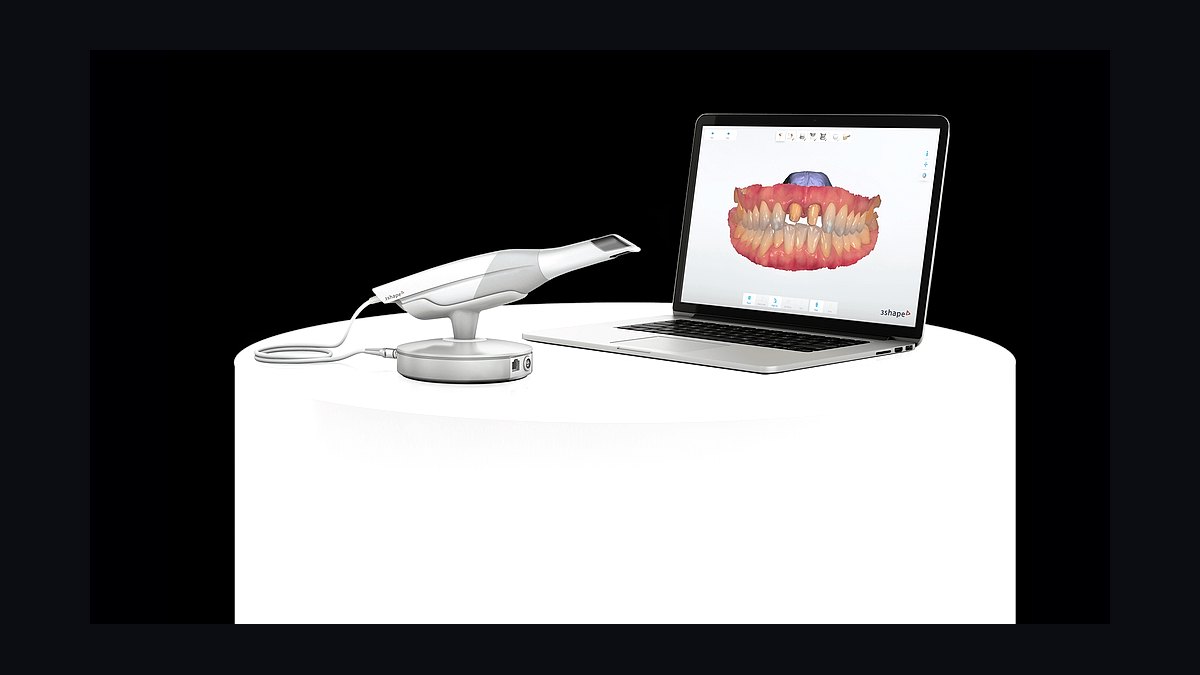
3Shape TRIOS ranks sixth as the leading open-system intraoral scanner, exporting freely to SureSmile, Spark, uLab, and in-house printing workflows. It competes with iTero on price and on export flexibility, letting a practice change aligner vendors without changing hardware. For practices that want optionality across aligner paths, that openness is the whole argument.
It is for practices not locked into a single aligner vendor, or those planning in-house design and printing where open export matters more than a closed planning pipeline. It trades away the tightest Invisalign integration in exchange for flexibility. Against iTero above, it wins on vendor optionality and loses on ClinCheck workflow friction; against OrthoFi below, it is capture hardware rather than a conversion engine.
7OrthoFi
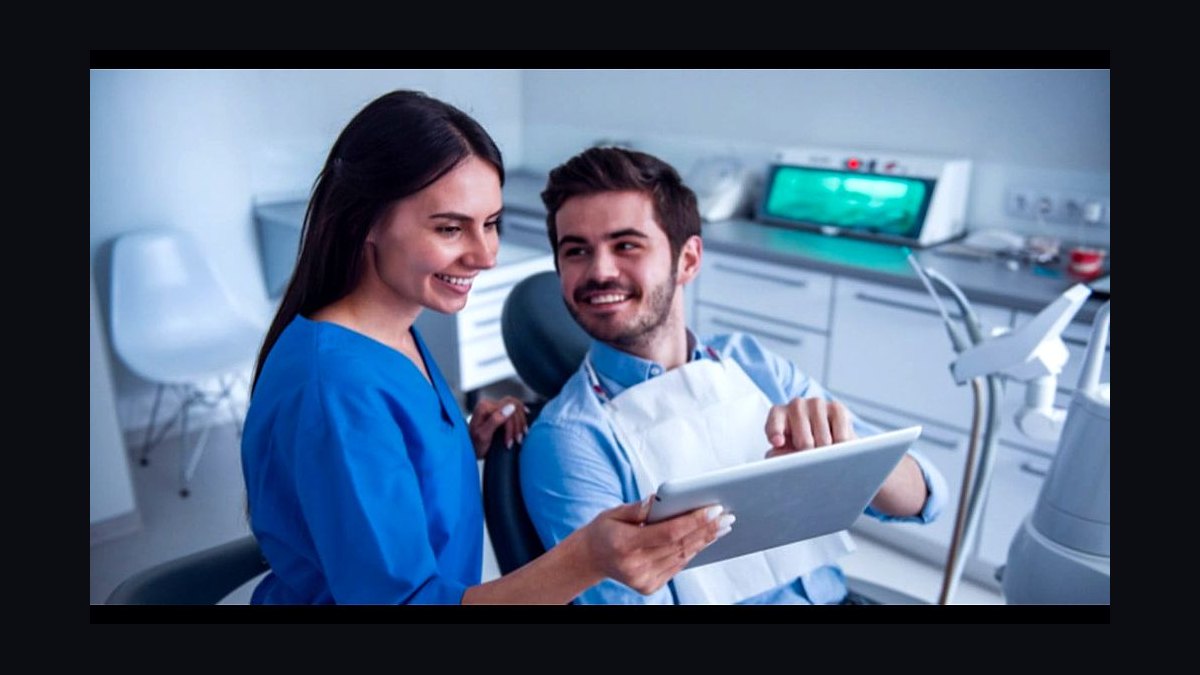
OrthoFi ranks seventh as the consult-to-start conversion and patient-pay layer, typically priced as a percentage of patient-pay collections or on a per-start basis. It owns the funnel from new-patient exam through treatment-coordinator consultation, financing presentation, and start decision — the moment where a parent does household budget math in the chair. For practices whose growth constraint is conversion, it is a direct revenue lever measurable within a quarter.
It is for practices with full chairs but too many consults leaving without starting, and it needs a named owner to reconcile contracts against the practice-management ledger. It trades away the simplicity of processing your own drafts, and the percentage pricing reads expensive until compared against staff hours chasing declined auto-drafts. Against 3Shape TRIOS above, it converts rather than captures; against OrthoBanc below, it owns the funnel rather than the collections tail.
8OrthoBanc

OrthoBanc ranks eighth as the recurring auto-draft and declined-payment recovery layer for orthodontic contracts. Priced per account or as a percentage of managed payments, it attacks the collections half of the financing problem — expired cards, closed accounts, insufficient funds, and changed insurance on 18-month-old contracts. Declined payments are relentless, and an unmanaged long-tail receivable is where practice profit quietly ages out.
It is for practices already converting consults reasonably well but losing money on the back end of the contract term, and it pairs naturally with a conversion layer rather than replacing one. It trades away the point-of-decision approval workflow OrthoFi owns. Against OrthoFi above, it handles collections rather than conversion; against Weave below, it manages payments rather than communication.
9Weave
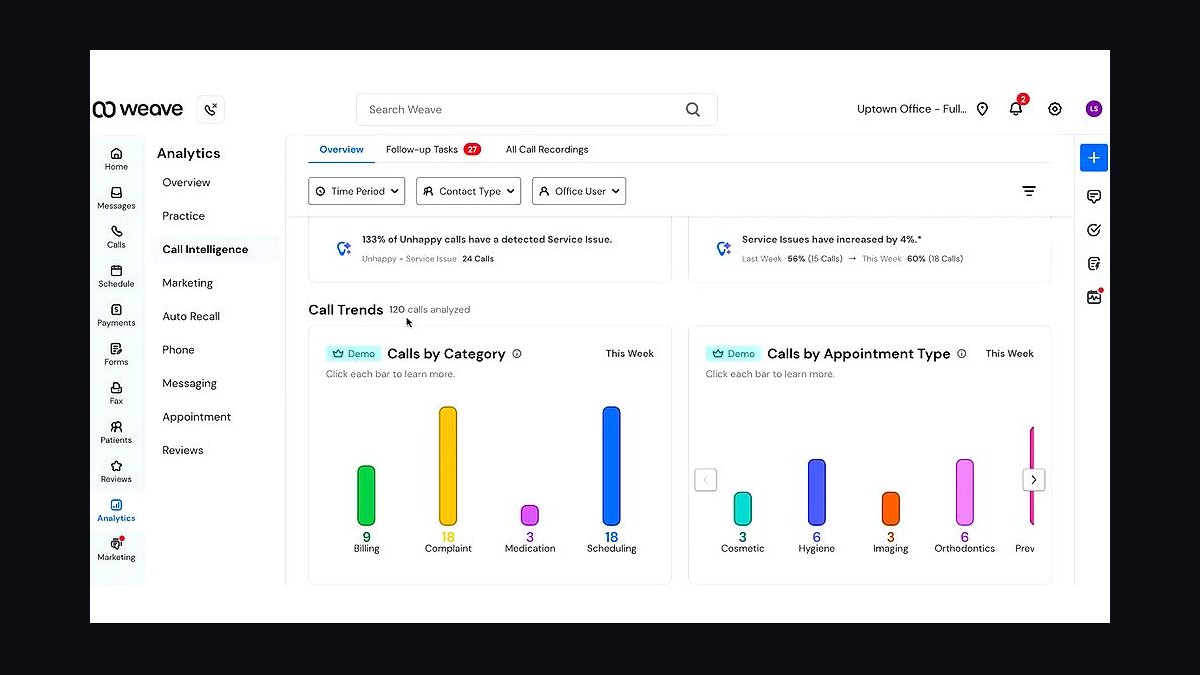
Weave ranks ninth as the unified communication layer, running in the high hundreds per month per location for two-way texting with the paying parent, reminders, retention recall, and the observation cohort. It reaches a teenager and a parent on different channels over a multi-year relationship, which the six-month dental recall cadence cannot. For practices with empty chairs and a new-patient volume problem, it is the cheaper first purchase.
It is for practices whose growth constraint is new-patient volume rather than consult conversion, and it should be bought before benchmarking software in that scenario. It trades away clinical depth entirely — this is engagement, not records. Against OrthoBanc above, it communicates rather than collects; against Podium below, it wins on unified texting and loses on review generation focus.
10Gaidge
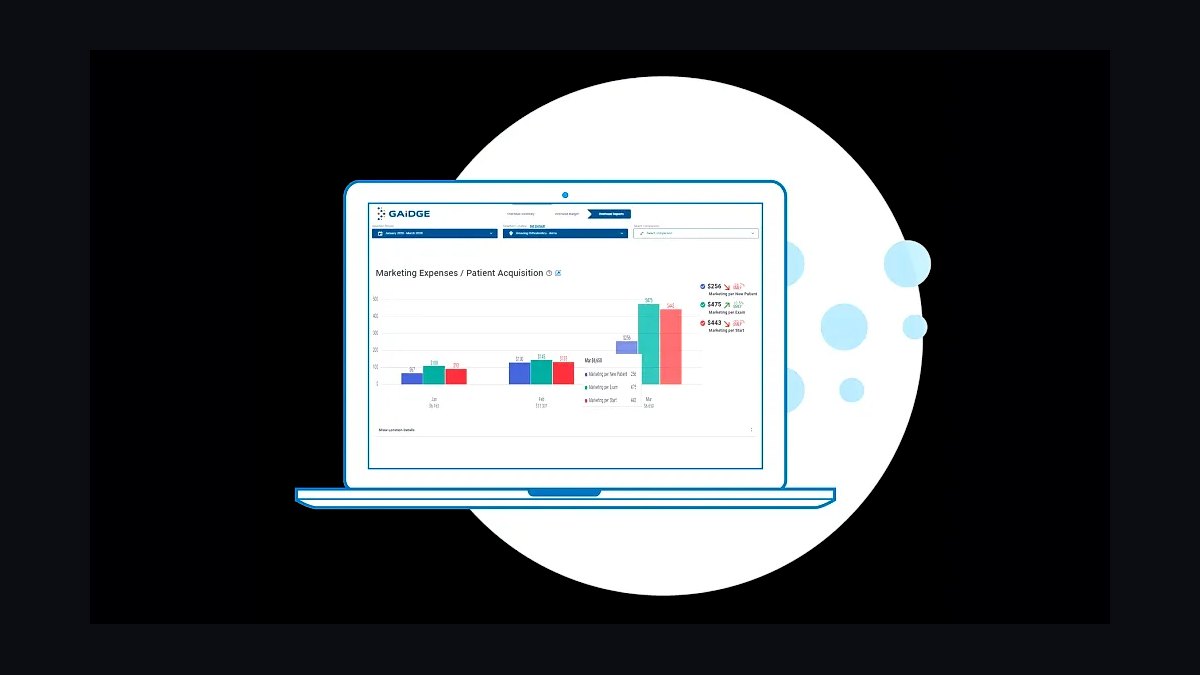
Gaidge ranks tenth as the ortho benchmarking layer, running in the mid hundreds per practice, and it exists specifically to show that your consult-to-start conversion trails peers. No amount of production reporting inside the practice-management system surfaces that external comparison. It is the cheapest layer and often purchased last, which is backwards for a practice with a conversion problem to diagnose.
It is for practices that already have clean data in the system of record and want to know where they stand against comparable offices. It trades away operational function — it measures rather than runs anything. Against Weave above, it diagnoses rather than engages, and buying it before you have a conversion problem is a common ordering mistake; it belongs after the funnel layers are live.
How we ranked these
We ranked tools by five weighted criteria: ortho-specific contract and treatment-card handling (25%), imaging and ceph capability (20%), consult-to-start conversion and financing workflow (20%), integration depth with scanners and aligner planning (20%), and total cost of ownership across a typical 24-month horizon (15%). Each vendor was assessed against real practice workflows rather than feature checklists, with multi-location scalability and support responsiveness factored into the integration score.
We deliberately ignored brand prestige, trade-show marketing claims, and published feature matrices that vendors update quarterly. We also excluded general-dental systems with ortho bolt-ons, since per-visit billing logic cannot natively represent a multi-year treatment contract. Pricing was treated as directional because quotes vary by provider count, location count, and negotiated bundles, making fixed rankings on sticker price misleading.
Related questions
Can a combined dental and orthodontics practice run one system?
Rarely well. Dental software bills per procedure and lacks a multi-year contract ledger and ceph tracing. Most combined practices run their dental system for restorative work and a parallel ortho system for treatment cards and imaging, accepting two systems over one that breaks financially.
Do I need both a practice-management system and separate imaging software?
Not necessarily. Ortho2 Edge Cloud includes imaging, so a solo practice can run treatment cards, scheduling, and ceph images in one login. Best-of-breed setups pair Dolphin Management with Dolphin Imaging for stronger tracing and 3D simulation, at the cost of an extra integration seam to maintain.
What is consult-to-start conversion and why does it matter?
It is the percentage of new-patient consultations that convert into signed treatment contracts. Because orthodontic revenue is elective and largely out-of-pocket, this single number drives growth more than new-patient volume. Tools like OrthoFi and Gaidge exist specifically to lift and benchmark it.
Is in-house aligner printing cheaper than per-case lab fees?
Only at high volume. Invisalign, SureSmile, and Spark charge per case, so low-volume practices usually pay less in lab fees than in equipment, materials, and staff time. In-office design through uLab inverts the math once aligner case counts climb, so model it against your own volume.
How long does it take to migrate active treatment contracts?
Longer than most practices expect. Every in-flight contract carries a fee, paid-to-date, insurance assignment, and remaining schedule that must land intact. Conversion of active contracts is the highest-risk part of any switch, so schedule it outside busy seasons and validate balances before go-live.
Do I need benchmarking software if my PMS has dashboards?
Yes, if you have a conversion problem. Practice-management dashboards report your own production but cannot show how your consult-to-start rate compares to peers. Gaidge-class benchmarking surfaces that external comparison, which is usually the number that reveals whether the issue is conversion or new-patient volume.
What breaks most often in a best-of-breed ortho stack?
Three seams: the PMS-to-financing handoff, where contract terms must match across systems; the scanner-to-planning export, where open scanners add a manual step; and the collections-to-accounting sync, where the PMS view of production drifts from the general ledger unless reconciled monthly.
Should I buy financing software before benchmarking software?
Yes, if consults are leaving without starting. Financing presented at the point of decision lifts conversion measurably within a quarter, while benchmarking only diagnoses the problem. Buy the tool that touches the moment of decision before the tool that reports on it afterward.
FAQ
What is the best tech stack for an orthodontic practice in 2027?
Pair an ortho-specific practice-management system like Dolphin Management, Ortho2 Edge Cloud, or Cloud 9 with ceph and 3D imaging, an intraoral scanner feeding aligner planning, a consult-to-start financing layer such as OrthoFi or OrthoBanc, and ortho benchmarking through Gaidge.
What is the difference between all-in-one and best-of-breed ortho stacks?
All-in-one platforms like Ortho2 Edge Cloud put practice management, imaging, and communication in one vendor ecosystem, so the vendor absorbs integration risk. Best-of-breed surrounds a system of record with specialists, giving stronger conversion and imaging at the cost of integration labor the practice must own.
Which ortho practice-management systems lead the market?
Dolphin Management is the long-standing clinical and contract standard, Ortho2 Edge Cloud is the clearest browser-based all-in-one, and Cloud 9, now part of Planet DDS, plays the same role at multi-location scale with centralized cross-site reporting.
Why does general dental software fail at orthodontics?
General dental software bills per procedure at each visit. Orthodontics quotes a single treatment fee up front and collects it across 18 to 30 months, requiring a treatment card with down payment, insurance assignment, auto-draft amount, and remaining balance. Per-visit systems have no native concept for that.
What imaging software do orthodontists actually use?
Dolphin Imaging is the category standard for ceph tracing, superimposition, and case presentation. CBCT-heavy practices extend into Dolphin 3D, while practices standardized on Planmeca or Carestream hardware often run Romexis or Carestream's own imaging suite instead.
How much does an ortho software stack cost per month?
A solo practice running an all-in-one plus scanner, auto-draft, texting, reviews, and accounting typically lands in the low thousands monthly plus amortized capital. A two-to-six-location group adding centralized conversion and benchmarking moves into the five-figure monthly range.
Do orthodontic practices need a separate financing platform?
Most do, because the start decision is often made by a parent doing budget math in the chair. OrthoFi owns the consult-to-start funnel, OrthoBanc and HFD handle recurring auto-draft and declined-payment recovery, and lenders like Wisetack and Sunbit approve plans before the family leaves.
What should I check before signing an ortho software contract?
Ask each vendor to demonstrate a treatment coordinator moving a patient from consultation to signed contract with financing approved, using your fee schedule, in one continuous screen share. Vendors who show the workflow rather than describe it are telling you something real about the product.
How many locations before best-of-breed beats all-in-one?
One doctor and one location usually favors all-in-one, since every added integration becomes someone's unpaid second job. Two to six locations with a dedicated operations manager starts favoring best-of-breed, because cross-location conversion comparison and centralized patient-pay become real money.
What is the biggest implementation mistake ortho practices make?
Buying a scanner for the chairside wow and never attaching financing to it. The simulation impresses the parent, the parent says they will think about it, and the scanner never converts anything. Sequence the conversion moment before the analytics layer.
Sources
- https://www.dolphinimaging.com/
- https://www.ortho2.com/
- https://www.planetdds.com/cloud-9/
- https://www.orthofi.com/
- https://www.orthobanc.com/
- https://www.gaidge.com/
- https://www.itero.com/
- https://www.3shape.com/
- https://www.weavecommunications.com/
- https://www.podium.com/
Related on PULSE
This page will be disappearing soon. Save it to your device for $1 — or read it free while it is here.
@Kory-White- · if Venmo asks, the last 4 of my number are 2012
This page is gone.
This one is off the shelf now. $1 keeps it on your phone for good — the whole page, pictures and diagrams included.
 pulse-tech-stacksTop 10 Best Tech Stack Tools for Pilates Studios in 2027
 pulse-tech-stacksTop 10 Best Tech Stack Tools for API Security Vendors in 2027
 pulse-tech-stacksTop 10 Best Tech Stack Tools for HVAC Equipment Distributors in 2027
 pulse-tech-stacksTop 10 Best Tech Stack Tools for Commercial HVAC Contractors in 2027
 pulse-tech-stacksTop 10 Best Tech Stack Tools for Tire Shops in 2027
 pulse-tech-stacksTop 10 Best Tech Stack Tools for HOA and Community Association Management Companies in 2027
 pulse-tech-stacksTop 10 Best Tech Stack Tools for AI Customer Support Companies in 2027
 pulse-tech-stacksTop 10 Best Tech Stack Tools for AI Translation API Companies in 2027
 pulse-tech-stacksTop 10 Best Tech Stack Tools for Threat Intelligence Vendors in 2027
 pulse-tech-stacksTop 10 Best Tech Stack Tools for Garden Centers and Nurseries in 2027