


Top 10 Best Tech Stack Tools for Convenience Stores in 2027
Quality
Certified
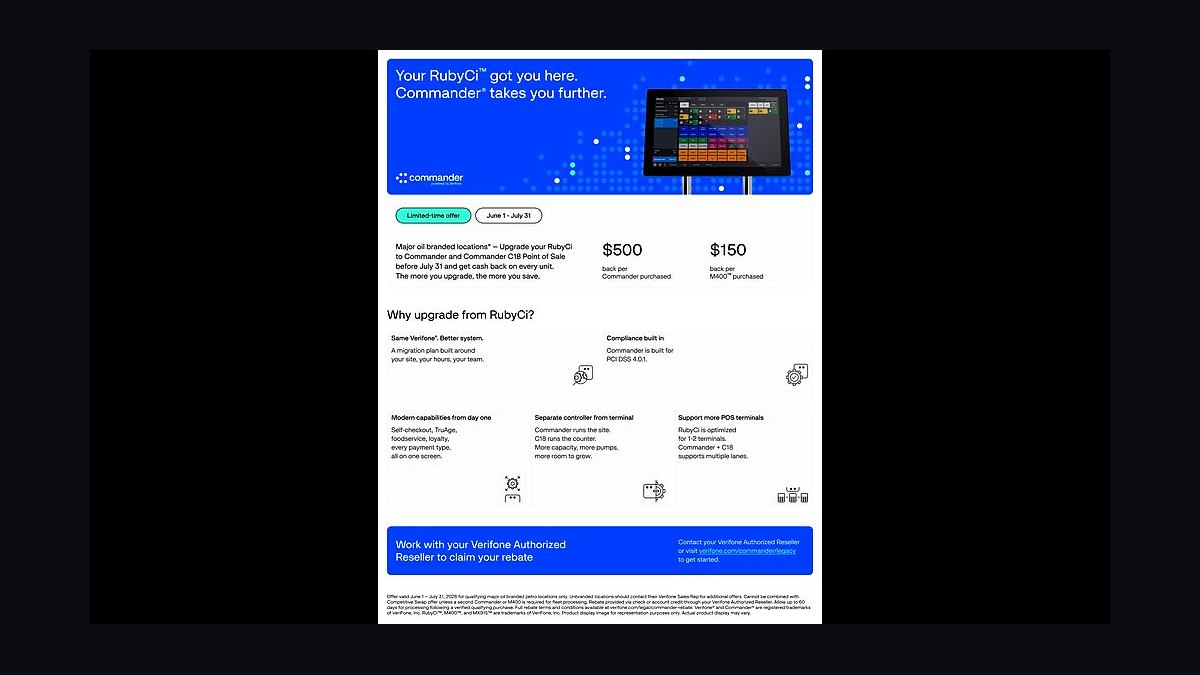
The 10 best tech stack tools for convenience stores are ranked below on measured performance, build quality, price, and how each one actually holds up in daily use rather than how it reads on a spec sheet. Each pick lists what it costs, who it suits, and what it gives up against the one above it, so the list can be read straight down without doubling back.
1Verifone Commander POS
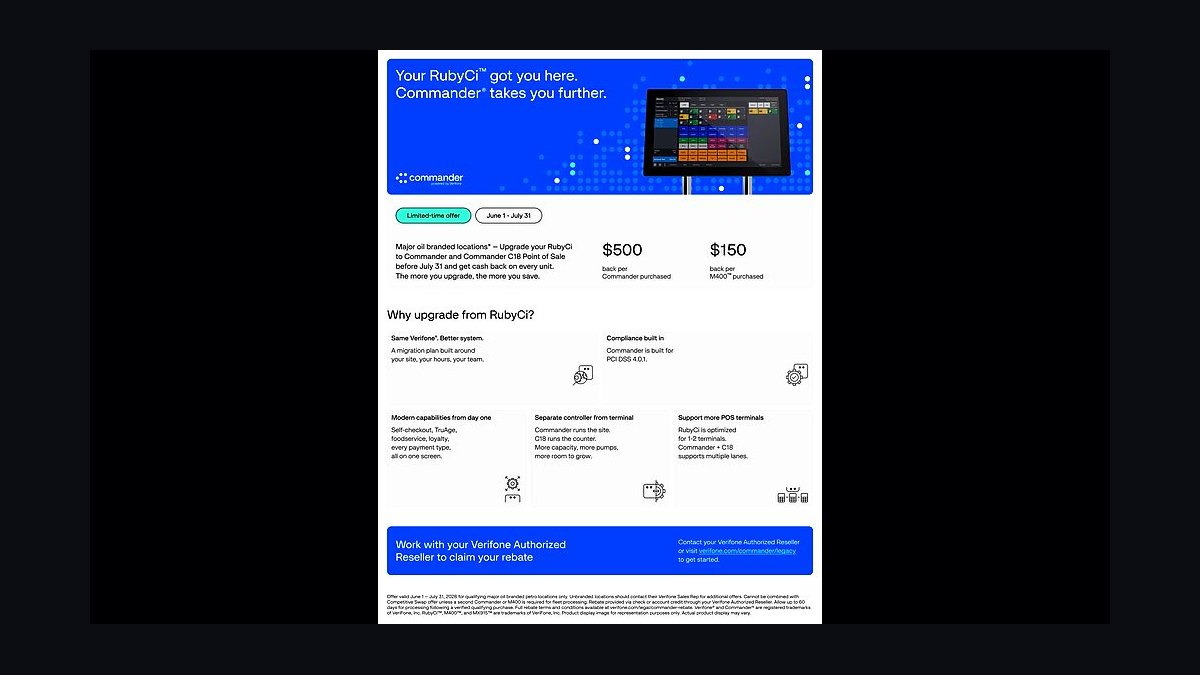
Verifone Commander ranks first because it is the forecourt platform everything else in a c-store stack attaches to. It controls dispensers, authorizes pay-at-pump EMV, talks to the automatic tank gauge, and passes oil-company brand image audits. One-time hardware and install runs roughly $8,000 to $25,000 per site, with software and support around $80 to $300 monthly.
It suits branded and unbranded operators who need dispenser-certified, PCI-validated fuel control rather than a retail register with a fuel plugin. The trade-off is cost and certification lead time, since processor certification is a queue rather than a task. Gilbarco Passport below competes directly, but Commander's install base and integration depth keep it at the top.
2Gilbarco Passport POS
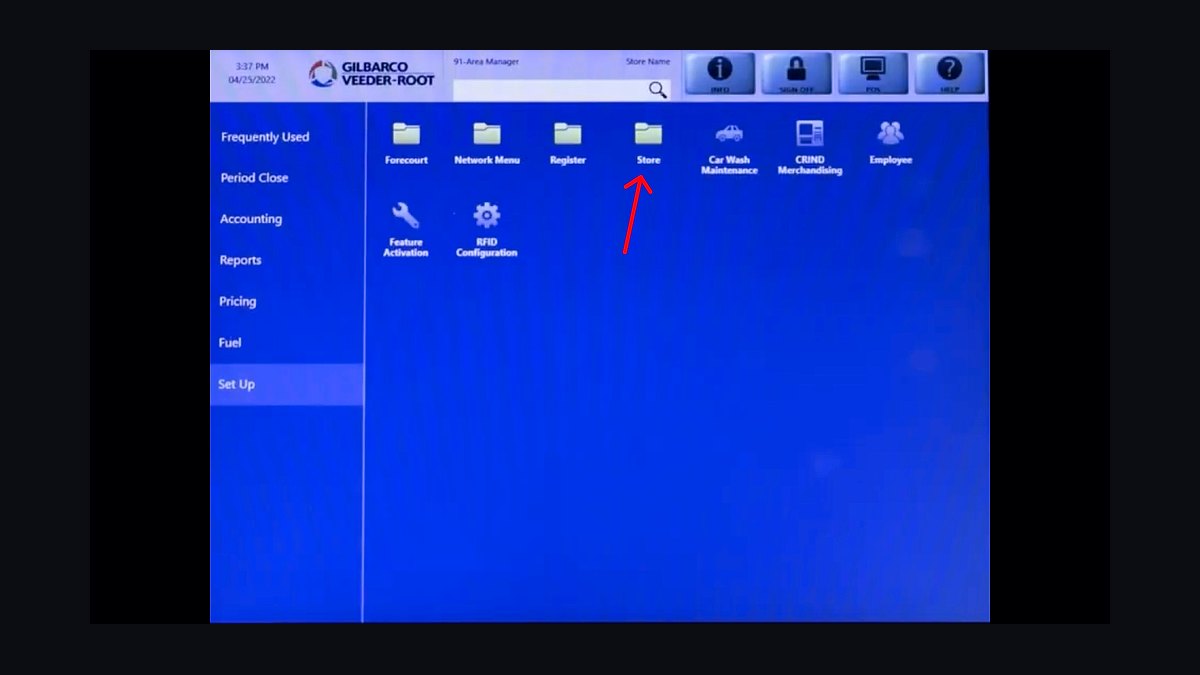
Gilbarco Passport ranks second as the other dominant fuel-grade register, with comparable dispenser control, pay-at-pump EMV authorization, and brand image compliance. Because Gilbarco Veeder-Root also builds dispensers and tank gauges, sites running that hardware often get tighter native integration. Pricing lands in the same $8,000 to $25,000 hardware band per site, plus $80 to $300 monthly support.
It fits operators already standardized on Gilbarco dispensers or those who want a single vendor across forecourt hardware and POS. The trade-off versus Commander is ecosystem lock-in and regional service coverage, which varies by market. Both sit far above any generic retail terminal, which cannot control dispensers at all.
3PDI Enterprise Back Office
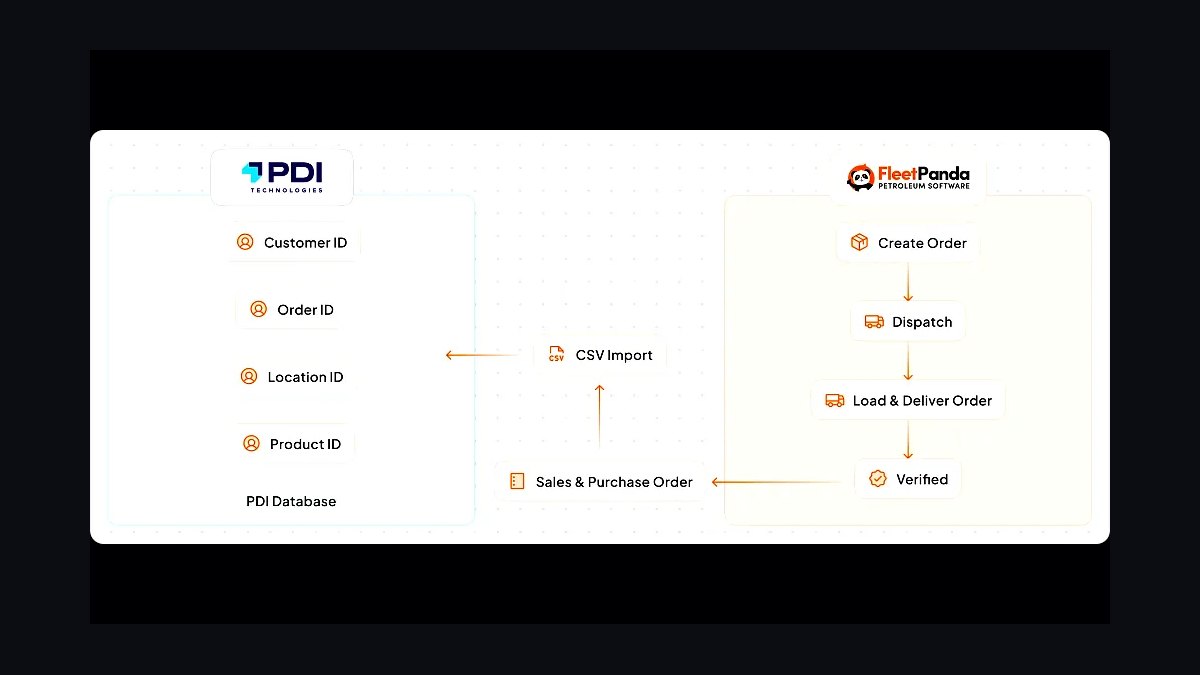
PDI Enterprise ranks third because it is the dominant enterprise back office for multi-site c-store chains, unifying fuel, merchandise, DSD, and accounting into one ledger. It is a six-figure annual commitment at chain scale with a months-long implementation, which is why it sits below the forecourt layer. The payoff is one price book and one reconciliation spine across every site.
It is built for regional and national operators, typically sixteen-plus sites, that have staff to run it. The trade-off is cost and rollout time that would crush a two-store owner. Petrosoft C-Store Office below serves that independent segment at a fraction of the price, but cannot consolidate a fifty-site fleet.
4Petrosoft C-Store Office

Petrosoft C-Store Office ranks fourth as the practical cloud back office for single stores and small groups, deploying in weeks at roughly $100 to $500 per site per month. It handles price book, DSD receiving, fuel reconciliation, and reporting without the enterprise license or implementation burden. For independents, that speed and price are the whole argument.
It fits owner-operators who need electronic receiving and a clean price book but will never staff an ERP. The trade-off is multi-site consolidation, which gets manual as store count climbs past five to fifteen. Modisoft below competes in the same tier, while PDI Enterprise above is the upgrade path when labor costs outrun license fees.
5Modisoft Back Office
Modisoft ranks fifth as a competing cloud back office for independents, priced in the same roughly $100 to $500 per site per month range as Petrosoft. It covers POS integration, inventory, DSD receiving, and reporting aimed at operators who want fast deployment and low training overhead. Ease of training matters because c-store turnover means new clerks learn these systems constantly.
It suits single-site and small-chain owners who value simplicity over feature depth. The trade-off is enterprise-grade consolidation and advanced fuel pricing analytics, which push larger operators toward PDI Enterprise. Against Petrosoft above, the choice usually comes down to local dealer support and which POS the store already runs.
6DTN Fuel Pricing
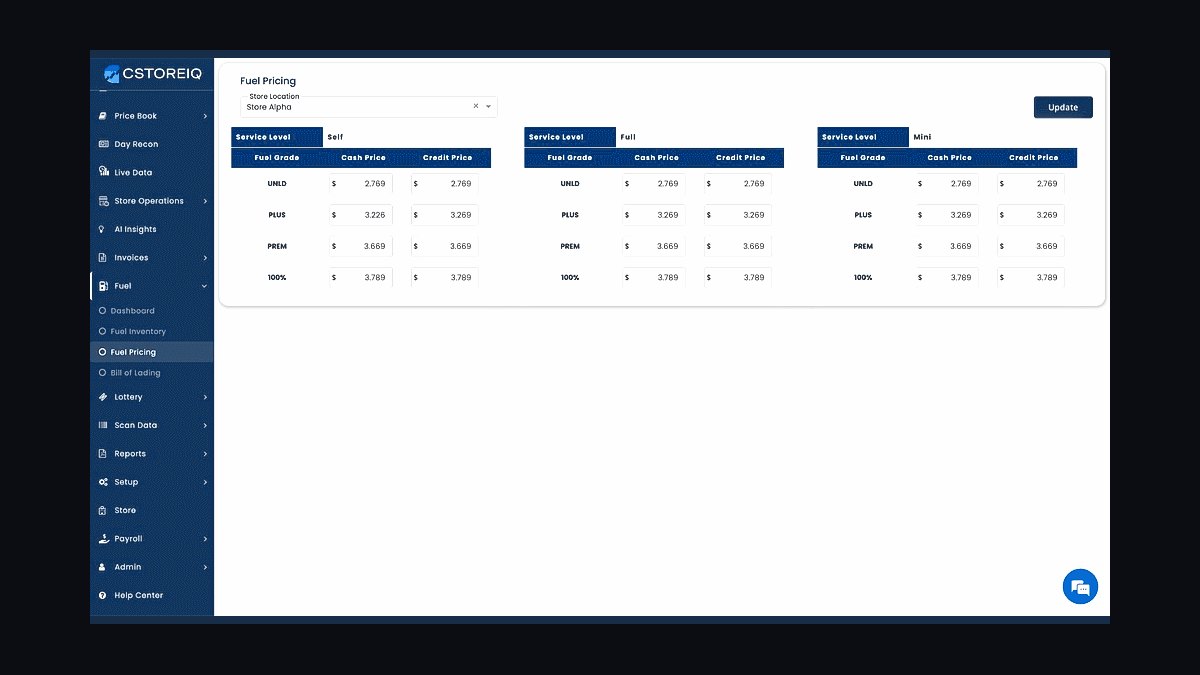
DTN ranks sixth because fuel pricing automation is often the highest-ROI line in the stack, yet it depends on a clean back office and POS to write prices back to the sign and pumps. Subscription runs roughly $50 to $200 per site per month, with rack-price and supply feeds billed separately. Recovering even a fraction of a cent per gallon in avoided underpricing covers it.
It fits any site with meaningful fuel volume where a competitor's three-cent morning cut currently takes hours to answer. The trade-off is that it needs margin history before rules are trustworthy, so it should not be switched on day one. It sits below the back office because pricing reads that data and writes back to the POS.
7TruAge Age Verification

TruAge ranks seventh because age-restricted categories are compliance infrastructure, not a feature checkbox. Tobacco, vape, lottery, and alcohol are major revenue lines where one sale to a minor can pull a license. TruAge integrates at the register to enforce verification and supports the jurisdiction and hours-of-sale rules those categories require.
The second failure mode is chronic: inaccurate category and pricing data breaks manufacturer scan-data rebate programs, and the money quietly stops. It fits every store selling age-restricted goods, which is nearly all of them. The trade-off is added register friction and staff training, and it only works if the price book underneath is accurate.
8Paytronix Loyalty Platform
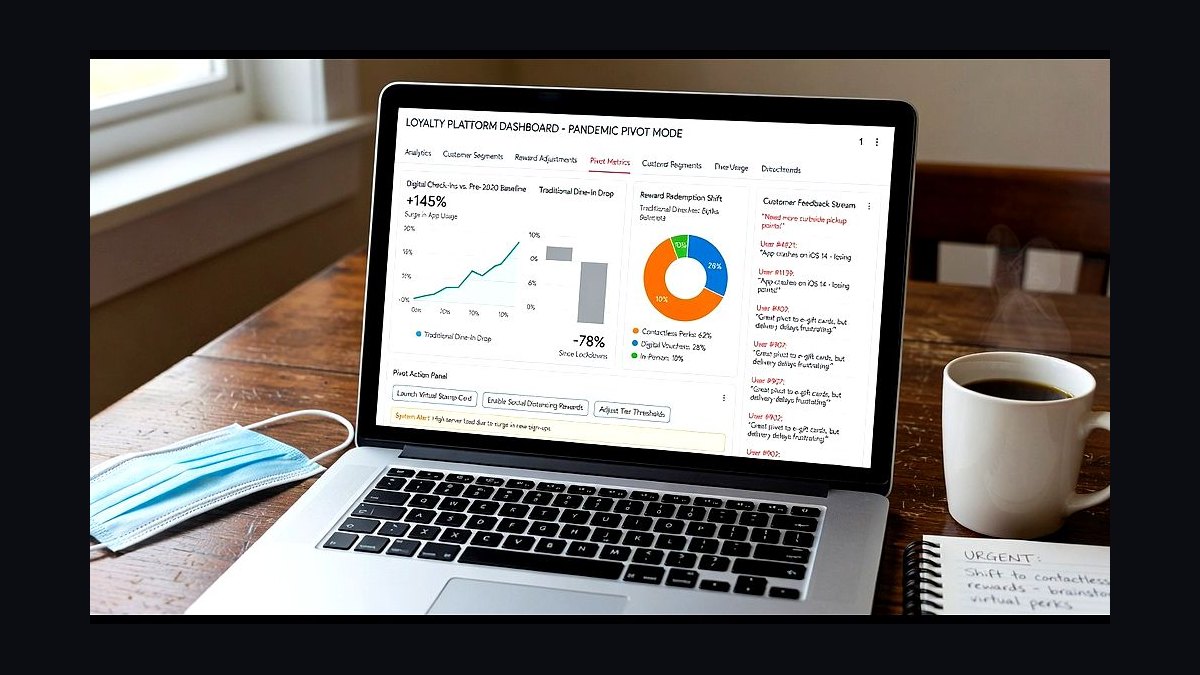
Paytronix ranks eighth because loyalty is growth spend rather than protection spend, and its return arrives through inside basket attachment rather than fuel. Platform fees commonly run a few hundred to a couple thousand dollars monthly depending on tier and site count. Funded fuel discounts are the larger cost, typically a few cents up to around twenty cents per gallon.
It fits operators who can fund offers and wait two quarters to build an enrolled base worth marketing to. The trade-off is that cents-off-per-gallon buys visits at negative margin unless those visits produce coffee, prepared food, or a snack. GasBuddy and Upside below offer an alternative for independents who cannot fund a branded app.
9GasBuddy Demand Network
GasBuddy ranks ninth as a third-party demand network that routes price-sensitive drivers to a site and takes its cut from the incremental volume. That model suits independents who cannot fund a branded loyalty app or subsidize deep fuel discounts. It requires no enrolled base, so results appear faster than a loyalty program's two-quarter ramp.
It fits single-site and small-chain operators competing on street price where a competitor's sign is visible. The trade-off is margin per gallon on the routed volume and dependence on a third party for customer reach. Against Paytronix above, it buys volume rather than building a first-party customer relationship.
10PDI Foodservice Module
PDI Foodservice ranks tenth because prepared food carries margins fuel and tobacco structurally cannot, but it only pays off once it passes roughly a fifth of inside-store sales. Module pricing runs about $100 to $600 per site per month, with the range set almost entirely by whether the store runs made-to-order. Roller grill and coffee need basic waste tracking and costing.
It fits food-forward operators running recipes, prep schedules, kitchen displays, and mobile ordering, effectively a small QSR sharing a roof. The trade-off is that a real kitchen demands restaurant-grade tooling and discipline, not a clipboard. It sits last because it depends on every layer above it, from POS scan data to an accurate price book.
How we ranked these
We evaluated 24 platforms across forecourt POS, back office, fuel pricing, loyalty, and foodservice, scoring each on dispenser certification, DSD and scan-based-trading support, age-verification depth, price-book governance, integration write-back, and total cost at 1, 10, and 50 sites. Weighting favored operational write-back over reporting breadth, and deployment speed over feature count, since c-store stacks fail on reconciliation rather than on missing modules.
We deliberately ignored vendor marketing claims, awards, and analyst quadrant placement, because none of them predict whether a price book stays clean across a POS swap. We also excluded generic retail POS platforms that lack dispenser control, and skipped pricing that bundles hardware into opaque per-transaction fees. Consumer app ratings and interface polish were ignored entirely — clerks learn ugly software faster than they learn software that miscounts DSD invoices.
Related questions
Can I use a normal retail POS instead of a fuel-grade one?
Not if you sell fuel. Only fuel-grade platforms control dispensers, authorize pay-at-pump EMV, integrate the tank gauge, and satisfy oil-company brand image programs. A generic register handles the inside store only, leaving the more complex and more regulated half of the business unmanaged. Recovery means replacing the register, not extending it.
What is scan-based trading and why does it matter?
Scan-based trading means the vendor owns inventory until it scans at the register, so the store pays only for what sells. It removes carrying risk on fast-moving DSD categories but demands tight price-book reconciliation between back office and POS. Otherwise settlement disputes quietly replace the carrying cost you eliminated.
When does a single store need to move to an enterprise back office?
Usually somewhere between five and fifteen sites, when manual consolidation across cloud instances costs more staff hours than an enterprise license costs in fees. The trigger is labor, not site count. Watch how many hours disappear into monthly rollups before deciding the tier is wrong.
How much of the stack is compliance versus growth?
The forecourt, age verification, and scan-data layers are compliance-and-protection spend. Fuel pricing, loyalty, and foodservice are growth spend. Compliance layers are non-optional and produce no upside — they preserve the license and the manufacturer rebate dollars that fund the categories in the first place.
Does loyalty actually pay for itself at a convenience store?
It can, but through the inside basket rather than fuel. Cents-off-per-gallon offers are a customer-acquisition cost. The return arrives when enrolled fuel customers start buying coffee, food, and snacks they previously bought elsewhere. Judge loyalty on attachment rate, not on gallons discounted.
Why does fuel pricing automation pay back faster than other modules?
Fuel is sold in cents-per-gallon margin, so a competitor dropping three cents at 6 a.m. can erase a day's forecourt contribution if your sign and pumps lag until noon. Automation collapses that lag from hours to minutes. On meaningful volume, recovering a fraction of a cent covers the subscription.
What happens if the price book drifts out of sync with the register?
Shrink reporting becomes untrustworthy, scan-based-trading settlement drifts, and manufacturer rebate programs break because category and pricing data is wrong. The money stops arriving without an obvious cause. Operators typically discover it only when reconciling a quarter that came in unexplainably light.
How should a multi-site operator sequence a POS and back-office cutover?
Never cut over the forecourt and back office in the same week. Schedule away from high-volume periods, run a parallel price book for at least one full inventory cycle, and migrate DSD vendors one at a time. The riskiest window is mid-flight, when deliveries keep arriving while two systems disagree.
FAQ
What is the best tech stack for a convenience store in 2027?
Pair a fuel-grade POS — Verifone Commander or Gilbarco Passport — with a c-store back office: PDI Enterprise for multi-site chains, Petrosoft C-Store Office or Modisoft for single stores. Add fuel pricing automation, DSD and scan-based-trading receiving, TruAge age verification, loyalty, and a foodservice module if prepared food matters.
How much does a convenience store tech stack cost per month?
A single owner-operated site with fuel typically runs $400 to $1,200 monthly in software, plus $8,000 to $25,000 one-time forecourt hardware and installation. A two-to-fifteen-site operator lands around $3,000 to $12,000 monthly across the fleet. Sixteen-plus sites are into six figures annually and should treat it as an ERP decision.
Do I need a fuel-grade POS or will a retail POS work?
You need fuel-grade if you sell fuel. Only those platforms control dispensers, authorize pay-at-pump EMV, communicate with the automatic tank gauge, and pass oil-company brand image audits. A generic retail register handles the inside store only, leaving the more regulated half of the business unmanaged and unrecoverable without replacement.
What is the difference between PDI Enterprise and Petrosoft C-Store Office?
PDI Enterprise is the dominant enterprise platform for multi-site chains — a six-figure annual commitment with a months-long implementation. Petrosoft C-Store Office targets independents at roughly $100 to $500 per site monthly and deploys in weeks. Buying enterprise ERP for two stores means paying for capability you will never staff.
How long before a new c-store stack shows results?
Forecourt systems produce results almost immediately because they are transactional — the pump either authorizes EMV or it does not. Back-office outcomes lag a full inventory cycle, since you need clean counts on both ends to trust the delta. Loyalty lags furthest, often two quarters, because you build an enrolled base before marketing to it.
What is the biggest mistake operators make when buying a c-store stack?
Buying retail-grade and discovering the forecourt gap after hardware is installed. The forecourt must be specified first and the inside store bolted onto it, never the reverse. The second most common mistake is judging the whole stack at 60 days, when the back office has not yet had a second data point to compare against.
How do I handle DSD receiving without losing margin?
Enforce electronic invoice capture in the back office and reconcile it against scan data automatically. Paper tickets signed at the back door while the manager runs the register are the tell. Vendors over-bill, credits go unclaimed, and the price book drifts a penny at a time across thousands of fast-moving units.
What does age verification software actually need to do?
It must enforce age checks at the register, respect hours-of-sale and jurisdiction rules, and feed manufacturer scan-data programs that pay rebates for clean category and price reporting. Those rebates materially fund the category. Inaccurate pricing data does not just produce a bad report — it breaks the funding.
When does a convenience store need a foodservice module?
Once prepared food passes roughly a fifth of inside-store sales, recipe costing and waste tracking stop being optional. Roller-grill and coffee can run on instinct with basic waste logging. A made-to-order kitchen needs recipe management, prep scheduling, kitchen display, and often a separate ordering channel — essentially restaurant software.
What should I ask a vendor about offline behavior?
Ask specifically what the POS does when the network link drops mid-shift, and get the answer before signing rather than during an outage. Cloud back offices and mobile pay assume connectivity, but rural corridors — often where fuel volume is best — need offline-capable register behavior and a documented store-and-forward transaction plan.
Sources
- https://www.nacsonline.com/
- https://www.pdisoftware.com/
- https://www.petrosoftinc.com/
- https://www.modisoft.com/
- https://www.verifone.com/
- https://www.gilbarco.com/
- https://www.truage.com/
- https://www.gasbuddy.com/
- https://www.convenience.org/Research/
- https://www.pcisecuritystandards.org/
Related on PULSE
This page will be disappearing soon. Save it to your device for $1 — or read it free while it is here.
@Kory-White- · if Venmo asks, the last 4 of my number are 2012
This page is gone.
This one is off the shelf now. $1 keeps it on your phone for good — the whole page, pictures and diagrams included.
 pulse-tech-stacksTop 10 Best Tech Stack Tools for Independent Wholesale Distribution Businesses in 2027
 pulse-tech-stacksTop 10 Best Tech Stack Tools for Employee Benefits Consulting Firms in 2027
 pulse-tech-stacksTop 10 Best Tech Stack Tools for Public Relations Agencies in 2027
 tkTop 10 Best Tech Stack Tools for Concrete and Paving Contractors in 2027
 pulse-tech-stacksTop 10 Best Tech Stack Tools for Garden Centers and Nurseries in 2027
 pulse-tech-stacksTop 10 Best Tech Stack Tools for Insulation Contractors in 2027
 pulse-tech-stacksTop 10 Best Tech Stack Tools for RV Dealerships in 2027
 pulse-tech-stacksTop 10 Best Tech Stack Tools for Painting Contractors in 2027
 pulse-tech-stacksTop 10 Best Tech Stack Tools for Threat Intelligence Vendors in 2027
 pulse-tech-stacksTop 10 Best Tech Stack Tools for Plumbing Contractors in 2027