


Top 10 Best Tech Stack Tools for Art Galleries in 2027
Quality
Certified
The 10 best tech stack tools for art galleries are ranked below on measured performance, build quality, price, and how each one actually holds up in daily use rather than how it reads on a spec sheet. Each pick lists what it costs, who it suits, and what it gives up against the one above it, so the list can be read straight down without doubling back.
1Artlogic

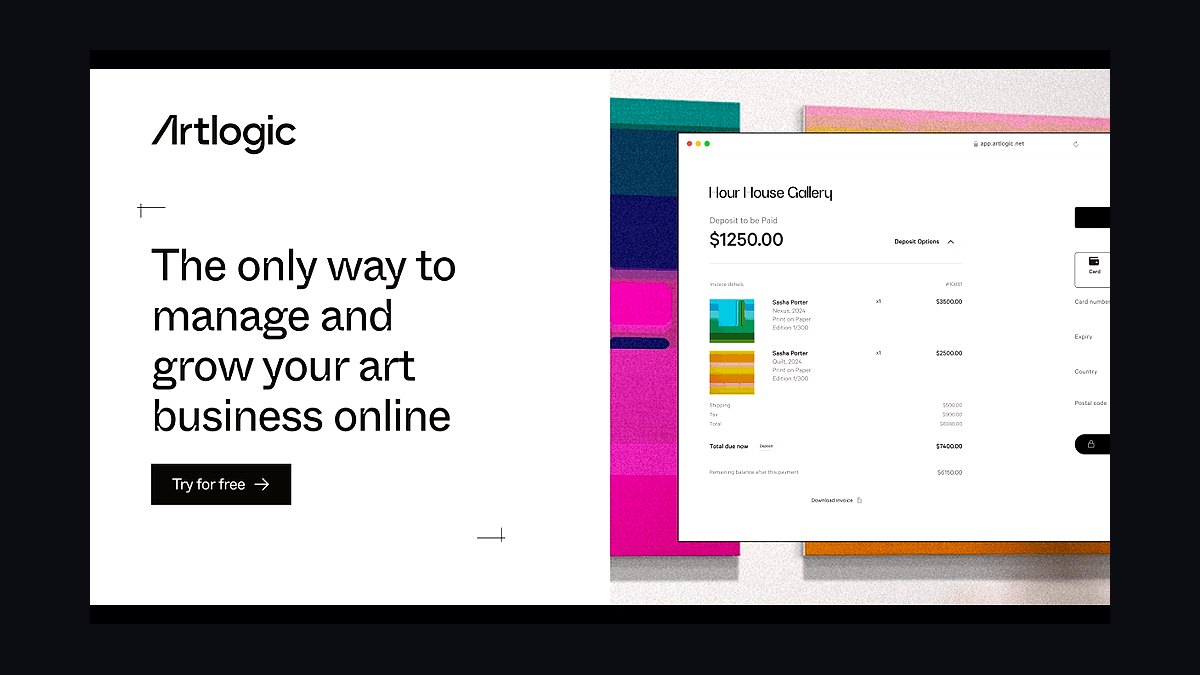
Artlogic ranks first because it is the only gallery platform that unifies inventory, consignment splits, artist statements, public websites, and password-gated viewing rooms in one system of record. Mid-size galleries with 15 to 30 represented artists typically spend $1,500 to $5,000 monthly on software, and Artlogic anchors that budget by eliminating double entry across every channel.
It suits galleries with a real fair calendar and a roster large enough to make manual tracking dangerous. It trades away simplicity and low cost, so a solo dealer may find ArtCloud or Artwork Archive sufficient. Compared with Arternal directly below, Artlogic owns the artwork record while Arternal only owns the collector relationship.
2Arternal

Arternal ranks second because it is the dedicated collector CRM built specifically for the offer-and-hold motion that generic sales CRMs ignore. It remembers which collector loves a specific artist's mid-career work, what they paid previously, and which works are held on a short fuse before public release, which matters when a gallery closes only a few dozen high-value transactions a year.
It is for galleries with a real sales team actively running offers, holds, and waitlists. It trades away affordability, since buying it before that volume exists wastes budget on an unused system. Compared with Artlogic above, Arternal handles relationships but not inventory, consignment math, or viewing rooms, so it layers on top rather than replaces.
3Artwork Archive

Artwork Archive ranks third because it gives small galleries a credible system of record for roughly $30 to $150 monthly, covering provenance, edition details, locations, and consignment terms without enterprise pricing. For an emerging gallery running a complete stack near $200 to $600 monthly, it is the cheapest way to stop tracking a growing roster on spreadsheets.
It is for single-owner galleries with a handful of artists and a modest collector base. It trades away deep website generation, viewing rooms, and advanced CRM, so galleries outgrowing manual contact tracking will feel the ceiling. Compared with ArtCloud below, it leans more toward inventory and cataloging than bundled e-commerce.
4ArtCloud

ArtCloud ranks fourth because it bundles inventory management, contact tools, and e-commerce into one product at a lower entry point than Artlogic, making it a practical first platform for leaner operations. It generates both a public website and private viewing rooms from the same record, so a small gallery avoids maintaining two systems.
It is for galleries that want one affordable product covering management and online sales rather than best-in-class depth in each. It trades away the website sophistication and enterprise scale that Artlogic offers larger rosters. Compared with Artwork Archive above, ArtCloud adds commerce and viewing rooms but costs more at the entry tier.
5Artsy

Artsy ranks fifth because it delivers reach to collectors a gallery would never meet through its own four walls, listing works from the same master record to a global audience. It pairs with any inventory system, so a gallery at any tier can add marketplace visibility without replacing its core platform.
It is for galleries wanting discovery and inbound collector interest beyond their existing relationships. It trades away control over presentation and pricing, since listings sit inside a third-party marketplace rather than a gallery-owned viewing room. Compared with Artnet below, Artsy leans toward primary-market discovery while Artnet leans toward auction comparables.
6Artnet

Artnet ranks sixth because its price database and auction comparables give secondary-market dealers the provenance and prior-sale context that primary-market reach tools do not provide. A private dealer verifying where a work sold and at what price relies on that history before quoting a client.
It is for secondary-market dealers and galleries reselling works where prior auction results matter more than public discovery. It trades away the primary-market collector traffic that Artsy supplies, so galleries selling new work from living artists get less from it. Compared with Artsy above, Artnet is research infrastructure rather than a sales channel.
7Crozier Fine Arts

Crozier Fine Arts ranks seventh because it handles the climate-controlled crating, condition reporting, and long-term storage that irreplaceable high-value works require. At blue-chip scale, logistics, storage, and insurance routinely exceed software spend several times over, and Crozier sits at the center of that larger budget line.
It is for galleries with heavy storage footprints, multi-location operations, and eight- and nine-figure annual sales. It trades away low cost and per-shipment flexibility, since standing accounts and dedicated storage command premium pricing. Compared with Convelio below, Crozier leans toward storage and institutional-scale coordination rather than transactional shipping.
8Convelio

Convelio ranks eighth because it gives mid-size galleries a specialist fine-art carrier for insured, high-value shipments without the standing-contract commitment that Crozier requires. Galleries shipping across multiple simultaneous fairs use it to replace ad-hoc bookings with coordinated, properly crated transport.
It is for galleries moving valuable originals more than a few times a year and wanting better rates than per-shipment bookings allow. It trades away long-term storage and the deep institutional coordination Crozier provides. Compared with ARTA below, Convelio suits galleries ready for a standing relationship rather than occasional one-off shipments.
9ARTA
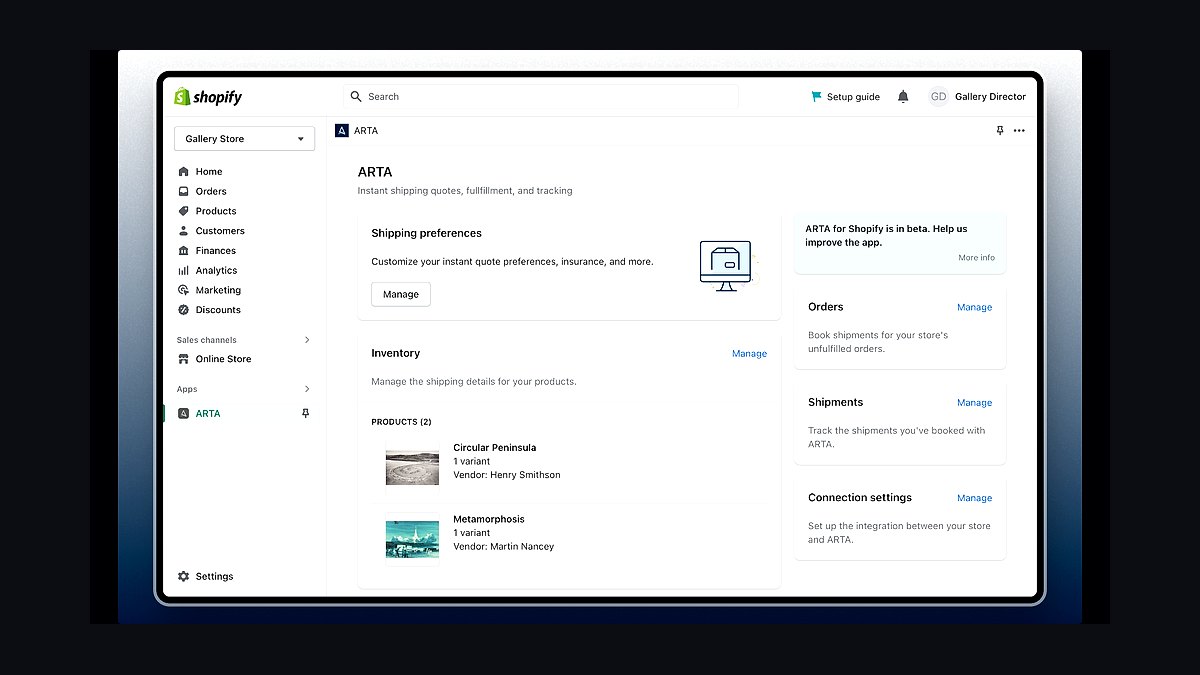
ARTA ranks ninth because it lets emerging galleries book specialist fine-art shipping per shipment instead of committing to a standing logistics contract. For a gallery running a complete stack near $200 to $600 monthly, that pay-as-you-go model keeps logistics costs tied directly to actual sales activity.
It is for single-owner and emerging galleries shipping valuable works only occasionally. It trades away the preferential rates and coordination that standing accounts with Crozier or Convelio deliver once shipping volume rises. Compared with Convelio above, ARTA is the entry point that galleries graduate from rather than the destination.
10QuickBooks
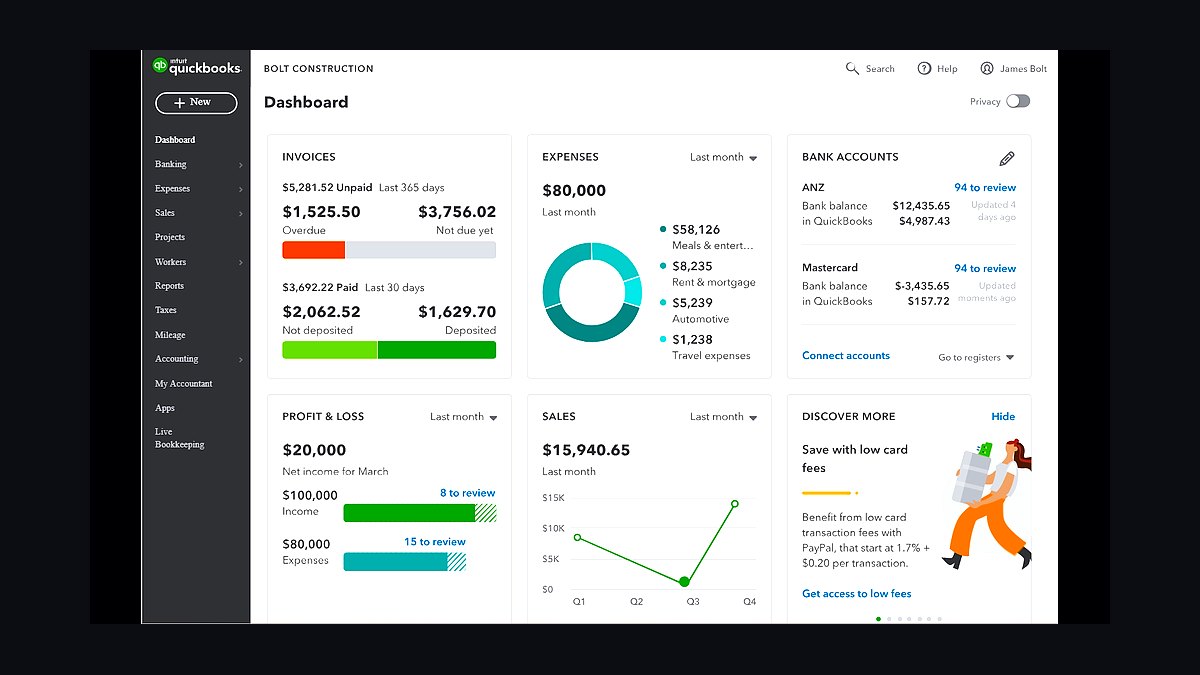
QuickBooks ranks tenth because it closes the loop on the consignment math the inventory system calculates, posting the sale, the artist's share, and the gallery's commission into clean books. At roughly $30 to $90 monthly, it is the cheapest layer in the stack and the one most galleries already know.
It is for emerging and single-owner galleries that do not yet need multi-currency accounting across international collectors. It trades away the multi-currency handling that Xero provides mid-size galleries selling abroad. Compared with Xero, QuickBooks wins on familiarity and price but loses once cross-border invoicing becomes routine.
How we ranked these
We ranked tools by how well they handle unique, consigned artworks rather than interchangeable SKUs. Weighted criteria: consignment and artist-split accuracy, provenance and condition tracking, viewing-room and website integration from one record, collector CRM depth for offer-and-hold selling, marketplace reach, fine-art logistics and insurance integration, multi-currency accounting, and total monthly cost at three gallery tiers. Integration breadth and data portability also counted, since stacks must stay narrow.
We deliberately ignored generic retail features: reorder points, quantity-on-hand logic, barcode checkout, loyalty programs, and high-volume e-commerce merchandising. We also excluded lead-scoring and pipeline-velocity scoring, because gallery sales run on private relationships and rare high-value transactions, not funnel throughput. Vendor marketing claims, analyst quadrant placement, and feature counts without art-specific consignment math were discarded. Pricing was judged at realistic gallery scale, not entry-tier list rates.
What to look for
What matters most is whether one system can serve as the single artwork record of truth. If inventory, consignment splits, website listings, and viewing rooms all read from that record, you avoid double entry and the drift that causes sold works to appear available. Match the stack to roster size and sales motion, not ambition: a small roster rarely justifies enterprise CRM spend, while a 20-artist gallery with a fair calendar needs integrated publishing.
The mistake most buyers make is buying the CRM before the system of record. They subscribe to a dedicated collector CRM while still tracking consignments in spreadsheets, so splits get miscalculated and provenance gaps surface later. The second common error is treating logistics and insurance as an afterthought, shipping valuable originals through standard couriers or letting coverage lapse between fairs, which risks an unrecoverable loss no software can fix.
Related questions
Does a gallery need a website separate from its viewing rooms?
Not necessarily. Artlogic and ArtCloud both generate a public website and private viewing rooms from the same inventory record, so most galleries run one platform for both rather than maintaining a separate site. A separate site only makes sense when a gallery wants a distinct editorial brand experience that the management platform cannot produce.
Can a gallery start without a dedicated CRM at all?
Yes. Below a certain private-sale volume, the contact and offer tools built into Artlogic or ArtCloud are enough. A standalone CRM like Arternal earns its cost once a sales team actively runs offers, holds, and waitlists. Buying one earlier usually means paying for a system that sits mostly unused.
How does secondary-market dealing change the stack?
A secondary-market or private dealer typically adds Artnet for price-database and auction-comp context on top of a lean inventory system, since verifying provenance and prior sale prices matters more than public reach. Consignment terms also shift, often involving third-party consignors rather than the artist directly, so split tracking must handle multiple parties.
Is Shopify ever the right primary platform for a gallery?
Only if revenue leans heavily on high-volume prints or merchandise rather than unique consigned originals. Shopify's checkout outperforms gallery-native commerce for repeatable products, but it lacks consignment and provenance tracking. It should never replace the gallery management system as the source of truth for one-of-a-kind works.
What triggers the move from per-shipment logistics booking to a standing account?
Once a gallery ships insured, high-value works more than a few times a year, or across multiple simultaneous fairs, a standing relationship with Crozier or Convelio replaces ad-hoc ARTA bookings. Standing accounts typically bring better rates, priority scheduling, and consistent condition-reporting workflows across every shipment.
How long does a typical gallery stack rollout take?
A realistic mid-size rollout runs about 90 days. The first 30 days stand up inventory and migrate every work with splits wired correctly. The next 30 bring collector history into the CRM and connect marketplace listings to the master record. The final 30 lock in logistics accounts, insurance, and documentation workflows.
Do galleries need multi-currency accounting software?
Yes, if they sell across borders or at international fairs. Collectors pay in their own currency, and artists may be paid in another, so QuickBooks or Xero configured for multi-currency keeps statements accurate. Single-currency books force manual conversion and create reconciliation errors that compound across a fair season.
What is the biggest risk of letting listings drift out of sync?
A sold work still marked available on the public site, or a price visible to a collector it was never meant to reach. Both errors damage trust and are entirely preventable by publishing every channel from one authoritative inventory record rather than re-entering availability and pricing by hand in three places.
FAQ
Do I really need a dedicated gallery management system instead of spreadsheets or generic retail software?
Generic retail tools assume interchangeable, quantity-tracked SKUs, while a gallery sells unique objects carrying provenance and consignment splits that a spreadsheet cannot reliably enforce as the roster grows. A dedicated system like Artlogic or Artwork Archive is the right foundation once you are tracking more than a handful of artists.
What is the practical difference between Artlogic and ArtCloud?
Both manage inventory, contacts, and online sales, but Artlogic is the broader market leader with deeper website and viewing-room capability favored by mid-size and larger galleries. ArtCloud bundles management, CRM, and e-commerce into one product at a lower entry point for leaner operations with simpler publishing needs.
When does a gallery need a separate CRM like Arternal instead of built-in contacts?
Once private-sale volume and a dedicated sales team are actively running offers, holds, and waitlists. Below that threshold, the built-in CRM inside Artlogic or ArtCloud is genuinely sufficient, and buying a standalone CRM earlier is wasted spend that drains a limited budget.
How is an online viewing room different from posting a work to the public website?
A viewing room is a private, often password-gated preview sent to a specific collector before a work is shown publicly, with price visibility the gallery controls per person. The public website is open reach with no such curation, so the two serve entirely different stages of a sale.
Do all galleries need specialist art logistics, or can low-value pieces ship through standard couriers?
Prints and lower-value pieces can move through standard couriers, but valuable originals need proper crating, climate control, condition reporting, and dedicated fine-art insurance through a specialist like Crozier, Convelio, or ARTA. Treating that as a core layer rather than a cost to trim protects both the asset and collector trust.
Why does a gallery's tech stack look so different from a general resale or consignment shop's?
A resale shop optimizes for volume across interchangeable, lower-value goods, while a gallery sells a small number of unique, high-value works through private relationships with consignment splits, provenance, viewing rooms, and serious logistics. The entire stack is built for the opposite optimization: low volume, high value, discretion-driven selling.
How much should a small gallery expect to spend monthly on software?
An emerging or single-owner gallery can run a complete, credible stack for roughly $200 to $600 a month. That typically covers Artwork Archive or ArtCloud for inventory, Artsy for visibility, QuickBooks for the books, and per-shipment logistics through ARTA rather than a standing contract.
What should a gallery migrate first when standing up a new stack?
Every work, with full provenance and consignment terms attached, entered into the inventory system before anything else. Skipping this step is the single most common reason small galleries end up back on spreadsheets within a year, because splits and provenance cannot be reconstructed reliably after the fact.
Does a gallery need a data warehouse and BI tool?
Only at institutional scale. Blue-chip or multi-location galleries with eight- and nine-figure sales commonly feed a data warehouse into Power BI for sell-through and collector-concentration reporting. Below that tier, the native reports inside Artlogic or ArtCloud answer the same questions without added infrastructure cost.
How do art fairs change the technology requirements?
Fairs demand offline-capable checklists, real-time availability sync across channels, and fast condition reporting before and after transit. A gallery doing several fairs a year needs inventory that publishes to fair checklists from the same master record, plus standing logistics and insurance coverage rather than per-shipment bookings with gaps between events.
Sources
- https://www.artlogic.net/
- https://www.artcloud.com/
- https://www.artworkarchive.com/
- https://www.arternal.com/
- https://www.artsy.net/
- https://www.artnet.com/
- https://www.arta.io/
- https://www.crozierfinearts.com/
- https://www.convelio.com/
- https://quickbooks.intuit.com/
Related on PULSE
This page will be disappearing soon. Save it to your device for $1 — or read it free while it is here.
@Kory-White- · if Venmo asks, the last 4 of my number are 2012
This page is gone.
This one is off the shelf now. $1 keeps it on your phone for good — the whole page, pictures and diagrams included.
 pulse-tech-stacksTop 10 Best Tech Stack Tools for Plastics and Injection Molding Manufacturers in 2027
 pulse-tech-stacksTop 10 Best Tech Stack Tools for Data Loss Prevention (DLP) Software Vendors in 2027
 pulse-tech-stacksTop 10 Best Tech Stack Tools for AI Observability Platform Companies in 2027
 pulse-tech-stacksTop 10 Best Tech Stack Tools for B2B SaaS Companies in 2027
 pulse-tech-stacksTop 10 Best Tech Stack Tools for Independent Dance Studios in 2027
 pulse-tech-stacksTop 10 Best Tech Stack Tools for Independent Bakeries in 2027
 pulse-tech-stacksTop 10 Best Tech Stack Tools for Movie Theaters in 2027
 tkTop 10 Best Tech Stack Tools for Concrete and Paving Contractors in 2027
 pulse-tech-stacksTop 10 Best Tech Stack Tools for Independent Wholesale Distribution Businesses in 2027
 pulse-tech-stacksTop 10 Best Tech Stack Tools for Hair Salons in 2027