


Top 10 Best Tech Stack Tools for Craft Breweries in 2027
Quality
Certified
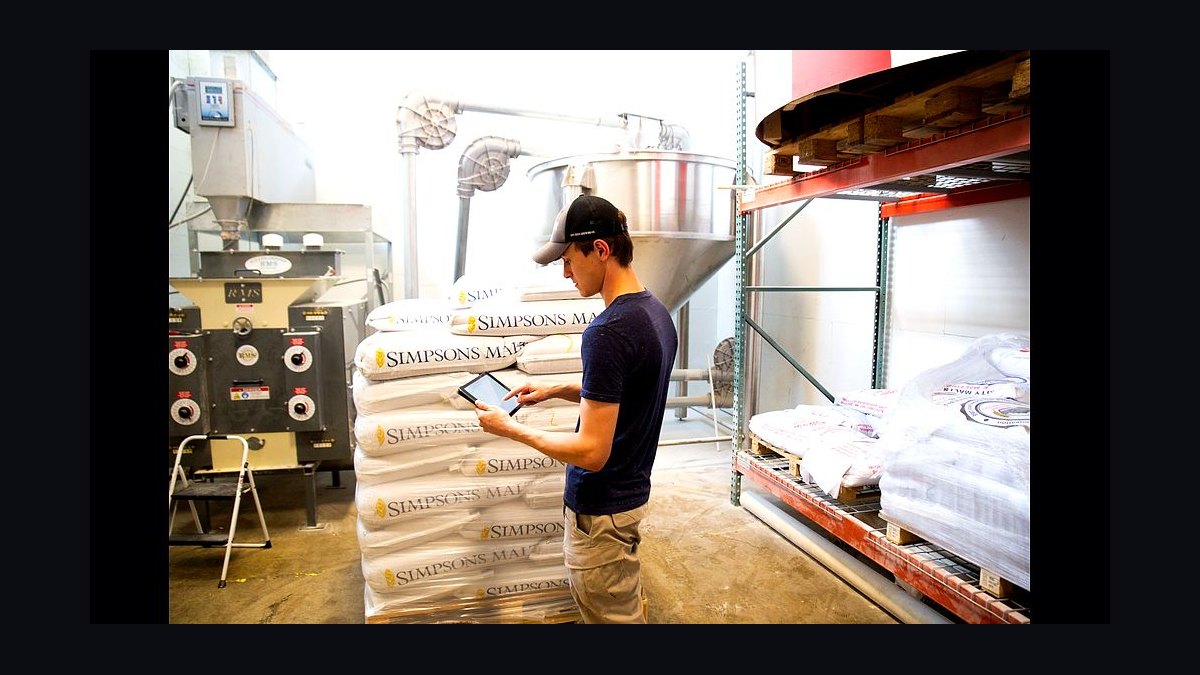
The 10 best tech stack tools for craft breweries are ranked below on measured performance, build quality, price, and how each one actually holds up in daily use rather than how it reads on a spec sheet. Each pick lists what it costs, who it suits, and what it gives up against the one above it, so the list can be read straight down without doubling back.
1Ekos Brewmaster

Ekos Brewmaster ranks first because it is the brewery-native production ERP most independents should buy before anything else, serving several thousand craft producers in the roughly 500-to-50,000 barrel range. It covers recipe management, brew scheduling, fermentation tracking, raw-material and packaging inventory, sales orders, and TTB-ready reporting, including the Brewer's Report of Operations. Pricing runs about $300 to $1,200-plus monthly by tier and modules, and implementation is measured in weeks, not quarters.
It is for the single-entity brewery under roughly 30,000 barrels whose ops lead can migrate recipes and materials without hiring an integrator. It trades away deep general-ledger, multi-entity, and standard-cost variance capability, which is exactly where OrchestratedBEER below it wins. Compared with OrchestratedBEER's $2,000 to $8,000-plus monthly plus partner-led multi-month projects, Ekos is cheaper and faster, but hits its ceiling the moment a second legal entity or investor reporting appears.
2OrchestratedBEER

OrchestratedBEER ranks second because it is the heavy production ERP built on SAP Business One, giving breweries a genuine general ledger, multi-entity handling, and manufacturing-costing underneath the brewing modules. Pricing commonly lands at $2,000 to $8,000-plus monthly, with a separate implementation fee that can equal a year of subscription and a partner-led project running months. The reason to pick it is the finance layer, not brewing features.
It is for regional breweries past roughly 75,000 barrels, multi-entity operators, private-equity-backed companies, or any brewery whose CFO wants standard-cost variance reporting. It trades away speed and simplicity: the day-to-day interface is denser than a cellar tech wants to touch, and you will need an implementation partner. Against Ekos above it, OrchestratedBEER costs multiples more but survives acquisition, intercompany transfers, and investor reporting that force an Ekos migration under time pressure.
3Arryved

Arryved ranks third because it is the brewery-native taproom POS that handles how a taproom actually sells: open tabs on a handheld, partial pours of a 12% barrel-aged stout, flights as a first-class object, and keg-level depletion that reconciles back to the ERP. Pricing is typically bundled hardware-plus-software at $150 to $400 per location monthly, plus payment processing that dominates total cost at volume.
It is for taprooms where beer, not food, carries revenue and where flights, partial pours, and mug clubs are core mechanics. It trades away the deep kitchen workflows, coursing, and menu engineering that Toast below it has spent a decade building. If food exceeds roughly 40% of taproom revenue, Toast wins; below that threshold, Arryved's beer-specific gaps cost less than the kitchen-side gains would deliver.
4Toast POS

Toast POS ranks fourth because it is the correct taproom system when food carries the revenue, with kitchen display workflows, coursing, and menu engineering deeper than any brewery-first POS will build. It quotes in the $69 to $165 per terminal per month band plus payment processing, and the rough operator threshold is food exceeding about 40% of taproom revenue. A decade of restaurant focus shows up in the kitchen, not the brewhouse.
It is for brewpubs with a serious kitchen where the menu, not the taplist, drives the P&L. It trades away brewery-native mechanics: flight builds, partial pours, and keg-level depletion reporting become modifier workarounds rather than first-class features. Against Arryved above it, Toast is the better restaurant system and the weaker brewery system, so the revenue mix decides which one belongs in the stack.
5Untappd for Business

Untappd for Business ranks fifth because it is the closest thing craft beer has to real-time brand telemetry, with check-in volume, rating distribution, and geographic concentration arriving weeks before depletion data reflects the same shift. Pricing runs roughly $59 to $300-plus per location per month by tier. The digital menu, release push notifications, and brand analytics justify the subscription at any brewery with meaningful distribution.
It is for any brewery selling off-premise that needs a brand-health story for chain reviews. It trades away nothing structurally, but it is not a substitute for Instagram: Untappd reaches drinkers at the moment of choosing a beer at a bar or bottle shop, while social reaches people who already follow you.
6Datisfy

Datisfy ranks sixth because it aggregates wholesaler depletions into one analytics layer normalized by chain, account, and SKU, which is the only practical way to see fragmented distributor data in one place. Pricing commonly runs $500 to $3,500-plus monthly by wholesaler count and SKU volume. It closes the gap a brewery cannot see directly: the retail transaction it never touches, only depletion data from the wholesaler.
It is for breweries working with three or more wholesalers, where the VIP supplier portal alone stops being sufficient. It trades away nothing operationally, but the return is avoided losses rather than added revenue, which makes the ROI argument easy to make and hard to feel. Against Untappd for Business above it, Datisfy is lagging sell-through data while Untappd is a leading brand indicator, and brand managers who correlate the two get a signal most categories would pay for.
7Shopify Plus

Shopify Plus ranks seventh because it is the e-commerce standard with the deepest app ecosystem, and with Craftpeak layered on top it handles brewery-specific mechanics like release drops, allocation, waitlists, and age gates. Pricing spans $39 for the entry plan to Shopify Plus in the low thousands monthly, with Craftpeak licensed and implemented on top. State-by-state shipping rules and age gating are configured here as a legal requirement, not a nice-to-have.
It is for breweries running DTC, merch, and release drops alongside taproom and distribution sales. It trades away niche-platform specialization, which is the point: you are not fighting a brewery-specific commerce engine every time the underlying platform ships an update. Against Datisfy above it, Shopify Plus is the transaction and fulfillment layer for direct sales, while Datisfy is wholesale visibility, and the two answer different questions.
8Klaviyo

Klaviyo ranks eighth because it is the email and SMS layer that turns taproom visitors, DTC buyers, and release-drop followers into a retained list with welcome, post-purchase, release-drop, and win-back flows. Pricing scales with list size from around $45 monthly into four figures, and the curve is the one that surprises operators: a list growing from 8,000 to 60,000 subscribers multiplies the bill. Pruning inactive contacts quarterly is the discipline that keeps it honest.
It is for any brewery with a DTC channel or a taproom list worth emailing more than once a quarter. It trades away nothing structurally, but it is only as good as the flows behind it, and a neglected list is a subscription nobody opens. Against Shopify Plus above it, Klaviyo is the retention engine that makes the commerce layer pay back, and the two are bought together rather than weighed against each other.
9QuickBooks Online Advanced

QuickBooks Online Advanced ranks ninth because it covers most breweries under roughly $10M in revenue at around $235 monthly, and it accepts journal entries from Ekos or OrchestratedBEER cleanly. Single entity, one bank account, a bookkeeper and an outside CPA is the profile it fits, and it is cheap enough that the ERP decision upstream stays the real constraint. It is the default finance layer for independents.
It is for single-entity breweries without investor reporting or standard-cost variance needs. It trades away multi-entity consolidation and intercompany transfers, which is exactly what breaks first when a brewery splits production and hospitality into separate legal entities. Against OrchestratedBEER above it, QuickBooks is the lightweight answer that collapses the moment a second entity or a CFO with strong costing opinions arrives, forcing an ERP migration under time pressure.
10Ignition by Inductive Automation

Ignition by Inductive Automation ranks tenth because it is the cheaper, more modern competitor to AVEVA System Platform for packaging-line SCADA and MES, and it has taken meaningful share in food and beverage. Spend is project-based and starts in the tens of thousands plus integration labor, which is why breweries below regional scale simply do not have this layer.
It is for regional breweries running a high-speed canning or bottling line where downtime by cause code, fill-volume QC, seam checks, and lot coding must reconcile to the ERP. It trades away simplicity and upfront cost, and it is frequently bought a year late. Against QuickBooks Online Advanced above it, Ignition is a capital project rather than a subscription, and the two sit at opposite ends of the stack: one closes the books, the other measures the line.
How we ranked these
We ranked tools by weighting brewery-specific compliance coverage (TTB BROP and excise reporting) at 30%, production-to-taproom inventory reconciliation at 25%, distribution and depletion visibility at 20%, total cost of ownership including payment processing at 15%, and implementation time-to-value at 10%. Scores came from vendor documentation, published pricing, and operator-reported deployment timelines across nano, regional, and national brewery tiers.
We deliberately ignored generic feature counts, G2-style star averages, and analyst quadrant placement, because every serious vendor in this category checks most boxes and the differences that matter are fit to volume, entity structure, and revenue mix. We also excluded marketing claims about AI and mobile apps, since neither has proven decisive in a brewhouse.
What to look for
What actually matters is the system of record for batches, inventory, and TTB reporting, because every other tool inherits its data. Match it to barrel volume, legal-entity count, and whether beer leaves your four walls. Then negotiate payment processing rates before SaaS subscriptions, since processing runs an order of magnitude larger at taproom volume.
The mistake most buyers make is starting with the taproom POS because it is visible and fun, then bolting on production software later. That sequence guarantees inventory drift, double entry, and a BROP that never ties. Buy the production spine first, prove a parallel brew cycle reconciles, then layer hospitality, brand, and depletion tools on top.
Related questions
Why does the production ERP decision drive the rest of the stack?
Every downstream tool inherits batch, inventory, and compliance data from the ERP. Taproom POS draws down kegs the ERP produced, finance receives its journal entries, and depletion analytics reconcile against finished goods. Pick the wrong system of record and every integration downstream carries bad numbers, forcing manual reconciliation that compounds monthly and eventually breaks TTB filings.
When does a brewery outgrow Ekos and need OrchestratedBEER or NetSuite?
The practical line sits around multi-entity structure, private-equity backing, or a finance team demanding standard-cost variance reporting. Ekos handles single-entity breweries comfortably past 30,000 barrels. Once you split production and hospitality into separate LLCs, run intercompany transfers, or prepare investor reporting, the finance layer's limits surface first and a genuine ERP becomes the cheaper answer.
Is Arryved always better than Toast for a brewery taproom?
No. Arryved wins when beer drives revenue, because it handles open tabs, partial pours, flights as first-class objects, keg-level depletion, and mug clubs natively. Toast wins when food exceeds roughly 40% of taproom revenue, since its kitchen display, coursing, and menu engineering are deeper than any brewery-first POS will build. Route on your actual revenue mix, not category loyalty.
How much does payment processing really cost compared to POS software?
Far more than the subscription. A taproom doing $1.5M annually pays roughly $40,000 per year at 2.6% plus per-transaction fees, while the POS software itself runs $1,800 to $4,800 annually. Processing is the line that determines total cost of ownership, so negotiate the rate and the fixed fee before you negotiate the SaaS tier.
Do small brewpubs actually need a full production ERP?
Usually not. A brewpub under 1,500 barrels selling nearly everything on premise needs batch records clean enough to file a BROP and a taproom POS that draws down keg inventory correctly. Ollie Ops, Beer30, or a well-configured entry tool plus Arryved covers that. Buying Ekos at that scale is not wrong, but it is rarely the highest-leverage first purchase.
What is the single most important integration in a brewery stack?
The connection between production ERP and taproom POS. Kegs and packaged goods produced in the ERP must draw down on the taproom side without double entry. When that link is missing or unreliable, inventory drifts, the BROP breaks, and month-end becomes manual archaeology. Build and test this integration before anything else goes live.
When should a brewery add Datisfy or a depletion analytics layer?
Once three or more wholesalers distribute your beer. With one wholesaler, their VIP supplier portal is free and sufficient. With several, depletion data fragments across portals and you cannot see velocity by chain and SKU, spot a slow account before a delisting, or walk into a category review with a coherent story. That is the threshold where aggregation pays for itself.
How long should a brewery ERP implementation actually take?
Ekos migrations are commonly done in-house over two to four weeks by a competent ops lead. OrchestratedBEER assumes a partner and a multi-month project, with implementation fees that can equal a year of subscription. Budget implementation as a real line item regardless of vendor, and refuse to run production, taproom, and depletion rollouts concurrently.
FAQ
What is the recommended tech stack for a craft brewery in 2027?
Pair a brewery-native production ERP like Ekos Brewmaster or OrchestratedBEER with Arryved for the taproom, Untappd for Business for brand and loyalty, VIP or Datisfy for distributor depletions, Shopify plus Craftpeak for DTC, Klaviyo for email, and QuickBooks or NetSuite for finance. The ERP choice drives everything downstream.
How much should a brewery budget monthly for its full software stack?
A nano or brewpub under 1,500 barrels with one location lands around $1,200 to $3,500 monthly. A regional brewery at 5,000 to 100,000 barrels with multiple taprooms and broad distribution runs roughly $8,000 to $30,000 monthly. National craft past 100,000 barrels reaches five and six figures monthly once packaging SCADA and data warehousing enter.
Does the ERP generate TTB Brewer's Report of Operations and excise returns?
Yes, and that is one of the strongest arguments for buying it first. Ekos and OrchestratedBEER generate the Brewer's Report of Operations (TTB Form 5130.9) and the federal excise return (Form 5000.24) from production data. The alternative is a spreadsheet that cannot survive an audit or a transition in operations staff.
What does Untappd for Business actually give a brewery?
Check-in volume, rating distribution, and geographic concentration function as real-time brand telemetry, arriving weeks before depletion data reflects the same shift. Correlating Untappd check-ins by DMA against Datisfy depletions by chain produces a leading indicator most consumer categories would pay heavily for. It also gives chain buyers the brand-health story they now expect.
Should a brewery use Shopify or a custom DTC platform?
Shopify plus Craftpeak is the standard answer. Shopify handles commerce, payments, and inventory sync, while Craftpeak adds alcohol-specific licensing, age gating, and state-by-state shipping rules. Configure shipping compliance correctly before launch, because direct-to-consumer alcohol shipping is a legal requirement, not a preference, and violations carry real penalties.
When does a brewery need packaging line SCADA or MES?
The moment a high-speed canning or bottling line makes the line itself a data source: downtime by cause code, fill-volume QC, seam checks, and lot coding that reconciles to the ERP. AVEVA System Platform is the legacy standard; Ignition from Inductive Automation is cheaper and more modern. Spend starts in the tens of thousands plus integration labor.
Is QuickBooks enough for a growing craft brewery?
QuickBooks Online Advanced covers most breweries under roughly $10M in revenue, especially single-entity operations with a bookkeeper and outside CPA. Once you run multiple legal entities, prepare investor reporting, or need standard-cost variance analysis, NetSuite or SAP becomes the cheaper answer despite the higher subscription and implementation cost.
How should a brewery sequence its software rollout?
Three phases, run sequentially. Days 1-30: production spine, migrate recipes and inventory, prove a parallel brew cycle reconciles, file a BROP from the new system. Days 31-60: taproom POS, mug club, Untappd, Shopify, Klaviyo. Days 61-90: depletion aggregation, CRM if regional, iPaaS connections, and one consolidated dashboard.
What is the biggest cause of failed brewery software implementations?
Sequencing failures, not selection failures. Breweries that launch the taproom before production inventory is trustworthy end up with two systems that disagree from day one, and the disagreement compounds. Each phase needs a falsifiable exit test, and looping back to fix a broken foundation is far cheaper than pushing forward on top of one.
Do breweries need a CRM like HubSpot or Salesforce?
Most independents do not, because the wholesaler owns the retail relationship. A regional brewery with a chain-account manager covering Total Wine, Kroger, and Whole Foods does, because programming commitments and category-review dates need somewhere to live. Add CRM at the point where chain accounts become a meaningful share of volume.
Sources
- https://www.ekos.com/
- https://www.orchestratedbeer.com/
- https://www.arryved.com/
- https://untappd.com/business
- https://www.shopify.com/
- https://www.klaviyo.com/
- https://quickbooks.intuit.com/
- https://www.netsuite.com/
- https://www.ttb.gov/beer/beer-reporting
- https://www.inductiveautomation.com/
Related on PULSE
This page will be disappearing soon. Save it to your device for $1 — or read it free while it is here.
@Kory-White- · if Venmo asks, the last 4 of my number are 2012
This page is gone.
This one is off the shelf now. $1 keeps it on your phone for good — the whole page, pictures and diagrams included.
 pulse-tech-stacksTop 10 Best Tech Stack Tools for Online Travel Agencies (OTAs) in 2027
 pulse-tech-stacksTop 10 Best Tech Stack Tools for AI Document Intelligence Companies in 2027
 pulse-tech-stacksTop 10 Best Tech Stack Tools for RV Dealerships in 2027
 pulse-tech-stacksTop 10 Best Tech Stack Tools for Septic and Portable Sanitation Services in 2027
 pulse-tech-stacksTop 10 Best Tech Stack Tools for Staffing Agencies in 2027
 pulse-tech-stacksTop 10 Best Tech Stack Tools for Window Cleaning Services in 2027
 pulse-tech-stacksTop 10 Best Tech Stack Tools for Painting Contractors in 2027
 pulse-tech-stacksTop 10 Best Tech Stack Tools for Data Loss Prevention (DLP) Software Vendors in 2027
 pulse-tech-stacksTop 10 Best Tech Stack Tools for Commercial HVAC Contractors in 2027
 pulse-tech-stacksTop 10 Best Tech Stack Tools for Hair Salons in 2027