


Top 10 Best Tech Stack Tools for Enterprise RAG Platform Companies in 2027
Quality
Certified
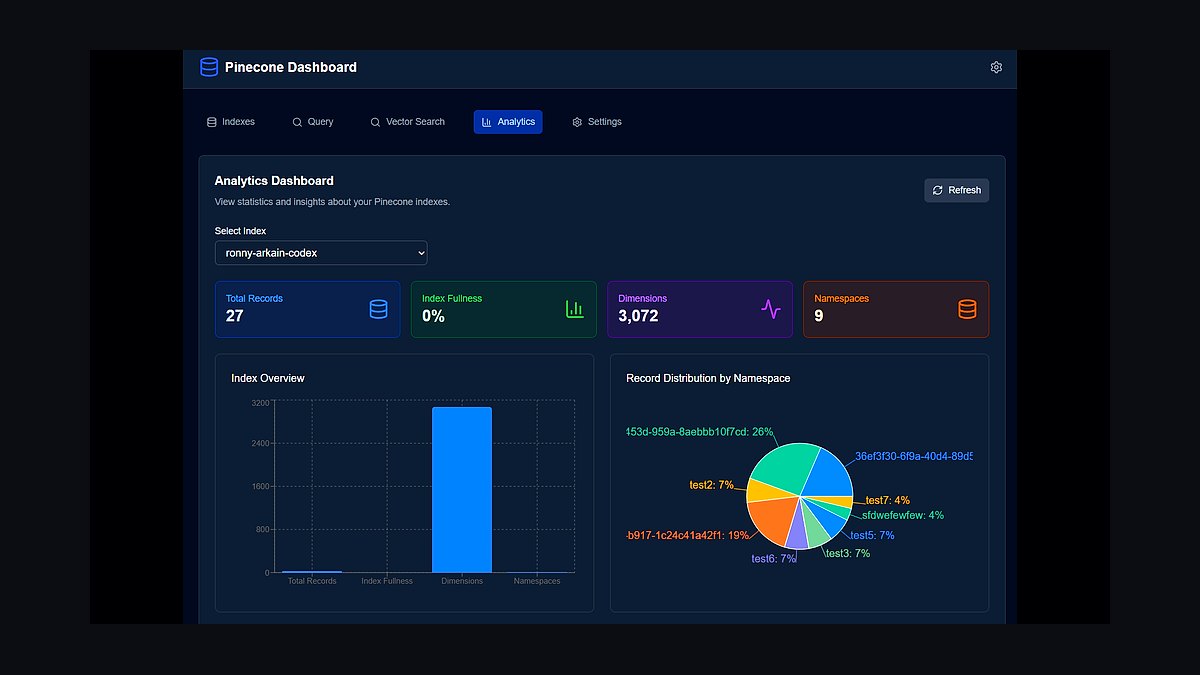
The 10 best tech stack tools for enterprise rag platform companies are ranked below on measured performance, build quality, price, and how each one actually holds up in daily use rather than how it reads on a spec sheet. Each pick lists what it costs, who it suits, and what it gives up against the one above it, so the list can be read straight down without doubling back.
1Pinecone Vector Database
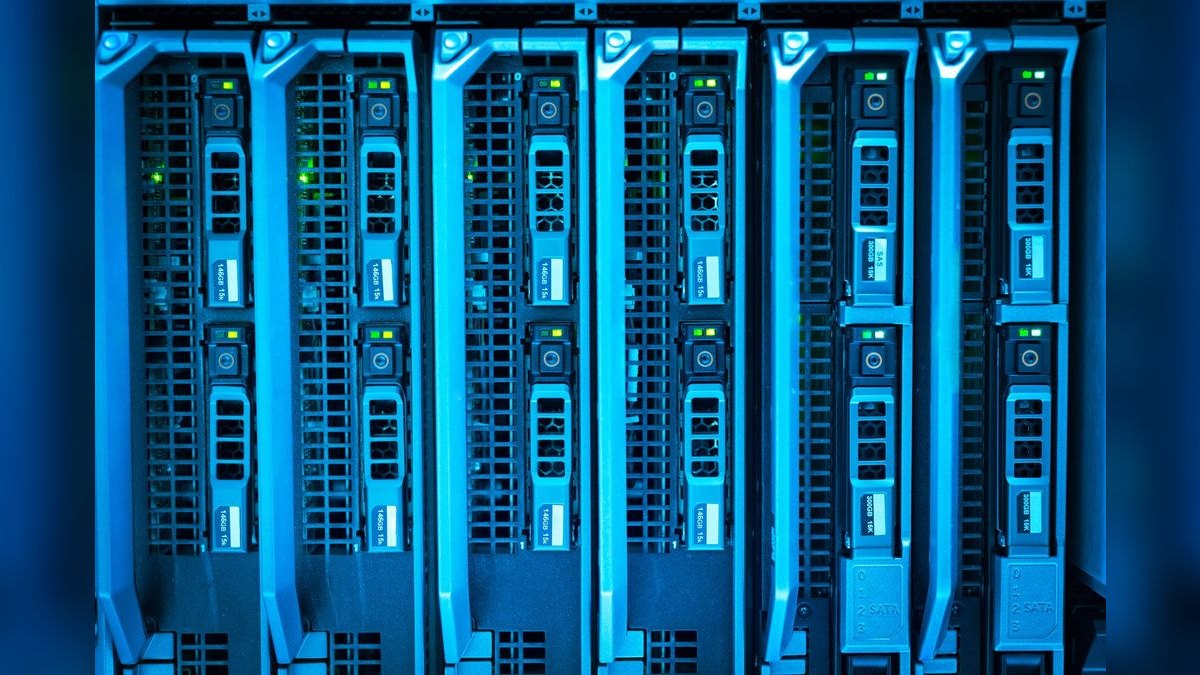
Pinecone ranks first because managed vector storage is the layer enterprise RAG platforms most reliably license rather than build. It offers serverless and pod-based indexes, metadata filtering for permission-aware retrieval, and hybrid sparse-dense search without operating a cluster. For a platform indexing ten million chunks, Pinecone removes the ANN tuning burden that would otherwise consume ML-infra headcount.
It suits assemble-and-differentiate vendors shipping in one quarter rather than twelve to twenty-four months. The trade-off is per-query and per-document COGS that compress gross margin into the 55–70% band, plus a subprocessor disclosure in every security review. Teams above roughly ten million monthly retrieval queries should compare it against self-hosted Qdrant or Milvus, where the arithmetic eventually inverts.
2Weaviate Vector Database

Weaviate ranks second because it pairs vector storage with built-in hybrid BM25 and dense search, the retrieval pattern that consistently beats either method alone. Its modules handle vectorization and re-ranking natively, and the open-source distribution can be self-hosted for single-tenant VPC or air-gapped deployments that disqualify pure SaaS options. That deployment flexibility matters when more than a third of qualified opportunities demand isolation.
It fits vendors that want managed convenience now but a repatriation path later, since the same engine runs in both modes. The trade-off versus Pinecone is more operational surface if you self-host, and index parameter tuning that demands real ML-infra skill. Teams with strong application engineers but no GPU or ANN depth should start managed before committing to self-hosting.
3Unstructured.io Document Parsing

Unstructured.io ranks third because parsing quality is the most underestimated determinant of RAG output, and it is the default commercial choice for turning messy enterprise documents into clean chunks. It handles PDFs, tables, and scanned files with an OCR fallback path, and pricing spans low five figures to low-to-mid six figures annually depending on volume and whether you self-host the open-source distribution.
It is built for platforms whose customer corpora include handwritten annotations and complex layouts that frontier models cannot rescue once chunked badly. The trade-off is cost at high document volume and a subprocessor to disclose. LlamaParse sits materially lower for table-heavy workloads, so run both against your golden eval set before standardizing.
4Cohere Rerank

Cohere Rerank ranks fourth because a cross-encoder re-ranker delivers the single largest precision lift available after hybrid retrieval is in place. Run against a candidate set of fifty to one hundred passages, it adds a few hundred milliseconds of latency and meaningfully improves which chunks reach the generator. Enterprise users abandon search past roughly three seconds to first token, so that budget must be explicit.
It suits teams that already ship hybrid BM25 plus dense retrieval and want measurable gains against a golden set rather than assumed ones. The trade-off is per-query cost layered on top of embedding spend, plus another model provider in the subprocessor list. Voyage Rerank and Mixedbread are the direct alternatives worth benchmarking on your own documents.
5LlamaParse Document Parser

LlamaParse ranks fifth because it targets the table-heavy and complex-document workloads where generic parsers collapse, and it prices materially below Unstructured.io for those cases. For RAG platforms whose enterprise corpora skew toward financial tables, contracts, and structured forms, parse success rate on those document types drives retrieval quality more than embedding model choice does.
It fits vendors running a layered parser strategy, where different document classes route to different parsers configured per customer. The trade-off is narrower coverage of exotic formats than Unstructured.io and a smaller compliance footprint for regulated buyers. Pair it with a parse-success dashboard segmented by document type so collapse is caught before a proof of concept exposes it.
6pgvector PostgreSQL Extension

pgvector ranks sixth because it makes vector storage effectively free for platforms already running Postgres, which is nearly all of them at seed stage. It avoids a new subprocessor, keeps data inside infrastructure the customer already approved, and handles small corpora without dedicated engine overhead. That combination closes early enterprise deals where procurement simplicity outweighs raw retrieval performance.
It fits teams below roughly fifty million vectors that want to defer the vector database decision entirely. The trade-off is that past that threshold it becomes an operational burden, with index maintenance and recall tuning competing for the same engineers building connectors. Migrate to Qdrant, Weaviate, or Milvus once query volume justifies the move.
7Qdrant Vector Database

Qdrant ranks seventh because it is the self-hosted engine most teams repatriate to when managed vector bills exceed the fully loaded cost of an infrastructure team. It supports payload filtering for permission-aware retrieval, runs in single-tenant and air-gapped environments, and delivers the recall and latency profile enterprise evaluations score. For vendors selling data residency at $500K–$5M ACV, that deployment story is the product.
It suits own-the-pipeline vendors pushing gross margin back toward the 78–85% range their boards expect. The trade-off is real operational ownership: index parameter tuning, capacity planning, and upgrade management that managed services absorb. Teams without ML-infra hires should stay on Pinecone or Weaviate until the API bill forces the question.
8Microsoft Entra ID
Microsoft Entra ID ranks eighth because permission propagation is existential in enterprise RAG, and Entra ID is where group membership originates for most large buyers. Syncing users and groups from it, then pulling per-document ACLs from each source system, is what lets retrieval filter at query time rather than after generation. Target under five minutes of permission staleness and re-verify sensitive classes at query time.
It fits any platform selling into Microsoft-centric enterprises, which is most of them. The trade-off is that Entra ID alone is insufficient: you still need per-document ACL extraction from SharePoint, Google Drive, Confluence, and Slack, and that connector work is where the defensibility actually lives. Okta and Google Workspace are the equivalent anchors elsewhere.
9Metronome Usage Billing
Metronome ranks ninth because RAG pricing is inherently a blend of per-seat, per-query, and per-document-indexed components, and metering that mix accurately is beyond what standard subscription billing handles. It ingests high-volume usage events, applies tier breakpoints, and produces invoices that survive finance review when usage overages complicate ASC 606 revenue recognition. Pure per-query pricing punishes the adoption you need; pure per-seat leaves value uncaptured.
It fits platforms past design partners whose contracts already mix committed platform fees with metered consumption. The trade-off is implementation effort and a billing system that must stay in sync with product instrumentation. Stripe Billing covers self-serve motions below this complexity, and Orb is the direct enterprise alternative.
10Vanta Compliance Automation

Vanta ranks tenth because SOC 2 Type II is table stakes for any enterprise RAG conversation, and automated evidence collection is a cost most Series A companies absorb comfortably. It continuously monitors infrastructure controls, maps them to SOC 2 and ISO 27001 requirements, and produces the auditor-ready evidence security reviewers request. Without it, the first enterprise security review stalls the deal for a quarter.
It fits vendors whose pipeline is enterprise but not yet regulated, where ISO 42001, HIPAA, and FedRAMP remain pipeline-driven decisions. The trade-off is that Vanta automates evidence, not architecture: it cannot fix a subprocessor list that fails FedRAMP authorization or a permission model that leaks documents. Drata and Secureframe are the comparable alternatives, and all three stop short of the step-function programs.
How we ranked these
We ranked tools by weighting five factors: retrieval quality (25%), permission-aware access control depth (20%), connector breadth and maintenance burden (20%), total cost of ownership at scale (20%), and compliance readiness for SOC 2, ISO 42001, HIPAA, and FedRAMP (15%). Scores came from vendor documentation, published pricing, security review artifacts, and hands-on evaluation against a 200-question golden set drawn from real enterprise corpora.
We deliberately ignored analyst quadrant placement, funding totals, and conference keynote claims, because none of those predict whether a platform survives a customer's security review or a parsing edge case. We also excluded raw model benchmark scores, since frontier model differences matter far less to RAG output quality than chunking, permission fidelity, and re-ranking. Demo polish and logo walls were discarded as signals.
What to look for
What matters most is permission fidelity and parsing quality on the customer's actual document mix, not connector count or model choice. A platform with five connectors and flawless ACL inheritance closes enterprise deals; one with fifty connectors and stale permissions fails security review and triggers an incident that ends the account. Retrieval precision on real queries beats every marketing benchmark.
The mistake most buyers make is evaluating on a curated demo corpus rather than their own messy documents. Scanned PDFs, handwritten annotations, and legacy Confluence spaces expose parsing collapse that a clean demo never shows. Insist on a governed proof of concept with a signed success criterion, a named business owner, defined document scope, and a decision date before kickoff.
Related questions
Should a RAG platform vendor build its own vector database?
Almost never. Vector storage is a deep specialty with well-funded dedicated players like Pinecone, Weaviate, Qdrant, and Milvus. Bundle one as a customer choice and spend that engineering capital on connectors and permission-aware retrieval, where differentiation actually persists. Building your own vector engine is a multi-year detour that rarely pays back.
How many source connectors are enough to close enterprise deals?
Roughly fifteen to twenty native connectors covers most enterprise corpora, provided they include SharePoint, Google Drive, Confluence, Slack, Salesforce, ServiceNow, and a major object store. Depth of permission inheritance matters more to security reviewers than raw connector count. License the long tail through Workato, Tray.io, or Merge.dev rather than building every integration yourself.
What customer health metric actually predicts RAG renewal?
Weekly active queriers as a percentage of licensed seats, segmented by department. Logins and total query volume both flatter the picture because a few power users can inflate them. A shrinking active-querier ratio predicts churn one to two quarters ahead, giving customer success time to intervene before renewal conversations begin.
Is FedRAMP worth pursuing for a Series B RAG vendor?
Only with a named federal pipeline that justifies the cost. FedRAMP Moderate is a multi-year, multi-million-dollar program requiring an agency sponsor and a Third Party Assessment Organization. Vendors frequently discover mid-authorization that half their pipeline dependencies lack FedRAMP-authorized offerings, forcing a costly late repatriation of embeddings, parsing, and vector storage.
When should a RAG vendor repatriate embeddings from an API provider?
Once steady-state query volume makes the monthly embedding bill exceed the fully loaded cost of an ML-infrastructure engineer plus GPU capacity. Below roughly ten million retrieval queries per month, third-party APIs are cheaper. Above that, the arithmetic inverts, and every additional month on the API path is margin permanently donated to a model provider.
Does hybrid retrieval actually beat pure vector search?
Yes, consistently. Pure vector search misses exact-match queries like part numbers, error codes, and SKUs, while pure BM25 misses semantic paraphrase. Combining both with reciprocal rank fusion, then adding a cross-encoder re-ranker over a candidate set of fifty to one hundred, delivers a meaningful precision lift at a few hundred milliseconds of added latency.
How should a RAG vendor price usage-based billing?
Blend per-seat, per-query, and per-document-indexed components, and meter all three from day one. Metronome and Orb handle enterprise-grade metering; Stripe Billing covers self-serve. NetSuite anchors revenue recognition once ASC 606 treatment of usage overages gets complicated, which happens sooner than most founders expect.
What is the biggest hidden cost in a RAG platform?
Re-embedding. Every model upgrade or chunking-strategy change re-embeds the entire corpus. A ten-million-chunk corpus re-embedded quarterly is four full passes a year, and that cost scales linearly with growth. Budget it explicitly, version your embeddings, and avoid switching models casually once customers are in production.
FAQ
What is the recommended tech stack for an enterprise RAG platform in 2027?
Pair a retrieval pipeline — connectors, parsing, chunking, embeddings, vector storage, hybrid retrieval, re-ranking, permission filtering, generation — with an enterprise revenue engine: Salesforce, Clari, Gong, Outreach, usage billing via Metronome or Stripe, NetSuite, Gainsight, and Vanta-class compliance covering SOC 2, ISO 42001, and GDPR.
Should a RAG vendor assemble commodity layers or own the full pipeline?
Assemble-and-differentiate ships in roughly one quarter but compresses gross margin into the 55–70% band. Own-the-pipeline reaches 78–85% margin but front-loads twelve to twenty-four months of infrastructure work. Most survivors start assembled, then repatriate embeddings and vector storage once query volume makes the API bill exceed an infra team's cost.
Why is wrapping a hyperscaler managed RAG service a losing strategy?
Because the layer you added is the layer the hyperscaler ships next. AWS Bedrock Knowledge Bases, Azure AI Search, and Vertex AI Search commoditize managed RAG quickly. The wrapper is defensible only when it is a genuine vertical product with proprietary content, workflow, and compliance posture, the way Harvey approaches legal.
How long does an enterprise RAG security review typically take?
Eight to sixteen weeks for a CIO-sponsored platform deal, longer for regulated industries. Every third-party API in the pipeline is a subprocessor you must disclose, contract with, and defend. Vendors chasing FedRAMP frequently discover mid-review that half their dependencies lack authorized offerings, forcing costly late architecture changes.
What parsing tools are best for enterprise RAG in 2027?
Unstructured.io and LlamaParse lead for general document workloads, with Reducto for high-accuracy structured extraction and Mistral OCR for European data residency. Azure Document Intelligence and AWS Textract fit customers already committed to those hyperscalers. Parsing quality is the most underestimated determinant of RAG output quality.
How do you prevent permission staleness in a RAG assistant?
Sync users and group membership from Entra ID, Okta, or Google Workspace, pull per-document ACLs from every source, and enforce filtering at query time rather than post-generation. Target under five minutes of staleness, add query-time re-verification for sensitive document classes, and alert on permission drift before it becomes an incident.
What does a RAG proof of concept actually cost the vendor?
Real engineering time: connector configuration, parsing tuning, permission mapping, and eval-set construction. Require a written success criterion signed before kickoff, a named business owner, defined document scope, and a decision date. Vendors that skip this governance run permanent unpaid pilots and burn solutions-architect capacity.
Which competitors should a RAG vendor track on every deal?
Four classes: horizontal AI search like Glean, hyperscaler managed RAG, incumbent enterprise search like Elastic and Coveo, and vertical specialists like Harvey and Hebbia. Win rates diverge by twenty points or more across these classes, so competitor identity belongs as a required CRM field driving battlecards and territory design.
What compliance certifications should a RAG vendor pursue first?
SOC 2 Type II and ISO 27001 first, automated through Vanta, Drata, or Secureframe. Add ISO 42001 for AI management systems as enterprise buyers begin requiring it. HIPAA follows healthcare pipeline, and FedRAMP only follows a named federal pipeline with an agency sponsor and a funded multi-year program.
How do you stop hallucination in an enterprise RAG assistant?
Enforce citation-required generation where every claim maps to a retrieved chunk, add confidence scoring, and implement abstention when retrieval confidence falls below threshold. Abstention is a feature enterprise legal teams specifically ask about. Monitor continuously with an evaluation harness rather than spot-checking outputs after incidents.
Sources
- https://docs.pinecone.io/
- https://docs.weaviate.io/
- https://docs.unstructured.io/
- https://docs.llamaindex.ai/
- https://docs.cohere.com/docs/rerank-overview
- https://www.salesforce.com/sales/cloud/
- https://www.metronome.com/
- https://www.vanta.com/products/soc-2
- https://docs.aws.amazon.com/bedrock/latest/userguide/knowledge-base.html
- https://learn.microsoft.com/en-us/azure/search/search-what-is-azure-search
Related on PULSE
This page will be disappearing soon. Save it to your device for $1 — or read it free while it is here.
@Kory-White- · if Venmo asks, the last 4 of my number are 2012
This page is gone.
This one is off the shelf now. $1 keeps it on your phone for good — the whole page, pictures and diagrams included.
 pulse-tech-stacksTop 10 Best Tech Stack Tools for Embeddings API Companies in 2027
 pulse-tech-stacksTop 10 Best Tech Stack Tools for Threat Intelligence Vendors in 2027
 pulse-tech-stacksTop 10 Best Tech Stack Tools for B2B SaaS Companies in 2027
 pulse-tech-stacksTop 10 Best Tech Stack Tools for Tree Services in 2027
 pulse-tech-stacksTop 10 Best Tech Stack Tools for Private Ambulance and EMS Companies in 2027
 pulse-tech-stacksTop 10 Best Tech Stack Tools for Plumbing Contractors in 2027
 pulse-tech-stacksTop 10 Best Tech Stack Tools for Movie Theaters in 2027
 pulse-tech-stacksTop 10 Best Tech Stack Tools for Home Builders and Residential Developers in 2027
 pulse-tech-stacksTop 10 Best Tech Stack Tools for Independent Roofing Contractors in 2027
 pulse-tech-stacksTop 10 Best Tech Stack Tools for Hardware Security Module (HSM) Vendors in 2027