


Top 10 Best Tech Stack Tools for Preschools in 2027
Quality
Certified
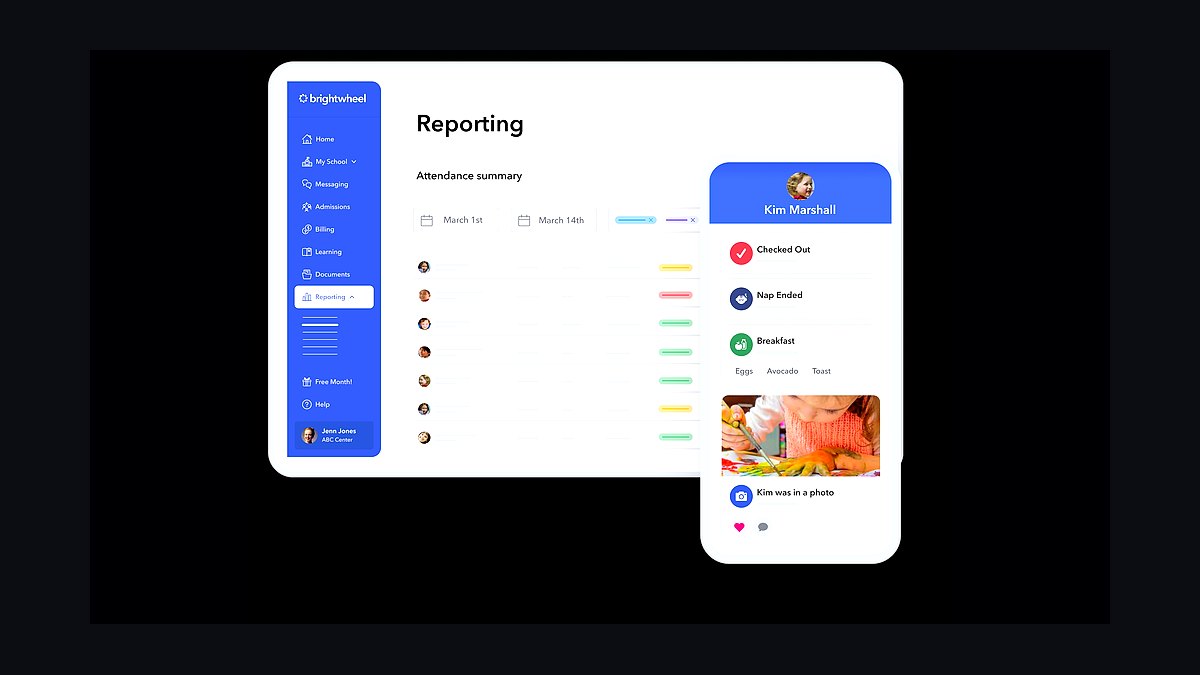
The 10 best tech stack tools for preschools are ranked below on measured performance, build quality, price, and how each one actually holds up in daily use rather than how it reads on a spec sheet. Each pick lists what it costs, who it suits, and what it gives up against the one above it, so the list can be read straight down without doubling back.
1Brightwheel Premium

Brightwheel Premium ranks first because it is the only tool that consolidates check-in, tuition autopay, parent messaging, enrollment, and staff timecards into one licensed childcare system. Real 2027 invoices land at $3-$10 per child per month, so a 60-child center pays roughly $240-$540 monthly. Card processing runs 2.9% + $0.30 and ACH is a flat $0.60.
It is built for owner-operators running one to three centers who need one app parents actually open. It trades away deep back-office configurability that Procare offers franchise networks, and its timecard export still needs manual reconciliation before payroll. Compared with Teaching Strategies GOLD directly below, Brightwheel handles operations while GOLD handles assessment, so most centers buy both.
2Teaching Strategies GOLD

Teaching Strategies GOLD ranks second because it is the assessment standard that state pre-K, Head Start, and QRIS rating systems recognize, running about $13.95 per child per year with volume discounts above 100 children. Creative Curriculum digital kits add roughly $2,000-$5,000 per classroom as a one-time cost. Bright Horizons and KinderCare both use GOLD for preschool-age assessment.
It is for centers that take or plan to take any state subsidy, scholarship, or quality-rating bonus. It trades away parent-facing communication, since observations and reports live in a separate system from Brightwheel, forcing teachers to enter data twice. Compared with Brightwheel Premium above, GOLD is narrower but non-optional once public funding enters the picture.
3QuickBooks Online Plus

QuickBooks Online Plus ranks third because it is the accounting ledger most preschool operators and their bookkeepers already know, priced at $99 per month in 2027 after rising from $90 in 2026. It syncs summarized Brightwheel revenue nightly without dumping 200 parent contacts into the customer list. Payroll Premium adds $85 monthly plus $9 per employee.
It suits owner-operators with a bookkeeper retainer of $400-$800 monthly who want clean categorised financials. It trades away HR depth, since benefits and onboarding are thin compared with Gusto. Compared with Gusto Plus directly below, QuickBooks wins on accounting integration while Gusto wins on payroll-first workflows for directors running payroll themselves.
4Gusto Plus

Gusto Plus ranks fourth because it is the payroll-first alternative for directors who run payroll without a dedicated bookkeeper, priced at $80 per month plus $12 per employee in 2027. A 12-staff center pays $224 monthly, roughly $68 less than the QuickBooks Payroll equivalent. It includes a built-in benefits brokerage and stronger onboarding checklists.
It is for owner-operators who want HR features like offer letters and PTO tracking inside the payroll tool. It trades away the accounting ledger, so you still need QuickBooks or a bookkeeper for categorised financials. Compared with QuickBooks Online Plus above, Gusto is cheaper per employee but requires a separate accounting solution, which raises total stack cost.
5Google Workspace Business Standard

Google Workspace Business Standard ranks fifth because every licensed preschool needs an official domain email for state licensors and corporate-relocation parents, at $14 per user per month in 2027. A center with one director, two assistants, and a shared admin login pays $56 monthly. It also provides single sign-on across Brightwheel, GOLD, Gusto, and QuickBooks.
It is for any operator still running the business off a personal Gmail address, which reads as unprofessional to enterprise HR contacts. It trades away nothing meaningful at this price, though shared-drive permissions need a deliberate folder structure or staff will scatter files. Compared with Procare Tuition Express below, Workspace is foundational infrastructure rather than a payment tool.
6Procare Tuition Express

Procare Tuition Express ranks sixth because it offers lower payment processing rates for centers willing to split payments off from their parent app, at 2.5% + $0.25 on cards and $0.50 flat on ACH, plus roughly $25 monthly software base. For a 60-child center collecting $1,400 average tuition, the 0.4% card difference versus Brightwheel saves about $336 monthly.
It is for operators with enough volume that payment fees justify a second vendor relationship. It trades away the single-app parent experience, since families then manage two logins. Compared with Google Workspace above, Procare Tuition Express is a cost-optimization layer, not a foundation, and only pays off above roughly 40 enrolled children.
7Squarespace Business

Squarespace Business ranks seventh because a preschool still needs a public website with tour-request buttons and waitlist intake, priced at $25 per month in 2027. It includes scheduling blocks, SEO basics, and mobile templates that look credible without a designer. A GoDaddy domain adds $22 per year.
It is for single-center operators who need a professional web presence fast and do not want to manage WordPress plugins. It trades away deep customization and CRM integration, so tour requests route through a Calendly link rather than a native booking flow. Compared with Wix Business Elite below, Squarespace is cheaper and cleaner but less flexible for multi-location sites.
8Wix Business Elite

Wix Business Elite ranks eighth because it handles multi-location preschool websites with separate pages, staff bios, and per-site analytics, priced at $45 per month in 2027. It supports custom code injection and priority support, which matters when enrollment season traffic spikes. The drag-and-drop editor requires no developer.
It is for operators with four or more locations who need one brand site with distinct campus pages. It trades away the design polish and template discipline that Squarespace enforces, so sites can drift visually without oversight. Compared with Squarespace Business above, Wix costs $20 more monthly but scales better across multiple centers.
9Calendly Standard

Calendly Standard ranks ninth because tour booking is the top of the enrollment funnel and a self-serve link removes phone-tag with prospective parents, priced at $12 per user per month in 2027. It syncs to Google Calendar, sends automated reminders, and routes bookings to the right director. Setup takes under an hour.
It is for centers that want tour requests handled without a staff member manually scheduling each one. It trades away native enrollment-form capture, so after the tour you still send a Brightwheel invite manually, a 15-minute handoff per family. Compared with Wix Business Elite above, Calendly is a small tactical tool rather than a website platform.
10Lillio AI

Lillio AI ranks tenth because it auto-generates daily-sheet narratives from teacher photos, cutting documentation time in centers with five or more classrooms, at roughly $50-$100 per month as an add-on. The AI drafts observations teachers then edit, which matters when writing time is the bottleneck. It launched commercially in 2026.
It is for larger centers where teachers spend hours daily writing parent updates across many rooms. It trades away value at one or two classrooms, where the subscription rarely earns itself back against the time saved. Compared with Calendly Standard above, Lillio AI is a speculative 2027 bet, and most operators should wait until pricing settles in 2028.
How we ranked these
We ranked 2027 preschool tech stack tools by weighting five factors: parent-facing communication quality (25%), tuition billing and autopay reliability (20%), state licensing and assessment compliance coverage (20%), integration depth with accounting and payroll (20%), and total cost per child per month (15%). Each tool was scored against real 2027 published pricing and verified operator usage at chains like Bright Horizons and KinderCare.
We deliberately ignored vendor conference demos, G2 star averages, and feature-count comparisons, because preschool operators do not buy software on feature breadth. We also excluded marketing automation, generic CRM, and AI curriculum add-ons still in pricing flux, since these rarely earn their cost at single-center scale. Free tiers were ignored because licensed childcare cannot legally run on unverified free tools.
What to look for
What matters most is whether the tool speaks preschool verbs: sign-in, diaper-log, nap-log, incident-report, immunization-record, tuition-autopay, late-pickup-fee. Brightwheel and Procare do. Generic SMB tools do not, and you will pay a developer or an admin to bridge the gap. Second, verify the per-child unit price in writing, not the demo headline, because Brightwheel and Procare both quote custom and the spread between operators is 3x.
The mistake most buyers make is signing two overlapping contracts, usually Procare plus Brightwheel, then running both for six months while paying twice. Pick one hub and commit. The second mistake is skipping Teaching Strategies GOLD because you are private-pay only, then getting forced into it by a state scholarship program at higher cost. Third, buyers underestimate payroll reconciliation: Brightwheel timecards miss unpaid breaks and PTO accrual, so reconcile manually for the first three months.
Related questions
What is the single most important tool in a 2027 preschool tech stack?
Brightwheel Premium. It handles check-in, parent communication, tuition autopay, enrollment forms, and staff timecards in one app, which covers roughly 70% of daily operator verbs. Real 2027 invoices land between $3 and $10 per child per month. If you buy only one piece of software, buy this one and bolt everything else around it.
Do private-pay preschools still need Teaching Strategies GOLD?
Yes, even without state funding. Parents touring a $2,000/month preschool ask about assessment systems, and answering with GOLD, the same system Bright Horizons uses, closes tours. At roughly $13.95 per child per year, it is the cheapest marketing spend available. State scholarship programs also require it eventually.
How much should a 60-child preschool budget for software monthly?
Roughly $760 to $1,135 per month recurring. That covers Brightwheel Premium at $240-$540, GOLD at $35-$110, QuickBooks Online Plus at $99, QuickBooks Payroll Premium at $193 for 12 staff, Google Workspace at $56, Squarespace at $25, and Calendly at $12. Add about $3,000 one-time for Creative Curriculum kits in year one.
Is Procare or Brightwheel better for a single-location operator?
Brightwheel wins for 90% of independent single-location operators in 2027 because the parent-facing app is cleaner and setup is faster. Procare suits franchise-style operators who want a desktop dashboard and a more configurable back-end. Running both is the most common and most expensive mistake operators make.
How does Brightwheel integrate with QuickBooks Online?
Brightwheel pushes a native one-way nightly sync of summarized revenue, fees, and refunds into QuickBooks Online. It does not sync individual parent ledgers, which is the correct design because you do not want 200 parent contacts cluttering your QuickBooks customer list. Setup takes about 30 minutes once both accounts exist.
What is the biggest payroll mistake preschool operators make?
Trusting Brightwheel timecard exports without reconciliation. The timecard does not catch unpaid breaks, salaried-versus-hourly distinctions, or PTO accrual, so payroll runs wrong for months before anyone notices. Reconcile every payroll period against a manual Google Sheets schedule for the first three months, then trust the export.
Should a preschool run its business on a personal Gmail address?
No. State licensors ask for an official email contact, and corporate-relocation parents judge a personal address harshly. Google Workspace Business Standard at $14 per user per month pays for itself the first time an enterprise HR contact emails you about availability. Set up Google SSO across Brightwheel, GOLD, Gusto, and QuickBooks on day one.
What percentage of tuition revenue should software consume?
Between 1.5% and 2.5% of tuition revenue is the healthy band. Above 4% means you are over-stacked, usually because you are running overlapping contracts or paying for AI add-ons that do not earn their cost at single-center scale. Audit your stack annually against this ratio before renewing anything.
FAQ
Brightwheel will not quote me a price. Should I walk away?
No, custom quoting is industry-standard. They price by enrollment tier and add-ons. Push for the per-child unit price in writing plus the annual contract minimum. Real 2027 quotes land between $3 and $10 per child per month. If you are quoted above $10, ask for the volume discount or threaten to switch to Procare.
Procare or Brightwheel for a new preschool opening in 2027?
Brightwheel for the parent-facing experience and faster setup. Procare for franchise-style operators who want a desktop dashboard and a more configurable back-end. For 90% of independent operators opening in 2027, Brightwheel wins on parent adoption alone, which is the metric that drives retention and referrals.
Do I really need Teaching Strategies GOLD if I am private-pay only?
Not strictly, but parents shopping a $2,000/month preschool will ask about your assessment system. Answering that you use Teaching Strategies GOLD, the same system Bright Horizons uses, closes tours. At $13.95 per child per year, it is the cheapest marketing money you will spend this year.
What about the AI curriculum tools that launched in 2026?
Illumine and Lillio AI are the two that matter. Both auto-generate daily-sheet narratives from teacher photos. They are net-positive at five or more classrooms where teacher writing time is the bottleneck, but at one or two classrooms the $50-$100 monthly add-on rarely earns itself back. Wait until 2028 when pricing settles.
How do I handle a parent who refuses to use the app?
In 2027 this is rare but real. Offer to email a weekly PDF daily-report and accept ACH or check payments, but charge a $25 monthly paper-handling fee to cover your admin time. Make digital the cheap default and paper the premium option. Most parents switch within two months once they see the fee.
How long does a full Brightwheel migration take?
Plan 30 days for a hard cutover. Week one is contract and training, week two is roster import, week three is parent invites, and week four is tuition autopay go-live. Do not run dual systems past day 30, because parallel operation doubles admin work and confuses parents about which app to check.
What happens if the director quits and I lose admin access?
You are locked out of payment processing for three to seven business days while support verifies ownership. Always have two named admins with different email addresses on the Brightwheel admin role. This single precaution prevents the most expensive operational failure mode in the entire stack.
Can I use Venmo or Zelle for tuition instead of the in-app processor?
You save the 2.9% card fee but blow up your 1099-K reporting, leave no audit trail for parents claiming tuition tax credits, and force yourself to chase late payments by text. Use the in-app processor. The fee is the cost of professionalism and it is deductible as a business expense.
How do I connect Calendly tour bookings to Brightwheel enrollment?
It is a manual handoff. A parent books a tour on Calendly, you give the tour, then you send a Brightwheel invite for enrollment forms. Plan 15 minutes per family on this handoff. There is no native integration as of 2027, and building one costs more than the admin time it saves.
What is the minimum viable stack for an in-home licensed program?
Brightwheel Premium at $40-$70, GOLD at $14-$17, QuickBooks Self-Employed at $20, Gusto Simple at $61 for two staff, and Google Workspace at $14. Total runs roughly $170-$200 per month. This is the floor for running a legal, licensed, professional in-home program in 2027.
Sources
- https://mybrightwheel.com/pricing/
- https://mybrightwheel.com/blog/how-much-is-brightwheel-premium
- https://www.capterra.com/p/23486/Procare-Child-Care-Management/
- https://www.g2.com/products/lillio-formerly-himama/pricing
- https://teachingstrategies.com/product/gold/
- https://www.in.gov/doe/files/Teaching-Strategy-Cost-Sheet.pdf
- https://gusto.com/product/compare/gusto-vs-quickbooks-payroll
- https://quickbooks.intuit.com/pricing/
- https://investors.brighthorizons.com/
- https://childpilot.com/
Related on PULSE
This page will be disappearing soon. Save it to your device for $1 — or read it free while it is here.
@Kory-White- · if Venmo asks, the last 4 of my number are 2012
This page is gone.
This one is off the shelf now. $1 keeps it on your phone for good — the whole page, pictures and diagrams included.
 pulse-tech-stacksTop 10 Best Tech Stack Tools for Plumbing Contractors in 2027
 pulse-tech-stacksTop 10 Best Tech Stack Tools for Septic and Portable Sanitation Services in 2027
 pulse-tech-stacksTop 10 Best Tech Stack Tools for AI Document Intelligence Companies in 2027
 pulse-tech-stacksTop 10 Best Tech Stack Tools for Independent Wholesale Distribution Businesses in 2027
 pulse-tech-stacksTop 10 Best Tech Stack Tools for Commercial HVAC Contractors in 2027
 pulse-tech-stacksTop 10 Best Tech Stack Tools for Bot Mitigation Vendors in 2027
 pulse-tech-stacksTop 10 Best Tech Stack Tools for Bars and Pubs in 2027
 pulse-tech-stacksTop 10 Best Tech Stack Tools for Small Pest Control Companies in 2027
 pulse-tech-stacksTop 10 Best Tech Stack Tools for Home Inspection Companies in 2027
 pulse-tech-stacksTop 10 Best Tech Stack Tools for Appliance Repair Services in 2027