


Top 10 Best Tech Stack Tools for Moving Companies in 2027
Quality
Certified
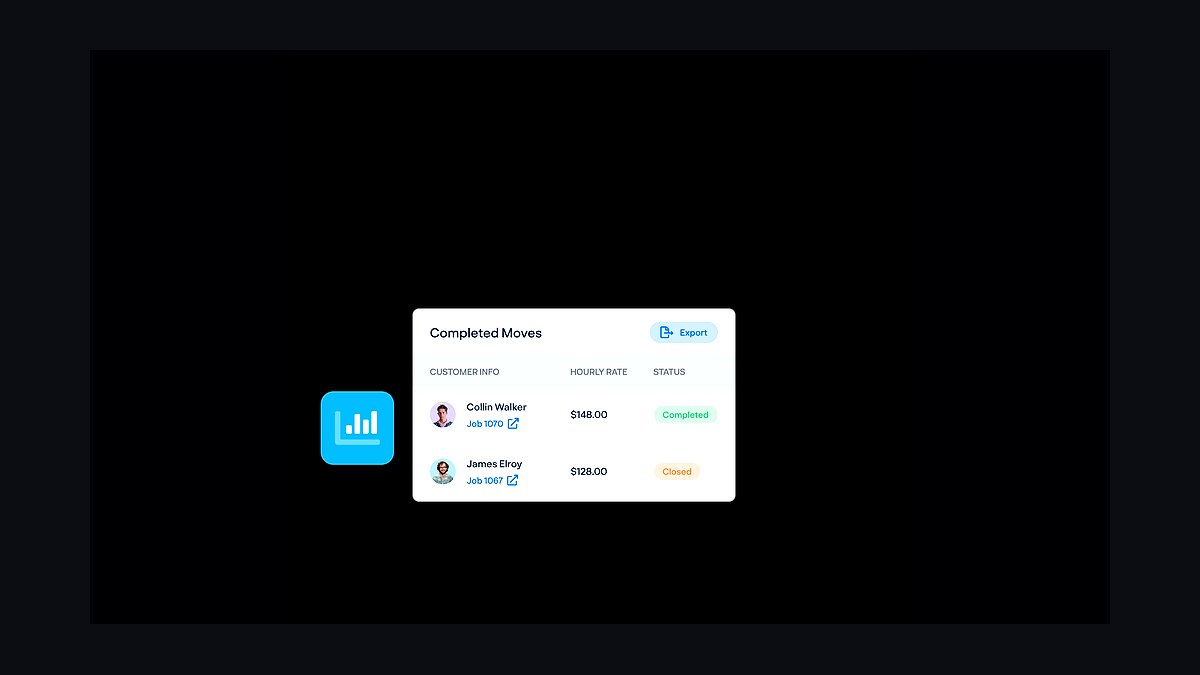
The 10 best tech stack tools for moving companies are ranked below on measured performance, build quality, price, and how each one actually holds up in daily use rather than how it reads on a spec sheet. Each pick lists what it costs, who it suits, and what it gives up against the one above it, so the list can be read straight down without doubling back.
1SmartMoving Software

SmartMoving ranks first because it is the moving-specific operational CRM that carries cube sheets, room-level inventory, valuation elections, and household goods bill of lading printing in one system of record. Pricing lands in the low hundreds per month for a small operator and climbs into four figures for multi-location enterprise tiers. Implementation runs two to four weeks with vendor onboarding support.
It is built for local and intrastate movers running three to six trucks who want a working workflow out of the box with almost no configuration. It trades away depth on storage-in-transit billing and complex warehouse management, so operators with heavy storage revenue should look at Movegistics instead. Buy it before any satellite tool, because every other component integrates into it.
2Movegistics

Movegistics ranks second because it is the deeper moving CRM that handles storage-in-transit billing, warehouse management, and complex interstate tariff math that local-first systems cannot. It is the pick when storage or interstate hauls are more than a small share of revenue. Onboarding takes longer and demands more configuration than an opinionated all-in-one.
It suits multi-location and interstate operators who need tariff tables and warehouse workflows rather than a fast local-only rollout. The trade-off is configuration debt and a longer implementation, so a local-only mover with no warehouse should take SmartMoving and accept its opinions. Forcing Movegistics onto a simple local operation wastes months on setup it will never use.
3Yembo AI Surveys

Yembo ranks third because its AI virtual survey turns a customer phone video into an item-by-item inventory with cube estimates that lands in the CRM as a draft quote. Human review runs five to fifteen minutes versus ninety minutes for an in-home walkthrough including drive time. Pricing is usually per-survey or a volume-tiered monthly flat rate and is frequently not published.
It is for operators with enough lead flow that booking-rate lift clears the subscription, since at 40 leads a month and a $2,000 average job each percentage point is worth about $800 monthly. At single-digit monthly leads it does not pay back, and a structured phone script with a customer photo request is the better answer. It feeds the CRM rather than replacing it.
4Samsara Fleet Telematics

Samsara ranks fourth because it supplies the GPS overlay on the dispatch map plus the ELD compliance layer that any operator running trucks over 10,001 pounds in interstate commerce needs under FMCSA hours-of-service rules. Per-vehicle subscription typically runs high-$20s to mid-$30s monthly on multi-year contracts, plus roughly $100–$150 in hardware per truck and similar installation.
It is for three-to-six-truck fleets where answering "where is my crew" without calling the foreman matters, and where geofence entry can trigger automated customer SMS. The trade-off is a 36-month term that is usually not negotiable at small-fleet volume, and dual-facing AI dashcams add $40–$60 per vehicle monthly. Data is inert without a weekly scorecard review.
5QuickBooks Online

QuickBooks Online ranks fifth because it is the terminal node where invoices, payments, deposits, and class-tracked job costing from the CRM land in the ledger. Mid-tier plus a payroll module lands most small operators in the $150–$250/month range once per-employee payroll fees are loaded in. It is the one component almost nobody should try to run inside the CRM.
It is for every operator regardless of size, since the CRM-to-accounting sync is the path that fails silently and needs a weekly reconciliation of closed jobs against deposits. The trade-off is that nothing reads back out of accounting into operations, and payroll pricing scales per employee so a twelve-person crew costs materially more than a four-person crew.
6QuickBooks Payroll

QuickBooks Payroll ranks sixth because moving payroll involves piece-rate components, tips, per diem on long hauls, multi-state withholding when crews cross state lines, and workers' compensation class codes that differ between drivers and helpers. Light payroll add-ons inside moving CRMs handle none of that cleanly. Pricing is a base fee plus a per-employee-per-month charge.
It is for operators with crews crossing state lines or running piece-rate pay, who should export hours from the CRM or time-tracking app into this engine rather than processing payroll natively. The trade-off is another monthly per-employee cost stacked on the accounting subscription, but a payroll run that does not balance gets fixed fast, so the pain is visible rather than silent.
7Connecteam Time Tracking
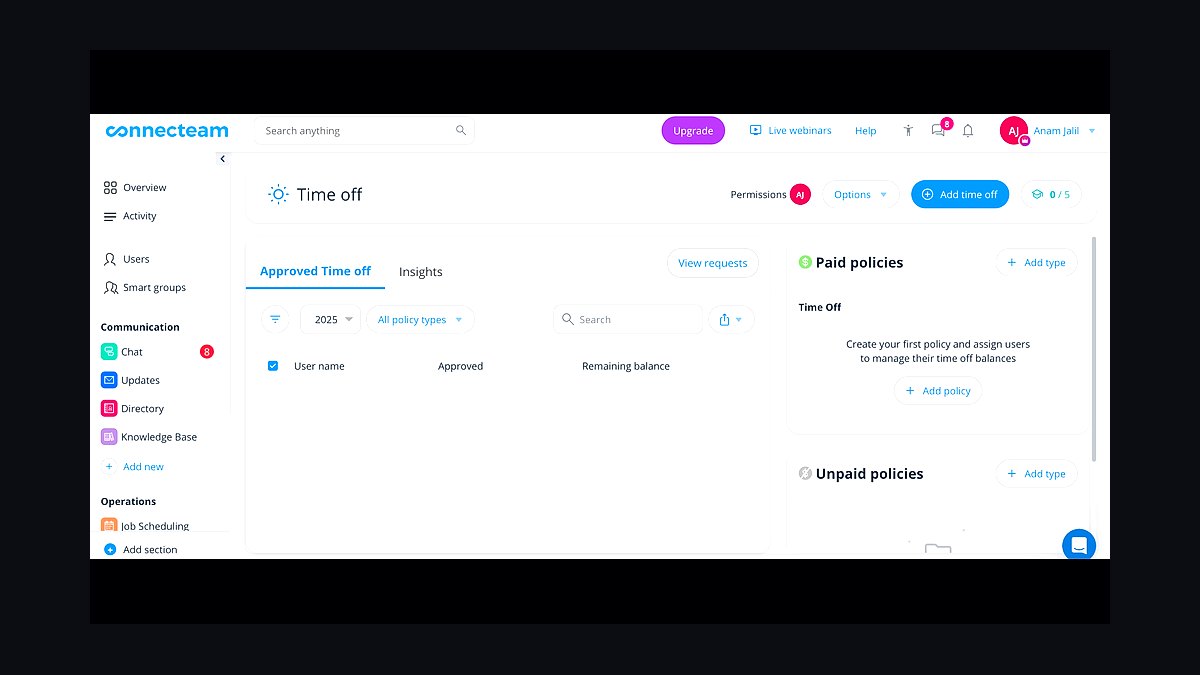
Connecteam ranks seventh because GPS-verified clock-in tied to a job number is what turns "eleven crew worked this week" into "job 4417 consumed 14.5 labor hours against a quote built on 11." Lightweight scheduling apps start around $20–$40/month for a small team, and GPS-verified time tracking with job costing runs per-user in the single-digit-to-low-teens dollars monthly plus a base fee.
It is for the three-to-six-truck band where job-level gross margin should be visible per job within a week of completion rather than at month-end close. The trade-off is that a twenty-person crew lands in the low-to-mid hundreds monthly, and the time-to-payroll path breaks as a payroll run that does not balance. Without it, job costing is guesswork.
8ClaimPilot Claims Software

ClaimPilot ranks eighth because the CRM-native claims module is adequate below roughly 150 jobs a month or about $2M in revenue, and above that threshold a dedicated claims engine pays back through faster subrogation, cleaner evidence chains, and fewer complaints escalating to the BBB or a regulator. Interstate household goods claims carry a statutory filing window measured in months.
It is for multi-state operations and shops above $2M revenue where a claim sitting in a spreadsheet can miss a filing deadline. The trade-off is a second system holding overlapping customer records, and it only works if every claim carries pre-move photo evidence tied to the inventory item, the signed valuation election, and a dated adjuster note. Below the threshold, stay with the CRM module.
9FMCSA ELD Rule

The FMCSA ELD rule ranks ninth because any operator running trucks over 10,001 pounds gross weight in interstate commerce is inside the hours-of-service and ELD requirements regardless of company size, and the telematics box is what keeps that legal. Intrastate-only operators must check state rules, which vary. The routing and theft-recovery value of telematics applies either way.
It is for every interstate mover, and it is the compliance reason telematics is non-negotiable rather than a nice-to-have map. The trade-off is that it dictates hardware and contract terms you would not otherwise choose, including 36-month commitments at small-fleet volume. It pairs with Samsara above and is the regulatory floor under that subscription.
10FMCSA Protect Your Move

FMCSA Protect Your Move ranks tenth because it is the consumer-facing valuation and rights framework that defines what a compliant bill of lading and valuation election must contain, and it is the reference that caps released-value exposure at roughly 60 cents per pound. A $600 damage claim becomes about $48 when the signed election is on file and tied to an inventory line.
It is for every licensed interstate mover, and it is the reason the claims module must hold pre-move photo evidence tied to the inventory item and a signed valuation election. The trade-off is that it is a regulatory resource rather than software, so it does not replace a claims engine or CRM. It is the compliance backbone the rest of the stack has to satisfy.
How we ranked these
We scored each tool on moving-specific capability first: cube sheet generation, room-level inventory, valuation coverage election, household goods bill of lading output, tariff math, claims tracking, and storage-in-transit billing. Weighting favored integration depth into accounting and telematics, implementation time, published pricing transparency, and mobile crew usability. Vendor case studies and generic feature lists carried almost no weight.
We deliberately ignored brand recognition, review-site star averages, and feature counts that never touch a moving workflow. Social media sentiment and conference booth size were excluded as noise. We also discounted AI claims unsupported by a documented workflow, and we did not credit any tool for capabilities that require custom development to reach, since most operators lack that capacity.
What to look for
Match the tool to your actual job mix before comparing prices. A local-only operator with no warehouse needs different depth than a multi-state mover running storage-in-transit and interstate tariffs. Test every candidate against four artifacts: can it produce a cube sheet, print a compliant bill of lading, record a valuation election, and tie a claim to a specific inventory line item?
The most common mistake is buying a generic CRM and building workarounds for cube sheets and valuation coverage. Operators spend three to four months patching, then re-platform and pay implementation twice. The second mistake is evaluating virtual survey tools against subscription cost instead of booking-rate lift, which is the number that actually justifies the spend.
Related questions
Can a moving company run on a general-purpose CRM?
Not viably. General CRMs lack cube sheets, room inventory, valuation coverage, tariff math, and household goods bill of lading generation. Operators who try typically revert to a moving-specific system within a few months, having paid implementation costs twice.
What is the single highest-return component to buy first?
The moving-specific operational CRM. It replaces the lead spreadsheet, the dispatch texts, the payment link, and the quote template simultaneously, and it is the system every other component integrates into. Buy it before anything else.
Do small operators need ELD-capable telematics?
If trucks exceed 10,001 pounds gross weight and cross state lines, FMCSA hours-of-service and ELD rules apply regardless of company size. Intrastate-only operators should check their state rules, which vary. The routing and theft-recovery value applies either way.
Should payroll run inside the moving CRM?
No. Piece-rate pay, tips, per diem, multi-state withholding, and workers' compensation class codes need a dedicated payroll engine. Export hours from the CRM or time-tracking app into that engine instead.
How long does a full stack rollout take?
Roughly 90 days done well: CRM and accounting live and reconciling in the first month, virtual survey and telematics in the second, time tracking and formal claims workflow in the third. Compressing it into one month reliably produces a half-configured system.
Is a virtual survey tool worth it for a small mover?
It depends on lead volume. At forty leads a month, a ten-point booking-rate lift on $2,000 average jobs is worth roughly $8,000 monthly, which clears most subscriptions. At eight leads a month it does not, and a structured phone script with photo requests is the better call.
What breaks silently in a moving company tech stack?
The CRM-to-accounting sync. Invoices keep generating but stop landing in the ledger, and nobody notices until bank reconciliation blows up months later. Reconcile closed jobs against deposits weekly, not monthly, to catch it early.
How much should a three-truck mover budget for software?
Roughly $1,200 to $2,200 per month all-in for three to six trucks and 15 to 25 crew, covering the operational CRM, virtual surveys, telematics, accounting and payroll, and crew time tracking, plus several hundred dollars in one-time telematics hardware and installation.
FAQ
How much should a three-truck moving company spend on software each month?
Roughly $1,200 to $2,200 per month all-in for three to six trucks and 15 to 25 crew. That covers the operational CRM, virtual surveys, fleet telematics, accounting and payroll, and crew time tracking, plus several hundred dollars in one-time telematics hardware and installation.
Why do generic CRMs fail for moving companies?
They have no concept of cube sheets, room-level inventory, valuation coverage election, tariff tables, or a household goods bill of lading. Operators spend months building workarounds, then re-platform to a moving-specific system anyway and pay implementation costs twice.
What integration paths matter most in a moving tech stack?
Four carry the load: survey-to-CRM, CRM-to-accounting, telematics-to-dispatch, and time-to-payroll. The two that fail silently, survey-to-CRM and CRM-to-accounting, need scheduled weekly human checks rather than relying on error alerts.
Do I need a dedicated claims module or is a spreadsheet enough?
A CRM-native claims module is adequate below roughly 150 jobs a month or about $2M in revenue. Above that, or in multi-state operations, a dedicated claims engine pays back through faster subrogation, cleaner evidence chains, and fewer regulatory complaints.
What is a normal damage claim rate for a moving company?
Damage claims on 3 to 7 percent of jobs is a normal operating range. Consistently above that points at crew training or packing materials rather than software, so fix the operational cause before buying another tool.
How do I evaluate a virtual survey tool before buying?
Run a two-week internal trial where estimators do video surveys side-by-side with in-home walkthroughs on the same jobs. Compare resulting cube counts and time consumed. That produces your local numbers instead of a vendor case study.
What is the biggest mistake when buying moving company software?
Buying a generic CRM and patching it. The second biggest is evaluating virtual survey tools against subscription cost instead of booking-rate lift, which is the number that actually justifies the spend at moderate lead volume.
Should I build custom dispatch software or buy it?
Building the customer and dispatch layer is defensible at scale when customer experience is the differentiator. Rebuilding accounting is not. The build-versus-buy line sits between the customer and dispatch layer, which is sometimes worth building, and the ledger, which never is.
How often should I reconcile the CRM-to-accounting sync?
Weekly. Compare the count and dollar total of jobs closed in the CRM against deposits and invoices in accounting for the same week. Five minutes weekly beats a five-figure cleanup engagement at year end.
What should I train crews on first in a new stack?
Make one thing mandatory in the mobile app before payroll processes, usually clock-in tied to a job number. That makes using the app the path of least resistance rather than an extra step, and it feeds job costing automatically.
Sources
- https://www.fmcsa.dot.gov/hours-service/elds/electronic-logging-devices
- https://www.quickbooks.intuit.com/accounting/
- https://www.smartmoving.com/
- https://www.movegistics.com/
- https://www.fmcsa.dot.gov/regulations/household-goods-movers
- https://www.bbb.org/
- https://www.irs.gov/businesses/small-businesses-self-employed/independent-contractor-defined
- https://www.dol.gov/agencies/whd/flsa
Related on PULSE
This page will be disappearing soon. Save it to your device for $1 — or read it free while it is here.
@Kory-White- · if Venmo asks, the last 4 of my number are 2012
This page is gone.
This one is off the shelf now. $1 keeps it on your phone for good — the whole page, pictures and diagrams included.
 pulse-tech-stacksTop 10 Best Tech Stack Tools for Pilates Studios in 2027
 pulse-tech-stacksTop 10 Best Tech Stack Tools for API Security Vendors in 2027
 pulse-tech-stacksTop 10 Best Tech Stack Tools for HVAC Equipment Distributors in 2027
 pulse-tech-stacksTop 10 Best Tech Stack Tools for Tire Shops in 2027
 pulse-tech-stacksTop 10 Best Tech Stack Tools for HOA and Community Association Management Companies in 2027
 pulse-tech-stacksTop 10 Best Tech Stack Tools for AI Customer Support Companies in 2027
 pulse-tech-stacksTop 10 Best Tech Stack Tools for AI Translation API Companies in 2027
 pulse-tech-stacksTop 10 Best Tech Stack Tools for Threat Intelligence Vendors in 2027
 pulse-tech-stacksTop 10 Best Tech Stack Tools for Garden Centers and Nurseries in 2027
 pulse-tech-stacksTop 10 Best Tech Stack Tools for Independent Food Trucks in 2027