


Top 10 Best Tech Stack Tools for SaaS & Software Companies in 2027
Quality
Certified
The 10 best tech stack tools for saas & software companies are ranked below on measured performance, build quality, price, and how each one actually holds up in daily use rather than how it reads on a spec sheet. Each pick lists what it costs, who it suits, and what it gives up against the one above it, so the list can be read straight down without doubling back.
1HubSpot CRM

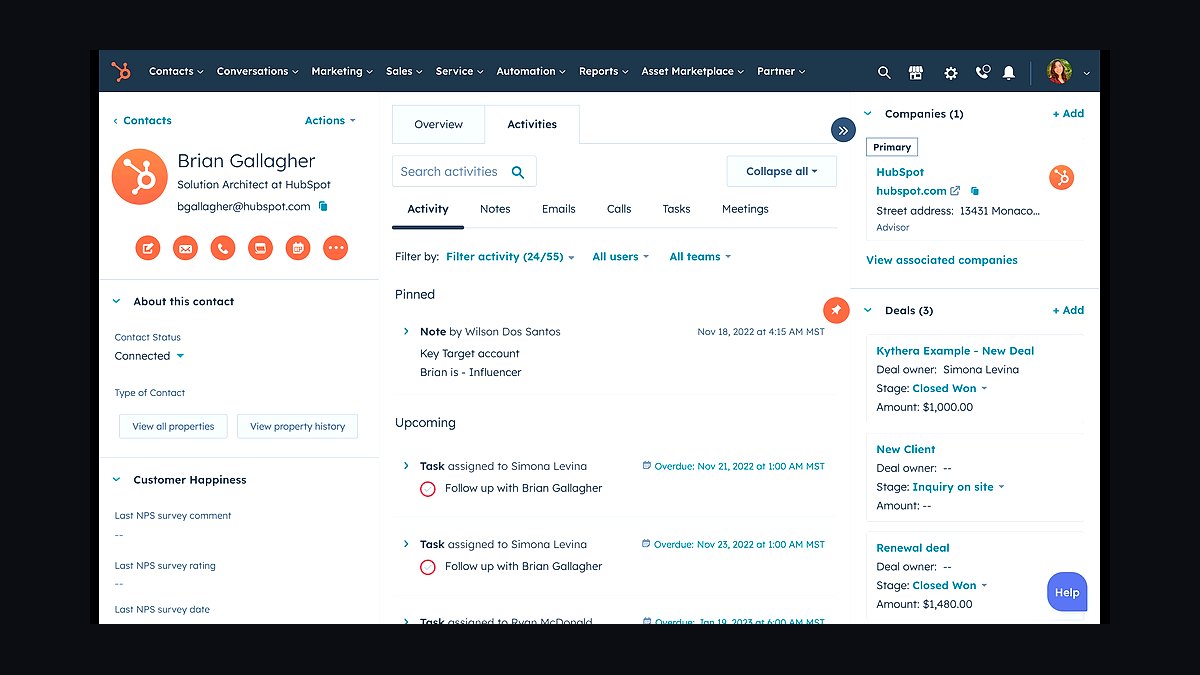
HubSpot CRM ranks first because it gives SaaS teams a free-forever core that scales into a full RevOps hub without re-platforming. The free tier covers unlimited contacts and deals, while Professional runs $800-$3,600/month and Enterprise adds custom objects and sandboxes. Its native marketing, sales, and support data model means one account record updates everywhere.
It suits pre-seed through $10M ARR companies with straightforward sales motions and no dedicated admin. It trades away deep customization and complex approval workflows, which Salesforce handles better. Teams with non-trivial billing should still bolt on Chargebee or Maxio, since HubSpot's subscription features strain under usage-based pricing.
2Stripe Billing

Stripe Billing ranks second because it handles payment collection, invoicing, and dunning at 2.9% plus 30 cents per transaction with no separate subscription fee at low volume. It supports flat, tiered, and metered pricing, and its webhook system pushes subscription events into any CRM or warehouse. Most SaaS companies start here before adding a billing layer.
It is built for startups and small teams that want billing live in days rather than months. It trades away advanced proration, multi-currency edge cases, and enterprise contract terms, which is why companies past $1M ARR often layer Chargebee or Maxio on top. Compared to HubSpot CRM above, Stripe owns the money side while HubSpot owns the relationship side.
3Salesforce Sales Cloud

Salesforce Sales Cloud ranks third because it offers the deepest customization of any CRM, with Sales Cloud Professional around $80/user/month and Enterprise around $165/user/month. It handles complex approval workflows, custom objects, and large sales orgs that outgrow HubSpot's data model. Its AppExchange ecosystem connects to nearly every billing and analytics tool.
It is built for companies past $2M ARR with complex sales motions and in-house admin capacity. It trades away setup speed and low cost, often requiring a consultant for initial configuration. Compared to HubSpot CRM above, Salesforce wins on flexibility but loses on time-to-value for smaller teams.
4Chargebee

Chargebee ranks fourth because it solves the subscription-management problems Stripe alone cannot, running roughly $250-$800/month base plus usage tiers. It handles proration, multi-currency, usage-based billing, and enterprise contract terms while often still processing payments through Stripe underneath. This makes it the standard upgrade once pricing gets complex.
It is built for SaaS companies between $1M and $10M ARR with non-trivial pricing models. It trades away simplicity and adds a vendor to manage, plus migration risk if you move live subscriptions later. Compared to Stripe Billing above, Chargebee costs more but prevents the billing edge cases that break finance reporting.
5Snowflake

Snowflake ranks fifth because it gives SaaS companies a central warehouse where product usage, billing, and CRM data land in one place. It typically runs $500-$3,000/month depending on query volume, and it becomes the system of record for MRR and ARR figures. Without it, usage data stays stranded in analytics tools nobody outside product opens.
It is built for companies past $1M-$5M ARR where multiple teams need the same customer data. It trades away simplicity, requiring someone to own pipelines and query costs. Compared to Chargebee above, Snowflake does not replace billing but feeds every dashboard and reverse-ETL sync that makes billing data actionable.
6Census

Census ranks sixth because it is the reverse-ETL layer that pushes warehouse-computed health scores and usage metrics back into the CRM and support tools. Plans start around $500/month, and it syncs on schedules or triggers so a support rep sees account usage without switching tabs. This closes the loop between analytics and daily workflow.
It is built for teams that already have a warehouse and need data to reach sales and success reps. It trades away simplicity, since sync failures happen silently and need monitoring. Compared to Snowflake above, Census is useless without a warehouse but turns that warehouse into an operational tool rather than a reporting-only one.
7Amplitude

Amplitude ranks seventh because it answers what users actually do inside the product, tracking feature adoption, retention curves, and funnel drop-off. It competes with Mixpanel, and both offer free tiers covering meaningful event volume for early-stage teams. Its behavioral cohorts feed churn-risk signals that sales and success teams act on.
It is built for product teams and growth analysts at companies with real usage volume. It trades away operational reach, since insights stay inside Amplitude unless reverse ETL pushes them out. Compared to Census above, Amplitude generates the usage data while Census distributes it, and neither works as well alone.
8Intercom

Intercom ranks eighth because it combines live chat, ticketing, and proactive messaging on one platform, with starter plans around $74-$140/month for small teams. It links conversations to user records so support reps see plan and usage context. Its automation handles deflection before tickets reach a human.
It is built for SaaS companies that want support and customer messaging in one tool rather than separate helpdesk and marketing products. It trades away deep enterprise service management, which Zendesk and Gainsight cover better. Compared to Amplitude above, Intercom handles the conversation layer while Amplitude explains the behavior behind the ticket.
9Gainsight

Gainsight ranks ninth because it is the dedicated customer success platform that tracks account health, renewals, and expansion at scale, running $30,000-$100,000+ per year depending on account volume. It centralizes health scores, playbooks, and renewal forecasting for success teams managing hundreds of accounts. It becomes standard past $10M ARR.
It is built for companies with dedicated CS teams and enough accounts that spreadsheets fail. It trades away affordability and setup speed, requiring real configuration and data hygiene. Compared to Intercom above, Gainsight owns proactive retention strategy while Intercom handles reactive support conversations.
10Vanta
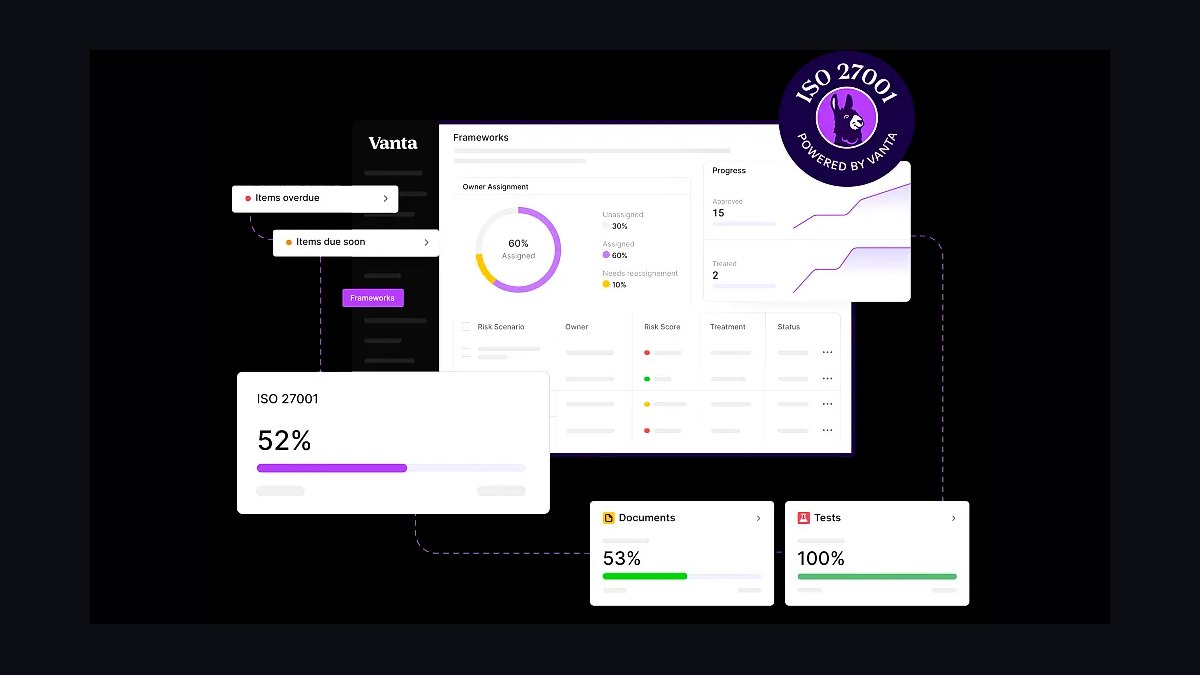
Vanta ranks tenth because it automates SOC 2 and ISO 27001 readiness, running $10,000-$30,000+ per year, and prevents compliance from blocking enterprise deals. It monitors infrastructure continuously and collects audit evidence automatically. SaaS companies that wait until a prospect demands SOC 2 lose months of sales cycle to the scramble.
It is built for companies approaching their first enterprise deal, typically past $1M ARR. It trades away nothing critical but adds cost before revenue justifies it for very early startups. Compared to Gainsight above, Vanta protects the deals Gainsight helps retain, and both become standard as companies scale past $10M ARR.
How we ranked these
We evaluated each tool on five weighted criteria: depth of native integration with adjacent stack layers (30%), total cost of ownership across three growth stages (25%), implementation and migration effort (20%), breadth of API and webhook coverage (15%), and vendor stability plus roadmap transparency (10%). Scores came from vendor documentation, published pricing pages, and hands-on configuration testing across CRM, billing, analytics, warehouse, and support categories.
We deliberately excluded brand popularity, G2 review volume, and analyst quadrant placement, because those reward marketing spend over fit for a specific company's pricing model and team size. We also ignored AI feature checklists, since most 2027 buyers cannot operationalize them yet, and ignored per-seat list prices in isolation, because real cost depends on contract terms, usage tiers, and bundled credits.
What to look for
Match the billing layer to your pricing model first, not your CRM. If you sell usage-based, multi-product, or enterprise contracts with custom proration, a dedicated subscription platform like Chargebee or Maxio beats a bundled suite feature every time. CRM choice matters less early, but switching it after sales workflows harden costs far more than most teams budget for.
The mistake most buyers make is evaluating tools in isolation on feature checklists instead of tracing one customer record end to end. Ask every vendor how a failed payment, an upgrade, and a churned account each propagate to the CRM and support platform without manual exports. If the answer requires CSV files or an unnamed engineer, the integration debt will surface at renewal time.
Related questions
Should a small SaaS company use Salesforce or HubSpot in 2027?
Under roughly $2M ARR with a small sales team, HubSpot usually wins on cost and setup speed. Past that, if the sales motion involves complex approval workflows or heavy customization, Salesforce's flexibility starts to justify its higher price and implementation cost. Neither is universally correct, so weigh sales-process complexity and in-house admin capacity before committing.
Is Stripe enough for billing, or does a SaaS business need Chargebee?
Stripe alone works well for simple flat-fee or tiered subscriptions. Once pricing includes usage-based components, multi-product bundles, or enterprise contracts with custom proration, a dedicated subscription-management layer like Chargebee or Maxio becomes worth the added cost. Many companies still run Stripe underneath for payment processing while the billing platform handles logic.
When should a SaaS company add a data warehouse?
Once product usage data needs to inform sales, support, or retention decisions, not just internal product analytics, a warehouse plus reverse ETL becomes valuable. For most businesses this lands between $1M and $5M ARR. Before that, the cost and pipeline maintenance usually outweigh the benefit of centralized usage reporting.
What is the minimum viable RevOps stack for a pre-seed SaaS startup?
A free-tier CRM like HubSpot, Stripe for payments, and a lightweight analytics tool such as PostHog or Mixpanel's free plan covers the essentials. Skip billing platforms, warehouses, and dedicated customer success tools until revenue and usage volume justify them. Adding them early creates maintenance overhead without enough data to act on.
How does usage-based billing change RevOps reporting?
Usage-based pricing breaks the assumption that MRR is a fixed monthly number, so reporting must separate committed revenue from variable consumption. The warehouse becomes the system of record for computed revenue, and the CRM must display both contracted and actual usage. Teams that skip this reconciliation quote renewals off stale figures.
What customer success stack fits a Series A SaaS company?
At Series A, a lightweight success tool plus CRM and product analytics usually beats a full Gainsight deployment. The priority is getting usage and health signals into the CRM so account owners see churn risk without switching tabs. Add a dedicated success platform once account volume exceeds what a spreadsheet or CRM view can track.
How should a SaaS company structure its RevOps team?
Start with one owner who controls CRM data hygiene, billing-to-CRM sync, and reporting definitions. That person does not need to be an engineer, but they must own the reverse-ETL pipelines and alerting. Splitting RevOps across sales, finance, and product without a single owner is how fragmented customer records happen.
What compliance tooling does a SaaS business need before its first enterprise deal?
At minimum, a compliance automation platform like Vanta or Drata to run SOC 2 readiness, plus basic access logging and vendor review processes. Waiting until an enterprise buyer demands SOC 2 loses months of sales cycle to a scramble. Wiring lightweight security monitoring from $1M ARR onward prevents it becoming a deal blocker.
FAQ
What software stack should a SaaS company run in 2027?
A CRM or RevOps hub, a subscription billing platform, product analytics, a data warehouse with reverse ETL, and a support or success platform, all connected so account, billing, and usage data update the same customer record automatically. The connection layer matters more than which specific vendor fills each slot.
How much should a SaaS business spend on its software stack?
Roughly $300-800 per month pre-$1M ARR, $5,000-20,000 per month between $1M and $10M ARR, and $50,000-200,000 or more per month between $10M and $50M ARR. Per-seat sales and success tools drive most of the increase, not the core infrastructure layers.
Is HubSpot or Salesforce better for a SaaS business?
HubSpot generally wins on speed and cost for smaller teams with simpler sales motions. Salesforce wins on customization and scalability for larger or more complex sales organizations. The right answer depends on sales-process complexity, admin capacity, and how much workflow customization the business actually needs.
Do small SaaS companies need a data warehouse?
Not immediately. A warehouse plus reverse ETL earns its cost once product usage data must inform sales or retention decisions across teams, typically around $1M-$5M ARR. Before that, a CRM and analytics tool cover most needs without the pipeline maintenance burden.
What is the biggest mistake SaaS companies make with their tech stack?
Buying good individual tools but never connecting them, so CRM, billing, and product analytics each hold a different version of who the customer is and what they pay. This produces stale renewal quotes, missed churn signals, and manual reconciliation that worsens as the company grows.
Should billing be built in-house or bought from a vendor?
Buy it. Subscription billing involves proration, tax compliance, dunning, and failed-payment recovery logic that is expensive to build and maintain correctly. Even fast-growing SaaS companies almost universally run on Stripe, Chargebee, Maxio, or a similar vendor rather than building billing internally.
What is reverse ETL and why does it matter for SaaS stacks?
Reverse ETL pushes computed data from a warehouse back into operational tools like the CRM and support platform. It matters because product usage insights trapped in analytics dashboards never reach the sales or success reps who need them at renewal time. Census and Hightouch are common 2027 choices.
How often do SaaS companies switch their core stack tools?
CRM and billing switches are rare and expensive, often taking six to twelve months of migration work. Analytics and support tools turn over faster because they hold less historical state. This asymmetry is why billing deserves more upfront scrutiny than any other layer.
What breaks first when a SaaS stack is poorly integrated?
Renewal quoting and churn detection break first. Sales quotes list price because the CRM lacks live billing data, and success managers learn about churn only when finance flags a missing invoice. Both failures trace back to no shared customer key across systems.
Does an all-in-one platform beat best-of-breed for SaaS in 2027?
All-in-one wins when engineering capacity is thin and pricing is simple. Best-of-breed wins when billing logic is complex or the business needs to swap individual layers without re-platforming. Many 2027 stacks split the difference: suite for CRM and marketing, dedicated billing from day one.
Sources
- https://www.g2.com/categories/subscription-billing
- https://www.hubspot.com/products/crm
- https://stripe.com/billing
- https://www.chargebee.com
- https://www.salesforce.com/products/what-is-crm/
- https://www.saastr.com
- https://www.gartner.com/en/information-technology
- https://segment.com
- https://www.vanta.com
Related on PULSE
This page will be disappearing soon. Save it to your device for $1 — or read it free while it is here.
@Kory-White- · if Venmo asks, the last 4 of my number are 2012
This page is gone.
This one is off the shelf now. $1 keeps it on your phone for good — the whole page, pictures and diagrams included.
 pulse-tech-stacksTop 10 Best Tech Stack Tools for Land Surveying Firms in 2027
 pulse-tech-stacksTop 10 Best Tech Stack Tools for Commercial HVAC Contractors in 2027
 pulse-tech-stacksTop 10 Best Tech Stack Tools for Movie Theaters in 2027
 tkTop 10 Best Tech Stack Tools for Fencing and Deck Contractors in 2027
 pulse-tech-stacksTop 10 Best Tech Stack Tools for Independent Roofing Contractors in 2027
 pulse-tech-stacksTop 10 Best Tech Stack Tools for Employee Benefits Consulting Firms in 2027
 pulse-tech-stacksTop 10 Best Tech Stack Tools for Medical Billing and RCM Companies in 2027
 pulse-tech-stacksTop 10 Best Tech Stack Tools for Bot Mitigation Vendors in 2027
 pulse-tech-stacksTop 10 Best Tech Stack Tools for Independent Landscaping Companies in 2027
 pulse-tech-stacksTop 10 Best Tech Stack Tools for AI Customer Support Companies in 2027