


Top 10 Best Tech Stack Tools for Hardware & Device Companies in 2027
Quality
Certified
The 10 best tech stack tools for hardware & device companies are ranked below on measured performance, build quality, price, and how each one actually holds up in daily use rather than how it reads on a spec sheet. Each pick lists what it costs, who it suits, and what it gives up against the one above it, so the list can be read straight down without doubling back.
1Oracle NetSuite ERP

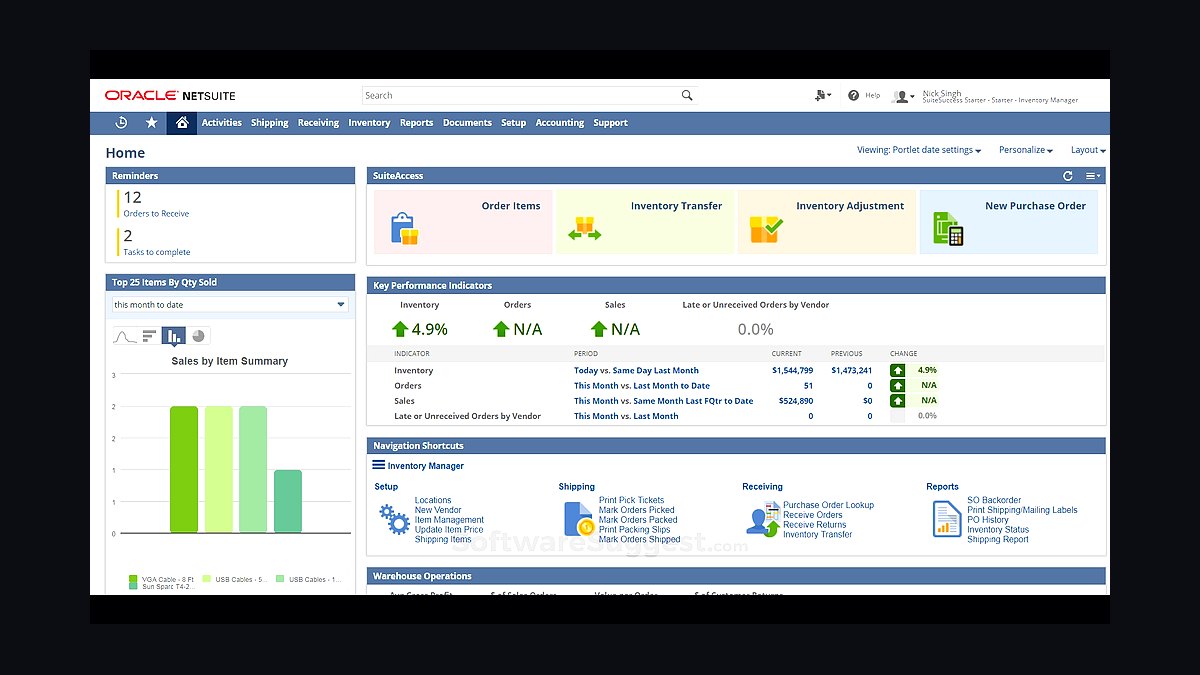
NetSuite ranks first because it is the only mainstream cloud ERP that treats multi-level BOMs, revision changes, and serial-number tracking as core features rather than bolt-ons. SuiteSuccess manufacturing editions start around $999-$1,999/month base plus $99-$129 per user, with implementation commonly running $10,000-$30,000. A revision change propagates from the BOM to inventory, quoting, and fulfillment in one transaction.
It is built for hardware firms crossing roughly 50 employees or 1,000 SKUs with real revision churn, not for a 10-person startup that would drown in implementation cost. It trades away cheap flexibility: once your product data lives in NetSuite's model, swapping modules later is painful. Compared to Odoo below, it costs 3-5x more but needs far less internal engineering to hold a complex BOM.
2Odoo Manufacturing

Odoo takes second because it delivers ERP-grade manufacturing, inventory, sales, and accounting for roughly $24-$36 per user per month, the lowest realistic entry point for a hardware business with under 200 SKUs. Its Manufacturing and PLM modules handle multi-level BOMs and revision bumps natively, and the whole suite shares one product record without middleware. A 25-person company can land near $15,000-$25,000/year all-in.
It suits hardware startups and small manufacturers who need breadth over depth and are willing to accept a less polished interface. It trades away enterprise-grade support and advanced ECO approval workflows, which is why it sits below NetSuite. Compared to Arena PLM below, Odoo covers more ground but handles concurrent engineering change orders far less rigorously.
3SAP Business One

SAP Business One ranks third because it is the realistic floor once a hardware manufacturer outgrows Odoo but cannot justify full SAP S/4HANA. It handles multi-level BOMs, revision control, and warehouse management with the data rigor large distributors and industrial buyers expect, and its partner ecosystem has deep manufacturing implementation experience. Total software spend for ERP plus adjacent modules typically lands $60,000-$150,000/year at mid-market scale.
It is right for industrial and B2B hardware firms with complex distributor requirements, not for consumer startups optimizing for e-commerce speed. It trades away ease of customization and modern UX, and implementations routinely run 6-12 months. Compared to NetSuite above, it is stronger on multi-plant manufacturing depth but weaker on cloud-native extensibility and DTC integration.
4Arena PLM

Arena PLM, owned by PTC, ranks fourth because it is the dedicated system of record for BOMs, revisions, and engineering change orders once spreadsheets stop working. Cloud seats run roughly $150-$300 per user per month. It becomes worth the cost past about five concurrent engineers editing BOMs or more than three active revisions per product per year, where ERP BOM modules break down under ECO approval workflows.
It is for hardware companies with real engineering change velocity and CAD-linked product data, not for firms with 20 stable SKUs. It trades away breadth: Arena does not run your inventory, quoting, or accounting, so it must push data downstream via API or middleware. Compared to Odoo above, it costs far more per seat but is the only option that scales past a handful of SKUs with genuine revision churn.
5Salesforce Revenue Cloud

Salesforce Revenue Cloud ranks fifth because CPQ is the layer that turns configurable hardware quoting from a 2-3 day engineering bottleneck into a sub-4-hour automated process. Expect roughly $50-$125 per user per month on top of Salesforce seats. It enforces valid configurations across options like mounting, power, and firmware combos so reps stop requesting engineering sign-off on every non-standard order.
It is for hardware businesses selling configurable products through direct and channel sales, not for firms with a single fixed SKU. It trades away simplicity and cost: Salesforce plus CPQ is expensive and requires admin investment. Compared to HubSpot below, it offers deeper configuration logic and approval workflows but a steeper implementation curve and higher per-seat spend.
6HubSpot Sales Hub
HubSpot Sales Hub ranks sixth because it gives hardware companies a CRM with configurable quoting at a fraction of Salesforce's cost and implementation time. Pricing scales by seat tier, and the CPQ-style quote tools handle tiered distributor pricing and product options without a separate platform. For a 40-person hardware business, it is often live in weeks rather than months.
It is for small and mid-size hardware firms whose quoting complexity is moderate, not for those needing hundreds of configuration rules or complex approval chains. It trades away CPQ depth and enterprise customization. Compared to Salesforce Revenue Cloud above, it is cheaper and faster to deploy but weaker on enforcing complex valid configurations automatically, which matters once product variants multiply.
7SPS Commerce EDI

SPS Commerce ranks seventh because EDI stops being optional once more than roughly 10% of revenue flows through big-box or major distributor channels. Retailers like Home Depot, Best Buy, and Lowe's mandate EDI 850/855/856/810 documents and fine non-compliant vendors $50-$500 per violation. Managed service runs $400-$1,500/month depending on trading partner count.
It is for hardware brands selling into retail or distribution, not for pure DTC operations. It trades away control and adds a per-partner cost that grows with channel expansion. Compared to TrueCommerce below, SPS has broader retail trading-partner coverage and stronger conformance testing, but pricing scales steeply once you exceed a handful of partners and document types.
8TrueCommerce EDI
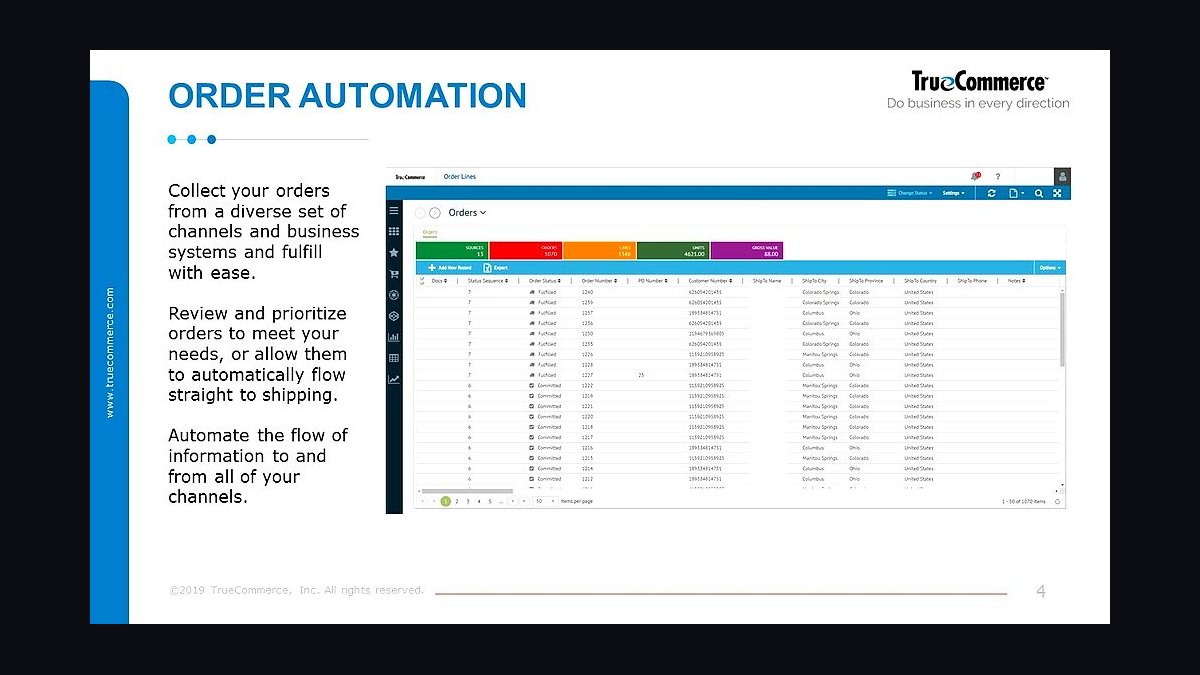
TrueCommerce ranks eighth because it delivers managed EDI connectivity at a lower entry price than SPS for hardware companies onboarding their first one or two retail partners. Monthly costs typically start near the low end of the $400-$1,500 range, and its testing environment lets you certify 856 Advance Ship Notices against real order data before go-live, avoiding dock refusals and chargebacks.
It is for smaller hardware vendors entering retail distribution for the first time, not for brands already managing dozens of trading partners. It trades away some breadth of pre-built retailer mappings and enterprise support depth. Compared to SPS Commerce above, it is cheaper to start but less proven at high partner counts and complex multi-document retail programs.
9AWS IoT Core
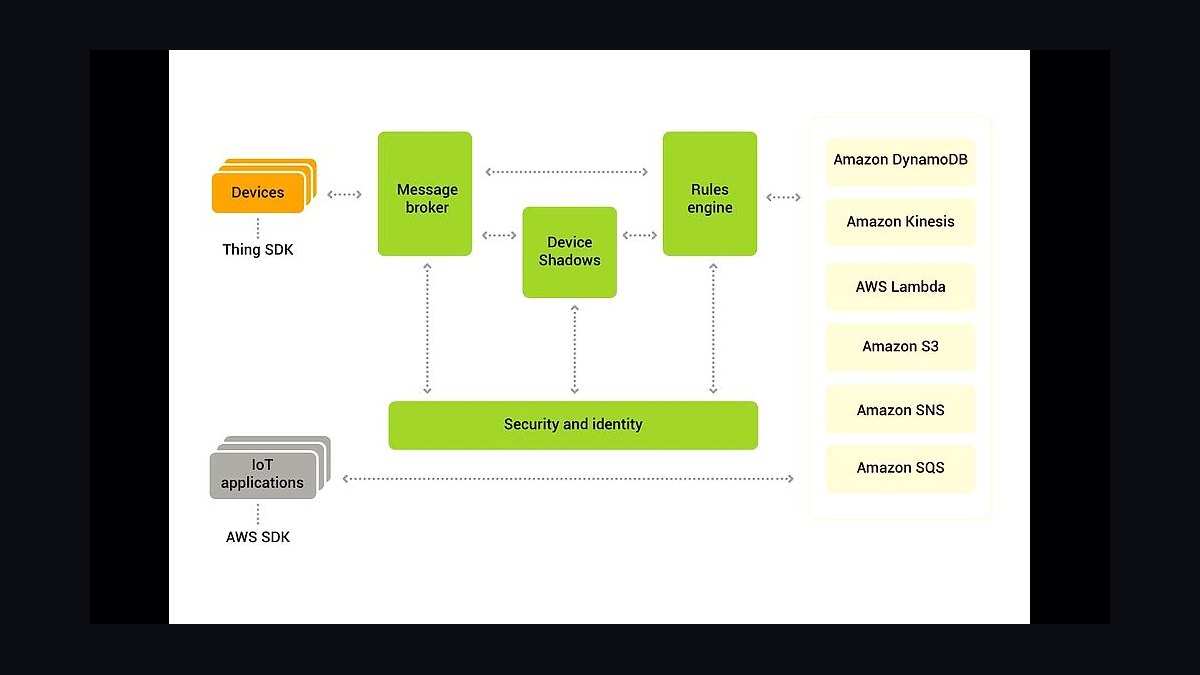
AWS IoT Core ranks ninth because it is the cheapest and most flexible way to ingest device telemetry at scale, charging roughly $1 per million messages plus device shadow and rules-engine fees. A fleet of 50,000 sensors reporting every five minutes generates about 14.4 million messages per day, landing near $150-$400/month before dashboards or anomaly detection.
It is for hardware companies with in-house embedded or cloud engineers who can build device management, OTA tooling, and dashboards themselves, not for teams without that staff. It trades away out-of-the-box fleet management and provisioning. Compared to Particle below, it is far cheaper at scale but requires you to build everything above the message layer, which is real engineering cost.
10Particle IoT Platform
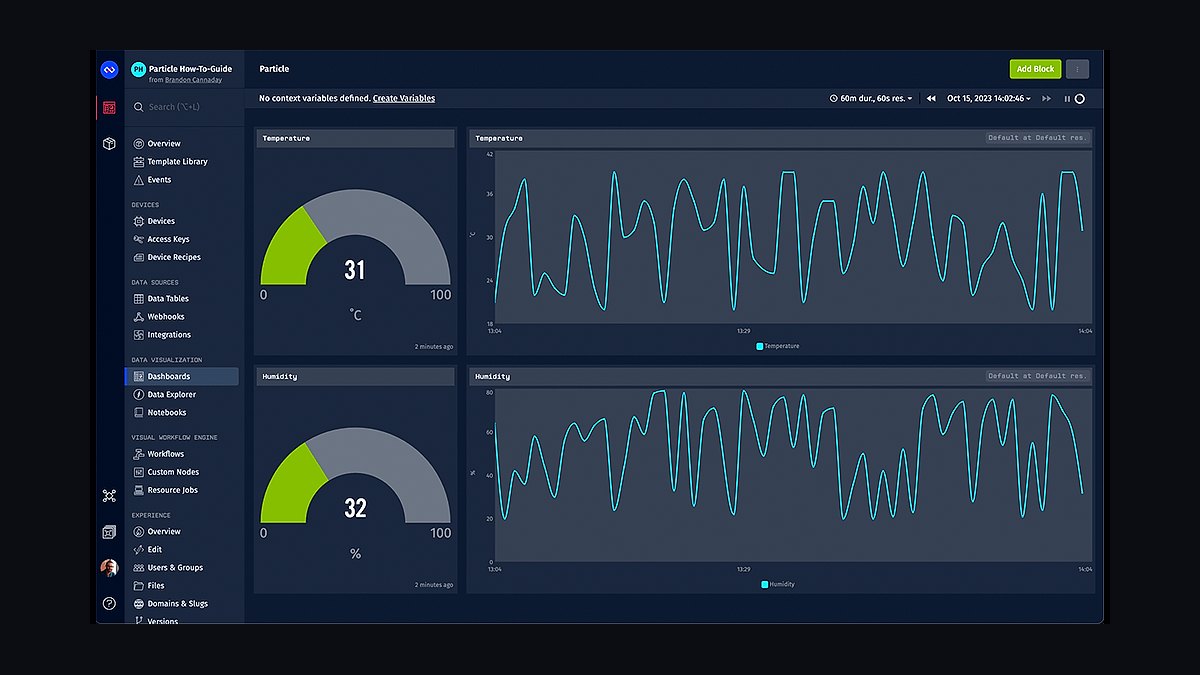
Particle ranks tenth because it bundles device provisioning, fleet management, and OTA firmware updates out of the box, which small hardware teams would otherwise spend months building. It costs roughly 2-4x the raw message price of AWS IoT Core, but that premium buys working device management on day one rather than a platform skeleton.
It is for hardware businesses without a dedicated embedded or cloud engineering team, especially those shipping connected consumer devices. It trades away cost efficiency at scale and introduces platform lock-in on a core competency. Compared to AWS IoT Core above, it is faster to launch and easier to operate, but becomes the wrong choice once you have the engineering team and fleet size to justify building on raw cloud primitives.
How we ranked these
We ranked tools by weighting five factors: breadth of hardware-specific functionality (BOM, revision, serial tracking), integration depth with ERP/CRM/PLM layers, total cost of ownership at 25-200 employee scale, implementation time to first value, and ecosystem maturity including partner/consultant availability. Pricing data came from published vendor tiers and user-reported ranges. Weighting favored tools that solve the single-source-of-truth problem across product records rather than point features.
We deliberately ignored analyst quadrant placement, brand recognition among services businesses, and feature-count marketing checklists. We excluded tools with no verifiable manufacturing or inventory depth, and discounted vendor demos that couldn't show a live multi-level BOM revision propagating downstream. We also ignored pure e-commerce platforms and generic project management tools, since neither tracks the physical product state that hardware companies actually need.
What to look for
The decisive factor is whether the tool can own or cleanly consume one authoritative product record — SKU, revision, BOM, warranty terms — without letting downstream systems edit it. Ask vendors to demonstrate a revision change propagating from PLM through ERP to CPQ and RMA in one transaction. If they can't show that live, the integration gap will surface post-implementation when fixing it costs five figures.
The mistake most buyers make is selecting on demo polish and user interface rather than data-model fit. A beautiful CRM built for services will silently fail at serial-number tracking and multi-level BOMs. Buyers also under-budget implementation consulting, which typically runs 1-2x annual license cost, and skip EDI certification testing before go-live, triggering retailer chargebacks on the very first shipment.
Related questions
Do I need a PLM if I only have 20 SKUs?
Probably not yet. Below roughly 20 SKUs with infrequent revisions, a well-governed ERP BOM module or a disciplined shared drive with a single BOM owner is workable. Add PLM once concurrent engineering edits, ECO approval workflows, or CAD-to-BOM version control become routine — usually past 5 concurrent engineers or 3+ revisions per product per year.
Can I run device telemetry without a dedicated IoT platform?
Yes, for very small fleets under a few thousand devices, a simple MQTT broker plus a time-series database can work. But you will rebuild device provisioning, fleet management, and OTA update tooling that vertical platforms like Particle or Golioth already provide. The break-even is usually when your embedded team's time costs more than the platform premium.
Should EDI come before or after ERP selection?
Confirm your ERP or its iPaaS layer has proven EDI connectors before signing anything. Retrofitting EDI onto an ERP with no native or partner integration is a common, expensive redo. Managed providers like SPS Commerce or TrueCommerce integrate cleanly with NetSuite, Business Central, and Odoo, but not with every SMB accounting tool.
How long does a full hardware software stack rollout take?
Expect 4-6 months for ERP plus CRM/CPQ at small-business scale, and 9-12 months if PLM and EDI certification with multiple retail partners are included. Budget 2-4 weeks per trading partner for EDI conformance testing alone. Rushing any phase is the most common cause of first-shipment chargebacks and data drift.
What is the minimum viable software stack for a brand-new hardware startup?
Cloud accounting like QuickBooks Online or Xero, plus a lightweight inventory tool such as Odoo Inventory or Cin7, plus a CRM with basic quoting, is enough pre-scale. Add ERP-grade manufacturing, PLM, and EDI only once order volume or SKU and revision complexity actually demands it — typically past 200 active SKUs or 10% distributor revenue.
Is NetSuite overkill for a small Hardware & Devices business?
Not inherently. NetSuite SuiteSuccess starting editions are scaled for smaller teams, but total cost including implementation consulting often runs $10,000-$30,000 up front. Compare against Odoo or Business Central first if budget is the binding constraint. NetSuite wins when multi-subsidiary, multi-currency, or complex revenue recognition enters the picture.
How do I keep product data consistent across ERP, CRM, and e-commerce?
Designate one system, usually PLM or ERP, as the single writable source of truth and push data outward via API or iPaaS to every other system. Never allow bidirectional sync where two systems can both edit the same product record. That write-back path is exactly where revision drift, price mismatches, and warranty disputes originate.
Should software vendor selection differ for consumer versus industrial hardware?
Yes. Consumer hardware businesses weight e-commerce, marketing automation, and high-volume RMA support more heavily. Industrial and B2B hardware businesses weight EDI, distributor portals, and multi-level BOM with engineering-change-order support more heavily. The same ERP can serve both, but CRM, CPQ, and support tooling choices diverge sharply between the two models.
FAQ
What is the biggest software mistake hardware companies make in year one?
Buying a CRM and ERP designed for services or pure digital businesses, then discovering 6-12 months in that BOM, revision, and serial-number tracking are bolted-on afterthoughts rather than core features. Insist on a live demo of a multi-level BOM revision propagating through the stack before signing any contract.
Does every connected device need a full IoT cloud platform?
No. A device reporting basic status a few times daily can often use a lightweight managed MQTT service without the full device-management feature set of AWS IoT Core or Azure IoT Hub. That saves meaningful monthly cost. Add the full platform once OTA updates, fleet provisioning, or anomaly detection become product requirements.
How much should a 40-person hardware company budget for software annually?
Expect $15,000-$40,000 all-in for ERP plus CRM at that scale if SKU count stays under 200. Cross 50 employees or 1,000 SKUs with multi-revision BOMs and total spend across ERP, CRM, PLM, and WMS commonly lands between $60,000 and $150,000 per year, excluding implementation consulting.
Why do hardware companies get EDI chargebacks from retailers?
Most large retailers mandate EDI 850/855/856/810 documents and fine non-compliant vendors $50-$500 per violation. A single malformed 856 Advance Ship Notice can get a shipment refused at the dock. Skipping the managed provider's certification environment before go-live is the single most common cause.
How do I link warranty and RMA data to shipped serial numbers?
Require serial number as a mandatory field on every support ticket, then wire a lookup from your helpdesk into the ERP's shipment and warranty table before go-live. Without it, agents manually check spreadsheets, adding 15-30 minutes per ticket and producing inconsistent warranty decisions across the team.
When does a dedicated PLM beat an ERP's built-in BOM module?
When engineering change orders need approval workflows, multiple concurrent product variants exist, or CAD file version control must tie to the BOM. Below that threshold, ERP BOM modules work. Above it, engineers route around the ERP with spreadsheets, recreating the exact single-source-of-truth problem the stack was meant to solve.
What does CPQ actually save a configurable-product hardware business?
Quote turnaround typically drops from 2-3 days of manual spreadsheet quoting to under 4 hours once CPQ enforces valid configurations automatically. Reps stop needing engineering sign-off on every non-standard combination. Expect $50-$125 per user per month on top of your CRM license for the CPQ layer.
How much does device telemetry cost at 50,000 deployed sensors?
AWS IoT Core charges roughly $1 per million messages plus device shadow and rules-engine fees. A fleet of 50,000 sensors reporting every 5 minutes generates about 14.4 million messages daily, so budget $150-$400 per month before adding anomaly detection, dashboards, or long-term storage on top of that baseline.
Can I swap my CRM later without touching the ERP?
Yes, if you built the stack on best-of-breed point solutions stitched together with an iPaaS like Celigo or Workato. That flexibility is the main argument for the composable approach. The trade-off is that every integration point is a new place data can silently drift out of sync, and you own that maintenance.
What is the right order to implement these systems?
Start with ERP and inventory as the operational backbone, then add CRM with CPQ once quoting complexity demands it, then PLM when revision churn exceeds spreadsheet discipline, then EDI before onboarding any big-box retailer, then device telemetry once connected products ship at scale. Each layer depends on the one before it.
Sources
- https://www.netsuite.com/portal/products/erp/manufacturing.shtml
- https://www.odoo.com/page/manufacturing
- https://www.sap.com/products/erp/business-one.html
- https://www.ptc.com/en/products/arena
- https://aws.amazon.com/iot-core/
- https://azure.microsoft.com/en-us/products/iot-hub
- https://www.spscommerce.com/resources/what-is-edi/
- https://www.truecommerce.com/resources/what-is-edi
- https://www.gartner.com/en/information-technology/glossary/plm-product-lifecycle-management
- https://www.zendesk.com/service/help-desk-software/
Related on PULSE
This page will be disappearing soon. Save it to your device for $1 — or read it free while it is here.
@Kory-White- · if Venmo asks, the last 4 of my number are 2012
This page is gone.
This one is off the shelf now. $1 keeps it on your phone for good — the whole page, pictures and diagrams included.
 pulse-tech-stacksTop 10 Best Tech Stack Tools for Window Cleaning Services in 2027
 pulse-tech-stacksTop 10 Best Tech Stack Tools for Appliance Repair Services in 2027
 tkTop 10 Best Tech Stack Tools for Fencing and Deck Contractors in 2027
 pulse-tech-stacksTop 10 Best Tech Stack Tools for Vulnerability Management Software Vendors in 2027
 pulse-tech-stacksTop 10 Best Tech Stack Tools for AI Legal Tech Companies in 2027
 pulse-tech-stacksTop 10 Best Tech Stack Tools for Independent Bakeries in 2027
 pulse-tech-stacksTop 10 Best Tech Stack Tools for Tree Services in 2027
 pulse-tech-stacksTop 10 Best Tech Stack Tools for Coffee Chain Operators in 2027
 pulse-tech-stacksTop 10 Best Tech Stack Tools for Septic and Portable Sanitation Services in 2027
 pulse-tech-stacksTop 10 Best Tech Stack Tools for AI Observability Platform Companies in 2027