


Top 10 Best Tech Stack Tools for AI & Data Companies in 2027
Quality
Certified
The 10 best tech stack tools for ai & data companies are ranked below on measured performance, build quality, price, and how each one actually holds up in daily use rather than how it reads on a spec sheet. Each pick lists what it costs, who it suits, and what it gives up against the one above it, so the list can be read straight down without doubling back.
1Snowflake Data Cloud

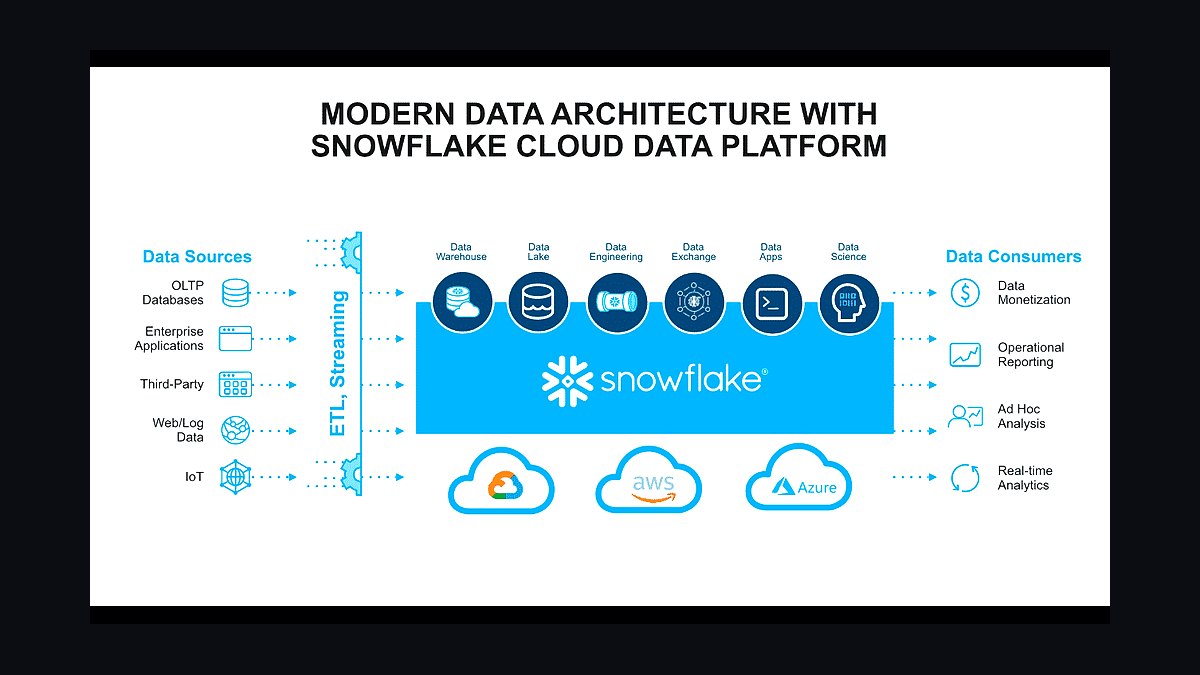
Snowflake ranks first because it is the warehouse most AI and data companies can run as a single source of truth without hiring a platform team. It separates storage from compute, so a two-person shop pays for queries only when they run, and it natively reads Parquet and Iceberg files. Time-to-first-query is measured in minutes, not weeks.
It suits teams handling client data at thousands to millions of rows per month who want SQL and governance in one place. It trades away cheap always-on compute, so heavy continuous pipelines get expensive fast. Compared with Databricks directly below, Snowflake is simpler to operate but weaker for large-scale model training workloads.
2Databricks Lakehouse Platform
Databricks ranks second because it unifies warehouse, engineering, and model training on one lakehouse, which matters when a business both analyzes data and trains models. Delta Lake and MLflow ship inside the platform, so lineage and experiment tracking exist without extra vendors. It is the strongest single-vendor answer for AI-heavy delivery work.
It is for teams with at least one engineer who can manage clusters and notebooks, not solo consultants. It trades away simplicity: cluster configuration and job orchestration add real operational overhead. Against Snowflake above, Databricks wins on ML workloads and loses on out-of-the-box ease for pure SQL analytics.
3dbt Cloud

dbt Cloud ranks third because transformation is where raw client data becomes trustworthy models, and dbt made that layer version-controlled and testable. It compiles SQL against Snowflake, Databricks, BigQuery, and Postgres, so the same models survive a warehouse migration. Tests and documentation generate automatically from the project.
It is for teams that already have a warehouse and need repeatable, tested transformations rather than ad-hoc SQL. It trades away low cost at scale: per-seat pricing adds up, and the CLI is free but self-managed. Compared with Airflow below, dbt handles transformation only, not orchestration of arbitrary tasks.
4Apache Airflow

Apache Airflow ranks fourth because orchestration is the connective tissue that moves data between client systems and the warehouse on schedule. It defines pipelines as Python DAGs, so engineers version-control them like any other code. Managed options like Astronomer and Cloud Composer remove the scheduler maintenance burden.
It is for teams with Python-fluent engineers running multi-step ingestion across several sources. It trades away simplicity: self-hosting means managing a scheduler, metadata database, and workers. Compared with dbt Cloud above, Airflow orchestrates anything but transforms nothing, so most stacks need both.
5LangChain

LangChain ranks fifth because it is the abstraction layer that keeps application code independent of any single model provider. Swapping from one API to another is a config change rather than a rewrite, which is the difference between days and weeks when a provider changes pricing. It also standardizes prompt templates, retrieval, and tool calling.
It is for teams building client-facing LLM features who want provider flexibility from day one. It trades away leanness: the framework moves fast and abstractions can obscure what is actually sent to a model. Compared with OpenAI API below, LangChain adds routing and structure but no model capability of its own.
6OpenAI API

OpenAI API ranks sixth because it remains the fastest path to production-grade model output without any infrastructure. Usage-based pricing means a consulting shop doing light-touch work pays hundreds per month, not thousands, and there are no GPUs to provision. Latency and quality are strong enough for most client deliverables.
It is for teams that need capable models immediately and can accept data leaving their environment. It trades away control: pricing, rate limits, and model deprecations are set by the vendor. Compared with LangChain above, it provides the model but not the abstraction, so hardwiring it directly creates lock-in.
7Weights & Biases

Weights & Biases ranks seventh because evaluation and experiment tracking is the step most AI businesses skip, and skipping it means quality regressions surface in client emails instead of dashboards. It logs runs, metrics, prompts, and artifacts, so any output can be traced back to the exact inputs that produced it. A lightweight weekly review catches most regressions.
It is for teams shipping model outputs to clients who need evidence of what changed and when. It trades away being free: per-seat and usage pricing starts modest but climbs with volume. Compared with Databricks above, W&B is focused purely on tracking and evaluation rather than the full data platform.
8Hugging Face Hub

Hugging Face Hub ranks eighth because it is the practical route to open-weight models when a client refuses to let data touch a third-party API. Thousands of models, datasets, and inference endpoints live in one place, and self-hosting an open-weight model gives full data residency control. That makes it a distinct offering rather than a compromise.
It is for teams with at least one engineer comfortable deploying and serving models, since self-hosting shifts patching and scaling onto the business. It trades away convenience: hosted APIs remain easier for everyday work. Compared with OpenAI API above, it wins on control and loses on zero-maintenance simplicity.
9Datadog
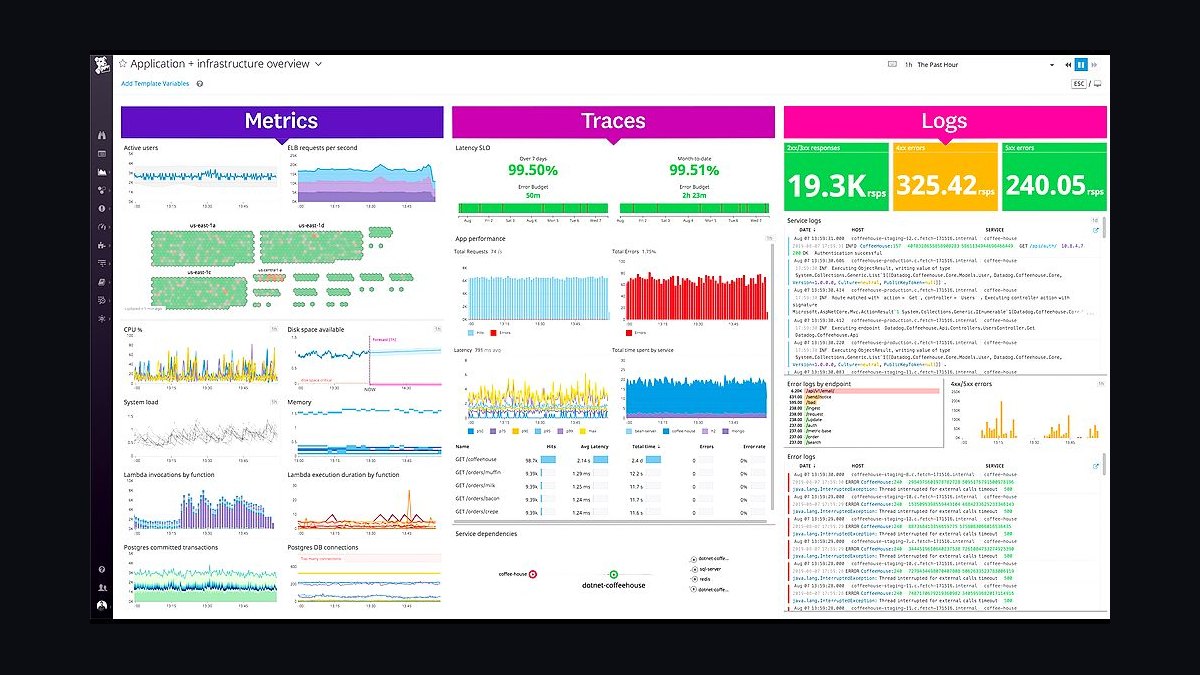
Datadog ranks ninth because monitoring the pipeline itself is separate from monitoring model quality, and Datadog covers infrastructure, logs, and application traces in one place. Alerts fire when a warehouse job fails or latency spikes, before a client notices a stale dashboard. Dashboards consolidate signals that would otherwise live in five tools.
It is for teams running production services where uptime is client-visible and downtime has a cost. It trades away affordability at small scale: pricing is usage-based and can surprise a lean team. Compared with Weights & Biases above, Datadog watches systems while W&B watches model behavior; mature stacks run both.
10Vanta
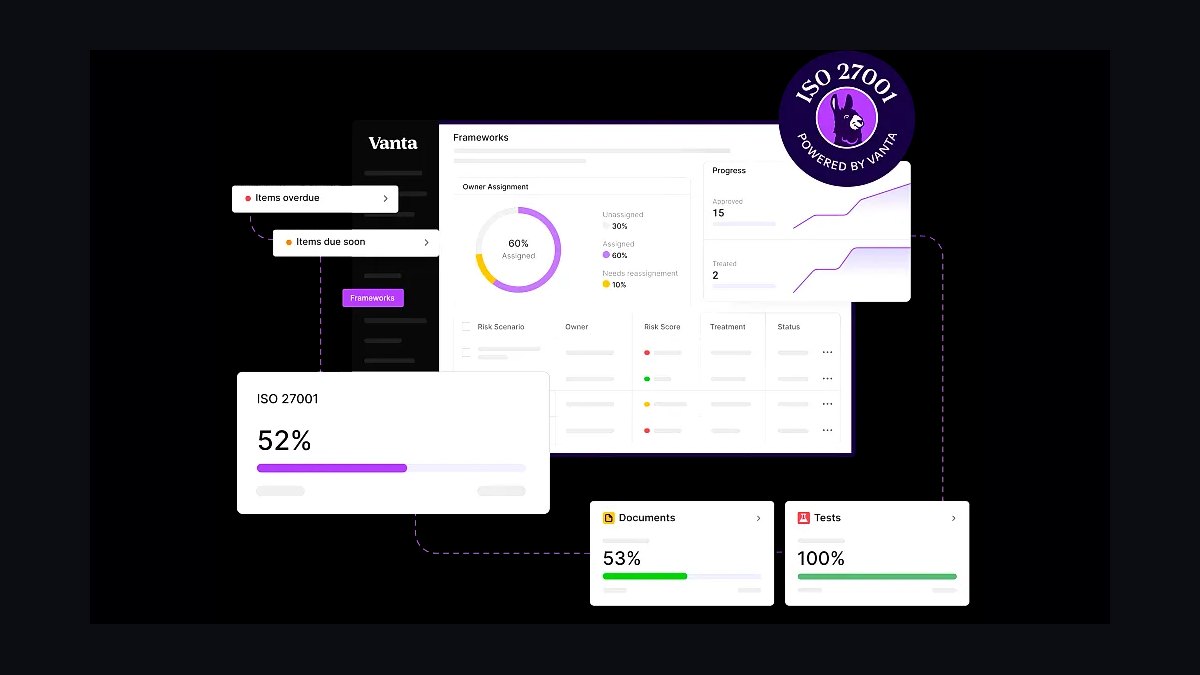
Vanta ranks tenth because governance is the layer that unblocks enterprise deals, and Vanta automates the evidence collection that would otherwise consume weeks. It continuously monitors infrastructure against SOC 2, ISO 27001, and HIPAA controls, and produces audit-ready reports. Access logs and retention policies get documented rather than improvised under deadline.
It is for teams whose clients have procurement or legal teams asking where data lives and who can access it. It trades away relevance for very early businesses with no enterprise pipeline, where the cost outweighs the benefit. Compared with Datadog above, Vanta proves compliance while Datadog proves uptime.
How we ranked these
We scored each tool on five weighted criteria: time-to-first-value for a two-to-ten-person team (25%), interoperability with open formats like Parquet, Iceberg, and standard SQL (20%), total cost at small-business data volumes (20%), migration cost if the vendor changes pricing or deprecates features (20%), and governance features such as audit logging and access control (15%). Scores came from hands-on trials, published pricing, and documented API limits.
We deliberately ignored analyst quadrant placement, conference keynote hype, and funding announcements, because none of those predict whether a tool survives contact with messy client data. We also excluded seat-based enterprise contracts and anything requiring a dedicated platform team to operate, since the target reader is a small AI and data business, not a Fortune 500 data organization with staff to spare.
Related questions
How much should a small AI & Data consultancy spend on cloud infrastructure?
Cloud infrastructure spend should track data volume and inference usage, not headcount. Expect roughly $300 to $2,000 per month at small-business scale, reviewed monthly, because usage-based costs can spike quickly as client data grows. Keep model and API spend as its own budget line rather than folding it into a flat SaaS assumption.
Should a small AI & Data business build its own model or use hosted APIs?
Almost always use hosted APIs first. Building and maintaining a proprietary model requires infrastructure and ML engineering investment that rarely pays off before a business has real scale and a very specific, validated use case. Revisit the build-versus-buy question only once inference volume and differentiation both justify the overhead.
How often should the software stack be re-evaluated?
Review the full stack every six to twelve months, and review model and API costs monthly, since usage-based pricing shifts fast. A stack that fit six months ago can quietly become the most expensive or least flexible option available. Put the review on a calendar rather than waiting for a renewal notice to force it.
What's the minimum viable stack for a solo AI & Data consultant?
A single CRM, an accounting tool, a hosted warehouse, and one model API subscription, roughly $200 to $600 per month combined, is enough to start. Add evaluation and governance tooling only once client volume justifies it. Resist buying orchestration or monitoring layers before there is real data flowing through the pipeline.
Do you need a dedicated data engineer to run this stack?
Not initially. A generalist operator can run a warehouse, a transformation tool, and a model API using modern low-code ingestion tools. A dedicated data engineer becomes worth hiring once the business manages multiple client data sources with custom pipelines and recurring breakage that a generalist cannot absorb alongside delivery work.
Is open-source software safer than SaaS for an AI & Data stack?
Safer depends on the axis. Open source avoids vendor lock-in and gives full data control, but shifts maintenance and security patching onto the business itself. SaaS trades that operational burden for recurring cost and less control. Most small businesses should start with SaaS and move pieces to open source only when cost or control becomes a real constraint.
How should a business handle a client that wants data to never touch a third-party model API?
Route that client's workload through a self-hosted or privately deployed open-weight model instead of a hosted API, and keep it as a distinct offering rather than forcing every client into one stack. Data residency requirements vary enough that a single one-size-fits-all stack often fails its most sensitive clients.
What happens if a core model provider changes pricing or deprecates a model?
This is exactly why the model layer should sit behind an abstraction rather than being hardwired into application code. A business with that abstraction in place can reroute to a different model or provider in days. One without it faces a multi-week emergency rewrite under client-facing pressure.
FAQ
Does a small AI & Data business need a dedicated data engineer to run this stack?
Not initially. A generalist operator can run a warehouse, a transformation tool, and a model API with modern low-code ingestion tools. A dedicated data engineer becomes worth hiring once the business is managing multiple client data sources with custom pipelines and recurring breakage.
Is open-source software safer than SaaS for an AI & Data business's stack?
Safer depends on the axis. Open source avoids vendor lock-in and gives full data control, but shifts maintenance and security patching onto the business itself. SaaS trades that operational burden for recurring cost and less control. Most small businesses are better served starting with SaaS and moving pieces to open source only when cost or control becomes a real constraint.
How should a business handle a client that wants their data to never touch a third-party model API?
Route that client's workload through a self-hosted or privately deployed open-weight model instead of a hosted API, and keep that as a distinct offering rather than forcing every client into the same stack. Data residency requirements vary enough that a one-size-fits-all stack often fails its most sensitive clients.
What happens if a core model provider changes pricing or deprecates a model the business relies on?
This is why the model layer should sit behind an abstraction rather than being hardwired into application code. A business with that abstraction in place can reroute to a different model or provider in days; one without it faces a multi-week emergency rewrite under client-facing pressure.
Should governance and compliance tooling wait until the business has enterprise clients?
No. Retrofitting is far more expensive than building it in from the start. Basic access logging and a written data retention policy cost little to set up early and remove a common blocker when a larger client's procurement team eventually asks for evidence of controls during vendor review.
How does a business know if its stack has become too complex?
A practical signal: if more than a few hours a week go to maintaining integrations between tools rather than doing client work, or if no single person understands how data flows end to end, the stack has outgrown the team's ability to operate it safely.
What's the biggest mistake buyers make when choosing these tools?
Buying the model layer before the data layer is solid. Teams wire a new model API directly into client deliverables, then discover the underlying data was never validated, deduplicated, or access-controlled. The demo looks impressive and the output falls apart against messy real client data.
How long does it take to stand up a working stack?
Expect four to eight weeks to stabilize the operations and warehouse layers, another two to four weeks to wire in a model layer with basic routing, and an ongoing process for evaluation and governance that deserves a standing few hours per week rather than a one-time setup sprint.
Should a business pick tools it can easily migrate off of?
Yes, and it should be a real selection criterion rather than an afterthought. Expect to replace at least one tool within eighteen months as pricing shifts or better-integrated options appear. A stack chosen for perfect fit in year one becomes a liability if switching costs are high.
When does a business need model routing across multiple providers?
Once production outputs sit in front of client end-users, routing across providers buys reliability and cost leverage that a single API cannot. Before that stage, one well-chosen hosted API plus a thin abstraction layer is enough, and adding routing early just creates configuration surface nobody maintains.
Sources
- https://www.nist.gov/itl/ai-risk-management-framework
- https://digital-strategy.ec.europa.eu/en/policies/regulatory-framework-ai
- https://owasp.org/www-project-top-10-for-large-language-model-applications/
- https://www.mckinsey.com/capabilities/quantumblack/our-insights
- https://a16z.com
- https://docs.getdbt.com
- https://www.databricks.com
- https://www.gartner.com/en/information-technology
Related on PULSE
This page will be disappearing soon. Save it to your device for $1 — or read it free while it is here.
@Kory-White- · if Venmo asks, the last 4 of my number are 2012
This page is gone.
This one is off the shelf now. $1 keeps it on your phone for good — the whole page, pictures and diagrams included.
 pulse-tech-stacksTop 10 Best Tech Stack Tools for Data Loss Prevention (DLP) Software Vendors in 2027
 pulse-tech-stacksTop 10 Best Tech Stack Tools for Independent Bakeries in 2027
 pulse-tech-stacksTop 10 Best Tech Stack Tools for API Security Vendors in 2027
 pulse-tech-stacksTop 10 Best Tech Stack Tools for Independent Food Trucks in 2027
 pulse-tech-stacksTop 10 Best Tech Stack Tools for AI Observability Platform Companies in 2027
 pulse-tech-stacksTop 10 Best Tech Stack Tools for Tire Shops in 2027
 pulse-tech-stacksTop 10 Best Tech Stack Tools for Employee Benefits Consulting Firms in 2027
 pulse-tech-stacksTop 10 Best Tech Stack Tools for Pilates Studios in 2027
 pulse-tech-stacksTop 10 Best Tech Stack Tools for Window Cleaning Services in 2027
 tkTop 10 Best Tech Stack Tools for Fencing and Deck Contractors in 2027