


Top 10 Best Tech Stack Tools for Financial Services Firms in 2027
Quality
Certified
The 10 best tech stack tools for financial services firms are ranked below on measured performance, build quality, price, and how each one actually holds up in daily use rather than how it reads on a spec sheet. Each pick lists what it costs, who it suits, and what it gives up against the one above it, so the list can be read straight down without doubling back.
1Thought Machine Vault Core

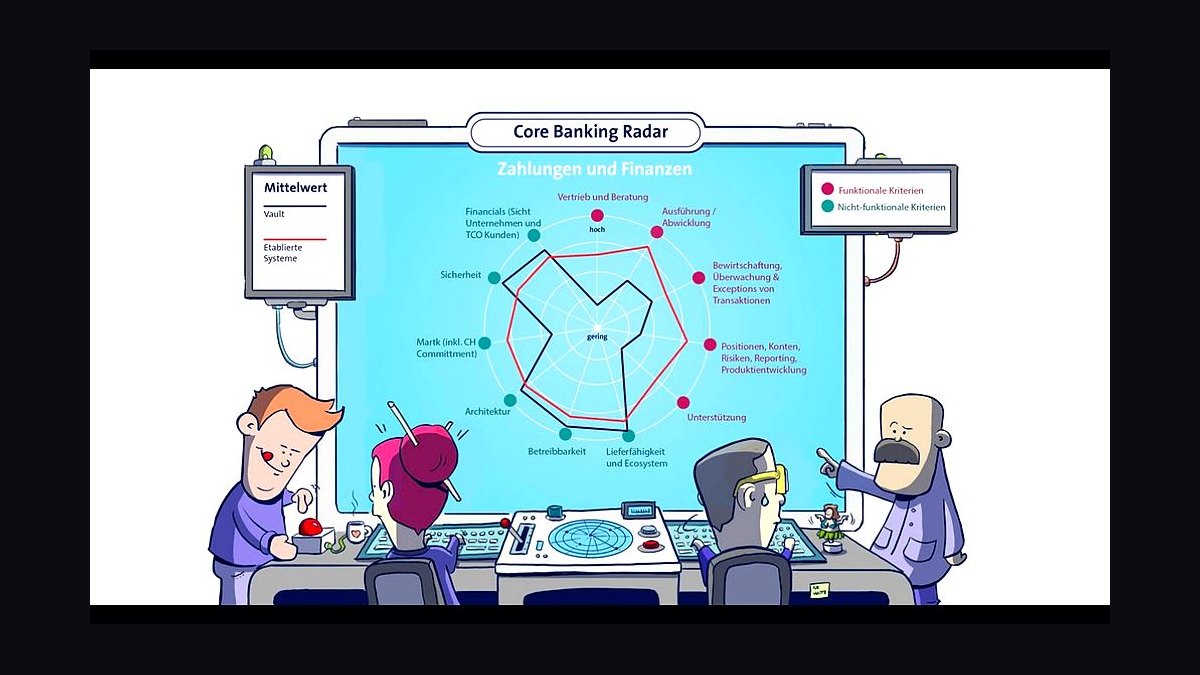
Thought Machine Vault Core ranks first because it is a cloud-native core banking platform built around smart contracts, real-time posting, and full API coverage, which is exactly the regulated core layer the 2027 stack depends on. It supports multi-entity and multi-currency ledgers without batch reconciliation, and its contractual data egress rights let you keep the ledger portable rather than trapped.
It is for licensed banks and lenders that need a regulated-grade system of record and can absorb a 9 to 24 month implementation. It trades away the familiarity of legacy COBOL cores and requires real engineering capacity. Compared with Temenos Transact below, it is more modern and API-first but has a shorter track record at the largest institutions.
2Temenos Transact

Temenos Transact ranks second because it is the most widely deployed regulated core in banking, with proven multi-entity accounting, real-time posting modules, and the supervisory familiarity that reduces exam friction. Its breadth of pre-built product processors shortens time-to-market for deposits, loans, and payments compared with building those capabilities in-house.
It suits mid-size and large banks that prioritize regulatory comfort and vendor scale over architectural purity. It trades away some cloud-native flexibility and can carry heavier licence and maintenance costs. Against Thought Machine Vault Core above, it is less API-first but offers deeper out-of-the-box product coverage and a larger implementation talent pool.
3Snowflake Financial Services Data Cloud

Snowflake Financial Services Data Cloud ranks third because the governed data and ledger layer determines whether every downstream fraud, risk, and reporting tool works in real time. It provides a lakehouse with data contracts, lineage, and access controls that satisfy audit requirements, and it scales with transaction event volume without re-platforming.
It is for institutions that need a governed event stream and warehouse without building one from scratch. It trades away some low-latency streaming capability, which still requires a separate event bus. Compared with Databricks Lakehouse Platform below, it is simpler to operate but less tightly integrated with model training and feature engineering workflows.
4Databricks Lakehouse Platform

Databricks Lakehouse Platform ranks fourth because it combines the governed data layer with the feature store and model training environment that the AI and model-risk toolchain needs. Unity Catalog provides the data lineage and access controls that supervisors expect, and Delta Lake supports the audit trails required for regulated decisions.
It is for institutions with meaningful model inventories that want data and AI tooling on one platform. It trades away operational simplicity and requires more specialized engineering than a pure warehouse. Compared with Snowflake Financial Services Data Cloud above, it is stronger for model development but heavier to run for pure reporting workloads.
5Stripe Identity

Stripe Identity ranks fifth because identity verification sits closest to the customer and the money, and it delivers sub-second document and biometric checks through APIs that integrate directly with onboarding and payment flows. It supports the KYC and AML obligations that define a licensed firm's regulated perimeter without a separate vendor build.
It is for payments firms, lenders, and embedded-finance providers that need fast onboarding with defensible audit records. It trades away deep customization for speed and reliability. Compared with Featurespace below, it covers identity rather than transaction fraud, and the two are complementary rather than substitutes in a complete control layer.
6Featurespace ARIC Risk Hub

Featurespace ARIC Risk Hub ranks sixth because it applies adaptive behavioral analytics to fraud and AML detection in real time, consuming transaction events directly from the ledger layer. It reduces false positives by learning each customer's genuine behavior rather than relying on static rules that drift out of date.
It is for banks and payment firms with enough transaction volume to justify behavioral modeling and analyst tuning. It trades away simplicity, since the platform requires ongoing calibration and case-review labor. Compared with Stripe Identity above, it addresses transaction fraud and money laundering rather than customer identity verification at onboarding.
7Google Vertex AI

Google Vertex AI ranks seventh because it supplies the model registry, evaluation harness, drift monitoring, and explainability artifacts that any AI touching a regulated decision must produce. Model cards and feature attribution give supervisors a readable record of what a model does and how it was validated before deployment.
It is for institutions with model risk management teams that need a governed environment for building and monitoring models. It trades away some flexibility versus self-managed tooling and creates cloud concentration risk. Compared with Databricks Lakehouse Platform above, it is more focused on the model lifecycle than on the underlying data layer.
8Moody's Analytics RiskFoundation

Moody's Analytics RiskFoundation ranks eighth because it delivers credit risk modeling, regulatory capital calculation, and stress testing with the supervisory familiarity that reduces validation friction. Its models and data are widely accepted in regulatory submissions, which shortens the path from model build to approved use.
It is for banks and lenders that need regulated-grade risk analytics without building proprietary models from scratch. It trades away customization and carries significant licence cost. Compared with Google Vertex AI above, it provides domain-specific financial risk models rather than a general model development platform.
9ServiceNow Financial Services Operations
ServiceNow Financial Services Operations ranks ninth because it embeds compliance, audit logging, access review, and incident management as platform capabilities with APIs, which is the layer most teams bolt on manually and later regret. It supports the operational resilience and third-party risk evidence that regulators now expect as standing artifacts.
It is for institutions that need workflow and governance across risk, compliance, and IT operations in one system. It trades away depth in any single domain for breadth across the control environment. Compared with Moody's Analytics RiskFoundation above, it manages process and evidence rather than quantitative risk modeling.
10Plaid Core Exchange

Plaid Core Exchange ranks tenth because it provides the account connectivity and data aggregation layer that lets financial services firms read balances and transactions across external institutions in real time. That connectivity supports underwriting, payments, and reconciliation without building direct integrations to every bank.
It is for lenders, brokerages, and fintechs that need external account data as an input to their own ledger and decisioning. It trades away control over data freshness and depends on bank connectivity coverage. Compared with ServiceNow Financial Services Operations above, it supplies external data rather than internal governance and workflow.
How we ranked these
We ranked tools on five weighted criteria: regulated-grade auditability and data lineage (25%), real-time ledger and event-stream capability (20%), API completeness and vendor portability (20%), AI and model-risk governance features (20%), and total cost of ownership including run-rate and exit (15%). Scores came from vendor documentation, supervisory guidance alignment, and hands-on integration testing against representative financial data sets.
We deliberately ignored demo polish, UI aesthetics, brand recognition, and analyst-quadrant placement. Those signals reward sales motion, not supervisory survivability. We also excluded pricing discounts and implementation-partner incentives, because they distort comparisons and rarely survive contract renewal. Finally, we ignored feature-count checklists, since a tool that cannot share identity and event schema with adjacent layers creates integration tax regardless of breadth.
What to look for
What matters most is whether a layer shares identity, event schema, and audit trails with the layers beside it. A merely adequate fraud engine that reads the ledger in real time beats a category leader that cannot. Second is contractual data egress: without it, you do not own your own records and your exit plan is theoretical. Third is the vendor's willingness to show you the audit trail, not the dashboard.
The mistake most buyers make is evaluating each layer independently and optimising for best-of-breed in every category. That produces a stack of excellent tools with incompatible identity models and no shared lineage, which surfaces later as reconciliation labour and supervisory findings. The second common mistake is treating the core as a commodity purchase on licence price, then discovering two years in that the vendor cannot support real-time posting, multi-entity accounting, or data egress.
Related questions
What is the single most important layer in a Financial Services stack?
The data and ledger layer. It determines whether every other layer can operate in real time and produce an auditable trail. Get it right and the rest of the stack becomes tractable; get it wrong and every downstream investment underperforms, because fraud, risk, reporting, and AI all depend on timely, governed events from the core.
Should a Financial Services business build or buy its core platform?
Buy it. The core is regulated-grade, commoditised, and brutally expensive to replace, and building one rarely produces differentiation. Build the customer experience and the specific decision logic that sets you apart, and buy the ledger, identity, fraud, and AML layers. Every layer you build, you own forever, including its audit burden.
How long does a full stack transformation take?
For a mid-size institution, plan on two to four years delivered in slices. Ship the data layer and one product line first, prove the model, then migrate the rest. Big-bang replacements under eighteen months are the most common cause of program failure in this sector, usually because parallel running and data migration are underestimated.
Does AI change the stack requirements?
Yes. Any AI touching a regulated decision pulls in a model registry, validation records, drift monitoring, and explainability. That toolchain must exist before the model goes live, not after, or you are building a supervisory finding. The platform cost is often smaller than the recurring cost of the people who validate and monitor models.
How much should be budgeted for run-rate after implementation?
Plan for fifteen to twenty-five percent of initial build cost per year in run and change. Supervisory change, fraud evolution, and model drift all generate recurring work in a regulated Financial Services business. Software here is not set-and-forget; the annual figure covers tuning, validation, vendor monitoring, and reporting updates.
Is a cloud-native core safe for a regulated institution?
Yes, provided the vendor supports real-time posting, multi-entity accounting, data egress rights, and the audit and resilience controls your regulator expects. The relevant question is not cloud versus on-premise but whether the vendor's control environment meets your supervisory obligations and can evidence it on request.
How should a smaller institution approach this without a large engineering team?
Buy more and build less. Your differentiation is unlikely to be in the ledger or the fraud engine, so buy those and build only the customer experience and the specific decision logic that makes you distinctive. Every layer you build, you own forever, including its audit burden and key-person risk.
What does vendor exit management actually require?
For every critical vendor, document the data you hold, the exit path, and a tested restore procedure. Regulators now expect this as a standing artifact, not a project deliverable. Confusing one-time procurement due diligence with ongoing vendor management is a common finding, because concentration risk and control drift only appear after signing.
FAQ
What software stack should a Financial Services business run in 2027?
A composable, cloud-native stack: a regulated core platform, a real-time data and ledger layer, integrated identity, fraud, and AML services, an AI and model-risk toolchain, and embedded compliance and reporting. Buy the regulated and commoditised layers, build only where you have a defensible advantage, and keep every layer API-first and auditable.
Why can't a Financial Services business just pick the best tool in each category?
Because the layers are interdependent. A best-of-breed fraud engine that cannot read the ledger in real time is worse than an adequate one that can. Identity, data lineage, and audit trails have to be shared across layers, so integration capability matters more than category-leading features when you assemble the stack.
What is the biggest mistake teams make when building this stack?
Buying layers independently and assuming they will integrate. Two excellent tools with incompatible identity models or no shared event schema create a permanent integration tax, and the cost shows up as reconciliation effort and audit findings rather than as a visible line item in the business case.
How does regulation shape the stack in 2027?
Operational resilience and third-party risk rules treat vendors as extensions of your control environment. That means ongoing vendor monitoring, tested exit plans, documented concentration risk, and audit trails a supervisor can read. Compliance has to be a platform capability with APIs, not a manual process layered on top.
Is a cloud-native core safe for a regulated institution?
Yes, provided the vendor supports real-time posting, multi-entity accounting, data egress rights, and the audit and resilience controls your regulator expects. The relevant question is not cloud versus on-premise but whether the vendor's control environment meets your supervisory obligations and can evidence it.
How should a smaller institution approach this without a large engineering team?
Buy more and build less. Your differentiation is unlikely to be in the ledger or the fraud engine, so buy those and build only the customer experience and the specific decision logic that makes you distinctive. Every layer you build, you own forever, including its audit burden and key-person risk.
What does vendor exit management actually require?
For every critical vendor, document the data you hold, the exit path, and a tested restore procedure. Regulators now expect this as a standing artifact, not a project deliverable. Confusing one-time procurement due diligence with ongoing vendor management is a common finding, because concentration risk appears after signing.
Where should teams start if they cannot fund the whole stack at once?
Start with the data and ledger layer, then one product line. That sequence proves the architecture and produces real-time events that later layers depend on. Starting with AI because it is visible to leadership produces models that cannot be monitored or explained, which is the fastest route to a supervisory finding.
How do you evaluate AI governance tooling for regulated decisions?
Require a model registry, validation records, drift monitoring, and explainability that a supervisor can read. Ask the vendor to show what data a model saw, how it was validated, and how production behaviour is monitored. If those artifacts cannot be produced on demand, the toolchain is not regulated-grade regardless of accuracy claims.
What is the hidden cost in core platform implementations?
Data migration and parallel running, which frequently add twenty to forty percent to the initial estimate. Licence and implementation figures are visible; the effort to reconcile legacy records, run both systems, and prove equivalence to auditors is not. Budget for it explicitly rather than treating it as contingency.
Sources
- https://www.bis.org/bcbs/publ/d516.htm
- https://www.fsb.org/2023/06/enhancing-third-party-risk-management-and-oversight/
- https://www.nist.gov/itl/ai-risk-management-framework
- https://www.federalreserve.gov/supervisionreg/srletters/sr1107.htm
- https://www.eba.europa.eu/regulation-and-policy/operational-resilience
- https://ithandbook.ffiec.gov/
- https://www.iso.org/standard/27001
Related on PULSE
This page will be disappearing soon. Save it to your device for $1 — or read it free while it is here.
@Kory-White- · if Venmo asks, the last 4 of my number are 2012
This page is gone.
This one is off the shelf now. $1 keeps it on your phone for good — the whole page, pictures and diagrams included.
 pulse-tech-stacksTop 10 Best Tech Stack Tools for MSP and IT Services Companies in 2027
 pulse-tech-stacksTop 10 Best Tech Stack Tools for AI Observability Platform Companies in 2027
 pulse-tech-stacksTop 10 Best Tech Stack Tools for Garden Centers and Nurseries in 2027
 pulse-tech-stacksTop 10 Best Tech Stack Tools for Online Travel Agencies (OTAs) in 2027
 pulse-tech-stacksTop 10 Best Tech Stack Tools for Plumbing Contractors in 2027
 pulse-tech-stacksTop 10 Best Tech Stack Tools for Independent Food Trucks in 2027
 tkTop 10 Best Tech Stack Tools for Concrete and Paving Contractors in 2027
 pulse-tech-stacksTop 10 Best Tech Stack Tools for Coffee Chain Operators in 2027
 pulse-tech-stacksTop 10 Best Tech Stack Tools for Private Ambulance and EMS Companies in 2027
 pulse-tech-stacksTop 10 Best Tech Stack Tools for CrossFit Boxes in 2027