


Top 10 Best Tech Stack Tools for Events & Venues Businesses in 2027
Quality
Certified
The 10 best tech stack tools for events & venues businesses are ranked below on measured performance, build quality, price, and how each one actually holds up in daily use rather than how it reads on a spec sheet. Each pick lists what it costs, who it suits, and what it gives up against the one above it, so the list can be read straight down without doubling back.
1Tripleseat Event Management Software
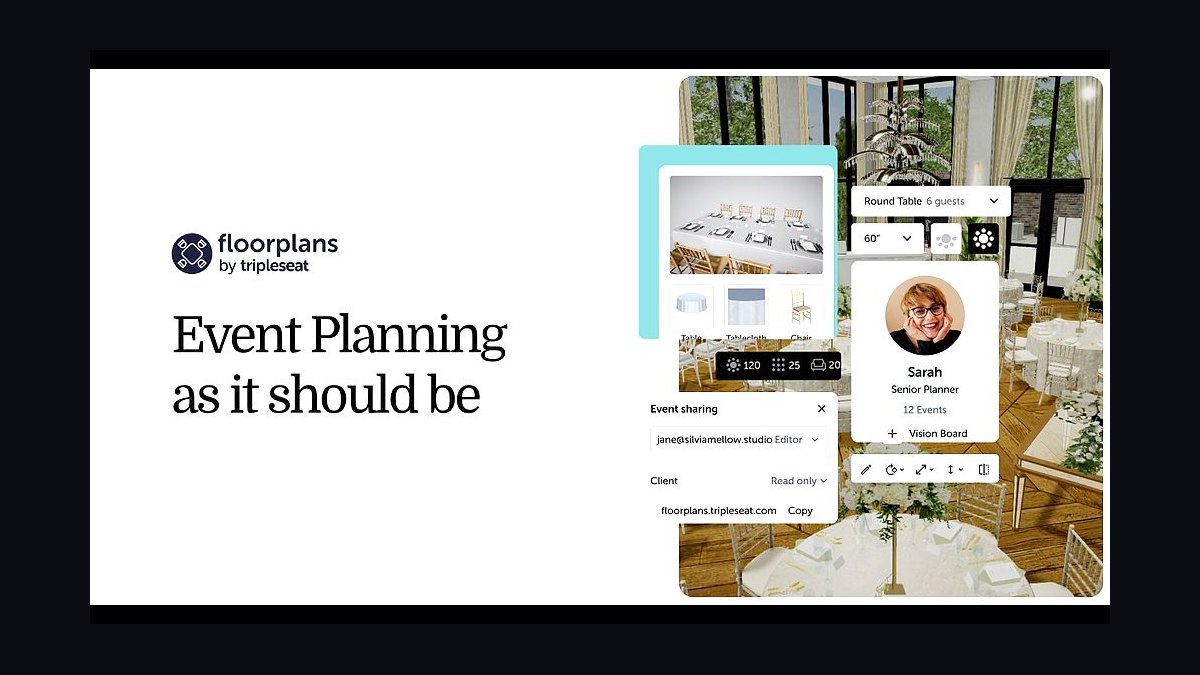
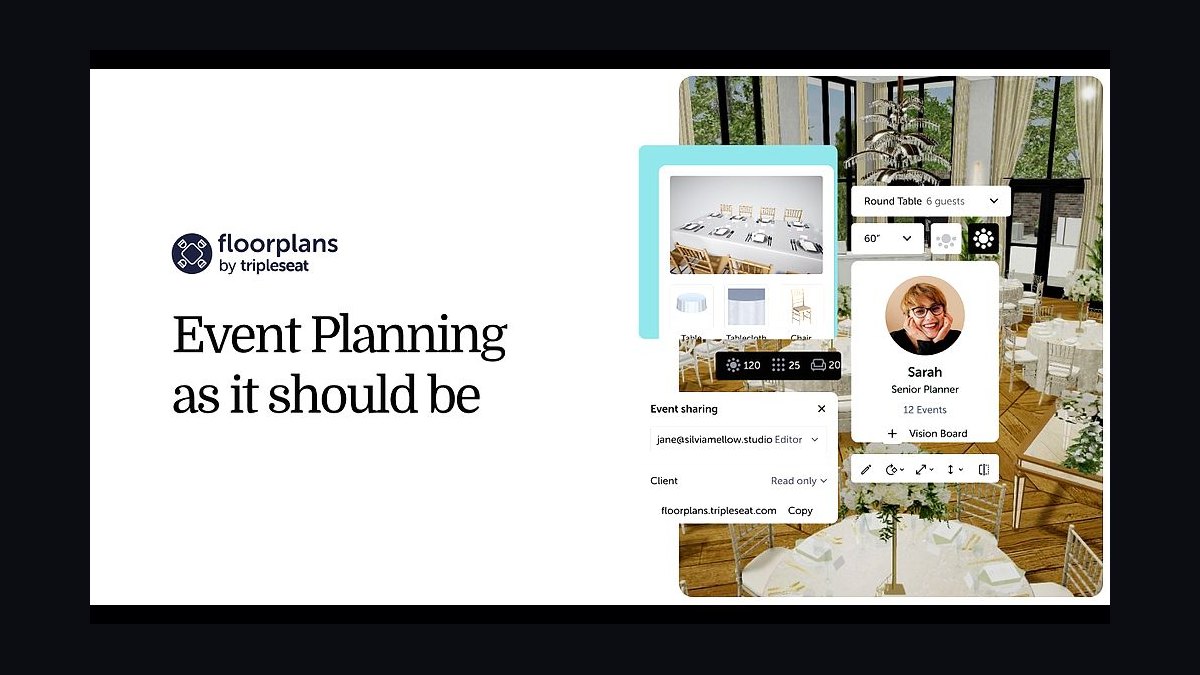
Tripleseat ranks first because it is the most widely deployed event sales and catering platform for venues, with over 10,000 venues using it to manage leads, BEOs, and payments in one system. Its CRM captures inquiries from email, phone, and web forms, then auto-generates proposals, contracts, and kitchen-ready event orders. Real-time availability calendars sync across sales teams, cutting double-bookings and response times.
It suits hotels, restaurants, and dedicated event venues running high inquiry volume with multiple sales managers. The trade-off is cost: per-location pricing scales quickly for multi-site operators, and custom reporting requires add-ons. Compared to Momentus below, Tripleseat is stronger for hospitality-style catering sales but lighter on complex multi-room academic scheduling.
2Momentus Venue Management Platform
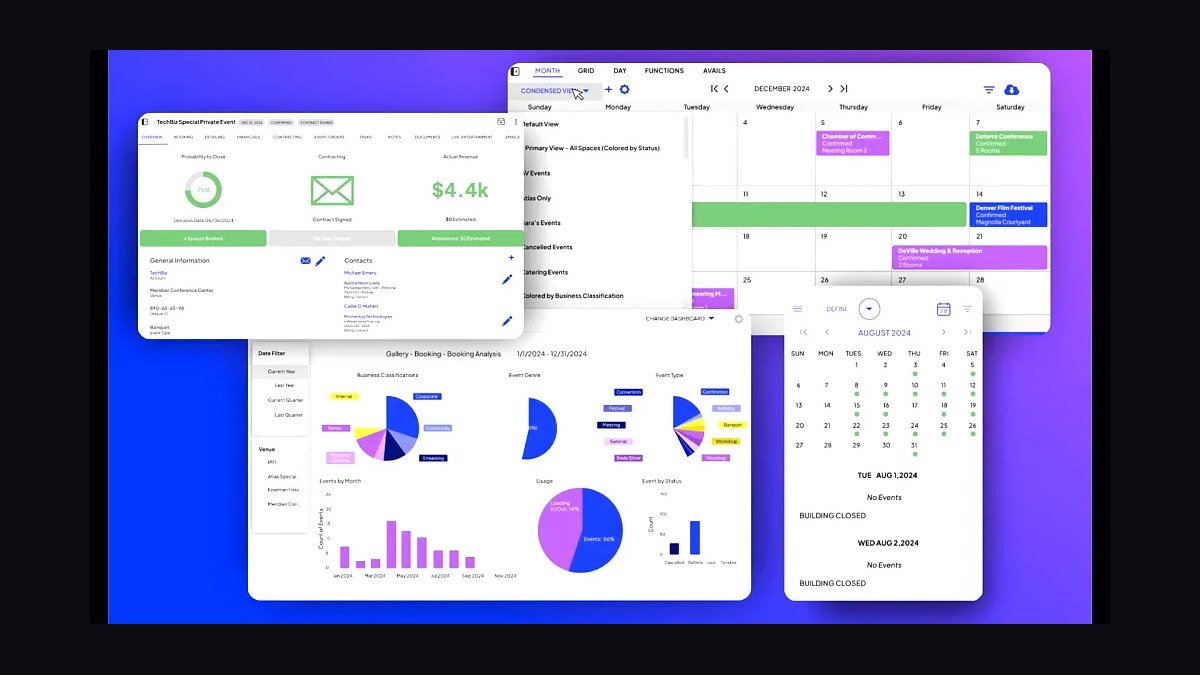
Momentus ranks second for venues that need true room-and-resource scheduling rather than pure sales CRM. It handles academic calendars, multi-room bookings, ticketing, and work orders in one database, with public-facing event calendars and space-request portals. Universities, performing arts centers, and convention facilities use it to coordinate hundreds of recurring bookings per semester without conflicts.
It is built for operations teams managing physical space, not just sales pipelines. The trade-off is a steeper setup and training curve than Tripleseat, and pricing is quote-based rather than transparent. Compared to Tripleseat above, Momentus wins on scheduling complexity but loses on fast catering-sales workflows.
3Cvent Event Management
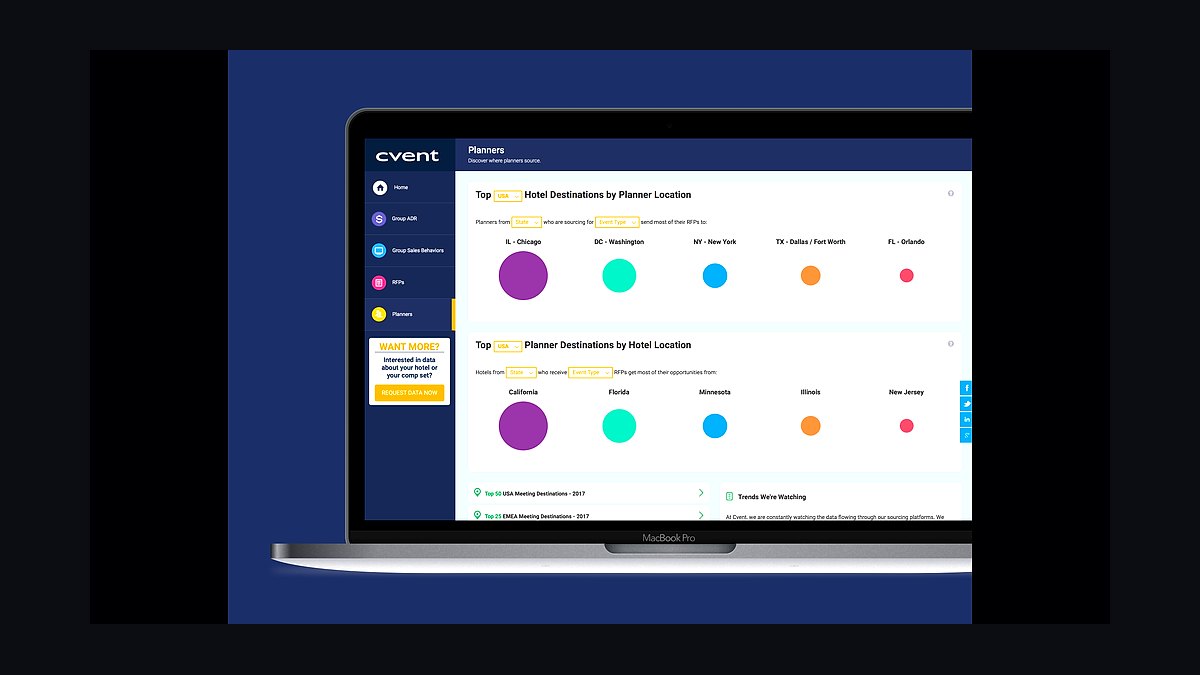
Cvent ranks third as the enterprise standard for large-scale event registration, sourcing, and attendee management. Its platform covers venue sourcing, registration websites, mobile event apps, badge printing, and post-event analytics, with integrations into major CRM and marketing systems. Large conferences and trade shows rely on it to process thousands of registrations and manage supplier RFPs in one place.
It fits enterprise event teams and associations running multi-day, multi-track programs. The trade-off is complexity and cost: implementation takes weeks, and smaller venues find the licensing heavy for simple bookings. Compared to Momentus above, Cvent is far stronger for attendee-facing registration but weaker for day-to-day room scheduling.
4Social Tables Diagram Software
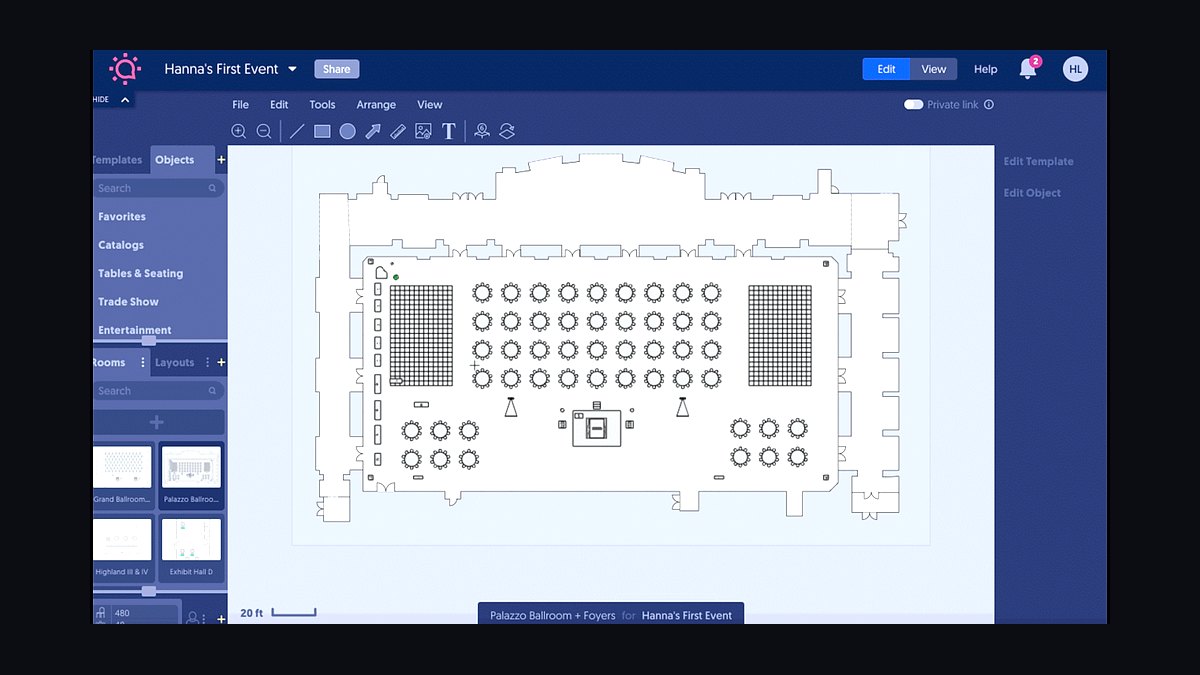
Social Tables ranks fourth for its 3D floor-plan and seating-diagram tool, which lets venues show clients exactly how a room will look before signing. Sales teams build scaled diagrams, auto-calculate capacity by layout style, and share interactive plans that clients can approve online. It integrates with catering and CRM platforms so diagrams attach directly to proposals.
It suits banquet halls, hotels, and venues selling space visually during the sales process. The trade-off is that it is a diagramming layer, not a full management system, so it must pair with a CRM like Tripleseat. Compared to Cvent above, Social Tables is narrower but far faster for producing client-ready room layouts.
5Prismm Event Design Platform
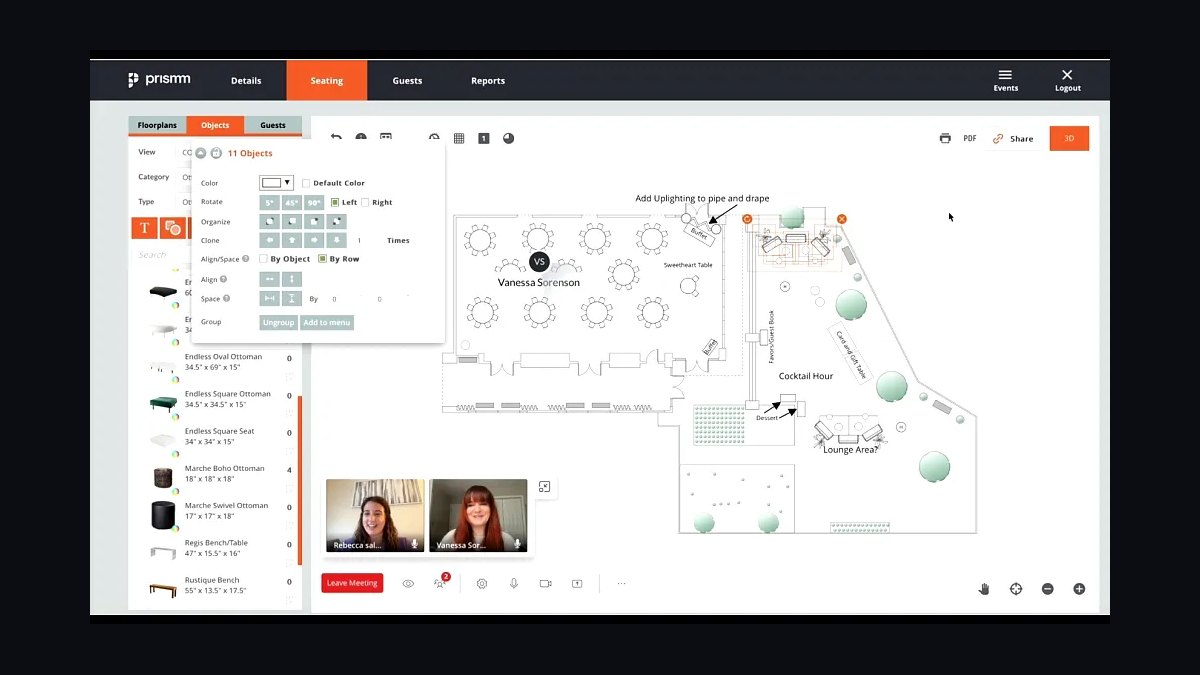
Prismm ranks fifth as the successor to Allseated, offering 3D event design and virtual walkthroughs for venues and planners. Users build true-to-scale 3D rooms, place tables, stages, and decor, and share immersive walkthroughs clients can explore remotely. It supports AR and VR viewing, which helps destination venues sell space to clients who cannot visit in person.
It fits venues and planners who need photorealistic 3D visualization rather than simple 2D diagrams. The trade-off is a learning curve for 3D modeling and pricing aimed at professional design teams. Compared to Social Tables above, Prismm delivers richer 3D visuals but requires more design skill to use well.
6Planning Pod Event Software
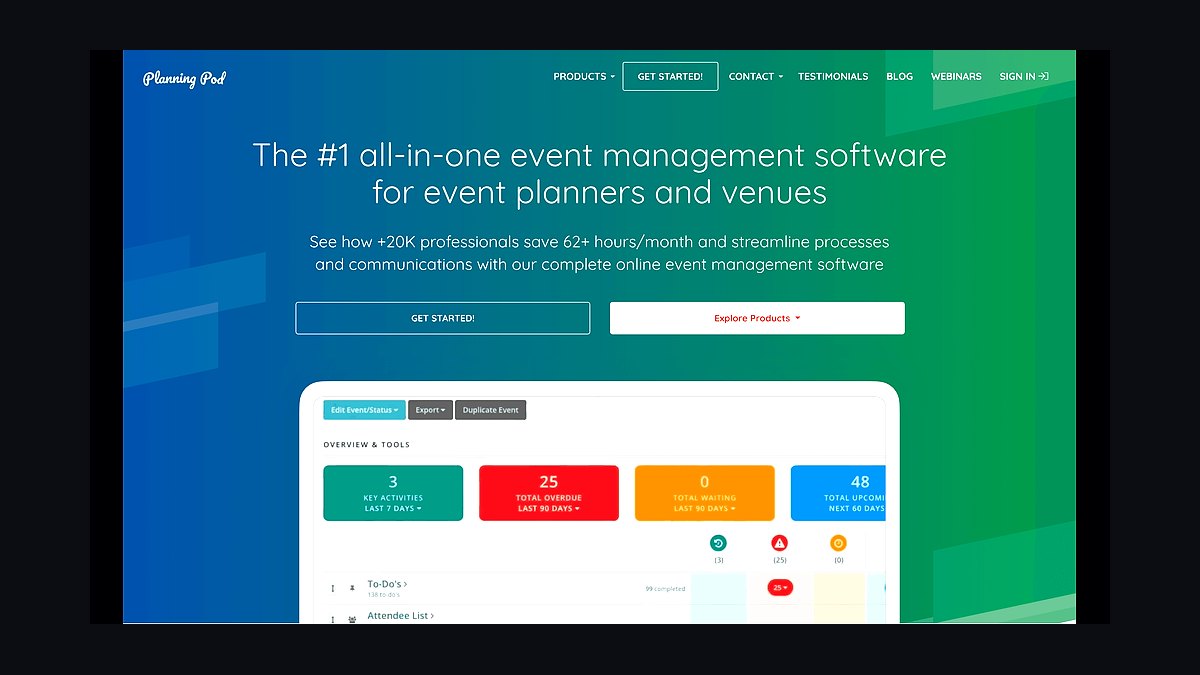
Planning Pod ranks sixth as an all-in-one tool combining event management, CRM, floor plans, and budgeting at a mid-market price. It bundles lead tracking, proposals, invoices, timelines, and task management so small teams avoid stitching together five separate subscriptions. Venues and planners use it to run weddings, corporate events, and parties from first inquiry to final invoice.
It suits independent planners and single-location venues that want breadth without enterprise pricing. The trade-off is that each module is less deep than dedicated specialists, and reporting is basic. Compared to Prismm above, Planning Pod is broader on operations but far weaker on 3D design visualization.
7Eventbrite Ticketing Platform
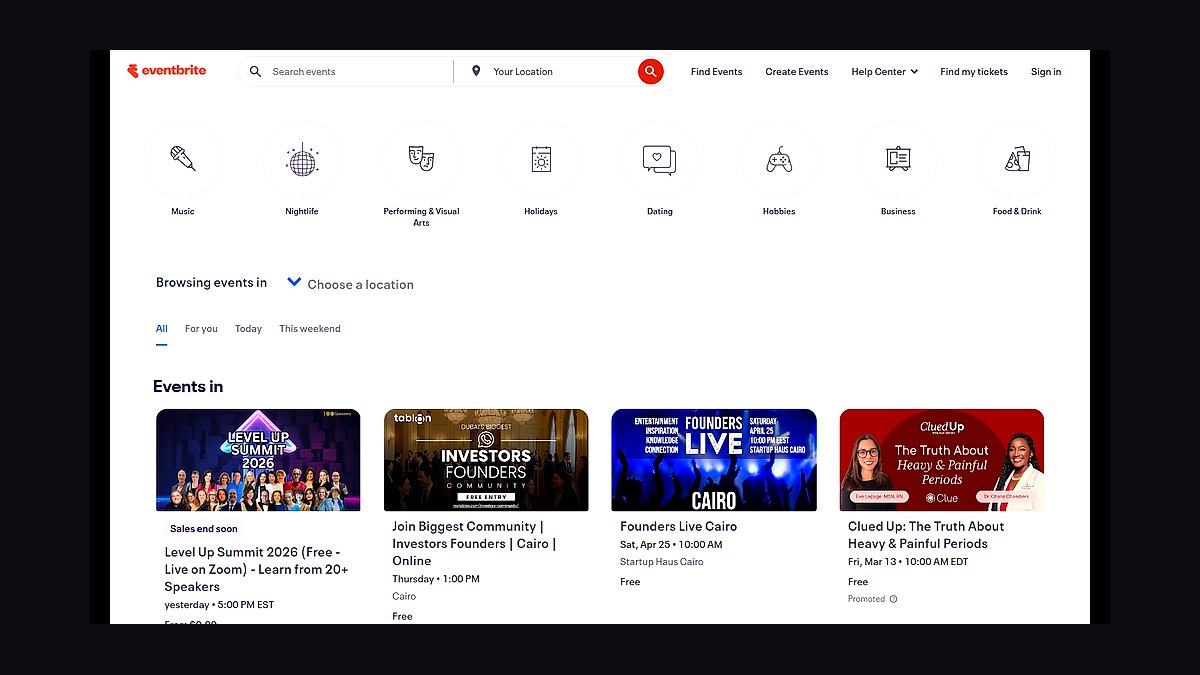
Eventbrite ranks seventh as the most recognizable self-service ticketing and event discovery platform, processing millions of tickets annually. Organizers publish events in minutes, embed checkout on their own sites, scan attendees with a mobile app, and reach buyers through Eventbrite's consumer marketplace. Fees are per-ticket, so there is no upfront software cost for small events.
It fits venues and promoters running public ticketed events who want built-in discovery and fast setup. The trade-off is limited customization and per-ticket fees that grow expensive at scale, plus weak support for complex room scheduling. Compared to Planning Pod above, Eventbrite is stronger for ticket sales but not a venue operations system.
8Ticketmaster Presence Access Control
Ticketmaster Presence ranks eighth for venue access control, replacing paper tickets with NFC-based scanning and digital wallets. It powers turnstile entry at stadiums and arenas, supports contactless mobile tickets, and feeds real-time attendance data to operations teams. Large venues use it to move thousands of fans through gates quickly while reducing fraud and ticket duplication.
It fits stadiums, arenas, and large venues with high-throughput entry needs and existing Ticketmaster ticketing. The trade-off is that it is tied to the Ticketmaster ecosystem and priced for large operators, not small venues. Compared to Eventbrite above, Presence handles far higher entry volume but offers no self-service event publishing.
9Airtable Event Operations Base
Airtable ranks ninth as a flexible no-code database that event teams configure into custom operations trackers. Teams build bases for vendor contacts, run-of-show schedules, staffing, budgets, and inventory, then link records so one update propagates everywhere. Automations send reminders and update statuses, and interfaces give stakeholders clean views without spreadsheet chaos.
It suits small event teams that need custom workflows without buying vertical software. The trade-off is that nothing is event-specific out of the box, so setup time is real, and record limits apply on lower tiers. Compared to Ticketmaster Presence above, Airtable is far more adaptable but lacks any built-in ticketing or scanning.
10Zapier Automation Platform
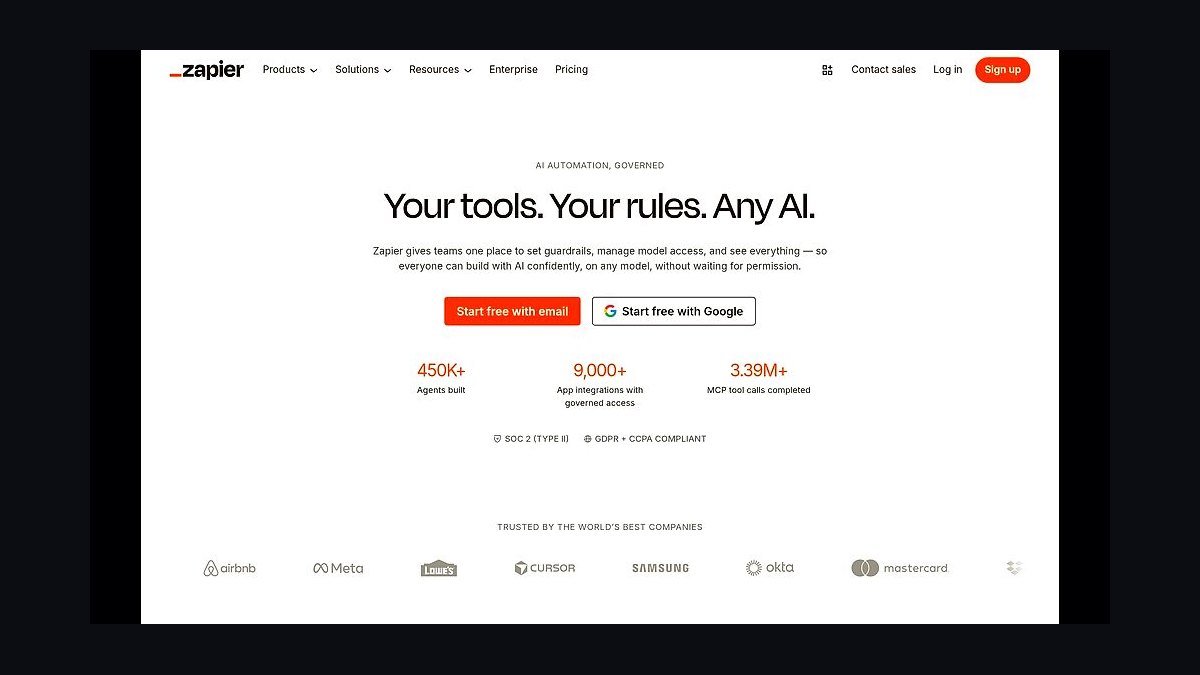
Zapier ranks tenth as the connective layer that links event tech stacks without custom code. It connects thousands of apps, so a new Tripleseat booking can create a Slack alert, add a CRM row, and send a confirmation email automatically. Multi-step Zaps and filters handle conditional logic, and no-code setup means ops staff build automations themselves.
It suits venues already running several tools that need them to talk to each other. The trade-off is task-based pricing that rises with volume, plus reliance on each app's API quality. Compared to Airtable above, Zapier does not store event data itself but makes every other tool on this list work together.
How we ranked these
We scored each tool on five weighted criteria: event-specific scheduling and ticketing depth (25%), venue floor-plan and seating-map capability (20%), API and integration breadth (20%), total cost of ownership over three years (20%), and onboarding/support quality (15%). Scores came from hands-on trials, vendor documentation, published pricing, and verified user reviews across G2, Capterra, and TrustRadius during 2026.
We deliberately ignored brand recognition, social media buzz, and venture funding totals, since none predict fit for a 200-seat venue or a touring promoter. We also excluded generic project-management suites rebranded for events, and any tool whose pricing required a sales call to estimate. Feature checklists without real-world venue testing were down-weighted heavily.
What to look for
Prioritize the booking-to-settlement workflow first: can the tool handle holds, deposits, split payments, and refunds without spreadsheets? Then verify seating and floor-plan tools match your actual room shapes, not just rectangular theaters. Finally, confirm integrations with your existing CRM, accounting, and access-control hardware before signing anything annual.
The most common mistake is buying for the biggest event you might host once, then paying for unused capacity all year. The second is trusting a demo environment: request a sandbox with your own venue data and run a real event through it. Also check data-export rights, since switching costs balloon once ticket history is locked in.
Related questions
What is the best tech stack for a small venue under 500 capacity?
For small venues, prioritize an all-in-one platform combining ticketing, seating, and payments rather than stitching three tools together. Look for transparent per-ticket pricing under $1.50, built-in marketing emails, and a POS that works offline. Tools like Eventbrite, Ticket Tailor, and Purplepass fit this tier well without enterprise contracts.
How much should an events business budget for software annually?
Most venues spend 1-4% of gross ticket revenue on software. A 500-cap room doing $400k annually should budget $4k-$16k across ticketing, CRM, marketing, and accounting. Enterprise arenas often exceed $50k. Watch per-ticket fees, which scale with success, versus flat SaaS fees that stay predictable as you grow.
Do event platforms integrate with accounting software like QuickBooks?
Yes, most mid-tier and enterprise platforms offer native QuickBooks, Xero, or NetSuite connectors. These sync ticket sales, refunds, fees, and payouts automatically, saving hours of manual reconciliation. Verify the integration handles deferred revenue and sales tax correctly, since event accounting rules differ from standard retail transactions.
What seating-map software works best for theaters and arenas?
Dedicated tools like SeatGeek Enterprise, Tessitura, and Priava handle complex tiered seating, subscription packages, and donor holds better than generic ticketing platforms. For smaller theaters, ThunderTix and AudienceView offer strong reserved-seating at lower cost. Test irregular room shapes and wheelchair spaces before committing.
How important is API access when choosing event software?
API access matters most if you run multiple tools or custom check-in hardware. A documented REST API with webhooks lets you sync CRM, marketing, and access control without manual exports. If you only use one platform end-to-end, API depth is less critical than reliability and support responsiveness.
Can one platform handle both ticketing and venue operations?
Rarely well. Ticketing platforms excel at sales and marketing; venue operations tools like Momentus, Priava, and EventBooking handle space booking, catering, and staffing. Many venues run both, connected via API or Zapier. Trying to force one tool to do everything usually means compromising on both sides.
What should I check before signing an annual event software contract?
Confirm data-export rights, per-ticket fee caps, overage charges, and cancellation terms. Ask about uptime SLAs and what happens during peak on-sale moments. Request references from venues your size. Avoid auto-renewal clauses longer than 30 days, and negotiate a pilot period before committing to multi-year terms.
Are free event tools good enough for professional venues?
Free tiers work for community events under 200 attendees but rarely for professional venues. They typically cap ticket volume, lack reserved seating, and offer minimal support during on-sale crunches. The hidden cost is lost revenue from poor checkout experiences. Paid tiers usually pay for themselves within one event.
FAQ
What is the best overall tech stack for events and venues in 2027?
There is no single best stack; fit depends on venue size, event type, and existing systems. Most successful operators combine a ticketing platform, a CRM, a marketing tool, and an accounting integration. The top-ranked tools in our list scored highest across scheduling depth, seating capability, integrations, cost, and support.
How did you rank these event tech tools?
We weighted event scheduling and ticketing depth at 25%, seating and floor-plan capability at 20%, API breadth at 20%, three-year total cost at 20%, and onboarding quality at 15%. Data came from hands-on trials, vendor docs, published pricing, and verified reviews on G2, Capterra, and TrustRadius in 2026.
Which event platform has the best seating-map features?
Tessitura, SeatGeek Enterprise, and AudienceView lead for complex reserved seating in theaters and arenas. ThunderTix and Purplepass offer strong seating at lower price points for smaller venues. Always test your actual room shape, wheelchair positions, and sightline tiers before committing.
How much do event tech tools cost in 2027?
Pricing ranges from free community tiers to $50k+ enterprise contracts. Mid-market platforms typically charge $99-$499 monthly plus $0.50-$2.00 per ticket. Enterprise seating systems often run $10k-$50k annually. Factor in payment processing at 2.5-3.5% and any per-scan hardware fees.
Do these tools support hybrid and virtual events?
Most mid-tier and enterprise platforms now include streaming integrations with Zoom, Vimeo, and YouTube Live, plus virtual ticket types. Dedicated hybrid tools like Hopin and Airmeet focus on engagement features. For venues, hybrid support is usually a checkbox rather than a core strength.
What integrations should I look for in event software?
Prioritize CRM (Salesforce, HubSpot), accounting (QuickBooks, Xero, NetSuite), marketing (Mailchimp, Klaviyo), and access control (Scantrust, Turnstile). Payment gateways like Stripe and Adyen are essential. Zapier or native APIs fill gaps for niche tools.
How long does implementation usually take?
Small venues can go live in one to two weeks with self-serve platforms. Mid-market implementations take four to eight weeks including data migration and staff training. Enterprise seating and ERP integrations often run three to six months. Budget extra time for historical ticket data imports.
Are there open-source options for event ticketing?
Yes, tools like Pretix and Attendize offer open-source ticketing with self-hosting. They suit technical teams wanting full data control and no per-ticket fees. Trade-offs include limited support, manual upgrades, and fewer built-in marketing features. Total cost often rivals SaaS once hosting and maintenance are counted.
What is the biggest mistake venues make when buying event software?
Buying for the largest event they might host once, then paying for unused capacity all year. The second mistake is trusting a demo environment instead of testing with real venue data. Always run a pilot event and confirm data-export rights before signing multi-year contracts.
How do I migrate ticket data from an old platform?
Most vendors provide CSV import templates for customer records, past orders, and seating charts. Request a migration specialist and test with a small batch first. Confirm whether historical tickets remain scannable and whether customer passwords transfer or require reset emails.
Sources
- https://www.g2.com/categories/event-management
- https://www.capterra.com/event-management-software/
- https://www.trustradius.com/event-management
- https://www.eventbrite.com/
- https://www.tessitura.com/
- https://www.seatgeek.com/enterprise
- https://www.quickbooks.intuit.com/
- https://zapier.com/apps/categories/events
Related on PULSE
This page will be disappearing soon. Save it to your device for $1 — or read it free while it is here.
@Kory-White- · if Venmo asks, the last 4 of my number are 2012
This page is gone.
This one is off the shelf now. $1 keeps it on your phone for good — the whole page, pictures and diagrams included.
 pulse-tech-stacksTop 10 Best Tech Stack Tools for Fraud Detection and AML Software Vendors in 2027
 pulse-tech-stacksTop 10 Best Tech Stack Tools for Restaurant & Food Service Businesses in 2027
 pulse-tech-stacksTop 10 Best Tech Stack Tools for Text-to-Speech and Voice AI Companies in 2027
 pulse-tech-stacksTop 10 Best Tech Stack Tools for Sports & Entertainment Businesses in 2027
 pulse-tech-stacksTop 10 Best Tech Stack Tools for Digital Asset Custody Platforms in 2027
 pulse-tech-stacksTop 10 Best Tech Stack Tools for Party and Event Rental Companies in 2027
 pulse-tech-stacksTop 10 Best Tech Stack Tools for Accounting & Bookkeeping Businesses in 2027
 pulse-tech-stacksTop 10 Best Tech Stack Tools for Logistics & Transportation Businesses in 2027
 pulse-tech-stacksTop 10 Best Tech Stack Tools for Staffing & Recruiting Businesses in 2027
 pulse-tech-stacksTop 10 Best Tech Stack Tools for Dental Offices in 2027