
What's the cheapest framing material that meets code for a private office buildout in 2027?
 Curated byKory White · Fractional CRO · Maryland
 PULSEKNOWLEDGE LIBRARY
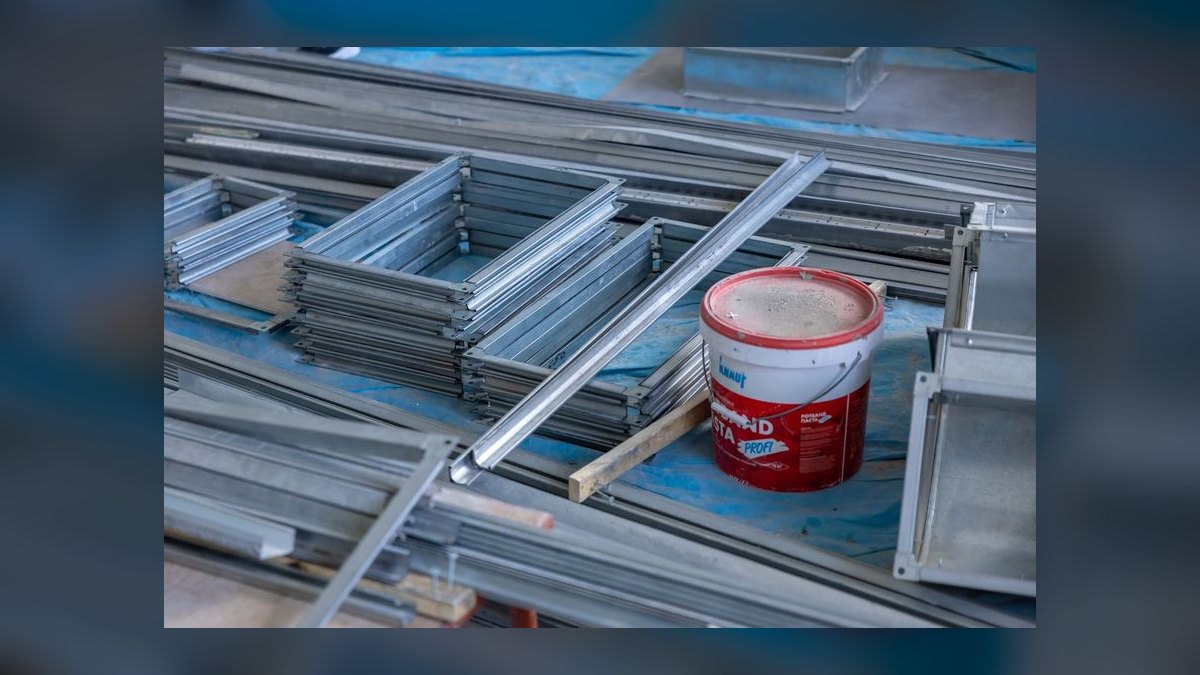
Light-gauge cold-formed steel studs are the cheapest framing material that meets commercial code for a private office buildout in 2027. Most multi-tenant office buildings require non-combustible interior partitions, which rules out untreated wood. Steel is mass-produced, dimensionally stable, pre-punched for wiring, and needs no fire-retardant treatment to pass inspection.
The end-to-end buildout process from lease to inspected wall
Framing material selection is not a standalone decision — it is one node inside a permitting-and-construction sequence that starts months before anyone touches a stud. Understanding where the material choice lands in that sequence is what keeps you from "saving" money at a point where the savings get clawed back later by a plan reviewer or an inspector.
The sequence typically runs like this. First, the lease is signed with a defined tenant improvement allowance and a work letter that spells out what the landlord will and will not pay for. Second, a space planner or architect produces a test fit — a rough layout showing how many private offices, conference rooms, and open-plan seats fit in the demised premises. Third, the architect produces construction documents: dimensioned partition plans, a partition type schedule (usually labeled P1, P2, P3 and so on, each defining stud gauge, stud depth, stud spacing, drywall layers, and insulation), reflected ceiling plans, and electrical plans. Fourth, those documents go to the building department for permit review, and in many jurisdictions simultaneously to the fire marshal. Fifth, a general contractor bids the documents, usually with subcontractor bids for framing/drywall, electrical, mechanical, plumbing, and fire protection. Sixth, framing goes up. Seventh, the inspector performs a framing/rough-in inspection before anything is covered. Eighth, drywall closes the wall, followed by tape, finish, paint, flooring, and trim. Ninth, a final inspection and a certificate of occupancy.
The material decision gets locked at step three, in the partition schedule — long before anyone buys a stud. That is the leverage point. Once the partition type is drawn and permitted, changing it requires a revision to the permit set, which costs architect time, re-review fees, and schedule. So if you want the cheapest code-compliant framing, you have to influence the partition schedule during design development, not during construction.

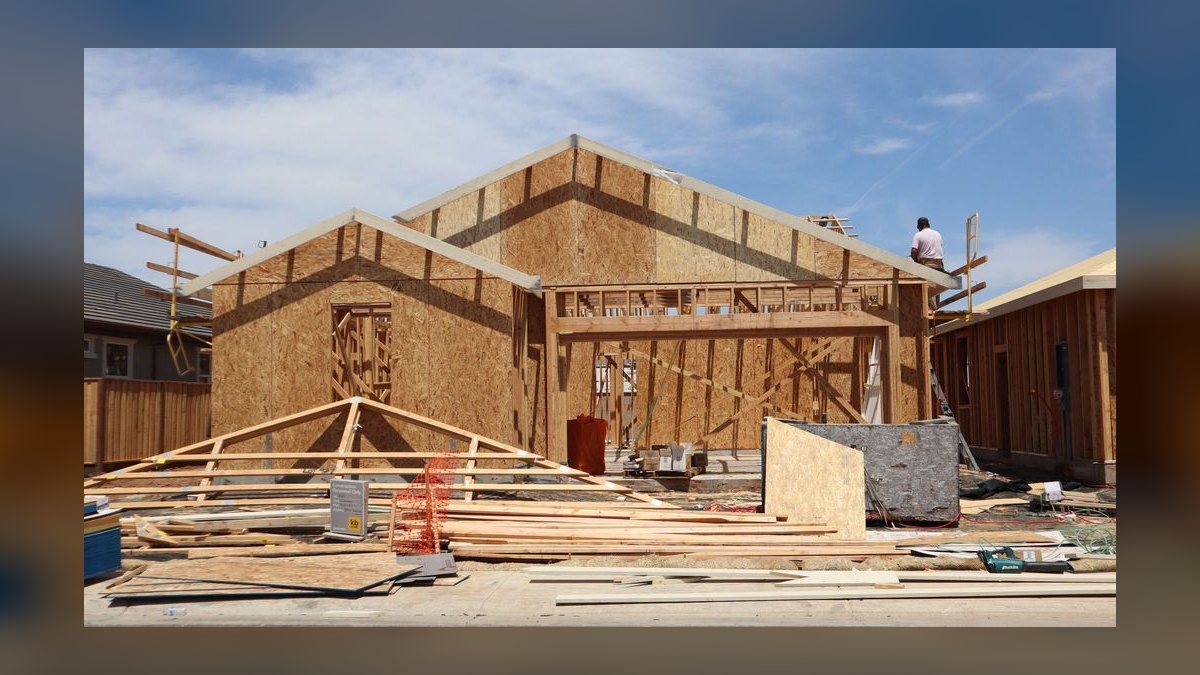
The critical constraint at that step is the building's construction type. The International Building Code classifies buildings into Types I through V. Types I and II are non-combustible construction; Types III, IV, and V permit combustible elements under defined conditions. Most mid-rise and high-rise multi-tenant office buildings are Type I or Type II, which is precisely why steel studs became the default for commercial interiors — in a non-combustible building, combustible framing in a partition is a conflict with the building's construction type classification, not merely a preference. In a low-rise, single-story, single-tenant building of Type V construction, wood framing may in fact be permitted; that is the narrow case where the general answer flips. Always confirm the building's construction type from the certificate of occupancy or the building's existing permit record before assuming either way.
One adjacent effect worth planning for: the partition schedule also drives the ceiling decision. A partition that stops at the suspended ceiling grid is cheaper to frame than one that runs slab-to-slab, because slab-to-slab walls need taller studs, deflection track at the top, and fire-stopping at every penetration through the rated assembly. But a partition that stops at the grid does almost nothing acoustically — sound travels over the top through the ceiling plenum. For a private office where the whole point is confidential conversation, the cheap ceiling-height wall is usually a false economy. If you are going to spend money anywhere in a private office partition, spend it on running the wall to deck and putting insulation in the cavity, and save it on stud gauge instead.
Who decides what: landlord, tenant, general contractor, architect
Framing material disputes are almost always role disputes in disguise. Four parties have a hand on the decision, and each has a different incentive.

The landlord owns the building standard. Most institutional landlords maintain a written building standard specification that dictates partition construction for tenant spaces — stud gauge, stud depth, drywall type, ceiling height, door and frame type, even paint sheen. The landlord's incentive is long-term asset condition and minimal re-tenanting cost, so they tend to specify slightly heavier construction than the code minimum. That means the landlord's standard, not the code, is frequently the real floor on your framing spec. If the building standard says a heavier gauge at 16 inches on center and code would allow a lighter gauge at 24 inches on center, you cannot simply pocket the difference — you would be in breach of the work letter. You can, however, negotiate: ask for the building standard in writing before signing, and ask for a deviation where the deviation does not affect the base building.
The tenant — you — owns the program and the budget. Your incentive is the cheapest wall that does the job for your lease term, which may be five years, not fifty. That timeline difference is the root of most landlord-tenant friction on spec. A landlord amortizes construction over decades of ownership; you amortize it over the term. Make that argument explicitly when asking for a lighter spec: you are not asking to build something non-compliant, you are asking not to over-build an asset you will hand back.
The architect of record stamps the drawings and carries professional liability for code compliance. Architects rationally over-specify, because an under-specified partition that fails inspection is their problem, and a slightly heavy partition is nobody's problem. The productive conversation is not "make it cheaper" but "what is the governing constraint on this partition type, and is there a lighter assembly with the same tested rating?" Fire-rated assemblies are proprietary tested assemblies — typically UL-listed designs — and an architect can often swap to an equivalent listed design that uses less material while holding the same rating. That is a real, defensible saving.

The general contractor carries schedule and means-and-methods risk. GCs like steel studs because crews are fast on them and callbacks are rare. A GC's bid also embeds their own risk premium: if the drawings are ambiguous about partition types, the GC prices the most expensive plausible reading. This is the single most common source of inflated framing cost in a small buildout — not the material, but the ambiguity. A clean, complete partition schedule with every wall on the plan tagged to a type reliably produces tighter bids than a plan with untagged walls and a note saying "typical."
There is a fifth party who shows up late and has veto power: the local authority having jurisdiction, meaning the plan reviewer and the field inspector. They interpret the adopted code, and adopted code varies. The 2024 IBC is the current published edition and jurisdictions adopt on their own cycles, often lagging by several years and layering local amendments on top. A 2027 buildout in one city may be reviewed under a locally amended 2021 code and in the next county under the 2024 code. Never plan a material strategy against the model code alone; confirm the adopted edition and local amendments with the building department, because that is the document your inspector actually holds.
The practical move is to compress this into one meeting early. Get the architect, the GC's framing sub, and the landlord's construction manager on a call and settle the partition schedule before it goes to permit. Every question resolved in that meeting is a change order you do not pay for later.

What the framing line item actually costs and where the contingency goes
Nobody buys studs; they buy finished partitions. So the honest way to budget is per linear foot of finished wall, or per square foot of leased area, not per stick of steel.
Structure your estimate in layers, because that is how the bid comes back and how you will need to interrogate it:
- Framing layer. Steel studs, top and bottom track, fasteners, deflection track if slab-to-slab, and the labor to lay out and erect. This is a surprisingly small slice of the finished wall cost — often well under a third of the partition total once drywall and finish are added.
- Board layer. Gypsum board, one or two layers per side depending on rating and acoustics, plus corner bead and trim accessories. Doubling drywall on one side is a common and relatively cheap way to buy acoustic performance.
- Cavity layer. Acoustic insulation — fiberglass batt or mineral wool. Mineral wool costs more per square foot than fiberglass but performs better acoustically and is non-combustible, which matters in rated assemblies.
- Finish layer. Tape, three-coat finish to a specified level (Level 4 is standard for painted office walls; Level 5 costs meaningfully more and is only worth it under critical raking light or high-gloss paint), primer, and two coats of paint.
- Openings. Hollow metal frames, doors, hardware, and the extra studs and blocking required to carry them. Door openings are disproportionately expensive per opening compared to plain wall, which is why an office layout with many small offices costs far more per square foot than one with fewer, larger ones.
- In-wall systems. Electrical rough-in, data drops, low-voltage, and any plumbing. Pre-punched steel studs help here; the electrician threads rather than drills.

Rather than trusting a single blended per-square-foot number, ask the GC for a line-item breakdown across those six layers. If a contractor quotes one flat number for "interior partitions," that number contains a cushion you cannot see and cannot negotiate. Published construction cost databases — RSMeans is the widely used one — provide localized unit costs by assembly, and a landlord's construction manager will usually have real recent numbers from the same building, which is even better data than a national index. Ask for a comparable from a recent buildout in the building; landlords often share it, because a realistic tenant expectation makes their job easier too.
On contingency: carry a design contingency during documentation and a construction contingency during the build, and do not spend the first one on the second. A design contingency covers the drawings changing — the partition schedule being revised, a wall moving, a rating being added after plan review comments. A construction contingency covers conditions found in the field: an existing slab that is out of level enough to require shimming, an unmarked existing duct in the path of a new wall, abandoned conduit above the ceiling, or existing partitions that turn out not to match the as-builts. In an existing building — especially second-generation space where a prior tenant's walls are being demolished — unknown existing conditions are the dominant risk, and they have nothing to do with which stud you picked.
Two upstream levers move the framing number far more than material choice ever will. The first is wall quantity: every linear foot you do not build is 100 percent saved. A layout with eight small private offices along an exterior wall has substantially more partition footage and more door openings than one with four larger shared offices and a couple of focus rooms. Test-fit alternatives against linear feet of partition, not just headcount. The second is reuse of existing partitions. In second-generation space, an existing steel-stud wall in the right place is free framing. Ask the architect to overlay the proposed plan on the existing conditions plan and count how many existing walls the new layout can keep. Shifting a proposed office line by a few feet to land on an existing wall can be the largest single saving in the entire framing scope.
The third lever is time. Material pricing for steel is a commodity exposure, and buildouts scheduled far out carry that risk. If the schedule allows, ask the GC whether the framing package can be bought out early and stored, or whether the subcontractor will hold pricing for a defined window. Neither is free, but both convert an unknown into a known, which is often what a budget actually needs.

Where commercial buildouts go wrong on partitions
The failures repeat across projects, and almost none of them are about picking the wrong stud.
Ceiling-height walls in private offices. Covered above, but it is the most common regret. The wall gets built to the grid, the office is finished, and the first week of occupancy reveals that every phone call is audible in the adjacent office. Fixing it after the fact means demolishing ceiling tile, extending the wall to deck, fire-stopping, and repairing — several times the cost of building it right initially.
Flanking paths. Even a slab-to-slab wall leaks sound if the paths around it are open. The usual culprits are a continuous return air plenum, back-to-back electrical boxes in the same stud cavity, ductwork crossing the wall, and gaps at the deck flutes above. Acoustic sealant at the perimeter, offsetting outlet boxes into different stud bays, and boot-and-lag treatment on ducts are cheap fixes at rough-in and expensive fixes afterward.
Under-specifying blocking. Steel studs will not hold a wall-mounted monitor, a heavy whiteboard, or an upper cabinet without in-wall backing. Blocking costs almost nothing while the wall is open and is a genuine renovation once it is closed. Walk the plan and mark every location where something will hang on a wall — displays, shelving, coat hooks, fire extinguisher cabinets, wall-mounted equipment — and get that blocking into the drawings.
Ignoring deflection at the top track. In a slab-to-slab partition under a structural floor above, the structure moves. A wall framed tight to the underside of the deck without a slip or deflection track will crack the drywall at the top and can transmit load into a non-load-bearing partition. Deflection track is inexpensive; the callback is not.
Missing accessibility clearances. Door approach clearances, corridor widths, and maneuvering space are code requirements that get violated by partition layouts drawn to maximize square footage. A private office door that lacks the required strike-side clearance forces a wall to move after framing. Catch it in the test fit.
Assuming the fire sprinkler layout survives. New partitions change sprinkler coverage. A head that covered an open area may not adequately cover a newly enclosed private office, and adding heads means a sprinkler contractor, a hydraulic calculation, and a separate fire protection permit. This is the same class of trap as adding a kitchenette or a server room to a raw shell — the enclosure, not the framing, triggers the cost. Ask the fire protection engineer to review the partition plan before permit, not after.
Assuming code equals landlord standard. Discussed above, and worth repeating because it produces the most avoidable rework: you can build a perfectly code-compliant wall and still be in violation of the lease work letter.
Value-engineering the wrong layer. When a bid comes back over budget, the instinct is to shave the framing. Framing is the smallest meaningful layer in the partition stack. The savings that actually move the number are reducing wall quantity, reducing door openings, reusing existing partitions, dropping from Level 5 to Level 4 finish where appropriate, and simplifying ceilings. Cutting insulation or dropping walls to ceiling height saves money on the estimate and costs it back in occupant complaints.
A negotiation checklist for the framing and partition scope
Work this sequence and the framing conversation stops being adversarial.
Before signing the lease, get the building standard specification and the work letter in writing, and read the partition section specifically. Confirm what the tenant improvement allowance covers and whether it is paid on progress or on completion. Confirm the building's construction type and the adopted code edition with the building department. Ask whether any existing partitions in the space will remain and get an existing conditions plan.
During design, insist that the architect issue a complete partition schedule with every wall on the plan tagged. Ask directly whether any rated assembly can be met with a lighter listed design at the same rating. Decide slab-to-slab versus ceiling-height per partition type — private offices and conference rooms to deck with insulation, non-sensitive walls to grid. Mark all blocking locations. Run the layout against linear feet of partition and count door openings.

During bidding, require line-item pricing across framing, board, insulation, finish level, openings, and in-wall systems. Ask each bidder to list their assumptions and exclusions; the differences between bids are usually in exclusions, not in unit prices. Ask for a unit price for adding or deleting a linear foot of each partition type, so change orders are priced before you need them.
During construction, hold a pre-installation meeting before framing starts, walk the layout in the field against the plan before board goes up, and inspect for blocking, acoustic sealant, and offset boxes at rough-in — that walk is your last cheap chance to fix anything inside a wall.
Two adjacent negotiations are worth folding into the same conversation. First, if your framing and partition cost exceeds the allowance, the overage is commonly amortized into rent over the term at an interest rate set by the landlord — negotiate that rate, because it is a financing term, not a construction term, and it is frequently softer than it looks. Second, ask whether the landlord will deliver the space with demolition already complete. Demolition of a prior tenant's partitions is cheap for a landlord to bundle into a re-tenanting scope and expensive for you to carry inside a small buildout budget, and it removes an entire category of unknown existing conditions from your contingency.
Related questions
Is wood framing ever legal in a commercial office?
Yes, in narrow cases. A single-story, single-tenant building of Type V construction may permit wood partitions under the adopted code. Fire-retardant-treated wood is also permitted in some assemblies. Confirm the building's construction type and adopted code edition with the building department before assuming either way.
Does stud gauge or stud depth affect cost more?
Depth generally matters more than gauge for the assembly total, because deeper studs pair with wider track, wider door frames, and more insulation per square foot. Gauge affects the stud price and the maximum unbraced height. Specify the lightest gauge and shallowest depth the height and rating allow.
What is the cheapest way to get acoustic privacy in a private office?
Run the partition to the structural deck, fill the cavity with insulation, seal the perimeter with acoustic sealant, and offset electrical boxes into different stud bays. Those four moves cost little at rough-in and outperform any upgrade you can make to the stud itself.
How much does a rated wall add versus a non-rated one?
The cost comes mostly from the required layers and details, not the studs: additional gypsum board, listed fire-stopping at every penetration, and rated door assemblies at openings. Rated corridor and demising walls are typically the expensive partitions in a buildout; interior office walls are usually non-rated.
Can existing partitions be reused to cut framing cost?
Frequently, and it is often the largest single saving available. Overlay the proposed plan on an existing conditions plan and count reusable walls. Shifting a proposed office line a few feet to land on an existing steel-stud wall can eliminate a whole partition run.
FAQ
Is light-gauge steel really the cheapest framing material for a commercial office buildout?
For a typical multi-tenant office building of non-combustible construction type, yes — it is the cheapest material that will actually pass plan review and inspection. Alternatives that might be cheaper per unit either fail the construction-type requirement or need treatments and details that erase the difference. The relevant comparison is always cheapest compliant, not cheapest available.
Why can't I just add fire-rated drywall over wood studs?
Because two different code requirements are in play. A fire-resistance rating is a property of a tested assembly and can sometimes be achieved with wood inside it, but a building classified as non-combustible construction restricts combustible materials regardless of the assembly's rating. Fire-retardant-treated wood addresses part of this, at a cost that typically removes any advantage over steel.
What should I ask the architect to change if the framing bid comes back high?
Ask three things: whether any rated partition can use a lighter equivalent listed assembly, whether the specified gauge and spacing exceed what the wall height requires, and whether the layout can be revised to reduce total linear feet of partition and total door openings. The last one moves the number most.
Does the building's tenant improvement allowance usually cover framing?
Typically yes, since partitions are standard construction rather than a specialty upgrade. Frame the request that way in negotiation: steel studs are the minimum code-compliant option in a non-combustible building, not a premium. Get the definition of standard construction written into the work letter rather than left to interpretation.
How far in advance should the framing material be decided?
At the construction-document stage, when the partition schedule is drawn — well before bidding. Once the schedule is permitted, changing it means a revised permit set, re-review, and schedule impact. The cheap window for material and assembly decisions is during design development, not construction.
Do new partitions trigger other code-required work?
Often. Enclosing open area changes sprinkler coverage, can change egress and travel distances, may require additional exit signage or lighting, and affects mechanical zoning and return air paths. Have the sprinkler and mechanical scopes reviewed against the partition plan before permit submission so those costs land in the budget rather than in a change order.
Sources
- https://www.iccsafe.org/ — International Code Council, publisher of the International Building Code
- https://codes.iccsafe.org/ — ICC Digital Codes, full text of IBC editions and state adoptions
- https://www.nfpa.org/ — National Fire Protection Association, fire-resistance and life-safety standards
- https://www.ul.com/ — UL Solutions, fire-resistance rated assembly listings
- https://www.astm.org/ — ASTM International, standards for cold-formed steel framing including C645 and C955
- https://www.aisc.org/ — American Institute of Steel Construction
- https://www.gypsum.org/ — Gypsum Association, fire-resistance design manual and finish level definitions
- https://www.rsmeans.com/ — RSMeans construction cost data
- https://www.boma.org/ — Building Owners and Managers Association, standards and tenant improvement guidance
- https://www.access-board.gov/ — U.S. Access Board, ADA accessibility standards including door clearances
Related on PULSE
- [What's the cheapest way to add a kitchenette to a raw shell office without triggering new fire sprinklers](/knowledge/bo0328)
- [What's the average cost to run new electrical for a private server room buildout in 2027?](/knowledge/bo0308)
- [What's the cheapest flooring option that still meets landlord base building standards in 2027](/knowledge/bo0269)
- [Can I lock in today's construction material prices for my buildout in 2027](/knowledge/bo0267)
- [Who Pays for Code-Required Upgrades in a Buildout?](/knowledge/bo0098)
- [What's the typical timeline from lease signing to move-in for a 5,000 SF office buildout?](/knowledge/bo0246)
@Kory-White- · if Venmo asks, the last 4 of my number are 2012
 editorialMy Thoughts: How Do I Save on Buildout by Taking a Second-Generation Restaurant Space
 boWhat are the hidden costs of a warm shell delivery that landlords don’t disclose?
 boHow do I force the landlord to pay for an independent cost estimator?
 boShould I hire a tenant rep broker to oversee my buildout or manage it myself?
 boHow do I negotiate a cap on my out-of-pocket costs for the buildout?
 boHow do I terminate a lease early if the landlord fails to deliver the buildout as promised?
 boHow do I negotiate a hard cap on my shared plaza maintenance costs after the buildout?
 boWhat Are the Good and Bad Clauses in a Commercial Lease?
 boShould I demand the landlord provide a third-party cost breakdown for every line item in their GC bid
 boHow do I calculate the true cost of using the landlord’s preferred GC versus my own