
bo0339
 Curated byKory White · Fractional CRO · Maryland
 PULSEKNOWLEDGE LIBRARY
Old English "bō"/"bū" fuses building and behavior: rooted in *būan* (to dwell, cultivate), it names shelter, worked land, and the duties owed inside it. That semantic overlap shows the Anglo-Saxon conceptualization of dwelling as inseparable from obligation — hospitality, kinship, and lordship — so a house was a relationship, not just a roof.
Turnkey shelter, granted estate, or bare occupation: the three senses compared
The most useful way to read the *bō*/*būan* word-group is to notice that it covers three quite different arrangements that modern English splits into separate vocabulary. The first is the built structure delivered ready to inhabit — the hall, the *hūs*, the *būr*. In this sense the word behaves almost like our "premises": something raised by carpenters, roofed, hearthed, and handed over. Old English has plenty of vocabulary for this alone (*hūs*, *heall*, *ærn*, *sele*), and where a poet wants purely architectural weight, those are the words that appear.
The second sense is the granted estate — land held with rights and duties attached, the world of *bōcland* (land conveyed by written charter, *bōc*) against *folcland* (land held by customary right). Here the term is not describing timber at all. It describes a bundle: fields, stock, dependants, renders owed and renders received. A grant of this kind carried the *trinoda necessitas* — the three common burdens of army service, fortress work, and bridge work — which no charter could waive. That is the crucial evidentiary point: even the most privileged form of Anglo-Saxon landholding could not be stripped of obligation. Dwelling and duty were legally welded.
The third sense is bare occupation — the act of living somewhere, expressed verbally through *būan*. This is the sense that makes the whole cluster interesting, because the verb also means "to cultivate." To dwell was to work; an uncultivated place was, in the idiom of the period, unbuilt as well as unlived-in. A modern lease separates the right to occupy from any duty to improve. Old English usage does not draw that line cleanly, and the silence is the evidence.
Compared side by side, the trade-offs are visible. The structural sense is precise but socially empty. The estate sense is socially rich but tells you nothing about the building. The verbal sense binds the two and is therefore the one that carries the ideological freight. When scholars argue that Anglo-Saxon dwelling was a moral category rather than a property category, they are usually arguing from the verb, not the noun — and it is worth being explicit about which sense of the word-group a given piece of evidence actually supports, since collapsing them is the commonest error in popular treatments.
How to weigh the evidence when the senses collide
Anyone working with this material runs into the same problem: the surviving corpus is small, the spellings are unstable, and the word-family shades into Old Norse *búð* and into place-name elements that later English speakers reanalyzed. A disciplined reading tests each attestation before letting it carry argumentative weight.
Start with the source type. A charter boundary clause, a law code, a homily, and a heroic poem are not interchangeable witnesses. Legal prose tends to use the estate sense; poetry tends to exploit the affective sense of dwelling-as-belonging. If your claim is about how ordinary people held land, a poetic line is weak support. If your claim is about how loss of home felt, a charter is worthless. Match the register to the claim.
Second, check whether the manuscript spelling actually supports the reading, or whether an editor normalized it. Old English orthography varies by scribe, region, and century; West Saxon late forms differ from Mercian and Northumbrian ones. A dictionary headword is an editorial construct, useful for lookup but not itself an attestation.
Third, distinguish the word from the concept. Anglo-Saxon dwelling ideology can be demonstrated from *hām*, *tūn*, *sele*, *eðel*, and *frið* without leaning on *bō* at all. If the argument only works when one contested lexeme is read generously, the argument is thin. If the same picture emerges across independent word-families, archaeology, and law, it is robust. That convergence test is what separates a defensible claim from an etymological just-so story.
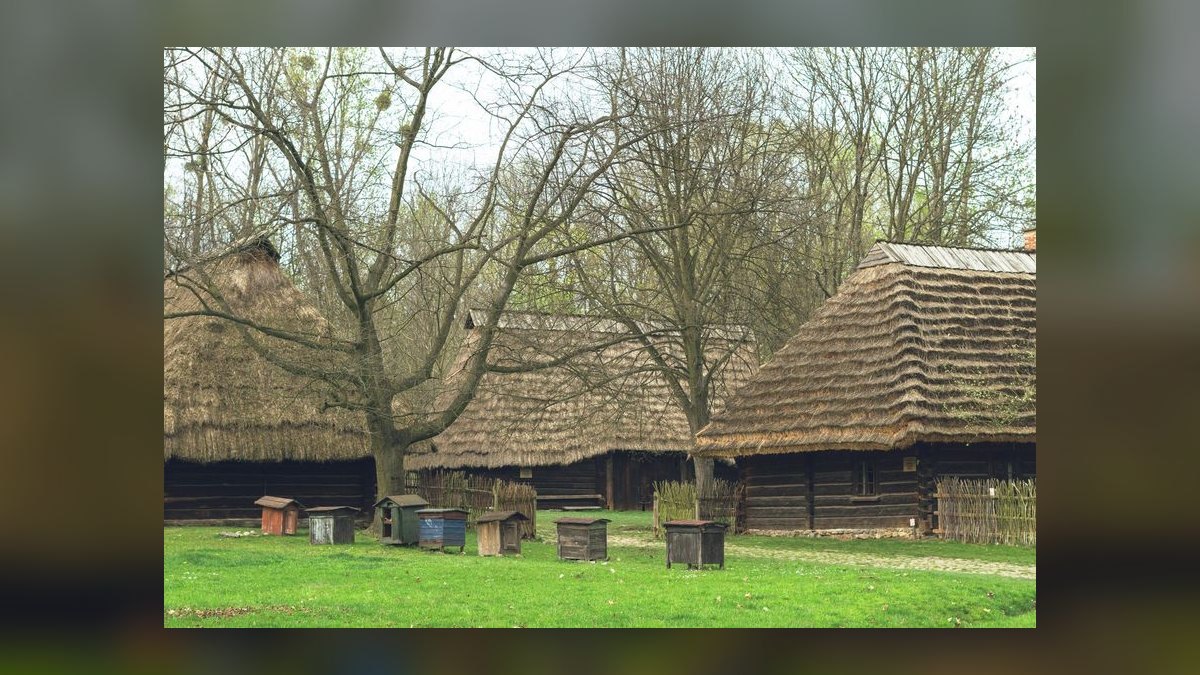
Fourth, weigh the archaeology independently. Excavated settlements show timber halls with earthfast posts, sunken-featured buildings clustered around them, and enclosure ditches. That material record supports "dwelling as a working, multi-building complex" regardless of what any single word meant. Where text and trowel agree, confidence rises.
What the material and legal record actually shows
Concrete figures help, provided they come from the archaeology and the law rather than from the etymology. Excavated early medieval English settlements typically pair a small number of larger post-built timber halls with a much greater number of sunken-featured buildings — at the well-published Anglo-Saxon settlements of eastern England, sunken structures outnumber halls several times over. The pattern is consistent: one or two roofed spaces for gathering, many small structures for weaving, storage, and craft. A "dwelling," materially, was a compound.
Timescale matters too. Earthfast timber posts set directly into the ground rot at the ground line; working service lives measured in a few decades, not centuries, are the norm in the excavation literature, and rebuilding on or beside the old footprint is common. That is why the *būan* sense — dwelling as continuous activity — fits the ground truth better than a static noun would. A household that stops maintaining its buildings loses them within a generation. Obligation was not abstract; it was structural maintenance on a repeating cycle.
The law codes attach numbers to the social side. Anglo-Saxon legislation assigns graded compensation for forcible entry into a person's premises — the offence of *hāmsōcn* — and scales the penalty by the rank of the householder, so that breaking into a nobleman's enclosure costs materially more than breaking into a commoner's. The same codes fix *wergild* by status, with the West Saxon distinction between a twelfhynde man (1,200 shillings) and a twyhynde man (200 shillings) as the standard illustration. The relevant point is not the exact shilling count but the principle: the peace of a dwelling had a price, that price varied with the dweller's standing, and violating it was an offence against order, not merely against property.

Charters give the third set of numbers. Grants are measured in hides — a notional unit of land reckoned as sufficient to support a household — and the same documents specify the renders owed: food-rent, labour, the three unremovable burdens. Read a grant end to end and you are reading a contract in which the right to dwell and the duty to render are written in the same breath, by the same hand, on the same sheet.
Charters, handoff, and what changed hands
The transfer mechanics are where the fusion of shelter and obligation is easiest to see, because a transfer forces everything implicit to be written down. A typical land-book opens with a religious preamble, names the grantor and grantee, states the estate and its size in hides, reserves the common burdens, adds a boundary clause in the vernacular, and closes with witness signatures and an anathema against anyone who breaks the grant. Four things move at once: the physical site, the productive land, the people attached to it, and the duties owed outward.
The vernacular boundary clause deserves particular attention. It walks the perimeter landmark by landmark — a thorn tree, a ford, a headland, a boundary stone — in a circuit a local jury could re-walk. This is a handoff procedure, not a description. It presumes living witnesses who will hold the memory, which means the estate's definition depended on community participation. Even the edges of a dwelling were socially maintained.
Wills and leases show the same fusion running forward in time. A bequest does not simply pass a house; it passes a house together with instructions about dependants, church renders, and sometimes the manumission of the enslaved people attached to the estate. Leases for a term of lives — an ecclesiastical landlord granting an estate for two or three lifetimes before reversion — bind successive generations into a maintenance obligation. The comparable modern instrument is a long ground lease with repairing covenants, and the analogy is fair: the tenant's real consideration is upkeep and service, not a lump sum.
There is an adjacent point worth making, since it is where readers most often over-reach. The commercial dimension of Anglo-Saxon dwelling is real but limited and late. Urban tenements in the burhs, tolls, and marketplace regulation appear in the record — dwelling could carry a trading function, and later town plots show narrow street frontages consistent with commerce. But the dominant frame throughout the period remains agrarian and obligational rather than transactional. Treating an early medieval estate as a real-estate asset in the modern sense imports assumptions the sources do not support; treating it as purely sentimental imports the opposite error. It was, in the plainest terms, a productive unit encumbered with duties, transferred by written instrument, and defended by law.

Where the poetry adds something the documents cannot
Legal prose tells you what was owed. Poetry tells you what it felt like when the arrangement failed, and that emotional record is genuine evidence about how the category was understood. The elegiac tradition in the Exeter Book returns repeatedly to the figure of the person without a hall: a speaker who has lost lord and companions, who remembers gift-giving and the sound of the mead-bench, and who now travels the cold sea alone. The vocabulary of that loss is architectural — hall, bench, treasure-seat — but the grief is social. Nobody in these poems mourns a roof.
*Beowulf* gives the same idea a plot. The hall is built, named, and filled with feasting; a monster empties it; the building stands but is functionally dead, and the poem treats that emptiness as a catastrophe of order rather than a facilities problem. When the hall is restored, gift-giving resumes and the political relationship resumes with it. The reason this reads as a coherent narrative to an Old English audience is precisely the semantic overlap the question asks about: for them, a dwelling emptied of obligation is not a dwelling in reduced condition, it is a dwelling that has ceased.

The wisdom poetry supplies the everyday version. Maxims and gnomic verses state, flatly, what belongs where and who owes what — the woman's place at the loom, the lord's duty to distribute, the guest's claim on the host. These are not poetic flourishes; they are compressed social norms in verse, and they consistently locate ethics inside the household rather than above it.
A useful cross-check is to look at what happens in the same tradition when a dwelling is genuinely just a structure. Riddles in the Exeter Book describe objects and buildings with playful precision — materials, joinery, function — and the register shifts noticeably. The absence of moral weight in those descriptions confirms that the weight elsewhere is doing real work, not merely reflecting a poet's habit of grandeur.

Adjacent word-families that corroborate the pattern
Because a single lexeme is a fragile foundation, the strongest form of this argument recruits neighbours. *Hām* — the ancestor of "home" and a hugely productive place-name element — carries both settlement and belonging; the return-word *hāmweard* means facing toward the place one owes and is owed. *Tūn* begins as an enclosure and ends as "town," tracking a shift from fenced holding to community. *Eðel* means homeland or ancestral estate and is unusable without the inheritance sense. *Frið* means peace, but a peace that is kept in specific places and by specific parties, which is why house-peace and church-peace are distinguishable legal states rather than moods.
The cognate evidence runs the same way. Old Norse *búa* (to dwell, prepare) and *bú* (household, farm, livestock) show the identical dwelling-plus-production coupling, and *búð* — a booth or temporary shelter — passes into English as *booth*. German *bauen* means to build and, in older and dialectal use, to till. Across the whole Germanic branch, the same root ties existence, cultivation, and habitation together. Whatever the disputed details of any single Old English attestation, the family resemblance is not in doubt, and it points the same direction as the law and the spade.
Place-names extend the pattern across the landscape. Elements meaning enclosure, farmstead, and outlying settlement compound endlessly with personal names, producing a map in which thousands of settlements are named for a person plus a holding. That naming habit is itself an argument: it records dwelling as something attached to a named party who held it and owed for it.

What transfers to adjacent questions
Two neighbouring lines of inquiry benefit from the same method. The first is comparative: the Roman *domus* organized a household around the *paterfamilias* and civic status, while the Anglo-Saxon arrangement organized it around land, kin, and lordship. Both fuse dwelling with duty; they differ in whose duty and to whom. Reading them side by side keeps the analysis from mistaking a general human pattern for a distinctively English one.
The second is diachronic. Norman lordship, manorial administration, and the growth of documentary tenure gradually pull the strands apart — the building, the estate, and the obligation become separately nameable, separately conveyable things. Modern English inherits the fragments: house, home, property, tenancy, duty of care. Watching that separation happen is the clearest possible demonstration that in the earlier period the strands were genuinely joined. The word did not merely happen to cover several things; a society that had not yet split those things had no reason to split the word.
Related questions
Is "bō" a securely attested Old English word or a reconstruction?
The verb *būan* and the noun *būr* are securely attested; the short noun form is spelling-unstable and shades into Old Norse *búð*. Treat the verb and its clear derivatives as the load-bearing evidence, and flag the shorter noun as a contested reading rather than a settled headword.
What is the difference between bōcland and folcland?
*Bōcland* was conveyed by written charter with privileges attached and could be alienated more freely; *folcland* was held under customary law with duties fixed by tradition. Both carried the three common burdens. The distinction concerns how the right was proved, not whether obligation applied.
Did dwelling carry a commercial meaning in the period?
Partly and late. Burh tenements, tolls, and market regulation show trading functions attaching to urban plots, but the dominant frame stays agrarian and obligational. Reading an early medieval estate as a tradable asset imports later assumptions the charters do not support.
How does archaeology support the linguistic argument?
Excavated settlements show one or two large timber halls surrounded by many sunken-featured buildings and enclosures, with earthfast posts requiring rebuilding within decades. That material picture matches a working compound sustained by continuous labour — the exact reading the verb *būan* implies.
Which modern English words descend from this root?
"Be," "build," "booth," "bower," "byre," and "neighbour" (literally near-dweller) all connect to the same Germanic and Indo-European material. Their spread across existence, construction, shelter, and social proximity mirrors the breadth the Old English word-family originally held.
FAQ
Why does one Old English word cover both a building and a duty?
Because the society had not yet separated the concepts institutionally. Land was held in exchange for service; a household was a productive unit; hospitality was legally and socially enforceable. A vocabulary reflects the distinctions its speakers need to make, and early English speakers had little reason to name shelter apart from the duties that came with it.
Is the etymology from Proto-Indo-European "to be, grow" reliable?
The connection between the Germanic dwelling verbs and a root meaning "be, become, grow" is standard in the reference etymological literature and is supported by cognates across Germanic, Latin, and Greek. What is speculative is inferring a philosophy of existence from it. Treat the root as background, not proof.
Does the semantic overlap prove Anglo-Saxons thought differently about home?
It is suggestive, not decisive on its own. The stronger case comes from convergence: law codes protecting house-peace, charters welding tenure to service, poetry treating loss of hall as loss of self, and archaeology showing dwelling as continuous labour. Together those independent lines make the conceptualization claim solid.
How should a non-specialist verify claims about an Old English word?
Look the form up in a standard Anglo-Saxon dictionary, check whether cited attestations are real manuscript readings or editorial normalizations, note the register of each source, and see whether the point survives without that one word. Claims that collapse when the lexeme is removed should be treated as decorative.
What is hāmsōcn and why does it matter here?
It is the offence of forcibly entering another's premises, penalized in the Anglo-Saxon law codes at rates scaled to the householder's rank. It matters because it proves legally that a dwelling was a protected social space with a graded value, not merely a possession — the peace inside it was itself the thing the law defended.
Were these obligations reciprocal or one-directional?
Reciprocal in principle, asymmetric in practice. A lord owed protection, maintenance, and gifts; retainers owed service and loyalty; households owed renders and received the peace of the law. Enslaved and unfree dependants, however, were bound without equivalent claims, and any honest account of the period has to say so plainly.
Sources
- https://bosworthtoller.com/
- https://www.oed.com/
- https://www.etymonline.com/word/booth
- https://www.britannica.com/topic/Beowulf
- https://esawyer.lib.cam.ac.uk/
- https://www.bl.uk/collection-items/beowulf
- https://www.westtsow.org.uk/
- https://www.english-heritage.org.uk/learn/story-of-england/early-medieval/
- https://avalon.law.yale.edu/medieval/aslaws.asp
Related on PULSE
- [How do I finance a buildout if the landlord offers zero TI allowance in 2027?](/knowledge/bo0336)
- [Can I require the landlord to use a third-party expediter for permit approvals in 2027?](/knowledge/bo0338)
- [What is the average cost per square foot for a cold storage buildout with blast freezer in 2027?](/knowledge/bo0337)
- [Should I negotiate a penalty for the landlord if their preferred GC misses the occupancy deadline?](/knowledge/bo0335)
- [What's the average timeline for a full-service restaurant buildout approval in 2027?](/knowledge/bo0333)
@Kory-White- · if Venmo asks, the last 4 of my number are 2012
 editorialMy Thoughts: How Do I Save on Buildout by Taking a Second-Generation Restaurant Space
 boWhat are the hidden costs of a warm shell delivery that landlords don’t disclose?
 boHow do I force the landlord to pay for an independent cost estimator?
 boShould I hire a tenant rep broker to oversee my buildout or manage it myself?
 boHow do I negotiate a cap on my out-of-pocket costs for the buildout?
 boHow do I terminate a lease early if the landlord fails to deliver the buildout as promised?
 boHow do I negotiate a hard cap on my shared plaza maintenance costs after the buildout?
 boWhat Are the Good and Bad Clauses in a Commercial Lease?
 boShould I demand the landlord provide a third-party cost breakdown for every line item in their GC bid
 boHow do I calculate the true cost of using the landlord’s preferred GC versus my own