


Should I open or buy a Cousins Subs franchise in 2027?
Quality
Certified
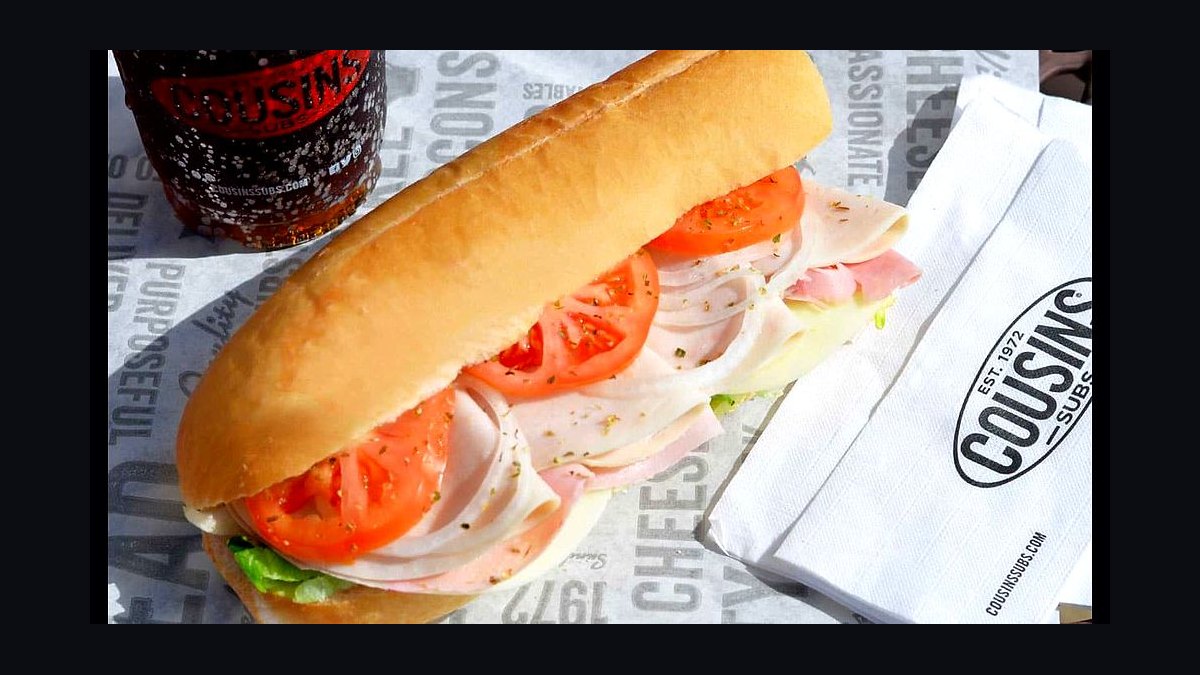
Probably not, unless you already operate multiple quick-service restaurants, live inside the Wisconsin/northern-Illinois corridor, and can fund a $465,000-$1,165,000 build. A Cousins Subs franchise pencils to a 7-9 year payback at mid-case volume, with Year-1 owner cash near breakeven. Open only if the trade area, operator profile, and capital reserve all line up — otherwise a national sandwich brand returns more per dollar invested.
The outcome you should expect
Walk into a 2027 Cousins Subs decision with a narrow band of realistic outcomes, not a wide one. The 2025 Franchise Disclosure Document puts the all-in investment at $465,000 to $1,165,000, built from a $25,000 initial franchise fee, $200,000-$700,000 of building and build-out costs, $120,000-$200,000 in equipment and smallwares, and $59,000-$80,000 of working capital reserved for the first three months. System-wide Average Unit Volume in 2023 was $763,000, and the most recent franchisee reporting for the 2024 cohort shows average gross revenue between $687,000 and $814,740 depending on store tenure and trade area. That spread matters because it is the single number that determines whether this franchise is a good use of capital or a slow-motion mistake.
Run the mid-case: a $687,000 AUV store at a 9-12% store-level EBITDA margin generates $62,000 to $82,000 of operating profit before debt service. Against a $500,000 SBA 7(a) loan at roughly 11.5% over 10 years, annual debt service runs close to $84,000. That means a typical new Cousins Subs franchisee should expect Year-1 owner cash somewhere between roughly breakeven and negative $20,000 — not because the concept is broken, but because a brand-new store in a market that still has to learn the Cousins name takes 12 to 18 months to climb toward system-average volume. The payback period on the full investment, assuming mid-case performance, lands at 7 to 9 years. Outperformers who push past $900,000 in AUV, typically by adding a second or third unit and spreading fixed overhead, can pull that down to 5 to 6 years.
Compare that against the two brands prospective buyers most often cross-shop. Jersey Mike's reports a roughly $1.1 million AUV in its 2024 FDD Item 19, with investment costs from $269,000 to $804,000 — meaning Jersey Mike's franchisees are frequently paying less to build and making more per year, producing a 3-5 year payback in strong trade areas. Jimmy John's sits at a lower AUV, roughly $720,000-$760,000 median, on a build cost of $360,000-$615,000 — cheaper to open than Cousins Subs, with a comparable or slightly better revenue outcome. Cousins Subs is the only one of the three carrying a build cost that regularly reaches $700,000 while its revenue sits at or below the other two. The honest expectation, in plain terms: you are paying a national-brand price for a 95-unit regional brand's economics, and the return only justifies that price inside the one geography where the name already means something to customers.
The outcome also depends heavily on whether you are a first-time single-unit buyer or an existing multi-unit operator. The franchisor's own disclosure and public commentary lean toward multi-unit development, and the economics explain why: a second or third unit shares a general manager bench, a shared food cost discipline, and marketing leverage that a single store cannot generate alone. A first-time owner-operator buying one Cousins Subs location outside Wisconsin should expect the worst version of this outcome — slower ramp, thinner brand pull, and a payback period that can stretch past 9 years if the site underperforms the mid-case AUV.
What drives that outcome
Four forces determine whether a given Cousins Subs location lands near the $814,000 high end or the $687,000 low end of the 2024 cohort, and all four are knowable before you sign.
Geographic brand density is the largest lever. Roughly 92 of the chain's 94-95 total units sit in Wisconsin, concentrated around the Milwaukee metro where brand awareness is estimated above 80%. The 2023 AUV lift of 117% over fiscal 2011 was driven almost entirely by legacy Milwaukee-area stores, not new-market openings — meaning the brand's own growth story is a story about deepening an existing market, not proving a new one. A location inside that corridor inherits decades of word-of-mouth and repeat-customer habit; a location in Texas, Florida, or the Carolinas starts from zero recognition and has to build it from scratch against national competitors who already have that recognition.
Operator experience in the sandwich/deli category is the second driver. Slicer operations, bread baking schedules, and food-cost discipline specific to a made-to-order sub concept do not transfer cleanly from an unrelated restaurant background. Franchisees moving in from outside the deli/sandwich category typically run 3-4 points worse on food cost during the first 18 months, which is enough on its own to erase most of the store-level EBITDA margin in the benchmark above.
Site format is the third driver. The Janesville, Wisconsin location that opened in February 2026 is a 2,200-square-foot freestanding building with a full drive-thru — the format the franchisor now treats as investment-grade, because drive-thru volume has become a meaningful share of quick-service sub sales since 2020. An inline, strip-mall location without a drive-thru is a materially different investment profile: lower build cost, but also a structurally lower ceiling on daily transaction count.
Competitive and vacancy dynamics in the immediate trade area are the fourth driver, and the one most buyers underprice. Jersey Mike's has stated a target of roughly 4,000 locations by 2027, up from about 2,800 in 2024, and its 2024 acquisition by Blackstone at an estimated $8 billion enterprise value has accelerated that buildout into secondary Midwest markets, including suburbs of Milwaukee. Existing Cousins Subs units that end up within roughly 3 miles of a new Jersey Mike's opening have historically absorbed a 5-9% AUV haircut in the following 12 months. Working in the opposite direction, Subway has closed more than 4,500 U.S. units through 2024 and lost an estimated 21% of category market share over five years — and Cousins Subs has been capturing roughly $0.20 of every dollar of nearby Subway closures in its existing trade areas, with the Janesville expansion explicitly built around a Subway-vacated site.

Each of these four forces is checkable before you sign a lease or pay the franchise fee — location data from ScrapeHero, competitor pipeline data from trade publications, and your own operating resume are all available during diligence, which is precisely why the 90-day decision tree below front-loads them.
Benchmarks and realistic ranges
Use these ranges as the underwriting floor and ceiling for any 2027 Cousins Subs deal, cross-checked against the three closest sandwich-category comparables.
Total investment: $465,000 to $1,165,000 all-in per FDD Item 7, built from a $25,000 franchise fee, $5,000-$50,000 in real estate/lease deposits, $200,000-$700,000 in building/build-out, $120,000-$200,000 in equipment and smallwares, $15,000-$40,000 in signage, $15,000-$30,000 in POS/technology, $8,000-$15,000 in initial inventory, $3,000-$10,000 in training and travel, a fixed $15,000 grand-opening marketing spend, and $59,000-$80,000 of three-month working capital.
Ongoing fees: a 6% royalty on gross sales plus a 2% national marketing fund contribution, an 8% combined drag on top-line revenue before any other expense is paid.
Franchisor financial criteria: $80,000 minimum liquid capital and $300,000 minimum net worth, both of which Cousins Subs itself frames as floors rather than comfortable targets — plan on closer to double each figure if you intend to self-fund the ramp period without a second capital raise.

Revenue benchmarks: system AUV of $763,000 (2023), with the 2024 franchisee cohort averaging $687,000-$814,740 depending on tenure and trade area classification (urban/suburban/rural breakouts are disclosed in FDD Item 19 and worth reading line by line rather than trusting a summary).
Year-1 underwriting on a $687,000 AUV store: food and paper cost at 30-32% of sales ($206,000-$220,000), labor including management at 28-30% ($192,000-$206,000), royalty and marketing combined at 8% ($55,000), occupancy at 7-9% ($48,000-$62,000), other operating expense at 8-10% ($55,000-$69,000), yielding a store-level EBITDA margin of 9-12%, or $62,000-$82,000. Debt service on a $500,000 SBA 7(a) loan at roughly 11.5% over 10 years runs approximately $84,000 annually, which means Year-1 owner cash after debt service typically lands between roughly breakeven and negative $20,000.
Payback period: 7-9 years at mid-case AUV, compressing to 5-6 years for operators who reach $900,000+ AUV, usually by adding units and spreading fixed costs.
Comparable brands, same category: Jersey Mike's reports roughly $1.1 million AUV against a $269,000-$804,000 investment range, producing a 3-5 year payback in comparable trade areas — a materially better capital-efficiency story than Cousins Subs in markets where both brands compete head to head. Jimmy John's reports a median AUV around $720,000-$760,000 against a lower $360,000-$615,000 investment range. Firehouse Subs, under RBI ownership since 2021, reports roughly $867,000 AUV against a $462,000-$1.07 million investment range, with the advantage of a national ad fund roughly double the scale of Cousins Subs' regional marketing budget. Set side by side, Cousins Subs is the only one of the four where build cost routinely reaches the top of its range while revenue sits at or below system peers — the gap that any serious underwriting has to explain away with local brand strength, not ignore.

Unit count context: 94-95 total Cousins Subs locations as of early-to-mid 2026, a footprint that has grown slowly and mostly within its home state, compared against Jersey Mike's trajectory toward roughly 4,000 units by 2027. That smaller footprint cuts both ways — less competitive density inside Wisconsin, but also far less brand recognition the moment you step outside it.
Risks, edge cases, and failure modes
Opening outside the Wisconsin/Illinois corridor is the single largest risk. Cousins Subs has publicly targeted Chicago-area multi-unit development since 2018, but only a fraction of the units promised under that push have actually materialized, and brand-pull risk in genuinely new markets is the most common cause of underperformance the franchisor's own disclosure history points to. A buyer evaluating a site in a state where Cousins Subs has zero existing presence is effectively underwriting a startup restaurant concept with a $700,000 build cost, not a proven regional favorite.
First-time, single-unit ownership is a structural mismatch with this brand's cost profile. An 8% combined royalty and marketing fee stacked on a $700,000 average build-out is not a forgiving starter business; a brand offering comparable or better national co-op marketing scale on a sub-$300,000 build is the more appropriate entry point for a first-time operator, and validator-call responses from existing single-unit Cousins Subs franchisees should be weighted accordingly during diligence.

Underestimating the ramp-period cash reserve is a frequent, avoidable failure. Item 7's $59,000-$80,000 working capital line covers roughly three months, but a 12-18 month ramp to system-average volume is the realistic timeline in a new or secondary trade area. Reserve a full year of debt service plus owner draw — typically $120,000-$150,000 of additional cushion beyond the FDD's stated working capital figure — before signing.
Passive or absentee ownership does not fit this model. Cousins Subs requires an owner-operator or a full-time managing partner on site; absentee, multi-unit-only ownership structures are generally only workable starting with a third unit, once a proven general manager layer exists, and the franchisor screens for this during the approval process.
Overbuilding the freestanding, drive-thru format in a thin trade area is a quiet killer. A 2,200-square-foot freestanding building with a full drive-thru, the Janesville-style format the franchisor now favors, carries meaningfully more debt service than an inline unit. Placed in an intersection with daily average traffic under roughly 20,000-30,000 vehicles, that extra $80,000-$100,000 of annual debt service load can exceed what the location's realistic volume can support — the format should match the trade area's actual traffic and demographic strength, not simply mirror the franchisor's newest prototype.
New competitive entry is a live, trackable risk rather than a hypothetical one. Jersey Mike's stated expansion target of roughly 4,000 units by 2027 is actively moving into secondary Midwest markets, and a Cousins Subs site within 2-3 road miles of a new Jersey Mike's opening has historically taken a measurable AUV hit in the following year. This risk is diligence-able before signing: check publicly tracked Jersey Mike's development pipelines for the specific trade area under consideration.

Relying on third-party FDD summaries instead of the primary document is a process risk, not a market risk, but it produces the same bad outcome. Item 19 breaks performance out by tenure cohort and by trade-area type, and Item 20 discloses unit closures — both details that aggregated summaries from franchise-review sites can flatten or omit, masking exactly the variance that determines whether a specific deal is strong or weak.
A practical rollout plan
A disciplined 90-day underwriting window, run in sequence, surfaces most of the risks above before any non-refundable capital moves.
Days 1-10 — pull the primary FDD. Request the current Cousins Subs Franchise Disclosure Document directly from the franchisor rather than relying on third-party review summaries for final underwriting decisions. Read Item 19 (financial performance) line by line, including its breakout by franchisee tenure and by trade-area classification, and review Item 20 for any recent unit closures or terminations.
Days 11-20 — validator calls. Speak with 8-12 existing franchisees: at least three single-unit operators, three multi-unit operators, and two who opened a location within the last 36 months. Ask directly whether they would make the same investment again at today's build cost — the unfiltered answer is more informative than any published average.
Days 21-35 — site and trade-area analysis. Pull location-analytics data (Placer.ai, SiteZeus, or an equivalent provider) on at least three candidate sites. Screen for 30,000+ daytime population within a one-mile radius, median household income of $65,000 or higher, and average annual daily traffic above 20,000 vehicles. Confirm no Jersey Mike's location within roughly two road miles of the candidate site.

Days 36-50 — capital stack. Get SBA 7(a) prequalification from at least two lenders experienced with Wisconsin or regional quick-service deals. Confirm the loan structure covers 80-85% loan-to-value, and that your equity injection covers the remaining 20-25% Item 7 gap plus a minimum of six months of additional operating reserves beyond the FDD's stated working capital figure.
Days 51-65 — lease negotiation. Negotiate the lease letter of intent to a rent level at or below roughly 7% of the site's projected annual sales. Walk away from any landlord unwilling to fund tenant improvement allowances below $50 per square foot — a weak lease can turn an otherwise sound site into a losing investment regardless of sales performance.
Days 66-75 — legal review. Engage a franchise-specific attorney, not general business counsel, to review the full FDD and franchise agreement. Budget $3,500-$5,000 for this review, and specifically stress-test the transfer, termination, and renewal provisions before signing anything.
Days 76-83 — final go/no-go. If validator calls surfaced two or more stores performing below $500,000 AUV within the last 24 months in trade areas comparable to the candidate site, treat that as a disqualifying signal and walk away from the deal regardless of how favorable the real estate terms look.
Days 84-90 — close and mobilize. Pay the $25,000 initial franchise fee only after every prior gate has cleared. Lock in a general contractor immediately and plan for a 7-9 month construction and opening window from signing to doors-open.
Related questions
What is the minimum net worth required to buy a Cousins Subs franchise?

The franchisor's published minimums are $300,000 net worth and $80,000 in liquid capital, though underwriting a realistic 12-18 month ramp period means planning for roughly double those figures as a safer cushion.
How does Cousins Subs compare to Jersey Mike's for a 2027 opening?
Jersey Mike's shows a higher AUV (~$1.1M) on a lower investment range ($269K-$804K), producing a 3-5 year payback versus Cousins Subs' 7-9 years — a materially stronger capital-efficiency case where both brands compete for the same trade area.
Can I buy an existing Cousins Subs location instead of building new?
Yes — Wisconsin has 20+ legacy multi-unit franchisees, some approaching a 2027-2029 retirement window, and acquiring an existing unit at a 2.5-3.5x SDE multiple is typically far cheaper than new construction while inheriting a known AUV.
Does Subway's decline actually help Cousins Subs open new units?
Yes — Subway has closed 4,500+ U.S. units and lost roughly 21% of category share in five years, and Cousins Subs has been capturing an estimated $0.20 of every dollar from nearby closures, including the 2026 Janesville site built on a vacated Subway location.
Is a freestanding drive-thru format required to open a Cousins Subs franchise?
No, but it's the format the franchisor currently favors for new development; it costs more to build than an inline unit and only makes financial sense where daily traffic and demand can support the added debt service.
FAQ

What is the total investment needed to open a Cousins Subs franchise? The all-in cost ranges from $465,000 to $1,165,000, including a $25,000 initial franchise fee. This covers build-out, equipment, signage, technology, inventory, and working capital, and actual costs vary by location size and format.
How much can I expect to earn as a Cousins Subs franchisee? Average store-level revenue in the 2024 cohort ran roughly $687,000 to $814,740 per year. After typical operating expenses and debt service, Year-1 owner cash commonly falls between roughly breakeven and negative $20,000, improving as the store ramps toward system-average volume.
What are the ongoing fees for a Cousins Subs franchise? Franchisees pay a 6% royalty on gross sales plus a 2% national marketing fund fee, an 8% combined fee load disclosed in FDD Item 6.
How long does it take to break even on a Cousins Subs franchise? At a typical store-level EBITDA margin of 9-12%, the payback period runs roughly 7 to 9 years at mid-case volume, compressing to 5-6 years for operators who push AUV above $900,000.
Is opening a Cousins Subs a good idea outside of Wisconsin? Generally no — more than 97% of locations sit in Wisconsin, and brand awareness drops sharply outside that corridor, raising the risk of below-benchmark sales and a longer payback period.
What operator experience does Cousins Subs look for in a franchisee? The franchisor favors multi-unit quick-service operators, particularly those with deli or sandwich-category experience; first-time, single-unit buyers face a steeper ramp given the combined royalty load and build cost.
Sources
- Cousins Subs 2024 FDD review — Franchise Chatter, January 2025
- Cousins Subs FDD Talk: Average Sales vs Cost — Franchise Chatter, December 2023
- Cousins Subs Franchise FDD, Profits & Costs (2025) — Sharpsheets
- Cousins Subs Franchise Cost & Profit Exposed — Vetted Biz, 2025
- Cousins Subs Franchise FDD, Costs & Fees (2026) — Franchise Payback
- Cousins Subs Franchise Costs & Criteria — cousinssubsfranchise.com
- Number of Cousins Subs locations in the USA in 2026 — ScrapeHero
- Cousins Subs Announces New Wisconsin Location in Janesville — QSR Magazine, February 2026
- Sandwich & Sub Restaurants in the US Industry Analysis 2025 — IBISWorld
- Subway is rapidly losing its sub sandwich dominance — Restaurant Business Online
Related on PULSE
- Should I open or buy a Lenny's Grill & Subs franchise in 2027?
- Should I open or buy a Jon Smith Subs franchise in 2027?
- Should I open or buy a Port of Subs franchise in 2027?
- Should I open or buy a Penn Station East Coast Subs franchise in 2027?
- Should I open or buy a Firehouse Subs franchise in 2027?
This page will be disappearing soon. Save it to your device for $1 — or read it free while it is here.
@Kory-White- · if Venmo asks, the last 4 of my number are 2012
This page is gone.
This one is off the shelf now. $1 keeps it on your phone for good — the whole page, pictures and diagrams included.
 franchiseShould I open or buy a Goddard School franchise in 2027?
 franchiseShould I open or buy a Big O Tires franchise in 2027?
 franchiseShould I open or buy a Hand and Stone Massage franchise in 2027?
 franchiseShould I open or buy a Domino's franchise in 2027?
 franchiseShould I open or buy a Dairy Queen franchise in 2027?
 franchiseShould I open or buy an Auntie Anne's franchise in 2027?
 franchiseShould I open or buy a UPS Store franchise in 2027?
 franchiseShould I open or buy a Bojangles franchise in 2027?
 frShould I open or buy a McDonald's franchise in 2027?
 franchiseShould I open or buy a KinderCare franchise in 2027?