


Should I open or buy a Pure Barre franchise in 2027?
Quality
Certified
Probably not as a greenfield build. Pure Barre franchise economics in 2027 favor buying an existing cash-flowing studio at roughly 2.5–3.5x seller's discretionary earnings over paying the full initial investment to open new. Greenfield only makes sense with substantial liquid capital, an under-served suburban trade area, and a willingness to owner-operate for two years.
What a Pure Barre unit actually is, and why the distinction between opening and buying decides everything
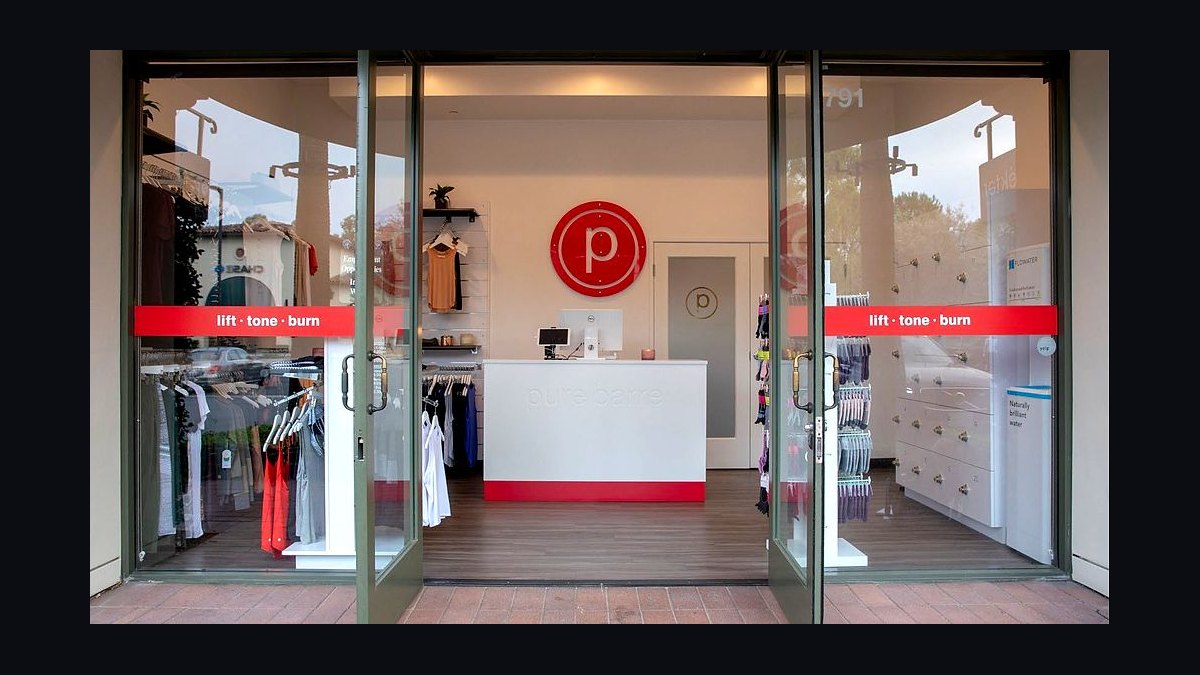
Strip away the branding and a Pure Barre studio is a small-footprint recurring-revenue subscription business wearing a fitness costume. The physical asset is modest: roughly 1,200 to 1,800 square feet of retail space, a mirrored studio room, wall-mounted and freestanding barres, a sound system, light equipment storage, a small retail display, and a front desk running a franchisor-mandated point-of-sale and member-management stack. There is no kitchen, no heavy machinery, no inventory spoilage, no delivery fleet. What you are actually buying is a brand license, a class format, a member-management system, and permission to operate inside a protected territory.
That matters because it reframes the core question. When someone asks whether to open or buy a Pure Barre franchise, they are usually asking two separate questions wearing one costume. The first is whether boutique barre is a business worth owning at all in 2027. The second is whether the franchise wrapper — the initial fee, the ongoing royalty, the brand marketing contribution, the standardized build-out — earns its cost relative to running an independent studio or buying someone else's already-built unit. Those questions have different answers, and conflating them is how prospective owners talk themselves into a six-figure mistake.
The revenue engine is a monthly unlimited membership, supported by class packs, intro offers, retail apparel, and occasional workshops. Membership is the whole game. A studio with a stable base of a few hundred active members throwing off predictable monthly billings is a genuinely pleasant business to own. A studio with a churning base that never clears its break-even member count is a treadmill that consumes cash, weekends, and marriages. The gap between those two outcomes is not primarily about the brand — it is about trade area, operator presence, and instructor retention, in roughly that order.

The franchise wrapper buys you real things. Brand recognition in the barre category is meaningful; Pure Barre is among the most recognized names in the format, and that shortens the education cycle when you open in a market that already knows what barre is. You get a proven class format with a training curriculum, a member-facing app and booking infrastructure, national marketing spend, vendor relationships for build-out and equipment, and a field support structure. You also get a documented playbook for the first ninety days of pre-sale, which is the single most leveraged period in the studio's life.
What the wrapper costs you is a franchise fee at signing, a royalty on gross sales, a brand marketing fund contribution, mandatory local marketing minimums, and — the underrated one — the loss of operational flexibility. You cannot change the class format, you cannot freely set pricing in most territories, you cannot pick your own point-of-sale, and you cannot pivot the concept if your trade area turns out to want reformer Pilates instead of barre. That last constraint has become materially more expensive since 2023, because the marginal new boutique-fitness member in most suburban markets is walking into a Pilates or strength studio rather than a barre studio.
The upstream and downstream effects are worth naming too. Upstream, your success depends on a retail leasing market you do not control and a certified-instructor labor pool that is thinner than it was five years ago. Downstream, your exit depends on there being a buyer who wants a franchised boutique fitness unit — and franchise resale values track the franchisor's health, not just your own numbers. If the brand's system-wide same-store sales are soft when you want out, your multiple compresses through no fault of your operation. Owning an independent studio removes the royalty but also removes the brand's resale liquidity. Neither structure is free.
The step-by-step process from first inquiry to open doors — or to a signed resale
The path is more standardized than most first-time franchisees expect, and the standardization is a gift: it means you can benchmark your progress against a known sequence and notice early when something is off. Here is the sequence that actually works, compressed into roughly ninety days of diligence before you commit capital.
Start by requesting the current Franchise Disclosure Document directly from the franchise development team. Read it in full, not the summary. Item 5 gives you the initial fee. Item 6 gives you every ongoing payment — royalty, brand fund, technology fees, local marketing minimums, transfer fees, renewal fees. Item 7 gives you the estimated initial investment range, low to high, itemized by category. Item 19 is the financial performance representation, if one is made, and it is the closest thing to an average-unit-volume figure you will get on paper. Item 20 lists outlet counts, openings, closures, transfers, and terminations, plus contact information for current and former franchisees. Read Item 3 for litigation history. Read the exhibits, including the terminated-franchisee list.
Then call franchisees. This is the step people skip and it is the step that matters most. Call twenty-five current owners and ten former owners from the Item 20 list. Ask the same five questions every time so you can compare answers: what was your gross revenue over the last twelve months, what is your current active member count, how many instructors have you cycled through since opening, what is your actual monthly net to owner after debt service, and would you sign this agreement again knowing what you know now. That last question is the diagnostic. If half the people you reach say no, that is a stop signal regardless of how good the deck looked.
Trade-area analysis comes next. Pull demographic and foot-traffic data for three candidate trade areas — household income, the female 25 to 54 population, competitor density including every barre, Pilates, yoga, and boutique strength studio within a three-mile radius, and daytime employment. Barre skews toward higher-income suburban women, and the concentration of that demographic within a tight radius is the single best predictor of whether a studio ramps. A trade area that looks fine on a map and thin on the data is a trade area you walk away from.

Real estate is where the deal is won or lost financially. Walk eight to twelve spaces with a tenant-representation broker who has done fitness deals specifically, because fitness has particular requirements: parking ratios, floor loading, HVAC capacity, restroom count, and signage visibility. End-cap positions in Class A centers outperform inline spaces in second-tier centers by enough to justify the rent premium. Negotiate free rent during build-out and a tenant improvement allowance — both are standard asks and both directly reduce the cash you sink before revenue starts.
Financing and modeling run in parallel with real estate. Build a thirty-six-month, month-by-month model with a conservative membership ramp — assume slow net adds in the first year and a plateau well below your optimistic case. Pre-qualify for an SBA 7(a) loan. If you cannot qualify while contributing a meaningful equity injection from your own funds, you are under-capitalized for this business and should stop.
Finally — and this is the step almost nobody takes — search the resale market before you sign anything. Business-broker listings, franchise-resale marketplaces, and the franchisor's own transfer pipeline regularly carry existing studios. A studio in its fourth year with a stable membership base and documented cash flow, priced at a multiple of seller's discretionary earnings, frequently costs less than a greenfield build and starts producing income on day one. Compare the two paths side by side with real numbers before you commit.
Costs, timelines, and the ranges you should plan against
The initial investment range disclosed in Pure Barre's Franchise Disclosure Document runs from roughly the low three hundred thousands to roughly six hundred thousand dollars, against an initial franchise fee of sixty thousand dollars for a single unit. That spread is wide because build-out dominates it and build-out is entirely a function of the space you take. A second-generation fitness space with usable restrooms, adequate HVAC, and a decent existing floor can land near the bottom of the range. A cold vanilla-shell space in a new development, where you are building restrooms and running new mechanical, lands at the top or above it. Assume you will be closer to the high end than the low end, because almost everyone is.

The ongoing cost structure is the part prospective owners consistently underestimate. Royalty runs seven percent of gross sales and a brand marketing fund contribution adds two percent, so nine cents of every revenue dollar leaves before you have paid rent, payroll, or yourself. Layer on a local marketing minimum in the range of fifteen hundred to twenty-five hundred dollars monthly, technology and software fees, merchant processing, insurance, and utilities. Rent should sit in the range of ten to fourteen percent of gross revenue and becomes genuinely dangerous above eighteen percent — a lease you signed at optimistic revenue assumptions is the hardest mistake to unwind, because it is a ten-year obligation set in month zero on numbers you had not yet proven.
Payroll deserves its own paragraph because it has moved. Certified barre instructors became scarcer through the mid-2020s while demand for instructor-led boutique formats stayed high, and per-class instructor rates rose accordingly. A studio running a full weekly schedule needs eight to fifteen part-time instructors to cover early mornings, midday, evenings, and weekends without burning out its best people. Managing that roster is a scheduling and retention job, not a fitness job. If you hire a full-time studio manager to do it for you, you have added a salary that, at typical average unit volume, consumes most or all of what would have been the owner's take-home. That is the arithmetic behind the near-universal advice to owner-operate for the first two years.
On revenue: the reported average unit volume for the system sits in the mid-three-hundred-thousands. Do the membership math yourself rather than trusting a pro forma. At a monthly unlimited price in the high one hundreds, a studio needs roughly two hundred-plus active members to cover a typical fixed-cost base and somewhere in the range of three hundred active members to reach the system average. Average member counts per studio run well below the number implied by the headline pricing, which is precisely why the disclosed average volume lands where it does rather than at the number an optimistic spreadsheet produces.
Timelines: expect roughly ninety days of diligence, sixty to one hundred twenty days of site selection and lease negotiation, and ninety to one hundred fifty days from lease execution to opening, depending on permitting in your jurisdiction. Permitting is the wildcard — municipalities with slow plan review can add sixty days you did not budget, and every added month is rent you are paying with no revenue. Total elapsed time from serious inquiry to open doors is commonly nine to fourteen months.
Cash flow: plan for year one to run between break-even and meaningfully negative. The pre-sale period before opening generates some membership revenue, which helps, but the first twelve months are a ramp and a ramp costs money. Year two is typically where a well-run studio in a good trade area crosses into positive owner cash flow. Payback on the initial investment commonly runs four to six years at average volumes, which is a long horizon for a business that also demands your physical presence.
The comparison that should anchor your thinking: a resale of an established studio with proven membership and documented cash flow, priced at a multiple of seller's discretionary earnings in the low-to-mid single digits, frequently costs substantially less than a greenfield build while eliminating the ramp period entirely. You inherit the membership base, the instructor roster, the lease at a known rent, and a revenue history a lender can underwrite. You also inherit the previous owner's reputation in the community and any deferred maintenance, which is what due diligence on a resale is for. Adjacent formats price similarly — reformer Pilates concepts, stretch-and-recovery studios, and yoga formats all sit in overlapping investment bands with different labor and demand profiles — so run the resale-versus-greenfield comparison across concepts, not just within one brand.
Where prospective owners get this wrong
Under-capitalization is the most common and most fatal error. Owners who finance essentially the entire investment and skip a genuine working-capital reserve run out of cash in the window between opening and membership maturity — typically somewhere in months nine through fourteen, which is exactly when the studio is closest to turning the corner. The cruelty of this failure mode is that the business was often working; the balance sheet just ran out of runway first. Budget a personal cash buffer beyond the high end of the disclosed investment range, held outside the business, untouchable except for this purpose.

Absentee ownership is the second. Boutique fitness is a hospitality business where members form attachments to specific instructors and to the front-desk experience. The owner who greets people by name, remembers that someone was traveling, and personally handles the cancellation conversation retains members that a hired manager does not. Studios that struggle are disproportionately investor-owned with a manager running the floor. If your thesis is passive income, this is the wrong asset class — a semi-absentee service business with fewer touch points and lower labor intensity would serve you better.
Chasing cheap rent is the third. A second-tier strip center two miles from the Class A center saves you a few dollars per square foot and costs you the visibility, co-tenancy, and parking that drive walk-in trials. Boutique fitness converts on convenience and impulse; a location that is slightly inconvenient bleeds trials at the top of the funnel forever, and no amount of local marketing spend fully compensates.
Instructor churn is the fourth and the most underestimated. The class format requires substantial brand-specific training per instructor, which means every departure costs real money and real calendar time to replace. Losing a popular instructor can visibly dent attendance in her classes for a full quarter while members reshuffle or drift. Treat instructor retention as a core operating metric with the same seriousness as member churn: pay competitively per class, build the schedule around instructor preferences where possible, and never let your two strongest instructors both be flight risks at the same time.
Perpetual discounting is the fifth. Aggressive intro offers are a legitimate acquisition tool for the pre-sale window and the first weeks after opening. Running them indefinitely teaches your trade area that the real price is the discount price, permanently compresses lifetime value, and makes every future price increase a churn event. Set a discount calendar before you open and hold to it even when a slow month tempts you.
Thin due diligence on the franchisor is the sixth, and it has become materially more important. Franchise-system health is not a fixed input — brands go through leadership changes, litigation, regulatory scrutiny, and periods of soft system-wide sales. Xponential Fitness, Pure Barre's parent, has been through a period of exactly that kind of turbulence, including regulatory action and reported softness in boutique same-store sales. None of that automatically makes a well-located, well-run individual studio a bad investment, but it does change your diligence burden: reconcile the disclosed outlet and closure data against public reporting, call terminated franchisees specifically, and understand what the franchisor's own financial condition means for the support you are paying nine percent of revenue to receive.

The seventh is demographic drift. The core barre demographic overlaps heavily with the population that adopted GLP-1 medications at scale, and that has produced a genuinely two-sided effect. Some members leave fitness entirely after significant weight loss because they no longer feel they need a class. Others enter fitness for the first time, or shift toward resistance and strength work to preserve lean mass — a tailwind for formats that emphasize strength and a headwind for formats read as purely calorie-burning. Barre sits somewhere in the middle. The practical implication is that you should position and program toward strength, mobility, and pelvic-floor and postpartum work rather than toward weight loss, because that is where the durable demand is going.
The eighth is assuming the last cycle's conditions still hold. The stretch from the late 2010s through the early 2020s was a rising tide for boutique fitness, where mediocre operators in decent locations still made money. That era has ended. When system same-store sales go flat or negative, the spread between good and bad operators widens dramatically. Underwrite yourself as an operator, not just the brand.
Decision framework: open, buy, go independent, or walk
Work the decision in a fixed order, because the gates are sequential and each one can end the analysis. Capital first, market second, operator commitment third, and only then the structural question of greenfield versus resale versus independent.
Capital gate: do you have genuine liquid capital sufficient to fund the equity injection a lender will require plus a working-capital reserve plus a personal buffer beyond the high end of the disclosed range? Not home equity you would need to borrow against. Not retirement funds you would rather not touch. Liquid, available, and psychologically spendable. If no, walk — and revisit in two years rather than stretching now.

Market gate: does your target trade area have the demographic density to support the member count you need, with competitor density low enough that you are not the fourth barre-adjacent option in a three-mile radius? Saturated coastal metros generally fail this test for greenfield; growing suburban Sun Belt markets more often pass it. If the market fails but you still want in, the answer is a resale in a proven trade area, not a greenfield in a thin one.
Operator gate: will you personally work the studio twenty-plus hours a week for the first two years, including early mornings and Saturdays? Answer this honestly against your actual life, not your intentions. If no, either bring in an operating partner with real equity — not an employee with a title — or choose a different business.
Only after all three gates pass does the structural question become live. If a cash-flowing resale exists in a trade area that passes the market gate, buy it: you skip the ramp, you underwrite from real financials, and your downside is bounded by an asset that already produces income. If no resale exists and the trade area is genuinely under-served, greenfield is defensible. If you have deep local fitness credibility, an existing client following, and no need for brand recognition to fill classes, the independent studio deserves a serious look — you save the franchise fee and nine points of ongoing revenue, at the cost of building every system yourself and accepting a thinner exit market.
One more comparison worth running before you commit capital to any of these: the same investment deployed into adjacent franchised concepts with different labor and demand profiles. Reformer Pilates concepts have shown stronger unit-level revenue in recent cycles. Stretch and recovery formats carry lighter payroll. Broader-format group training reaches a wider gender mix at higher volume but with more operational complexity. Outside fitness entirely, education and children's-activity franchises in a comparable investment band typically carry higher margins, less instructor scarcity, and no exposure to fitness-demand shifts. Owning the barre business specifically should be a considered choice, not a default because it was the first franchise brochure you read.
Related questions
How long does it take to break even on a boutique fitness franchise?

Most well-located studios reach monthly operating break-even somewhere in the second year and full payback on the initial investment in roughly four to six years. Under-capitalized or absentee-run studios frequently never reach the second milestone.
Is buying an existing franchise resale always better than opening new?
No. A resale in a weak trade area with a damaged local reputation and a bad lease is worse than a well-sited greenfield. The advantage of a resale is that you can underwrite real financials instead of projections — use that advantage rather than assuming it.
Does the franchisor's financial trouble affect an individual studio owner?
Yes, indirectly. Support quality, national marketing effectiveness, and resale liquidity all track franchisor health. A strong individual unit can still perform well, but your exit multiple is partly hostage to system-wide conditions you do not control.
Should I open an independent barre studio instead of paying franchise fees?
Consider it seriously if you already have local fitness credibility and a client following. You save the initial fee and roughly nine percent of ongoing revenue, but you build every system yourself and face a thinner buyer pool at exit.
How many members does a barre studio need to be profitable?
Roughly two hundred active members at a typical unlimited monthly price covers a normal fixed-cost base; around three hundred is where the studio reaches system-average revenue and produces meaningful owner income. Model your own rent and payroll rather than using these as targets.
FAQ
What is the total investment required to open a Pure Barre franchise?
The Franchise Disclosure Document lists an initial investment range running from roughly the low three hundred thousands to around six hundred thousand dollars, inclusive of a sixty thousand dollar initial franchise fee. Build-out drives most of the spread, so a second-generation fitness space lands low and a cold shell lands high. Plan for the upper half of the range plus a personal cash buffer beyond it.
What does the owner actually take home?

At system-average revenue with the owner working the studio, take-home commonly lands in the range of fifty to sixty-five thousand dollars annually after royalty, brand fund, local marketing, payroll, rent, insurance, and software. Hiring a full-time studio manager instead of owner-operating typically consumes most or all of that figure, which is why the first two years are expected to be hands-on.
Is it better to buy an existing studio than to open a new one?
For most buyers, yes. A cash-flowing studio priced at a low-to-mid single-digit multiple of seller's discretionary earnings eliminates the ramp period, provides financials a lender can underwrite, and often costs less than a greenfield build. The trade-off is inheriting the seller's local reputation, lease terms, and any deferred maintenance — which is exactly what resale due diligence is for.
What are the biggest risks going into 2027?
Three stand out: parent-company turbulence at Xponential Fitness including regulatory action and soft system-wide same-store sales; market saturation in coastal metros where greenfield territory is largely spoken for; and rising costs on both sides of the ledger as retail rents and per-class instructor pay have climbed. None is disqualifying alone, but together they mean operator skill now matters more than brand tailwind.
Where does a new studio work best?
Dense suburban trade areas with a large concentration of higher-income women aged twenty-five to fifty-four within a three-mile radius, in markets where boutique fitness supply has not yet caught up with demand. Growing Sun Belt metros generally still have white space; established coastal metros mostly do not, and new entries there are typically resales rather than new territory.
How much of my own time will this require?
Plan on twenty to thirty hours per week for the first eighteen to twenty-four months, including early mornings and weekends, covering front desk, instructor scheduling, member onboarding, and local marketing. It settles down after the membership base stabilizes and the instructor roster matures, but it never becomes a passive holding.
Sources
- https://www.ftc.gov/business-guidance/resources/franchise-rule-compliance-guide
- https://www.sba.gov/funding-programs/loans/7a-loans
- https://www.purebarre.com/franchise
- https://investor.xponential.com/
- https://www.franchisechatter.com/
- https://www.ihrsa.org/publications/
- https://www.bizbuysell.com/
- https://www.sec.gov/edgar/search/
- https://www.franchisetimes.com/
Related on PULSE
This page will be disappearing soon. Save it to your device for $1 — or read it free while it is here.
@Kory-White- · if Venmo asks, the last 4 of my number are 2012
This page is gone.
This one is off the shelf now. $1 keeps it on your phone for good — the whole page, pictures and diagrams included.
 franchiseShould I open or buy a Pizza Hut franchise in 2027?
 franchiseShould I open or buy a Massage Envy franchise in 2027?
 franchiseShould I open or buy a Valvoline Instant Oil Change franchise in 2027?
 franchiseShould I open or buy an F45 Training franchise in 2027?
 franchiseShould I open or buy a Jeremiah's Italian Ice franchise in 2027?
 franchiseShould I open or buy a Bahama Breeze franchise in 2027?
 franchiseShould I open or buy a Dunkin' franchise in 2027?
 franchiseShould I open or buy a Cook Out franchise in 2027?
 franchiseShould I open or buy a Cinnabon franchise in 2027?
 franchiseShould I open or buy a Papa John's franchise in 2027?