


Should I open or buy a Pinkberry franchise in 2027?
Quality
Certified
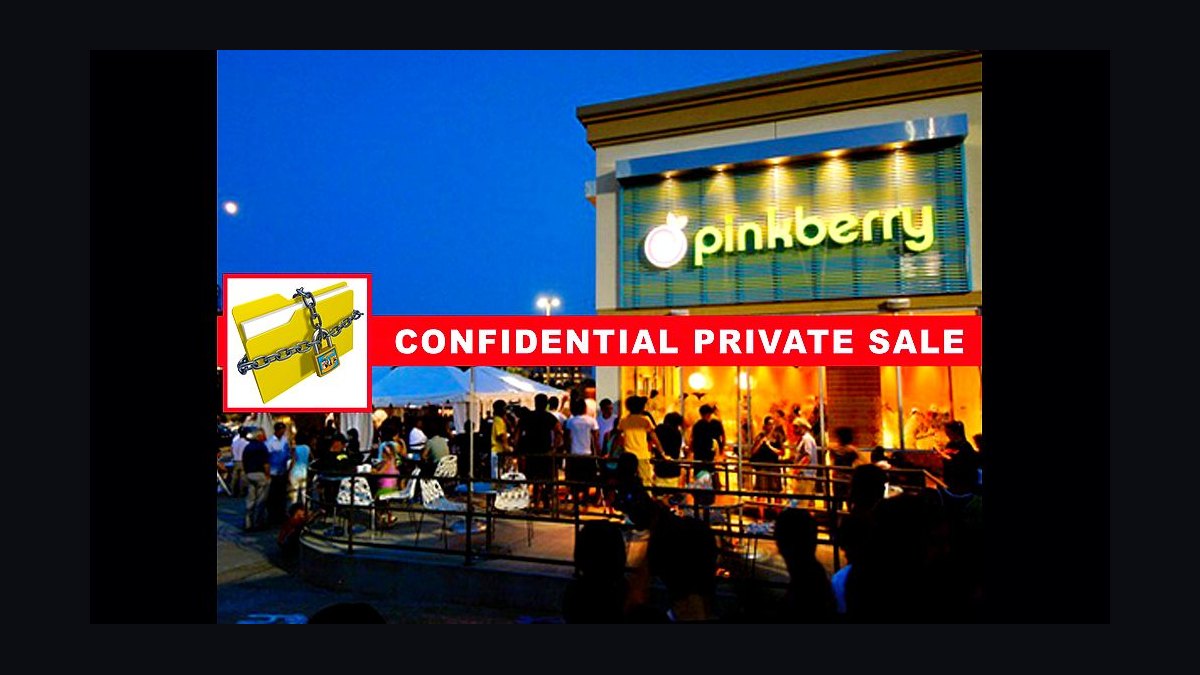
Opening a new Pinkberry in 2027 is the wrong move for most buyers. The frozen-yogurt category has contracted for over a decade, Pinkberry's U.S. footprint has fallen roughly 61% from its 2014 peak, and the $285,000–$663,000 cash requirement rarely clears a defensible return unless you land an airport, mall, or university site. A resale at 1.5–2.5x SDE is the stronger franchise path for nearly everyone else.
The two paths: greenfield build vs. buying a resale
Anyone weighing whether to open a Pinkberry in 2027 is really choosing between two different businesses that happen to share a logo, a point-of-sale system, and a royalty structure. A greenfield build means signing a franchise agreement with Kahala Brands, paying the $35,000 initial franchise fee, and spending $120,000–$310,000 on construction plus $55,000–$140,000 on equipment — Taylor soft-serve freezers, branded signage, walk-in refrigeration — before a single cup of yogurt is sold. You are underwriting a location with no sales history, no trained staff, and no proof the site performs anywhere near system average. The total initial investment band of $285,440 to $663,050, as disclosed in the 2025 FDD Item 7, assumes a clean build: no change orders, no permitting delays, no landlord disputes over tenant-improvement allowances. Every dollar of that range is spent before the store has told you anything about itself.
A resale, by contrast, means buying an existing franchisee's unit — walking into a space with working equipment, an established local customer base, and real trailing financials to underwrite against instead of a pro forma spreadsheet. Resales in the Pinkberry system, and across the broader frozen-dessert category generally, tend to trade at 1.5x to 2.5x seller's discretionary earnings, which on a typical struggling unit translates to $60,000–$130,000 out the door — a fraction of greenfield cost. You inherit the lease, often at a favorable legacy rate negotiated years before current retail rents climbed; you inherit equipment that is already depreciated on someone else's books; and you inherit a staff that already understands the rush patterns, the slow Tuesday afternoons, the Saturday-night line out the door at the mall location. The tradeoff is that you also inherit whatever made the previous owner want out — a declining trade area, a lease approaching a kick-out clause, or a brand riding a structural down-cycle the next owner cannot fix with better Instagram marketing.
Category context sharpens this comparison considerably. Pinkberry peaked at roughly 154 U.S. locations in 2014 and now operates under 60 domestic stores, a contraction of about 61% in a little over a decade. Parent company Kahala Brands, which acquired Pinkberry in 2015, has largely redirected new-unit development toward the Gulf, Southeast Asia, and Latin America, where the brand still carries novelty value it lost domestically years ago. That makes a 2027 greenfield buyer in the U.S. someone opening into a system the franchisor itself is not actively growing — a materially different risk profile than franchising into a concept still in its domestic expansion phase, the way a buyer evaluating a newer fast-casual chain or a growing coffee concept would be. A resale buyer, meanwhile, is simply acquiring a slice of whatever domestic footprint remains, which at least lets you underwrite against a known, shrinking pie rather than betting on a hypothetical one that the brand's own capital allocation suggests it no longer believes in.
It's worth noting this pattern is not unique to Pinkberry. Frozen yogurt as a category went through the same boyhood-to-bust arc that swallowed Menchie's, 16 Handles, and TCBY's domestic footprint — a 2007–2012 boom driven by self-serve novelty, followed by oversaturation, followed by a slow bleed as the self-serve model lost its differentiation once every grocery store and gas station started stocking premium frozen yogurt pints. Anyone comparing Pinkberry against other dessert or quick-service franchise opportunities should treat that arc as a cautionary template, not a one-brand anomaly.
How to decide between opening new and buying in
The decision for 2027 buyers hinges on three gates evaluated in sequence: available cash, site type, and operator profile. If you have under roughly $400,000 in liquid, deployable capital, the math rarely works regardless of site — walk away before spending a dollar on due diligence, because a thin capital base forces exactly the kind of leverage that breaks during the category's seasonal Q4 trough. If you clear that bar, the next filter is site type. A B-tier suburban strip-center location should be rejected outright in 2027; the category's remaining demand is concentrated in international airport terminals, Class A mall food courts, and university campus co-tenancies, where captive foot traffic offsets the brand's declining organic pull. Urban high-foot-traffic corridors sit as a secondary, acceptable tier — not as strong as a captive-audience site, but not disqualifying either.
Only after clearing the site filter does operator profile matter. Are you a multi-unit dessert or quick-service operator who can fold a Pinkberry into an existing staffing, purchasing, and G&A structure — the way a Dairy Queen or Jamba multi-unit owner might add a complementary dessert concept to a portfolio? Or are you a first-time owner willing to personally run the counter 40–55 hours a week in year one? If the answer to both is no, a resale under 2.5x SDE is almost always the better outcome than forcing a greenfield build into a marginal site and hoping a hired general manager runs it the way an owner would.
This sequencing matters because each gate filters a distinct failure mode. The cash gate catches buyers who would be forced into excess leverage to close the gap between savings and the FDD's investment range — leverage that becomes unserviceable the moment Q4 revenue dips 35–45% below the Q2–Q3 peak, as frozen-dessert seasonality reliably does. The site gate catches buyers who would open into a location the brand's remaining demand pattern simply cannot support; a Pinkberry in a declining strip center is fighting both its own brand contraction and a weak site simultaneously. The operator-profile gate catches what is arguably the single biggest killer of Pinkberry unit economics: an absentee owner paying a general manager a market salary, which routinely drops EBITDA margin from the healthy 8–12% range down to 2–4% or negative territory, because the underlying model was built assuming an owner-operator drawing no salary in year one while the business establishes itself.
Concrete numbers behind each option

The greenfield path's economics start with the 2019 FDD Item 19 disclosure of a $509,707 system-wide average unit volume, but that figure is now misleading for a 2027 buyer because it blends high-performing airport and mall units with a shrinking base of standalone neighborhood stores. The same 2019 disclosure showed the top-20% of units averaging over $843,000 in gross sales while the bottom 20% sat under $310,000 — a 2.7x spread that makes clear location, far more than brand strength, drives the entire unit's viability. A realistic 2027 greenfield build in a B-tier suburban site should underwrite to $380,000–$450,000 AUV, not the inflated system-wide average. After the 6% royalty and 2% marketing fee (roughly $32,000–$45,000 annually on a $450,000-volume store) and realistic operating costs, EBITDA margin lands around 8–12%, producing year-one owner cash flow in the $30,000–$54,000 range before any owner draw. Payback on the full initial investment runs 6 to 9 years at the midpoint — a long runway that does not survive a bad lease renewal or an unplanned refrigeration capital expenditure.
The resale path's numbers look structurally different because the capital-intensive part of the business — build-out, equipment, training, brand awareness — is already sunk by the prior owner. A unit trading at 1.5x to 2.5x SDE for $60,000–$130,000 gets you equipment that would cost $175,000–$450,000 new, at what amounts to 40–60 cents on the dollar once depreciation and seller motivation are factored in. If that unit is producing even $35,000 in SDE, a $90,000 purchase price pays back in roughly 2.5 years on the purchase price alone — three to four years faster than a comparable greenfield build, because you skip both the construction period and the ramp-up months where a new store is still building local awareness from zero. The catch is verifying that SDE figure is real and sustainable: pull at least two years of financials, confirm the lease has runway beyond your intended hold period, and discount any owner-reported numbers that quietly include unpaid family labor, since that gap becomes your labor cost line the moment you take over.

Category headwinds apply to both paths roughly equally, and they are worth sizing. Statista pegged the U.S. frozen yogurt store industry at $661 million in 2020, down from $740 million in 2019, with continued contraction through 2022 and beyond as chains across the category shed locations. Working against both paths: commercial rents in dessert-friendly retail corridors are up roughly 22% since 2021 per CBRE's Q1-2026 report, and limited-service restaurant labor costs are up roughly 34% since 2021 per BLS QCEW data. Working in favor of both: catering and corporate-event channel revenue is growing an estimated 18% year-over-year industry-wide, and airport concession sales are running roughly +9% year-over-year — which is exactly why the viable 2027 Pinkberry buyer, greenfield or resale, is disproportionately found in travel and campus-adjacent footprints rather than neighborhood strip centers. A buyer comparing this against, say, a Jamba or Crumbl opportunity should run the same AUV-minus-occupancy-minus-labor math before assuming any dessert franchise is interchangeable with another.
Sequencing the decision and closing the deal
Whichever path the numbers point toward, the sequencing should follow the same disciplined order over roughly 90 days. In the first ten days, request the current FDD directly from Kahala Brands and read Item 19 line by line, specifically looking for AUV broken out by venue type — airport, mall, campus, standalone. If the franchisor will not disclose venue-segmented performance, treat that refusal itself as a signal to slow down rather than a formality to push past. Over the next ten days, pull the FDD Item 20 list of current and departed franchisees and call at least fifteen of them, including several who exited the system in the last three years; departed franchisees will tell you things current ones under a non-disparagement clause cannot, including which sites underperformed and why the franchisor's support fell short during a renovation or lease renegotiation.
With that groundwork done, spend two weeks on site underwriting if you are leaning toward opening new: identify three candidate locations — one travel-adjacent, one mall food court, one university co-tenancy — and build a five-year P&L for each at conservative, base, and optimistic AUV assumptions. Reject any site that fails to clear a double-digit EBITDA margin under the conservative case; do not let a persuasive broker or an enthusiastic landlord talk you into the optimistic case as your underwriting baseline. Run the resale comparison in parallel: pull active listings from business-for-sale marketplaces and franchise resale networks, and target anything priced under 2.5x SDE with financials you can independently verify against bank statements, not just a seller's P&L summary.
Whichever option wins this head-to-head gets the next phase: franchise and real-estate attorney review of the FDD and any lease assignment, followed by a capital stack built around SBA financing that caps leverage at roughly 75% of build-out or purchase costs. Over-leveraged units are consistently the ones that do not survive the category's Q4 seasonal trough, when frozen-dessert revenue typically runs 35–45% below the Q2–Q3 peak — a seasonality pattern shared with most ice cream and shaved-ice concepts, which is why lenders familiar with the category tend to underwrite debt service coverage against the trough quarter, not the annual average.
The final decision, whichever direction it goes, should rest on a written checklist rather than enthusiasm for the brand: a confirmed A-tier site or a verified resale under 2.5x SDE, a capital stack that does not require excess leverage, an owner personally committed to working the counter in year one, and — for the greenfield path specifically — a committed catering pipeline already in motion at signing, since corporate and event catering is one of the few genuine growth levers left in this category. If any of those boxes stays unchecked at day 90, the disciplined answer is to walk and evaluate a franchise with stronger underlying unit economics rather than forcing a Pinkberry deal to work on hope and brand nostalgia.
Related questions
Is Pinkberry still expanding in the U.S.? No. Kahala Brands has largely shifted new-unit development to international markets since acquiring the brand in 2015, with U.S. store count down from a 2014 peak of about 154 to under 60 today.
Can I finance a Pinkberry franchise with an SBA loan? Yes, SBA 7(a) financing is commonly used for roughly 70–75% of build-out or purchase costs, but going beyond that leverage level creates real risk given the category's seasonal Q4 revenue trough.
What's a realistic owner salary in year one? Most underwriting assumes $0 owner salary in year one; paying a general manager instead typically drops EBITDA margin from the 8–12% range down to 2–4% or negative.
How does Pinkberry compare to Crumbl or Jamba as a 2027 franchise pick? Crumbl's reported AUVs exceed $1.6 million with faster payback for top operators, and Jamba's $480,000–$650,000 AUVs come with a similar 6% royalty but a healthier category trajectory than frozen yogurt.
Is a resale riskier than it looks because of why the seller is leaving? It can be — a seller exiting because of a declining trade area or an expiring lease hands you the same problem. Independent site and lease-term verification is non-negotiable before closing.
FAQ

Is Pinkberry actually growing or shrinking? Pinkberry has shrunk steadily for over a decade, falling from roughly 154 U.S. stores in 2014 to under 60 today — about a 61% domestic contraction, with most new development now happening internationally rather than in the U.S.
How much cash do I need to open a Pinkberry in 2027? The 2025 FDD Item 7 puts total initial investment at roughly $285,000 to $663,000, required almost entirely in cash since franchise financing for this brand is limited, plus several months of additional working capital reserve.
What can I expect to earn in year one? A realistic 2027 AUV for a new B-tier site is $380,000–$450,000. After the 6% royalty and 2% marketing fee and normal operating costs, year-one owner cash flow typically falls in the $30,000–$54,000 range.
How long until the investment pays back? Most franchisees should expect a 6-to-9-year payback period on a greenfield build. A resale purchased at 1.5–2.5x SDE for $60,000–$130,000 typically pays back several years faster because the build-out cost is already sunk.
Are there locations where opening new still makes sense? Yes, but narrowly: international airport terminals, high-traffic Class A mall food courts, and university campus co-tenancies are the main settings where captive foot traffic still supports a new Pinkberry unit.
Should I buy an existing Pinkberry instead of building one? For most buyers, yes. A resale under 2.5x SDE avoids the heaviest construction costs, comes with proven financials and existing equipment, and reaches breakeven faster than a comparable greenfield build.
Sources
- VettedBiz — Pinkberry Franchise Insights: FDD, Costs & Fees
- Franchise Chatter — Pinkberry Franchise Review: Average and Median Gross Sales
- FranDB — Pinkberry Franchise Cost to Open
- Restaurant Business Online — The second frozen yogurt craze continues its long decline
- Statista — U.S. frozen yogurt store industry market size
- Wikipedia — Pinkberry
- BLS QCEW — Limited-Service Restaurant labor cost trends
- CBRE — Q1 2026 Retail Real Estate Market Report
- 1851 Franchise — Pinkberry Franchise Deep Dive
- IBISWorld — Yogurt Production in the US
Related on PULSE
This page will be disappearing soon. Save it to your device for $1 — or read it free while it is here.
@Kory-White- · if Venmo asks, the last 4 of my number are 2012
This page is gone.
This one is off the shelf now. $1 keeps it on your phone for good — the whole page, pictures and diagrams included.
 franchiseShould I open or buy a Jimmy John's franchise in 2027?
 franchiseShould I open or buy a Valvoline Instant Oil Change franchise in 2027?
 franchiseShould I open or buy a Cinnabon franchise in 2027?
 franchiseShould I open or buy a Marco's Pizza franchise in 2027?
 franchiseShould I open or buy a Matco Tools franchise in 2027?
 franchiseShould I open or buy a Servpro franchise in 2027?
 franchiseShould I open or buy a Crumbl Cookies franchise in 2027?
 franchiseShould I open or buy a Bahama Breeze franchise in 2027?
 franchiseShould I open or buy a Kumon franchise in 2027?
 franchiseShould I open or buy a Jeremiah's Italian Ice franchise in 2027?