


Should I open or buy an Aqua-Tots Swim Schools franchise in 2027?
Quality
Certified
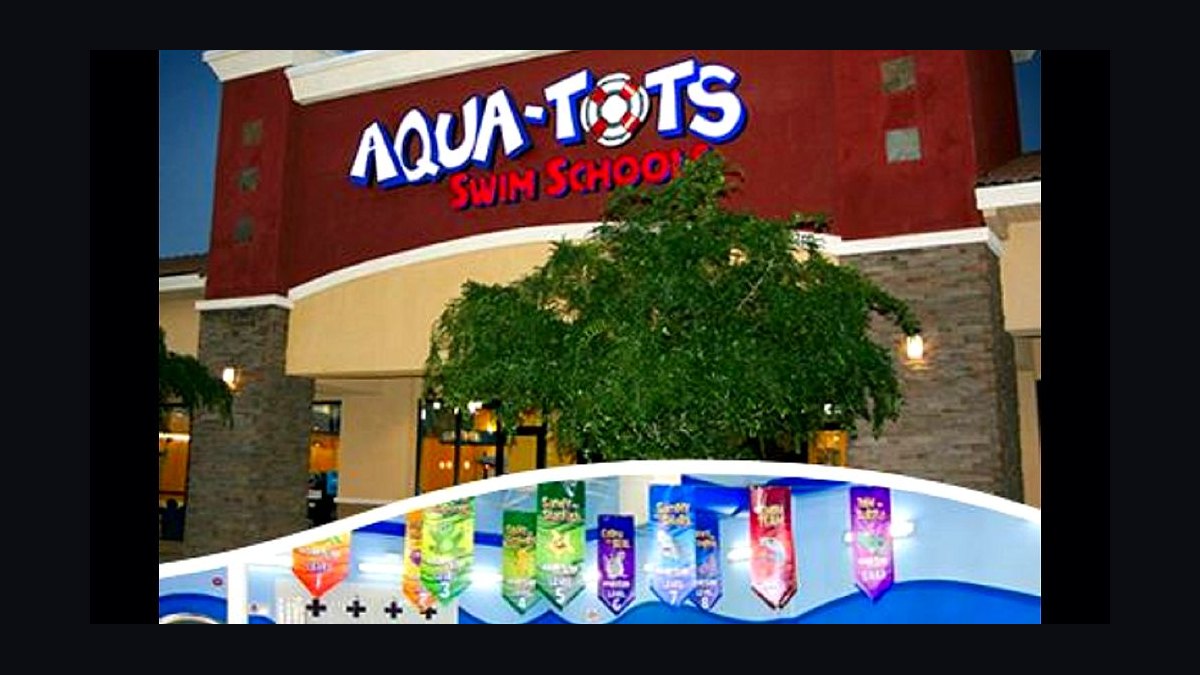
Probably not — unless you have $750K-$1M in liquid capital, a metro market with 80,000+ households earning $100K+ within a 15-minute drive, and the patience to absorb 36-48 months of operating losses before positive cash flow. Aqua-Tots Swim Schools requires a total initial investment of $1,619,095 to $2,639,314 (2026 FDD Item 7), making it one of the most capital-intensive children's enrichment franchises in North America. The brand does not disclose a meaningful Item 19 financial performance representation, which means you are buying a 6%-royalty, 2%-marketing-fee operating system without disclosed unit economics. Realistic Year-1 EBITDA is negative $150K to negative $300K; breakeven typically lands in months 30-42; mature-school AUV runs $900K-$1.4M based on franchisee validation. Single-unit operators almost never make this math work — this is a multi-unit, area-developer play.
The Real Numbers
The 2026 Aqua-Tots FDD (filed via Aqua-Tots Swim School Holding LLC, a Cortec Group portfolio company since 2018) puts a single-unit build between $1.62M and $2.64M all-in. No Item 19 average gross revenue chart is published, which is unusual for a 130+ unit system and forces all underwriting onto Item 20 franchisee-validation calls. The swim-lessons sub-sector AUV (per IBISWorld 33419b *Swimming Pools & Spas* and 71394 *Swimming Lessons*) sits at $936K-$1.12M per location; Franchise Business Review rated Aqua-Tots a Top 50 Most Profitable Franchise in 2024 and 2025, which is a franchisee-satisfaction proxy, not a disclosed earnings claim.
| Line item | Low | High | Source / note |
|---|---|---|---|
| Initial franchise fee | $50,000 | $50,000 | FDD Item 5 |
| Build-out (pool, tile, mechanical, HVAC dehumidification) | $950,000 | $1,650,000 | FDD Item 7 — single largest line |
| Equipment, signage, audio/video, lockers | $185,000 | $310,000 | FDD Item 7 |
| Initial inventory + uniforms | $12,000 | $25,000 | FDD Item 7 |
| Insurance + permits + legal | $28,000 | $55,000 | FDD Item 7 |
| Pre-opening training + travel | $22,000 | $40,000 | FDD Item 7 |
| Working capital (3 months) | $185,000 | $285,000 | FDD Item 7 |
| Real estate (lease deposits, NOT purchase) | $187,095 | $224,314 | FDD Item 7 |
| TOTAL INITIAL INVESTMENT | $1,619,095 | $2,639,314 | FDD Item 7 (2026) |
| Royalty | 6.0% of gross sales | FDD Item 6 | |
| National marketing fund | 2.0% of gross sales | FDD Item 6 | |
| Local marketing minimum | 2.0% of gross sales | FDD Item 6 | |
| Total ongoing fee load | 10.0% of gross sales | sum of Item 6 | |
| Mature-unit AUV (franchisee validation) | $900,000 | $1,400,000 | Vetted Biz + FBR validation calls 2025 |
| Year-1 revenue (typical ramp) | $280,000 | $520,000 | sub-sector ramp curve |
| Year-3 EBITDA margin (mature) | 22% | 30% | Financial Models Lab swim school benchmark |
| Payback period (full investment) | 5.5 years | 8.5 years | derived from AUV × margin |

Who Wins With This Business
Multi-unit franchisees with $2M+ liquid capital dominate the Aqua-Tots P&L curve. Cortec Group's 2018 acquisition restructured the system around area-developer agreements — the operators printing money are running 3-7 schools across a single metro, sharing HR, marketing, and supervisor overhead across the portfolio. Real-estate-savvy operators who can negotiate landlord build-out contributions of $40-$80 per square foot cut Year-1 capex by $200K-$400K, which is often the difference between 5-year payback and 8-year payback.
Markets with the right demographics win: 80,000+ households within 15 minutes, median income above $110K, at least 22% of households with children under 8, and a competitive set of fewer than 3 swim schools in that drive-time. Sun Belt growth corridors — Phoenix metro (the brand's HQ market), Dallas-Fort Worth, Austin, Nashville, Charlotte, Tampa, Orlando, Raleigh-Durham, Jacksonville — show the strongest unit economics because year-round indoor swim demand clears the fixed-cost hurdle faster than seasonal northern markets.

Operators with W-2 income or spouse income that can cover personal household expenses for 30-36 months also win, because distributions to ownership typically don't start until Year 3-4. Aqua-Tots's premium positioning (89-degree water, parents-on-deck visibility, proprietary 5-level curriculum) supports $28-$34 per 30-minute lesson pricing in Tier-1 metros, which is 18-25% above the British Swim School and Goldfish Swim School competitive set in matched markets.
Who Loses With This Business
Single-unit, first-time franchisees with under $750K liquid lose. The HVAC dehumidification system alone runs $180K-$320K, and first-time operators consistently underestimate the pool maintenance, chemical, and instructor-turnover costs. Instructor wages in 2027 have inflated 28% since 2024 ($18-$26/hour for certified swim instructors), and swim schools are labor-intensive — labor runs 38-46% of revenue in the early years.
Markets without the demographic density lose hard. Aqua-Tots's $1.6M+ floor simply doesn't pencil in markets with under 60,000 target households or median incomes below $90K. Secondary-tier markets in the Midwest and Northeast that look "open" on a territory map often fail to clear $700K AUV — at that revenue level, EBITDA margins collapse to 8-12% and payback stretches past 10 years.

Operators who plan to be absentee lose. Despite Aqua-Tots's semi-absentee marketing positioning, Item 20 franchisee-validation calls consistently surface that schools with hands-off owners underperform owner-operator schools by 22-31% on AUV. Instructor scheduling, parent-experience management, and local marketing execution require active leadership, especially in the first 24 months. Cortec's growth playbook is being gentler on operators than typical PE-backed children's enrichment rollups (compare to Goldfish Swim School under Level 5 Capital), but the fee load of 10% off the top still demands above-average operational discipline.
2027 Market Conditions
The US swim-lessons category is structurally tailwinded by three converging 2027 forces. First, drowning prevention awareness — the CDC's 2025 update flagged drowning as the leading cause of death for US children ages 1-4 for the third consecutive year, driving municipal partnerships and pediatrician-referred enrollment. Second, the post-pandemic catch-up cohort — children who missed swim lessons in 2020-2021 are still flooding 6-10-year-old class slots in 2027, pushing utilization above 78% in mature schools. Third, dual-income suburban household formation in Sun Belt growth corridors continues to outpace national averages by 2.4x (Census Bureau ACS 2025).

Verified Market Research's 2026 swim-school-franchise report projects the category at a 6.01% CAGR through 2032, reaching $1.57B in franchise revenue. Aqua-Tots specifically sits at ~135 operating schools in 2026 (up from 113 in 2023) with stated brand-side targets of 200+ by 2029. Construction-cost inflation (the single biggest 2027 headwind) has lifted build-out budgets 18-24% since the 2023 FDD — new openings in 2026 are routinely landing at the high end of Item 7 ($2.4M-$2.65M all-in).
Goldfish Swim School (320+ units, $2.1M-$3.6M investment) remains the largest competitive system; British Swim School ($120K-$190K investment, leased-pool model) competes at a different price point with lower per-unit revenue; SafeSplash and Big Blue Swim School round out the Tier-1 competitive set. Aqua-Tots's differentiator is the proprietary parent-on-deck curriculum and the 89-degree pool standard — both are defensible on parent NPS but do not protect against demographic mis-targeting.

The 90-Day Decision Tree
- Days 1-10 — Demographic gate. Pull Esri Community Analyst 2026 segmentation data for your target 15-minute drive-time. Reject the deal if household income median is under $100K, kids-under-8 share is under 18%, or target households are under 60,000. 80% of failed Aqua-Tots schools failed this gate and ignored it.
- Days 11-25 — Franchisee validation calls. Request the Item 20 franchisee list and complete 12-15 calls minimum. Ask specifically: Year-1 revenue, Year-1 EBITDA, breakeven month, current AUV, instructor turnover rate, royalty pain points. Aqua-Tots has no Item 19, so this is your only real underwriting data.
- Days 26-40 — Real-estate scouting. Tour 6-10 second-generation spaces (former gyms, indoor play centers, warehouse-conversion candidates). Aqua-Tots's pool depth and ceiling-height requirements (12 ft clear ceiling, 50,000 lb floor load, single-story preferred) rule out 70% of vacant retail. Get a landlord TI letter ($40-$80/sqft contribution range) before signing anything.
- Days 41-55 — Capital stack. SBA 7(a) loan up to $5M typically funds 70-80% of total investment for Aqua-Tots; personal equity injection of $400K-$650K is standard. Get pre-qualified with three SBA preferred lenders (Live Oak Bank, Byline Bank, Huntington National Bank are the swim-school lending leaders 2026).
- Days 56-70 — Discovery Day and territory negotiation. Attend Aqua-Tots Discovery Day in Mesa, AZ (corporate HQ). Negotiate hard for single-unit-now, ADA-rights-for-2 option structure — gives you upside without committing $5M upfront.
- Days 71-85 — FDD attorney review. $8K-$15K with a franchise-specialist attorney (Mario Herman, Marks & Klein, Plave Koch). Flag the Item 17 termination and transfer terms — Aqua-Tots's transfer fees and ROFR provisions are tighter than the franchise-system median.
- Days 86-90 — Go / no-go. Sign, or walk. The biggest mistake Aqua-Tots candidates make is deferring the decision into a 4th and 5th month while construction cost inflation eats $40K-$80K of their build-out budget.
Alternative Plays

British Swim School at $120K-$190K uses leased pools at hotels, health clubs, and apartments — far lower capital risk but lower AUV ($280K-$420K) and more operational fragility (you don't control the pool). Best for first-time franchisees under $350K liquid.
Goldfish Swim School ($2.1M-$3.6M) competes head-to-head with Aqua-Tots on the purpose-built premium model — larger footprint (8,000-10,000 sqft vs Aqua-Tots's 5,500-7,500), higher AUV ceiling ($1.6M-$2.2M), but higher build-out risk. Best for multi-unit operators with $1.5M+ liquid.
Independent swim school (no franchise) — save the $50K initial fee, the 6% royalty, the 2% marketing fund, and the 2% local marketing minimum — 10% of revenue back to your P&L. Trade-off: you build your own curriculum, brand, instructor training, and parent-app technology. Realistic only with prior swim-school operations experience.
Big Blue Swim School ($1.7M-$3.4M) — Level 5 Capital portfolio, Chicago-based, tech-forward parent-app and instructor scheduling. Smaller system (~30 units) but aggressive growth.
Don't open a swim school at all — a $1.6M-$2.6M deployment into a single-tenant industrial outparcel STNL property at a 6.5% cap rate yields $104K-$170K of passive NOI with near-zero operating risk. Run this math before you sign Aqua-Tots's FDD.
FAQ
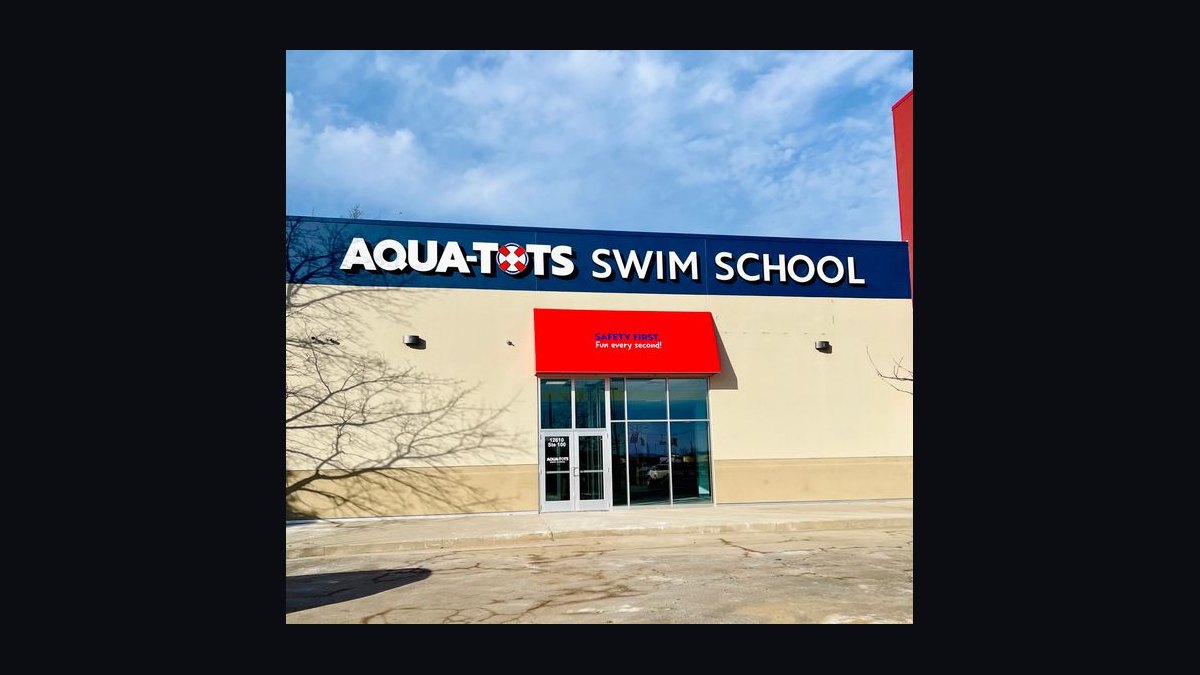
What is the total investment range for an Aqua-Tots franchise? The total initial investment ranges from $1,619,095 to $2,639,314 (2026 FDD Item 7). This includes franchise fees, construction, equipment, and working capital, but does not guarantee a specific timeline to profitability.
How long does it take to break even with an Aqua-Tots franchise? Breakeven typically occurs between months 30 and 42, with Year-1 EBITDA often negative $150,000 to $300,000. Most single-unit operators find this timeline challenging without substantial reserves.
Does Aqua-Tots provide financial performance data in its FDD? No, the brand does not disclose a meaningful Item 19 financial performance representation. This means you are buying a system with a 6% royalty and 2% marketing fee, but without disclosed unit economics to validate typical revenue or profit.
What are the key demographic requirements for a successful location? A metro market with at least 80,000 households earning $100,000 or more within a 15-minute drive is generally needed. Without this density, achieving mature-school average unit volumes of $900,000 to $1.4 million is unlikely.
Is this a good opportunity for a single-unit operator?

Almost never. The capital requirements and negative cash flow period make it a multi-unit or area-developer play. Single-unit operators rarely make the math work without deep pockets and a long-term perspective.
How much liquid capital do I need to qualify? You typically need $750,000 to $1 million in liquid capital. This covers the initial investment and absorbs operating losses for the first 36 to 48 months before positive cash flow is expected.
Bottom Line
Aqua-Tots is a real, durable, demographically-tailwinded brand with legitimate parent NPS, defensible premium pricing, and PE backing that has professionalized operations since the 2018 Cortec acquisition. The math, however, is brutal for under-capitalized single-unit operators. The $1.62M-$2.64M investment floor, the 10%-of-revenue ongoing fee load, the 30-42 month breakeven, and the absent Item 19 disclosure combine to produce a franchise that only makes sense for multi-unit operators with $2M+ liquid, deep Sun Belt market knowledge, and 36-48 months of personal cash runway. If that's not you, look at British Swim School at one-tenth the capital or a passive real-estate alternative. If that is you, Aqua-Tots is a Top-3 swim-school franchise system in North America — but only after you've completed 12-15 Item 20 validation calls and a defensible demographic analysis of your target territory.
Sources
- Aqua-Tots Swim Schools Franchise Cost & FDD (2026) — Peersense
- Aqua-Tots Swim Schools Franchise FDD, Costs & Fees (2026) — FranchisePayback
- Aqua-Tots Swim School Franchise 2026 Investment Breakdown — FranchiseGrade
- Aqua-Tots Swim School Franchise Cost & Profit (2025) — Vetted Biz
- Aqua-Tots Swim Schools Franchise FDD, Profits & Costs (2025) — Sharpsheets
- Swimming School Investment — Aqua-Tots Franchise corporate site
- Aqua-Tots Swim Schools — Entrepreneur Franchise 500 directory
- Swim School Franchise Market Report 2026-2032 — Verified Market Research
- Big Blue Swim School Franchise Cost — FranchiseHelp 2026
- British Swim School Franchise Review 2026 — Franchise Chatter
- Swim School Owner Income and EBITDA — Financial Models Lab
- CDC Childhood Drowning Statistics 2025 update — CDC.gov
Related on PULSE
- Should I open or buy an Aqua-Tots (re-do) franchise in 2027?
- Should I open or buy a Primrose Schools franchise in 2027?
- Should I open or buy a Big Blue Swim School franchise in 2027?
- Should I open or buy a SafeSplash Swim School franchise in 2027?
- Should I open or buy a Goldfish Swim School (re-do) franchise in 2027?
- Should I open or buy a British Swim School franchise in 2027?
This page will be disappearing soon. Save it to your device for $1 — or read it free while it is here.
@Kory-White- · if Venmo asks, the last 4 of my number are 2012
This page is gone.
This one is off the shelf now. $1 keeps it on your phone for good — the whole page, pictures and diagrams included.
 franchiseShould I open or buy a Culver's franchise in 2027?
 franchiseShould I open or buy a Planet Fitness franchise in 2027?
 franchiseShould I open or buy a Cold Stone Creamery franchise in 2027?
 franchiseShould I open or buy a Panera Bread franchise in 2027?
 franchiseShould I open or buy a KinderCare franchise in 2027?
 franchiseShould I open or buy a Kumon franchise in 2027?
 franchiseShould I open or buy a Crumbl Cookies franchise in 2027?
 franchiseShould I open or buy a Jamba franchise in 2027?
 franchiseShould I open or buy a Drybar franchise in 2027?
 franchiseShould I open or buy a UPS Store franchise in 2027?