


Should I open or buy a Sun Tan City franchise in 2027?
Quality
Certified
<p class="dateline"><em>Published June 9, 2027 — Updated June 9, 2027</em></p>
Probably not — unless you can convert an existing tanning salon, sit on $250K+ liquid, and have a clear plan to win the under-35 wellness crowd, not just the UV-bed regulars. A new-build Sun Tan City runs $676,290 to $1,114,750 all-in (2026 FDD Item 7), with a $30,000 franchise fee and 8% royalty plus a 2% national brand fund. Item 19 is thin — the franchisor discloses limited unit economics, and third-party benchmarks peg average yearly gross sales around $563,253 with estimated owner earnings of $78,856 to $101,386. Breakeven realistically lands at month 28-36 for a new-build; 18-24 months for a conversion using the $13,000 signage credit and waived franchise fee. Year-1 conservative cash flow: negative $40K to positive $25K after debt service. Conversions and multi-unit operators win here. Single-unit greenfield buyers usually do not.
The Real Numbers
Sun Tan City opened its first salon in 1999 in Bowling Green, Kentucky, and runs 252 total units across the U.S. as of the 2025 system count — 162 franchised, 90 corporate. Parent Sun Tan City LLC is part of the Glow Brands portfolio alongside Planet Beach and Sun Tan City Express. The brand sells a membership-first business model — Diamond, Platinum, and Silver tiers between $24.99 and $79.99/month — which means predictable recurring revenue but heavy reliance on off-peak February-April promotions to lock in annual contracts.
Here are the honest 2026 FDD numbers plus operator-survey ranges. Treat franchisor disclosures as the floor; third-party data (Vetted Biz, FranchisePayback, Franchimp) fills in what Item 19 omits.
| Cost Line | New-Build (Low) | New-Build (High) | Conversion |
|---|---|---|---|
| Initial franchise fee (Item 5) | $30,000 | $30,000 | $0 (waived) |
| Real estate / leasehold improvements | $215,000 | $410,000 | $40,000 |
| Equipment (UV beds, spray booths, red light) | $185,000 | $310,000 | $25,000 |
| Signage / interior branding | $42,000 | $68,000 | -$13,000 credit |
| Initial inventory (lotions, eyewear) | $18,000 | $32,000 | $12,000 |
| Training, travel, grand opening | $26,000 | $48,000 | $18,000 |
| POS, software, security | $14,000 | $28,000 | $8,000 |
| Insurance & permits | $6,290 | $14,750 | $4,000 |
| 3 months working capital | $140,000 | $174,000 | $90,000 |
| TOTAL Item 7 range | $676,290 | $1,114,750 | $184,000-$245,000 |
| Ongoing royalty | 8.0% gross | 8.0% gross | 6.0% (reduced) |
| Brand fund / national marketing | 2.0% gross | 2.0% gross | 2.0% gross |
| Local marketing minimum | 2.0% gross | 2.0% gross | 2.0% gross |
| Net worth requirement | $500,000 | $500,000 | $500,000 |
| Liquid cash requirement | $250,000 | $250,000 | $250,000 |
| Term (years) | 10 | 10 | 10 |

Unit economics from third-party benchmarks (Sun Tan City's Item 19 is sparse; these come from Vetted Biz franchise comp data and IBISWorld report 1721 — Tanning Salons in the US):
| Metric | Low | Median | High |
|---|---|---|---|
| Annual gross sales | $410,000 | $563,253 | $820,000 |
| Membership revenue % | 58% | 66% | 74% |
| Cost of goods (lotions, eyewear) | 9% | 11% | 13% |
| Labor % | 22% | 26% | 30% |
| Rent % | 8% | 11% | 14% |
| Royalty + brand + local mkt | 12% | 12% | 12% |
| EBITDA margin | 9% | 14% | 19% |
| Owner earnings (SDE) | $58,000 | $89,000 | $135,000 |
| Payback period (new-build) | 5.5 years | 6.8 years | 9+ years |
| Payback period (conversion) | 1.5 years | 2.2 years | 3.5 years |
The math is brutal for new-builds: at the median $563,253 in gross sales and 14% EBITDA, you generate roughly $78,900 in pre-debt cash flow. Service $700K of SBA 7(a) debt at 11.5% over 10 years and you owe ~$118K/year in debt service alone — that is negative $39K/year on a single salon. Sun Tan City math only works as a 3-5 unit operator where you spread the district manager and central marketing overhead across multiple boxes, or as a conversion where the entry price drops by 75%.
Who Wins With This Business

Existing tanning salon owners converting their location win the hardest. The waived franchise fee, $13,000 signage credit, and 6% reduced royalty (versus 8%) means the conversion math is genuinely attractive — most independents are doing $300-450K in revenue on broken POS systems and no membership funnel, and Sun Tan City's Glow Brands membership engine typically lifts gross sales 30-45% in year one post-conversion.
Multi-unit operators with 3-5 unit development agreements win second. Sun Tan City offers area development discounts on franchise fees (drops to $20K per unit at 3+, $15K at 5+), and the district-manager overhead on a single salon (~$65K/year fully loaded) gets diluted across multiple boxes. By unit four, blended EBITDA climbs from 14% to 18-19%.

Operators in Sun Tan City's Midwest/South stronghold win on local brand recognition. Kentucky, Indiana, Ohio, Tennessee, Missouri, and Virginia account for ~60% of system units, which means recognition-driven membership signups without heavy local marketing burn.
Real-estate-savvy owners who can find 2,800-3,800 sq ft endcap retail at $22-32/sq ft NNN win on rent. Rent above $36/sq ft breaks the unit economics regardless of how well you operate.
Operators with a wellness pivot strategy win the next decade. Red light therapy beds, cryo chambers, and full-spectrum infrared — all already part of Sun Tan City's "Beauty Angel" and "Wellness Pod" lineup — are the growth lever as UV demand softens. Operators who lean into wellness upsells hit $700K+ in unit revenue.
Who Loses With This Business
Single-unit greenfield buyers using maximum SBA leverage lose. The math simply does not work — $700K of debt at 11.5% swamps a $78,900 median EBITDA. You will work for negative $39K in year one and need 2-3 years of personal capital injection before the salon self-funds.
Operators in coastal blue-state markets lose on demand. California, Oregon, Washington, Massachusetts, New York have declining UV tanning demand, stricter age-restriction laws (California bans under-18 tanning entirely), and higher wellness alternative competition (spray tans, self-tanners, dermatology offerings). Sun Tan City has almost no footprint in these states — for good reason.
Absentee owners lose. Tanning salons are labor-intensive, hourly-employee businesses with 20-30% staff turnover quarterly. Without an owner or full-time GM on site, membership churn spikes, upsells collapse, and the EBITDA margin drops from 14% to 6% within two quarters.
Operators expecting Item 19 transparency lose patience. Sun Tan City discloses less financial performance data than most franchisors its size, which means you are flying partially blind on unit-economics validation. You must do your own franchisee discovery calls — call at least 15 existing franchisees before signing.
Owners who underestimate the GLP-1 wellness shift lose. Body image and tanning demand patterns are shifting fast as Ozempic, Wegovy, and Mounjaro restructure the 20-45 female demographic's spending — the core tanning customer. Operators stuck on UV-only revenue will see 3-5% annual same-store revenue declines through 2030.
2027 Market Conditions
The U.S. tanning salon industry hit $1.9 billion in 2025 revenue per IBISWorld report 1721, growing at a slow 0.8% CAGR over the prior 5 years. For 2027, IBISWorld projects flat-to-1.5% industry growth — well below CPI — which means unit-level growth must come from share gain, not category growth.

Three forces shape 2027:
(1) The wellness-tanning pivot. Red light therapy, infrared, cryo, and spray-tan booths are growing at 8-12% annually while UV-bed-only revenue is flat to declining 2%. Sun Tan City is ahead of competitors here — Beauty Angel red light pods are in ~70% of corporate locations and the franchisor pushes franchisees hard to add them.
(2) Membership fatigue. Consumers cancelled $48 billion of subscription services in 2025 per Antenna Subscription Index data. Tanning memberships are not immune — annual churn on Sun Tan City memberships sits at 38-45%, which means the membership funnel must constantly refill. February-April promotion months drive 60% of new membership signups.
(3) Regulatory pressure on UV. 17 states ban under-18 UV tanning entirely as of 2027; FDA reclassified Class II tanning beds with stricter warnings in 2024. Expect another 3-5 states to add restrictions through 2029. This shrinks the under-25 demographic and shifts revenue toward 18-35 wellness customers and 35-55 cosmetic-tan customers preparing for vacations, weddings, and events.
The 90-Day Decision Tree
- Days 1-7: Capital verification. Confirm $250,000 liquid (cash, marketable securities, retirement-rollover-eligible 401(k) via ROBS) and $500,000 net worth excluding primary residence. Pull personal credit report; SBA 7(a) lenders want 680+ FICO.
- Days 8-21: FDD acquisition and deep read. Request the current 2026 Sun Tan City FDD from franchise development at suntancity.com/own-a-franchise. Read Items 5 (fees), 6 (other fees), 7 (initial investment), 19 (financial performance), 20 (outlets and franchisee info), 21 (financial statements) twice. Flag every "may, could, generally" caveat.
- Days 22-35: Franchisee discovery calls. Use the Item 20 franchisee list to call 15-20 operators. Ask: actual year-1 and year-3 revenue, EBITDA, time to breakeven, biggest surprise expense, would you do it again, how franchisor support compares to year one promises.
- Days 36-50: Market and real estate scout. Identify 2-3 target trade areas with 35,000+ population in 3-mile radius, median household income $55-95K, female 18-45 population skew, no Sun Tan City within 5 miles. Engage a retail tenant rep broker (CRRE, Cushman) — they get paid by the landlord, not you.
- Days 51-65: Conversion search (parallel track). Run the math on buying an existing independent tanning salon in your target market for $120-280K, then converting. BizBuySell, BizQuest, and local business brokers typically list 8-15 tanning salons for sale per state at any time. A $300K acquisition + $185K conversion is half the price of a greenfield with 12-month-faster ramp.
- Days 66-75: Financing commitment. Get SBA 7(a) pre-approval from a PLP lender (Live Oak, Newtek, Huntington). New-build deals typically need 15-20% equity injection; conversions go down to 10%. Seller financing on a conversion can take equity down to 5-7%.
- Days 76-83: Final go/no-go. If single-unit greenfield with full SBA leverage: STOP. The math does not work. If conversion or 3+ unit development: proceed. If multi-unit development agreement: negotiate franchise fee reduction in writing (Sun Tan City does this; ask).
- Days 84-90: Sign or walk. Execute Franchise Agreement with 15-day federal cooling-off period intact. Lock real estate LOI within the cooling-off window so you can walk from both if needed.
Alternative Plays
Buy an existing Sun Tan City franchise resale. Item 20 of the FDD lists franchisees who transferred or terminated — call the brokers (FranNet, IFPG, Transworld). Resales typically trade at 3.0-4.0x SDE, often with existing membership base of 800-2,400 members already producing recurring revenue. A $280-380K resale with $90K SDE lands you at 3.1-4.2x with no buildout risk.
Convert an independent. As detailed above, the conversion economics dominate greenfield — half the capital, half the timeline, immediate revenue from day one.
Multi-unit area development. Sign a 3-5 unit AD agreement at the discounted franchise fees. Forces you to put $650K+ in development deposits at signing, but the economics work at scale.

Adjacent franchise concepts. Planet Beach (sister brand, spray + wellness focused, $385-595K all-in), Palm Beach Tan (premier competitor, $540-985K), or Glo Tanning (newer entrant, $450-720K, aggressive growth incentives). All have better Item 19 disclosure than Sun Tan City.
The wellness pivot — no UV. Restore Hyper Wellness, iCRYO, Perspire Sauna Studio — each runs $450-850K all-in and grows at 15-25% same-store revenue. No FDA reclassification risk, no UV demographic decline.
Independent wellness studio. Skip franchising entirely. Build a single-location red light + spray + infrared studio for $220-340K. No royalty, no brand fund, no FDD constraints — but you do all the marketing and SOP work yourself.
FAQ
What is the total investment to open a Sun Tan City franchise in 2027? The all-in cost for a new-build location ranges from roughly $676,000 to $1.1 million, per the 2026 FDD Item 7. This includes the $30,000 franchise fee, construction, equipment, and initial inventory. Conversions of existing tanning salons can be significantly cheaper, especially with the $13,000 signage credit and waived franchise fee.
How much can I expect to earn as a Sun Tan City owner? The franchisor’s Item 19 disclosure is limited, but third-party data suggests average yearly gross sales around $563,000. Estimated owner earnings after royalties and expenses typically fall between $79,000 and $101,000 annually. Keep in mind that first-year cash flow is often negative to slightly positive, especially for new builds.
How long does it take to break even with a Sun Tan City franchise? For a new-build location, breakeven realistically occurs between month 28 and month 36. If you convert an existing tanning salon, you might reach breakeven in 18 to 24 months due to lower startup costs and faster ramp-up. Multi-unit operators tend to see quicker returns.
Is a conversion or a new-build better for Sun Tan City? Conversions are generally the stronger option, as they come with incentives like a $13,000 signage credit and a waived franchise fee. They also benefit from an existing customer base and lower initial investment. Single-unit greenfield buyers usually face higher risk and longer payback periods.
What are the ongoing fees for a Sun Tan City franchise? You’ll pay an 8% royalty on gross sales plus a 2% national brand fund contribution. These fees are standard in the industry and apply to both new builds and conversions. There are no hidden surcharges, but they directly impact your net profit margins.
Who is the ideal candidate for a Sun Tan City franchise in 2027? The best fit is someone with at least $250,000 in liquid capital who can convert an existing tanning salon and has a clear strategy to attract the under-35 wellness crowd—not just traditional UV-bed customers. Multi-unit operators with existing salon experience tend to perform best.
Bottom Line
A Sun Tan City franchise is a conversion play and a multi-unit play, not a single-unit greenfield play in 2027. The $676K-$1.1M new-build economics get crushed by SBA debt service at current rates, while the conversion path at $184-245K all-in with a waived franchise fee, $13K signage credit, and 6% reduced royalty is genuinely attractive — especially for existing independent tanning salon owners. If you have $250K liquid, can find a struggling independent doing $300-450K in gross sales, and are willing to operate the box for the first 18 months, do the conversion. If you are buying a single new-build with maximum leverage and hoping for absentee returns: walk away and pick a different concept. The 2027 IBISWorld outlook of flat-to-1.5% industry growth means share gain is the only growth lever, and the brand's wellness pivot (Beauty Angel red light, spray, infrared) is the only path to outsized returns through 2030.
Sources
- Sun Tan City Franchise FDD, Costs & Fees (2026) — FranchisePayback
- Sun Tan City Franchise Insights: FDD, Costs & Fees — VettedBiz
- Sun Tan City Franchise Cost & Opportunities 2026 — FranchiseHelp
- Sun Tan City Franchise Analysis: Cost, FDD & More — Franzy
- Sun Tan City Franchise Costs, Fees, and FDD data — Franchise Signal
- Sun Tan City Franchise Review — FranchiseGrade
- Sun Tan City — Franchise Database — Franchimp
- Own a Sun Tan City Franchise — suntancity.com
- Tanning Salons in the US Industry Analysis, 2025 — IBISWorld Report 1721
- Tanning Salons in the US Market Size Statistics — IBISWorld
- Tanning Salon Franchises in the US — IBISWorld Specialized Market Report
- Sun Tan City Franchise Overview — Franchising.com
Related on PULSE
- Should I open or buy a Glo Sun Spa franchise in 2027?
- Should I open or buy a Zoom Tan franchise in 2027?
- Should I open or buy a City Barbeque franchise in 2027?
- Should I open or buy a Chip City franchise in 2027?
- Should I open or buy a Waxing the City franchise in 2027?
- Should I open or buy a Palm Beach Tan franchise in 2027?
This page will be disappearing soon. Save it to your device for $1 — or read it free while it is here.
@Kory-White- · if Venmo asks, the last 4 of my number are 2012
This page is gone.
This one is off the shelf now. $1 keeps it on your phone for good — the whole page, pictures and diagrams included.
 franchiseShould I open or buy a Jimmy John's franchise in 2027?
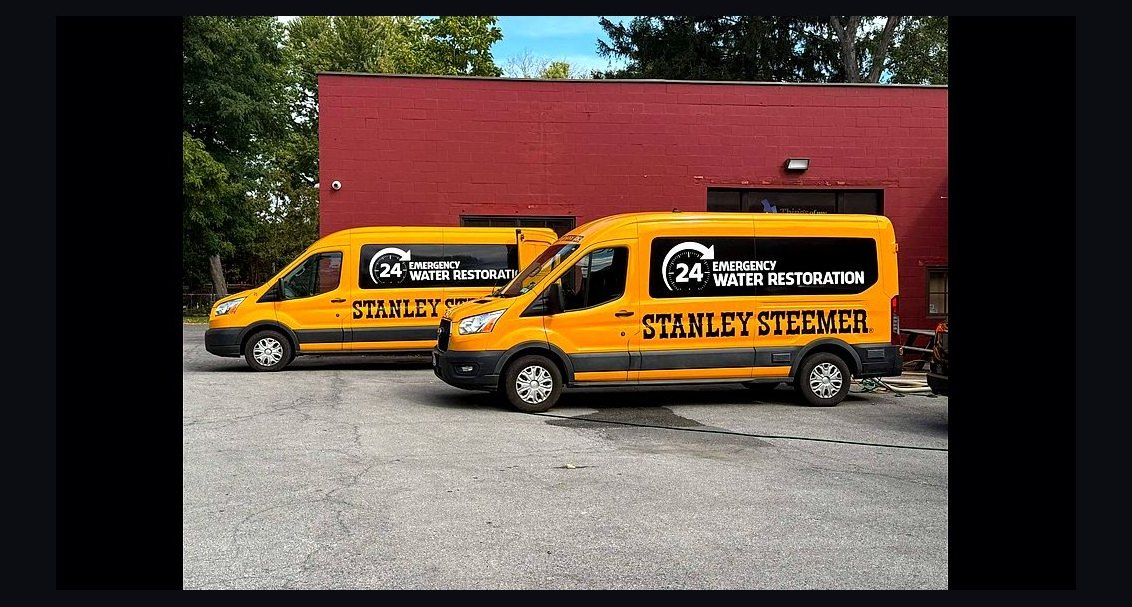 franchiseShould I open or buy a Stanley Steemer franchise in 2027?
 franchiseShould I open or buy a Domino's franchise in 2027?
 franchiseShould I open or buy a Meineke franchise in 2027?
 franchiseShould I open or buy a Dairy Queen franchise in 2027?
 franchiseShould I open or buy a Jeremiah's Italian Ice franchise in 2027?
 franchiseShould I open or buy a Great Clips franchise in 2027?
 franchiseShould I open or buy a Goddard School franchise in 2027?
 franchiseShould I open or buy a Subway franchise in 2027?
 franchiseShould I open or buy an F45 Training franchise in 2027?