


Should I open or buy a 85C Bakery Cafe franchise in 2027?
Quality
Certified
Don't build a plan around opening an 85°C Bakery Cafe franchise in 2027 — the brand has grown almost entirely through company-owned stores in the U.S. and is not actively recruiting franchisees. Confirm availability directly with corporate first; if the answer is no (the likely outcome), redirect the same capital and timeline toward an actively-franchising bakery-cafe like Paris Baguette or Tous les Jours, which offer comparable economics with a real, open path to signing.
Comparing Your Two Real Options: Waiting on 85°C vs. Franchising a Peer Now
Anyone researching this question in 2027 is really choosing between two very different paths, and conflating them is the single biggest mistake candidates make. Path one is pursuing 85°C itself — a Taiwanese bakery-and-coffee concept founded in 2004 that built a cult following around sea-salt coffee and high-volume fresh-baked pastry cases. The brand currently operates roughly 60-plus U.S. locations, and by most public reporting more than 90% of those are corporate-run rather than franchised. Its parent company, Gourmet Master Co., Ltd., trades on the Taiwan Stock Exchange and has been public about preferring direct operational control to protect supply chain consistency and brand execution as it expands into Western markets. That preference is not a temporary phase — it's a deliberate growth strategy, and it means a typical individual applicant showing up in 2027 asking to open a single unit is very unlikely to find an open door. Where 85°C has granted outside operating rights, it has skewed toward "area development" or "operating partner" structures with existing multi-unit operators who bring deep capital and a track record, not first-time franchise buyers.
Path two is choosing a bakery-cafe brand that is actively signing new franchisees right now and offers a nearly identical customer experience: fresh-baked bread and pastry cases, specialty coffee and beverage programs, and a similar all-day traffic pattern. Paris Baguette is the most direct comparison — a Korean-origin, French-inspired bakery-cafe with more than 150 U.S. locations, a dedicated franchise development team, and stated plans to keep expanding aggressively through 2030. Tous les Jours, also South Korean in origin, runs a similar artisan bread-and-cake model with roughly 80 U.S. locations, slightly lower brand recognition than 85°C but a documented reputation for being more franchisee-friendly and faster to approve candidates. A third, lower-capital option is Cinnabon, which isn't a true clone of 85°C's full bakery-cafe format but shares the high-margin, bakery-centric core and offers a materially smaller entry ticket through its kiosk format.
The practical difference between these two paths isn't just availability — it's certainty. Path one requires you to spend weeks or months simply finding out whether a deal is possible, with no guarantee of a yes, and if you do get a yes it likely comes wrapped in a joint-venture structure requiring $3 million to $5 million in net worth and $1.5 million or more in liquid capital, well beyond a standard single-unit franchise requirement. Path two gives you an actual Franchise Disclosure Document, a real application timeline, and a known set of terms you can underwrite today. For most candidates evaluating this decision in 2027, the rational move is to spend no more than a few weeks confirming 85°C's status before shifting fully into evaluating the open alternatives.
How to Decide Between Waiting and Franchising a Peer
The decision tree below is less about brand preference and more about how much time and capital you're willing to leave uncommitted while you wait on an answer from a company that isn't actively selling franchises. Treat the confirmation step as time-boxed — give it two to four weeks of direct outreach, not months of hoping a contact eventually calls back.
The reason this matters more than it might seem: candidates who keep negotiating informally with a brand that isn't structured to franchise them can burn three to six months of runway — site searches paused, capital sitting idle, lease options expiring — before getting a final no. That's real opportunity cost in a market where Paris Baguette and Tous les Jours are actively approving candidates and helping them find sites in the same window. If you meet the joint-venture capital bar and 85°C is willing to talk, it's worth pursuing because the brand's beverage attach and cult following genuinely do drive higher ticket averages than most peers. But if you don't clear that bar, or corporate simply doesn't respond, the decision tree above says to move immediately rather than keep waiting.
What the Numbers Look Like for Each Path
Because 85°C doesn't publish a current, actively-marketed FDD for single-unit franchisees, the most reliable way to underwrite the opportunity is to build a comparable bakery-cafe model and treat 85°C's own reported performance as an upside case if a deal materializes. A well-located store in a major metro — Los Angeles, Houston, San Francisco, the markets where 85°C already has density — can generate an annual unit volume (AUV) in the range of $1.5 million to $3.2 million, well above a typical U.S. bakery-cafe, driven by high ticket velocity and strong beverage attachment on top of bakery sales. Cost of goods sold on a bakery-cafe like this runs 28% to 35% of revenue, higher than a standard QSR because of daily fresh-dough production, imported specialty ingredients such as taro paste and sea-salt cream, and unavoidable waste on unsold pastries at end of day. Labor lands at 30% to 38% of sales because skilled, on-site bakers command a premium over counter-only QSR staffing. Occupancy in the kind of dense shopping-center or strip-mall location this format needs typically consumes another 12% to 18% of revenue. After a royalty of roughly 5% to 6%, an ad fee of 1% to 2%, and remaining operating costs, a mature store can produce net cash flow — pre-tax, pre-debt-service — of about 10% to 18% of revenue, meaning a $2 million AUV location might clear $200,000 to $360,000 a year before owner salary and loan payments. New locations commonly take 12 to 24 months to reach that mature run rate, so plan on financing at least 18 months of negative or thin cash flow.
If you land in a comparable-brand or joint-venture structure with 85°C, expect the entry costs to mirror this range: a franchise or development fee near $40,000 to $50,000 if a conventional fee structure is even offered, buildout and leasehold improvements of $280,000 to $750,000 given the bakery production space required, bakery equipment and ovens running $150,000 to $420,000, signage and decor of $25,000 to $80,000, initial inventory of $12,000 to $35,000, opening marketing of $15,000 to $45,000, training and travel of $15,000 to $40,000, and working capital of $60,000 to $160,000 to cover the first three to four months. That totals a $500,000 to $1.5 million investment — before layering on the $1.5 million-plus in liquid assets a joint-venture structure may demand separately.

Paris Baguette, by contrast, publishes conventional franchise terms: a $50,000 franchise fee, total investment of $600,000 to $1.8 million, a 5% royalty, and a reported AUV range of $1.2 million to $2.8 million — close to 85°C's ceiling with none of the access uncertainty. Tous les Jours runs leaner: a $40,000 to $50,000 franchise fee, $500,000 to $1.5 million total investment, a 5% royalty, and an AUV range of $1.0 million to $2.5 million. Cinnabon is the low-capital outlier — a $30,000 fee, $250,000 to $500,000 for a mall kiosk or $500,000 to $1.2 million for an inline cafe, a 5% to 6% royalty, and an AUV of $800,000 to $1.6 million, trading peak upside for a materially faster, cheaper path to opening.
Implementation Details and Sequencing
Once you've picked a lane — pursuing 85°C directly or moving to an open alternative — the execution sequence is nearly identical, because the operational demands (skilled bakery labor, daily production, high-traffic siting) are shared across every brand in this category. What changes is how much time you spend on step one before moving to step two.
Start by putting the availability question to corporate in writing so you have a dated record of the response — this matters if you later need to demonstrate due diligence to a lender. Once you have either an 85°C offer or have pivoted to Paris Baguette or Tous les Jours, request the full FDD and focus specifically on Item 19, the financial performance representation, since that's the only place you'll find brand-verified AUV and cost data rather than industry estimates. Call existing franchisees — five to ten conversations is a reasonable minimum — and ask pointedly about labor turnover among bakers, how long it actually took their store to reach positive cash flow, and how responsive corporate support has been on supply chain and equipment issues, since bakery concepts live or die on production consistency. Underwrite the deal against your specific trade area rather than the brand's published range, because AUV in this category swings heavily with foot traffic density and local awareness of Asian-style bakery-cafes. Only after that underwriting holds up should you move to securing both financing and a site simultaneously, since the equipment-heavy buildout (ovens, proofers, display cases, POS) has a long lead time that should overlap with lease negotiation rather than follow it. Budget extra time and capital for hiring and training skilled bakers before opening — this is the step most first-time operators underestimate, and it's the same step that determines whether you hit the 10% to 18% net margin range or fall short of it during the first year of ramp-up.
Related questions
Is 85°C Bakery Cafe currently accepting new franchisees at all?
Not through a conventional, actively-marketed FDD as of 2027. The brand has grown primarily through company-owned U.S. stores, with any outside operating rights typically structured as capital-intensive joint ventures for existing multi-unit operators.
How much does it cost to open a Paris Baguette franchise?
Total investment runs $600,000 to $1.8 million with a $50,000 franchise fee and a 5% royalty, based on a reported AUV range of $1.2 million to $2.8 million per location.
What's the cheapest bakery-cafe franchise alternative to 85°C?
Cinnabon's mall kiosk format starts around $250,000 to $500,000 total investment, well below any full bakery-cafe build, though it trades away some of the upside AUV ceiling.
Why does 85°C prefer company-owned stores over franchising?
Its parent, Gourmet Master Co., Ltd., has stated it wants to protect product consistency, supply chain integrity, and brand execution — a common approach for Asian bakery brands expanding into U.S. markets.
How long does a new bakery-cafe take to become profitable?
Most new locations take 12 to 24 months to reach a mature, positive cash-flow run rate, so operators should finance at least 18 months of thin or negative cash flow going in.
FAQ
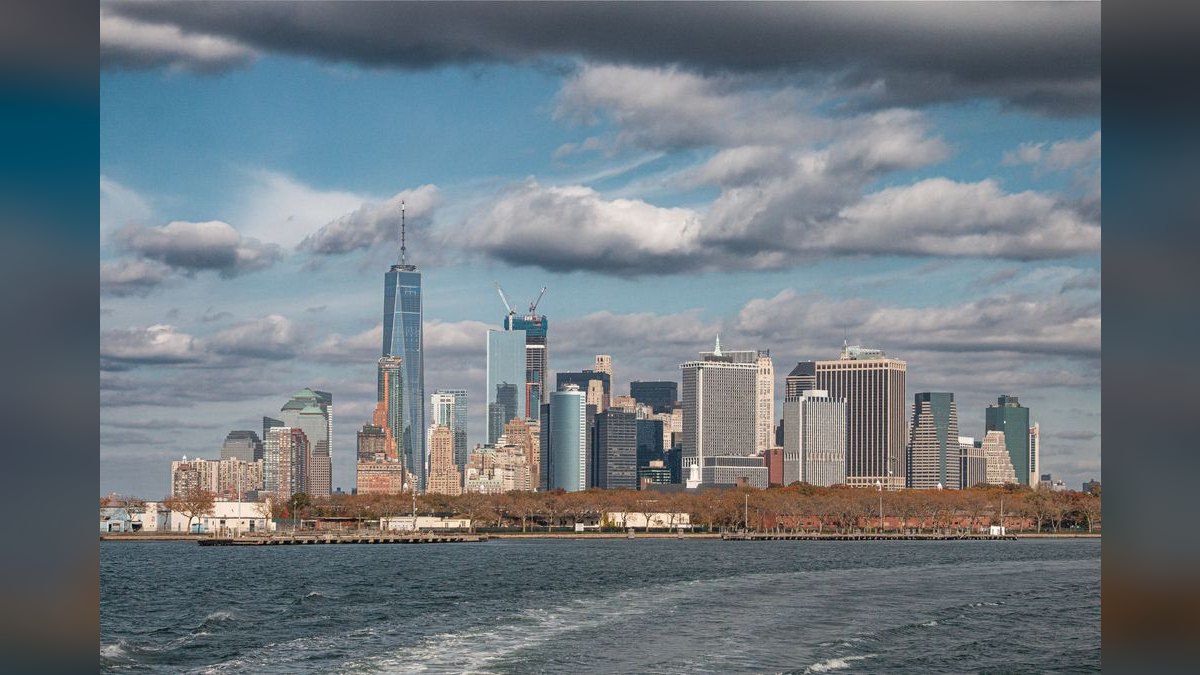
Can I actually buy an 85°C Bakery Cafe franchise in 2027? Almost certainly not through a standard single-unit process. The company operates the large majority of its U.S. locations directly, and any exception tends to require joint-venture-level capital and an existing operator track record rather than a conventional franchise application.
What should I do first if I'm interested in this brand? Contact 85°C's corporate development team directly and get a written answer on current franchise availability. Give it a hard 30-day deadline, then move on to an open alternative if you don't get a concrete offer.
Is Paris Baguette a good substitute for 85°C? Yes — it's the closest direct comparison in product mix, price point, and format, with an actively-recruiting franchise program, a $50,000 fee, and an AUV range that overlaps significantly with what 85°C locations are believed to generate.
Why is the total investment so wide, from $500,000 to $1.5 million or more? Bakery-cafe buildouts are equipment-heavy — ovens, proofers, refrigerated display cases — and costs vary enormously with market real estate rates, unit size, and how much leasehold work an existing space needs before it can support daily bakery production.
What's the biggest operating risk in this category? Labor. Skilled, on-site bakers are harder to hire and retain than standard QSR counter staff, and labor typically runs 30% to 38% of revenue — higher than most quick-service formats — so understaffing or turnover directly threatens both quality and daily production volume.
Should I wait for 85°C to open franchising rather than sign with a peer now? Only if you already clear the joint-venture capital bar of roughly $3 million to $5 million in net worth. Otherwise, waiting has a real cost — sitting capital and expiring site options — while Paris Baguette and Tous les Jours are actively approving candidates today.
Sources
- https://www.paris-baguette.com
- https://www.tljus.com
- https://www.cinnabon.com
- https://www.ftc.gov/business-guidance/resources/franchise-rule
- https://www.franchise.org
- https://www.nrn.com
- https://www.qsrmagazine.com
- https://www.ibisworld.com
- https://www.statista.com
- https://www.franchisebusinessreview.com
Related on PULSE
- Best bakery and dessert franchises to buy in 2027
- Should I open or buy a Woof Gang Bakery franchise in 2027?
- Should I open or buy a Boudin Bakery franchise in 2027?
- Should I open or buy a Just Love Coffee Cafe franchise in 2027?
- Should I open or buy a Sunny Street Cafe franchise in 2027?
- Should I open or buy a Broken Yolk Cafe franchise in 2027?
This page will be disappearing soon. Save it to your device for $1 — or read it free while it is here.
@Kory-White- · if Venmo asks, the last 4 of my number are 2012
This page is gone.
This one is off the shelf now. $1 keeps it on your phone for good — the whole page, pictures and diagrams included.
 franchiseShould I open or buy a Taco Bell franchise in 2027?
 franchiseShould I open or buy a FACE FOUNDRIÉ franchise in 2027?
 franchiseShould I open or buy a Kumon franchise in 2027?
 franchiseShould I open or buy a Dunkin' franchise in 2027?
 franchiseShould I open or buy a Kona Ice franchise in 2027?
 franchiseShould I open or buy a Goddard School franchise in 2027?
 franchiseShould I open or buy a Massage Envy franchise in 2027?
 franchiseShould I open or buy a Valvoline Instant Oil Change franchise in 2027?
 franchiseShould I open or buy a Roto-Rooter franchise in 2027?
 franchiseShould I open or buy a Culver's franchise in 2027?