


Should I open or buy a Sunny Street Cafe franchise in 2027?
Quality
Certified
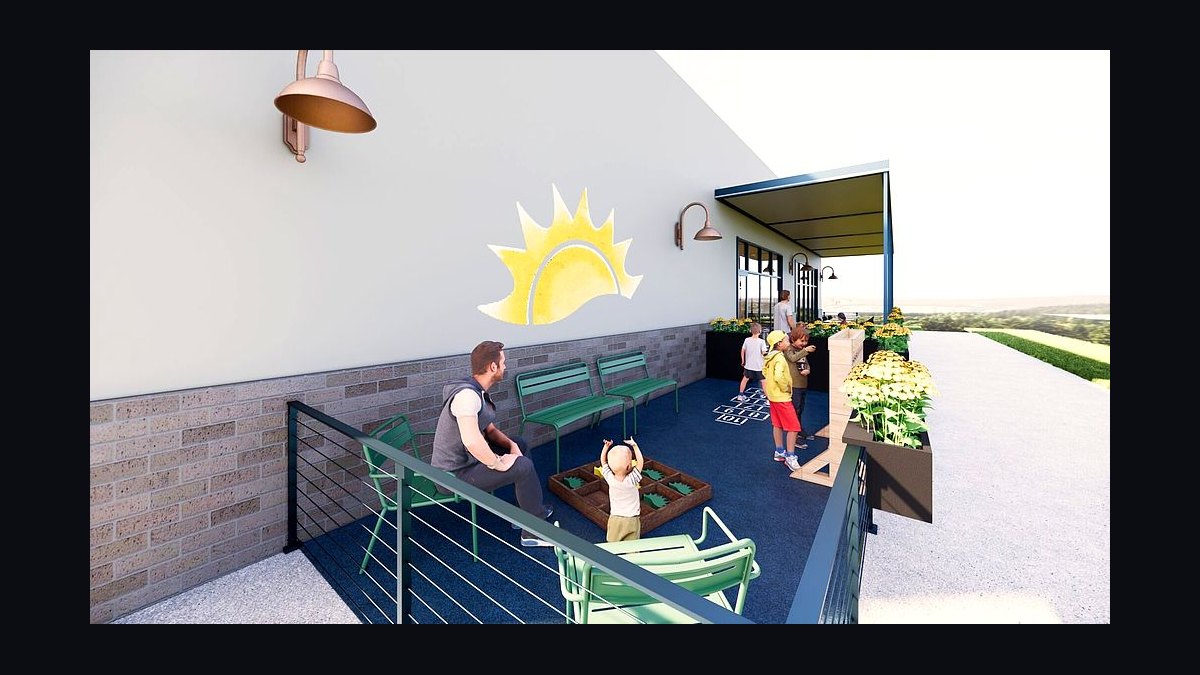
Yes, if you're a hands-on operator with $150,000-$250,000 liquid and $500,000-$900,000 in total capital who wants a daytime-only, full-service breakfast-and-lunch franchise. Sunny Street Cafe rewards operators who execute weekend service well and build neighborhood loyalty. Skip it if you want simple fast-casual hours, can't staff weekend peaks, or sit far outside its Midwest core without a local marketing plan.
The Outcome You Should Expect
Open a Sunny Street Cafe and you are buying into a specific, narrow outcome: a full-service, from-scratch breakfast-and-lunch cafe that closes by early afternoon every single day. That single design choice — daytime-only hours, typically 6:30am to 2:30pm — shapes almost everything else about what ownership feels like. You will not staff a dinner rush. You will not manage a bar program or late-night security concerns. You will, instead, run a concentrated, high-intensity morning-and-midday operation where nearly all of your weekly revenue lands inside a roughly eight-hour window, six or seven days a week.
Financially, a mature unit should land somewhere in the $900,000 to $1,600,000 gross revenue range, translating to owner earnings of $120,000 to $280,000 once royalty (about 5% of gross), an advertising fee (2%-3%), food cost (28%-33%), and labor (roughly 30% of sales) are accounted for. That earnings band is competitive for a moderate-capital, full-service concept — it sits above what most fast-casual breakfast brands produce per dollar invested, largely because the from-scratch menu commands a higher average check ($12-$16) than quick-service breakfast ($5-$8) without carrying the total investment burden of an upscale brunch concept like Another Broken Egg Cafe ($1M-$1.8M) or a high-AUV player like First Watch ($1.5M-$2.5M).

The realistic expectation, then, is a business that behaves like a well-run neighborhood restaurant with a built-in lifestyle advantage: an operator who can be home most evenings, but who must be excellent at service, staffing, and community-building during a compressed operating window. Owners who treat the model as "easier because it's shorter hours" consistently underperform; owners who treat it as "the same intensity, just concentrated" hit the upper half of the earnings range.
What Drives That Outcome
Three levers dominate the P&L: food cost discipline, weekend labor execution, and community loyalty that drives repeat visits. Because the menu is from-scratch rather than pre-portioned or centrally frozen, food cost control depends heavily on local kitchen management — waste, portioning, and vendor negotiation matter more here than at a heavily systematized fast-casual brand. A cafe running 33% food cost instead of 28% is giving up roughly $45,000-$65,000 of annual owner earnings on a $1.2M-gross location, which is the single biggest swing factor separating the top and bottom quartile of Sunny Street franchisees.

Labor is the second lever, and it behaves unevenly across the week. A weekday shift might run 6-10 staff; Saturday and Sunday mornings can require 12-18, with premium pay of $2-$4/hour above base to keep experienced servers and cooks showing up for the hardest shifts. Franchisees who under-schedule weekends chase their own tail with slow tickets, unhappy tables, and bad reviews that suppress the very community reputation the brand depends on to fill seats without paid advertising. Franchisees who over-staff burn margin they can't get back. Getting this balance right, week over week, is arguably the single most trainable skill that separates a $120,000 earner from a $250,000 earner operating the same footprint.
The third lever, community loyalty, is less mechanical but just as measurable in outcomes: cafes that build a genuine "regulars" base — the kind that shows up three mornings a week and brings visiting family on weekends — post materially higher same-store sales growth than cafes leaning solely on drive-by traffic. This is why co-tenancy near dense daytime populations (offices, medical facilities, gyms) and residential density within two miles both correlate with stronger performance: they supply the repeat-customer base that the from-scratch menu and neighborhood atmosphere are designed to convert into loyalty.
Benchmarks and Realistic Ranges

Use the 2026 FDD figures as your planning baseline, not your ceiling or floor. The franchise fee runs $30,000-$35,000. Total Item 7 investment spans $500,000-$900,000, broken down roughly as: buildout and leasehold improvements $250,000-$480,000, equipment and kitchen build-out $130,000-$260,000, signage and decor $22,000-$65,000, initial inventory $10,000-$26,000, initial marketing $14,000-$38,000, training and travel $12,000-$35,000, and working capital $45,000-$110,000 to carry the first three months. Ongoing, expect a royalty near 5% of gross and an advertising fee around 2%-3%.
Site-level benchmarks matter as much as brand-level ones. A typical Sunny Street runs 2,400-3,400 square feet, and total construction cost of $250-$400 per square foot means a 2,800-square-foot cafe can run $700,000-$1.1M to build before considering tenant improvement allowances, which landlords often offer at $30-$60 per square foot and which meaningfully offset the franchisee's cash outlay. Base rent averages $18-$28 per square foot in core Midwest markets but climbs to $30-$45 per square foot in high-growth Sun Belt locations — a real consideration for anyone evaluating expansion outside the brand's Ohio, Indiana, Kentucky, and Michigan stronghold, where over 80% of current units sit.
Staffing benchmarks: a mature unit runs 25-35 employees between full- and part-time, with annual labor cost (including payroll taxes, workers' comp, and benefits) of $350,000-$500,000. Manager compensation runs $45,000-$65,000 for assistant managers and $55,000-$75,000 for general managers, frequently with bonuses tied to food cost control and sales growth. Turnover industry-wide runs a brutal 120%-150% annually, but the daytime-only schedule gives Sunny Street a genuine retention edge — kitchen managers average 2.5-3 years of tenure against an industry average closer to 18 months, which is a real, quantifiable advantage when you're comparing this franchise to any brand that runs a full dinner service.

Competitively, Sunny Street's $500,000-$900,000 investment range positions it as one of the more affordable full-service breakfast franchises, undercutting First Watch's $1.5M-$2.5M and Another Broken Egg's $1M-$1.8M, while a comparable regional player like Egg Harbor Cafe runs $700,000-$1.2M with tighter territorial restrictions. The trade-off for the lower entry cost is a smaller national footprint and correspondingly lower brand awareness outside the Midwest.
Risks, Edge Cases, and Failure Modes
The single biggest structural risk is geographic concentration. With more than 80% of units clustered in four Midwest states, a franchisee opening in Florida, Texas, or the Carolinas is effectively building brand awareness from zero, absorbing 20%-40% higher real estate costs relative to Midwest averages, and doing so without the built-in word-of-mouth that lets an Ohio location coast on existing recognition. This is not a reason to avoid expansion markets, but it is a reason to budget materially more for local marketing and to expect a longer ramp to mature AUV.
A second failure mode is misreading "daytime-only" as "low-labor." Franchisees who staff the concept like a quick-service breakfast spot — thin weekend coverage, minimal server training — run into exactly the service breakdowns that erode the community loyalty the model depends on. Because the cafe has no evening shift to recover a bad morning's reputation, a string of slow Saturday brunches can suppress traffic for months before an owner notices the pattern in the numbers.

Site selection carries its own edge cases. Exclusive breakfast clauses in neighboring leases can quietly block a location that otherwise looks ideal — some landlords have already granted breakfast-concept exclusivity to another tenant, and franchisees need Sunny Street's real estate team (which typically delivers site approval in 30-45 days) to catch this before signing. Insufficient parking (the practical minimum is around 15 spaces per 1,000 square feet) and lunch-only traffic patterns — areas that go dead after 2pm on the residential or office side — both quietly cap a site's ceiling regardless of how good the operator is. Drive-thru capability is increasingly requested by franchisees chasing incremental volume, but it adds $150,000-$250,000 to build-out and often requires a zoning variance, so it should be evaluated site-by-site rather than assumed as a default upgrade.
Finally, don't underestimate delivery-channel margin risk. Third-party delivery (DoorDash, Uber Eats) typically represents 8%-12% of sales but carries 20%-30% commission — many successful franchisees deliberately cap delivery to off-peak hours specifically to protect the margin that royalty and ad-fee obligations already compress.
A Practical Rollout Plan

The path from signing to a mature, community-loyal cafe runs on roughly a five-month build timeline followed by a longer loyalty-building phase. Start by reading the full 2026 FDD, with particular attention to Item 19 (financial performance representations) and Item 20 (unit counts and turnover), so your expectations are anchored to disclosed data rather than sales-pitch averages. From there, call at least eight existing operators — ask specifically about weekend staffing ratios, actual food cost against the 28%-33% benchmark, and how long it took their location to build a genuine regular customer base rather than just foot traffic.
Once open, the first six months should be treated as a loyalty-building sprint, not a profit sprint: expect thinner margins while you find your weekend staffing rhythm and your neighborhood discovers the cafe. Track food cost and labor percentage weekly rather than monthly during this window — small drift compounds fast in a from-scratch kitchen. Franchisees who hit their numbers in year one and are running the model efficiently by year two are the ones who most often go on to evaluate a second unit, since the same moderate-capital, daytime-only economics that make the first cafe attractive tend to make a second one in an adjacent trade area attractive too, provided the operator has proven they can staff weekend peaks without their own constant presence.
Related questions
How does Sunny Street Cafe's franchise fee compare to other breakfast concepts?
At $30,000-$35,000, it's below First Watch's roughly $50,000 fee and in line with most regional breakfast franchises, though total investment matters more than the fee itself when comparing brands.
Can one operator run two Sunny Street Cafe locations?
Yes — multi-unit ownership is common once an operator proves they can staff weekend peaks and maintain food cost discipline without being on-site constantly, though most franchisees wait until year two or three.
Does Sunny Street Cafe support drive-thru locations?
Some sites add drive-thru capability, but it adds $150,000-$250,000 to build-out and often requires a zoning variance, so it's evaluated per-site rather than offered as a standard format.
How important is the local real estate team's role in site approval?
Very — Sunny Street's corporate real estate team typically delivers site approval within 30-45 days and negotiates lease terms, which meaningfully reduces the risk of signing a lease with a hidden exclusivity clause or weak daytime traffic pattern.
What happens to sales after 2:30pm at a Sunny Street Cafe?
Nothing — the model deliberately closes daytime-only, so there is no evening revenue to offset a slow morning, which is why weekend execution and community loyalty carry more financial weight than at brands with a dinner shift.
FAQ
What are the typical total startup costs for a Sunny Street Cafe franchise? The total investment range is roughly $500,000 to $900,000, including a franchise fee of about $30,000 to $35,000. Exact costs depend on location size, leasehold improvements, and equipment needs.

How much can an owner expect to earn annually? Mature units typically generate gross revenue between $900,000 and $1,600,000, with owner earnings in the range of $120,000 to $280,000 pre-tax. Actual profit depends heavily on food cost control and weekend labor management.
What are the operating hours and schedule like? Sunny Street Cafe operates daytime hours only, typically from 6:30am to 2:30pm. This means no dinner shifts, late nights, or overnight work, which is a genuine lifestyle advantage for owners.
Is this a full-service restaurant or fast-casual? It's a full-service, sit-down breakfast-and-lunch cafe with a from-scratch menu, requiring servers and a larger kitchen crew than a fast-casual concept, especially during weekend brunch peaks.
What are the biggest challenges of owning this franchise? Full-service labor management, weekend demand that requires careful scheduling, and the brand's regional Midwest concentration relative to national competitors are the primary challenges.
Can I open a Sunny Street Cafe outside the Midwest? Yes, but brand recognition is lower outside the core Ohio-Indiana-Kentucky-Michigan footprint, so local marketing and community-building carry more weight in driving the business to maturity.
Sources
- https://www.ftc.gov/business-guidance/resources/franchise-rule
- https://www.entrepreneur.com/franchises
- https://www.franchisedirect.com
- https://www.franchisetimes.com
- https://www.qsrmagazine.com
- https://www.nrn.com
- https://www.ibisworld.com
- https://www.statista.com
- https://www.franchisebusinessreview.com
- https://www.sunnystreetcafe.com
Related on PULSE
- Should I open or buy a Just Love Coffee Cafe franchise in 2027?
- Should I open or buy a Broken Yolk Cafe franchise in 2027?
- Should I open or buy a Keke's Breakfast Cafe franchise in 2027?
- Should I open or buy a The Toasted Yolk Cafe franchise in 2027?
- Should I open or buy a 85C Bakery Cafe franchise in 2027?
- Should I open or buy a Taziki's Mediterranean Cafe franchise in 2027?
This page will be disappearing soon. Save it to your device for $1 — or read it free while it is here.
@Kory-White- · if Venmo asks, the last 4 of my number are 2012
This page is gone.
This one is off the shelf now. $1 keeps it on your phone for good — the whole page, pictures and diagrams included.
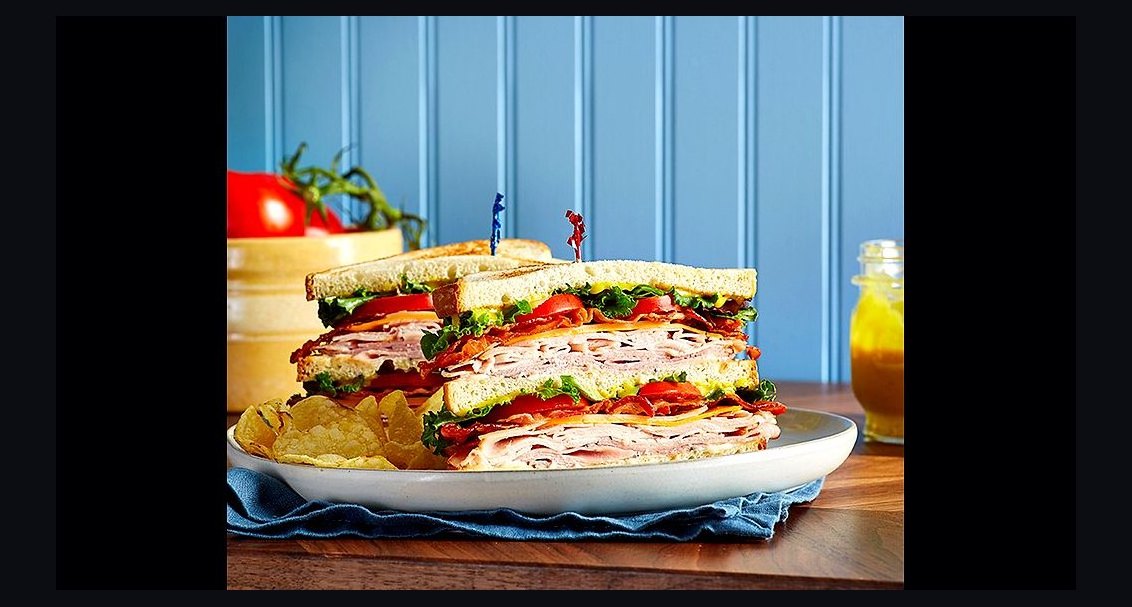 franchiseShould I open or buy a McAlister's Deli franchise in 2027?
 franchiseShould I open or buy a Domino's franchise in 2027?
 franchiseShould I open or buy an Ace Hardware franchise in 2027?
 franchiseShould I open or buy a Kumon franchise in 2027?
 franchiseShould I open or buy a Merry Maids franchise in 2027?
 franchiseShould I open or buy a Kona Ice franchise in 2027?
 franchiseShould I open or buy a Goddard School franchise in 2027?
 franchiseShould I open or buy a Massage Envy franchise in 2027?
 franchiseShould I open or buy a Smoothie King franchise in 2027?
 franchiseShould I open or buy a Culver's franchise in 2027?